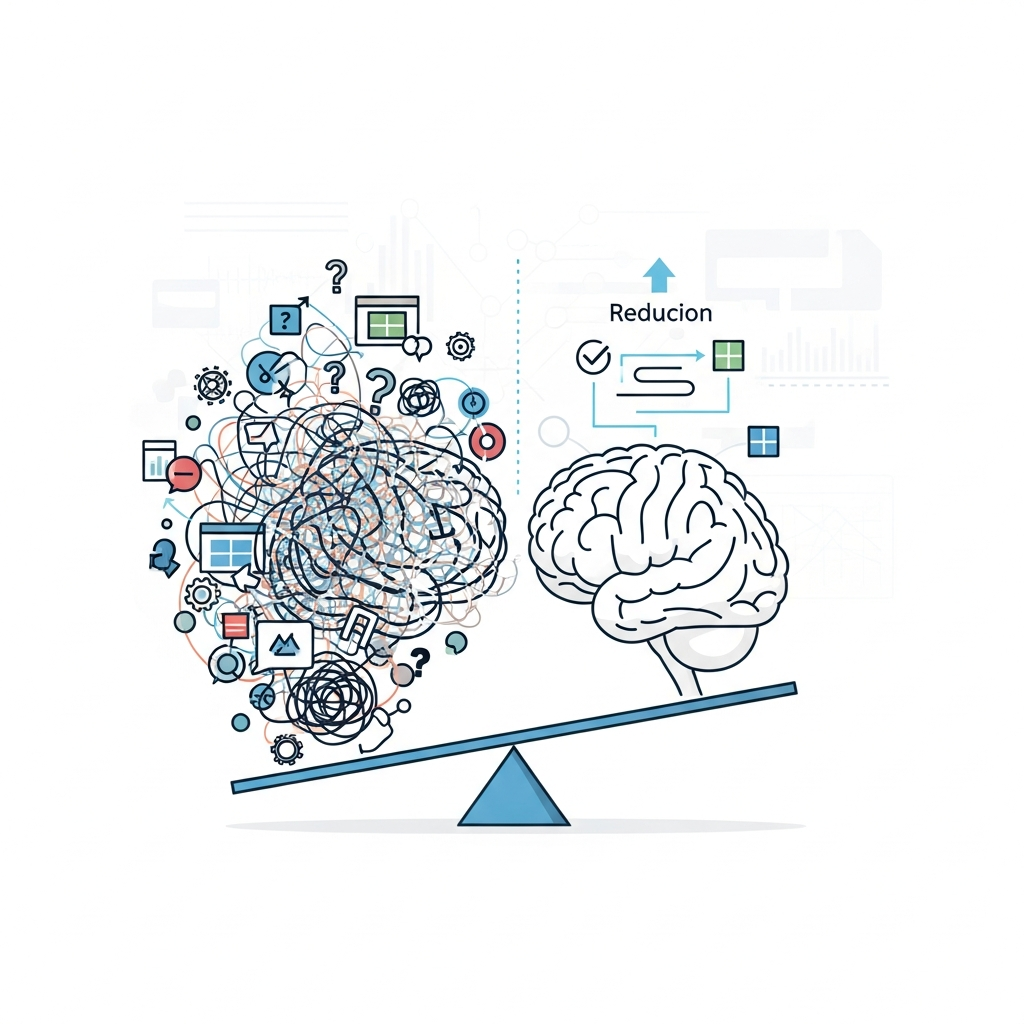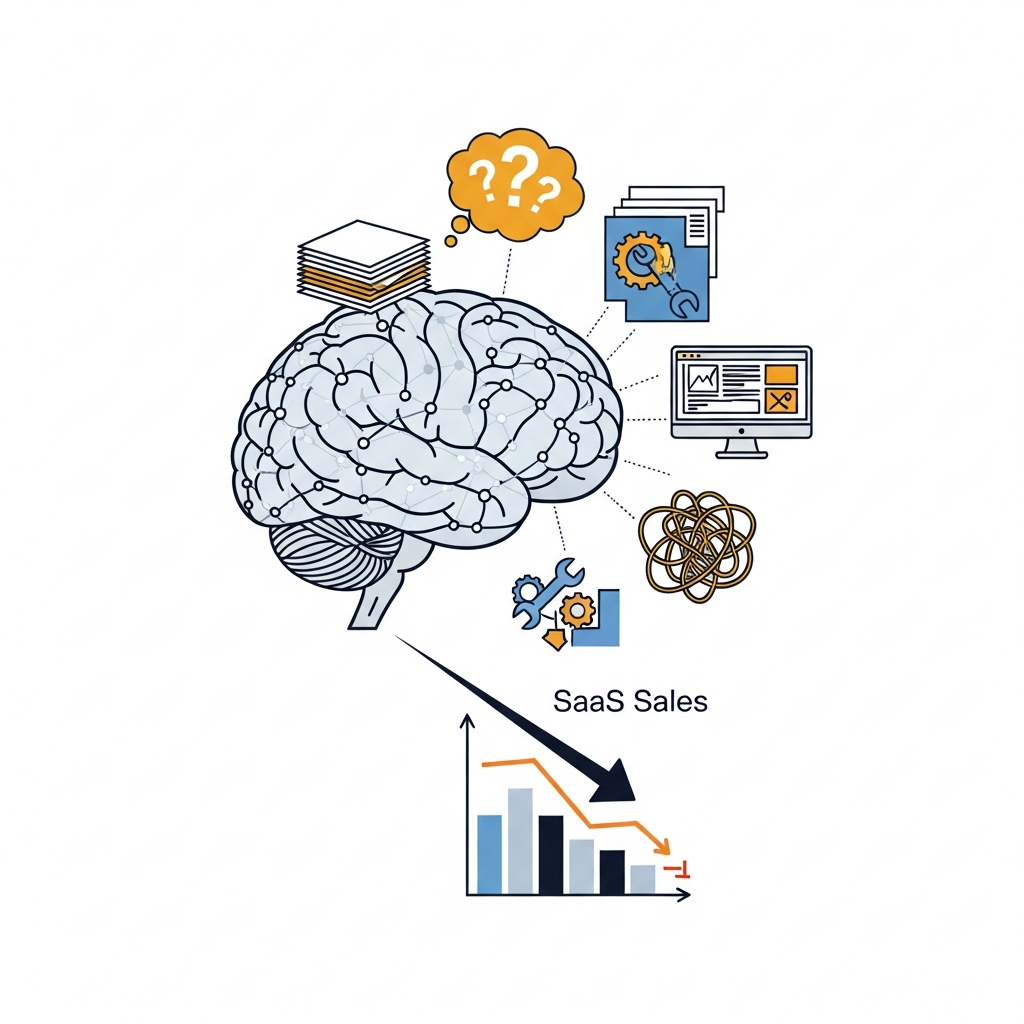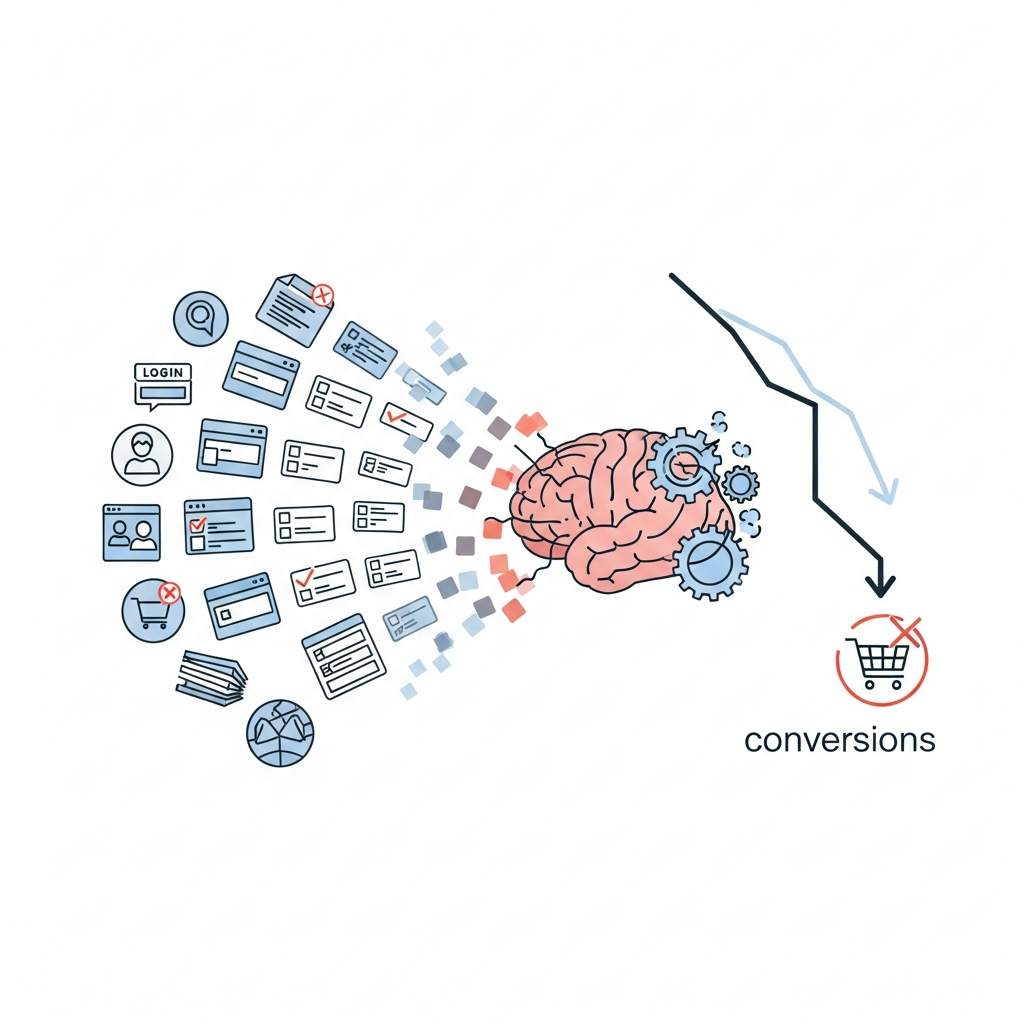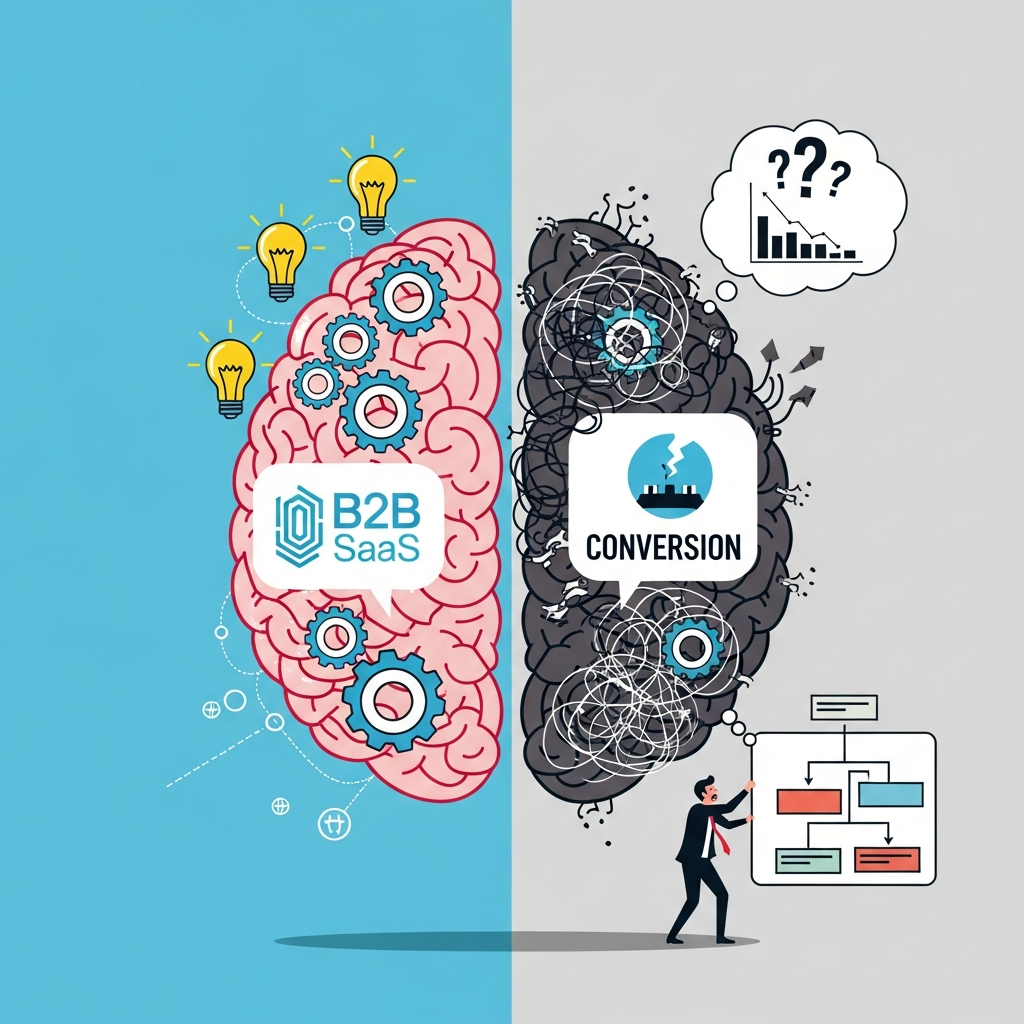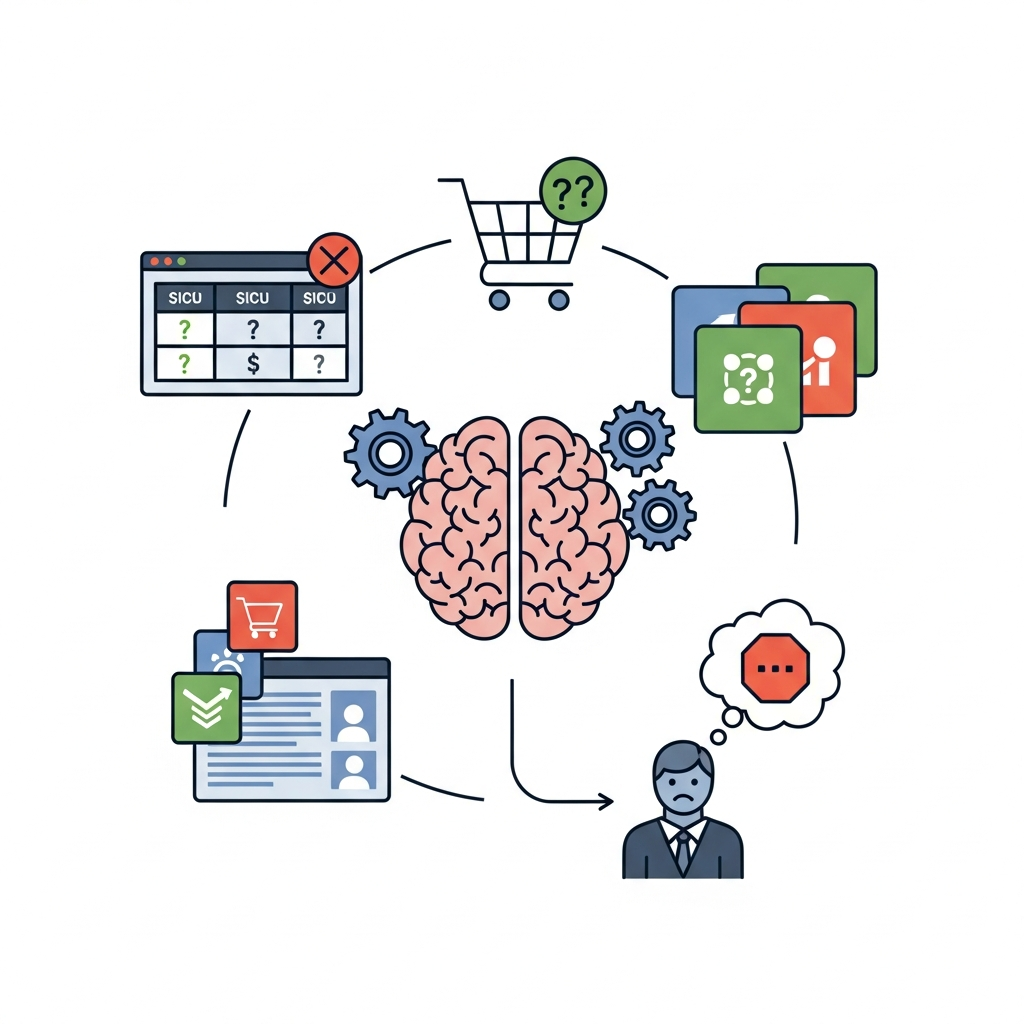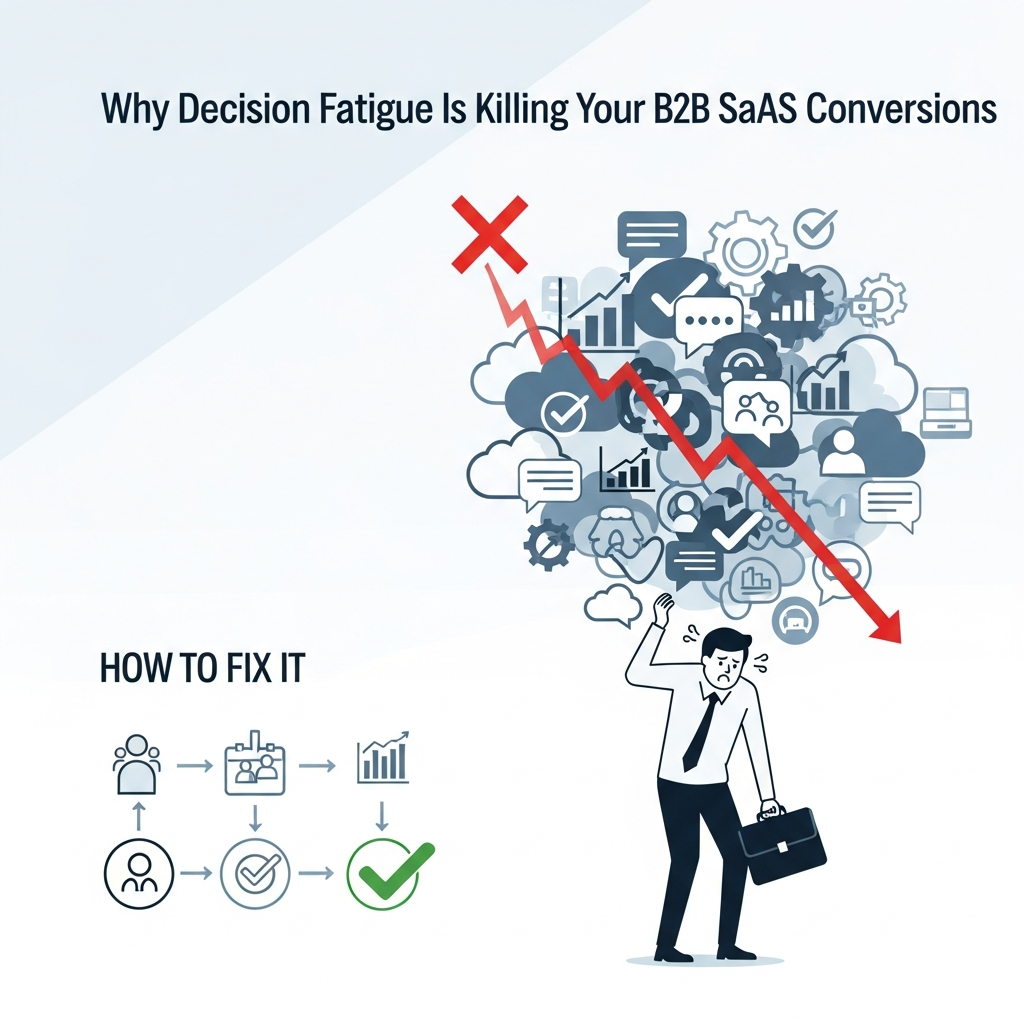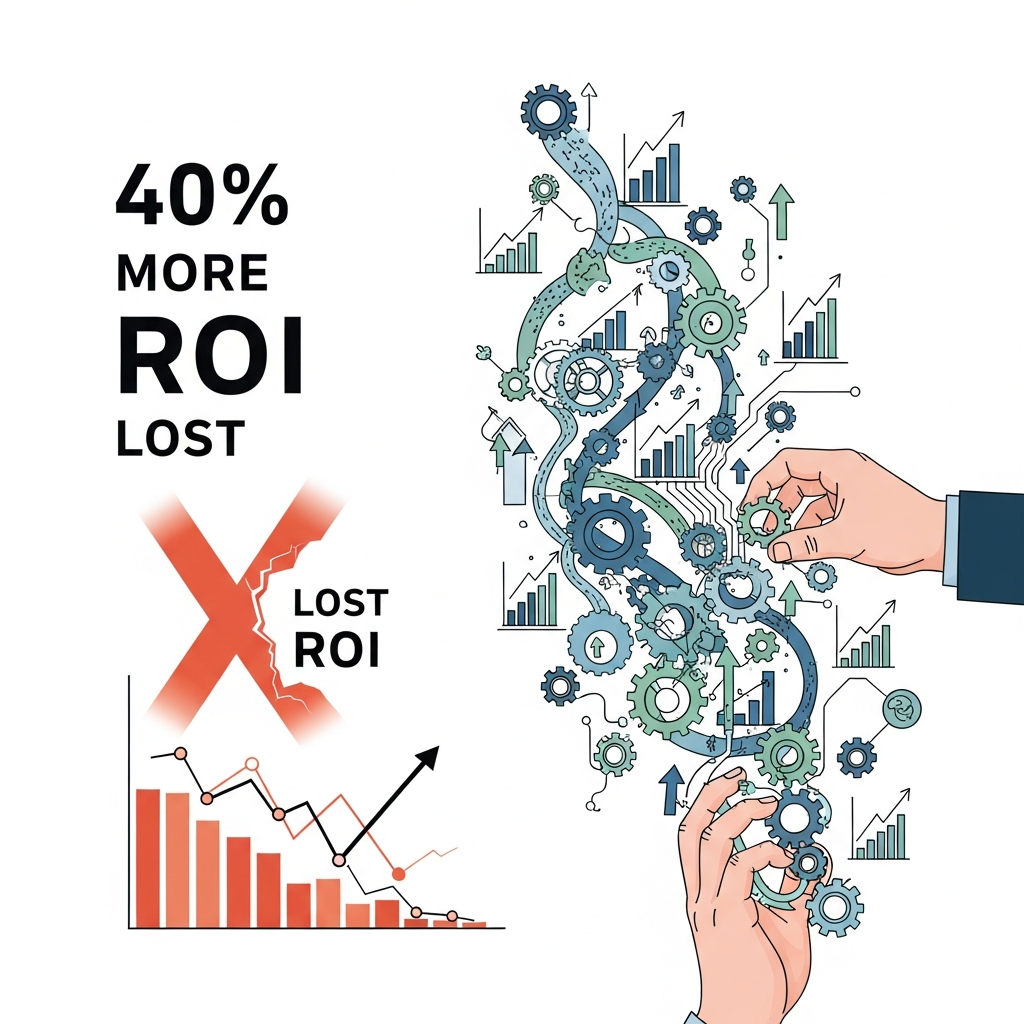
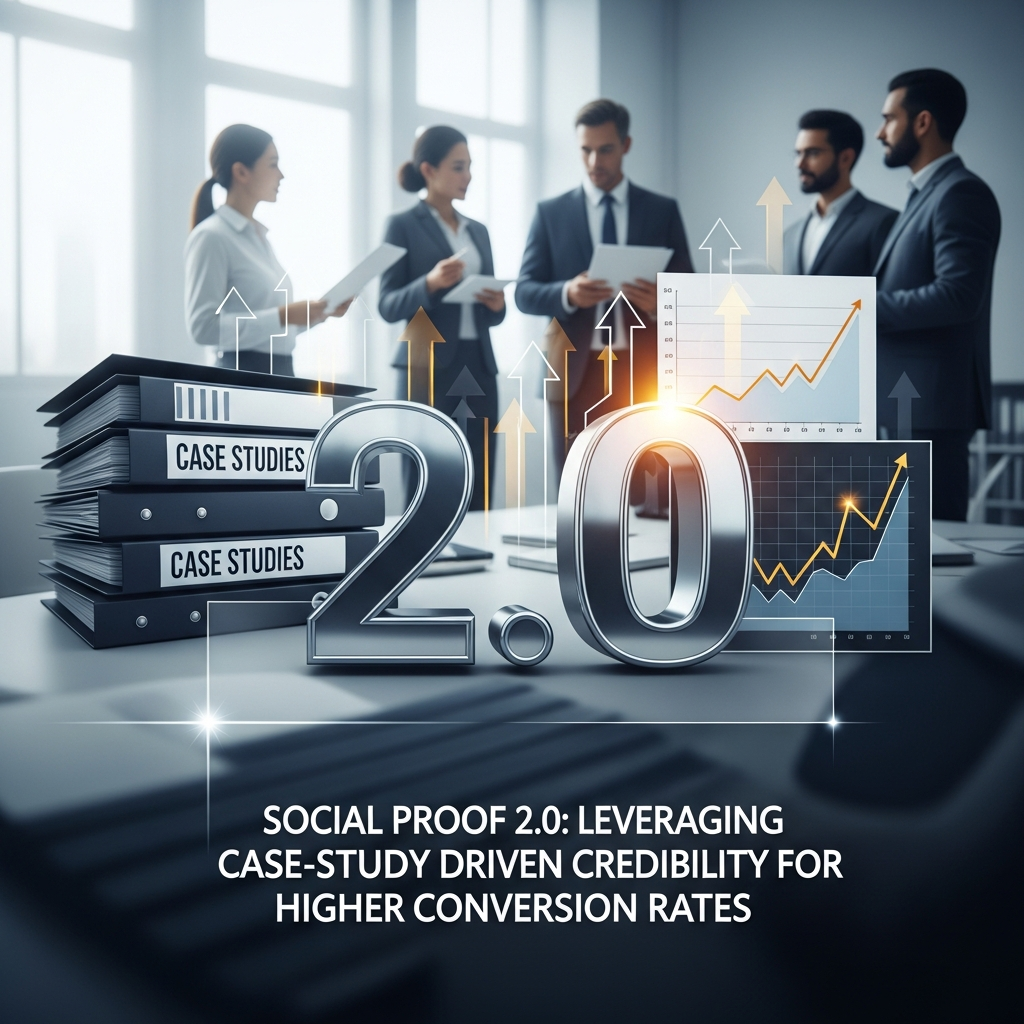
Social Proof 2.0: Leveraging Case-study Driven Credibility for Higher Conversion Rates
Social Proof 2.0: Leveraging Case-study Driven Credibility for Higher Conversion Rates concept 1
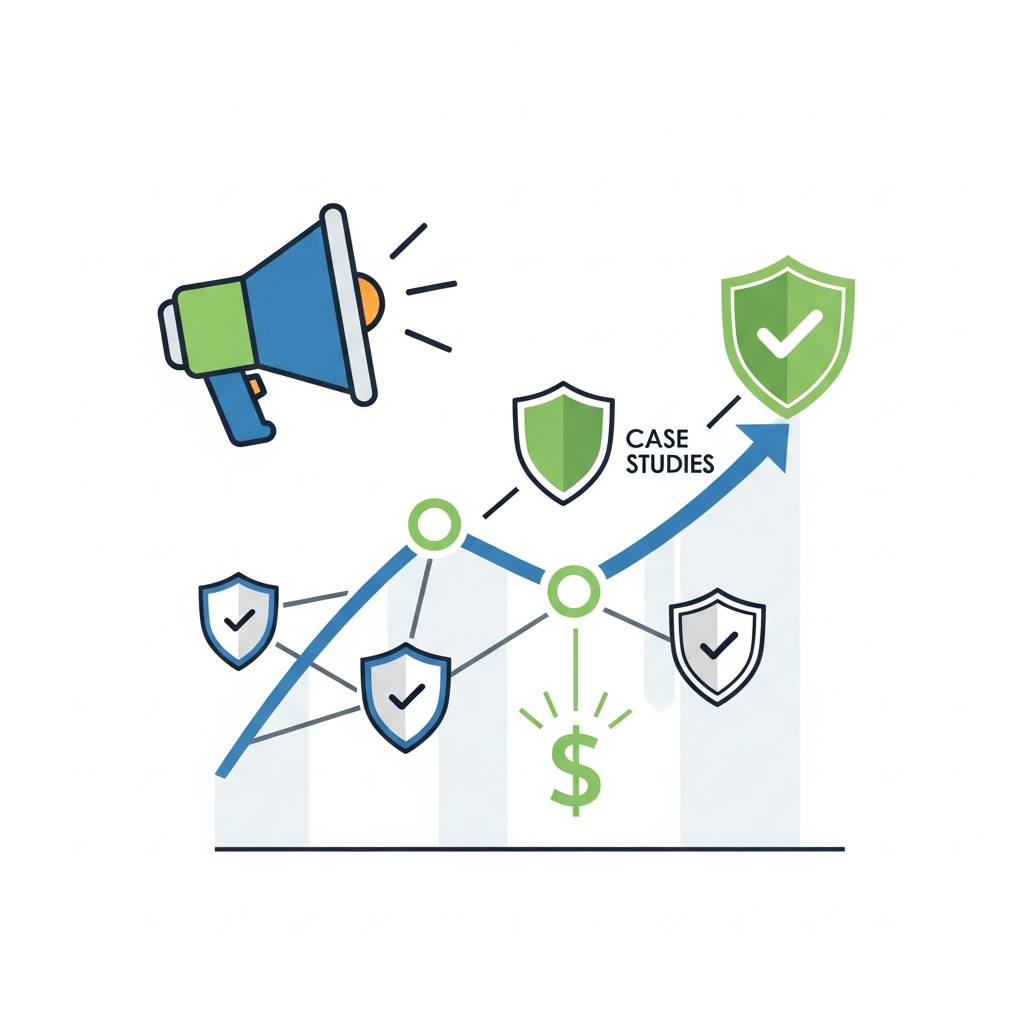
The Erosion of the “Star Rating” and the Birth of Social Proof 2.0

Let’s be brutally honest for a second. We’ve all become somewhat immune to those generic five-star ratings. You know the ones—tucked neatly into a carousel on a landing page, featuring a headshot that looks suspiciously like a stock photo of a “Smiling Business Professional.” We see them, we register them, and we immediately disregard them as marketing fluff. The skepticism of the modern buyer has reached an all-time high, and frankly, I don’t blame them. We’ve been burned by inflated metrics and “manufactured” testimonials for too long.

I remember sitting in a growth meeting three years ago for a mid-market SaaS firm. We had the logos. We had the quotes. We even had a “4.8 out of 5” badge from a reputable review site. Yet, our demo-to-close ratio was stagnating. The problem wasn’t a lack of proof; it was a lack of visceral credibility. We were checking boxes, but we weren’t building trust. That was my “aha” moment: Social Proof 1.0 is dead. It’s too passive. It’s too easily faked. What we needed—and what the market now demands—is Social Proof 2.0: the strategic deployment of narrative-driven, data-backed case studies that act as a proxy for the prospect’s own success.

In this guide, we aren’t just talking about writing a “success story.” We’re dissecting the neurobiology of why stories convert, how to reverse-engineer buyer hesitation through specific testimonials, and why your current “Case Studies” page is likely a graveyard of missed opportunities. This is about granular, messy, and undeniably real evidence.
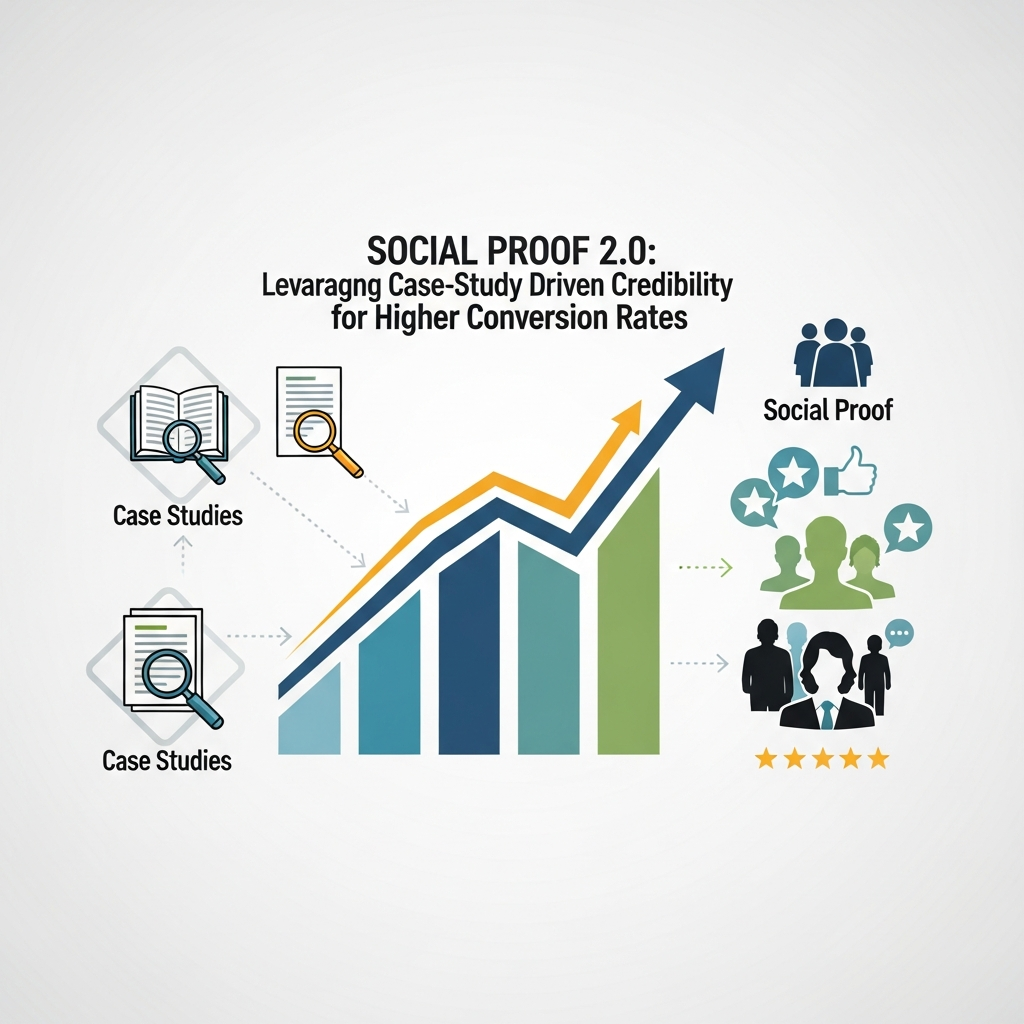
Social Proof 2.0: Leveraging Case-study Driven Credibility for Higher Conversion Rates concept 2

The Cognitive Science of Why Narratives Trump Statistics

Data is cold. Numbers are abstract. While we love to say we make “data-driven decisions,” the human brain is neurologically wired to process stories with far greater intensity. When we read a list of statistics—say, “Increased ROI by 40%”—only the language-processing parts of the brain (Broca’s and Wernicke’s areas) are activated. We understand the information, but it doesn’t move us.

However, when we read a narrative—a case study that details a specific person facing a specific struggle—the brain undergoes a process called neural coupling. The listener’s brain activity mirrors that of the storyteller. If the case study describes the stress of a failing supply chain, the reader’s cortisol levels might actually rise. If it describes the relief of a streamlined workflow, their brain releases oxytocin. You aren’t just selling a product; you are literally altering the chemistry of your prospect’s brain to align with your solution. This isn’t manipulation; it’s empathy at scale.

The Availability Heuristic and Your Brand

Psychologically, humans rely on the Availability Heuristic. We judge the probability of an event based on how easily we can recall a similar example. If a prospect can vividly remember the story of how “Company X” used your tool to save their Q4, they will perceive your tool as being more effective than a competitor who merely lists a “99% satisfaction rate.” The story is “available” in their mind; the statistic is a ghost.
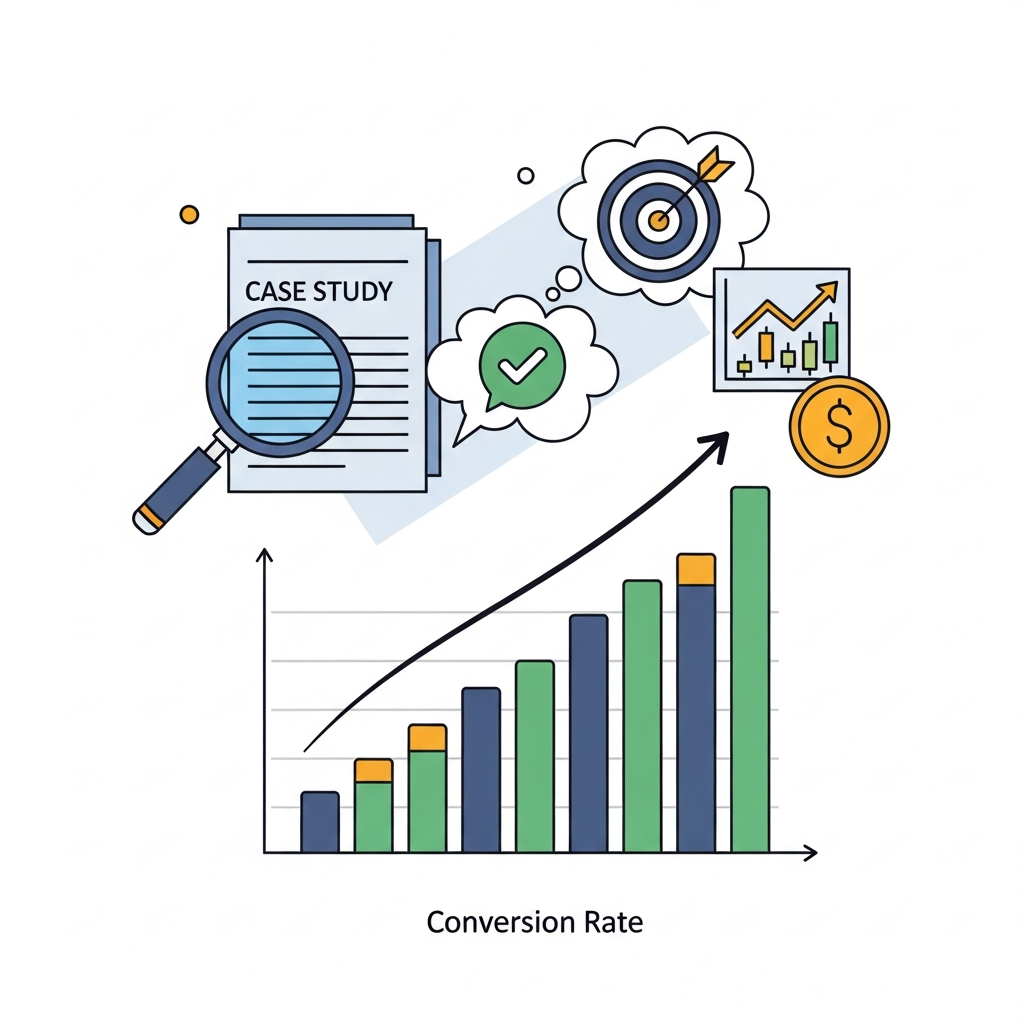
Social Proof 2.0: Leveraging Case-study Driven Credibility for Higher Conversion Rates concept 3

The Anatomy of a High-Conversion Case Study: Moving Beyond the “Hero’s Journey”

Most B2B case studies follow a predictable, boring formula: The Problem, The Solution, The Result. It’s the “Hero’s Journey” for software, and it’s become white noise. To achieve Social Proof 2.0, we need to inject friction. We need the “messy middle.” If everything looks too perfect, it feels dishonest.

1. The Protagonist’s Internal Conflict

Don’t just tell me the company was losing money. Tell me that the Director of Operations was losing sleep. Tell me they were terrified of a board meeting. Internal conflict creates relatability. Your prospect doesn’t identify with a “Corporation”; they identify with a person who has the same job title and the same anxieties they do. We want to hear about the specific moment of crisis that led them to look for a solution.

2. The “Implementation Friction” (The Secret Sauce)

This is where most marketers get scared. They want to pretend the software was installed in five minutes and everything was sunshine. Stop doing this. True credibility comes from acknowledging the hurdles. “The integration took two weeks longer than expected because our legacy database was a disaster, but the support team stayed on the phone with us until midnight.” That sentence alone sells more than ten generic quotes. It proves you are a partner, not just a vendor.

3. Granular, Non-Round Numbers

If you tell me you increased revenue by “50%,” I think you’re rounding up or making it up. If you tell me you increased revenue by “47.3% over a 14-month period,” I believe you. Specificity is the antidote to skepticism. Use exact dates, specific dollar amounts, and actual timeframes. The “Social Proof 2.0” framework thrives on the precision of the data.
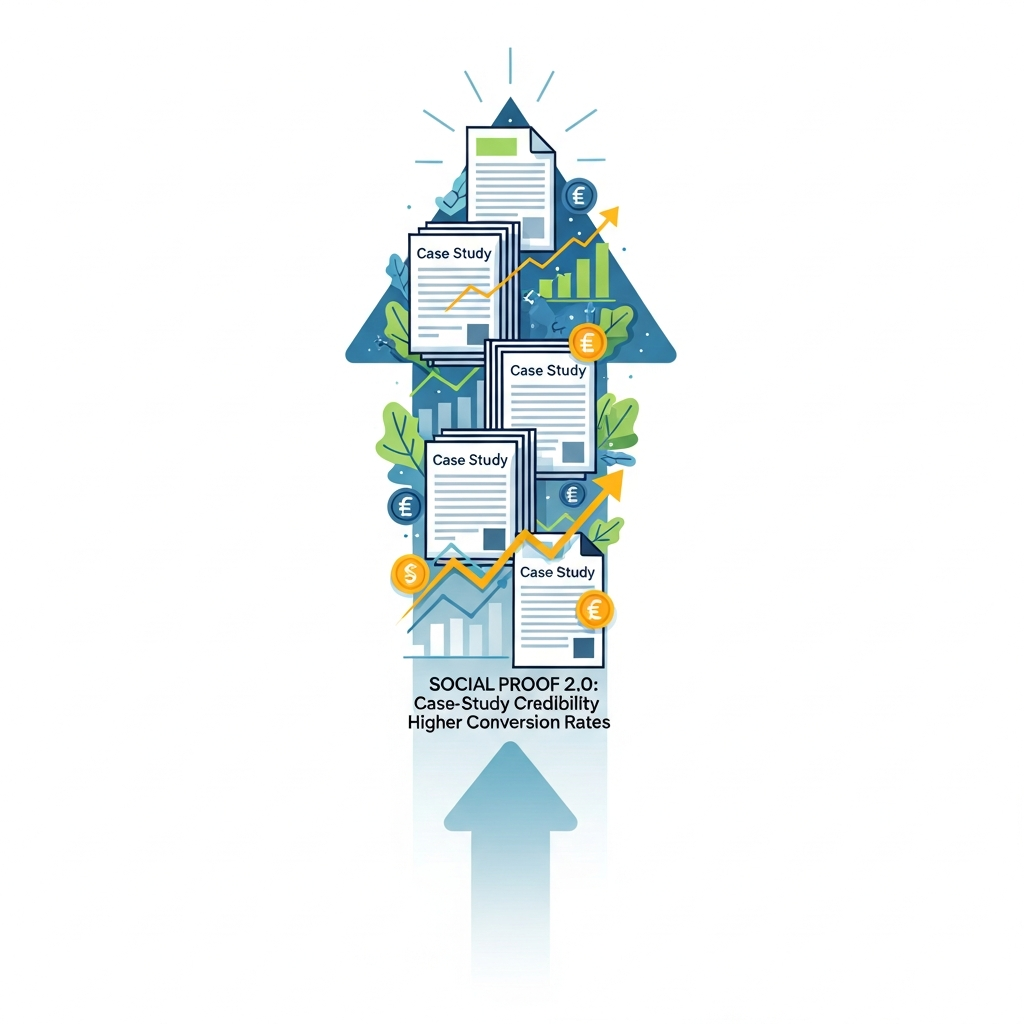
Social Proof 2.0: Leveraging Case-study Driven Credibility for Higher Conversion Rates concept 4

Reverse-Engineering Buyer Hesitation via Case Studies

One of the most effective ways I’ve used case studies is as a preemptive strike against objections. Every sales cycle has common friction points: “It’s too expensive,” “Our team won’t adopt it,” or “It won’t work with our current tech stack.”

Instead of trying to “overcome” these in a sales call, you should let your customers do it for you in your case studies. We call this The Objection-First Testimonial. I once worked with a client where the main objection was the complexity of the UI. We specifically went out and interviewed our least tech-savvy customer. We asked them: “What did you think of the interface when you first logged in?” They admitted they were intimidated. Then they explained how the intuitive design won them over in three days. Sending that case study to a hesitant prospect is like a tactical nuke for their doubts.

  • The Cost Objection: Feature a case study where the customer initially thought the price was too high but later realized the cost of not acting was ten times higher.
  • The Integration Objection: Highlight a customer who had the messiest, most archaic tech stack imaginable and show how your product played nice with it.
  • The Adoption Objection: Showcase a story where a skeptical internal team became the product’s biggest champions.

>Distribution 2.0: Killing the “Resources” Page Graveyard

If your case studies only live on a page called “Resources” or “Success Stories,” you are failing. That’s where content goes to die. In the Social Proof 2.0 model, case studies are dynamic assets that are injected into every stage of the funnel.

The “Contextual Proof” Method

Instead of one long PDF, break your case studies into “Micro-Proofs.” If a prospect is looking at your “Security & Compliance” page, they shouldn’t see a link to all case studies. They should see a 200-word excerpt from a CTO specifically talking about how you passed their rigorous security audit. This is Contextual Proof. You are matching the evidence to the specific concern the prospect has at that exact moment.

Integrating Social Proof into Sales Outreach

Stop sending “just checking in” emails. They are useless. Instead, send a “Thought this might be relevant to you” email with a link to a case study that mirrors the prospect’s exact industry and pain point. “Hey [Name], I know you’re dealing with [Specific Pain Point]. We just finished a project with [Similar Company] where we tackled that exact issue. Thought their approach to the [Specific Detail] might give you some ideas.” This isn’t a sales pitch; it’s a value-add backed by proof.

The “Dark Social” Amplifier

Much of your selling happens when you aren’t in the room. It happens in Slack channels, at dinners, and in private LinkedIn messages. Highly detailed, narrative-driven case studies are the ultimate currency for Dark Social. They give your internal champion the ammunition they need to convince the rest of the C-suite. A generic quote doesn’t win a budget battle; a detailed ROI roadmap based on a peer’s experience does.

>Video Case Studies: Authenticity over Production Value

We need to talk about the “B-Roll” trap. Many companies spend $10,000 on a high-gloss video case study with cinematic music and drone shots. It looks like a car commercial. And because it looks like a commercial, people treat it like a commercial—they tune it out.

In the Social Proof 2.0 world, authenticity is the new authority. A Zoom recording of a customer speaking candidly about their results, complete with a dog barking in the background or a slightly grainy connection, often converts better than a professional production. Why? Because it’s clearly real. It hasn’t been scrubbed by a legal team or a PR firm. It feels like a peer-to-peer recommendation.

The “Raw Interview” Technique

One strategy I’ve seen work wonders is the “Raw Interview” format. Instead of a polished edit, publish a 5-10 minute segment of the actual interview. Label it as “Uncut Interview with [Customer Name].” This signals to the prospect that you have nothing to hide. It builds an immense amount of “implied trust.” You’re letting them see the “source code” of your credibility.

>Metrics That Actually Matter (Beyond the Conversion Rate)

How do we know if Social Proof 2.0 is working? A simple lift in landing page conversion is nice, but it’s only the tip of the iceberg. We need to look deeper into the sales cycle.

1. Impact on Sales Cycle Velocity

Does the presence of high-quality case studies reduce the time from first touch to closed-won? When prospects have access to detailed narratives, they spend less time in the “Education” phase because the case study has already done the heavy lifting. Measure the average days-to-close for prospects who engaged with a case study versus those who didn’t. The difference is usually startling.

2. Deal Size Expansion

Social Proof 2.0 isn’t just about getting a “Yes.” It’s about getting a “Yes, and give me the premium tier.” When a prospect reads about a peer who utilized your most advanced features to achieve massive results, they are less likely to haggle over price and more likely to see the value in your higher-end offerings. Look for a correlation between case study consumption and Average Contract Value (ACV).

3. Retention and “Buyer’s Remorse” Reduction

Trust built on narrative is stickier than trust built on a feature list. When customers buy because they’ve seen a roadmap of success from someone like them, they enter the relationship with realistic expectations and a clear vision of how to achieve ROI. This leads to higher retention and lower churn in the first 90 days.

>The Ethics of Social Proof: Don’t Cross the Line

As we push for more detailed and visceral case studies, we must maintain an unwavering commitment to truth. The “2.0” in Social Proof implies a higher level of sophistication, not a higher level of deception. Never ghostwrite a testimonial and ask a customer to sign it. Never cherry-pick data to hide a negative outcome that was relevant to the story. If you lose your integrity in your social proof, you lose the ability to sell forever. Your reputation is a fragile thing; don’t trade it for a short-term conversion bump.

Instead, involve your customers in the process. Show them the draft. Ask them: “Does this accurately represent the stress you were under and the results we achieved?” Often, they’ll give you even better, more visceral details when they see you’re trying to tell a real story rather than just a marketing one.

>Conclusion: The Future of Credibility

The landscape of B2B and high-ticket B2C sales is shifting. The “information asymmetry” that once favored the seller is gone. Buyers have more information than ever, and their “BS detectors” are finely tuned. In this environment, your only competitive advantage is unimpeachable credibility.

Social Proof 2.0 is about moving away from the “look at us” marketing of the past and toward a “look at what we did together” philosophy. It’s about being brave enough to show the friction, the failures, and the ultimate triumphs. It’s about treating your case studies not as marketing collateral, but as essential pieces of evidence in a trial for your brand’s life. Start building your library of “messy,” granular, and undeniable proof today. Your conversion rates—and your customers—will thank you for it.
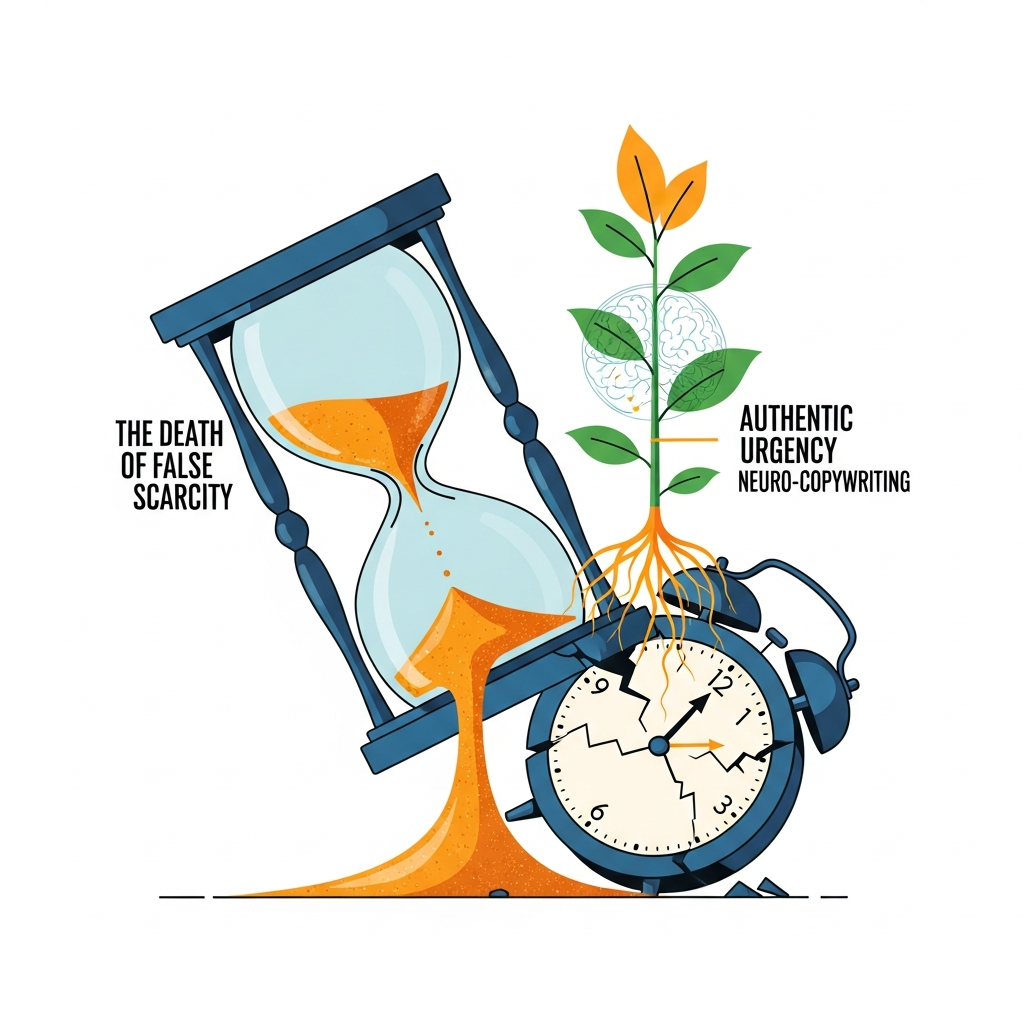
The Death of False Scarcity: Building Authentic Urgency in Modern Neuro-copywriting
The Death of False Scarcity: Building Authentic Urgency in Modern Neuro-copywriting concept 1

The Great Desensitization: Why Your Countdown Timer is Killing Your Conversion Rate

I remember sitting in a windowless boardroom in 2014, watching a “guru” demonstrate how a simple JavaScript countdown timer could double sales overnight. Back then, it worked. The reptilian brain, or more accurately, the amygdala-driven survival circuit, wasn’t yet conditioned to the digital “boy who cried wolf.” If a timer hit zero, we assumed the offer vanished. We felt that visceral prickle of FOMO—Fear Of Missing Out—and we reached for our wallets. But something shifted around 2019. The “evergreen” countdown timer, which magically resets every time you clear your cookies, became the hallmark of the digital snake oil salesman.

Modern consumers aren’t just skeptical; they are biologically habituated to manipulation. When a user sees a “Only 3 seats left!” banner on a webinar that they know is pre-recorded, a phenomenon known as Psychological Reactance kicks in. This is the brain’s defensive response to a perceived threat to its autonomy. Instead of clicking “Buy,” the prospect feels a surge of cortisol—not the “good” kind that drives action, but the “bad” kind that triggers avoidance. They feel hunted. And nobody likes being hunted. The death of false scarcity isn’t just an ethical shift; it’s a neurological necessity for any brand that plans to exist three years from now.

The Neurobiology of the “Bait and Switch”

To understand why authentic urgency works, we have to look at the Ventral Tegmental Area (VTA) and the Prefrontal Cortex (PFC). When we encounter a genuine limited-time opportunity, our dopamine pathways light up. We anticipate a reward. However, if the brain detects a lie—a fake deadline or a manufactured shortage—the PFC immediately flags it as a “deceptive signal.” This creates Cognitive Dissonance. The prospect wants the solution but despises the messenger. In neuro-copywriting, this is the kiss of death. You might get the one-time sale, but you’ve effectively incinerated the Lifetime Value (LTV) of that customer by damaging the trust-processing centers of their brain.

The Death of False Scarcity: Building Authentic Urgency in Modern Neuro-copywriting concept 2

Beyond the Timer: Defining Authentic Urgency

Authentic urgency isn’t about telling people to “Hurry!” It’s about illustrating the intrinsic cost of delay. If you are selling a weight loss program, the urgency isn’t that the price goes up in ten minutes; it’s that every day the prospect waits, their systemic inflammation persists. If you’re selling B2B software, the urgency is the $4,000 in lost productivity they bleed every month they stick with their legacy system.

We need to move from Extrinsic Pressure (timers, red text, screaming banners) to Intrinsic Motivation (logic, empathy, and consequence). Authentic urgency is a service to the customer. It helps them overcome the Status Quo Bias—that paralyzing neurological tendency to do nothing even when change is beneficial. You aren’t “forcing” a sale; you are facilitating a breakthrough.

The “Capacity Constraint” Framework

One of the most powerful ways to build authentic urgency is through Radical Transparency regarding your constraints. Every business has them. You have limited server bandwidth, limited coaching hours, limited physical inventory, or a limited window before a specific seasonal event.

  • Human Bandwidth: “I only take on three new consulting clients per month because my process requires 15 hours of deep-dive research for each.” (This is verifiable and logical).
  • Logistical Windows: “To get your garden seeds in the ground by the first frost, you need to order by Friday.” (This is an external reality the seller doesn’t control).
  • Curated Exclusivity: “We only printed 500 copies of this leather-bound edition because the artisanal bindery we use can’t handle more.” (This attaches value to the scarcity).

When you explain why something is scarce, the brain accepts the limitation as a fact rather than a tactic. This lowers the guard of the PFC and allows the emotional brain to engage with the benefits of the product.

The Death of False Scarcity: Building Authentic Urgency in Modern Neuro-copywriting concept 3

The Cognitive Psychology of “The Cost of Inaction” (COI)

Standard copywriting focuses heavily on ROI (Return on Investment). But the human brain is Loss Averse. As Daniel Kahneman famously noted, the pain of losing is twice as potent as the joy of gaining. Therefore, elite neuro-copywriting pivots from “Look what you’ll get” to “Look what you’re losing by waiting.”

This is where we employ Temporal Discounting. Most people value a small reward now more than a large reward later. By waiting, they are choosing the “small reward” of staying comfortable/lazy over the “large reward” of their desired future. Your copy must bridge this gap.

Writing the “Gap” Analysis

To do this effectively, you must paint a vivid, sensory-rich picture of the “Middle Ground.” That purgatory where they currently live. Let’s say you’re writing for a sleep aid supplement.

False Scarcity: “Buy now! Sale ends in 2 hours!” (Weak. Ignorable.)

Authentic Urgency (COI): “Another night of staring at the ceiling at 3:00 AM isn’t just frustrating; it’s physically taxing. Every hour of lost REM sleep increases your cortisol levels the next morning, making you more likely to snap at your kids or miss a crucial detail at work. You can keep hoping tomorrow will be different, or you can address the neural pathways keeping you awake. Which version of yourself do you want to be at 9:00 AM tomorrow?”

This approach uses affective forecasting—forcing the brain to simulate a future emotional state. It creates a sense of urgency that is internal, not external.

The Death of False Scarcity: Building Authentic Urgency in Modern Neuro-copywriting concept 4

Neuro-Copywriting Tactics for the Skeptical Era

If we are abandoning the “fake” tactics, what do we replace them with? How do we nudge the prospect toward the “Add to Cart” button without feeling like a used car salesman? We use Micro-Nudges and Social Validation that feel organic.

1. Real-Time Activity Feeds (Done Ethically)

Instead of “300 people are looking at this right now” (which is usually a lie), use “12 people joined the community in the last 24 hours.” This leverages Social Proof without the frantic energy. It suggests a moving train that the prospect might want to board, but it doesn’t scream in their ear. It taps into our tribal instincts—the need to belong to a successful group.

2. The “Threshold” Close

This is where you reveal how close you are to a meaningful milestone. “We’re about to ship our 10,000th order. To celebrate, we’re including a gift for the next 14 customers.” This is grounded in a specific, celebratory event. It feels like an invitation to a party rather than a countdown to an execution.

3. Micro-Copy: The Power of “Yet”

Urgency can be subtle. Using the word “yet” triggers a sense of incompleteness in the brain. “You haven’t mastered your morning routine yet.” This creates a Zeigarnik Effect—the psychological phenomenon where people remember uncompleted or interrupted tasks better than completed ones. The brain wants to close the loop. Your product becomes the “loop closer.”

>The Empathy-First Conversion Architecture

I’ve spent fifteen years analyzing heatmaps and click-through rates, and if there’s one thing I’ve learned, it’s that empathy outperforms ego every single time. False scarcity is an ego-driven tactic. It assumes the seller is in control. Authentic urgency is empathy-driven. It recognizes the customer’s struggle and offers a timely hand up.

When you write with empathy, you use Mirror Neurons. You describe the problem so accurately that the reader feels you are inside their head. “I know that feeling of looking at a blank screen while the cursor blinks, mocking your lack of ideas.” When the reader feels understood, their Oxytocin levels rise. Oxytocin is the “bonding hormone.” It mutes the amygdala’s fear response. In this state, the reader is much more likely to accept your “limitations” as honest and your “deadlines” as helpful.

Case Study: The “Waitlist” Strategy

I once worked with a SaaS founder who insisted on an “Open/Closed” enrollment model. We didn’t use a countdown timer. Instead, we used a Conditional Waitlist. We told the truth: “Our support team is small. To ensure every new user gets a 1-on-1 onboarding call, we only admit 50 people a week. Join the waitlist, and we’ll email you when your slot opens.”

The result? A 40% increase in conversion over the “Always Open” model. Why? Because the scarcity was logical. It was rooted in a commitment to quality. The “urgency” was the desire to be one of the 50, but it wasn’t manufactured—it was a byproduct of operational integrity. The prospects didn’t feel pressured; they felt chosen.

>Advanced Neuro-Linguistic Programming (NLP) in Urgency

We can further enhance authentic urgency by using specific linguistic structures that bypass the “analytical” filter. One such structure is the “If/Then” Proposition coupled with a Future Pace.

“If you decide to start today, then by this time next month, you’ll have your first three chapters drafted. If you wait, next month will look exactly like this one—more ideas, zero pages.”

This uses Linear Time Mapping. It forces the brain to plot two different trajectories. The urgency arises from the visible divergence of those two paths. One leads to growth; the other leads to stagnation. Stagnation is a form of biological death, and the brain is hardwired to avoid it at all costs.

The “Precision Pricing” Nudge

Oddly enough, urgency can be built into your pricing. Avoid “rounded” numbers. $497 feels like a marketing number. $482 feels like a calculated, cost-plus-margin number. When things feel calculated and precise, they feel more “real.” People don’t question the “scarcity” of a precisely priced item as much as they do a “Special $99 Sale!” which feels like it was pulled from a hat.

>Why “Slow” is the New “Fast” in High-Ticket Copy

If you are selling something for $5,000, a countdown timer is an insult to the buyer’s intelligence. High-ticket sales require Cognitive Ease. You want the buyer to feel calm, certain, and focused. The urgency here must be Philosophical.

You aren’t asking them to buy before the clock hits zero; you are asking them to commit before their current problem becomes an irreversible disaster. This is “High-Stakes Urgency.” It’s the difference between a “Flash Sale” on a sweater and a doctor telling you that you need surgery before the nerve damage becomes permanent. Which one gets your attention? Which one do you respect?

The “Inverted” Deadline

Try this: Instead of saying “Offer ends Friday,” say “We start on Monday.” Shift the focus from the end of the opportunity to the beginning of the transformation. This reframes the deadline as a “Launch Point.” It’s positive, forward-looking, and creates a natural, undeniable reason for the cut-off date. If the class starts Monday, you obviously can’t join on Tuesday. The scarcity is a natural law of the universe, not a line of code on a sales page.

>Reclaiming the Narrative: An Ethical Manifesto

We are entering the “Post-Truth” era of marketing, where consumers are increasingly insulated by “Ad-Blockers” of the mind. The only way through these defenses is through a radical commitment to the truth. Does that mean we stop being persuasive? Absolutely not. It means we become more persuasive by being more human.

Stop looking for the latest “hack” or “plugin.” Instead, look at your business. Where are the real bottlenecks? Where are the genuine limits? What is the actual, painful consequence of your customer waiting another six months to solve their problem? Write those things down. Use them. That is where the power lies.

The “Death of False Scarcity” is actually the birth of Sustainable Influence. It’s the move from being a “closer” to being a “guide.” Guides don’t need to lie about how much oxygen is left in the tank; they just need to point out that the sun is setting and the summit is still three miles away. That’s enough to get anyone moving.

The brain remembers how you made it feel. If you make it feel tricked, it will remember that every time your name pops up in an inbox. If you make it feel empowered—even if that empowerment came with a firm “Now is the time”—you’ve built a bridge that no competitor can burn down.

Focus on the Dopaminergic Reward of progress. Focus on the Amgydala’s healthy fear of a life wasted. But leave the JavaScript timers in 2014 where they belong. The modern world is too fast, too loud, and too smart for anything less than the truth. Build your urgency on the bedrock of reality, and you’ll never have to worry about a “declining conversion rate” again. You’ll be too busy serving the people who finally, actually, trust you.

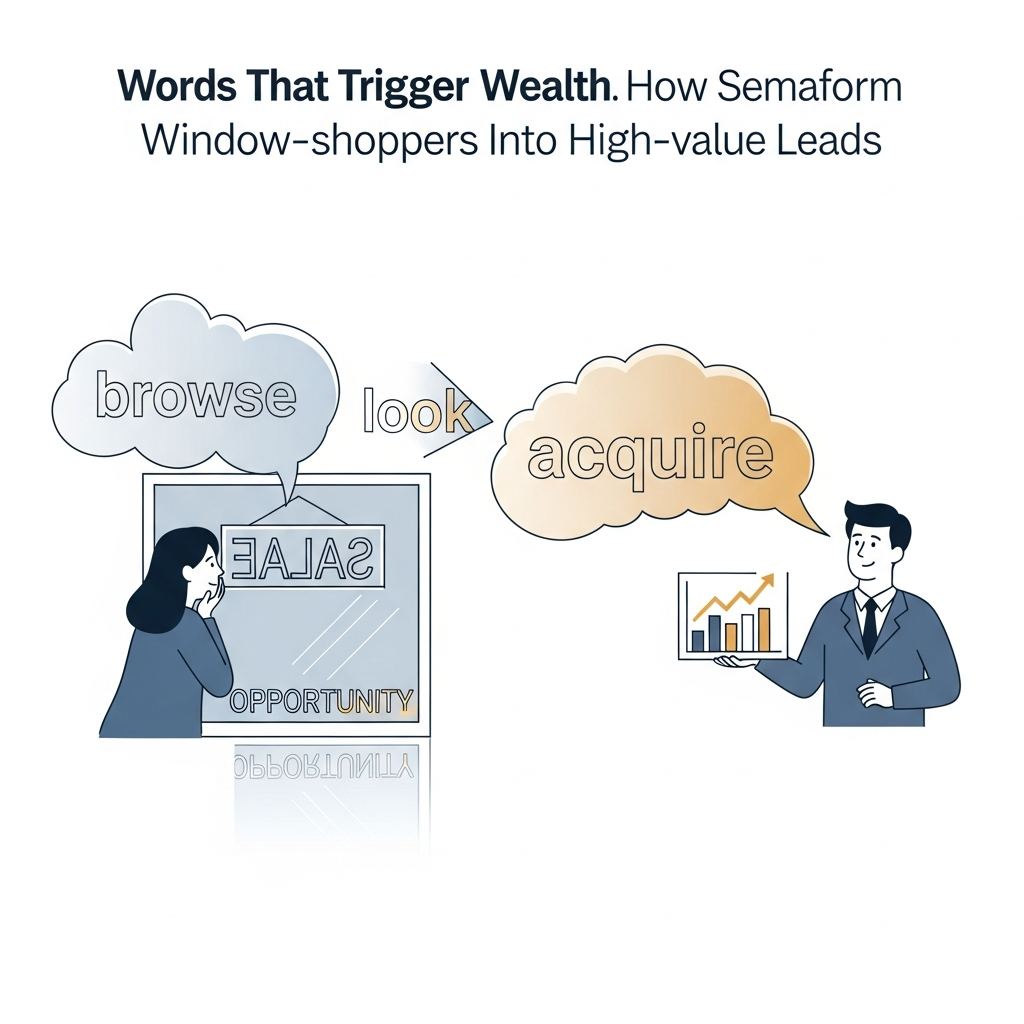
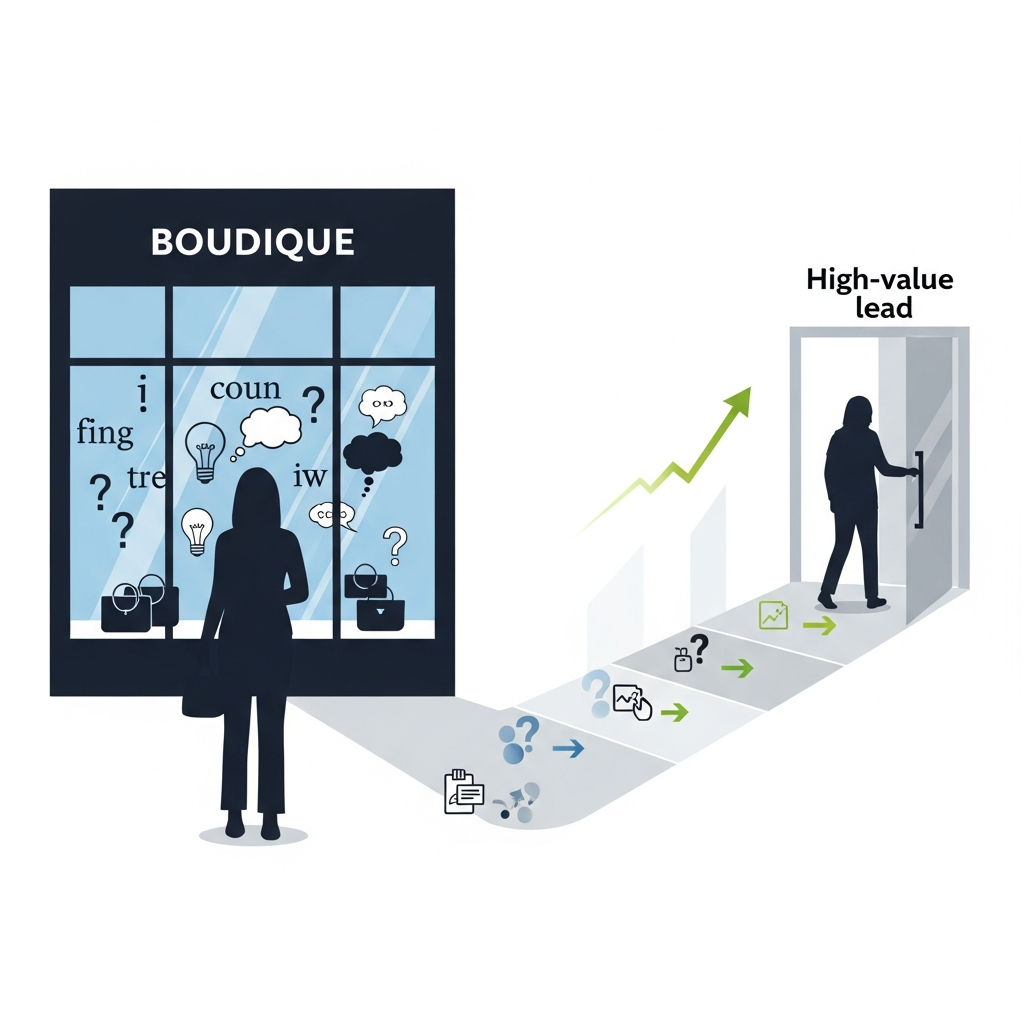
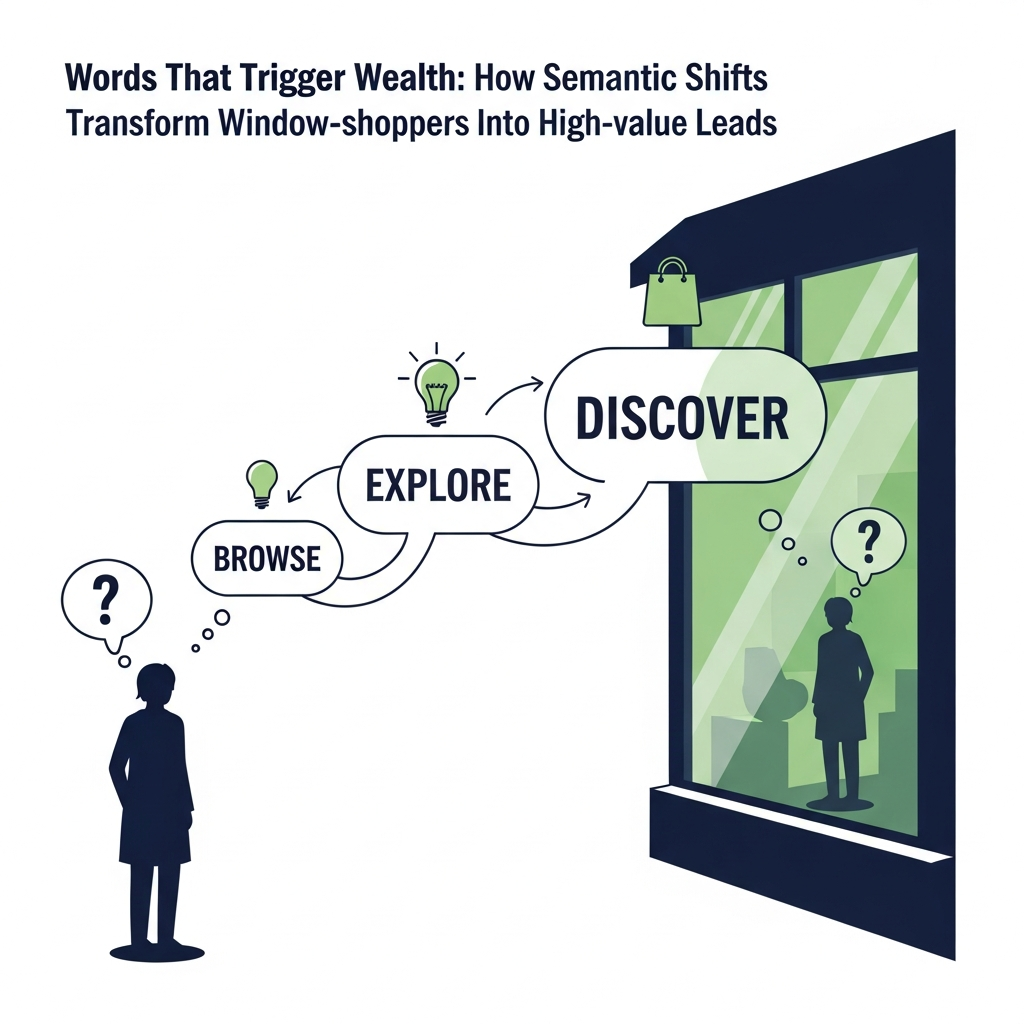
Words That Trigger Wealth: How Semantic Shifts Transform Window-shoppers Into High-value Leads
Words That Trigger Wealth: How Semantic Shifts Transform Window-shoppers Into High-value Leads concept 1

The Invisible Friction: Why Your Copy is Repelling the Wealthy

I remember sitting in a mahogany-clad boardroom in Zurich about a decade ago, watching a brilliant CMO wither under the gaze of a private equity titan. The CMO was pitching a revolutionary wealth management platform. He kept using words like “cheap,” “efficient,” and “savings.” To a middle-market consumer, those words are honey. To the man across the table, they were grit in a finely tuned engine. He didn’t want “cheap.” He wanted exclusive. He didn’t care about “savings”—he cared about yield optimization and capital preservation.

That was the day I realized that words aren’t just carriers of meaning; they are emotional triggers that either align with a prospect’s identity or violently clash with it. If you are targeting high-value leads but using the vocabulary of a discount retailer, you aren’t just losing sales; you are invisible. You are broadcasting on a frequency they’ve long since tuned out. This isn’t about snobbery. It’s about the semantics of value.

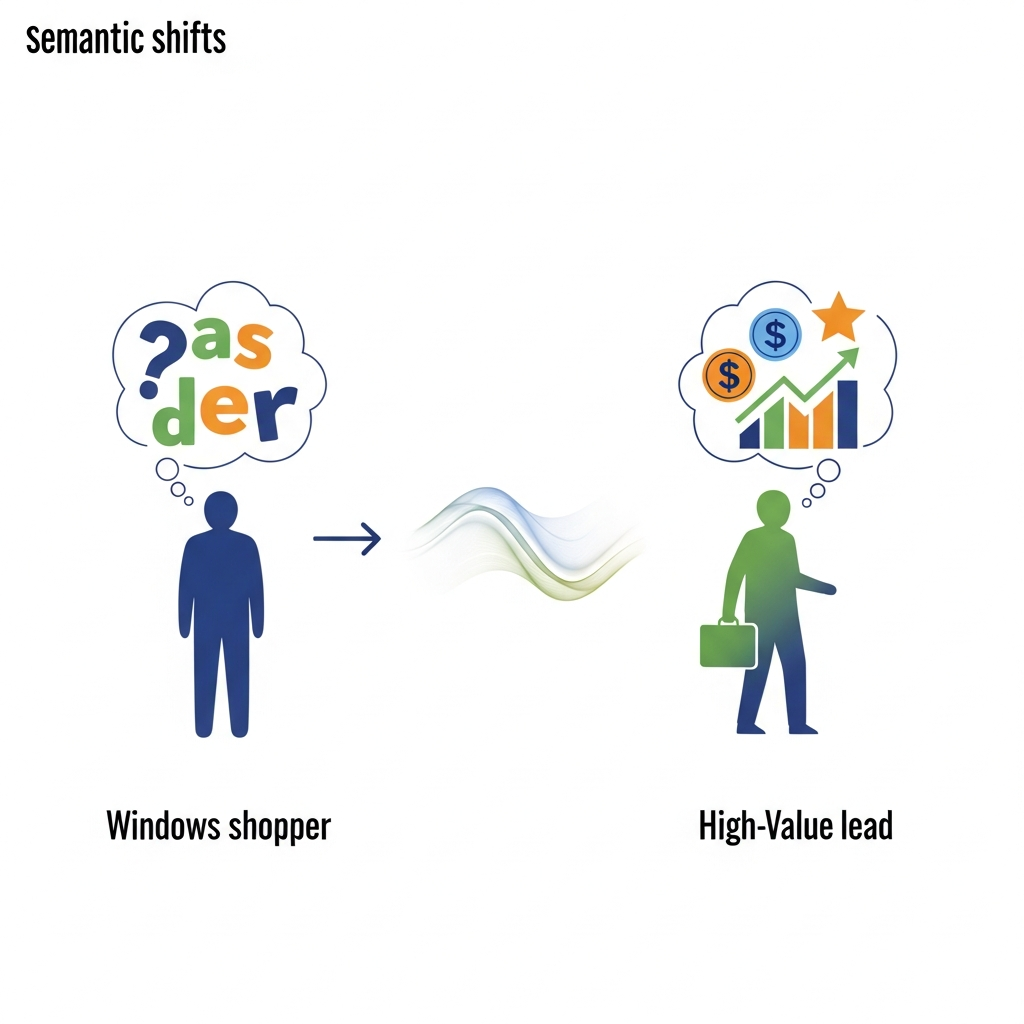
When we talk about “Semantic Shifts,” we’re looking at the subtle, often unconscious psychological recalibration that happens when a lead encounters a specific set of vocabulary. It’s the difference between a “problem” and a “complexity.” It’s the gap between “buying a product” and “acquiring an asset.” If you want to transform window-shoppers into high-value leads, you have to stop selling features and start linguistic world-building.

Words That Trigger Wealth: How Semantic Shifts Transform Window-shoppers Into High-value Leads concept 2

The Sapir-Whorf Hypothesis of High-Ticket Sales

In linguistics, there’s a concept called linguistic relativity—the idea that the language we speak shapes how we perceive the world. In the world of high-ticket sales, this is our North Star. If your copy uses “transactional” language, your prospect perceives a “transactional” relationship. They look for the lowest price. They haggle. They treat you like a vendor. But if your copy utilizes “transformational” or “stewardship” language, the relationship shifts. You become a partner, an advisor, a gatekeeper.

Think about the word “cost.” It implies loss. It’s a subtraction from one’s wealth. Now, consider “investment” or, even better, “capital allocation.” These terms imply a future-facing movement of resources with the expectation of a return. A window-shopper asks what something costs. A high-value lead asks what the allocation requires and what the projected delta is. By shifting your semantics, you filter out the “price-sensitive” and attract the “value-obsessed.”

The Psychological Weight of Syllables

It sounds academic, almost pedantic, but the “weight” of your words matters. In English, we have a fascinating split between Germanic roots (short, punchy, visceral) and Latinate roots (longer, abstract, intellectual).

  • Germanic: Help, Buy, Get, Fix, Cheap.
  • Latinate: Facilitate, Acquire, Obtain, Resolve, Economical.

While “human” copy often favors the Germanic for its clarity, high-value leads often respond better to a strategic infusion of Latinate vocabulary. Why? Because it signals authority and distance. It suggests that the solution is sophisticated, not just a quick fix. You aren’t “helping them get more leads.” You are “facilitating the expansion of their proprietary pipeline.” See the difference? One sounds like a freelancer; the other sounds like a consultant.

Words That Trigger Wealth: How Semantic Shifts Transform Window-shoppers Into High-value Leads concept 3

The Semantic Pivot: From “Need” to “Aspiration”

High-value leads rarely “need” anything in the survivalist sense. They have their basics covered. They are operating at the top of Maslow’s hierarchy. Therefore, using “pain point” language—the bread and butter of traditional copywriting—can actually be offensive to them. If you tell a CEO who manages a $500M portfolio that he has a “problem,” his ego might reflexively reject it. He doesn’t have “problems”; he has “strategic bottlenecks.”

We need to shift the semantic focus from the deficiency (what they lack) to the aspiration (what they are becoming). This is the “Identity Shift.” Window-shoppers look for things to fill a hole. High-value leads look for things that polish their armor.

Reframing the “Solution”

Stop using the word “solution.” It’s become a corporate cliché that means absolutely nothing. Instead, use words that imply a structural change.

  • Instead of “Solution,” try “Architecture.” (e.g., “The architecture of your wealth.”)
  • Instead of “Fix,” try “Equilibrium.” (e.g., “Restoring equilibrium to your operations.”)
  • Instead of “Easy,” try “Seamless” or “Fluid.” (High-value leads know nothing is easy, but they pay for fluidity.)

This isn’t just about being “fancy.” It’s about matching the internal monologue of a person who deals with complexity every day. They want to know you understand the nuances of their world.

Words That Trigger Wealth: How Semantic Shifts Transform Window-shoppers Into High-value Leads concept 4

The Syntax of Certainty: How Sentence Structure Commands Wealth

It’s not just the words; it’s the architecture of the sentence. Most “window-shopper” copy is frantic. It uses lots of exclamation points! It asks too many questions? It feels desperate for attention. High-value copy, conversely, is marked by declarative certainty.

Consider the “if/then” structure.
“If you want to grow your business, then you should click here.” This is weak. It puts the power in the prospect’s hands and suggests uncertainty.
Now, consider the Presuppositional Statement:
“As your portfolio scales, the requirement for sophisticated risk mitigation becomes a matter of legacy, not just profit.”
This sentence doesn’t ask. It states a fact. It assumes the lead is already successful (“As your portfolio scales”) and positions the service as an inevitable next step. It’s authoritative. It’s calm. It smells like old money.

The Power of the Passive Voice (Used Sparingly)

We’re always told to “use the active voice.” In 90% of cases, that’s right. But in luxury and high-ticket environments, the passive voice can create a sense of inevitability and timelessness.
“We hand-stitch every bag” is active and focuses on the “we” (the vendor).
“Every bag is hand-stitched” is passive and focuses on the object and the standard.
It removes the “salesman” from the room and leaves only the craftsmanship. High-value leads don’t want to be “sold to” by a person; they want to “interact with” an excellence that exists independently of the salesperson.

>Case Study: The “Fee” vs. “Retainer” Transformation

I worked with a boutique legal firm that was struggling to attract high-net-worth individuals for their estate planning. Their website was filled with “affordable fees” and “simple pricing.” They were getting “shoppers”—people who wanted a $200 will. We did a total semantic overhaul.

We stripped out “fees” and replaced it with “capital commitment.” We replaced “pricing” with “retainer structure.” We changed “simple” to “streamlined for complexity.” Within three months, their lead volume actually decreased, but their lead value quadrupled. They stopped talking to people who wanted a bargain and started talking to people who wanted their children’s inheritance secured. The “word” was the filter.

The takeaway? You cannot attract a $100,000 client using $10 vocabulary. The cognitive dissonance is too loud. They will feel that “something is off,” and they will leave without even knowing why.

>Interrogating Your Current Lexicon: A Diagnostic

Take a look at your current landing page or sales deck. Be ruthless. Look for what I call “Cheapened Adjectives.” These are words that have been eroded by late-stage capitalism until they mean nothing.

  • Revolutionary: Unless you’ve invented cold fusion, it’s not revolutionary. Use “Pioneering” or “Primary.”
  • Ultimate: It sounds like a monster truck rally. Use “Definitive” or “Comprehensive.”
  • World-class: Everyone says this. Use “Peerless” or “Recognized by [Specific Authority].”
  • Hustle: This is for people trying to make their first $1,000. For high-value leads, use “Efficacy” or “Strategic Momentum.”

Your goal is to purge the “noise” of the common marketplace. You want your copy to feel like a quiet, expensive room. There is a reason luxury car commercials often have long silences and deep, resonant voiceovers. The silence is where the value lives.

>The Neurobiology of Precision: Why Specificity Triggers Trust

High-value leads are often high-information leads. They didn’t get where they are by being vague. When you use “fuzzy” words—”lots of,” “many,” “fast,” “better”—you trigger their skepticism. Their brains are wired to look for the “catch.”

Precision, however, bypasses this skepticism. Instead of “fast results,” use “a 22% reduction in operational latency within the first fiscal quarter.” The more specific the language, the more the lead’s brain perceives you as an expert who has actually done the work. This is the Semantic Shift from Generalization to Specification.

The “Artifact” Technique

One way to trigger wealth-perception is to treat your service or product as an “artifact” rather than a commodity. Use words that imply history, provenance, and curation.

  • Curation: Not “choosing,” but “curating.”
  • Provenance: Not “where it’s from,” but “its provenance.”
  • Legacy: Not “future,” but “legacy.”

These words carry a “phantom weight.” They suggest that what you are offering has value that transcends the immediate moment. For a high-value lead, who is often thinking in decades rather than days, this is the ultimate hook.

>Empathy in High-Ticket Copy: The “burden of Success”

Here is where many copywriters fail. They think “empathy” means “I know you’re struggling to pay the bills.” For a high-value lead, empathy means: “I know you’re struggling with the weight of responsibility, the lack of time, and the difficulty of finding people you can actually trust.”

Your copy should acknowledge the loneliness of the high-achiever. Use phrases like:
“For those who are tired of being the smartest person in the room.”
“We understand the nuances of managing high-stakes volatility.”
“You don’t need another vendor; you need a confidant for your strategic vision.”
This isn’t about being “nice.” It’s about signaling that you are part of their “tribe.” You understand the specific pressures that come with having a high net worth or a high-level position. You aren’t looking up at them; you are looking across at them.

>The Semantic Bridge: From Curiosity to Commitment

How do we move them from just reading to actually signing? We use “Committal Semantics.” We shift the language from the “potential” to the “actual.”

In your Call to Action (CTA), avoid “Submit” or “Buy Now.” Those are commands for subordinates. Instead, use language that implies an invitation to a higher tier of engagement.

  • “Request a Consultation” (Implies you might say no).
  • “Apply for Membership” (Exclusivity).
  • “Initiate the Onboarding Protocol” (Professionalism and process).
  • “Secure Your Position” (Scarcity).

Notice how these phrases feel more significant. They don’t feel like clicking a button; they feel like opening a door. That is the essence of the semantic shift.

>The Final Word: Consistency is the Real Conversion Hook

You can’t just sprinkle these words into your copy like salt and expect it to work. Semantic shifts require a holistic commitment. If your headline is “Bespoke Wealth Architecture” but your footer says “Cheap Deals Here,” the spell is broken. The high-value lead will smell the incongruity immediately.

This linguistic transformation is a commitment to a higher standard of communication. It’s about respecting your prospect’s intelligence and their time. It’s about speaking their language so fluently that they don’t even realize you’re selling to them—they just realize that they’ve finally found someone who understands exactly what they need.

Stop being a window-shopper in the world of high-ticket sales. Stop using the language of the masses and start using the lexicon of the elite. It’s not about changing what you do; it’s about changing how you name it. Because in the end, the person who defines the terms of the conversation is the person who wins the contract.

Mastering the Anchoring Effect: Psychological Pricing Strategies for Enterprise Saas Negotiations
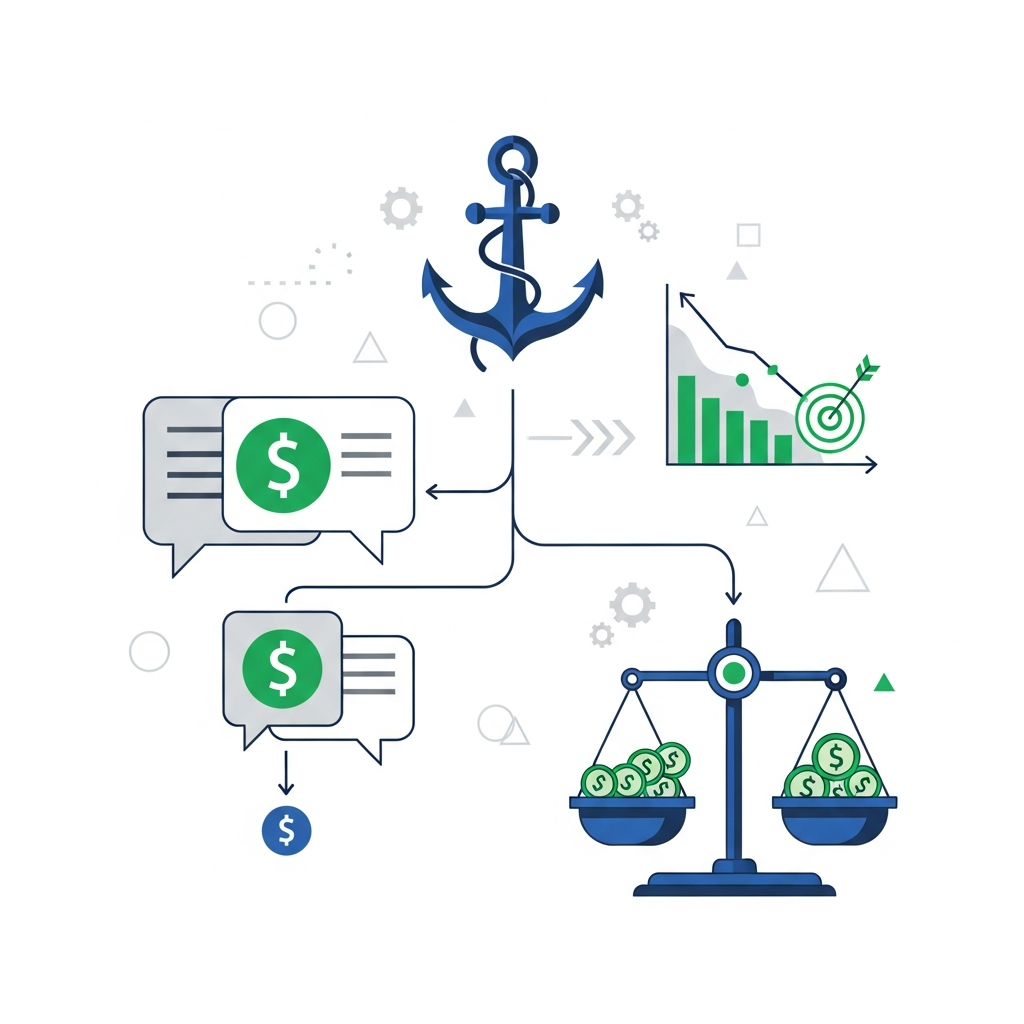
Mastering the Anchoring Effect: Psychological Pricing Strategies for Enterprise Saas Negotiations concept 1

The Invisible Gravity of the First Number

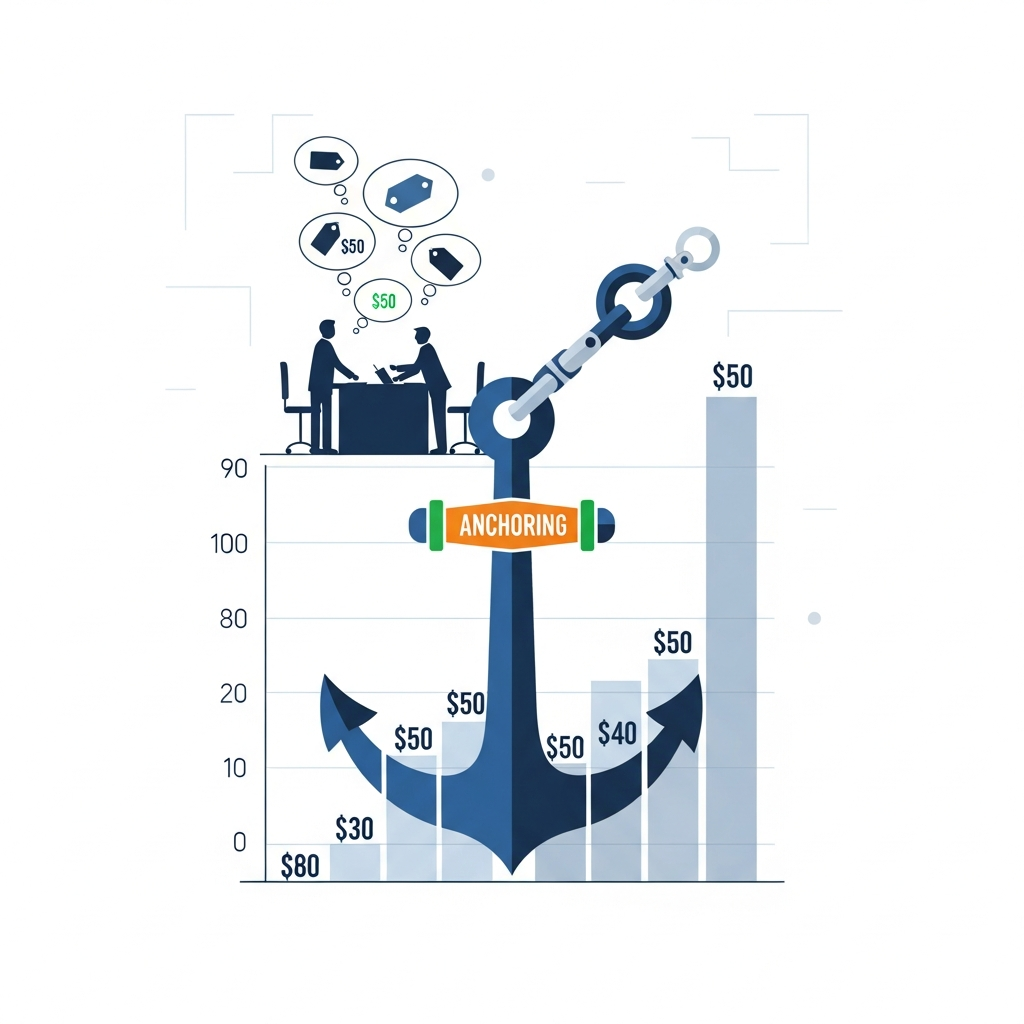
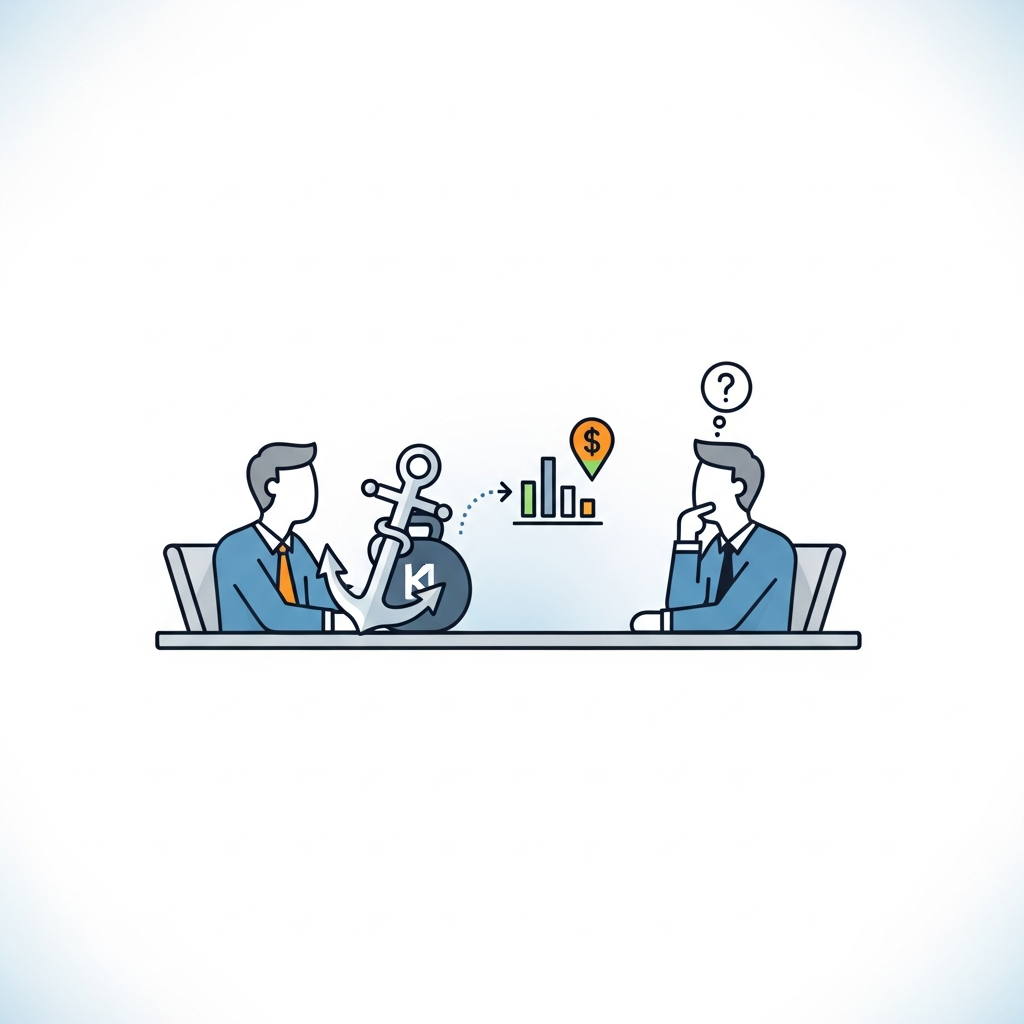
I’ve sat in enough midtown Manhattan boardrooms to know the exact moment the oxygen leaves the room. It’s not when the legal team starts nitpicking the indemnity clauses, nor is it when the CTO asks about SOC2 compliance for the third time. It’s the moment the first number hits the mahogany table. That number—the anchor—creates a psychological gravity so dense that every subsequent minute of the negotiation is spent trying to escape its pull. If you aren’t the one setting that anchor, you’re already losing the war for margin.

The anchoring effect isn’t just some dusty heuristic from a Kahneman and Tversky paper; it is the visceral, often irrational way our brains latch onto the first piece of information offered when making decisions. In Enterprise SaaS, where value is often amorphous and “ROI” is a projection of a future that hasn’t happened yet, the anchor is the only objective reality the buyer has. It’s the north star, even if that star is a total fabrication. We’re going to dissect how to build that anchor, how to defend it, and why your $200k-a-year platform is actually being judged against a number you probably haven’t even thought of yet.

The Neurobiology of Why We Get Stuck

Our brains are remarkably efficient at being lazy. We use a process called “Anchor and Adjustment.” When we see a price, our brain accepts it as a baseline and then adjusts away from it based on new information. The problem? We never adjust far enough. The initial stimulus leaves a residue. In a high-stakes SaaS deal, if I pitch an enterprise license at $500,000, and your budget was $200,000, your brain doesn’t just stay at $200k. It subconsciously drifts toward $350k. You feel like you’ve won a massive discount, while I’ve secured a deal 75% higher than your internal ceiling. It’s a dance of cognitive dissonance where the loser often leaves the room smiling.

Mastering the Anchoring Effect: Psychological Pricing Strategies for Enterprise Saas Negotiations concept 2

The Architecture of the Enterprise Anchor

You don’t just shout a number and hope it sticks. That’s amateur hour. An effective anchor in the enterprise space is built through a sequence of value signals that precede the actual quote. It’s about “priming” the environment. If I spend three months talking about the $10 million in technical debt your current legacy system creates, a $1 million implementation fee feels like a bargain. I’ve anchored the problem before I’ve anchored the price.

Consider the “Decoy” strategy. I often advise SaaS founders to present a three-tier pricing model even when they know the prospect only wants the middle tier. The “Titanium” or “Global Enterprise” tier shouldn’t just be expensive; it should be painfully expensive. It exists solely to make the “Professional” tier look like a rounding error. When a CIO sees a $2M option and a $450k option, the $450k option stops being “expensive” and starts being “the sensible choice.” You aren’t selling the $2M tier. You’re selling the relief of not paying it.

The Precision Paradox: Why $147,550 Beats $150,000

There is a peculiar bit of psychological magic in the “precise number.” Round numbers—like $100k or $50k—are perceived as placeholders. They look like guesses. They invite a counter-offer that is equally round and usually 20% lower. However, when you present a quote of $147,550, you signal to the procurement team that this number is the result of a rigorous, data-driven calculation. It suggests you’ve crunched the numbers on server load, implementation hours, and seat-based utility. It is much harder for a buyer to look at a precise number and say, “Can you do $120k?” It feels disrespectful to the “math” you’ve clearly done. Precision commands a higher level of deference.

Mastering the Anchoring Effect: Psychological Pricing Strategies for Enterprise Saas Negotiations concept 3

Tactical Execution: The First-Mover Advantage

There’s a classic debate in negotiation circles: do you go first, or do you wait for the buyer to show their hand? In SaaS, if you have a solid grasp of the value you’re delivering, you always go first. Waiting allows the buyer to anchor you with their budget. “We only have $80k allocated for this” is a hard anchor to break. If you hit them with $250k before they can say a word, you’ve reframed their entire budget conversation. Now, they aren’t thinking about their $80k limit; they’re wondering why their budget is so misaligned with the market reality you’ve just established.

  • The “Flanking” Move: If you know the budget is low, anchor with a massive TCV (Total Contract Value) over three years rather than an annual fee. A $900,000 three-year deal sounds more serious and “anchors” the long-term commitment better than a $300k annual recurring revenue (ARR) quote.
  • The “Flinch”: When the buyer eventually counters, you must flinch. Not physically (though sometimes that helps), but through your terms. If you drop the price without changing the scope, you’ve just admitted your anchor was a lie. You’ve destroyed your credibility.
  • The Scope-Price Linkage: Every dollar move downward must be “paid for” by a feature or service removal. “We can get to $120k, but we’ll have to move from 24/7 support to a 12-hour ticket response time.” This reinforces the validity of the original anchor.

The “Total Cost of Ownership” (TCO) Re-Anchor

In enterprise sales, you aren’t just competing against other SaaS vendors. You are competing against the “Status Quo.” The Status Quo has its own anchor: $0 (or so the buyer thinks). Your job is to prove that the Status Quo actually costs $2M a year in inefficiency. By anchoring the cost of doing nothing, your subscription fee becomes a cost-saving measure rather than an expense. I’ve seen deals close at double the expected price because the salesperson spent the first three meetings documenting the hidden costs of the client’s current manual processes. Shift the anchor from “What this costs” to “What you’re losing.”

Mastering the Anchoring Effect: Psychological Pricing Strategies for Enterprise Saas Negotiations concept 4

Navigating the Procurement Gauntlet

Procurement officers are professional “de-anchorers.” They are trained to ignore your first offer and treat it as a theatrical performance. To beat them, you need to understand “The Threshold of Plausibility.” If your anchor is too high—say, 10x the market rate—it loses its gravitational pull and becomes a joke. You lose trust. The ideal anchor is just at the edge of what they find believable but high enough to leave you room for meaningful concessions.

When procurement says, “We have a strictly defined budget of $X,” they are attempting to counter-anchor. I’ve found success by acknowledging the budget and then immediately pivoting to “Value Adjustments.” “I understand the budget is $100k. Most of our clients with that budget find that they have to sacrifice [Key Critical Feature], which usually ends up costing them more in the long run. Would you like to see how we can bridge that gap?” You aren’t fighting their anchor; you’re making it look dangerous.

The “Silence” Anchor: Let the Number Breathe

One of the most common mistakes I see from even seasoned AEs is the “nervous chatter” immediately following the price reveal. You say, “The annual investment is $215,000…” and then, because the silence feels like a heavy blanket, you add, “…but we have some flexibility there depending on the seat count.” You just sabotaged your own anchor. You gave away the farm before they even asked for a cow.

State the price. Then stop. Don’t sip your water. Don’t look at your phone. Look them in the eye and wait. The first person to speak after a price is revealed is usually the one who makes a concession. Let them be the one to break. Even if they react with shock, let that reaction hang in the air. Their shock is just a negotiation tactic; your silence is a statement of value.

>The Psychology of Concessions: Giving Without Losing

If you start at $200k and eventually settle at $150k, the way you get there matters more than the final number. This is the “Decreasing Concessions” rule. If your first drop is $20k, your second should be $10k, and your third should be $2,500. This creates a psychological “asymptote”—it signals to the buyer that you are reaching your absolute floor. If you drop $10k every time they ask, they’ll keep asking until you’re at zero. You’re training them that your price is a suggestion, not a fact.

We also need to talk about “The Non-Monetary Anchor.” Sometimes, the best way to hold your price is to anchor on terms. “The price is $150k, but I can’t move on the Net-30 payment terms” or “I need a case study and a press release signed off within 90 days.” Often, procurement will fight you on these terms, and then you can “concede” on the terms to keep your price anchor intact. It’s a shell game, but one where everyone leaves with what they actually need.

The “Endowment Effect” Integration

How do you make an anchor even stronger? You let the prospect “own” the solution before they pay for it. This is why Proof of Concepts (PoCs) are so dangerous/effective. Once a team has integrated your software into their workflow, the psychological cost of “losing” that efficiency (the endowment effect) makes them less likely to fight your price anchor. They aren’t buying a new tool; they’re paying to keep a tool they already feel they own. At that point, the anchor isn’t just a number on a page—it’s the price of maintaining their new, better reality.

>The Ethics of Psychological Pricing

I’d be remiss if I didn’t touch on the morality of this. Is anchoring manipulative? Perhaps. But in the world of Enterprise SaaS, where a single bad deal can sink a startup and a single good one can lead to a Series B, you have a responsibility to your team and your product to capture the value you create. If you don’t anchor correctly, you aren’t being “fair”—you’re being undervalued. The goal of psychological pricing isn’t to trick people into paying more than something is worth; it’s to prevent them from underpaying for the immense value your engineers and product teams have spent years building. Value is subjective. The anchor is simply your way of defining that subjectivity.

Final Strategic Checklist for Your Next Negotiation

  • Research the “Shadow Anchor”: What did they pay for their last solution? That is their hidden baseline. You must break that before you set yours.
  • Prime the Value: Spend the discovery phase talking about the millions they are losing, not the thousands you are charging.
  • Be Specific: Use a non-round number to imply rigorous calculation.
  • Wait for the Silence: Give your anchor room to sink in.
  • Control the Concession Curve: Smaller and smaller drops to signal the floor.

The next time you’re preparing a quote, don’t just think about what you *need* to get. Think about what you need to *say* first. The first number isn’t just a price; it’s the boundary of the possible. If you don’t set the boundary, your customer will—and they’ll always set it in their own favor. Mastering the anchoring effect is about having the courage to claim your space in the market and the tactical discipline to hold it under pressure. Go big. Go precise. And for heaven’s sake, stop talking once you’ve said the number.

The Psychology of B2b Sales: Solving Decision Fatigue for Better Conversions
The Psychology of B2b Sales: Solving Decision Fatigue for Better Conversions concept 1

The Cognitive Exhaustion of the Modern Buyer

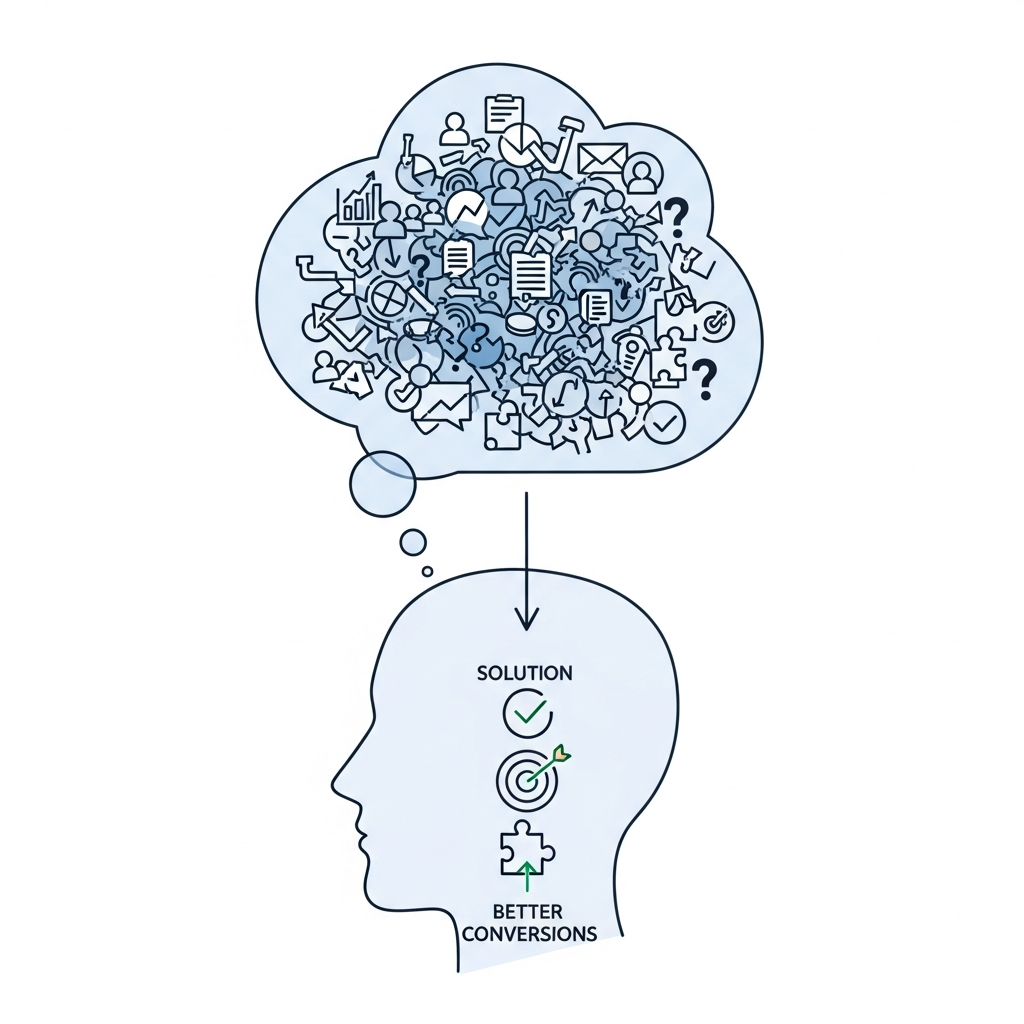
I remember sitting across from a Chief Information Officer during a grueling Q4 negotiation. He had fourteen tabs open, three different vendor comparisons on his second monitor, and a look in his eyes that I can only describe as “existential dread.” It wasn’t that he didn’t like our product. It wasn’t even a budget issue. He was simply done. Every cell in his brain was screaming for him to stop making choices. That is the reality of the modern B2B landscape. We aren’t selling to logic machines; we are selling to exhausted human beings navigating a minefield of “option overload.”

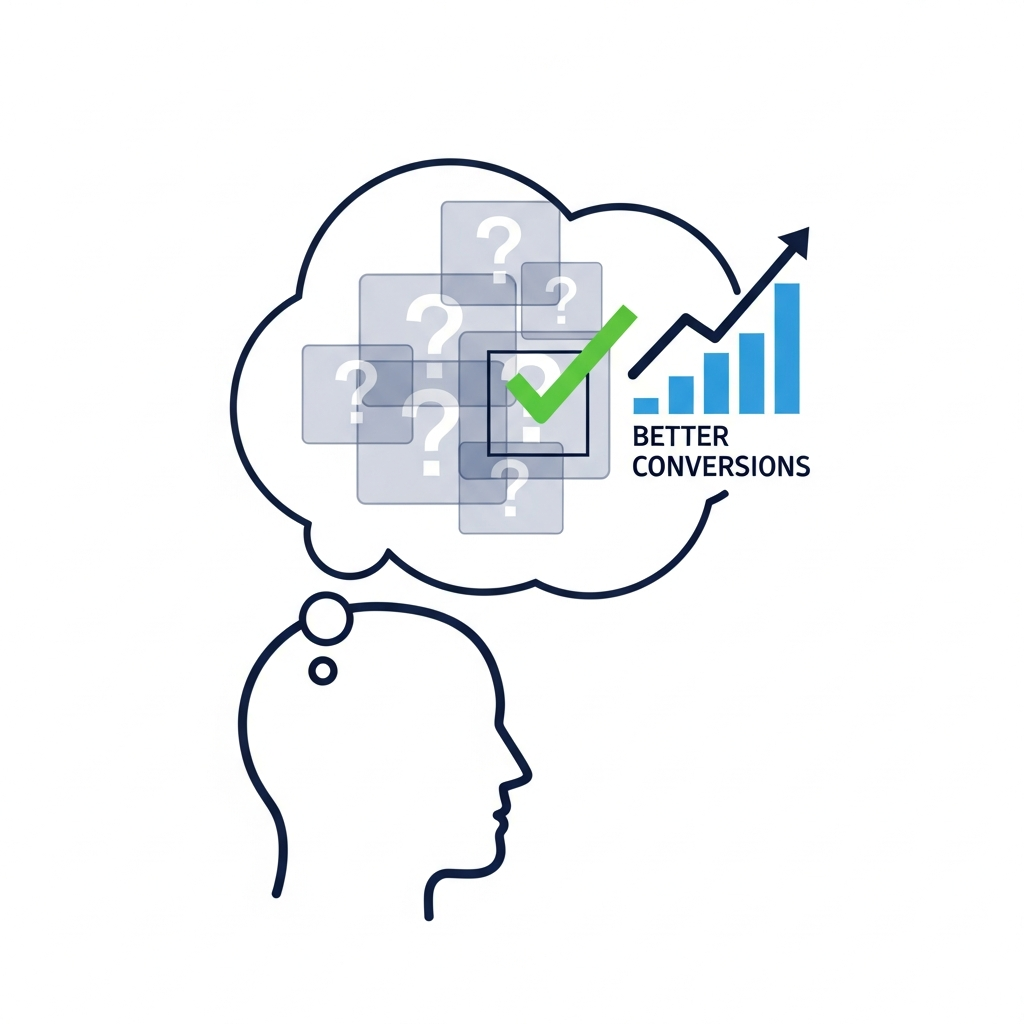
Decision fatigue isn’t just a catchy buzzword used by productivity gurus. It is a documented psychological phenomenon—often referred to as ego depletion—where the quality of decisions deteriorates after a long session of decision-making. In B2B sales, where the cycles are long and the committees are bloated, we are essentially asking our prospects to run a mental marathon. If you don’t understand the neurobiology of how your buyer’s brain processes (and rejects) information, you aren’t just losing sales; you’re actively contributing to their burnout.

The Psychology of B2b Sales: Solving Decision Fatigue for Better Conversions concept 2

The Neurobiology of the “No”: Why Choice Paralysis Kills Deals

To fix the conversion problem, we have to look at the prefrontal cortex. This is the “CEO” of the brain, responsible for executive function, logic, and complex choice. But here’s the rub: the prefrontal cortex has a remarkably small battery. Every time a buyer compares two features, weighs a price point, or justifies a purchase to a stakeholder, they are draining that battery. When the battery hits zero, the brain defaults to the path of least resistance. Usually, that path is doing nothing.

The Glucose Theory of Choice

Research by social psychologist Roy Baumeister suggests that willpower and decision-making draw from a finite pool of mental energy, specifically linked to glucose levels. While the “glucose” part is debated in some neurological circles, the practical application remains undeniable: a tired brain chooses the status quo. In a B2B context, the status quo is your biggest competitor. It’s not the rival firm undercutting your price; it’s the prospect’s desire to stop thinking. If your sales process requires too much “heavy lifting” mentally, the prospect will subconsciously label your solution as a source of stress rather than a source of value.

The Paradox of Choice in Enterprise Software

Barry Schwartz’s The Paradox of Choice remains the definitive text here. He argues that while we think more options lead to better outcomes, they actually lead to anxiety and regret. In B2B, we often try to impress prospects with “modular flexibility.” We tell them, “You can configure it any way you want!” To us, that sounds like freedom. To a fatigued buyer, it sounds like homework. By providing too many configurations, we trigger analysis paralysis. The fear of making the wrong choice becomes greater than the potential benefit of making the right one.

The Psychology of B2b Sales: Solving Decision Fatigue for Better Conversions concept 3

The B2B Committee Quagmire: Fatigue by Consensus

The days of the “Lone Wolf” decision-maker are dead. Gartner research indicates that the average B2B buying group now involves six to ten stakeholders. Think about the cognitive load of that for a moment. Each person in that group has their own biases, their own KPIs, and their own specific brand of decision fatigue. The “consensus-based” model of buying is a recipe for mental exhaustion.

The Noise-to-Signal Ratio

Each stakeholder introduces new variables. The CTO cares about integration; the CFO cares about the ROI timeline; the End User cares about the UI/UX. When these voices clash, the “noise” becomes deafening. As a salesperson, if you simply dump information on all of them, you are adding to the noise. High-performing reps act as information curators. They don’t give the buyer more information; they give them less, but of higher relevance. They filter the signal from the noise, effectively “outsourcing” the cognitive load from the buyer to themselves.

The Cost of “Social Friction”

Every time a buyer has to defend a choice to a colleague, they use up cognitive reserves. It’s a social risk. If you provide a 50-page slide deck, you’re asking them to do the work of distilling it for their boss. That is a massive friction point. If you want to solve decision fatigue, you must provide “internal champions” with ready-to-use, simplified collateral. Give them the one-page executive summary that makes them look like a genius without them having to sweat for it. You’re not just selling a product; you’re selling a way for them to save face and save energy.

The Psychology of B2b Sales: Solving Decision Fatigue for Better Conversions concept 4

Strategic Curation: Moving from “What Do You Want?” to “Here is What You Need”

The most successful B2B closers I’ve ever worked with have stopped asking open-ended questions mid-funnel. In the discovery phase, sure, let the prospect talk. But once you move into the solutioning phase, you must transition into a prescriptive role. Think of it like a high-end restaurant with a tasting menu versus a 20-page diner menu. The diner menu is stressful. The tasting menu is a relief.

The Prescriptive Sales Model

A prescriptive approach reduces the number of decisions a buyer has to make. Instead of saying, “We have three tiers of service, which one fits your budget?” you say, “Based on your current infrastructure and your goal of 20% growth, Tier 2 is the only logical path for you. Here is why.” You have removed the burden of comparison. You have taken the weight off their shoulders. This isn’t about being pushy; it’s about being helpful. You are acting as a consultant who has already done the mental labor for them.

Reducing the “Mental Friction” of Pricing

Pricing is where decision fatigue usually reaches its zenith. Complexity in pricing models—add-ons, per-seat costs, implementation fees, tiered discounts—is a conversion killer. I’ve seen deals die because the quote was too hard to read. To combat this, simplify your “Choice Architecture.” Use anchoring strategically. Present a “gold standard” option first. It sets a mental benchmark. Even if they don’t buy it, it makes the “recommended” option feel like a safe, middle-ground compromise. It narrows the field of vision, which is exactly what a fatigued brain needs.

>The Power of Defaults and Heuristics

Humans are creatures of habit. We use “heuristics”—mental shortcuts—to make decisions without thinking. In B2B sales, you can leverage these shortcuts to bypass the fatigue barrier. The most powerful heuristic is the Default Bias. We tend to stick with whatever the pre-set option is because changing it requires cognitive effort.

  • Default Configurations: Set the most popular or effective settings as the “standard” in your proposals.
  • Social Proof as a Shortcut: If a buyer is too tired to analyze your data, they will look at what their peers are doing. “Companies like Google and Amazon use this configuration” is a heuristic that says, “You don’t have to think about this; they already did.”
  • The Authority Bias: Use expert testimonials and third-party certifications. It allows the buyer to “borrow” the authority of others rather than verifying everything themselves from scratch.

>Micro-Conversions: Breaking the Marathon into Sprints

One of the biggest mistakes in B2B is trying to get the “Big Yes” too early. Asking for a six-figure contract is a massive cognitive load. It triggers the “threat response” in the brain. Instead, focus on micro-conversions. These are small, low-stakes “yeses” that build momentum without exhausting the buyer.

The “Foot-in-the-Door” Technique

Start with a low-friction request. “Can we spend five minutes on the phone to see if this is even a fit?” is easier than “Can we schedule a 60-minute demo?” Once they’ve committed to a small action, they are psychologically more likely to commit to the next one to maintain cognitive consistency. We like to think of ourselves as people who follow through. By getting those small wins, you are training the buyer to say “yes” to you, making the final “Big Yes” feel like a natural conclusion rather than a stressful leap.

Loss Aversion and the “Cost of Inaction”

Cognitive science tells us that the pain of loss is twice as powerful as the joy of gain. When a buyer is fatigued, they are more focused on not losing what they have (security, time, budget) than they are on gaining something new. Shift the conversation from “What you will gain” to “What you are currently losing by waiting.” This utilizes the framing effect. If they feel like they are already losing money every day they don’t act, the decision to buy becomes a way to stop the pain, which is a much more primal and easier decision than the decision to start a project.

>Healing the “Buyer’s Hangover”: Post-Purchase Dissonance

The psychological work doesn’t end when the contract is signed. In fact, that’s often when Cognitive Dissonance (buyer’s remorse) sets in. The buyer’s brain, finally coming down from the stress of the decision, starts to look for reasons why they might have made a mistake. This is why churn happens before implementation even begins.

To solve this, you need a “Decision Affirmation” strategy. Immediately after the sale, provide materials that validate their choice. Don’t send a technical manual. Send a “Welcome and Success Roadmap” that reiterates the benefits. Reassure the prefrontal cortex that it did a good job. You want to move them from the “exhaustion” phase to the “relief” phase as quickly as possible. When the buyer feels supported, their brain associates you with the end of stress, not the cause of it.

>Conclusion: The Empathy-Driven Sales Process

The “Hard Sell” is dead because the “Hard Sell” is too exhausting. Modern B2B sales is an exercise in cognitive empathy. It’s about looking at your sales process and asking, “Where am I making this person work too hard?” Every friction point, every unnecessary choice, and every bloated document is a leak in your conversion funnel.

By simplifying the choice architecture, acting as a prescriptive guide, and leveraging psychological heuristics, you aren’t just closing more deals. You are providing a service to your buyers. You are giving them back their most precious resource: their mental energy. In a world of infinite noise and endless options, the vendor who makes the decision easiest is the one who wins. It’s not about having the most features; it’s about having the most clarity. Stop selling, and start solving for the human brain.

Cognitive Load: the Silent Killer of Saas Sales and How to Reduce It
Cognitive Load: the Silent Killer of Saas Sales and How to Reduce It concept 1

The Invisible Tax on Your Revenue: Why Mental Friction is Killing Your Close Rate

I remember sitting in a glass-walled conference room in midtown Manhattan back in 2016. I was the “technical expert” on a high-stakes enterprise SaaS deal. My Account Executive—let’s call him Dave—was a powerhouse. He knew the product inside out. He had a slide deck that was, quite literally, eighty-four slides long. He was prepared. He was thorough. He was, as it turned out, the primary reason we lost that $200k ARR deal.

As Dave navigated through the fourteenth sub-menu of our platform, explaining the granular permissions of our API integration, I watched the prospect. Not the CEO, but the actual decision-maker—the VP of Operations. Her eyes didn’t just glaze over; her entire posture shifted. She leaned back, crossed her arms, and started checking her watch. She wasn’t bored. She was exhausted.

She was suffering from a massive spike in cognitive load. In that moment, her brain decided that our “solution” was more work than the problem she was already facing. This is the silent killer of SaaS sales. It’s not your price point. It’s not your lack of an AI feature. It’s the sheer amount of mental calories you’re forcing your prospects to burn just to understand what you do.

Cognitive Load: the Silent Killer of Saas Sales and How to Reduce It concept 2

What is Cognitive Load Theory, Really?

To fix the leak in your sales funnel, we have to look at the psychology. Cognitive Load Theory (CLT), originally developed by John Sweller in the 1980s, posits that our working memory has a limited capacity. Think of it like the RAM in a computer. If you try to run Chrome with fifty tabs, Photoshop, and a high-end video game at the same time, the system freezes. The human brain is no different.

In the context of a SaaS sale, the prospect’s “RAM” is being used for three things simultaneously:

  • Intrinsic Load: This is the inherent difficulty of the task. If you’re selling a complex Kubernetes orchestration tool, there is a baseline level of mental effort required to understand it. You can’t change this, but you can manage it.
  • Extraneous Load: This is the “noise.” This is the bad UI, the cluttered slides, the jargon, and the AE who talks too fast. This is the stuff that adds no value but consumes mental energy. This is where deals go to die.
  • Germane Load: This is the “good” load. It’s the mental effort used to process, practice, and automate new schemas. This is the prospect thinking, “How will this actually fit into my workflow?”

Your goal isn’t to eliminate effort. It’s to ruthlessly eliminate the extraneous so the prospect has enough room for the germane. If they are busy trying to figure out where your “Next” button is or what “synergistic paradigm shifting” means, they have zero capacity left to visualize their own ROI.

Cognitive Load: the Silent Killer of Saas Sales and How to Reduce It concept 3

The Biology of the “No”: Prefrontal Cortex vs. The Amygdala

Let’s get analytical for a second. When the cognitive load becomes too high, the prefrontal cortex—the part of the brain responsible for logic, planning, and executive decision-making—begins to shut down. It’s metabolically expensive to think hard. The brain, which is a survival machine designed to conserve energy, triggers a “flight” response.

In sales, “flight” doesn’t mean they run out of the room. It means they say, “Let me think about it and get back to you next quarter.” It means they go with the “safe” legacy incumbent because, even though that incumbent is worse, the brain already knows how to navigate it. The “status quo” isn’t just a competitor; it’s a neurological sanctuary.

The Glucose Drain

Decision fatigue is real. There is a reason Steve Jobs wore the same turtleneck every day. Every minor decision we make depletes our store of mental energy. By the time your prospect gets to your 4 PM demo, they’ve already made a thousand decisions. If your demo requires them to learn a new vocabulary and navigate a complex hierarchy, you are asking for energy they simply do not have.

Cognitive Load: the Silent Killer of Saas Sales and How to Reduce It concept 4

The “Feature Fallacy” and the Death of the Demo

The most common way SaaS companies spike cognitive load is through “The Harbor Tour.” You know the one. You’ve probably done it. You show the prospect every single bell and whistle your engineering team has shipped in the last three years. You think you’re showing “value.” In reality, you’re showing “work.”

Every feature you show that a prospect doesn’t immediately need is a tax. It’s a cognitive burden. They have to process what it is, decide if they need it, realize they don’t, and then try to discard that information. Multiply that by twenty features, and you’ve effectively given your prospect a migraine.

The Minimum Viable Demo (MVD)

I’ve moved my teams toward a philosophy of the “Minimum Viable Demo.” We don’t show the software; we show the transformation. If the prospect needs to solve X, we show them exactly how to get to X in the fewest clicks possible. We hide the sidebars. We ignore the settings menu. We keep the UI clean. We want the “Aha!” moment to happen before the “Huh?” moment.

>Pricing Pages: Where Clarity Goes to Die

Have you looked at your pricing page lately? I mean, really looked at it? Many SaaS companies have pricing structures that require a PhD in mathematics to decipher. “It’s $12 per user, but only for the first 50 users, then it’s $10, but API calls are metered, and SSO is an add-on of $500 per month…”

Stop. You’re killing your conversion rate. When a prospect looks at a pricing table and has to pull out a calculator, you’ve increased the extraneous cognitive load to a breaking point.

The Power of Three (and the Curse of Choice)

The “Paradox of Choice” is a well-documented psychological phenomenon. Give people two options, and they choose. Give them twenty, and they freeze. The classic SaaS “Good, Better, Best” (Standard, Pro, Enterprise) model works because it maps to the brain’s natural categorization. Any more than four tiers and you’re entering the danger zone. If you have “Add-ons,” “Bundles,” and “Modules” all vying for attention, you aren’t being flexible; you’re being confusing.

>Information Architecture in the Sales Process

It’s not just the software or the pricing. It’s the documentation. We love sending over 30-page whitepapers and 15-page “Security Questionnaires.” We think we’re being helpful. We think we’re providing “enablement.”

The reality? Most sales collateral is mental junk mail. To reduce cognitive load, your sales assets must be “Scannable, Not Readable.” High-level headers, bolded key terms, and clear “Next Steps.” If I have to read three paragraphs to find out what the next meeting is about, I’m probably going to cancel that meeting.

The “Reverse Discovery” Strategy

Traditional discovery involves asking 50 questions to “understand the business.” While necessary, it’s also exhausting for the buyer. It feels like an interrogation. To lower the load, try “Reverse Discovery.”

Instead of: “Tell me about your current workflow for X.”
Try: “Usually, companies your size are struggling with A, B, and C because of the current market shift. Which of those sounds most like your current situation?”

By providing the options, you move the prospect from a “Recall” task (high cognitive load) to a “Recognition” task (low cognitive load). You’re doing the heavy lifting for them.

>The Role of UX in Sales Friction

Sales and Product are often viewed as separate silos. This is a mistake. The Sales UX—how it feels to buy from you—is just as important as the Product UX. If your “Book a Demo” flow involves a 12-field form, you’ve already failed. If your contract requires a manual signature and a scanned PDF return, you are adding “Transaction Friction” which is just another form of cognitive load.

Every step in your sales cycle should be examined through a single lens: How can we make this easier for the buyer to say “Yes”?

  • Shorten the forms. Use enrichment tools like Clearbit to find data so the prospect doesn’t have to type it.
  • Automate the scheduling. Use Calendly or Chili Piper. Don’t play “calendar tag.”
  • Use digital contracts. PandaDoc or DocuSign. One click. Done.
  • Pre-fill the paperwork. If you know their company name and address, why are you asking them to type it into the contract?

>The “Mental Model” Trap

One of the hardest parts of selling innovative SaaS is that you’re often asking people to adopt a new mental model. If you’re selling a “No-Code Platform,” you’re asking people who think in terms of “Developers and Sprints” to think in terms of “Drag-and-Drop and Instant Deployment.”

This shift is a massive germane load. To mitigate this, you must use Analogies. Analogies are cognitive shortcuts. They allow the prospect to “hook” your new, complex concept onto an old, simple one they already understand.

“It’s like Excel, but for your customer database.”
“It’s like having a 24/7 security guard for your cloud infrastructure.”

When you use a powerful analogy, you instantly clear the mental fog. The prospect doesn’t have to build a new schema from scratch; they just have to modify an existing one.

>Strategies for Sales Leaders: Reducing the Burden

If you’re managing a team, how do you operationalize this? You can’t just tell AEs to “make it easier.” You need systems.

1. The Five-Minute Rule

If an AE cannot explain the core value proposition of your software to a five-year-old in under sixty seconds, your messaging is too heavy. Audit your team’s “elevator pitches.” If they sound like they’re reading a technical manual, they’re losing deals in the first five minutes.

2. The “Powerpoint Detox”

Challenge your team to run a discovery call or even a demo without a single slide. Forces them to engage in a conversation. Conversations are dynamic and adaptive, which naturally regulates cognitive load. Slides are static and relentless.

3. Visual Anchoring

Human beings process visuals 60,000 times faster than text. Instead of a list of features, use a simple diagram of the “Before” and “After.” A simple flowchart showing how data moves through your system is worth more than ten slides of bullet points. It allows the brain to map the process spatially, which is much lower load than processing linguistic strings.

>The Support-Sales Paradox

Ironically, being “too helpful” can increase cognitive load. When you offer a prospect ten different ways to solve a problem, you aren’t being flexible—you’re being an obstacle. You are the expert. Act like it.

Don’t say: “We could do A, or B, or C. What do you think?”
Say: “Based on what you’ve told me, B is the most efficient path for your team. Here’s why.”

This is Prescriptive Selling. It reduces the decision-making burden on the prospect and positions you as a trusted advisor rather than just another vendor throwing options at the wall.

>Emotional Resonance: The Cognitive Load Bypass

There is one way to bypass cognitive load entirely: Emotion. When we are emotionally engaged—through a story or a shared pain point—our brain processes information differently. We move from the slow, analytical System 2 thinking to the fast, intuitive System 1 thinking (as described by Daniel Kahneman).

If you can make the prospect *feel* the relief of solving their problem, the “how” becomes secondary. They will endure a higher cognitive load if the emotional payoff is clear. Tell stories about other customers who were just as overwhelmed as they are. Use “feel-felt-found.”

“I know exactly how it feels to manage that much data in a spreadsheet. One of our clients, Sarah at Acme Corp, felt the same way last year. What she found was that by automating the ingest, she got ten hours of her week back.”

That narrative is easy to process. It’s sticky. It’s low load.

>Conclusion: The Competitive Advantage of Simplicity

We live in an era of “Software Fatigue.” The average enterprise uses over 300 SaaS apps. Your prospects are tired. They are overwhelmed. They are looking for an exit, not another entry on their to-do list.

In this market, the company that wins isn’t necessarily the one with the most features. It’s the one that is the easiest to buy and easiest to use. By ruthlessly auditing your sales process for cognitive load, you aren’t just “improving UX.” You are removing the neurological barriers to revenue.

Go back to your demo. Look at your pricing. Read your last five sales emails. Ask yourself: “Am I making them think, or am I making them feel?” If you’re making them think too hard, you’ve already lost. Reduce the load. Clear the path. Let them breathe. The “Yes” will follow.

Why Decision Fatigue Is Killing Your B2b Saas Conversions (and How to Fix It)
Why Decision Fatigue Is Killing Your B2b Saas Conversions (and How to Fix It) concept 1

The Hidden Cognitive Tax: Why Your Prospects Are Ghosting You

It is 3:17 PM on a Tuesday. Your ideal customer—let’s call him Marcus, a VP of Engineering at a mid-market fintech firm—has just finished his fifth back-to-back meeting. He is running on lukewarm coffee and the fumes of a dwindling attention span. He clicks your ad. He lands on your “Features” page. He is greeted by a sprawling grid of 45 different capabilities, three distinct pricing tiers with “Contact Us” buttons scattered like digital confetti, and a chatbot that pops up asking if he’d like a “quick whitepaper.”

Marcus doesn’t sign up. He doesn’t even bookmark the page. He closes the tab with a heavy sigh. It’s not that your software isn’t good. It might be revolutionary. But in that moment, Marcus wasn’t suffering from a lack of interest. He was suffering from decision fatigue. His brain simply ran out of the metabolic fuel required to process one more choice. And in the high-stakes world of B2B SaaS, where the sales cycles are long and the stakeholders are many, decision fatigue is the silent killer of conversions.

Why Decision Fatigue Is Killing Your B2b Saas Conversions (and How to Fix It) concept 2

The Neurobiology of the “No”: What’s Happening Under the Hood

To understand why your conversion rate is hovering at a dismal 2%, we have to look at the prefrontal cortex. This is the executive center of the brain. It handles logic, planning, and—crucially—decision-making. Here’s the catch: the prefrontal cortex is incredibly energy-intensive. Unlike our primal “lizard brain” which can run on autopilot for days, the executive brain has a finite battery.

In the academic world, this is often referred to as Ego Depletion. While the concept has faced some replication debates, the core psychological reality remains: making choices wears us down. Every time you ask a prospect to choose between “Starter” and “Growth,” or “See Demo” vs. “Start Free Trial,” you are making a withdrawal from their cognitive bank account. If the balance hits zero before they reach the “Thank You” page, you lose. It’s a binary outcome driven by biological exhaustion.

Hick’s Law and the Paradox of Choice

You’ve likely heard of Hick’s Law. It’s a staple of UX design. It states that the time it takes for a person to make a decision increases logarithmically with the number and complexity of choices. But in B2B SaaS, we often ignore this in favor of “feature-rich” marketing. We think more features equals more value. Psychology says the opposite. Barry Schwartz, in his seminal work The Paradox of Choice, argues that an abundance of options actually leads to anxiety and indecision. For your prospect, a crowded pricing page isn’t an opportunity; it’s a threat to their mental peace.

Why Decision Fatigue Is Killing Your B2b Saas Conversions (and How to Fix It) concept 3

The B2B Context: A Multi-Layered Fatigue

Decision fatigue in B2C is simple. Do I buy the blue shoes or the red shoes? If I pick wrong, I lose fifty bucks. In B2B SaaS, the stakes are tectonic. If Marcus chooses the wrong CRM, he’s not just out of a few thousand dollars; he’s potentially responsible for a failed implementation that costs his company millions and stains his career. This adds a layer of anticipatory regret to the decision fatigue. He isn’t just tired; he’s scared of being tired and wrong.

Furthermore, B2B decisions are rarely made in a vacuum. We’re talking about “Buying Committees.” Now, you aren’t just dealing with Marcus’s decision fatigue; you’re dealing with the collective fatigue of Marcus, the CFO, the Head of Security, and the end-users. Every friction point in your funnel is a moment where the committee can collectively decide that it’s simply “too much work” to move forward.

Why Decision Fatigue Is Killing Your B2b Saas Conversions (and How to Fix It) concept 4

Where SaaS Companies Get It Wrong (The Usual Suspects)

I’ve spent a decade auditing SaaS funnels, and the same patterns emerge like clockwork. We are our own worst enemies. We love our products so much that we want to show every bell and whistle on the first date. It’s the digital equivalent of a first date showing you their entire 20-year career plan before the appetizers arrive. It’s overwhelming.

1. The “Kitchen Sink” Pricing Page

If your pricing page requires a PhD to decode, you’ve already lost. I see companies with seven different tiers, each with a 20-item checklist of “included” vs. “excluded” features. The prospect looks at this and realizes they have to spend 45 minutes doing a gap analysis just to figure out which version they need. Result? They decide to “think about it.” And in SaaS, “I’ll think about it” is the graveyard where deals go to die.

2. The CTA Identity Crisis

Look at your homepage right now. How many primary buttons do you have? “Request a Demo,” “Start for Free,” “Watch Video,” “Talk to Sales.” Each of these is a different cognitive path. By offering four doors, you’re forcing the user to stop and evaluate which door is the right one. This micro-evaluation is a friction point. It creates a stutter in the user’s flow. You want a slip-and-slide, not a hurdle race.

3. Progressive Disclosure (Or Lack Thereof)

The onboarding process is often the worst offender. Most SaaS platforms dump the user into a dashboard that looks like a NASA control center. The user wanted to solve one problem—say, sending an automated email—but now they have to set up integrations, invite team members, and configure their “workspace.” This is cognitive overload at the most critical juncture of the customer journey.

>How to Fix It: Engineering the Path of Least Resistance

Fixing decision fatigue isn’t about removing options; it’s about curating them. You need to act as a sherpa, not a librarian. A librarian shows you where the books are. A sherpa tells you exactly where to step so you don’t fall off the mountain. Here is the blueprint for a low-fatigue B2B SaaS funnel.

The “Power of One” Strategy

Every page on your site should have exactly one goal. One. If it’s your landing page for a specific ad campaign, the only thing the user should be able to do is the thing you paid for them to do. Remove the navigation bar. Kill the footer links. Eliminate the “Related Blog Posts.” If you want them to book a demo, make the “Book a Demo” button the only logical exit point. This reduces the choice set to a binary: Do I want this or not? Binary decisions are much easier on the brain than multivariate ones.

Opinionated Onboarding

Stop asking users how they want to set up their account. Tell them. Deploy “Opinionated UX.” Use templates that are 90% pre-configured based on their industry. If they are a marketing agency, their dashboard should already look like a marketing agency’s dashboard. By providing a default state, you harness the power of the Status Quo Bias. People are much more likely to stick with a pre-set option than they are to build one from scratch.

Tiered Pricing for Humans, Not Robots

Limit your pricing to three tiers. Why three? Because it allows for Price Anchoring. You have the “Basic” (too small), the “Enterprise” (too expensive for most), and the “Professional” (the ‘Goldilocks’ choice). Most users will naturally gravitate toward the middle. By highlighting the middle tier as “Most Popular,” you provide a social heuristic. You’re telling the prospect, “People like you usually pick this.” You’ve just done the hard work of decision-making for them.

>The Power of “Progressive Disclosure”

This is a concept borrowed from human-computer interaction (HCI). It’s the idea of only showing information when it is absolutely necessary. Don’t show the advanced reporting features until the user has successfully completed their first basic task. In your sales deck, don’t talk about your SOC2 compliance in slide two unless you’re talking to the CISO. For the Marketing Manager, that’s just extra noise that drains their battery.

Think of it like a video game. You don’t get the “Ultimate Sword” at Level 1. You get a wooden stick. You learn to swing the stick. Then you get a shield. If you gave a Level 1 player the entire inventory, they’d quit the game out of sheer confusion. Your SaaS is the same. Drip-feed the complexity.

>Using Social Proof as a Cognitive Shortcut

Social proof isn’t just about showing off; it’s about reducing the perceived risk of a decision. When Marcus sees that three of his competitors use your software, his brain can offload the “Is this safe?” calculation. He thinks, “If it works for them, it’ll work for me.” You’ve just bypassed a massive amount of analytical heavy lifting. But be careful—don’t overwhelm him with fifty logos. Show him the three most relevant logos. Again, curation is king.

>The “Default” Effect: Why Less Is More in Configuration

I recently worked with a DevOps tool that had a 12-step setup process. Conversion was in the gutter. We changed the setup so that the tool automatically detected the user’s environment and pre-filled 10 of the 12 steps. The user just had to click “Confirm.” Conversions jumped by 40% overnight. We didn’t change the product’s value. We just stopped asking the user to make 12 decisions when they only really cared about one: “Does this work?”

>The Role of Empathetic Copywriting

Your copy should acknowledge the fatigue. Instead of “Our platform offers robust multi-channel orchestration,” try “Stop jumping between 10 different tabs. Manage everything in one place.” The first sentence is a feature that requires mental translation. The second is a relief of cognitive burden. It speaks directly to the pain of the fatigued brain. Support your user. Be the aspirin, not the headache.

A Quick Checklist for Auditing Your Funnel

  • The 5-Second Test: Can a user identify exactly what they should do next within 5 seconds of landing on your page?
  • CTA Density: Do you have more than two different primary calls-to-action on your homepage? (If yes, kill one).
  • Pricing Clarity: Can a prospect figure out their likely monthly cost without talking to a human?
  • Onboarding Friction: How many clicks does it take from “Sign Up” to “Aha Moment”? If it’s more than five, you have a problem.

>The Strategic Advantage of Simplicity

In the “Feature Wars” of the SaaS world, simplicity is the ultimate weapon. Everyone is trying to be the “all-in-one” solution. But “all-in-one” often translates to “everything-is-confusing.” If you can be the company that makes the decision easy, you will win. Not because your code is better, but because your user experience respects the biological limits of the human brain.

Look, I get it. You’ve worked hard on those features. Your engineers are proud of them. Your investors want to see “Enterprise” readiness. But none of that matters if Marcus closes the tab because his brain is too tired to figure out how to buy from you. Reduce the options. Clear the path. Make the “Yes” the easiest thing he does all day.

It’s not just about conversion optimization; it’s about empathy. It’s about recognizing that on the other side of that screen is a tired, stressed-out human being who just wants their problems to go away. If you can be the one who doesn’t add to their mental load, they won’t just buy your software—they’ll thank you for it.

>Final Thoughts for the Over-Thinkers

If you take nothing else from this, remember: Constraints are a gift to your customer. By limiting what they can do, you are guiding them toward what they should do. In the crowded, noisy, exhausting landscape of B2B SaaS, the brand that provides the most clarity—not the most features—is the one that scales. Stop making your prospects think so hard. They’re already tired enough.

Bid Optimization via Machine Learning: Why Manual Bidding is Costing You 40% More ROI.

In the nascent days of digital advertising, managing a Google Ads account was a tactile, almost artisanal pursuit. You would log in once a day, perhaps once a week, adjust a few CPC bids by a nickel or a dime, and feel the smug satisfaction of a job well done. It was the era of the “hand-cranked” auction—a world where human intuition could actually compete with the relatively slow-moving data streams of the early internet.

Fast forward to the present. The landscape has transitioned from a leisurely stroll through a data park to a high-frequency trading environment that would make a Wall Street quant sweat. Today, every single ad auction—which occurs in milliseconds—evaluates thousands of signals simultaneously. We are talking about device type, location intent, browser history, time of day, OS version, and even the atmospheric pressure of the user’s current city (well, perhaps not quite, but the granularity is staggering).

To suggest that a human media buyer can manually process these variables and assign a perfect bid for every individual impression is not just ambitious; it is statistically impossible. If you are still relying on manual bidding, you are essentially trying to win a Formula 1 race on a penny-farthing bicycle. Research and empirical data from high-scale accounts suggest that this stubborn adherence to “manual control” is costing advertisers, on average, 40% in potential ROI. Here is why the era of the manual bid is dead, and how Machine Learning (ML) is the only scalpel sharp enough for modern bid optimization.

>The Cognitive Ceiling: Why Humans Fail at High-Frequency Auctions

The human brain is an extraordinary piece of biological hardware, particularly skilled at pattern recognition and creative synthesis. However, it is fundamentally ill-equipped for the “Cold Calculus” of real-time bidding. When we bid manually, we are forced to aggregate. We look at the “average” performance of a keyword over the last 30 days and set a bid based on that average.

The problem? There is no such thing as an average user.

Consider two users searching for “enterprise CRM software” at 2:00 PM on a Tuesday. User A is a researcher at a Fortune 500 company who has visited your pricing page three times in the last 48 hours. User B is a college student writing a thesis who just happened to click an organic link earlier. To a manual bidder, these users are identical because they used the same keyword. To a Machine Learning algorithm, User A represents a high-probability conversion event worth a $50 bid, while User B represents a bounce worth $0.50.

By bidding the “average” (say, $25), the manual bidder overpays for User B and loses the auction for User A. This inefficiency—multiplied by thousands of auctions—is where that 40% ROI leakage occurs. Machine Learning operates at the Request Level, while humans operate at the Aggregate Level. This is a fundamental structural disadvantage that no amount of human “gut feeling” can overcome.

Visual for Bid Optimization via Machine Learning: Why Manual Bidding is Costing You 40% More ROI.

The Architecture of an ML Bidder: Beyond Simple Automation

It is a common misconception that Machine Learning bidding (or “Smart Bidding”) is just a fancy set of “if-then” rules. It is significantly more sophisticated. Most modern ML bidding engines rely on a combination of Bayesian Inference and Deep Neural Networks to predict the likelihood of a conversion.

1. Predictive Modeling and Signal Synthesis

Unlike a human, an ML model doesn’t just look at what happened; it calculates the probability of what will happen. It uses a process called cross-signal analysis. For instance, it might discover that users on iOS devices in New York City have a 15% higher conversion rate on rainy Tuesdays between 5:00 PM and 7:00 PM. A human would never find that correlation, or if they did, they couldn’t possibly implement a bid adjustment for it in real-time. The ML model adjusts the bid for that specific micro-moment instantly.

2. The Epsilon-Greedy Strategy: Exploration vs. Exploitation

One of the most powerful aspects of ML in bidding is how it handles uncertainty. In the world of Reinforcement Learning, this is known as the Exploration vs. Exploitation trade-off. The algorithm “exploits” known winning segments to maximize current ROI, but it also “explores” new, untested segments (new times of day, new audiences) with a small portion of the budget. This ensures the account never stagnates—a feat manual buyers rarely achieve because they tend to be risk-averse with client capital.

“In the context of bid optimization, the algorithm is not just a calculator; it is a laboratory, constantly running thousands of micro-experiments to find the path of least resistance to a conversion.”

>The Mathematical Reality of the 40% ROI Gap

How do we arrive at the figure of 40%? It isn’t just a marketing hyperbole; it’s rooted in the concept of Diminishing Marginal Returns.

In manual bidding, the bidder often hits a “performance plateau.” To get more volume, they raise bids across the board. This increases the Cost Per Acquisition (CPA) because they are now paying more for the same low-quality traffic alongside the high-quality traffic.

ML-driven bid optimization flattens the efficiency curve. Because the algorithm can bid less for low-probability impressions and more for high-probability ones, it effectively reallocates “wasted” spend from the bottom 30% of your traffic and pushes it into the top 10% of high-intent auctions. The result? You often see a simultaneous increase in conversion volume and a decrease in CPA. That delta—the gap between the wasteful “flat” bidding and the surgical “dynamic” bidding—typically accounts for a 30% to 50% improvement in total return.

>Deconstructing the “Google Just Wants My Money” Myth

The most frequent objection to automated bidding is a cynical one: “Why would I trust the platform (Google/Meta) to set my bids? They just want to drain my budget.”

While a healthy dose of skepticism is required in any relationship with Big Tech, this logic falls apart under analytical scrutiny. The platforms are incentivized by long-term retention. If an advertiser spends $10,000 and sees $0 in return because the “automation” was predatory, they will stop spending. If the automation delivers a $50,000 return, they will increase their spend to $100,000.

Furthermore, the platforms possess First-Party Data that you will never have access to. They know the user’s recent search history across different sites, their app usage patterns, and their proximity to physical store locations. When you use manual bidding, you are intentionally blinding yourself to 90% of the data used to determine the auction’s winner. You are essentially playing poker while your opponent (the ML algorithm) can see half of your cards.

>The Hidden Cost of Human Intervention: Latency and Bias

Beyond the data processing limits, manual bidding suffers from two distinct human pathologies: Latency and Cognitive Bias.

The Latency Penalty

Digital markets change by the hour. A competitor might run out of budget at 3:00 PM, leaving a vacuum of cheap, high-quality traffic. A manual bidder might not check the account until the next morning. By then, the opportunity is gone. An ML algorithm detects the change in auction pressure in real-time and lowers the bids to capture that traffic at a discount. Manual bidding is inherently reactive; ML bidding is inherently proactive.

The Bias Trap

Humans are prone to the Recency Bias. If a keyword performed poorly yesterday, a manual bidder might slash the bid today, ignoring the fact that yesterday was a national holiday or a freak technical glitch on the website. Machine Learning models use decay functions and stochastic gradients to weight data appropriately, ensuring that a single outlier doesn’t derail the entire strategy.

>Strategizing for the Shift: How to Transition Without Breaking Your Account

If you are currently 100% manual, jumping headfirst into “Maximize Conversions” can feel like throwing your car into reverse while driving 60 mph. The transition requires a phased, academic approach.

  • Step 1: Clean the Data Stream. ML is “Garbage In, Garbage Out.” Before turning on automated bidding, ensure your conversion tracking is flawless. If the algorithm thinks a “Newsletter Signup” is worth as much as a “$5,000 Purchase,” it will optimize for the wrong thing.
  • Step 2: Use “Enhanced CPC” as a Training Wheel. ECPC allows the algorithm to adjust your manual bids by a small percentage based on conversion probability. It is a low-risk way to let the machine start learning your account’s nuances.
  • Step 3: Run a Controlled Experiment. Use the “Experiments” feature in Google Ads to split your traffic 50/50. Run Manual Bidding on one half and Target ROAS (tROAS) on the other. Do not touch it for 30 days. The statistical significance of the results will usually end the manual bidding debate permanently.
  • Step 4: Define Your Constraints. Automation works best when it has a clear North Star. Instead of telling the machine to “Get more sales,” tell it “Get more sales at a minimum 400% ROAS.” This provides the guardrails necessary to prevent budget runaway.

>The Evolution of the Media Buyer: From Pilot to Architect

Does the rise of Machine Learning bidding mean that the digital marketer is becoming obsolete? On the contrary. It means the boring parts of the job are becoming obsolete.

The role is shifting from Tactical Execution (changing bids) to Strategic Orchestration. In the ML era, the elite copywriter and strategist focus on:

  • Creative Excellence: Since everyone will eventually use the same bidding algorithms, the only true competitive advantage left is the Ad Creative. The machine can’t write a compelling hook or understand the emotional pain points of your customer.
  • Value-Based Optimization: Feeding the machine better data. This involves integrating your CRM so the algorithm optimizes for Lifetime Value (LTV) rather than just a one-time lead.
  • Market Context: The algorithm doesn’t know your company is launching a new product next month or that a global supply chain issue has halved your inventory. Humans provide the context; machines provide the scale.

>Conclusion: The High Price of “Control”

The 40% loss in ROI associated with manual bidding is effectively a “Control Tax.” It is the price advertisers pay for the illusion of being in charge. In the hyper-competitive landscape of modern PPC, this is a tax that most businesses cannot afford to pay indefinitely.

Machine Learning in bid optimization is no longer a “luxury feature” for big spenders; it is the baseline requirement for survival. By relinquishing the granular, millisecond-level decisions to the algorithms, you free yourself to focus on the elements of marketing that truly move the needle: psychology, offer resonance, and long-term brand strategy.

The question is no longer whether you should automate your bidding—the question is how much more ROI you are willing to lose before you do.