
The Erosion of the “Star Rating” and the Birth of Social Proof 2.0
Let’s be brutally honest for a second. We’ve all become somewhat immune to those generic five-star ratings. You know the ones—tucked neatly into a carousel on a landing page, featuring a headshot that looks suspiciously like a stock photo of a “Smiling Business Professional.” We see them, we register them, and we immediately disregard them as marketing fluff. The skepticism of the modern buyer has reached an all-time high, and frankly, I don’t blame them. We’ve been burned by inflated metrics and “manufactured” testimonials for too long.
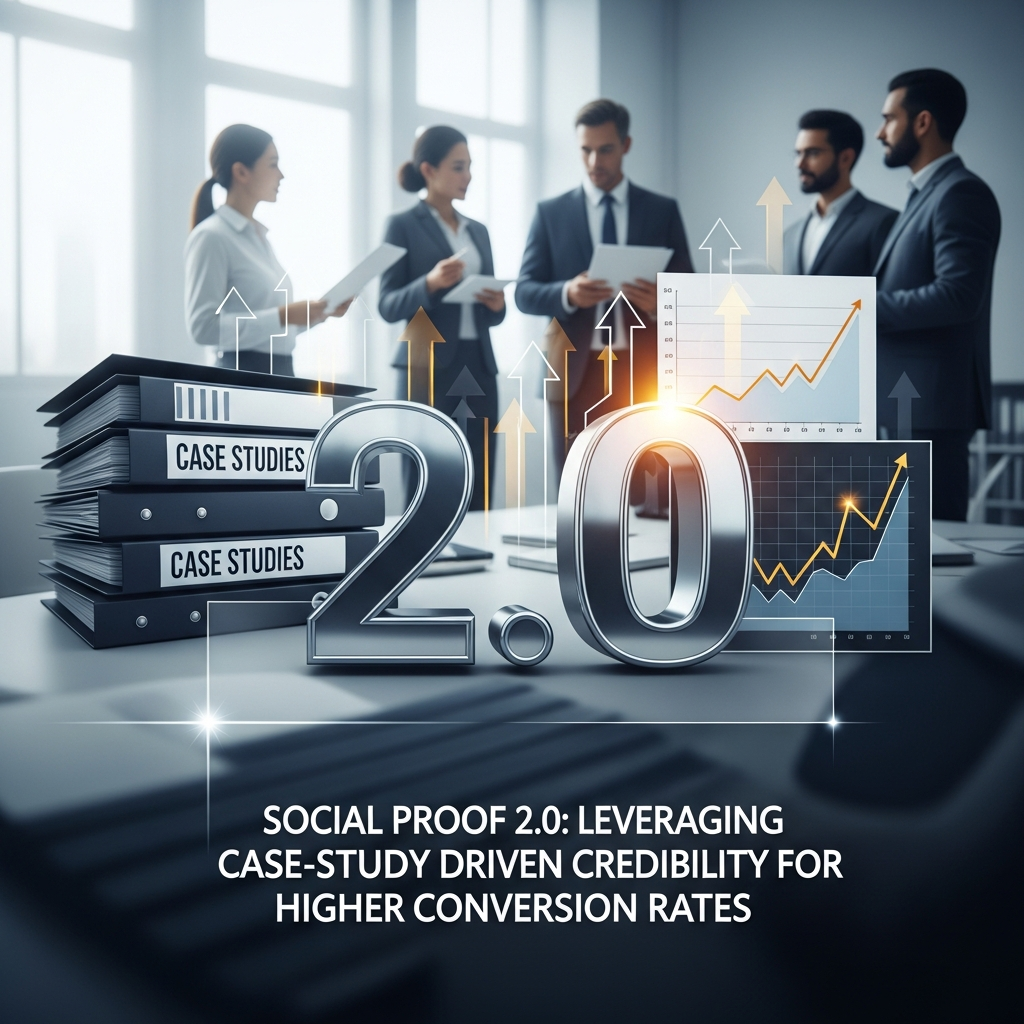
I remember sitting in a growth meeting three years ago for a mid-market SaaS firm. We had the logos. We had the quotes. We even had a “4.8 out of 5” badge from a reputable review site. Yet, our demo-to-close ratio was stagnating. The problem wasn’t a lack of proof; it was a lack of visceral credibility. We were checking boxes, but we weren’t building trust. That was my “aha” moment: Social Proof 1.0 is dead. It’s too passive. It’s too easily faked. What we needed—and what the market now demands—is Social Proof 2.0: the strategic deployment of narrative-driven, data-backed case studies that act as a proxy for the prospect’s own success.
In this guide, we aren’t just talking about writing a “success story.” We’re dissecting the neurobiology of why stories convert, how to reverse-engineer buyer hesitation through specific testimonials, and why your current “Case Studies” page is likely a graveyard of missed opportunities. This is about granular, messy, and undeniably real evidence.
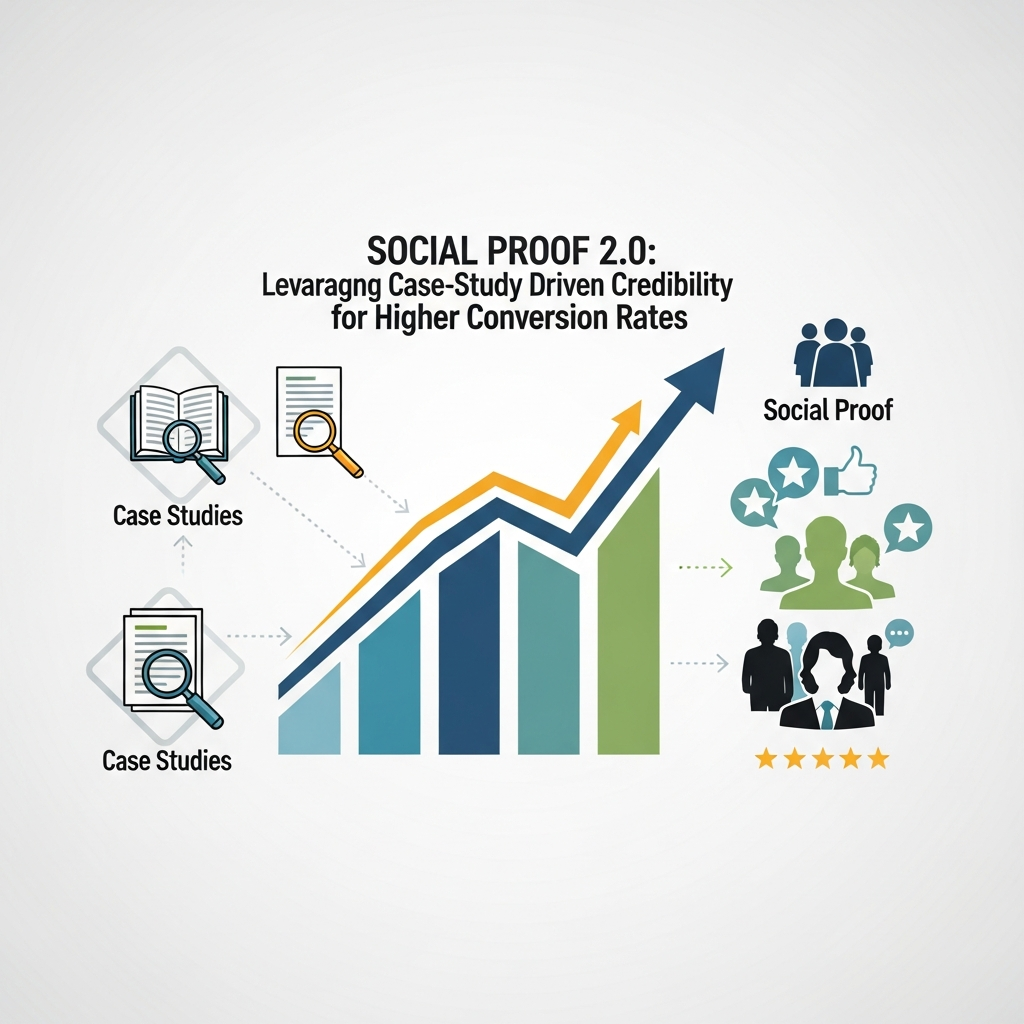
The Cognitive Science of Why Narratives Trump Statistics
Data is cold. Numbers are abstract. While we love to say we make “data-driven decisions,” the human brain is neurologically wired to process stories with far greater intensity. When we read a list of statistics—say, “Increased ROI by 40%”—only the language-processing parts of the brain (Broca’s and Wernicke’s areas) are activated. We understand the information, but it doesn’t move us.
However, when we read a narrative—a case study that details a specific person facing a specific struggle—the brain undergoes a process called neural coupling. The listener’s brain activity mirrors that of the storyteller. If the case study describes the stress of a failing supply chain, the reader’s cortisol levels might actually rise. If it describes the relief of a streamlined workflow, their brain releases oxytocin. You aren’t just selling a product; you are literally altering the chemistry of your prospect’s brain to align with your solution. This isn’t manipulation; it’s empathy at scale.
The Availability Heuristic and Your Brand
Psychologically, humans rely on the Availability Heuristic. We judge the probability of an event based on how easily we can recall a similar example. If a prospect can vividly remember the story of how “Company X” used your tool to save their Q4, they will perceive your tool as being more effective than a competitor who merely lists a “99% satisfaction rate.” The story is “available” in their mind; the statistic is a ghost.
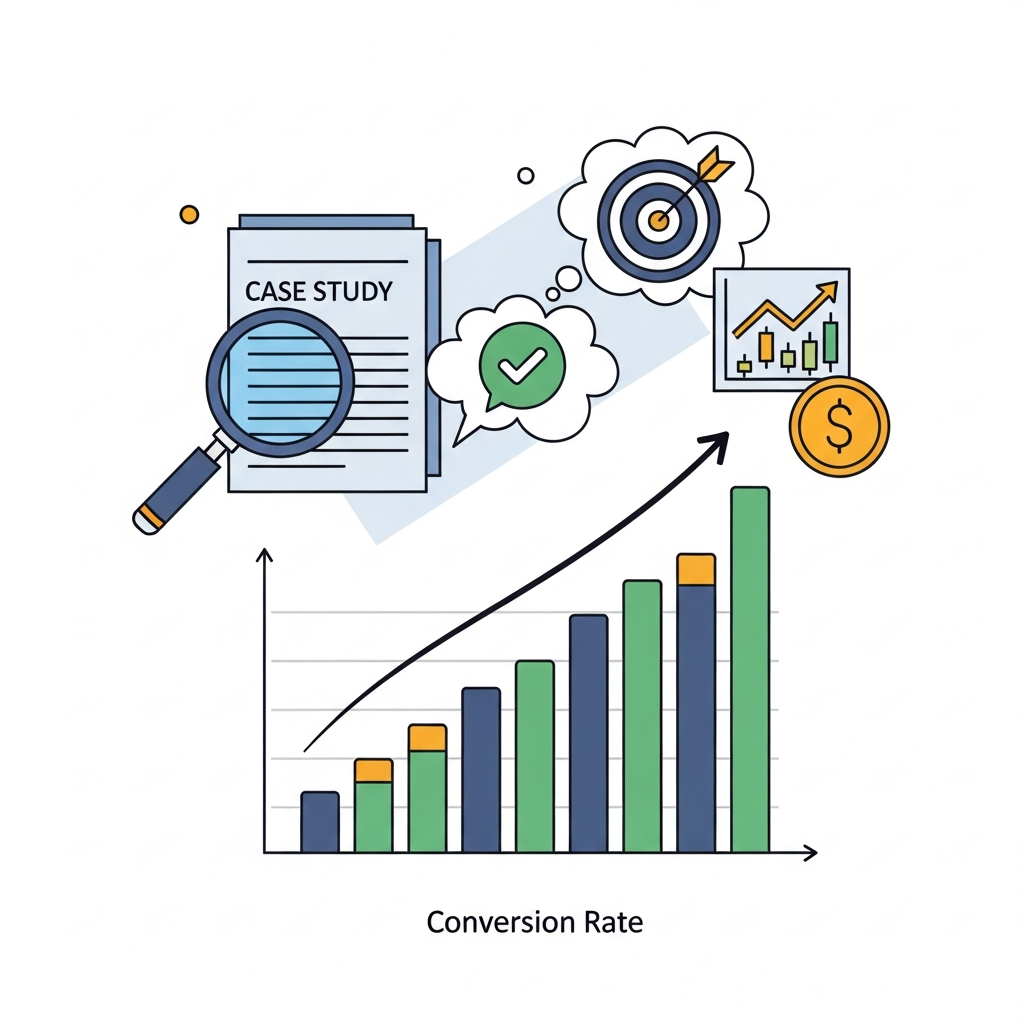
The Anatomy of a High-Conversion Case Study: Moving Beyond the “Hero’s Journey”
Most B2B case studies follow a predictable, boring formula: The Problem, The Solution, The Result. It’s the “Hero’s Journey” for software, and it’s become white noise. To achieve Social Proof 2.0, we need to inject friction. We need the “messy middle.” If everything looks too perfect, it feels dishonest.
1. The Protagonist’s Internal Conflict
Don’t just tell me the company was losing money. Tell me that the Director of Operations was losing sleep. Tell me they were terrified of a board meeting. Internal conflict creates relatability. Your prospect doesn’t identify with a “Corporation”; they identify with a person who has the same job title and the same anxieties they do. We want to hear about the specific moment of crisis that led them to look for a solution.
2. The “Implementation Friction” (The Secret Sauce)
This is where most marketers get scared. They want to pretend the software was installed in five minutes and everything was sunshine. Stop doing this. True credibility comes from acknowledging the hurdles. “The integration took two weeks longer than expected because our legacy database was a disaster, but the support team stayed on the phone with us until midnight.” That sentence alone sells more than ten generic quotes. It proves you are a partner, not just a vendor.
3. Granular, Non-Round Numbers
If you tell me you increased revenue by “50%,” I think you’re rounding up or making it up. If you tell me you increased revenue by “47.3% over a 14-month period,” I believe you. Specificity is the antidote to skepticism. Use exact dates, specific dollar amounts, and actual timeframes. The “Social Proof 2.0” framework thrives on the precision of the data.
Reverse-Engineering Buyer Hesitation via Case Studies
One of the most effective ways I’ve used case studies is as a preemptive strike against objections. Every sales cycle has common friction points: “It’s too expensive,” “Our team won’t adopt it,” or “It won’t work with our current tech stack.”
Instead of trying to “overcome” these in a sales call, you should let your customers do it for you in your case studies. We call this The Objection-First Testimonial. I once worked with a client where the main objection was the complexity of the UI. We specifically went out and interviewed our least tech-savvy customer. We asked them: “What did you think of the interface when you first logged in?” They admitted they were intimidated. Then they explained how the intuitive design won them over in three days. Sending that case study to a hesitant prospect is like a tactical nuke for their doubts.
- The Cost Objection: Feature a case study where the customer initially thought the price was too high but later realized the cost of not acting was ten times higher.
- The Integration Objection: Highlight a customer who had the messiest, most archaic tech stack imaginable and show how your product played nice with it.
- The Adoption Objection: Showcase a story where a skeptical internal team became the product’s biggest champions.
>Distribution 2.0: Killing the “Resources” Page Graveyard
If your case studies only live on a page called “Resources” or “Success Stories,” you are failing. That’s where content goes to die. In the Social Proof 2.0 model, case studies are dynamic assets that are injected into every stage of the funnel.
The “Contextual Proof” Method
Instead of one long PDF, break your case studies into “Micro-Proofs.” If a prospect is looking at your “Security & Compliance” page, they shouldn’t see a link to all case studies. They should see a 200-word excerpt from a CTO specifically talking about how you passed their rigorous security audit. This is Contextual Proof. You are matching the evidence to the specific concern the prospect has at that exact moment.
Integrating Social Proof into Sales Outreach
Stop sending “just checking in” emails. They are useless. Instead, send a “Thought this might be relevant to you” email with a link to a case study that mirrors the prospect’s exact industry and pain point. “Hey [Name], I know you’re dealing with [Specific Pain Point]. We just finished a project with [Similar Company] where we tackled that exact issue. Thought their approach to the [Specific Detail] might give you some ideas.” This isn’t a sales pitch; it’s a value-add backed by proof.
The “Dark Social” Amplifier
Much of your selling happens when you aren’t in the room. It happens in Slack channels, at dinners, and in private LinkedIn messages. Highly detailed, narrative-driven case studies are the ultimate currency for Dark Social. They give your internal champion the ammunition they need to convince the rest of the C-suite. A generic quote doesn’t win a budget battle; a detailed ROI roadmap based on a peer’s experience does.
>Video Case Studies: Authenticity over Production Value
We need to talk about the “B-Roll” trap. Many companies spend $10,000 on a high-gloss video case study with cinematic music and drone shots. It looks like a car commercial. And because it looks like a commercial, people treat it like a commercial—they tune it out.
In the Social Proof 2.0 world, authenticity is the new authority. A Zoom recording of a customer speaking candidly about their results, complete with a dog barking in the background or a slightly grainy connection, often converts better than a professional production. Why? Because it’s clearly real. It hasn’t been scrubbed by a legal team or a PR firm. It feels like a peer-to-peer recommendation.
The “Raw Interview” Technique
One strategy I’ve seen work wonders is the “Raw Interview” format. Instead of a polished edit, publish a 5-10 minute segment of the actual interview. Label it as “Uncut Interview with [Customer Name].” This signals to the prospect that you have nothing to hide. It builds an immense amount of “implied trust.” You’re letting them see the “source code” of your credibility.
>Metrics That Actually Matter (Beyond the Conversion Rate)
How do we know if Social Proof 2.0 is working? A simple lift in landing page conversion is nice, but it’s only the tip of the iceberg. We need to look deeper into the sales cycle.
1. Impact on Sales Cycle Velocity
Does the presence of high-quality case studies reduce the time from first touch to closed-won? When prospects have access to detailed narratives, they spend less time in the “Education” phase because the case study has already done the heavy lifting. Measure the average days-to-close for prospects who engaged with a case study versus those who didn’t. The difference is usually startling.
2. Deal Size Expansion
Social Proof 2.0 isn’t just about getting a “Yes.” It’s about getting a “Yes, and give me the premium tier.” When a prospect reads about a peer who utilized your most advanced features to achieve massive results, they are less likely to haggle over price and more likely to see the value in your higher-end offerings. Look for a correlation between case study consumption and Average Contract Value (ACV).
3. Retention and “Buyer’s Remorse” Reduction
Trust built on narrative is stickier than trust built on a feature list. When customers buy because they’ve seen a roadmap of success from someone like them, they enter the relationship with realistic expectations and a clear vision of how to achieve ROI. This leads to higher retention and lower churn in the first 90 days.
>The Ethics of Social Proof: Don’t Cross the Line
As we push for more detailed and visceral case studies, we must maintain an unwavering commitment to truth. The “2.0” in Social Proof implies a higher level of sophistication, not a higher level of deception. Never ghostwrite a testimonial and ask a customer to sign it. Never cherry-pick data to hide a negative outcome that was relevant to the story. If you lose your integrity in your social proof, you lose the ability to sell forever. Your reputation is a fragile thing; don’t trade it for a short-term conversion bump.
Instead, involve your customers in the process. Show them the draft. Ask them: “Does this accurately represent the stress you were under and the results we achieved?” Often, they’ll give you even better, more visceral details when they see you’re trying to tell a real story rather than just a marketing one.
>Conclusion: The Future of Credibility
The landscape of B2B and high-ticket B2C sales is shifting. The “information asymmetry” that once favored the seller is gone. Buyers have more information than ever, and their “BS detectors” are finely tuned. In this environment, your only competitive advantage is unimpeachable credibility.
Social Proof 2.0 is about moving away from the “look at us” marketing of the past and toward a “look at what we did together” philosophy. It’s about being brave enough to show the friction, the failures, and the ultimate triumphs. It’s about treating your case studies not as marketing collateral, but as essential pieces of evidence in a trial for your brand’s life. Start building your library of “messy,” granular, and undeniable proof today. Your conversion rates—and your customers—will thank you for it.