
The Invisible Tax on Your Revenue: Why Mental Friction is Killing Your Close Rate
I remember sitting in a glass-walled conference room in midtown Manhattan back in 2016. I was the “technical expert” on a high-stakes enterprise SaaS deal. My Account Executive—let’s call him Dave—was a powerhouse. He knew the product inside out. He had a slide deck that was, quite literally, eighty-four slides long. He was prepared. He was thorough. He was, as it turned out, the primary reason we lost that $200k ARR deal.
As Dave navigated through the fourteenth sub-menu of our platform, explaining the granular permissions of our API integration, I watched the prospect. Not the CEO, but the actual decision-maker—the VP of Operations. Her eyes didn’t just glaze over; her entire posture shifted. She leaned back, crossed her arms, and started checking her watch. She wasn’t bored. She was exhausted.
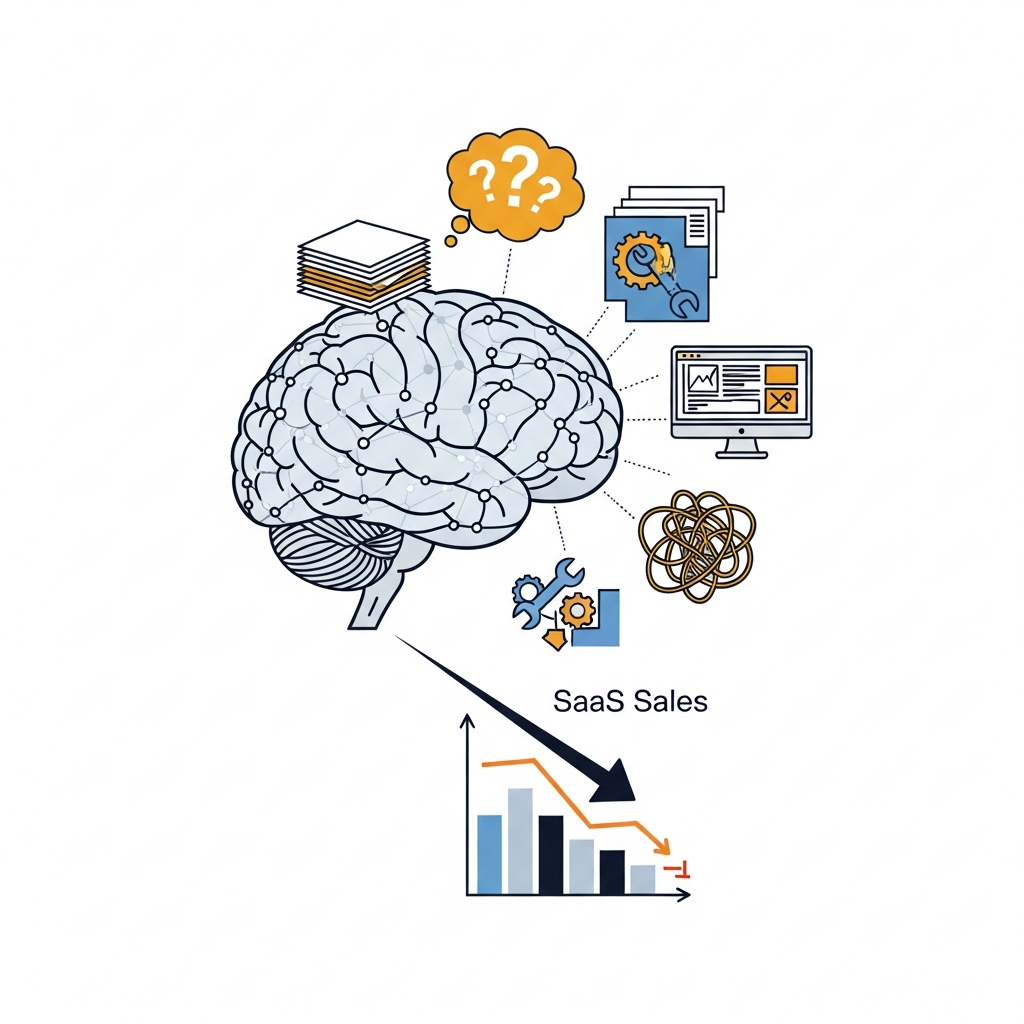
She was suffering from a massive spike in cognitive load. In that moment, her brain decided that our “solution” was more work than the problem she was already facing. This is the silent killer of SaaS sales. It’s not your price point. It’s not your lack of an AI feature. It’s the sheer amount of mental calories you’re forcing your prospects to burn just to understand what you do.
What is Cognitive Load Theory, Really?
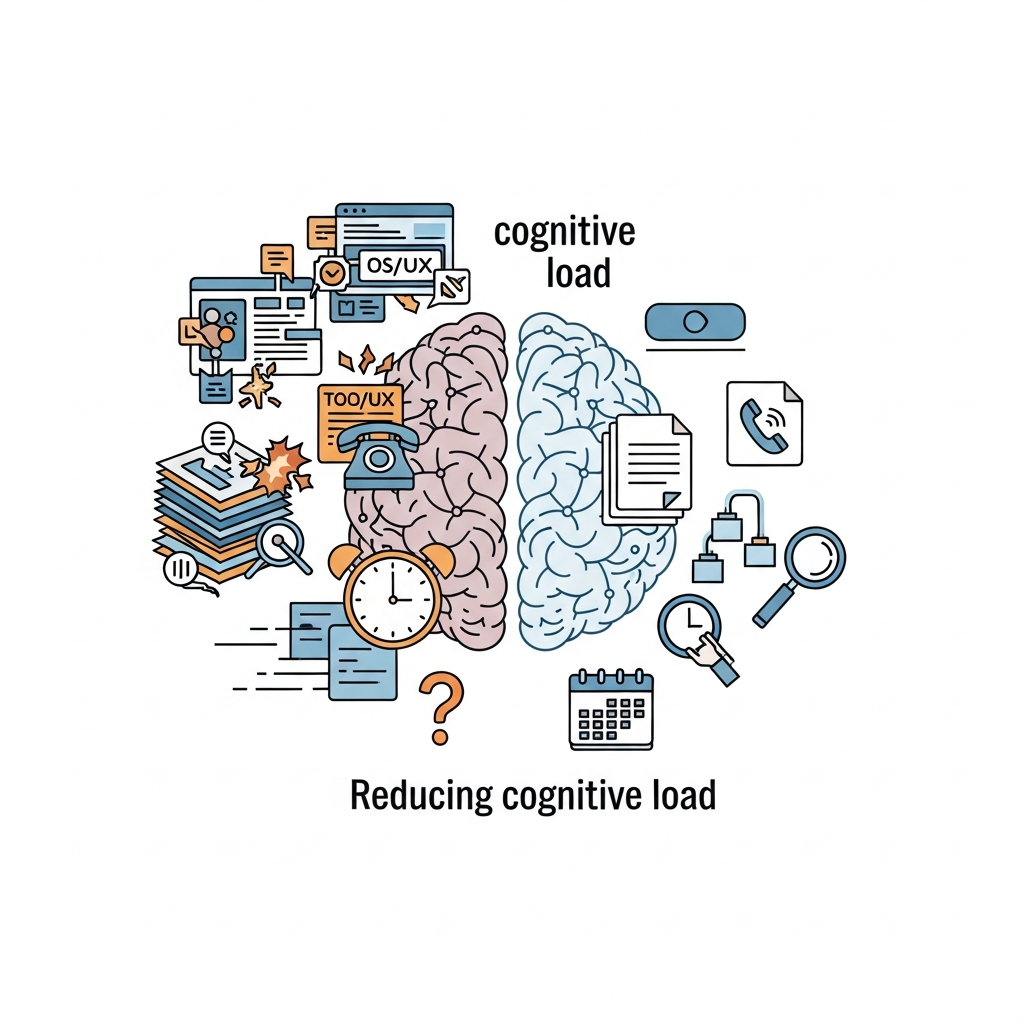
To fix the leak in your sales funnel, we have to look at the psychology. Cognitive Load Theory (CLT), originally developed by John Sweller in the 1980s, posits that our working memory has a limited capacity. Think of it like the RAM in a computer. If you try to run Chrome with fifty tabs, Photoshop, and a high-end video game at the same time, the system freezes. The human brain is no different.
In the context of a SaaS sale, the prospect’s “RAM” is being used for three things simultaneously:
- Intrinsic Load: This is the inherent difficulty of the task. If you’re selling a complex Kubernetes orchestration tool, there is a baseline level of mental effort required to understand it. You can’t change this, but you can manage it.
- Extraneous Load: This is the “noise.” This is the bad UI, the cluttered slides, the jargon, and the AE who talks too fast. This is the stuff that adds no value but consumes mental energy. This is where deals go to die.
- Germane Load: This is the “good” load. It’s the mental effort used to process, practice, and automate new schemas. This is the prospect thinking, “How will this actually fit into my workflow?”
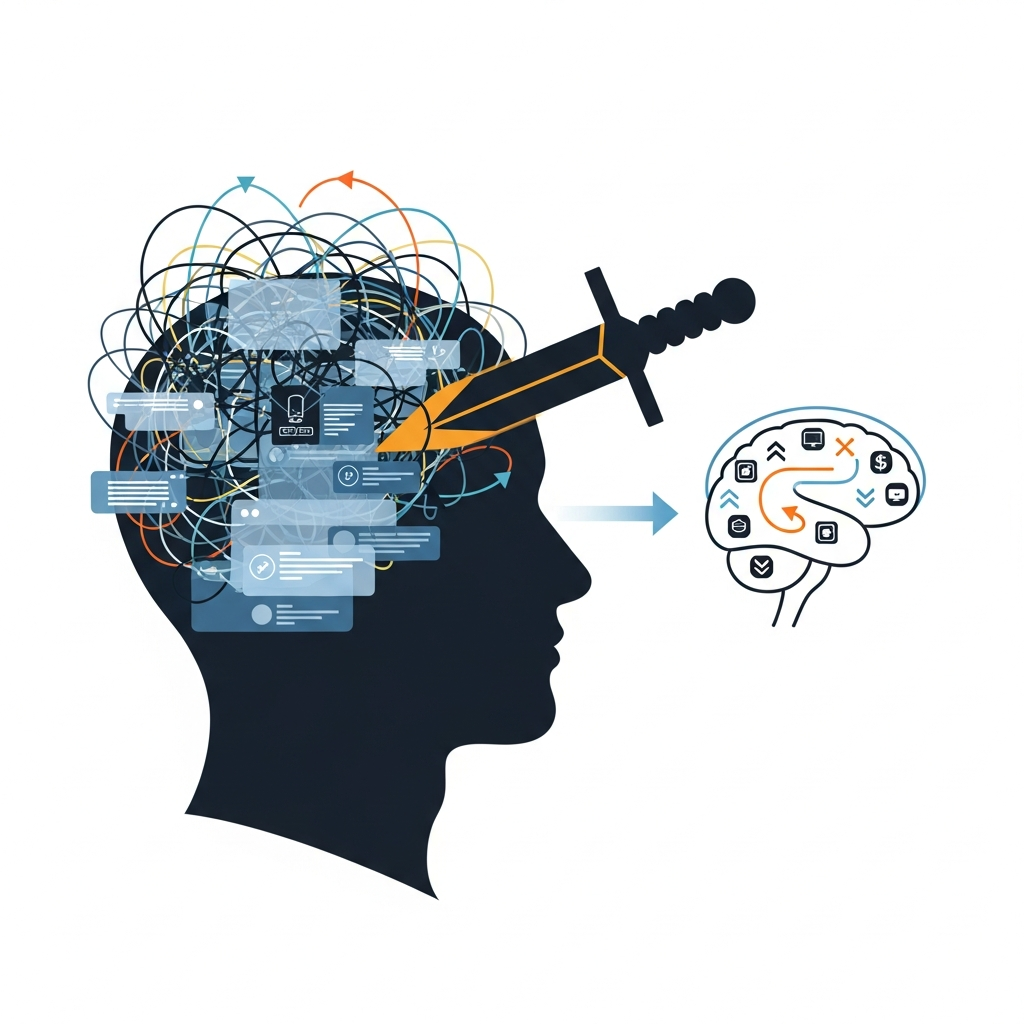
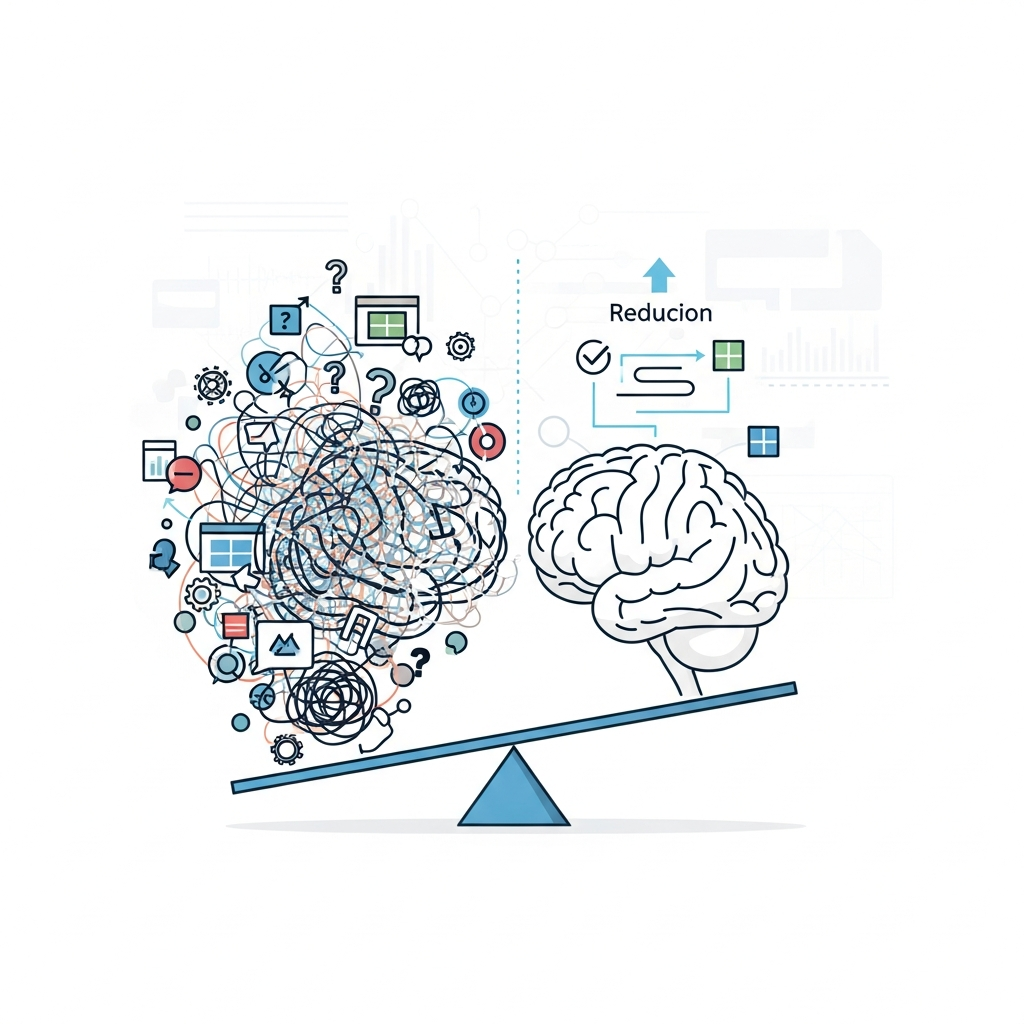
Your goal isn’t to eliminate effort. It’s to ruthlessly eliminate the extraneous so the prospect has enough room for the germane. If they are busy trying to figure out where your “Next” button is or what “synergistic paradigm shifting” means, they have zero capacity left to visualize their own ROI.
The Biology of the “No”: Prefrontal Cortex vs. The Amygdala
Let’s get analytical for a second. When the cognitive load becomes too high, the prefrontal cortex—the part of the brain responsible for logic, planning, and executive decision-making—begins to shut down. It’s metabolically expensive to think hard. The brain, which is a survival machine designed to conserve energy, triggers a “flight” response.
In sales, “flight” doesn’t mean they run out of the room. It means they say, “Let me think about it and get back to you next quarter.” It means they go with the “safe” legacy incumbent because, even though that incumbent is worse, the brain already knows how to navigate it. The “status quo” isn’t just a competitor; it’s a neurological sanctuary.
The Glucose Drain
Decision fatigue is real. There is a reason Steve Jobs wore the same turtleneck every day. Every minor decision we make depletes our store of mental energy. By the time your prospect gets to your 4 PM demo, they’ve already made a thousand decisions. If your demo requires them to learn a new vocabulary and navigate a complex hierarchy, you are asking for energy they simply do not have.
The “Feature Fallacy” and the Death of the Demo
The most common way SaaS companies spike cognitive load is through “The Harbor Tour.” You know the one. You’ve probably done it. You show the prospect every single bell and whistle your engineering team has shipped in the last three years. You think you’re showing “value.” In reality, you’re showing “work.”
Every feature you show that a prospect doesn’t immediately need is a tax. It’s a cognitive burden. They have to process what it is, decide if they need it, realize they don’t, and then try to discard that information. Multiply that by twenty features, and you’ve effectively given your prospect a migraine.
The Minimum Viable Demo (MVD)
I’ve moved my teams toward a philosophy of the “Minimum Viable Demo.” We don’t show the software; we show the transformation. If the prospect needs to solve X, we show them exactly how to get to X in the fewest clicks possible. We hide the sidebars. We ignore the settings menu. We keep the UI clean. We want the “Aha!” moment to happen before the “Huh?” moment.
>Pricing Pages: Where Clarity Goes to Die
Have you looked at your pricing page lately? I mean, really looked at it? Many SaaS companies have pricing structures that require a PhD in mathematics to decipher. “It’s $12 per user, but only for the first 50 users, then it’s $10, but API calls are metered, and SSO is an add-on of $500 per month…”
Stop. You’re killing your conversion rate. When a prospect looks at a pricing table and has to pull out a calculator, you’ve increased the extraneous cognitive load to a breaking point.
The Power of Three (and the Curse of Choice)
The “Paradox of Choice” is a well-documented psychological phenomenon. Give people two options, and they choose. Give them twenty, and they freeze. The classic SaaS “Good, Better, Best” (Standard, Pro, Enterprise) model works because it maps to the brain’s natural categorization. Any more than four tiers and you’re entering the danger zone. If you have “Add-ons,” “Bundles,” and “Modules” all vying for attention, you aren’t being flexible; you’re being confusing.
>Information Architecture in the Sales Process
It’s not just the software or the pricing. It’s the documentation. We love sending over 30-page whitepapers and 15-page “Security Questionnaires.” We think we’re being helpful. We think we’re providing “enablement.”
The reality? Most sales collateral is mental junk mail. To reduce cognitive load, your sales assets must be “Scannable, Not Readable.” High-level headers, bolded key terms, and clear “Next Steps.” If I have to read three paragraphs to find out what the next meeting is about, I’m probably going to cancel that meeting.
The “Reverse Discovery” Strategy
Traditional discovery involves asking 50 questions to “understand the business.” While necessary, it’s also exhausting for the buyer. It feels like an interrogation. To lower the load, try “Reverse Discovery.”
Instead of: “Tell me about your current workflow for X.”
Try: “Usually, companies your size are struggling with A, B, and C because of the current market shift. Which of those sounds most like your current situation?”
By providing the options, you move the prospect from a “Recall” task (high cognitive load) to a “Recognition” task (low cognitive load). You’re doing the heavy lifting for them.
>The Role of UX in Sales Friction
Sales and Product are often viewed as separate silos. This is a mistake. The Sales UX—how it feels to buy from you—is just as important as the Product UX. If your “Book a Demo” flow involves a 12-field form, you’ve already failed. If your contract requires a manual signature and a scanned PDF return, you are adding “Transaction Friction” which is just another form of cognitive load.
Every step in your sales cycle should be examined through a single lens: How can we make this easier for the buyer to say “Yes”?
- Shorten the forms. Use enrichment tools like Clearbit to find data so the prospect doesn’t have to type it.
- Automate the scheduling. Use Calendly or Chili Piper. Don’t play “calendar tag.”
- Use digital contracts. PandaDoc or DocuSign. One click. Done.
- Pre-fill the paperwork. If you know their company name and address, why are you asking them to type it into the contract?
>The “Mental Model” Trap
One of the hardest parts of selling innovative SaaS is that you’re often asking people to adopt a new mental model. If you’re selling a “No-Code Platform,” you’re asking people who think in terms of “Developers and Sprints” to think in terms of “Drag-and-Drop and Instant Deployment.”
This shift is a massive germane load. To mitigate this, you must use Analogies. Analogies are cognitive shortcuts. They allow the prospect to “hook” your new, complex concept onto an old, simple one they already understand.
“It’s like Excel, but for your customer database.”
“It’s like having a 24/7 security guard for your cloud infrastructure.”
When you use a powerful analogy, you instantly clear the mental fog. The prospect doesn’t have to build a new schema from scratch; they just have to modify an existing one.
>Strategies for Sales Leaders: Reducing the Burden
If you’re managing a team, how do you operationalize this? You can’t just tell AEs to “make it easier.” You need systems.
1. The Five-Minute Rule
If an AE cannot explain the core value proposition of your software to a five-year-old in under sixty seconds, your messaging is too heavy. Audit your team’s “elevator pitches.” If they sound like they’re reading a technical manual, they’re losing deals in the first five minutes.
2. The “Powerpoint Detox”
Challenge your team to run a discovery call or even a demo without a single slide. Forces them to engage in a conversation. Conversations are dynamic and adaptive, which naturally regulates cognitive load. Slides are static and relentless.
3. Visual Anchoring
Human beings process visuals 60,000 times faster than text. Instead of a list of features, use a simple diagram of the “Before” and “After.” A simple flowchart showing how data moves through your system is worth more than ten slides of bullet points. It allows the brain to map the process spatially, which is much lower load than processing linguistic strings.
>The Support-Sales Paradox
Ironically, being “too helpful” can increase cognitive load. When you offer a prospect ten different ways to solve a problem, you aren’t being flexible—you’re being an obstacle. You are the expert. Act like it.
Don’t say: “We could do A, or B, or C. What do you think?”
Say: “Based on what you’ve told me, B is the most efficient path for your team. Here’s why.”
This is Prescriptive Selling. It reduces the decision-making burden on the prospect and positions you as a trusted advisor rather than just another vendor throwing options at the wall.
>Emotional Resonance: The Cognitive Load Bypass
There is one way to bypass cognitive load entirely: Emotion. When we are emotionally engaged—through a story or a shared pain point—our brain processes information differently. We move from the slow, analytical System 2 thinking to the fast, intuitive System 1 thinking (as described by Daniel Kahneman).
If you can make the prospect *feel* the relief of solving their problem, the “how” becomes secondary. They will endure a higher cognitive load if the emotional payoff is clear. Tell stories about other customers who were just as overwhelmed as they are. Use “feel-felt-found.”
“I know exactly how it feels to manage that much data in a spreadsheet. One of our clients, Sarah at Acme Corp, felt the same way last year. What she found was that by automating the ingest, she got ten hours of her week back.”
That narrative is easy to process. It’s sticky. It’s low load.
>Conclusion: The Competitive Advantage of Simplicity
We live in an era of “Software Fatigue.” The average enterprise uses over 300 SaaS apps. Your prospects are tired. They are overwhelmed. They are looking for an exit, not another entry on their to-do list.
In this market, the company that wins isn’t necessarily the one with the most features. It’s the one that is the easiest to buy and easiest to use. By ruthlessly auditing your sales process for cognitive load, you aren’t just “improving UX.” You are removing the neurological barriers to revenue.
Go back to your demo. Look at your pricing. Read your last five sales emails. Ask yourself: “Am I making them think, or am I making them feel?” If you’re making them think too hard, you’ve already lost. Reduce the load. Clear the path. Let them breathe. The “Yes” will follow.