Why Your Website Isn’t Ranking: 7 Common Seo Mistakes and How to Fix Them

The digital landscape is often described as a democratic meritocracy, where the best content rises to the top through the invisible hand of the algorithm. However, any seasoned digital strategist knows that the reality is far more Machiavellian. You have poured your intellectual capital into a website, polished the prose, and optimized the imagery, yet you remain relegated to the digital equivalent of a forgotten dusty shelf in a library basement. If your website isn’t ranking, it is rarely a matter of bad luck; it is almost certainly a failure of systemic synchronization between your site’s architecture and the ever-evolving heuristics of search engines.

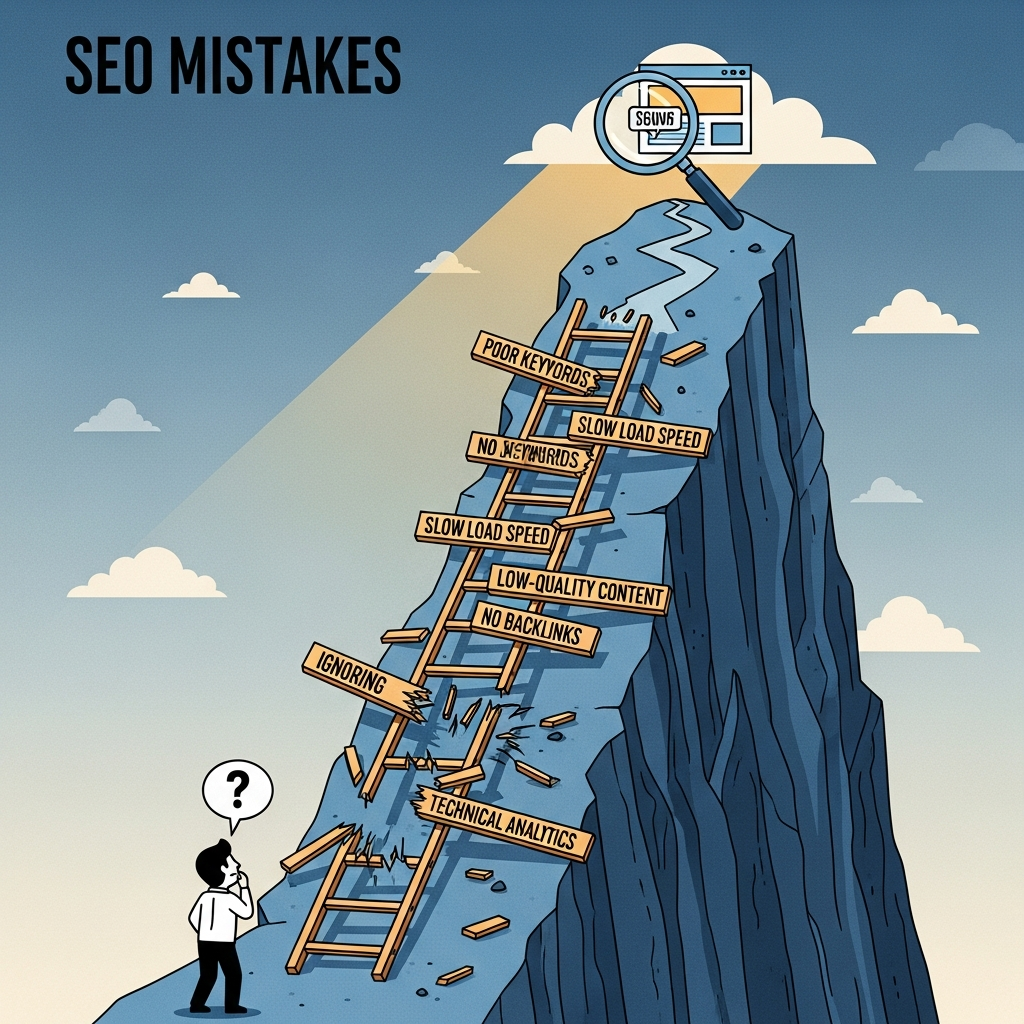
Search Engine Optimization (SEO) is not a “set-and-forget” endeavor. It is a rigorous, multidisciplinary exercise in technical precision, linguistic nuance, and psychological profiling. To rank is to prove to a non-human entity—the search crawler—that you are the definitive authority on a subject. When that proof fails, the consequences are invisibility. In this comprehensive analysis, we will dissect the seven most egregious SEO mistakes that keep high-quality websites in the shadows and provide the high-level remediation strategies necessary to reclaim your digital sovereignty.
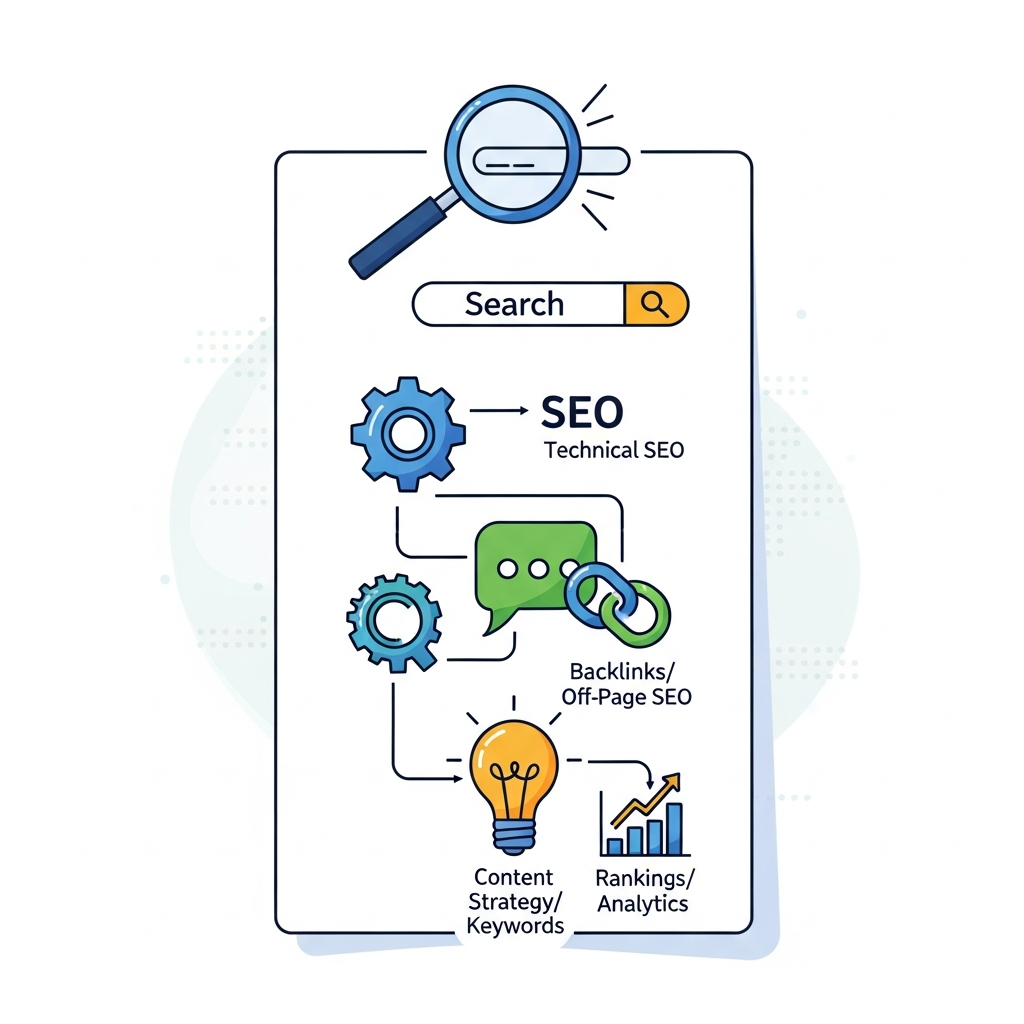
Visual for Why Your Website Isn't Ranking: 7 Common Seo Mistakes and How to Fix Them

1. The Technical Sunder: Ignoring the Crawl Budget and Indexing Architecture

Before a search engine can rank your content, it must first be able to find, read, and interpret it. This is the domain of Technical SEO, and it is where most websites fail before they even begin the content race. Search engines like Google utilize “spiders” or “crawlers” to navigate the web. These bots operate on a “crawl budget”—a finite amount of time and resources allocated to your site based on its perceived authority and health.

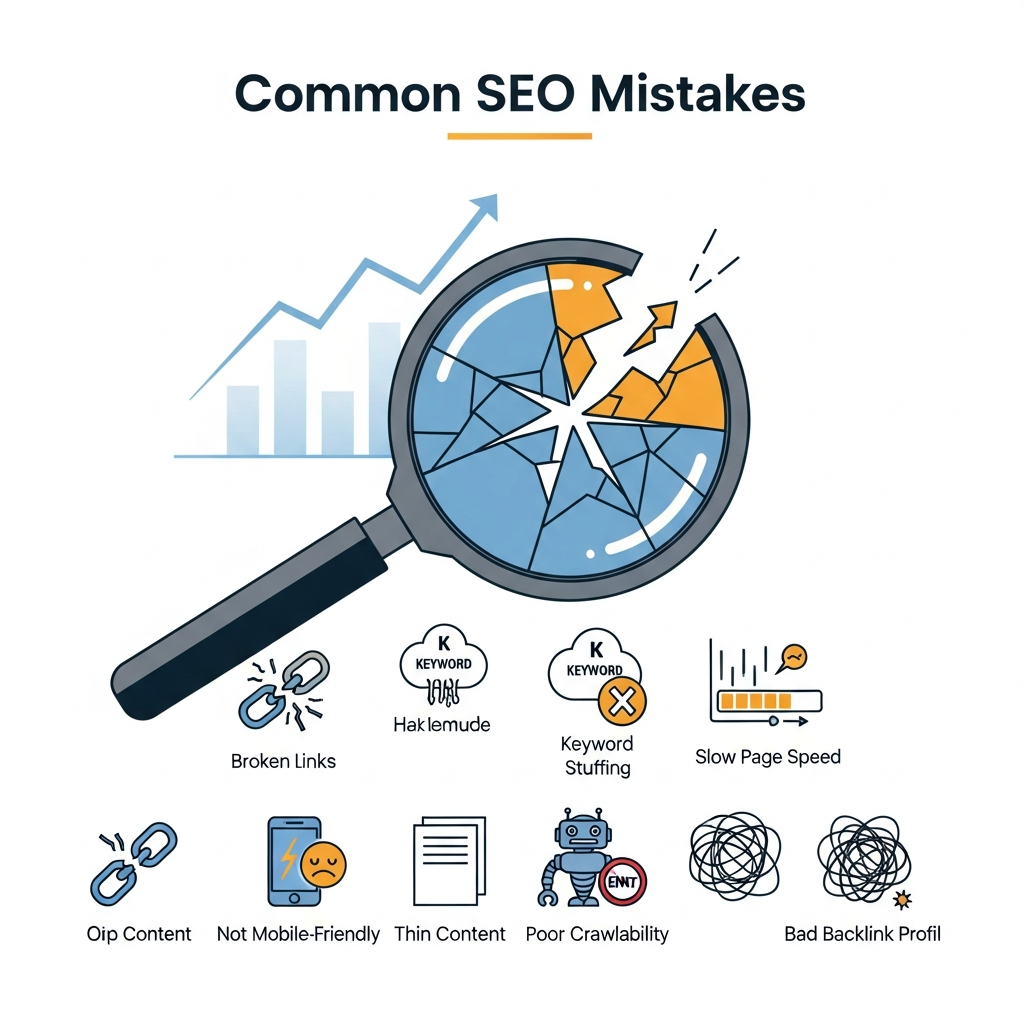
If your site architecture is a labyrinth of broken links, orphaned pages, and convoluted redirect chains, you are effectively squandering your crawl budget. The crawler gets frustrated (in a computational sense) and departs before reaching your most valuable assets. Furthermore, the misuse of the robots.txt file can inadvertently block crucial CSS and JavaScript files, leading to a “partial render” that obscures your content from the engine’s view.

The Fix: Engineering a Frictionless Path

To remedy technical obfuscation, one must adopt the mindset of a systems architect. Start with a comprehensive crawl of your site using tools like Screaming Frog or Ahrefs. Identify and eliminate 404 errors with surgical precision. Implement a flat site architecture; ideally, no piece of content should be more than three clicks away from the homepage.

“Technical SEO is the foundation upon which all other efforts are built. Without a crawlable infrastructure, your content is essentially shouting into a vacuum.”

Furthermore, prioritize your XML sitemap. Ensure it is dynamically updated and submitted to Google Search Console. If you are utilizing heavy JavaScript frameworks (like React or Angular), ensure you are employing Server-Side Rendering (SSR) or Dynamic Rendering. If the bot sees a blank page because it can’t execute your script, your ranking potential is zero.
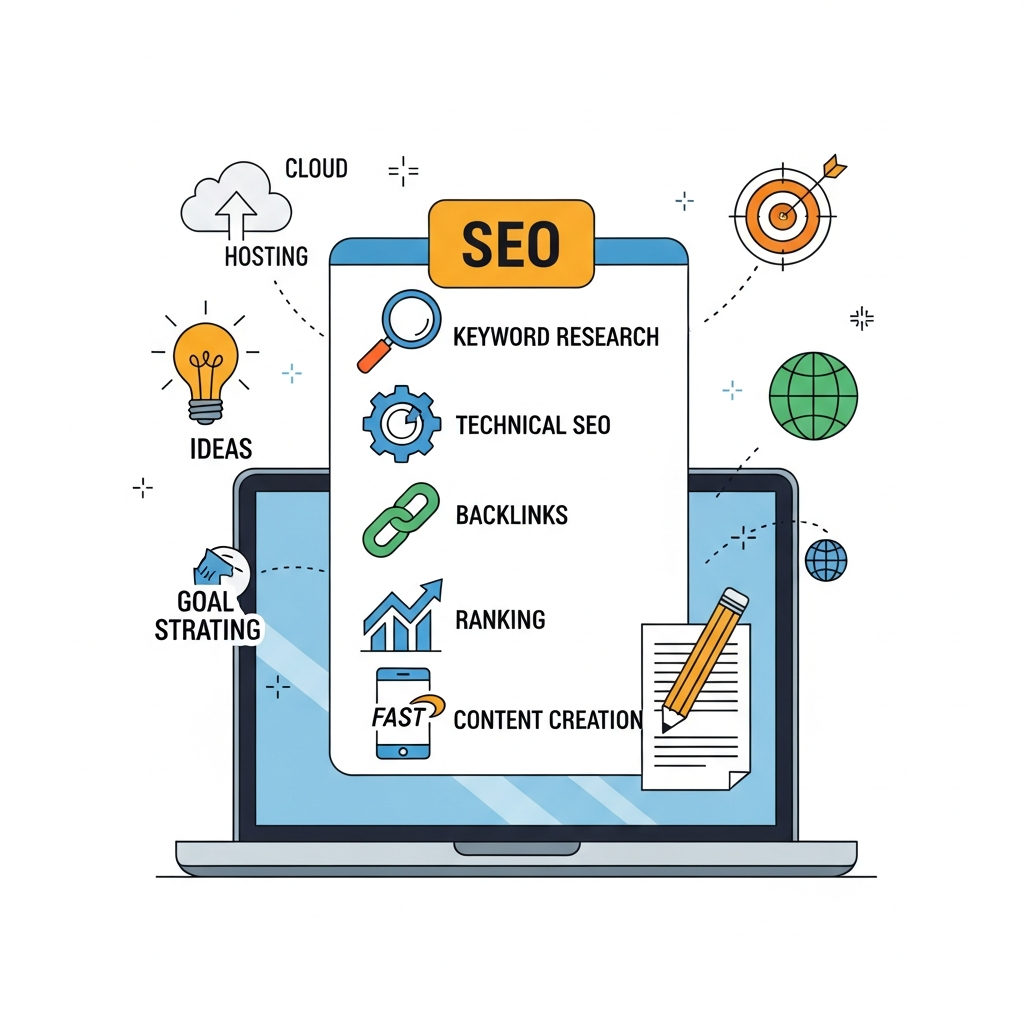
Visual for Why Your Website Isn't Ranking: 7 Common Seo Mistakes and How to Fix Them

2. Keyword Cannibalization: The War Within

There is a persistent myth in the SEO community that the more pages you have targeting a specific keyword, the better your chances of ranking. This is a fundamental misunderstanding of how search engines perceive authority. This phenomenon, known as keyword cannibalization, occurs when multiple pages on your site compete for the same search query. Instead of presenting a single, authoritative pillar of information, you are forcing Google to choose between several diluted options.

The result? Google often chooses neither, or it fluctuates between them, preventing any single page from gaining the “link juice” and historical authority required to crack the top three positions. It is the digital equivalent of a political party splitting its own vote, allowing a less qualified opponent to win the seat.

The Fix: Content Consolidation and Semantic Mapping

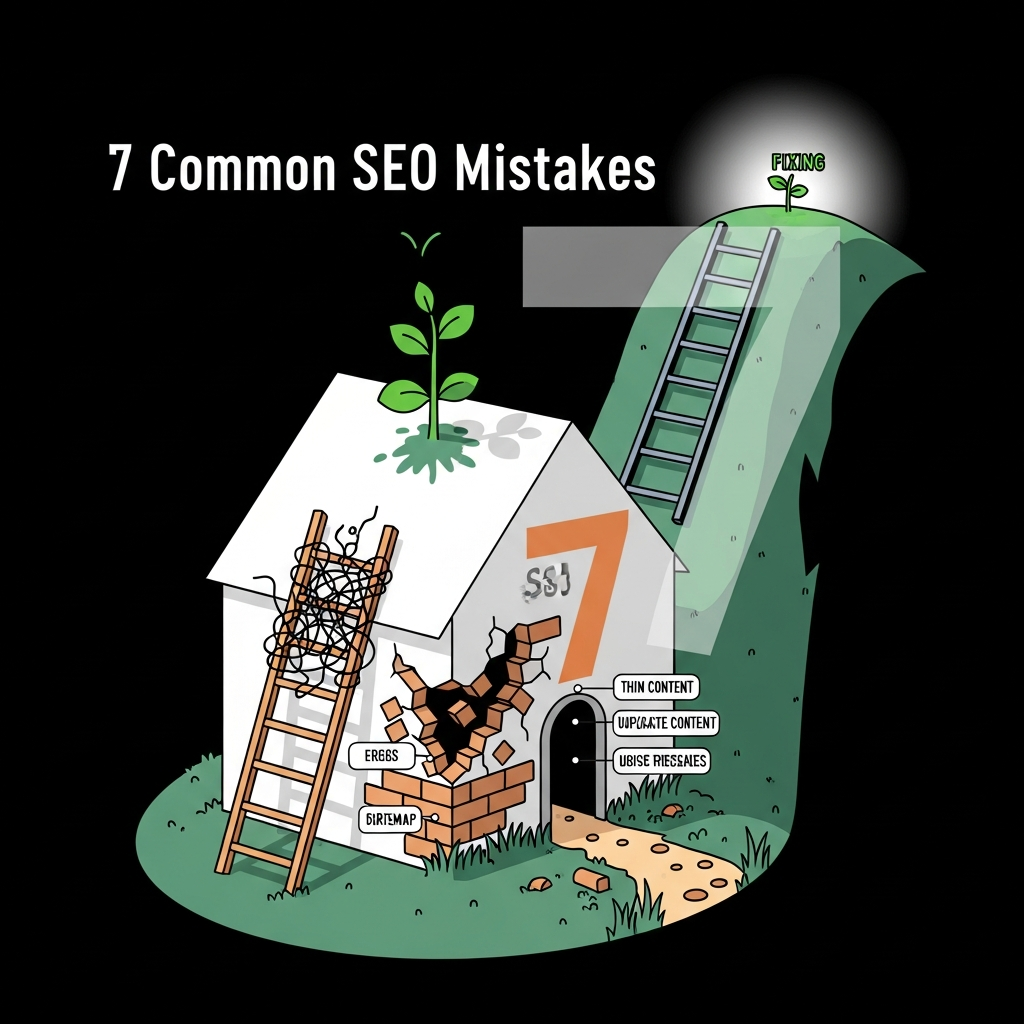
Audit your content library for thematic overlap. If you have three blog posts titled “How to Bake Bread,” “Best Bread Baking Tips,” and “Bread Making for Beginners,” you are cannibalizing yourself. The solution is content pruning and consolidation.

  • Identify: Use Google Search Console to see which pages are ranking for the same queries.
  • Consolidate: Merge the insights from multiple “thin” pages into one “mega-guide” that provides comprehensive value.
  • Redirect: Use 301 redirects from the old, deleted URLs to the new authoritative URL. This transfers the existing “ranking power” to the new destination.
  • Clarify: Use unique H1 tags and meta-descriptions to ensure each page has a distinct, non-overlapping purpose.
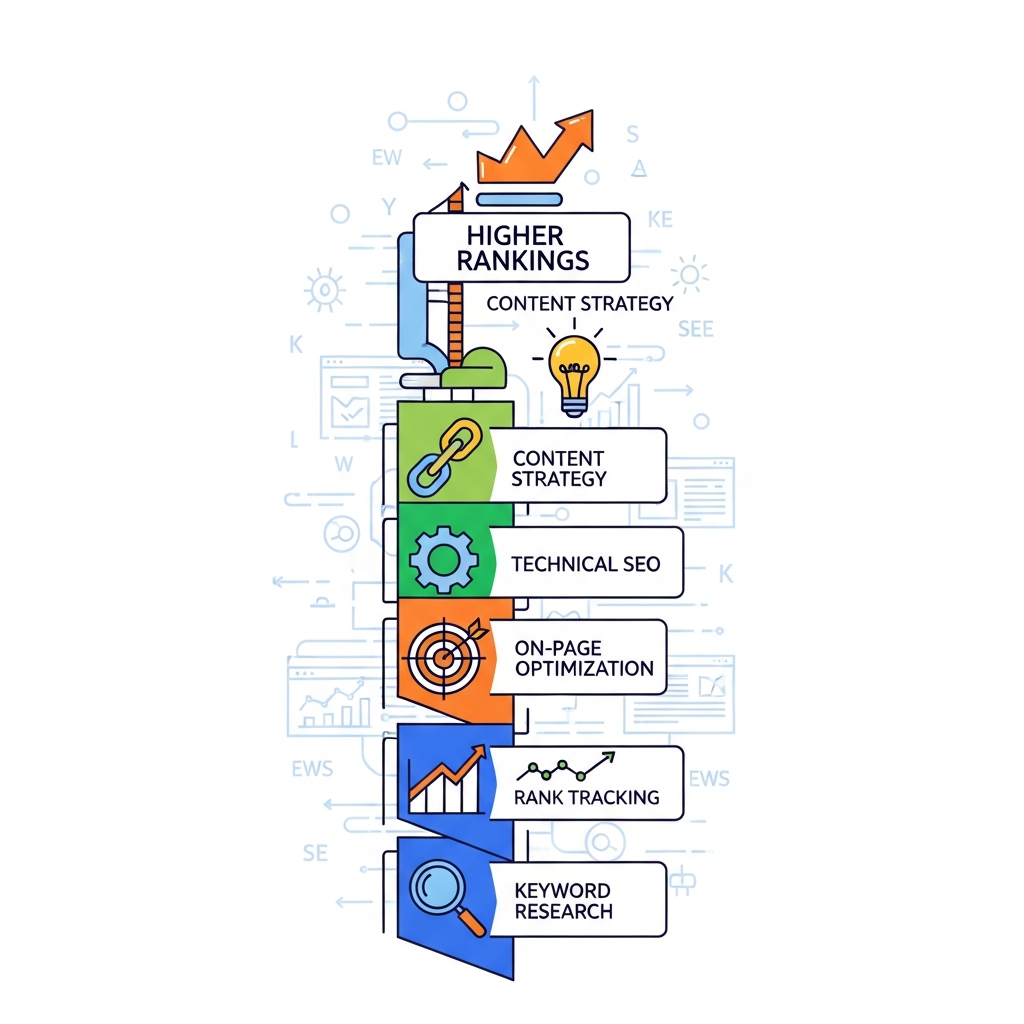
Visual for Why Your Website Isn't Ranking: 7 Common Seo Mistakes and How to Fix Them

3. The Backlink Paradox: Valuing Quantity Over Qualitative Authority

In the early days of the web, SEO was a numbers game. He who had the most links won. Today, the algorithm has evolved from a simple counter to a sophisticated forensic investigator. A thousand links from low-authority, “spammy” directories or irrelevant forums are not just useless—they are actively toxic. This is the “Backlink Paradox”: the harder you try to “get” links through artificial means, the less likely you are to rank.

Google’s Penguin update and its subsequent iterations have made it clear that relevance and authority are the only currencies that matter. A single link from a high-authority publication like The New York Times or a niche-specific leader like Search Engine Journal is worth more than ten thousand links from a private blog network (PBN).

The Fix: Earned Authority Through “Skyscraper” Content

Stop “building” links and start “earning” them. This requires a shift from transactional outreach to a PR-based mindset. The most effective method remains the Skyscraper Technique: find a piece of content in your niche that is already performing well and has many backlinks, then create something significantly better—more data-driven, better designed, and more current.

Once your superior asset is live, reach out to the individuals who linked to the original piece and demonstrate the added value of your resource. Additionally, focus on Digital PR. Provide expert quotes to journalists via platforms like HARO (Help A Reporter Out) or Featured.com. When you become a cited source of truth, the high-authority backlinks follow naturally, signaling to Google that you are a trusted entity in your field.

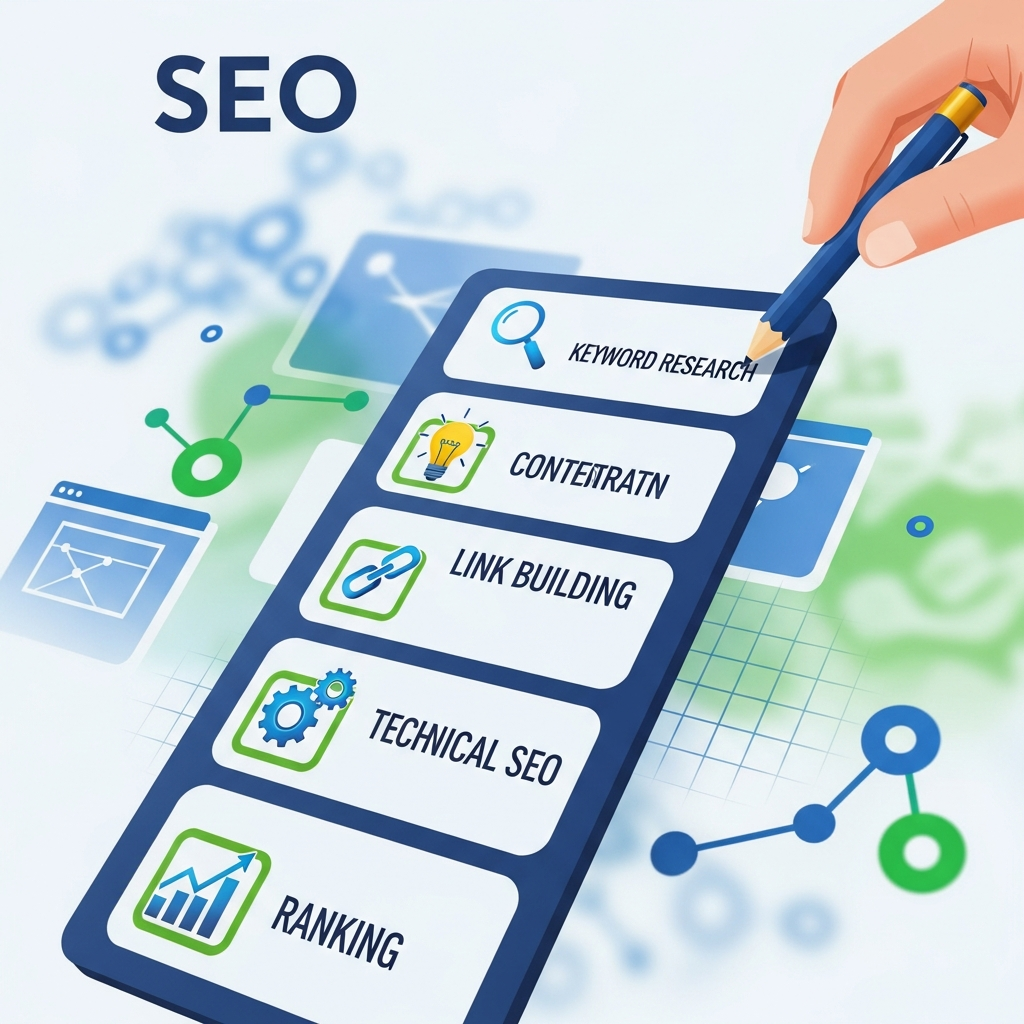
Visual for Why Your Website Isn't Ranking: 7 Common Seo Mistakes and How to Fix Them

4. Neglecting Core Web Vitals: The User Experience Mandate

For years, SEOs focused almost exclusively on keywords and links, treating the actual user experience (UX) as a secondary concern. That era ended with the introduction of Core Web Vitals. Google has explicitly stated that page experience is a ranking factor. If your site is sluggish, shifts layout during loading, or provides a frustrating mobile experience, your rankings will suffer, regardless of your content’s quality.

The three pillars of Core Web Vitals are:

  • Largest Contentful Paint (LCP): How fast the main content loads.
  • First Input Delay (FID): How quickly the site responds to a user’s first interaction.
  • Cumulative Layout Shift (CLS): How much the page elements “jump around” as the site loads.

The Fix: Performance Optimization as a Competitive Advantage

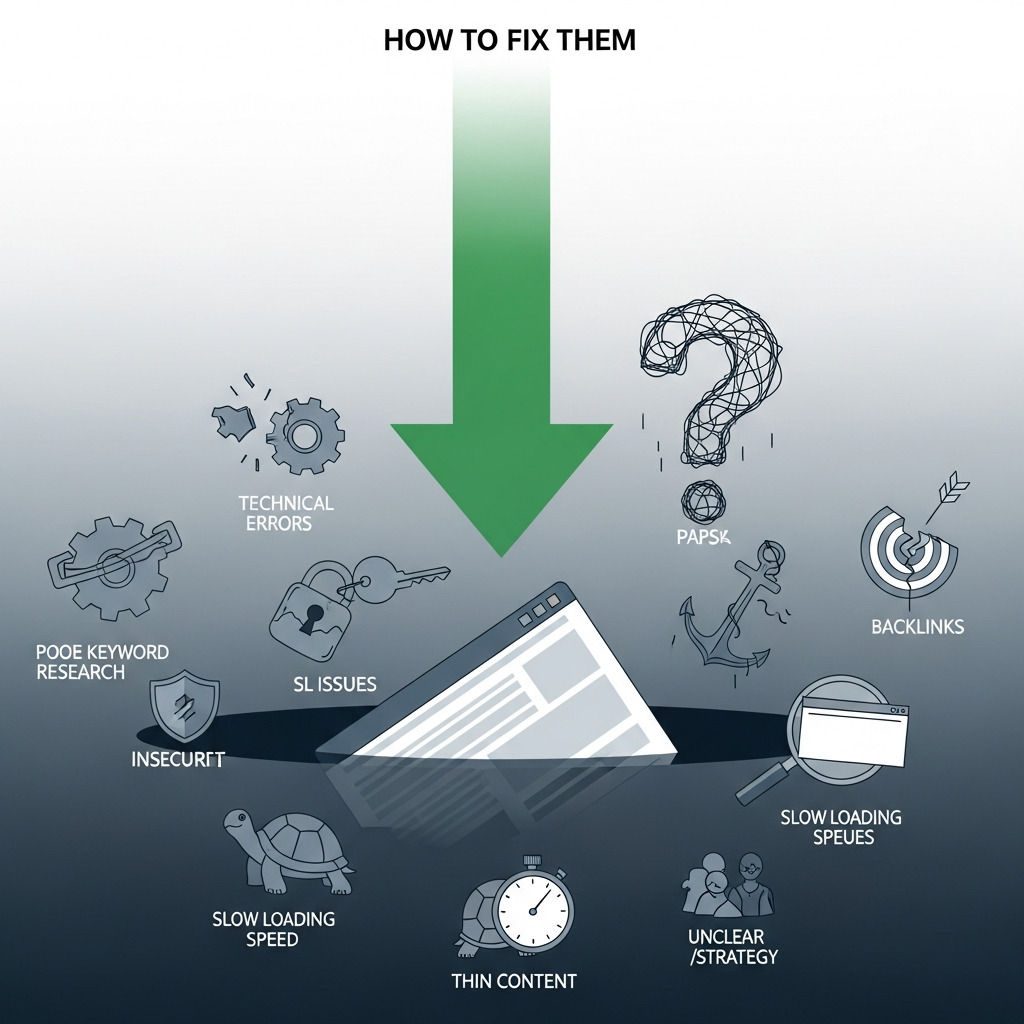
Performance optimization is an ongoing technical requirement. Start by optimizing your images; use next-gen formats like WebP and implement “lazy loading” so images only load as the user scrolls. Minify your CSS, JavaScript, and HTML to reduce the payload size. Consider a Content Delivery Network (CDN) like Cloudflare to serve your site from servers physically closer to the user.

Most importantly, adopt a mobile-first philosophy. Google uses the mobile version of your site for indexing and ranking. If your desktop site is a masterpiece but your mobile site is a cramped, unreadable mess, you are effectively invisible to the majority of the world’s searchers.
Visual for Why Your Website Isn't Ranking: 7 Common Seo Mistakes and How to Fix Them

5. The “Thin Content” Epidemic: Sacrificing Substance for Frequency

There is a pervasive anxiety among content creators that they must publish daily to remain relevant. This often leads to the production of “thin content”—articles that are short, derivative, and offer no unique insight. From an analytical perspective, thin content is a liability. It increases your site’s “noise-to-signal” ratio and fails to satisfy the user’s search intent.

Google’s E-E-A-T guidelines (Experience, Expertise, Authoritativeness, and Trustworthiness) are designed to filter out the superficial. If your content looks like it was generated by a first-generation AI or written by someone with only a passing familiarity with the subject, it will never reach the first page.

The Fix: The Deep-Dive Methodology

Quality is a prerequisite, not a luxury. Instead of publishing four 500-word posts a week, publish one 2,500-word comprehensive guide. Incorporate original research, proprietary data, expert interviews, and unique case studies. Use Semantic SEO: don’t just target a keyword; cover the entire topic. If you are writing about “Remote Work,” you must also address “digital nomadism,” “asynchronous communication,” “VPN security,” and “mental health for remote employees.”

By creating a comprehensive topical map, you signal to the algorithm that your domain is an exhaustive resource. This builds “Topical Authority,” which allows you to rank for high-competition keywords that would otherwise be out of reach.

>6. Misaligning with Search Intent: The Psychological Disconnect

You may have the best-written article in the world, but if it doesn’t match the search intent of the user, it will fail. Search intent is the “why” behind a query. Generally, intent falls into four categories: Informational, Navigational, Transactional, and Commercial Investigation.

A common mistake is trying to rank a transactional “product page” for an informational query. If someone searches for “the history of coffee,” they are looking for an educational essay, not a “Buy Now” button for a bag of beans. Conversely, if they search for “best espresso machine reviews,” they are in the commercial investigation phase and want comparisons, not a deep dive into the botany of Coffea arabica.

The Fix: Reverse-Engineering the SERP

Before writing a single word, perform a manual search for your target keyword. Look at the top three results. What type of content are they? Are they listicles, long-form guides, product pages, or videos? Google is showing you exactly what the user wants. If the top results are all “How-to” guides and you are trying to rank a landing page, you are fighting an uphill battle against the algorithm’s understanding of human psychology.

Align your content structure with the dominant intent. Use the inverted pyramid style for informational queries—provide the most important answer immediately, then delve into the details. For commercial queries, provide clear comparisons, pros and cons, and pricing data. When your content satisfies the user’s intent, your dwell time increases and your bounce rate decreases—both of which are potent signals of quality to the search engine.

>7. The Internal Link Vacuum: Failing to Distribute Authority

Many site owners focus so heavily on external backlinks that they completely neglect their internal linking structure. Internal links are the nervous system of your website. They guide users to related content, but more importantly, they help search engines understand the hierarchy and relationship between your pages. Without internal links, your high-authority “hub” pages cannot pass their “link juice” to your deeper, more specific “spoke” pages.

A page with no internal links is known as an orphan page. For Google, an orphan page is a sign of low importance. If you don’t care enough to link to it from within your own site, why should the search engine prioritize it in its index?

The Fix: Implementing the Hub-and-Spoke Model

Adopt a “Topic Cluster” or “Hub-and-Spoke” model. Create a central, comprehensive pillar page for a broad topic (the Hub) and link it to several more specific, related articles (the Spokes). Each spoke article should also link back to the pillar page.

Use descriptive anchor text. Instead of using “click here,” use “advanced SEO strategies” or “benefits of organic gardening.” This gives the search engine context about the destination page. Regularly audit your site for orphan pages and integrate them into your broader content ecosystem. By creating a dense, logical web of internal links, you ensure that every part of your site benefits from the authority of your best-performing content.


>The Synthesis: SEO as an Iterative Discipline

The fundamental truth of SEO is that it is never “finished.” The search engines of today are vastly more sophisticated than those of five years ago, and they will be eclipsed by the AI-driven models of next year. However, the core principles remain constant: your website must be technically sound, your content must be authoritative and useful, and your user experience must be frictionless.

If your website isn’t ranking, it is not an indictment of your business’s value, but rather a diagnostic indicator that your communication with the search engine is flawed. By systematically addressing these seven mistakes—from the technical bedrock to the nuances of search intent—you move from being a passive observer of the algorithm to an active participant in your own digital success. SEO is a marathon of incremental gains. Start with the foundation, refine the strategy, and the rankings will inevitably follow.

Are you ready to stop guessing and start ranking? The transition from obscurity to authority begins with a single, data-driven audit. Reclaim your place at the top of the search results by treating SEO not as a dark art, but as the high-stakes engineering discipline that it truly is.
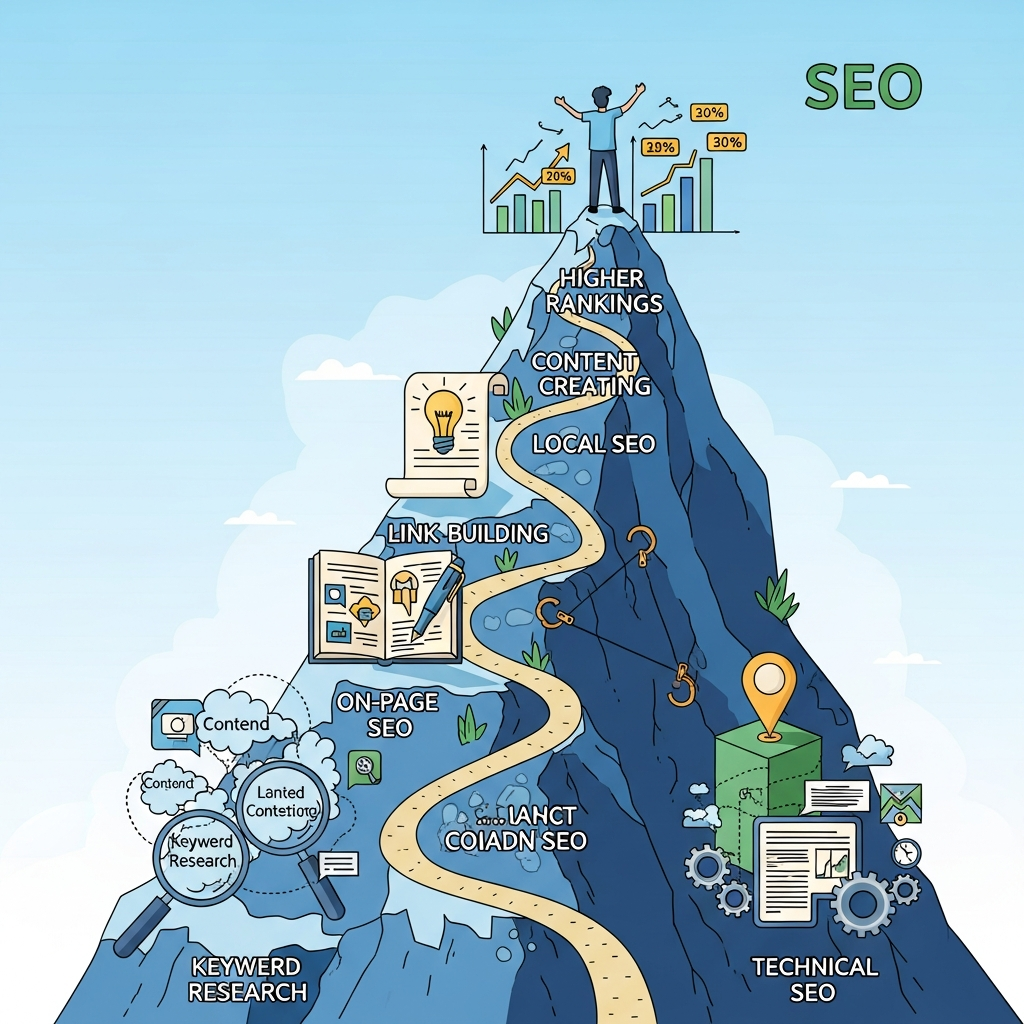
The Complete Seo Checklist: a Step-by-step Guide for Higher Rankings

In the contemporary digital ecosystem, Search Engine Optimization (SEO) has transcended its origins as a mere collection of technical parlor tricks. It has evolved into a rigorous, multidisciplinary science that sits at the intersection of linguistics, psychology, and computer science. For the uninitiated, the Google algorithm remains a cryptic deity, demanding tribute in the form of backlinks and meta-tags. However, for the seasoned practitioner, SEO is an exercise in architectural precision and semantic clarity. This guide serves as your definitive manual for navigating the labyrinthine corridors of modern search dynamics.

Visual for The Complete Seo Checklist: a Step-by-step Guide for Higher Rankings

Section 1: The Technical Infrastructure—Building the Bedrock

Before one can contemplate the nuances of content strategy or the psychological triggers of a meta-description, one must ensure that the underlying digital scaffolding is sound. Technical SEO is the foundation upon which all other efforts rest. If your technical house is built on sand, no amount of high-quality content will prevent it from sinking into the depths of the second page of search results.

Crawlability and Indexability

The primary directive of any search engine is to discover, parse, and store information. If your site structure prevents a crawler from accessing your pages, you are essentially invisible. Ensure your Robots.txt file is not inadvertently blocking critical directories. Furthermore, the implementation of an XML Sitemap is non-negotiable; it acts as a cartographic guide for Google’s spiders, ensuring that even the most remote corners of your domain are indexed.

The Canonicalization Conundrum

Duplicate content is the silent killer of search rankings. When multiple versions of a page exist (e.g., via URL parameters or different protocols like HTTP vs. HTTPS), search engines struggle to identify the “authoritative” source. By utilizing the rel=”canonical” tag, you provide a clear instruction to the algorithm, consolidating link equity and preventing internal competition. It is a subtle but vital act of digital hygiene.

HTTPS and Security Protocols

In an era defined by data breaches and privacy concerns, security is not just a preference; it is a ranking signal. The transition from HTTP to HTTPS via an SSL certificate is mandatory. Beyond the direct algorithmic benefit, the “Secure” padlock in the browser bar is a critical trust signal for users. In the world of SEO, trust is a currency that can be traded for conversions.

Visual for The Complete Seo Checklist: a Step-by-step Guide for Higher Rankings

Section 2: The Semantic Core—Keyword Research and Intent Taxonomy

The days of “keyword stuffing” are long dead, buried under the weight of Google’s BERT and RankBrain updates. Modern search engines do not merely look for strings of characters; they seek to understand intent. Keyword research, therefore, is no longer a volume-hunting expedition; it is an ethnographic study of your target audience.

Decoding Search Intent

Every query typed into a search bar carries a specific psychological motivation. These generally fall into four categories:

  • Informational: The user seeks knowledge (e.g., “What is the capital of Estonia?”).
  • Navigational: The user seeks a specific website (e.g., “Facebook login”).
  • Transactional: The user is ready to purchase (e.g., “Buy iPhone 15 Pro Max”).
  • Commercial Investigation: The user is comparing options (e.g., “Best SEO tools 2024”).

Your content must be laser-focused on satisfying the specific intent behind the keywords you target. Ranking for a high-volume transactional keyword with an informational blog post is an exercise in futility; the user will bounce, and your rankings will plummet.

The Long-Tail and Niche Dominance

While high-volume “head” terms are enticing, they are often prohibitively competitive. The strategic practitioner looks to the long-tail keywords—queries that are more specific and often carry higher conversion rates. These phrases reflect the natural language of human speech and are increasingly relevant in the age of voice search and generative AI interfaces.

Visual for The Complete Seo Checklist: a Step-by-step Guide for Higher Rankings

Section 3: On-Page Optimization—The Art of Relevance

On-page SEO is the process of optimizing individual web pages to rank higher and earn more relevant traffic. It is where your technical foundation meets your creative strategy. It requires a meticulous attention to detail and an understanding of how both humans and machines read a page.

Title Tags and Meta Descriptions: The Digital Storefront

Your title tag is arguably the most important on-page element. It must be concise (under 60 characters) and front-loaded with your primary keyword. However, it must also be written for humans. Think of it as a headline in a prestigious newspaper; it must provoke curiosity without descending into “clickbait.” Similarly, the meta description serves as your elevator pitch. While it may not be a direct ranking factor, it is a crucial driver of Click-Through Rate (CTR), which indirectly influences your authority.

Header Hierarchy (H1-H6)

A well-structured page is a readable page. Use a single H1 tag for your main title and use H2 and H3 tags to organize your content logically. This hierarchy allows crawlers to understand the “thematic weight” of different sections. It also provides a better experience for users who skim content—which, let’s be honest, is most of them.

Image Optimization and Alt Text

Images are not merely aesthetic ornaments; they are opportunities for optimization. Large image files can degrade page speed, so compression is essential. Furthermore, the Alt Text attribute is vital for accessibility and for providing context to search engines that cannot “see” the image. Describe the image accurately, and if it is relevant, include a keyword—but avoid the temptation to over-optimize.

“SEO is not about gaming the system; it is about learning how to speak the system’s language so that your value is never lost in translation.”

Visual for The Complete Seo Checklist: a Step-by-step Guide for Higher Rankings

Section 4: Content Strategy—The Era of E-E-A-T

Google’s quality rater guidelines place a heavy emphasis on E-E-A-T: Experience, Expertise, Authoritativeness, and Trustworthiness. Content is no longer just about word count or keyword density; it is about establishing yourself as a credible voice in a noisy digital landscape.

The Death of Thin Content

Regurgitating existing information is a recipe for stagnation. To rank in the top tier, your content must provide “added value.” This could be original research, a unique perspective, or a superior user experience. If your page provides the same information as the ten pages above it, Google has no incentive to promote you. You must aim for 10x Content—material that is ten times better than anything currently available for that query.

Semantic Richness and LSI Keywords

Latent Semantic Indexing (LSI) is a fancy way of saying “related concepts.” If you are writing about “Paris,” Google expects to see terms like “Eiffel Tower,” “Louvre,” and “Seine.” The presence of these related terms confirms the depth of your content. Academic and comprehensive writing naturally incorporates these concepts, proving to the algorithm that you are covering the topic holistically rather than just chasing a single keyword.

The Importance of Content Freshness

In many niches, particularly those related to technology or news, the “decay” of information is rapid. A guide written in 2021 might be obsolete by 2024. Regularly updating your high-performing content signals to Google that your site is active and that your information remains accurate. This “freshness factor” can provide a significant boost to older pages that have begun to slip in the rankings.

Visual for The Complete Seo Checklist: a Step-by-step Guide for Higher Rankings

Section 5: Off-Page SEO—Building Digital Authority

If on-page SEO is what you say about yourself, off-page SEO is what others say about you. In the eyes of a search engine, a backlink is a vote of confidence. However, not all votes are created equal. The quality and relevance of your link profile are far more important than the raw number of links.

The Anatomy of a High-Quality Backlink

A link from a high-authority, relevant site (like an industry-leading publication or a university) is worth infinitely more than a hundred links from obscure, irrelevant blogs. Focus on Editorial Merit. This is achieved through guest posting on reputable sites, digital PR, and creating “link magnets”—original data, infographics, or tools that people naturally want to reference.

The Danger of “Toxic” Links

The history of SEO is littered with the carcasses of websites that tried to “buy” their way to the top. Link farms, PBNs (Private Blog Networks), and automated link-building schemes are a direct violation of Google’s terms of service. While they might provide a short-term boost, they inevitably lead to manual penalties or algorithmic suppression. A clean, organic link profile is the only sustainable strategy.

Social Signals and Brand Mentions

While the direct impact of social media shares on SEO is a subject of much debate, there is no denying the indirect benefits. High social engagement leads to increased brand awareness, which leads to more branded searches and, ultimately, more organic links. Furthermore, unlinked brand mentions are increasingly recognized by algorithms as a signal of authority. Being talked about—even without a link—matters.

>Section 6: User Experience (UX) and Core Web Vitals

Google has made it explicitly clear: user experience is a ranking factor. The Core Web Vitals update solidified this by introducing metrics that measure how users perceive the speed, responsiveness, and visual stability of a page.

LCP, FID, and CLS: The Technical Trinity

  • Largest Contentful Paint (LCP): Measures loading performance. To provide a good user experience, LCP should occur within 2.5 seconds of when the page first starts loading.
  • First Input Delay (FID): Measures interactivity. Pages should have an FID of less than 100 milliseconds.
  • Cumulative Layout Shift (CLS): Measures visual stability. Pages should maintain a CLS of less than 0.1.

A site that is slow or “jumpy” creates friction. Search engines want to reward sites that provide a seamless experience. Optimization techniques include using a Content Delivery Network (CDN), minifying CSS and JavaScript, and ensuring that images have defined dimensions to prevent layout shifts.

Mobile-First Indexing

We no longer live in a world where mobile optimization is an “extra.” Google now uses the mobile version of a site’s content for indexing and ranking. If your mobile site is a stripped-down, inferior version of your desktop site, your rankings will suffer. Responsive design is the industry standard for a reason; it ensures a consistent experience across all devices.

>Section 7: The Perpetual Cycle of Analysis and Iteration

SEO is not a “set it and forget it” endeavor. It is a continuous loop of implementation, measurement, and refinement. The landscape changes, competitors adapt, and algorithms evolve. To stay ahead, you must become a student of your own data.

Google Search Console and Analytics

These are the two most critical tools in your arsenal. Google Search Console provides a direct line of communication from the search engine, alerting you to crawl errors, indexing issues, and manual penalties. Google Analytics 4 (GA4) allows you to track user behavior once they arrive on your site. Are they converting? Where are they dropping off? This data should inform your future content and technical decisions.

Competitive Intelligence

You do not exist in a vacuum. Your competitors are likely pursuing the same keywords and audience. Use tools like Ahrefs, SEMrush, or Moz to analyze their link profiles and content strategies. Don’t just copy them; identify their weaknesses and capitalize on them. If they have a high-ranking post that is outdated or poorly formatted, that is your opportunity to create something superior.

The Human Element: Conversion Rate Optimization (CRO)

Ranking #1 for a high-volume keyword is a vanity metric if that traffic doesn’t translate into business value. Conversion Rate Optimization is the process of turning searchers into customers. This involves A/B testing headlines, optimizing Call-to-Action (CTA) buttons, and simplifying the checkout or contact process. SEO gets them to the door; UX and CRO bring them inside and make them stay.

>Conclusion: The Future of Search

As we peer into the future, the rise of Artificial Intelligence and Search Generative Experience (SGE) promises to disrupt the status quo once again. However, the fundamental principles of SEO remain unchanged: provide the most relevant, authoritative, and accessible answer to a user’s query. By following this comprehensive checklist, you are not just optimizing for an algorithm; you are optimizing for the human experience. The rankings will follow.

The journey of a thousand rankings begins with a single audit. Start with your technical foundation, move to your semantic strategy, and never stop refining your authority. In the high-stakes game of digital visibility, the disciplined and the detailed are the ones who ultimately prevail.

Mastering Search Engine Optimization: How to Rank #1 on Google

In the digital epoch, the quest for the summit of Google’s search results is often portrayed as a modern-day crusade—a blend of arcane sorcery, rigorous data science, and an unhealthy obsession with the whims of an enigmatic algorithm. To “rank #1” is the ultimate meritocracy of the internet, yet the path to this zenith is littered with the corpses of websites that tried to “game” the system. To master Search Engine Optimization (SEO) is not merely to optimize for a bot, but to curate an experience that satisfies the insatiable curiosity of the human psyche while adhering to the stringent logical frameworks of Mountain View’s silicon giants.

This guide serves as a comprehensive manual for the discerning marketer and the meticulous technologist. We shall deconstruct the multifaceted architecture of SEO, moving beyond the pedestrian advice of “writing good content” into the granular, analytical, and often counter-intuitive strategies that separate the apex predators of the SERPs (Search Engine Results Pages) from the also-rans.

Visual for Mastering Search Engine Optimization: How to Rank #1 on Google

I. The Ontological Shift: From Keywords to Entities

For decades, SEO was a game of lexical matching. If a user searched for “bespoke leather shoes,” the site with that exact phrase repeated the most frequently—and perhaps bolded for good measure—would win. That era is dead. Google has evolved from a directory of strings into a repository of things. This transition to Semantic Search means the algorithm now understands the relationship between entities.

An entity, in SEO parlance, is a well-defined object or concept. When you write about SEO, Google recognizes its relationship to “digital marketing,” “backlinks,” “RankBrain,” and “John Mueller.” Ranking #1 requires you to establish your content within this web of relationships. You are no longer just targeting keywords; you are building a knowledge graph.

“The goal of search is to understand exactly what you mean and give you back exactly what you want.” – Larry Page

To master this, one must employ LSI (Latent Semantic Indexing) keywords—though the term is technically archaic, the principle of topical depth remains. Your content must demonstrate “topical authority.” If you want to rank for a competitive term, you cannot simply write one stellar post. You must build a “Topic Cluster” consisting of a pillar page and multiple supporting sub-topics, all interconnected via a sophisticated internal linking structure.

Visual for Mastering Search Engine Optimization: How to Rank #1 on Google

II. Technical SEO: The Infrastructure of Invisibility

If content is the sovereign, technical SEO is the castle. Without a robust foundation, your brilliant prose will languish in the dark corners of the deep web, unindexed and unloved. Technical SEO is an exercise in reducing friction for Google’s crawlers.

1. Crawl Budget and Efficiency

Google does not have infinite resources to spend on your website. Each site is allocated a “crawl budget.” If your site is bloated with 404 errors, unnecessary redirects (301 chains), and low-quality “zombie” pages, the Googlebot will exhaust its budget before it finds your high-value content. Use tools like Screaming Frog to conduct a forensic audit of your site’s health.

2. The Schema Markup: Speaking Google’s Native Tongue

While Google is adept at parsing natural language, it prefers structured data. Schema Markup (JSON-LD) allows you to explicitly tell the search engine what your content represents. Is it a recipe? A product? A FAQ? By implementing Schema, you increase your chances of appearing in “Rich Snippets,” which dramatically improves Click-Through Rate (CTR), a known secondary ranking signal.

3. HTTPS and Security

In an era of rampant data breaches, security is not optional. Since 2014, HTTPS has been a confirmed ranking signal. A site without an SSL certificate is effectively shouting to the world—and to Google—that it is untrustworthy. In the eyes of the algorithm, trust is a prerequisite for authority.

Visual for Mastering Search Engine Optimization: How to Rank #1 on Google

III. The E-E-A-T Framework: The Currency of Credibility

Google’s Quality Rater Guidelines introduce us to E-E-A-T: Experience, Expertise, Authoritativeness, and Trustworthiness. This is not a direct “ranking factor” in the way a backlink is, but it is the lens through which Google evaluates the quality of its index.

  • Experience: Does the author have first-hand, “boots-on-the-ground” experience with the subject?
  • Expertise: Is the author a recognized professional or an academic in the field?
  • Authoritativeness: Does the domain itself carry weight? Is it the “go-to” source for this niche?
  • Trustworthiness: Is the information accurate, cited, and transparent?

To rank #1, especially in “Your Money Your Life” (YMYL) niches like finance or health, you must cultivate these signals. This involves creating detailed author bios, citing reputable sources, and ensuring your “About Us” page reflects a legitimate organization rather than a faceless content farm.

Visual for Mastering Search Engine Optimization: How to Rank #1 on Google

IV. Content Orchestration: Beyond the “High-Quality” Cliché

The advice to “write high-quality content” is as ubiquitous as it is useless. What constitutes quality in the eyes of an algorithm? It is a combination of Search Intent and Comprehensive Utility.

Decoding Search Intent

There are four primary types of search intent. If your content does not align with the user’s intent, you will never rank, regardless of how “good” the writing is.

  1. Informational: The user wants to learn (e.g., “What is SEO?”).
  2. Navigational: The user is looking for a specific site (e.g., “Google Search Console login”).
  3. Commercial: The user is researching before a purchase (e.g., “Best SEO tools 2024”).
  4. Transactional: The user is ready to buy (e.g., “Ahrefs subscription discount”).

Ranking #1 requires a forensic analysis of the current top 10 results. If the SERP for your target keyword is filled with listicles, do not try to rank with a long-form white paper. The algorithm has already decided what the user wants; your job is to provide the most refined version of that format.

The “Skyscraper” Technique 2.0

The Skyscraper technique—finding the best content and making something better—is still viable, but it requires more nuance today. “Better” no longer means “longer.” It means more readable, more visually engaging, and more updated. Use original data, bespoke infographics, and expert interviews to add unique value that cannot be replicated by generative AI.

Visual for Mastering Search Engine Optimization: How to Rank #1 on Google

V. On-Page Optimization: The Art of the Nuance

On-page SEO is the process of optimizing individual web pages. While the basics are well-known, the mastery lies in the execution of the Title Tag and Meta Description as psychological triggers.

Your Title Tag is your first—and often only—chance to capture a user’s attention. It should be a blend of your primary keyword and a “power word” that increases CTR. For example, instead of “SEO Guide,” use “Mastering SEO: The Definitive 2024 Blueprint for Ranking #1.”

Furthermore, internal linking is perhaps the most undervalued lever in SEO. By strategically linking from high-authority pages (like your homepage) to “deep” content pages, you distribute Link Equity (or “Link Juice”) throughout your site, signaling to Google which pages are the most important.

>VI. Off-Page SEO: The Machiavellian World of Link Building

If on-page SEO is what you say about yourself, off-page SEO is what the world says about you. Backlinks remain the most significant ranking factor in Google’s algorithm. However, the days of quantity-over-quality are long gone. Ten links from high-authority, relevant domains are worth more than ten thousand links from disparate, low-quality blogs.

The Power of Relevance

A backlink from a niche-specific site (e.g., a tech blog linking to a software site) carries exponentially more weight than a link from a generic news site. Link building should be approached as Digital PR. This includes guest posting on reputable sites, the “Broken Link Building” strategy, and—most effectively—creating “Link Magnets” (original research, calculators, or controversial opinion pieces that demand citation).

“The best way to get links is to create something that is actually worth linking to.” – A sentiment often echoed by Matt Cutts.

Beware the “Black Hat” temptation. Purchasing link packages from Fiverr or participating in link farms will eventually lead to a manual penalty. Google’s Penguin algorithm and its subsequent AI-driven updates are incredibly adept at sniffing out unnatural link patterns. Slow, organic growth is the only sustainable path to the #1 spot.

>VII. User Experience (UX) and the Core Web Vitals

In 2021, Google officially integrated Core Web Vitals as ranking signals. This move codified what we already knew: Google prioritizes the user. If your site is slow, unresponsive, or suffers from “layout shift” (where elements jump around as they load), your rankings will suffer.

  • Largest Contentful Paint (LCP): Measures loading performance. Aim for 2.5 seconds or faster.
  • First Input Delay (FID): Measures interactivity. Aim for less than 100 milliseconds.
  • Cumulative Layout Shift (CLS): Measures visual stability. Aim for a score of less than 0.1.

Mobile-first indexing is also the standard. Your site must be perfectly responsive. If your mobile experience is a secondary thought, you are effectively invisible to the majority of searchers. SEO and UX are no longer separate disciplines; they are a symbiotic whole.

>VIII. The Artificial Intelligence Frontier: SGE and Beyond

As we navigate the mid-2020s, the elephant in the room is SGE (Search Generative Experience). Google is increasingly using AI to provide direct answers on the SERP, potentially leading to “zero-click” searches. To rank #1 in this environment, you must optimize for AI Overviews.

This involves being extremely concise in your definitions, using clear heading structures, and providing “nuggets” of information that an AI can easily scrape and attribute to you. Ironically, the rise of AI makes the human element—your unique perspective and “Experience” (the first ‘E’ in E-E-A-T)—more valuable than ever. AI can summarize facts, but it cannot (yet) provide a nuanced, human critique of a complex industry.

>IX. Measuring Success: The Analytics of Victory

Ranking #1 is a vanity metric if it doesn’t lead to conversions. To truly master SEO, one must be proficient in Google Analytics 4 (GA4) and Google Search Console. You must track not just your position, but your “Share of Voice,” your “Engagement Rate,” and your “Conversion Rate Optimization” (CRO).

SEO is not a one-time project; it is a cycle of hypothesis, execution, measurement, and refinement. The algorithm changes thousands of times a year. What works today might be relegated to the dustbin of history by the next Core Update. Vigilance is the price of dominance.

>X. Conclusion: The Long Game

Achieving the #1 spot on Google is not about “tricking” the algorithm. It is about becoming the most authoritative, trustworthy, and useful resource on the internet for your chosen topic. It requires a Herculean effort across technical, creative, and analytical domains. It is a game of marginal gains—optimizing a title here, speeding up a server there, and earning a high-authority link tomorrow.

Those who view SEO as a “hack” will always be at the mercy of the next update. But those who view it as a commitment to excellence—a way to ensure that the best information reaches the people who need it most—will find themselves not just at the top of the search results, but at the forefront of their industry. The view from the top is spectacular, but the climb is where the true mastery is forged.

10 Proven Seo Strategies to Skyrocket Your Organic Traffic Fast

The search engine landscape is currently undergoing a seismic shift, one that renders the archaic practices of the early 2010s not just obsolete, but actively detrimental to your digital footprint. As we navigate the era of Generative AI, Search Generative Experience (SGE), and increasingly sophisticated Neural Matching, the “hack” is dead. Long live the strategy. To skyrocket organic traffic in the current milieu requires a synthesis of pedantic technical precision and a flair for psychological resonance.

For the uninitiated, SEO often feels like trying to nail jelly to a wall. For the expert, it is a game of probability, signals, and semantic engineering. If you are seeking a “magic button,” you are in the wrong place. However, if you are looking for a robust, battle-tested framework that leverages the current algorithmic biases of Google’s Hummingbird, RankBrain, and Smith updates, then let us begin our deep dive into the ten pillars of modern organic dominance.

Visual for 10 Proven Seo Strategies to Skyrocket Your Organic Traffic Fast

1. The Psychography of Search Intent Mastery

In the prehistoric era of search, we optimized for keywords. Today, we optimize for intent. Google has moved beyond simple string matching to “things, not strings.” Understanding search intent is the difference between attracting a window shopper and converting a high-value lead.

Search intent generally falls into four buckets: Informational, Navigational, Transactional, and Commercial Investigation. However, elite practitioners look deeper into the micro-intent. What is the specific problem the user is trying to solve at this exact millisecond? To master this:

  • Analyze the SERP Features: If the search results for your target keyword are dominated by video carousels, writing a 3,000-word essay is a fool’s errand. The algorithm has decided the intent is visual.
  • Deconstruct the “People Also Ask” (PAA) Clusters: These are a goldmine for understanding the logical progression of user curiosity. Use these to structure your subheadings.
  • Map Content to the Funnel: Ensure your top-of-funnel (TOFU) content doesn’t read like a sales pitch, and your bottom-of-funnel (BOFU) content doesn’t hide the “Buy” button behind a philosophical treatise on industry trends.

“To know what a person seeks is to know their mind. To provide the answer before they have fully articulated the question is to own the market.”

>2. Establishing Topical Authority via Content Hubs

Google no longer views pages in isolation. It evaluates your site’s Topical Authority. If you write one brilliant article about “Quantum Computing” on a blog otherwise dedicated to sourdough recipes, you will never rank. The algorithm views you as an intruder in the space.

The solution is the Pillar-and-Spoke model (or Topic Clusters). This involves creating a comprehensive “Pillar Page” that provides a high-level overview of a broad topic and then linking to numerous “Spoke” pages that dive deep into specific sub-niches. This internal linking structure signals to Google that you have exhausted the topic, making you a definitive source.

Pro Tip: Ensure your internal links use descriptive anchor text. Avoid the “click here” trap; instead, use “comprehensive guide to quantum entanglement” to pass maximum semantic value between pages.

Visual for 10 Proven Seo Strategies to Skyrocket Your Organic Traffic Fast

3. The E-E-A-T Moat: Building Human Trust in an AI World

With the deluge of AI-generated content flooding the web, Google has doubled down on Experience, Expertise, Authoritativeness, and Trustworthiness (E-E-A-T). This is not a direct ranking factor in the way a backlink is, but it is a framework that influences how the algorithm perceives your quality.

To fortify your E-E-A-T moat, you must move beyond the anonymous corporate voice. You need the “Experience” component—the “scars” of someone who has actually done the work.

  • Author Bylines: Every piece of content should be attributed to a real human with a verifiable digital footprint. Link to their LinkedIn profile and a detailed “About the Author” page.
  • First-Person Insights: Incorporate original research, case studies, and “in my experience” anecdotes. AI can aggregate facts, but it cannot (yet) share the nuance of a failed experiment or a hard-won victory.
  • Fact-Checking: In niches categorized as YMYL (Your Money or Your Life), such as health or finance, having a medical or financial professional review your content is non-negotiable.
Visual for 10 Proven Seo Strategies to Skyrocket Your Organic Traffic Fast

4. Technical Infrastructure: Core Web Vitals and Beyond

You can have the most poetic content on the internet, but if your site takes five seconds to load on a 4G connection, your bounce rate will be a tragedy. Technical SEO is the foundation upon which your creative efforts rest. Google’s Core Web Vitals (CWV) are now essential metrics for ranking.

Focus on these three metrics with clinical obsession:

  • Largest Contentful Paint (LCP): How fast does the main content load? Aim for under 2.5 seconds.
  • Interaction to Next Paint (INP): This replaced First Input Delay (FID) as a core metric. It measures the overall responsiveness of your page to user interactions.
  • Cumulative Layout Shift (CLS): Does your “Purchase” button jump around while the page is loading, causing users to accidentally click an ad? If so, your CLS is poor. Aim for a score of less than 0.1.

Utilize server-side caching, image compression (WebP format), and a robust Content Delivery Network (CDN) to ensure your infrastructure is as lean as a professional athlete.

Visual for 10 Proven Seo Strategies to Skyrocket Your Organic Traffic Fast

5. Semantic Engineering and Schema Markup

If you want to communicate directly with search engine crawlers, you must speak their language: Schema Markup. This is structured data (JSON-LD) that tells Google exactly what it is looking at. Instead of hoping Google “guesses” that your page is a product review, you tell it explicitly.

Implementing advanced Schema types can significantly increase your Organic Click-Through Rate (CTR) by enabling “Rich Snippets.” These include star ratings, price points, FAQ dropdowns, and recipe times directly in the search results.

Key Schema Types to Implement:

  • Organization Schema: Validates your brand’s identity.
  • FAQ Schema: Occupies more vertical real estate on the SERP, pushing competitors down.
  • Article and Person Schema: Reinforces the E-E-A-T of your content and its creator.

>6. Historical Optimization: The ROI of Content Pruning

Most marketers are obsessed with the “new.” However, the highest ROI in SEO often lies in the “old.” Historical optimization is the process of updating, refreshing, or even deleting old content to improve its performance.

Content decay is a natural phenomenon. Over time, facts become outdated, links break, and search intent shifts. By identifying pages that were once top performers but have since slipped to the second page of Google, you can reclaim that traffic with 20% of the effort required to write a new post.

The Pruning Strategy: If a page has zero traffic, zero backlinks, and provides no value to the user journey, delete it. This consolidates your “crawl budget” and allows Google to focus its energy on your high-performing assets. If two pages are competing for the same keyword (Keyword Cannibalization), merge them into one “super-post” and 301 redirect the old URL.

>7. The “Digital PR” Approach to Backlinks

The era of buying 500 links on Fiverr for $50 is over; in fact, doing so is a digital death sentence. In 2024 and beyond, link building is actually Digital PR. A single link from a high-authority, relevant publication like the New York Times or a top-tier industry journal is worth more than 10,000 links from obscure blogs.

To earn these links, you must create “Linkable Assets.” These are often:

  • Original Data and Statistics (everyone wants to cite a new study).
  • Controversial (but well-defended) Opinion Pieces.
  • Highly Visual Infographics or Interactive Tools.

Stop thinking about “building links” and start thinking about “earning mentions.” Use platforms like Connectively (formerly HARO) to provide expert quotes to journalists. When you become a source of value, the links follow as a natural byproduct.

>8. Optimizing for “Zero-Click” Searches and Featured Snippets

A significant percentage of searches now end without the user ever clicking on a website. They find their answer in the Featured Snippet (Position Zero). While some argue this “steals” traffic, the reality is that if you don’t occupy that spot, your competitor will.

To win the Featured Snippet, you must provide “snackable” answers within your long-form content. Use a specific “Snippet Bait” paragraph near the top of your post—usually 40 to 60 words—that directly answers the primary keyword’s question in a neutral, encyclopedia-like tone.

Structure matters here. Use HTML tables for comparison data and ordered lists for step-by-step instructions. Google’s algorithm is remarkably adept at scraping these structures to present them as the definitive answer.

>9. Video SEO and Multi-Modal Search

Google is no longer a text-only engine. With the rise of “Multi-modal” search, users are searching with images (Google Lens) and finding results in the form of short-form video (YouTube Shorts, TikTok). If your SEO strategy is limited to the written word, you are ignoring half the market.

Actionable Video Steps:

  • Embed relevant YouTube videos into your blog posts to increase “Dwell Time,” a key engagement signal.
  • Optimize your video titles and descriptions with the same rigor you apply to your H1 tags.
  • Use Video Object Schema to help Google index the key moments within your video, allowing them to appear in the “Key Moments” section of the SERP.

>10. Analyzing the Data: Moving Beyond Rankings

Finally, the most elite SEO strategy is to stop obsessing over “rankings” and start obsessing over “conversions.” Being number one for a high-volume keyword is meaningless if that traffic has a 99% bounce rate and zero intent to engage.

Use Google Search Console (GSC) to identify “Striking Distance” keywords—those for which you are currently ranking in positions 4-10. These are the low-hanging fruit. A slight tweak to the Meta Title to improve CTR or the addition of a few internal links can often push these into the top 3, where the lion’s share of traffic resides.

Analyze your Search Console Insights to see which content is resonating with your audience and double down on those themes. SEO is not a “set it and forget it” discipline; it is an iterative process of hypothesis, execution, and refinement.

“The best place to hide a dead body is page two of Google. The second best place is in a strategy that hasn’t been updated since 2018.”

Conclusion: The Long Game

Skyrocketing your organic traffic “fast” is a relative term. In the world of SEO, “fast” means months, not days. However, by implementing these ten strategies, you are not just chasing an algorithm; you are building an ecosystem. You are creating a digital asset that earns trust, provides immense value, and stands the test of time and technical shifts.

The future of search belongs to those who prioritize the user experience while providing the technical breadcrumbs that allow AI and search bots to understand their brilliance. Focus on intent, authority, and infrastructure. The traffic will not just follow; it will thrive.

Predictive Algorithm Modeling: Anticipating Search Intent Before the Competition

In the halcyon days of search engine optimization, we were all essentially digital cartographers, mapping out the landscape of keywords that had already been settled. We looked at historical data, sighed over the monthly search volumes provided by tools that were—let’s be honest—little more than educated guesses, and optimized for the past. But the map is not the territory. Today, the landscape is shifting in real-time. If you are waiting for a keyword to show up in a SEMrush or Ahrefs dashboard with a “high volume” badge, you are already three months too late to the feast. The scraps that remain are hard-fought and expensive.

Welcome to the era of Predictive Algorithm Modeling. This isn’t just about anticipating the next trend; it’s about using stochastic modeling, time-series analysis, and deep learning to identify the latent intent of users before they even know they have it. It is the transition from being a reactive content creator to a proactive architect of digital demand. In this comprehensive guide, we will dissect the mechanics of predictive SEO, exploring how you can out-maneuver both the algorithm and your competition by living in the future.

Visual for Predictive Algorithm Modeling: Anticipating Search Intent Before the Competition

The Epistemology of Search: Moving Beyond the Keyword

To understand predictive modeling, one must first undergo a bit of an intellectual ego-death regarding keywords. Keywords are merely the linguistic residue of an underlying psychological state. When a user types a query, they are attempting to bridge the gap between a state of lack and a state of resolution. Traditional SEO focuses on the bridge; predictive modeling focuses on the tectonic shifts that create the gap in the first place.

Search engines like Google have moved from being lexical (matching words) to semantic (matching meaning) and are now becoming predictive (anticipating needs). Through the implementation of BERT, MUM (Multitask Unified Model), and subsequent iterations, Google’s neural networks are increasingly capable of understanding the “trajectories” of search behavior. If a user searches for “early signs of pregnancy,” the algorithm already knows the statistical likelihood of them searching for “best prenatal vitamins” in three days and “stroller reviews” in five months. Predictive modeling allows us to occupy those future spaces before the competitive noise becomes deafening.

“The best way to predict the future is to create it, but in the absence of omnipotence, the second-best way is to model the recurring patterns of human desire using high-velocity data streams.”

The Anatomy of a Predictive Search Model

Building a predictive model isn’t about gazing into a crystal ball; it’s about crunching the right variables. An elite predictive SEO framework typically involves three core layers:

  • Historical Seasonality: Not just “Christmas is in December,” but the micro-fluctuations of intent that occur in specific fiscal quarters or even weather patterns.
  • Correlative External Signals: Monitoring social sentiment, venture capital flow, and legislative shifts that act as leading indicators for search demand.
  • User Pathing Latency: Analyzing the time-to-conversion between informational queries and transactional queries within a specific niche.
Visual for Predictive Algorithm Modeling: Anticipating Search Intent Before the Competition

Data Ingestion: The Fuel for the Machine

A model is only as robust as the data that feeds it. Relying solely on Google Search Console is like trying to navigate the Atlantic with a bathtub toy. To anticipate intent, we need a “Data Lake” approach. This involves aggregating disparate data sources into a unified repository for analysis.
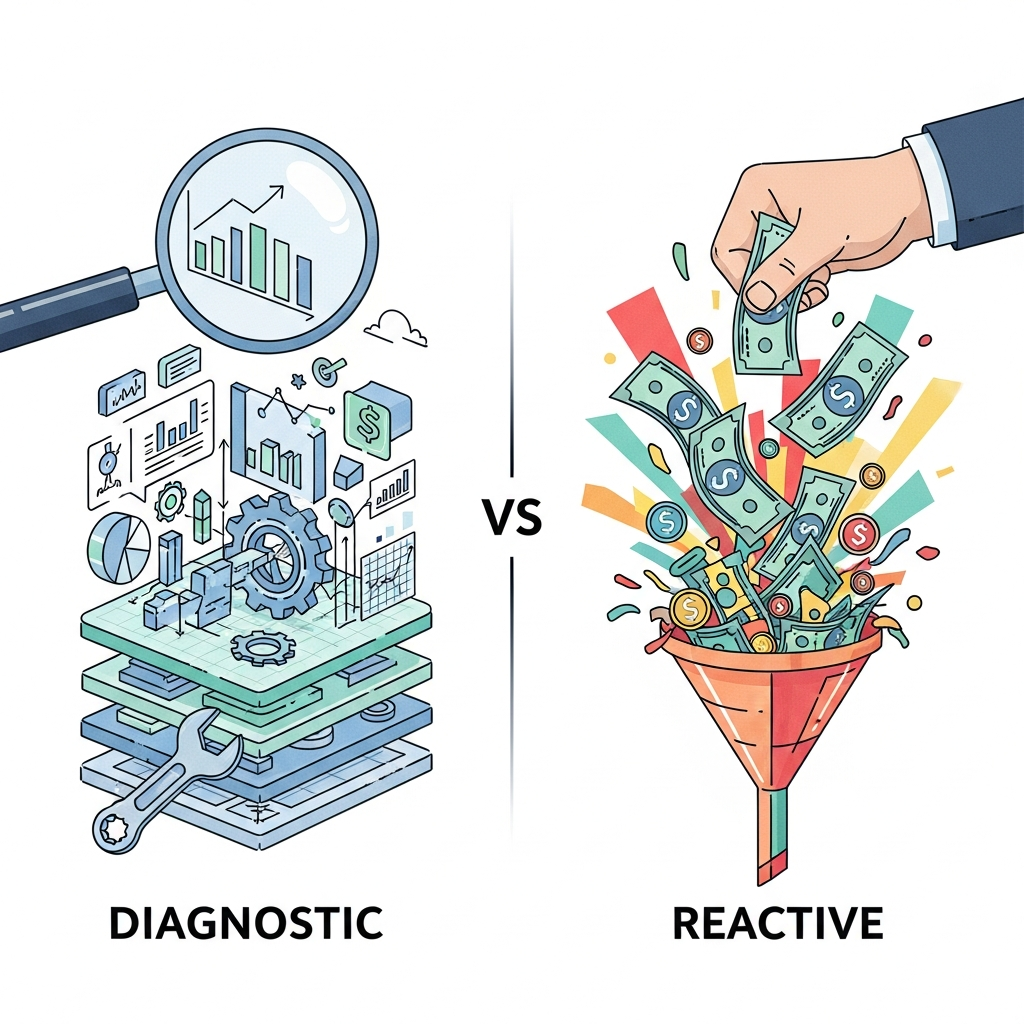
For an elite practitioner, this means using Python or R to scrape and integrate several streams. Consider the Google Trends API. While the web interface is rudimentary, the API allows for granular “interest over time” data that can be correlated with internal CRM data. If you notice that interest in “remote work infrastructure” peaks exactly 14 days after a specific type of economic report is released, you have a predictive window. You don’t wait for the peak; you publish 10 days after the report.

Furthermore, we must look at Social Listening and Sentiment Analysis. Platforms like Reddit and X (formerly Twitter) are the “canaries in the coal mine” for search intent. A spike in discussions regarding “AI-driven supply chain disruptions” on specialized subreddits will almost inevitably precede a surge in search queries for related B2B solutions. By using Natural Language Processing (NLP) to cluster these discussions, we can identify “emergent entities” before they enter the mainstream lexicon.

Feature Engineering for Intent Forecasting

In machine learning, feature engineering is the process of using domain knowledge to extract features from raw data. In our context, we are looking for “Intent Signals.” For example, if we are in the SaaS space, our features might include:

  • Rate of change in competitor mentions on G2 or Capterra.
  • The velocity of new GitHub repositories being created in a specific technology stack.
  • Macroeconomic indicators like interest rate hikes (which might trigger searches for “cost-saving software”).
Visual for Predictive Algorithm Modeling: Anticipating Search Intent Before the Competition

Algorithmic Architectures: Choosing Your Weapon

Once the data is cleaned and the features are engineered, we must choose a modeling approach. While many SEOs are content with a simple linear regression, the complexities of human search behavior often require more sophisticated “Non-linear” approaches.

1. Time-Series Analysis (Prophet and ARIMA)

For predicting seasonal peaks and cyclical trends, Facebook’s Prophet or the ARIMA (AutoRegressive Integrated Moving Average) model are industry standards. These models are particularly adept at handling outliers—such as the massive search anomalies caused by the 2020 pandemic—and smoothing them out to reveal the underlying trend. They allow you to say, with a high degree of confidence, “By June 15th, search intent for ‘sustainable swimwear’ will increase by 42% regardless of current weather patterns.”

2. Random Forests and XGBoost

If you are trying to predict categorical intent (i.e., whether a searcher will want “How-to” content vs. “Pricing” content), gradient-boosted decision trees like XGBoost are remarkably powerful. By feeding the model historical user journey data, you can predict the “Next Best Content” to serve a user. This is how high-level publishers dominate the SERPs; they don’t just rank for one query; they have modeled the entire decision-making tree and have content ready for every branch.

3. Recurrent Neural Networks (RNNs) and LSTMs

Human behavior is sequential. What I searched for yesterday influences what I search for today. Long Short-Term Memory (LSTM) networks are a type of RNN designed to recognize patterns in sequences. In the context of predictive SEO, LSTMs can be used to model the “decay” of interest. It can tell you when a topic is not just “down for the week” but is officially entering a state of permanent obsolescence, allowing you to reallocate your crawl budget and editorial resources to more fertile ground.

>The Psychology of the “Pre-Search” Phase

Before a user types a query into Google, they exist in a “Pre-Search” state of ambiguity. They have a problem, but they haven’t yet formulated the language to solve it. Predictive algorithm modeling seeks to own this state of ambiguity. If you can provide the answer before the user has even finished articulating the question, you don’t just win a click; you win authority.

This requires a deep dive into Psychographic Layering. Let’s say you are in the fintech space. A reactive SEO focuses on “how to invest in stocks.” A predictive SEO realizes that a certain segment of the population is currently worried about “inflationary pressure on mid-cap assets.” By the time those users start searching for specific investment vehicles, they should already be familiar with your brand because you predicted their anxiety and addressed it through “top-of-funnel” predictive content pieces weeks earlier.

“The most sophisticated algorithms don’t just follow the user; they anticipate the collision between necessity and curiosity.”

>Operationalizing Predictive SEO: A Practical Framework

Theory is fine for academic journals, but for the elite copywriter and strategist, we need a roadmap. How do we turn these complex data models into actual ranking content?

Step 1: The Inventory of Intent

Map your current content against the Standard Buyer’s Journey. However, add a “T-Minus” column. This column represents the predicted time before the user enters that stage. For a luxury travel brand, the “T-Minus 90 days” intent might be “dreaming/escapism,” while “T-Minus 30 days” is “logistical planning.” Your goal is to create a content bridge that leads them through these phases automatically.

Step 2: The “Shadow” Keyword Strategy

Identify keywords that do not yet have significant volume but are “semantically adjacent” to growing trends. Use Latent Dirichlet Allocation (LDA) to find topics that frequently co-occur in academic papers or patent filings in your industry. If you see a specific term being used in white papers, it is only a matter of time before it trickles down into consumer search intent. Build the pillar pages for these terms now. When the volume arrives, you will have the oldest, most authoritative URL on the subject.

Step 3: Real-Time Content Injection

Use a “Headless CMS” paired with your predictive model to dynamically update content. If your model predicts a sudden surge in interest for “remote work security” due to a news break, your homepage and sidebar “recommended reading” should update programmatically to surface that content. This isn’t just SEO; it’s User Experience Optimization powered by predictive analytics.

>The Risks: Overfitting and the Echo Chamber

As with any high-level strategy, there are pitfalls. The most common in predictive modeling is overfitting. This happens when your model is so finely tuned to historical data that it fails to account for “Black Swan” events. If your model only looks at last year’s trends, it will be blindsided by a sudden cultural shift or a new technological breakthrough (like the sudden explosion of Generative AI).

There is also the “Echo Chamber” effect. If every major player is using the same predictive models, we all end up producing the same “future-proof” content at the same time, leading to a new kind of competitive saturation. The solution is to inject human eccentricity into the model. Use your predictive data as the skeleton, but use human intuition, wit, and unique brand voice as the skin. An algorithm can predict what people will search for, but it cannot yet predict what will truly resonate with their souls.

>The Future: Autonomous SEO Agents

We are rapidly approaching a point where the “human-in-the-loop” will become the bottleneck. We are seeing the rise of Autonomous SEO Agents—AI systems that not only predict intent but automatically generate, publish, and iterate on content to meet that intent in real-time. This sounds like science fiction, but for those of us working with Large Language Models (LLMs) and Vector Databases, it is the current frontier.

In this future, the role of the elite copywriter evolves. We become the “Prompt Architects” and the “Strategic Overseers.” We manage the models, ensuring they don’t hallucinate or veer off-brand, while the predictive algorithms do the heavy lifting of trend spotting and intent mapping. The competitive advantage will go to those who can master the interplay between data science and narrative craft.

>Conclusion: The Proactive Advantage

Predictive algorithm modeling is more than a technical upgrade; it’s a fundamental shift in mindset. It’s moving from the “Ask and Receive” model of search to the “Anticipate and Provide” model. By the time your competitor is looking at a keyword report, you should already be ranking for those terms, with a backlink profile that is months in the making and content that has been refined through early user feedback.

The digital world doesn’t wait for the slow. It rewards those who can read the ripples in the water before the wave arrives. Stop optimizing for what was. Start modeling for what will be. The competition is looking at the scoreboard; you should be looking at the trajectory of the ball.

Key Takeaways for Your Strategy:

  • Shift focus from keywords to “Intent Trajectories.” Understand where the user is going, not just where they are.
  • Integrate non-traditional data streams. Use social listening, API data, and macroeconomic signals to find leading indicators.
  • Adopt sophisticated modeling. Move beyond spreadsheets and into Python-based time-series and classification models.
  • Build “Shadow” content. Occupy the semantic space of emergent trends before they hit the mainstream.
  • Balance data with humanity. Use the algorithm to find the “what,” but use human creativity to master the “how.”
The E-E-A-T Blueprint: Why Technical SEO is Only Half the Battle for Google Rankings

In the halcyon days of the early 2010s, SEO was a playground for the technically proficient and the ethically flexible. If you could optimize your crawl budget, sprinkle keywords like fairy dust, and secure a few dozen PBN links from a Russian server farm, you were essentially the king of the SERPs. But the digital landscape has undergone a tectonic shift. Today, the algorithm is no longer a simple pattern-matching machine; it has evolved into a sophisticated arbiter of human credibility. While the technical foundation of a website—its Schema markup, Core Web Vitals, and XML sitemaps—remains the “cost of entry,” the real battle for dominance is won or lost in the murky, qualitative waters of E-E-A-T.

Standing for Experience, Expertise, Authoritativeness, and Trustworthiness, E-E-A-T is not a direct ranking factor in the way a backlink is, but rather a framework used by Google’s Quality Raters to evaluate the efficacy of the algorithm itself. It is the invisible hand that guides which pages rise to the top of the search results and which ones are relegated to the digital graveyard of page two. If you treat SEO as a purely technical endeavor, you are essentially building a state-of-the-art library filled with plagiarized, unverified pamphlets. It might look good on paper, but no one is going to cite it as a source of truth.

Visual for The E-E-A-T Blueprint: Why Technical SEO is Only Half the Battle for Google Rankings

The Genesis of the E-E-A-T Framework

To understand why E-E-A-T matters, we must look back at the Quality Rater Guidelines (QRG). Google employs thousands of human evaluators whose sole job is to manually check search results and rate their quality. These ratings provide a feedback loop for the engineers to tweak the ranking algorithms. For years, we dealt with E-A-T. Then, in December 2022, Google added an extra “E” for Experience. This wasn’t just a linguistic flourish; it was a fundamental acknowledgment that in an age of generative AI, the “who” and the “how” behind the content are becoming more valuable than the content itself.

Consider the distinction. If you are searching for advice on how to treat a rare cardiac condition, do you want an article written by a “content strategist” who synthesized WebMD articles (Expertise), or do you want the insights of a board-certified cardiologist who has performed three thousand surgeries (Experience + Expertise)? Google’s evolution toward E-E-A-T is an attempt to codify that human preference into a machine-readable format.

The “Experience” Paradox: Why First-Person Narrative Wins

The introduction of Experience was a direct response to the surge of “thin” content. With the advent of Large Language Models (LLMs), any high-schooler can generate a 2,000-word guide on “The Best Hiking Boots for Beginners.” However, that AI cannot tell you how those boots felt on the descent of the Appalachian Trail during a thunderstorm. It cannot describe the specific way the heel friction felt after six miles of damp terrain.

Experience is about the “I.” It is about first-hand involvement. Google is increasingly prioritizing content where the creator has actually utilized the product, visited the location, or lived the experience. This is why Reddit and Quora have seen a massive resurgence in search visibility. Users are hungry for the messy, unpolished reality of human experience, which serves as a powerful antidote to the sanitized, SEO-optimized fluff that has dominated the web for the last decade.

Visual for The E-E-A-T Blueprint: Why Technical SEO is Only Half the Battle for Google Rankings

Deconstructing the Pillars: Expertise, Authority, and the Core of Trust

While Experience is the newcomer, the original pillars remain the bedrock of a successful organic strategy. Let’s dissect them with the clinical precision of a surgeon.

Expertise: The Depth of Knowledge

Expertise refers to the creator of the main content. It is less about the website as a whole and more about the individual behind the keyboard. In the world of YMYL (Your Money Your Life) topics—such as finance, health, and legal advice—expertise is non-negotiable. Google looks for signals that the author is a subject matter expert. This is communicated through:

  • Formal Credentials: Degrees, certifications, and professional licenses.
  • External Validation: Being cited in academic journals or major news outlets.
  • Author Entities: A consistent digital footprint that proves the author exists and is recognized in their niche.

Authoritativeness: The Reputation of the Source

Authoritativeness scales the concept of expertise up to the level of the domain. When other experts or websites in your niche point to you as a source of truth, you gain authority. This is where the old-school concept of “Backlinks” meets the new-school concept of “Digital PR.”

If you write a brilliant piece on astrophysics and NASA links to it, your authoritativeness skyrockets. Why? Because an established authority has effectively vouched for your credibility. It is the digital equivalent of a peer-reviewed endorsement. However, authority is not just about links; it’s about topical relevance. A website that is an authority on gardening will not carry the same weight when it tries to rank for cryptocurrency advice.

Trustworthiness: The Most Important Pillar

In the updated QRG, Google explicitly states that Trustworthiness is the most important member of the E-E-A-T family. It is the central hub. A site can have experience, expertise, and authority, but if it is untrustworthy—perhaps it hides its refund policy, has a history of data breaches, or fails to cite its sources—it will be penalized.

Trust is built through transparency. Does your site have an “About Us” page that features real people? Do you have clear contact information? Are your sources cited with outbound links? If you are an e-commerce site, do you have a plethora of genuine customer reviews? Trust is the filter through which all other E-E-A-T signals are viewed.

Visual for The E-E-A-T Blueprint: Why Technical SEO is Only Half the Battle for Google Rankings

Why Technical SEO is Only the Foundation

Lest we forget our roots, technical SEO is absolutely vital. If Google’s bots cannot crawl your site, or if your JavaScript rendering is a chaotic mess, your E-E-A-T signals won’t even be seen. However, technical SEO has a diminishing marginal return. Once your site is fast, mobile-friendly, and properly indexed, further technical optimizations yield smaller and smaller gains.

“Technical SEO makes a site readable for machines; E-E-A-T makes a site valuable for humans. Google’s algorithm is increasingly bridging the gap between the two.”

Think of technical SEO as the plumbing and electricity in a restaurant. You cannot run a Michelin-star establishment without them. But no one goes to a restaurant because the pipes are 3/4-inch copper or because the wiring is up to code. They go for the food (Experience) and the reputation of the chef (Expertise/Authority). If your SEO strategy is 90% technical and 10% content quality, you are essentially inviting people to dine in a beautifully wired, empty basement.

>The YMYL Nexus: Where E-E-A-T Becomes Life or Death

The stakes of E-E-A-T are not uniform across the web. If you are writing a blog post about the “Best 1980s Synth-Pop Albums,” Google’s standards for E-E-A-T are relatively relaxed. You don’t need a PhD in Musicology to have a valid opinion on Depeche Mode. However, for YMYL categories, the standards are draconian—and rightfully so.

YMYL categories include:

  • Finance: Investment advice, taxes, retirement planning, or loans.
  • Health: Medical conditions, drugs, mental health, or nutrition.
  • Safety: Information on dangerous activities or emergency preparedness.
  • Civics/Law: Voting, legal proceedings, and government information.

In these sectors, Google employs a “disruption of life” metric. If inaccurate information on your page could lead to someone losing their savings or suffering a medical emergency, your E-E-A-T signals must be impeccable. This is where many affiliate marketers hit a brick wall. You cannot rank for “Best Heart Medication” using an AI-written article on a generic domain. Google demands a level of verifiable expertise that most generic content sites simply cannot provide.

>Practical Implementation: Building Your E-E-A-T Blueprint

Moving from the theoretical to the practical, how do we actually “do” E-E-A-T? Since it isn’t a checkbox in a plugin, it requires a holistic approach to brand building. Here is a blueprint for the modern SEO professional.

1. Cultivate and Display Individual Authorship

Stop publishing content under the name of “Admin” or “Editorial Staff.” This is an immediate red flag. Create detailed author bios for every contributor. Link to their LinkedIn profiles, their previous work on other reputable sites, and any professional awards. Use Person Schema to help search engines connect the dots between the author and their digital footprint.

2. The “Information Gain” Strategy

Google recently filed a patent for “Information Gain.” In layman’s terms, this means the algorithm looks for whether your page provides *new* information that wasn’t present in the pages it already crawled. If you are merely summarizing the top 10 results, your information gain is zero. To improve E-E-A-T, add unique data, original photography, or a contrarian viewpoint backed by evidence. This is the essence of “Experience.”

3. Aggressive Fact-Checking and Sourcing

Treat your blog like a journalistic publication. If you make a claim, back it up with a link to a primary source—preferably a .gov, .edu, or high-authority news site. This doesn’t “drain your Link Juice” (a concept that is largely archaic); it reinforces your Trustworthiness. It shows Google that your content is rooted in established fact.

4. Audit Your Digital Footprint (Off-Page E-E-A-T)

E-E-A-T happens mostly off-site. What are people saying about your brand on Reddit? What are your Glassdoor reviews like? Is your business mentioned in Wikipedia? While you can’t always control these factors, you can influence them through Digital PR and community engagement. Mentions on authoritative sites, even without a “dofollow” link, are powerful signals of authority.

>The Role of Schema Markup in the E-E-A-T Framework

While we argued that technical SEO is only half the battle, it is the bridge that communicates E-E-A-T to the bots. Structured Data (Schema) is the language Google uses to understand entities. By using Article, Author, Organization, and ReviewedBy Schema, you are explicitly telling Google who wrote the content, who vetted it, and what their credentials are.

For example, using the reviewedBy property allows you to show that even if a staff writer wrote a medical article, it was checked for accuracy by a licensed doctor. This is a powerful way to leverage the expertise of others to bolster your site’s trustworthiness.

>The AI Elephant in the Room: Can Machines Have E-E-A-T?

The rise of Generative AI has created a crisis of authenticity. AI can mimic Expertise (by synthesizing data) and it can sound Authoritative (by its confident tone), but it fundamentally lacks Experience and Trustworthiness. It cannot “experience” anything. It cannot be held accountable for its mistakes, which is the cornerstone of trust.

Google’s stance on AI content has shifted. They no longer penalize it simply for being AI-generated, but they do penalize it if it lacks E-E-A-T. The irony is that as AI becomes more prevalent, the human elements of content—personal anecdotes, nuanced opinions, and original research—become exponentially more valuable. To future-proof your SEO, don’t just use AI to write content; use it to research, then overlay it with the “human experience” that an LLM cannot replicate.

>Conclusion: The Shift from Optimization to Reputation

In the final analysis, E-E-A-T represents the “humanization” of search. Google is trying to mimic the way a rational, skeptical human being evaluates information. When we look for a lawyer, we don’t just look for who has the fastest-loading website; we look for who has the most experience, the best reputation, and the most transparent fees.

Technical SEO will always be necessary. It ensures that your “digital store” is open, the lights are on, and the aisles are organized. But E-E-A-T is why people choose to shop there instead of at the competitor down the street. It is the cumulative effect of your brand’s reputation, your authors’ expertise, and the genuine value you provide to your audience.

Stop asking, “How can I rank for this keyword?” and start asking, “Do I deserve to rank for this keyword?” If the answer is “no,” then no amount of Schema or site speed optimization will save you from the eventual algorithmic correction. The blueprint for success in modern SEO is simple, yet incredibly difficult to execute: Be the authority you claim to be.

As we move deeper into this decade, the gap between “good content” and “trustworthy content” will continue to widen. Those who invest in building a brand rooted in E-E-A-T will find themselves insulated from the volatility of algorithm updates, while those who rely on technical hacks will be forever chasing a moving target. SEO is no longer just a technical department; it is a reputation management department. Treat it accordingly.

Semantic Content Clustering: How to Build Topic Authority in a Post-Keyword World

The era of keyword-focused SEO is officially in the rearview mirror. If you are still building content calendars around high-volume, low-competition keywords as standalone targets, you are essentially trying to build a modern skyscraper on a foundation of sand. Google has evolved. The algorithms—Hummingbird, RankBrain, BERT, and now MUM—don’t just read your words; they understand your intent. They are looking for context, authority, and semantic relevance.

Search engines no longer view “strings” of text; they view “things”—entities and the relationships between them. This shift necessitates a complete overhaul of how we approach content strategy. Enter: Semantic Content Clustering. This isn’t just another buzzword to throw around in marketing meetings. It is the architectural blueprint for building topical authority in an environment where AI-driven search engines prioritize depth over breadth.

Visual for Semantic Content Clustering: How to Build Topic Authority in a Post-Keyword World

The Death of the Keyword and the Birth of the Entity

For years, the playbook was simple: find a keyword, check the volume, write a 1,500-word post, and pray for a backlink. That strategy is failing. Why? Because Google has moved toward Semantic Search. Semantic search is the process by which search engines attempt to produce the most accurate results by understanding searcher intent, query context, and the relationship between words.

Consider the word “Apple.” Without context, a search engine doesn’t know if you want the fruit, the tech giant, or the record label. Semantic SEO provides that context. By clustering content around a central theme, you signal to Google that your site isn’t just a collection of random articles, but a comprehensive knowledge base—a definitive source of truth for an entire topic area.

“SEO is no longer about being the best answer for a specific keyword; it’s about being the best answer for a specific journey.”

Visual for Semantic Content Clustering: How to Build Topic Authority in a Post-Keyword World

Defining Semantic Content Clustering

Semantic content clustering is the strategic organization of your website’s content into interconnected “hubs” and “spokes.” Instead of creating disparate pages, you create a Pillar Page (the hub) that provides a comprehensive overview of a broad topic and then link it to multiple Cluster Pages (the spokes) that dive deep into specific subtopics.

This structure does three critical things for your SEO:

  • Improves Crawlability: It creates a clean, logical site architecture that helps search bots find and index your content faster.
  • Increases Topical Authority: By covering every facet of a topic, you prove to Google that you have “Topical Breadth,” a key component of the E-E-A-T (Experience, Expertise, Authoritativeness, Trustworthiness) framework.
  • Boosts User Engagement: It keeps users on your site longer by providing logical next steps in their learning journey.
Visual for Semantic Content Clustering: How to Build Topic Authority in a Post-Keyword World

The Anatomy of a High-Authority Content Cluster

Building a cluster isn’t about volume; it’s about architecture. You need four distinct elements to make a semantic cluster work effectively.

1. The Pillar Page (The Hub)

The pillar page is the high-level overview. It should be broad enough to encompass dozens of subtopics but detailed enough to stand on its own. Think of it as the “Ultimate Guide” or the “Masterclass” page. It targets a high-volume, high-competition broad term.

2. The Cluster Content (The Spokes)

These are your deep dives. Each cluster page focuses on a specific long-tail keyword or question related to the pillar. If your pillar is “Digital Marketing,” your cluster pages might be “How to Set Up Google Ads,” “The Future of AI in Social Media,” or “A Guide to Retargeting Pixels.”

3. The Internal Linking Graph (The Connective Tissue)

This is where the magic happens. All cluster pages must link back to the pillar page, and the pillar page must link out to all cluster pages. Ideally, cluster pages should also link to each other where contextually appropriate. This creates a “semantic loop” that passes link equity and context throughout the entire silo.

4. Semantic Breadth (The Context)

To truly build authority, your cluster must include LSI (Latent Semantic Indexing) keywords and related entities. If you’re writing about “Mountain Biking,” search engines expect to see terms like “suspension,” “trail ratings,” “hardtail,” and “downhill geometry.” If those entities are missing, your cluster is semantically incomplete.

>Step-by-Step: How to Build Your Semantic Roadmap

As an elite copywriter, I don’t just “write.” I engineer. Here is the exact process for building a cluster that dominates the SERPs.

Step 1: Identify Your Core Entity

Don’t start with a keyword tool. Start with your business goals. What is the one thing you want to be known for? This is your core entity. If you are a SaaS company selling CRM software, your core entity is “Customer Relationship Management.” Everything you write should orbit this sun.

Step 2: Map the Semantic Universe

Use tools like Google’s “People Also Ask,” AnswerThePublic, and AI models to identify every question a user might have regarding your core entity. You are looking for intent patterns. Organize these into categories: Information-seeking, Navigational, and Transactional. Your cluster should serve all three.

Step 3: Audit Existing Content

You likely already have “zombie content”—old posts that are underperforming. Don’t delete them. Refactor them. Map your existing articles to your new cluster categories. If a post doesn’t fit into a cluster, it’s a distraction and should either be rewritten or redirected.

Step 4: Execute the “Inverted Pyramid” of Content

Write your pillar page first, but don’t publish it until you have at least 5-10 cluster pages ready to go. Launching a pillar page without its supporting spokes is like launching a ship without a crew. Once the cluster is live, use descriptive anchor text for your internal links. Avoid “click here” or “read more.” Use anchors like “advanced B2B lead generation strategies” to tell Google exactly what the destination page is about.

>The Technical Side of Semantic Authority: Schema and JSON-LD

You cannot ignore the “machine-readable” side of semantic SEO. While your content is for humans, your metadata is for the bots. To solidify your topic authority, you must use Structured Data (Schema.org).

By implementing “About” and “Mentions” schema, you can explicitly tell Google which entities your page is discussing. If your pillar page mentions “Cloud Computing,” use Schema to link that term to the Wikipedia entry for Cloud Computing. This removes any ambiguity for the search engine and cements your page’s place in the Knowledge Graph.

>Advanced Strategy: Leveraging “Searcher Task Accomplishment”

Google’s recent updates have placed a heavy emphasis on whether a user actually finishes their “task” on your site. If they read your cluster page and then have to go back to Google to search for a related question, you have failed the semantic test.

Your cluster should be a closed ecosystem. Anticipate the “next” question. If they are reading about “How to Start a Podcast,” the next logical question is “What is the best podcasting microphone?” Your cluster should have that answer ready and linked. When Google sees that users land on your site and stay there to satisfy their entire search journey, your authority will skyrocket.

>Common Pitfalls in Semantic Clustering

Even the best marketers stumble here. Avoid these three common mistakes:

  • Keyword Cannibalization: Don’t create two cluster pages that target the same intent. If “best SEO tools” and “top SEO software” serve the same purpose, merge them. Semantic SEO is about distinct concepts, not different wordings.
  • Weak Pillars: A pillar page that is too short won’t rank. It needs to be a definitive resource. If you can’t get at least 2,500 words of high-quality, non-fluff content on your pillar page, your topic might be too narrow.
  • Broken Links: In a cluster, the link is the currency. A broken link or a “nofollow” tag on an internal link in your cluster is like a leak in a dam. It wastes all your topical power.

>The Role of AI in Semantic Content Creation

We are in a “Post-Keyword World” largely because of Large Language Models (LLMs). Google is using AI to understand you, so you should use AI to understand Google. Use tools like SurferSEO, Frase, or Clearscope to identify the semantic gap between your content and the top-ranking results.

These tools analyze the “Corpus” of the top 10 results and tell you which entities you are missing. If the top 10 pages for “Sustainable Investing” all mention “ESG Scores” and “Carbon Offsets,” and your page doesn’t, you will never rank for that topic, regardless of your keyword density.

>Measuring the Success of Your Topic Authority

Traditional SEO metrics like individual keyword rankings are becoming less relevant. To measure the success of a semantic cluster, look at these KPIs:

  • Topical Share of Voice: How much of the total search traffic for a specific category do you own?
  • Organic Pages per Session: Are users moving from one cluster page to another?
  • Ranked Keywords per Page: A successful semantic page should rank for hundreds, if not thousands, of long-tail variations, not just one primary term.
  • Internal Link Through-Put: Use Search Console to see if your pillar page is passing impressions to your cluster pages.

>Future-Proofing Your Strategy: SGE and Beyond

With the advent of Google’s Search Generative Experience (SGE), the “zero-click search” is becoming more common. AI will summarize your content directly on the results page. You might think this is bad for traffic, but it’s actually an opportunity. Google cites its sources in SGE. By being the most authoritative cluster on a topic, you ensure that you are the source Google chooses to cite.

The goal is no longer to get the “click” for a simple question; the goal is to be the authority for the complex journey. Simple questions get answered by AI; complex strategies and deep dives require human-led authority. That is where you win.

>Conclusion: The Architecture of Trust

Semantic content clustering is more than an SEO tactic; it is a commitment to quality. It requires you to stop thinking like a “search engine optimizer” and start thinking like a “subject matter expert.” When you build a cluster, you aren’t just trying to trick an algorithm into ranking you higher. You are building a comprehensive map of a topic, helping users navigate complex information, and establishing a level of trust that no single “keyword-optimized” post could ever achieve.

The transition from keywords to topics is a transition from being a solicitor to being a consultant. In a world saturated with AI-generated noise, authority is the only currency that still holds value. Build your clusters, connect your entities, and dominate your niche by being the most thorough, logical, and helpful resource on the web.

OKRs in Marketing: Transitioning from “Vague Goals” to Verifiable Key Results

Let’s be brutally honest for a moment: Most marketing departments are running on a treadmill of “busy-work” while hallucinating progress. You’ve seen it. I’ve seen it. The Monday morning meetings where someone says, “We need to increase brand awareness,” or “Let’s focus on engagement this quarter.”

Those aren’t goals. Those are wishes. They are soft, pillowy cushions designed to protect marketing teams from the cold, hard reality of accountability. If you can’t measure it with a definitive ‘yes’ or ‘no’ at the end of the quarter, it’s not a result—it’s a hobby.

This is where the OKR (Objectives and Key Results) framework enters the room like a cold splash of water. Born at Intel and perfected at Google, OKRs are the antidote to the “vague-goal syndrome” that plagues modern marketing. Transitioning from fuzzy aspirations to verifiable key results isn’t just a management tweak; it’s a fundamental rewiring of how your team thinks, breathes, and executes.

Visual for OKRs in Marketing: Transitioning from

The Fundamental Anatomy of a Marketing OKR

Before we dive into the weeds of implementation, we need to clarify what we’re actually building. An OKR consists of two distinct components that work in tandem to create both inspiration and execution.

The Objective (The “Where”): This is your North Star. It is qualitative, inspirational, and designed to get the team out of bed in the morning. An objective doesn’t have a number in it. It describes a desired future state. Example: “Become the most trusted educational resource for first-time home buyers.”

The Key Results (The “How”): These are the yardsticks. They are quantitative, time-bound, and—this is the non-negotiable part—verifiable. If an Objective is the destination, the Key Results are the GPS coordinates that prove you’ve arrived. Example: “Achieve 50,000 monthly organic visits to the ‘Home Buying 101’ hub.”

In marketing, we often confuse these two. We treat “getting more leads” as an objective when it’s actually a key result. We treat “launching a new campaign” as a result, when it’s actually just a task. To win with OKRs, you must separate the impact from the activity.

Visual for OKRs in Marketing: Transitioning from

Why Marketing Teams Struggle with “Vague Goals”

Marketing is inherently creative, and creative people often recoil at the thought of rigid metrics. There is a prevailing fear that if we track everything, we lose the “magic.” This is a fallacy. In reality, metrics provide the guardrails that allow creativity to be effective rather than just decorative.

The “Vague Goal” trap usually stems from three specific failures in leadership:

  • Fear of Failure: If a goal is vague (e.g., “Improve social media presence”), it is impossible to fail. You can always find a metric that went up. OKRs remove this safety net.
  • The Activity Trap: Many marketers believe that being busy equals being productive. They mistake “sending 10 emails” for “generating revenue.”
  • Lack of Strategic Alignment: When the marketing team doesn’t know how their work impacts the bottom line, they default to vanity metrics like “likes” and “impressions.”

To transition to verifiable results, you must first foster a culture where failure is seen as data, and where “getting it done” is secondary to “making it matter.”

Visual for OKRs in Marketing: Transitioning from

The Shift from Outputs to Outcomes

If you take nothing else away from this guide, remember this: Key Results are about outcomes, not outputs.

An output is something you do (e.g., write a whitepaper). An outcome is the result of that action (e.g., 500 qualified leads from that whitepaper). Marketing teams that are new to OKRs almost always fill their “Key Results” section with a to-do list. They write things like:

  • “Launch the new website.”
  • “Run a LinkedIn ad campaign.”
  • “Publish 12 blog posts per month.”

These are not Key Results. These are Initiatives. You could launch a beautiful website that converts at 0% and does nothing for the business. Did you “hit” your goal? Technically, yes. Did you help the company? Absolutely not.

A verifiable Key Result for a website launch would look like this: “Increase website conversion rate from lead-to-MQL from 2.1% to 3.5% by Q3.” Now, you aren’t just launching a site; you’re optimizing for performance. The “launch” is just the tool you use to hit the number.

>Crafting Verifiable Key Results: The “So What?” Test

How do you know if your Key Result is actually verifiable and valuable? You put it through the “So What?” test. Imagine you tell your CEO you hit your KR. If they say “So what?” and you don’t have an answer that involves money, market share, or growth, your KR is weak.

Let’s look at a typical transition from a vague goal to a verifiable KR:

Vague Goal: “Improve our SEO and get more traffic.”
Refined KR (Output-based): “Publish 20 SEO-optimized articles.”
The “So What?” Reality (Outcome-based): “Increase organic search traffic to the pricing page from 500 to 2,000 sessions per month.”

The third option is verifiable. At the end of the quarter, the analytics dashboard will show a number. It is binary. You either hit 2,000 or you didn’t. There is no room for “we felt like the traffic was better.”

>OKRs for Different Marketing Verticals

Marketing is a broad church. The OKRs for a Brand Manager will look vastly different from those of a Performance Marketer. Let’s break down how to apply this rigor across different specialties.

1. Content Marketing & SEO

Content is the king of “vague goals.” We often hide behind the idea that content is a “long-term play” to avoid immediate accountability. While true, we still need verifiable milestones.

Objective: Establish our brand as the undisputed thought leader in the AI-automation space.

  • KR 1: Achieve 3 top-3 rankings for high-intent keywords with a total search volume of 10k+.
  • KR 2: Secure 5 placements in Tier-1 industry publications (e.g., TechCrunch, Wired).
  • KR 3: Increase average time-on-page across the blog from 1:20 to 2:45.

2. Demand Generation & Paid Media

Paid media is already data-heavy, but it often focuses on the wrong data (CPC instead of CAC). OKRs help align paid spend with business health.

Objective: Hyper-scale our lead generation engine without sacrificing lead quality.

  • KR 1: Increase monthly Sales Qualified Leads (SQLs) from 150 to 300.
  • KR 2: Maintain a Customer Acquisition Cost (CAC) of under $450.
  • KR 3: Increase the “Lead-to-Opportunity” conversion rate from 12% to 18%.

3. Brand & Communications

This is the hardest area to quantify, which makes OKRs even more vital here. Don’t let “brand” be a black hole for budget.

Objective: Create a “fanatical” following that differentiates us from commoditized competitors.

  • KR 1: Increase Net Promoter Score (NPS) from 45 to 60.
  • KR 2: Grow branded search volume from 5,000 to 8,500 monthly queries.
  • KR 3: Achieve a 15% share of voice in the “Enterprise Security” category.

>The Rule of Three: Avoid OKR Bloat

One of the most common mistakes I see in high-growth marketing teams is “OKR Bloat.” They try to track 15 different Key Results for a single objective. This is a recipe for mediocrity. When everything is a priority, nothing is a priority.

The Golden Rule: 1 Objective, 3 to 5 Key Results. Maximum.

If you have more than five KRs, you aren’t focused. You’re just listing your department’s entire dashboard. OKRs are meant to highlight the *most* important levers for growth this quarter. Everything else is just “business as usual” (BAU). Don’t mix your daily tasks with your OKRs.

>The Cultural Shift: High-Trust Accountability

Transitioning to verifiable results requires a psychological shift. In a traditional marketing setup, failing to hit a goal is often seen as a performance issue. In an OKR setup, failing to hit a “stretch goal” is often expected.

Google famously aims for a 60-70% success rate on their OKRs. If you hit 100% of your Key Results, you didn’t win—you “sandbagged.” You set the bar too low. You played it safe.

For a marketing team to embrace this, leadership must reward transparency. If a team realizes halfway through the quarter that their Key Result of “2,000 leads” was wildly optimistic because the market shifted, they should be able to pivot or discuss it openly without fear of retribution. The goal is alignment, not punishment.

>Implementing the OKR Cycle in Marketing

You can’t just set OKRs in January and check them in December. That’s how goals go to die. The OKR framework requires a rhythm—a heartbeat.

Phase 1: The Planning (Week 0)

The CMO or Marketing Director sets the top-level Objective based on the company’s annual goals. The individual teams (Content, Paid, Product Marketing) then draft their own OKRs that support that top-level objective. This is “bidirectional” goal setting. It’s not just top-down; it’s collaborative.

Phase 2: The Weekly Check-in

Every week, spend 15 minutes reviewing the numbers. Are we “On Track,” “At Risk,” or “Off Track”? This prevents “End-of-Quarter Panic,” where teams realize on week 11 that they haven’t moved the needle at all.

Phase 3: The Scoring & Retrospective

At the end of the quarter, score your KRs on a scale of 0.0 to 1.0. A 0.7 is a “green” (great success). A 1.0 is a “miracle” (you sandbagged). A 0.3 is a “red” (total failure). The most important part is the Retrospective: Why did we miss? Was it the strategy, the execution, or the goal itself?

>Common Marketing OKR Pitfalls to Avoid

Even the best marketing minds fall into these traps. Keep an eye out for these red flags:

  • The “And” KR: “Increase traffic and decrease bounce rate and improve conversions.” This is three KRs disguised as one. Break them apart.
  • Lagging-only Metrics: Revenue is a lagging indicator. It takes time to show up. Balance your OKRs with “leading indicators”—metrics that predict future success (e.g., “Demo requests” is a leading indicator for “Revenue”).
  • The “Vanish” KR: Setting a KR that you have no way of tracking today. If you don’t have the tooling to measure “Brand Sentiment” accurately, don’t make it a KR until you’ve built the measurement system.

>Tools for Tracking: Don’t Overcomplicate It

I’ve seen companies spend $50,000 on OKR software only to have the team hate using it. If you’re just starting, a shared Google Sheet or a simple Notion database is more than enough. The magic is in the conversations the framework triggers, not the software used to record it.

As you scale, tools like GTMHub or Lattice can help align thousands of employees, but for a 20-person marketing team? Keep it lean. Focus on the data, not the interface.

>The Competitive Advantage of Verifiable Marketing

In a world of tightening budgets and AI-driven competition, “vague” marketers are the first to be replaced. CEOs and CFOs are tired of hearing about “engagement” when the pipeline is dry. By moving to verifiable Key Results, you change the perception of marketing from a cost center to a profit center.

You stop being the department that “makes things pretty” and start being the department that “drives predictable growth.”

Is it harder? Yes. Does it require more math? Definitely. But it also provides a level of clarity and confidence that vague goals never can. When you hit a 0.7 on a truly ambitious, verifiable Key Result, you don’t just feel like you did a good job—you have the data to prove it.

>Conclusion: Start Small, but Start Now

Don’t try to overhaul your entire marketing philosophy by next Monday. Start by taking your biggest “Vague Goal” for this quarter and putting it through the grinder. Strip away the fluff. Ask “So what?” until you find the number that actually matters.

Transitioning to OKRs is a muscle. The first quarter will be clunky. Your goals will be poorly written. You will miss your targets. But by the third quarter, you’ll look back at your old way of working and wonder how you ever got anything done in the fog.

Marketing isn’t a guessing game. It’s a series of hypotheses tested against reality. OKRs are simply the way we record the results. Stop wishing for growth and start verifying it.

Diagnostic vs. Reactive: Why a Marketing Audit Should Always Precede Your Ad Spend

Imagine walking into a doctor’s office with a chronic cough, and before you even sit down, the physician hands you a prescription for high-dosage antibiotics and schedules you for a lung biopsy. No stethoscope. No blood tests. No questions about your history. You would walk out immediately, wouldn’t you? You would call it malpractice.

Yet, in the high-stakes world of digital growth, businesses commit the marketing equivalent of this every single day. They see a dip in sales or a plateau in growth and immediately “prescribe” more ad spend. They dump five, ten, or fifty thousand dollars into Meta, Google, or LinkedIn, hoping the sheer volume of traffic will drown their problems. It rarely does. Instead, they end up with a high-speed delivery system for a broken message, a leaky funnel, or a product-market mismatch.

This is the difference between reactive marketing and diagnostic marketing. One is a desperate gamble; the other is a strategic blueprint. In this guide, we are going to tear apart the myth that “more ads” is the solution to stagnant growth and explain why a comprehensive marketing audit is the only logical step before touching your credit card.

Visual for Diagnostic vs. Reactive: Why a Marketing Audit Should Always Precede Your Ad Spend

The Fatal Allure of Reactive Marketing

Reactive marketing is born out of anxiety. It’s the “we need leads yesterday” mentality. When a CEO looks at a dashboard and sees red, the first instinct is to turn the dials. “Double the daily budget on the retargeting campaign! Launch a new PMax campaign! Hire an agency that promises 10x ROI in 30 days!”

The problem with this approach is that it treats symptoms rather than causes. If your conversion rate is low, doubling your traffic just means you are paying twice as much to watch people leave your site. Reactive marketing is inherently expensive because it relies on brute force. It ignores the underlying “plumbing” of your brand’s digital presence.

“Pouring money into ads without an audit is like trying to fill a bucket with holes by using a larger hose. You might get more water in the bucket temporarily, but the waste is astronomical.”

When you react, you lose leverage. You are at the mercy of platform algorithms and rising CPMs. You haven’t earned the right to scale because you haven’t proven that your ecosystem can handle the pressure of increased volume.

Visual for Diagnostic vs. Reactive: Why a Marketing Audit Should Always Precede Your Ad Spend

The Diagnostic Approach: The Audit as a Foundation

Diagnostic marketing assumes that something is always broken—or at least, something can always be optimized. A marketing audit isn’t just a “check-up.” It is a deep-tissue scan of your entire go-to-market strategy. It looks at the technical, the psychological, and the financial aspects of your business.

Before you spend a single dollar on an ad, you must have answers to the following questions:

  • Is the tracking actually working? You’d be surprised how many Seven-figure brands have broken GA4 setups or misfiring pixels.
  • Does the landing page match the intent? If you’re bidding on “best accounting software” but your landing page talks about “enterprise financial transformation,” you’ve already lost.
  • What is the “true” CAC? Many companies calculate Customer Acquisition Cost (CAC) incorrectly, ignoring the overhead or the blended impact of organic traffic.
  • Who is the actual buyer? Not the “persona” you wrote three years ago, but the person actually clicking and buying today.

1. The Technical Audit: Fixing the Leaky Pipe

Most ad spend waste happens at the technical level. If your website takes four seconds to load on a mobile device, you are losing up to 50% of your paid traffic before they even see your headline. That is a 50% tax on your ad spend that no amount of “better creative” can fix.

A diagnostic audit starts with the “plumbing.” This includes Core Web Vitals, mobile responsiveness, and the checkout or lead-gen flow. If there is friction—if a button is hard to click or a form has twelve fields when it only needs three—your ad spend is being lit on fire. You must audit the user journey from the first click to the final confirmation page.

2. The Messaging Audit: Is Anyone Listening?

In a world of infinite scrolls and goldfish-level attention spans, your messaging is your only weapon. Most reactive marketing fails because the messaging is “me-centric.” It’s all about the features, the “we’ve been in business since 1994,” and the “award-winning service.”

A diagnostic audit peels back the layers of your copy. We look for Product-Market Fit resonance. Are you speaking to the customer’s pain, or are you just shouting about your solution? We analyze the “Hook-Value-Call to Action” framework across all touchpoints. If your ads are saying one thing and your website is saying another, the cognitive dissonance will kill your conversion rate.

Visual for Diagnostic vs. Reactive: Why a Marketing Audit Should Always Precede Your Ad Spend

Why Most Agencies Skip the Audit

If audits are so vital, why does every agency want to start running ads on day one? The answer is simple: Billable hours and immediate gratification.

Audits are hard work. They require high-level thinking, data science, and a willingness to tell the client their “baby is ugly.” It’s much easier for an agency to say, “Give us $10,000 for management and $50,000 for spend, and we’ll start testing.” Testing is often just a euphemism for “we don’t know what we’re doing, so we’re using your money to find out.”

An elite marketer will refuse to run ads without a diagnostic phase. They know that their reputation depends on ROI, and ROI is impossible to guarantee if the foundation is built on sand. When you pay for an audit, you are paying for a map. When you pay for reactive ads, you are paying for gas in a car with no steering wheel.

>The Pillars of a High-Impact Marketing Audit

If you are serious about scaling, your audit needs to cover four specific pillars. Skipping one is like trying to fly a plane with one wing missing.

Pillar 1: Data Integrity & Attribution

If you cannot measure it, you cannot manage it. In the post-iOS14 world, attribution is messy. A diagnostic audit looks at your “Source of Truth.” Are you relying solely on the Facebook Ads Manager dashboard (which often over-reports)? Or are you looking at Marketing Efficiency Ratio (MER) and First-Party Data?

We need to see where the drop-offs are. Is there a specific step in the funnel where 80% of users vanish? That is a data signal. A diagnostic audit turns “I think” into “I know.”

Pillar 2: Competitive Intelligence

You do not operate in a vacuum. Your competitors are bidding on the same keywords and targeting the same audiences. A reactive approach ignores the competition until they start stealing market share. A diagnostic approach analyzes their creative hooks, their pricing strategy, and their backlink profile.

Pro Tip: Use tools like the Meta Ad Library to see what your competitors have been running for more than 90 days. If an ad has been active for three months, it’s likely profitable. That is free data for your audit.

Pillar 3: Offer Architecture

Sometimes the ads aren’t the problem. Sometimes the offer is the problem. If you are offering a “Free Consultation” in a market where everyone else is offering a “Free Audit + 30-Day Roadmap,” you are going to lose. Your offer needs to be “Irresistible” in the sense that the value vastly outweighs the perceived cost or effort.

A marketing audit scrutinizes the offer. We look at the Value Ladder. Do you have an entry-point offer? Is there a logical upsell? Are you maximizing the Average Order Value (AOV)? If your AOV is too low, you’ll never be able to afford the rising costs of traffic.

Pillar 4: Creative Resonance

Creative is the new targeting. Since the algorithms are now better at finding your audience than you are, your “creative” (images, videos, headlines) does the heavy lifting. An audit looks at your historical creative performance. Which angles worked? Which ones flopped? We look for patterns in the “stop-rate” (the first 3 seconds of a video) and the “hold-rate” (how many people watched the whole thing).

>The Financial Impact: CAC vs. LTV

This is where the rubber meets the road. The ultimate goal of a marketing audit is to protect your Unit Economics. Reactive marketing often leads to a “Death Spiral” where the Cost Per Acquisition (CAC) exceeds the Lifetime Value (LTV) of a customer.

By conducting an audit first, you can identify ways to increase LTV through email marketing, SMS, and retention strategies before you pump the top of the funnel. If you can increase your LTV by 20% through a simple automated email sequence, you can suddenly afford to spend more on ads than your competitors. That is how you win markets.

“The business that can afford to spend the most to acquire a customer wins.” – Dan Kennedy

But you can only afford to spend the most if your backend is optimized. A diagnostic audit ensures that your backend is a profit-generating machine, not a black hole.

>Case Study: The $50,000 Lesson

I once consulted for an e-commerce brand spending $50,000 a month on Google Ads. They were barely breaking even and were convinced they needed a “better Google Ads expert.”

We paused the spend and did a 14-day diagnostic audit. We found two glaring issues:

  • The Mobile Checkout: The “Add to Cart” button was hidden below the fold on 80% of mobile devices.
  • The Message Gap: Their ads promised “Next Day Shipping,” but their product pages said “Ships in 3-5 business days.”

We fixed the button and aligned the shipping message. We didn’t change a single thing in the Google Ads account. Within 30 days, their conversion rate jumped by 40%. They were suddenly profitable without spending an extra dime on traffic. That is the power of a diagnostic mindset.

>How to Conduct Your Own Preliminary Audit

While a professional audit is irreplaceable, you can start the diagnostic process yourself. Follow this checklist before you approve your next ad budget increase:

Step 1: The “Ghost” Test

Open an incognito window and try to buy your own product or book your own service on a mobile device using a slow Wi-Fi connection. Every time you feel a moment of frustration or confusion, write it down. That is a conversion killer.

Step 2: The “So What?” Test

Read your ad copy and your landing page headlines out loud. After every sentence, ask yourself, “So what?” If your copy says “We have a patented technology,” and the answer is “So what?”, you haven’t explained the benefit. Keep digging until the “So what?” is answered with “This will save me time/money/stress.”

Step 3: The Data Reconciliation

Compare your Shopify/CRM sales to your Ad Manager sales. If there is a discrepancy of more than 20%, your tracking is broken. Do not scale until you know where your money is coming from.

>Stop Reacting. Start Diagnosing.

Ad spend is a multiplier. It multiplies what you already have. If you have a high-converting, psychologically resonant, technically sound sales process, ads will multiply your wealth. If you have a confusing, slow, “me-centric” website, ads will only multiply your losses.

The next time you feel the urge to “just try some ads,” stop. Take a breath. Invest in a marketing audit. It is the only way to ensure that your marketing budget is an investment in growth rather than a donation to Silicon Valley’s bottom line.

Marketing is a science of certainty, not a game of chance. You wouldn’t accept a medical diagnosis without a check-up; don’t accept a marketing strategy without an audit. Your balance sheet will thank you.

>Final Thoughts for the Decision Maker

If you are a CEO, a Founder, or a Marketing Director, your job is to be a steward of the company’s resources. Reactive spending is a failure of stewardship. A diagnostic audit is an act of leadership. It sets the tone for a culture of data-driven decisions and excellence. It forces your team to look at the hard truths and fix the foundational issues that are holding you back.

Are you ready to stop guessing and start growing? The audit is the first step. It’s time to look under the hood before you hit the gas.

Beyond the “Hustle”: Why Empirical Evidence is the Only Foundation for Sustainable Growth.

The business world has a fetish for the “grind.” If you spend ten minutes on LinkedIn or Twitter, you are bombarded with the same tired tropes: wake up at 4:00 AM, outwork your competition, “embrace the suck,” and wear your burnout like a badge of honor. We have romanticized the “hustle” to the point where we value movement over direction and effort over outcome. But here is the cold, hard truth that most gurus won’t tell you: the hustle is a lottery ticket, not a strategy.

I have spent years in the trenches of growth marketing and organizational design. I have seen founders work themselves into a hospital bed only to watch their companies fold in eighteen months. I have also seen “lazy” founders build empires by doing about four hours of high-leverage work a day. The difference isn’t grit. It isn’t even “passion.” The difference is the adherence to empirical evidence. If you are building a business based on gut feelings, caffeine, and motivational quotes, you aren’t an entrepreneur; you are a gambler who is running out of chips.

Visual for Beyond the

The Fatal Flaw of the Hustle Culture

The problem with hustle culture is that it confuses activity with achievement. In the early stages of a startup, yes, effort is required. But effort without an empirical feedback loop is just noise. When we operate in “hustle mode,” we are often operating in a state of high cortisol and low cognitive flexibility. We make decisions based on what feels productive rather than what the data proves is effective.

Hustle culture relies heavily on survivorship bias. We look at the one billionaire who slept on his office floor and assume that the floor-sleeping was the cause of his success. We ignore the 10,000 others who slept on their office floors and ended up bankrupt. Empirical evidence demands that we look at the denominator, not just the numerator. It forces us to ask: What are the repeatable, predictable variables that lead to growth?

The Psychological Cost of Ignoring Evidence

When you ignore evidence in favor of raw effort, you eventually hit a wall called Decision Fatigue. Your brain can only make a finite number of high-quality decisions per day. If you are “hustling” through 16-hour days, by hour ten, your ability to discern a good lead from a bad one or a sound investment from a sinkhole is compromised. Evidence-based growth acts as a cognitive externalization; the data makes the hard choices for you, preserving your mental energy for execution.

Visual for Beyond the

Defining Empirical Growth: Beyond the Buzzwords

To move beyond the hustle, we must first define what we mean by empirical evidence. In a business context, this is the application of the scientific method to your growth strategy. It is the transition from “I think our customers like X” to “We have observed a 22% higher conversion rate when we present X instead of Y, with a 95% confidence interval.”

Empirical growth is built on three pillars:

  • Observable Data: Real-world interactions, not hypothetical market research or “expert” opinions.
  • Falsifiability: Every strategy you deploy must be capable of being proven wrong. If you cannot define what failure looks like, you cannot recognize success.
  • Reproducibility: If you can’t make the growth happen twice using the same variables, you haven’t found a strategy; you’ve found a fluke.

The Difference Between Vanity Metrics and Empirical Signals

One of the biggest mistakes “hustlers” make is chasing vanity metrics. These are numbers that look great on a slide deck but have zero correlation with sustainable revenue. High social media engagement, “raw” website traffic, and the number of employees you have are classic vanity metrics. They feed the ego, but they don’t feed the bottom line.

Empirical signals, on the other hand, focus on unit economics and retention. If your Customer Acquisition Cost (CAC) is higher than your Lifetime Value (LTV), no amount of “hustle” will save you. In fact, the harder you hustle in that scenario, the faster you will go broke. Empirical evidence forces you to stop and fix the leaky bucket before you try to pour more water into it.

Visual for Beyond the

The Survivorship Bias Trap: Why Your Heroes Are Lying to You

Every biography of a successful tech mogul follows the same narrative arc: they had a “vision,” they worked harder than everyone else, they took massive risks, and they won. But if you dig into the actual mechanics of their growth, you find something different. You find that they were obsessively data-driven.


The “vision” is usually just a hypothesis. The “risk” was usually a calculated experiment where the downside was capped. The “hard work” was focused on optimizing systems, not just performing tasks. When we try to emulate the “hustle” without the “evidence,” we are essentially trying to fly a plane by flapping our arms really fast because we saw a bird do it. It’s the wrong mechanism for the desired outcome.

The Danger of “Founder Intuition”

Founder intuition is a dangerous drug. It feels like a superpower, but it’s often just a collection of personal biases disguised as insight. Intuition is great for generating hypotheses, but it is a terrible tool for validating them. A sustainable growth model requires the humility to let the data tell you that your “brilliant” idea is actually a dud.

>Building the Infrastructure for Sustainable Growth

If you want to move away from the frantic energy of the hustle and toward the steady, compounding growth of an empirical system, you need the right infrastructure. This isn’t about buying expensive software; it’s about a shift in your operational philosophy.

1. The Feedback Loop: The Heartbeat of Growth

Every action your company takes should be part of a loop. You launch a campaign, you measure the result, you analyze the variance between your expectation and reality, and you iterate. Most “hustle” companies skip the analysis and iteration phases. They just launch, launch, launch. By the time they realize they are heading in the wrong direction, they are 50 miles off course.

2. Cohort Analysis: Seeing the Truth Behind the Averages

Averages lie. If you look at your average retention rate, you might think you’re doing fine. But if you perform a cohort analysis—breaking down users by the month they joined—you might find that your newest users are leaving at twice the rate of your early adopters. This is an empirical “fire alarm” that the hustle-mindset would miss while focusing on total user growth.

3. The North Star Metric

A sustainable business needs one single metric that represents the value delivered to the customer. For Airbnb, it’s nights booked. For Slack, it’s messages sent. If your North Star metric is growing, your business is likely healthy. If you are “hustling” but your North Star metric is flat, you are wasting your life. Empirical evidence keeps you focused on the one thing that actually matters.

The “20-Mile March”: Why Pacing Beats Sprinting

In his book Great by Choice, Jim Collins introduces the concept of the “20-Mile March.” He tells the story of two explorers racing to the South Pole. One explorer pushed his team to the limit on good weather days and hunker down on bad days. The other explorer committed to walking 20 miles every single day, regardless of the weather. The one who paced himself—the one who adhered to a strict, evidence-based regimen—was the one who survived and won.

Growth is a marathon, not a sprint. Hustle culture is a series of frantic sprints that lead to exhaustion and injury. Sustainable growth is the 20-mile march. It requires the discipline to not overextend yourself when things are going well, so that you have the reserves to maintain your pace when things get difficult.

The Compounding Power of Small Gains

If you improve your conversion rate by just 1% every week, you don’t just grow by 52% in a year. Because of compounding, you actually grow by nearly 68%. This is the “boring” path to success. It doesn’t make for a great Instagram story, but it makes for a very large bank account. Hustle culture looks for 100% gains overnight; empirical growth looks for 1% gains that last forever.

>Case Study: The Pivot from Hype to Evidence

Consider the story of a well-known D2C mattress brand (we’ll keep it nameless to be polite). In their early years, they were the darlings of the “hustle” world. They raised hundreds of millions, spent aggressively on billboards and podcasts, and grew their top-line revenue at a staggering pace. They were “winning” the hustle game.

However, their unit economics were a disaster. They were losing money on every mattress sold once you factored in returns and marketing costs. They ignored the empirical evidence that their business model was unsustainable because they were addicted to the “growth at all costs” narrative. When the venture capital dried up, the hustle couldn’t save them. They had to drastically downsize and restructure. Meanwhile, smaller, quieter competitors who focused on profitable unit economics from day one are now the ones dominating the market.

>Step-by-Step: How to Transition to an Empirical Framework

If you’re currently caught in the hustle trap, how do you get out? You can’t just stop working, but you can change how you work. Follow this framework to transition your business into an evidence-led organization.

Step 1: The Data Audit

Sit down and list every metric you currently track. Now, go through that list and delete anything that you cannot directly link to revenue or customer retention. If a number goes up and you don’t know exactly what action caused it, it’s not data—it’s noise. You need to identify your levers.

Step 2: Establish Your Baselines

You cannot measure growth if you don’t know where you are starting. Establish firm baselines for your CAC, LTV, Churn Rate, and Conversion Rate. These are your “vital signs.” If any of these numbers move in the wrong direction, you stop the hustle and find out why. You don’t “grind” through a declining LTV.

Step 3: Run Weekly Sprints (The Real Kind)

In Agile methodology, a “sprint” isn’t about working harder; it’s about time-boxing an experiment. Every week, pick one variable to test. Maybe it’s a headline on a landing page, or a different lead magnet, or a pricing tweak. At the end of the week, look at the evidence. Did it work? If yes, keep it. If no, discard it. This is how you build a “Growth Machine.”

Step 4: Institutionalize the Learning

The greatest asset of an empirical company isn’t its product; it’s its knowledge base. Every time an experiment fails, document it. Why did it fail? What did we learn about our customers? This ensures that you never make the same mistake twice. In a hustle-based company, mistakes are repeated constantly because everyone is too busy to document the “why.”

>The Myth of “Not Enough Time”

The most common pushback I hear from founders is: “I don’t have time for all this data stuff. I just need to get things done!”

This is the ultimate irony. You have time to work 80 hours a week on things that might not work, but you don’t have three hours a week to ensure that your work is actually effective? The “not enough time” excuse is a psychological defense mechanism. Analyzing data is hard. It forces us to confront the possibility that we are wrong. Hustling is easy. It allows us to feel productive even when we are failing.

Sustainable growth requires the courage to be slow. It requires the maturity to admit that your effort is not a substitute for a viable strategy. If you don’t have time for evidence, you are effectively saying you have time for failure.

>The Biological Imperative of Sustainability

We often talk about business sustainability in terms of finances, but what about human sustainability? Your brain is a biological organ. It requires glucose, rest, and low-stress environments to function at peak capacity. When you operate in a state of perpetual hustle, you are essentially “overclocking” your brain. Eventually, the hardware fries.

Empirical evidence provides the “guardrails” for your mental health. When you know that your systems are working—because the data tells you so—your baseline stress level drops. You no longer feel the need to check your email at 2:00 AM because you trust the feedback loops you’ve built. This isn’t just better for your business; it’s better for your life. You can’t enjoy the fruits of your labor if you’ve burned out your capacity for joy before you reach the finish line.

>Conclusion: The New Standard of Excellence

The era of the “uninformed hustle” is coming to an end. In an age of AI-driven optimization and hyper-competitive global markets, raw effort is no longer a competitive advantage. Anyone can work hard. Anyone can pull an all-nighter. The new “moat”—the thing that will separate the titans from the also-rans—is the ability to process information and pivot based on empirical evidence faster than anyone else.

Stop looking at the clock and start looking at the spreadsheet. Stop valuing the “grind” and start valuing the truth. Growth is not a result of how much you suffer; it is a result of how much you learn. If you want to build something that lasts—something that grows while you sleep and sustains you for decades—you must move beyond the hustle. You must build your foundation on the only thing that doesn’t lie: evidence.

Are you ready to stop guessing and start growing?