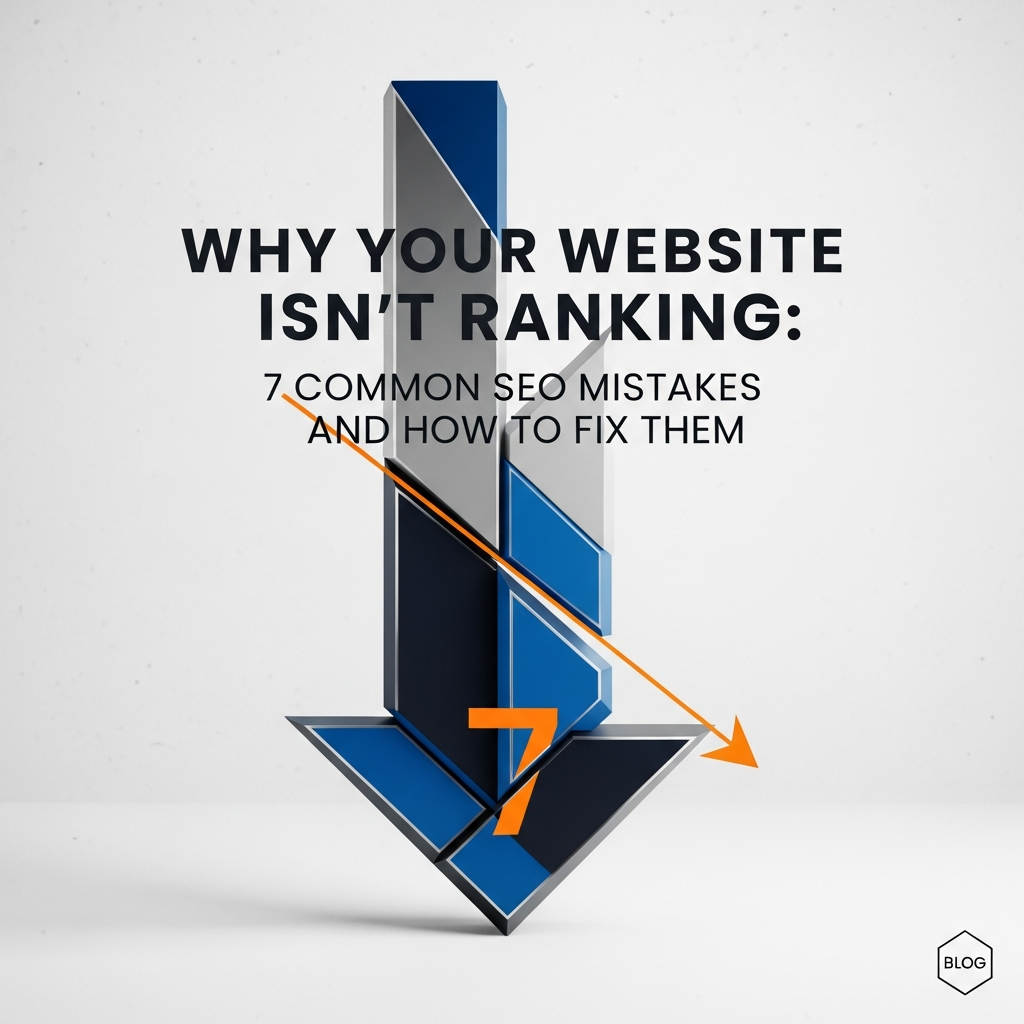
Why Your Website Isn’t Ranking: 7 Common Seo Mistakes and How to Fix Them

The digital landscape is often described as a democratic meritocracy, where the best content rises to the top through the invisible hand of the algorithm. However, any seasoned digital strategist knows that the reality is far more Machiavellian. You have poured your intellectual capital into a website, polished the prose, and optimized the imagery, yet you remain relegated to the digital equivalent of a forgotten dusty shelf in a library basement. If your website isn’t ranking, it is rarely a matter of bad luck; it is almost certainly a failure of systemic synchronization between your site’s architecture and the ever-evolving heuristics of search engines.

Search Engine Optimization (SEO) is not a “set-and-forget” endeavor. It is a rigorous, multidisciplinary exercise in technical precision, linguistic nuance, and psychological profiling. To rank is to prove to a non-human entity—the search crawler—that you are the definitive authority on a subject. When that proof fails, the consequences are invisibility. In this comprehensive analysis, we will dissect the seven most egregious SEO mistakes that keep high-quality websites in the shadows and provide the high-level remediation strategies necessary to reclaim your digital sovereignty.
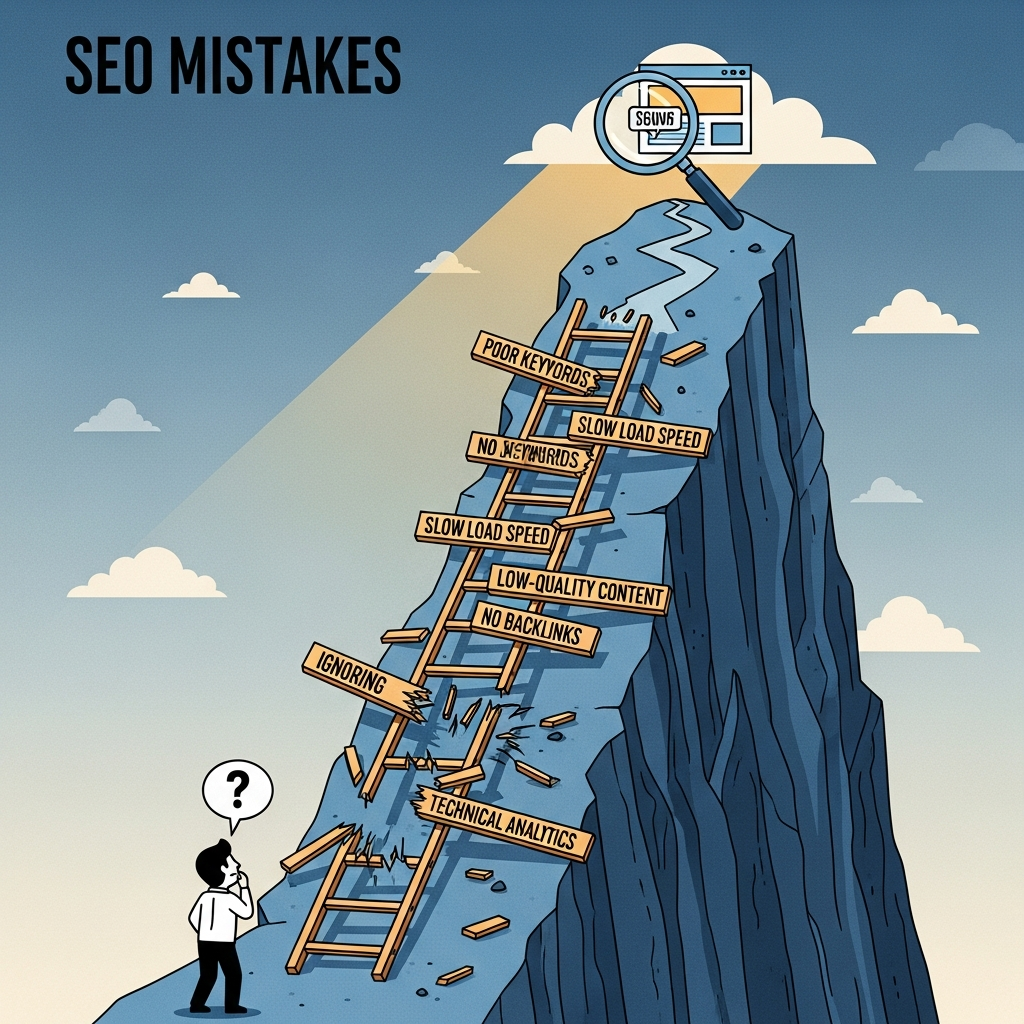
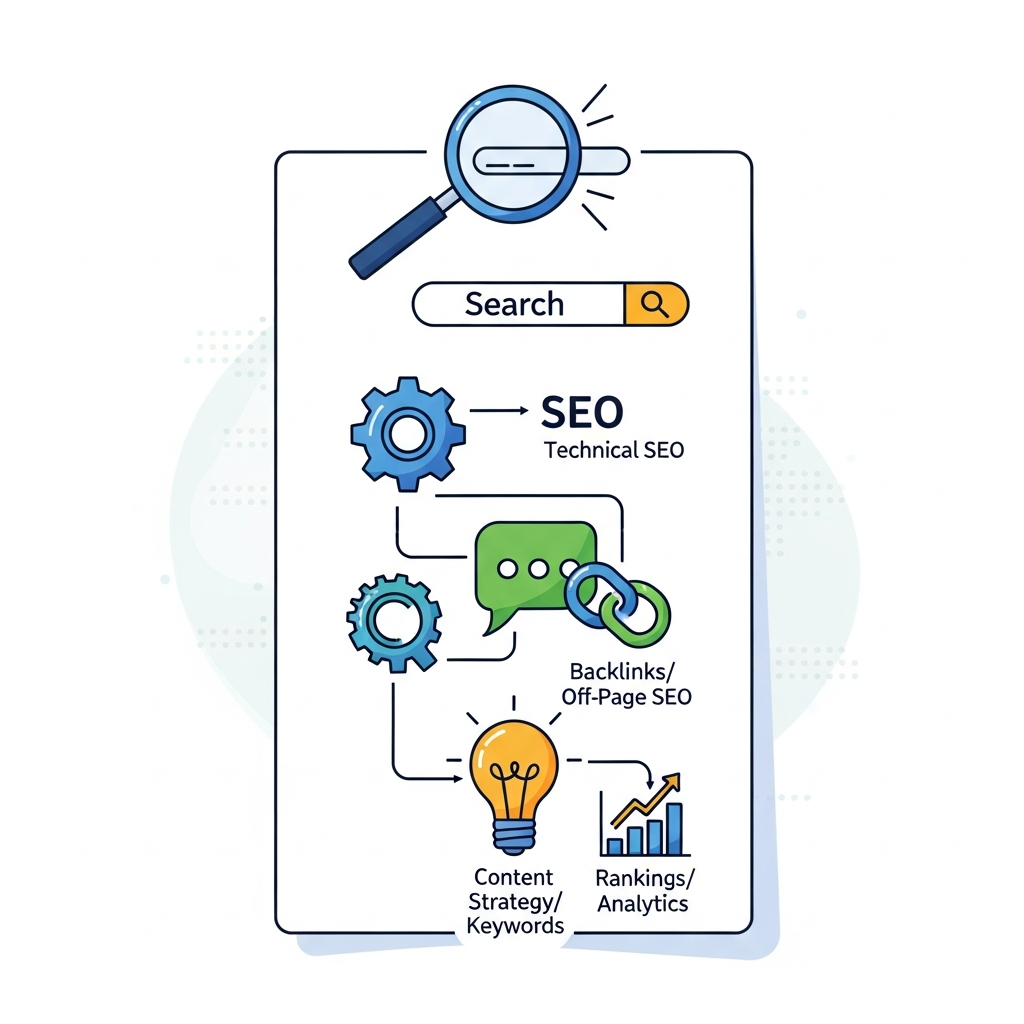
Visual for Why Your Website Isn't Ranking: 7 Common Seo Mistakes and How to Fix Them

1. The Technical Sunder: Ignoring the Crawl Budget and Indexing Architecture

Before a search engine can rank your content, it must first be able to find, read, and interpret it. This is the domain of Technical SEO, and it is where most websites fail before they even begin the content race. Search engines like Google utilize “spiders” or “crawlers” to navigate the web. These bots operate on a “crawl budget”—a finite amount of time and resources allocated to your site based on its perceived authority and health.

If your site architecture is a labyrinth of broken links, orphaned pages, and convoluted redirect chains, you are effectively squandering your crawl budget. The crawler gets frustrated (in a computational sense) and departs before reaching your most valuable assets. Furthermore, the misuse of the robots.txt file can inadvertently block crucial CSS and JavaScript files, leading to a “partial render” that obscures your content from the engine’s view.

The Fix: Engineering a Frictionless Path

To remedy technical obfuscation, one must adopt the mindset of a systems architect. Start with a comprehensive crawl of your site using tools like Screaming Frog or Ahrefs. Identify and eliminate 404 errors with surgical precision. Implement a flat site architecture; ideally, no piece of content should be more than three clicks away from the homepage.

“Technical SEO is the foundation upon which all other efforts are built. Without a crawlable infrastructure, your content is essentially shouting into a vacuum.”

Furthermore, prioritize your XML sitemap. Ensure it is dynamically updated and submitted to Google Search Console. If you are utilizing heavy JavaScript frameworks (like React or Angular), ensure you are employing Server-Side Rendering (SSR) or Dynamic Rendering. If the bot sees a blank page because it can’t execute your script, your ranking potential is zero.
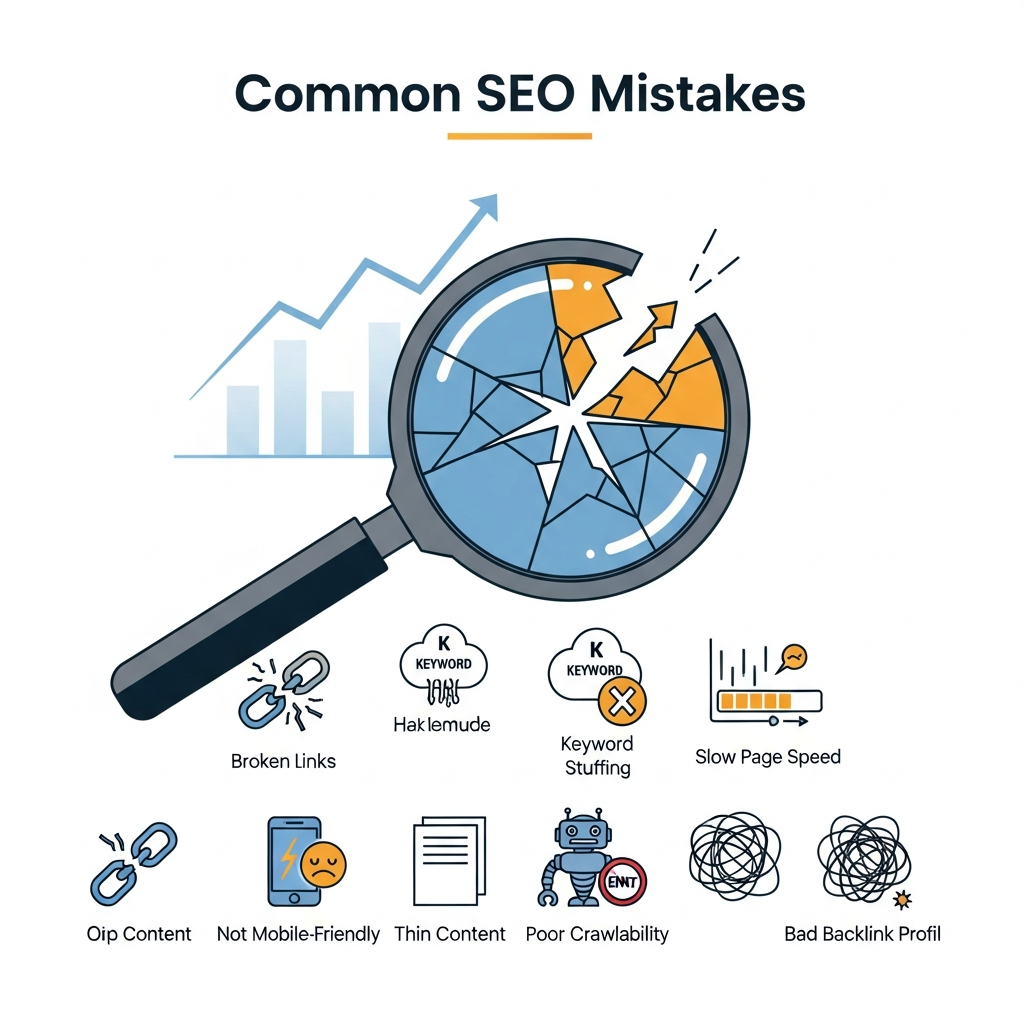
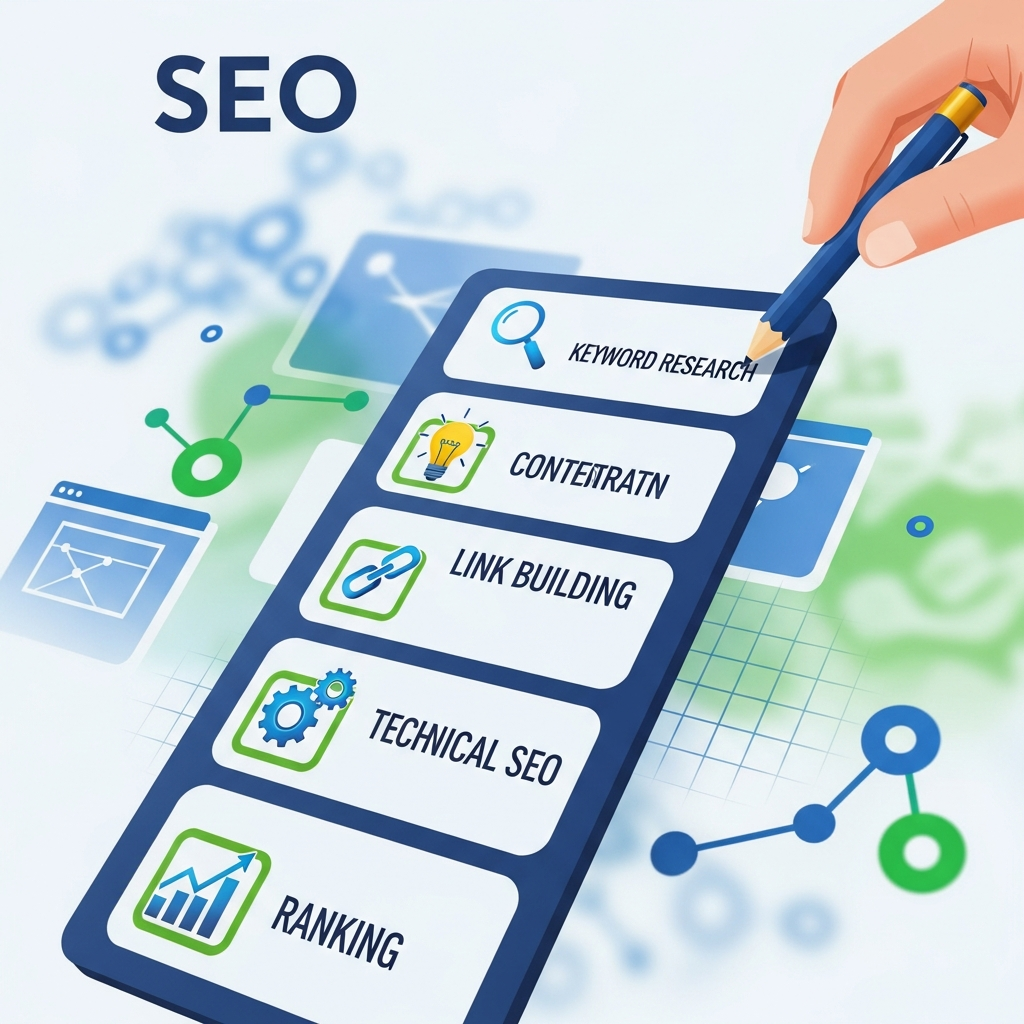
Visual for Why Your Website Isn't Ranking: 7 Common Seo Mistakes and How to Fix Them

2. Keyword Cannibalization: The War Within

There is a persistent myth in the SEO community that the more pages you have targeting a specific keyword, the better your chances of ranking. This is a fundamental misunderstanding of how search engines perceive authority. This phenomenon, known as keyword cannibalization, occurs when multiple pages on your site compete for the same search query. Instead of presenting a single, authoritative pillar of information, you are forcing Google to choose between several diluted options.

The result? Google often chooses neither, or it fluctuates between them, preventing any single page from gaining the “link juice” and historical authority required to crack the top three positions. It is the digital equivalent of a political party splitting its own vote, allowing a less qualified opponent to win the seat.

The Fix: Content Consolidation and Semantic Mapping

Audit your content library for thematic overlap. If you have three blog posts titled “How to Bake Bread,” “Best Bread Baking Tips,” and “Bread Making for Beginners,” you are cannibalizing yourself. The solution is content pruning and consolidation.

  • Identify: Use Google Search Console to see which pages are ranking for the same queries.
  • Consolidate: Merge the insights from multiple “thin” pages into one “mega-guide” that provides comprehensive value.
  • Redirect: Use 301 redirects from the old, deleted URLs to the new authoritative URL. This transfers the existing “ranking power” to the new destination.
  • Clarify: Use unique H1 tags and meta-descriptions to ensure each page has a distinct, non-overlapping purpose.
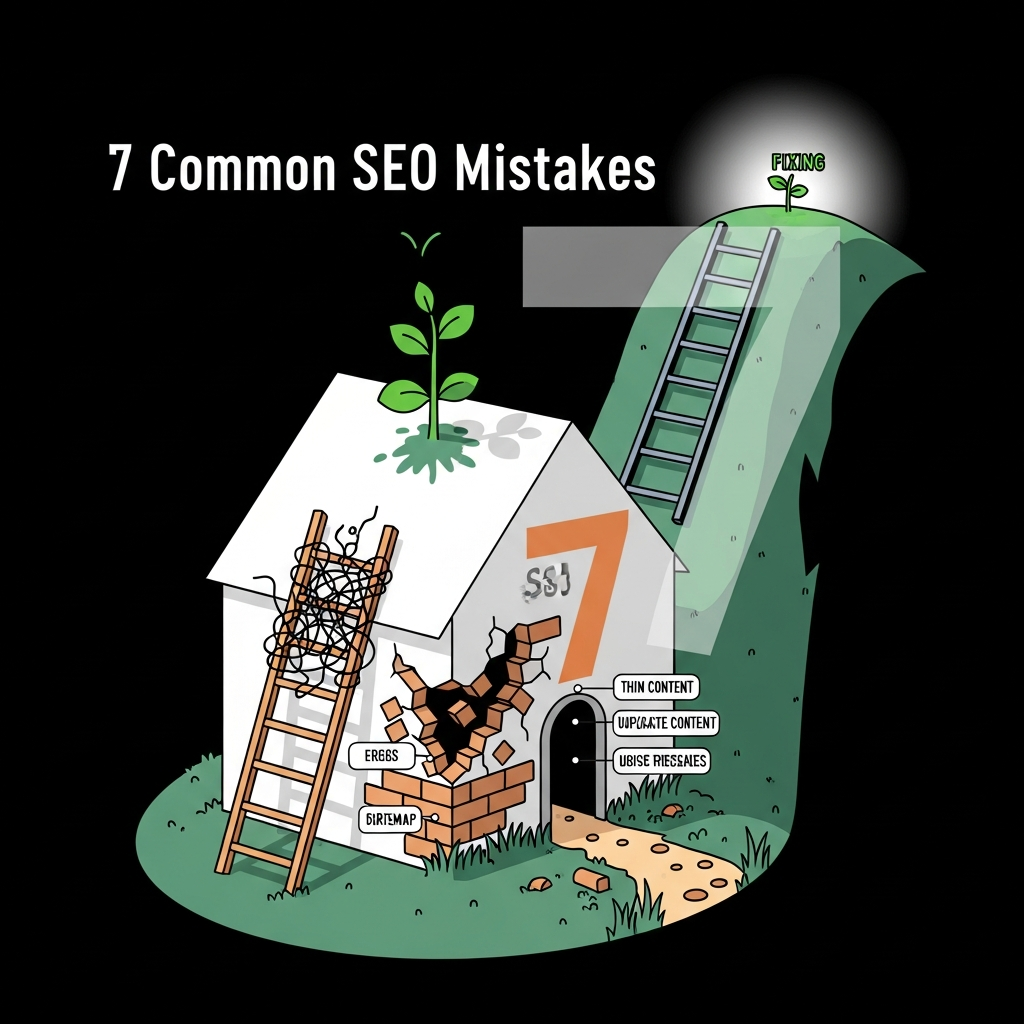
Visual for Why Your Website Isn't Ranking: 7 Common Seo Mistakes and How to Fix Them

3. The Backlink Paradox: Valuing Quantity Over Qualitative Authority

In the early days of the web, SEO was a numbers game. He who had the most links won. Today, the algorithm has evolved from a simple counter to a sophisticated forensic investigator. A thousand links from low-authority, “spammy” directories or irrelevant forums are not just useless—they are actively toxic. This is the “Backlink Paradox”: the harder you try to “get” links through artificial means, the less likely you are to rank.

Google’s Penguin update and its subsequent iterations have made it clear that relevance and authority are the only currencies that matter. A single link from a high-authority publication like The New York Times or a niche-specific leader like Search Engine Journal is worth more than ten thousand links from a private blog network (PBN).

The Fix: Earned Authority Through “Skyscraper” Content

Stop “building” links and start “earning” them. This requires a shift from transactional outreach to a PR-based mindset. The most effective method remains the Skyscraper Technique: find a piece of content in your niche that is already performing well and has many backlinks, then create something significantly better—more data-driven, better designed, and more current.

Once your superior asset is live, reach out to the individuals who linked to the original piece and demonstrate the added value of your resource. Additionally, focus on Digital PR. Provide expert quotes to journalists via platforms like HARO (Help A Reporter Out) or Featured.com. When you become a cited source of truth, the high-authority backlinks follow naturally, signaling to Google that you are a trusted entity in your field.
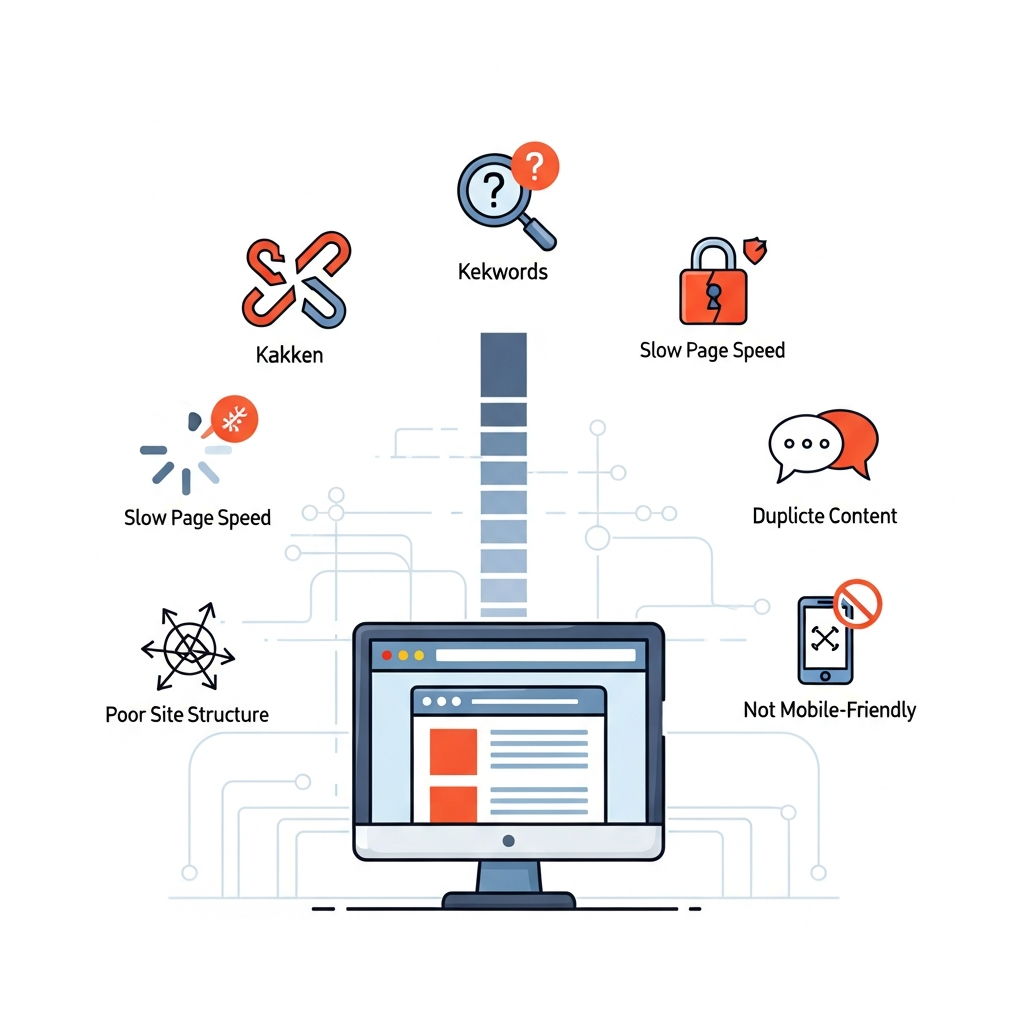
Visual for Why Your Website Isn't Ranking: 7 Common Seo Mistakes and How to Fix Them

4. Neglecting Core Web Vitals: The User Experience Mandate

For years, SEOs focused almost exclusively on keywords and links, treating the actual user experience (UX) as a secondary concern. That era ended with the introduction of Core Web Vitals. Google has explicitly stated that page experience is a ranking factor. If your site is sluggish, shifts layout during loading, or provides a frustrating mobile experience, your rankings will suffer, regardless of your content’s quality.

The three pillars of Core Web Vitals are:

  • Largest Contentful Paint (LCP): How fast the main content loads.
  • First Input Delay (FID): How quickly the site responds to a user’s first interaction.
  • Cumulative Layout Shift (CLS): How much the page elements “jump around” as the site loads.

The Fix: Performance Optimization as a Competitive Advantage

Performance optimization is an ongoing technical requirement. Start by optimizing your images; use next-gen formats like WebP and implement “lazy loading” so images only load as the user scrolls. Minify your CSS, JavaScript, and HTML to reduce the payload size. Consider a Content Delivery Network (CDN) like Cloudflare to serve your site from servers physically closer to the user.

Most importantly, adopt a mobile-first philosophy. Google uses the mobile version of your site for indexing and ranking. If your desktop site is a masterpiece but your mobile site is a cramped, unreadable mess, you are effectively invisible to the majority of the world’s searchers.
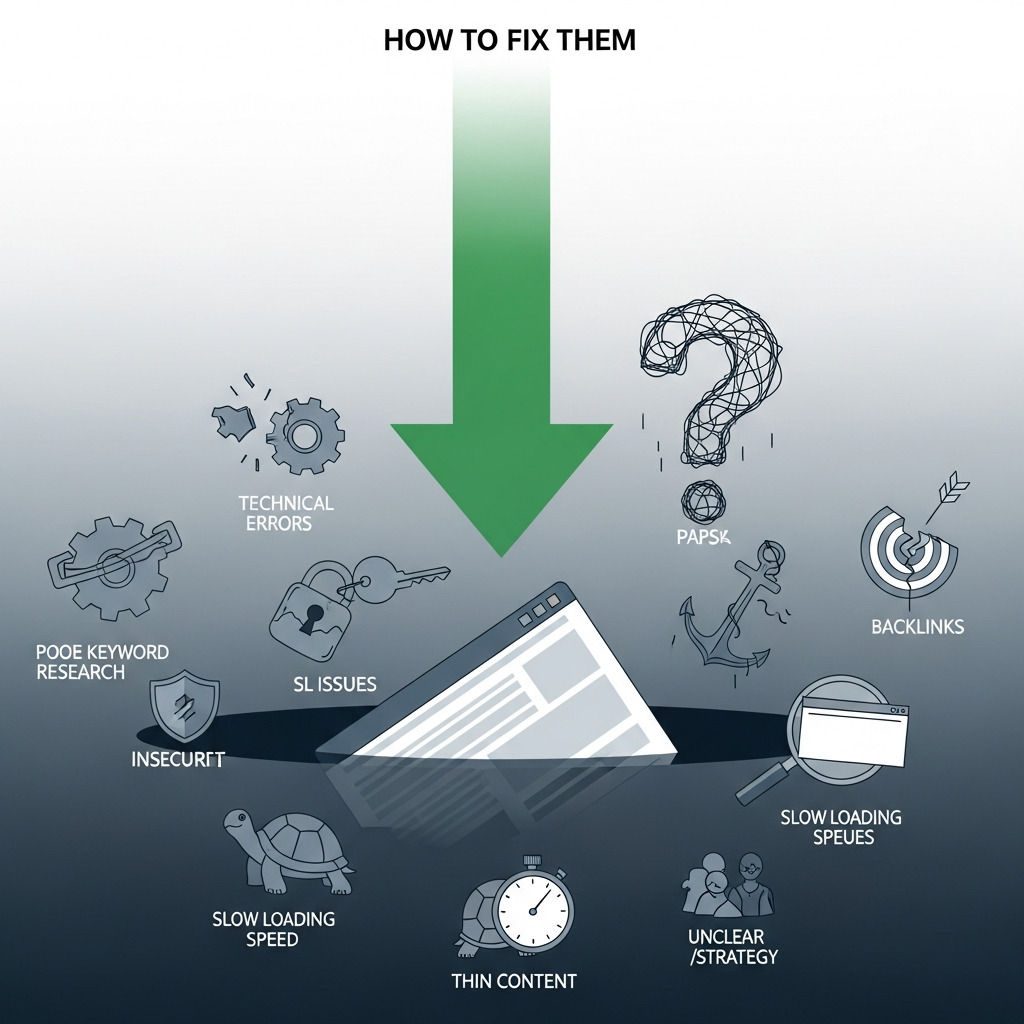
Visual for Why Your Website Isn't Ranking: 7 Common Seo Mistakes and How to Fix Them

5. The “Thin Content” Epidemic: Sacrificing Substance for Frequency

There is a pervasive anxiety among content creators that they must publish daily to remain relevant. This often leads to the production of “thin content”—articles that are short, derivative, and offer no unique insight. From an analytical perspective, thin content is a liability. It increases your site’s “noise-to-signal” ratio and fails to satisfy the user’s search intent.

Google’s E-E-A-T guidelines (Experience, Expertise, Authoritativeness, and Trustworthiness) are designed to filter out the superficial. If your content looks like it was generated by a first-generation AI or written by someone with only a passing familiarity with the subject, it will never reach the first page.

The Fix: The Deep-Dive Methodology

Quality is a prerequisite, not a luxury. Instead of publishing four 500-word posts a week, publish one 2,500-word comprehensive guide. Incorporate original research, proprietary data, expert interviews, and unique case studies. Use Semantic SEO: don’t just target a keyword; cover the entire topic. If you are writing about “Remote Work,” you must also address “digital nomadism,” “asynchronous communication,” “VPN security,” and “mental health for remote employees.”

By creating a comprehensive topical map, you signal to the algorithm that your domain is an exhaustive resource. This builds “Topical Authority,” which allows you to rank for high-competition keywords that would otherwise be out of reach.

>6. Misaligning with Search Intent: The Psychological Disconnect

You may have the best-written article in the world, but if it doesn’t match the search intent of the user, it will fail. Search intent is the “why” behind a query. Generally, intent falls into four categories: Informational, Navigational, Transactional, and Commercial Investigation.

A common mistake is trying to rank a transactional “product page” for an informational query. If someone searches for “the history of coffee,” they are looking for an educational essay, not a “Buy Now” button for a bag of beans. Conversely, if they search for “best espresso machine reviews,” they are in the commercial investigation phase and want comparisons, not a deep dive into the botany of Coffea arabica.

The Fix: Reverse-Engineering the SERP

Before writing a single word, perform a manual search for your target keyword. Look at the top three results. What type of content are they? Are they listicles, long-form guides, product pages, or videos? Google is showing you exactly what the user wants. If the top results are all “How-to” guides and you are trying to rank a landing page, you are fighting an uphill battle against the algorithm’s understanding of human psychology.

Align your content structure with the dominant intent. Use the inverted pyramid style for informational queries—provide the most important answer immediately, then delve into the details. For commercial queries, provide clear comparisons, pros and cons, and pricing data. When your content satisfies the user’s intent, your dwell time increases and your bounce rate decreases—both of which are potent signals of quality to the search engine.

>7. The Internal Link Vacuum: Failing to Distribute Authority

Many site owners focus so heavily on external backlinks that they completely neglect their internal linking structure. Internal links are the nervous system of your website. They guide users to related content, but more importantly, they help search engines understand the hierarchy and relationship between your pages. Without internal links, your high-authority “hub” pages cannot pass their “link juice” to your deeper, more specific “spoke” pages.

A page with no internal links is known as an orphan page. For Google, an orphan page is a sign of low importance. If you don’t care enough to link to it from within your own site, why should the search engine prioritize it in its index?

The Fix: Implementing the Hub-and-Spoke Model

Adopt a “Topic Cluster” or “Hub-and-Spoke” model. Create a central, comprehensive pillar page for a broad topic (the Hub) and link it to several more specific, related articles (the Spokes). Each spoke article should also link back to the pillar page.

Use descriptive anchor text. Instead of using “click here,” use “advanced SEO strategies” or “benefits of organic gardening.” This gives the search engine context about the destination page. Regularly audit your site for orphan pages and integrate them into your broader content ecosystem. By creating a dense, logical web of internal links, you ensure that every part of your site benefits from the authority of your best-performing content.


>The Synthesis: SEO as an Iterative Discipline

The fundamental truth of SEO is that it is never “finished.” The search engines of today are vastly more sophisticated than those of five years ago, and they will be eclipsed by the AI-driven models of next year. However, the core principles remain constant: your website must be technically sound, your content must be authoritative and useful, and your user experience must be frictionless.

If your website isn’t ranking, it is not an indictment of your business’s value, but rather a diagnostic indicator that your communication with the search engine is flawed. By systematically addressing these seven mistakes—from the technical bedrock to the nuances of search intent—you move from being a passive observer of the algorithm to an active participant in your own digital success. SEO is a marathon of incremental gains. Start with the foundation, refine the strategy, and the rankings will inevitably follow.

Are you ready to stop guessing and start ranking? The transition from obscurity to authority begins with a single, data-driven audit. Reclaim your place at the top of the search results by treating SEO not as a dark art, but as the high-stakes engineering discipline that it truly is.
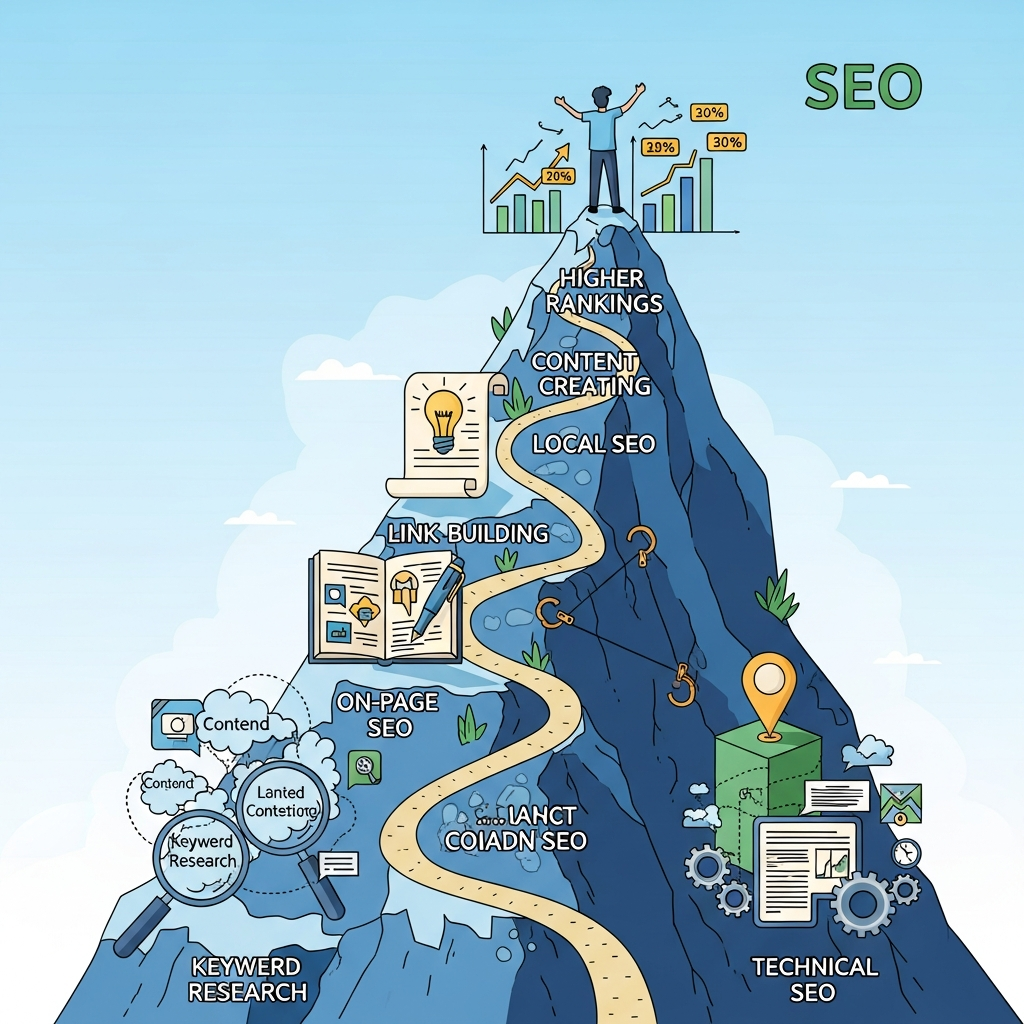
The Complete Seo Checklist: a Step-by-step Guide for Higher Rankings

In the contemporary digital ecosystem, Search Engine Optimization (SEO) has transcended its origins as a mere collection of technical parlor tricks. It has evolved into a rigorous, multidisciplinary science that sits at the intersection of linguistics, psychology, and computer science. For the uninitiated, the Google algorithm remains a cryptic deity, demanding tribute in the form of backlinks and meta-tags. However, for the seasoned practitioner, SEO is an exercise in architectural precision and semantic clarity. This guide serves as your definitive manual for navigating the labyrinthine corridors of modern search dynamics.

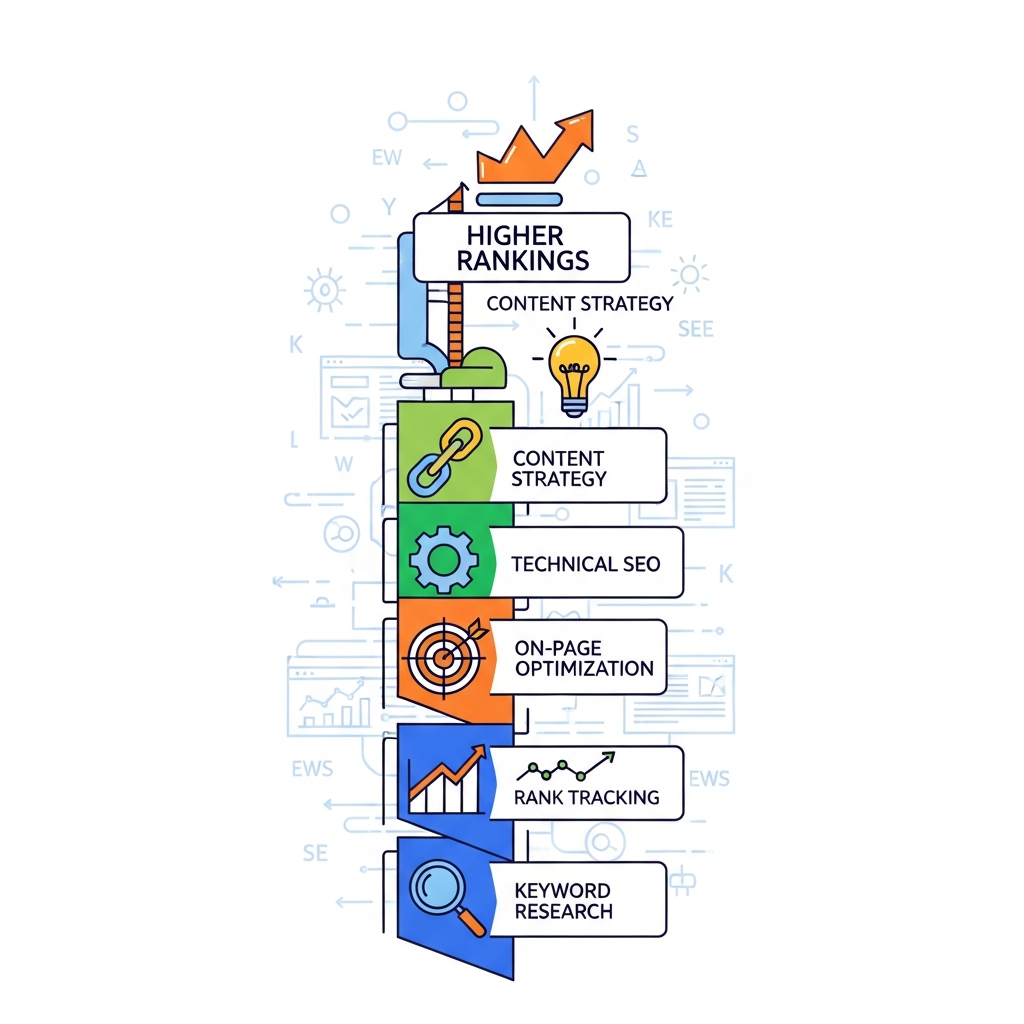
Visual for The Complete Seo Checklist: a Step-by-step Guide for Higher Rankings

Section 1: The Technical Infrastructure—Building the Bedrock

Before one can contemplate the nuances of content strategy or the psychological triggers of a meta-description, one must ensure that the underlying digital scaffolding is sound. Technical SEO is the foundation upon which all other efforts rest. If your technical house is built on sand, no amount of high-quality content will prevent it from sinking into the depths of the second page of search results.

Crawlability and Indexability

The primary directive of any search engine is to discover, parse, and store information. If your site structure prevents a crawler from accessing your pages, you are essentially invisible. Ensure your Robots.txt file is not inadvertently blocking critical directories. Furthermore, the implementation of an XML Sitemap is non-negotiable; it acts as a cartographic guide for Google’s spiders, ensuring that even the most remote corners of your domain are indexed.

The Canonicalization Conundrum

Duplicate content is the silent killer of search rankings. When multiple versions of a page exist (e.g., via URL parameters or different protocols like HTTP vs. HTTPS), search engines struggle to identify the “authoritative” source. By utilizing the rel=”canonical” tag, you provide a clear instruction to the algorithm, consolidating link equity and preventing internal competition. It is a subtle but vital act of digital hygiene.

HTTPS and Security Protocols

In an era defined by data breaches and privacy concerns, security is not just a preference; it is a ranking signal. The transition from HTTP to HTTPS via an SSL certificate is mandatory. Beyond the direct algorithmic benefit, the “Secure” padlock in the browser bar is a critical trust signal for users. In the world of SEO, trust is a currency that can be traded for conversions.

Visual for The Complete Seo Checklist: a Step-by-step Guide for Higher Rankings

Section 2: The Semantic Core—Keyword Research and Intent Taxonomy

The days of “keyword stuffing” are long dead, buried under the weight of Google’s BERT and RankBrain updates. Modern search engines do not merely look for strings of characters; they seek to understand intent. Keyword research, therefore, is no longer a volume-hunting expedition; it is an ethnographic study of your target audience.

Decoding Search Intent

Every query typed into a search bar carries a specific psychological motivation. These generally fall into four categories:

  • Informational: The user seeks knowledge (e.g., “What is the capital of Estonia?”).
  • Navigational: The user seeks a specific website (e.g., “Facebook login”).
  • Transactional: The user is ready to purchase (e.g., “Buy iPhone 15 Pro Max”).
  • Commercial Investigation: The user is comparing options (e.g., “Best SEO tools 2024”).

Your content must be laser-focused on satisfying the specific intent behind the keywords you target. Ranking for a high-volume transactional keyword with an informational blog post is an exercise in futility; the user will bounce, and your rankings will plummet.

The Long-Tail and Niche Dominance

While high-volume “head” terms are enticing, they are often prohibitively competitive. The strategic practitioner looks to the long-tail keywords—queries that are more specific and often carry higher conversion rates. These phrases reflect the natural language of human speech and are increasingly relevant in the age of voice search and generative AI interfaces.

Visual for The Complete Seo Checklist: a Step-by-step Guide for Higher Rankings

Section 3: On-Page Optimization—The Art of Relevance

On-page SEO is the process of optimizing individual web pages to rank higher and earn more relevant traffic. It is where your technical foundation meets your creative strategy. It requires a meticulous attention to detail and an understanding of how both humans and machines read a page.

Title Tags and Meta Descriptions: The Digital Storefront

Your title tag is arguably the most important on-page element. It must be concise (under 60 characters) and front-loaded with your primary keyword. However, it must also be written for humans. Think of it as a headline in a prestigious newspaper; it must provoke curiosity without descending into “clickbait.” Similarly, the meta description serves as your elevator pitch. While it may not be a direct ranking factor, it is a crucial driver of Click-Through Rate (CTR), which indirectly influences your authority.

Header Hierarchy (H1-H6)

A well-structured page is a readable page. Use a single H1 tag for your main title and use H2 and H3 tags to organize your content logically. This hierarchy allows crawlers to understand the “thematic weight” of different sections. It also provides a better experience for users who skim content—which, let’s be honest, is most of them.

Image Optimization and Alt Text

Images are not merely aesthetic ornaments; they are opportunities for optimization. Large image files can degrade page speed, so compression is essential. Furthermore, the Alt Text attribute is vital for accessibility and for providing context to search engines that cannot “see” the image. Describe the image accurately, and if it is relevant, include a keyword—but avoid the temptation to over-optimize.

“SEO is not about gaming the system; it is about learning how to speak the system’s language so that your value is never lost in translation.”

Visual for The Complete Seo Checklist: a Step-by-step Guide for Higher Rankings

Section 4: Content Strategy—The Era of E-E-A-T

Google’s quality rater guidelines place a heavy emphasis on E-E-A-T: Experience, Expertise, Authoritativeness, and Trustworthiness. Content is no longer just about word count or keyword density; it is about establishing yourself as a credible voice in a noisy digital landscape.

The Death of Thin Content

Regurgitating existing information is a recipe for stagnation. To rank in the top tier, your content must provide “added value.” This could be original research, a unique perspective, or a superior user experience. If your page provides the same information as the ten pages above it, Google has no incentive to promote you. You must aim for 10x Content—material that is ten times better than anything currently available for that query.

Semantic Richness and LSI Keywords

Latent Semantic Indexing (LSI) is a fancy way of saying “related concepts.” If you are writing about “Paris,” Google expects to see terms like “Eiffel Tower,” “Louvre,” and “Seine.” The presence of these related terms confirms the depth of your content. Academic and comprehensive writing naturally incorporates these concepts, proving to the algorithm that you are covering the topic holistically rather than just chasing a single keyword.

The Importance of Content Freshness

In many niches, particularly those related to technology or news, the “decay” of information is rapid. A guide written in 2021 might be obsolete by 2024. Regularly updating your high-performing content signals to Google that your site is active and that your information remains accurate. This “freshness factor” can provide a significant boost to older pages that have begun to slip in the rankings.

Visual for The Complete Seo Checklist: a Step-by-step Guide for Higher Rankings

Section 5: Off-Page SEO—Building Digital Authority

If on-page SEO is what you say about yourself, off-page SEO is what others say about you. In the eyes of a search engine, a backlink is a vote of confidence. However, not all votes are created equal. The quality and relevance of your link profile are far more important than the raw number of links.

The Anatomy of a High-Quality Backlink

A link from a high-authority, relevant site (like an industry-leading publication or a university) is worth infinitely more than a hundred links from obscure, irrelevant blogs. Focus on Editorial Merit. This is achieved through guest posting on reputable sites, digital PR, and creating “link magnets”—original data, infographics, or tools that people naturally want to reference.

The Danger of “Toxic” Links

The history of SEO is littered with the carcasses of websites that tried to “buy” their way to the top. Link farms, PBNs (Private Blog Networks), and automated link-building schemes are a direct violation of Google’s terms of service. While they might provide a short-term boost, they inevitably lead to manual penalties or algorithmic suppression. A clean, organic link profile is the only sustainable strategy.

Social Signals and Brand Mentions

While the direct impact of social media shares on SEO is a subject of much debate, there is no denying the indirect benefits. High social engagement leads to increased brand awareness, which leads to more branded searches and, ultimately, more organic links. Furthermore, unlinked brand mentions are increasingly recognized by algorithms as a signal of authority. Being talked about—even without a link—matters.

>Section 6: User Experience (UX) and Core Web Vitals

Google has made it explicitly clear: user experience is a ranking factor. The Core Web Vitals update solidified this by introducing metrics that measure how users perceive the speed, responsiveness, and visual stability of a page.

LCP, FID, and CLS: The Technical Trinity

  • Largest Contentful Paint (LCP): Measures loading performance. To provide a good user experience, LCP should occur within 2.5 seconds of when the page first starts loading.
  • First Input Delay (FID): Measures interactivity. Pages should have an FID of less than 100 milliseconds.
  • Cumulative Layout Shift (CLS): Measures visual stability. Pages should maintain a CLS of less than 0.1.

A site that is slow or “jumpy” creates friction. Search engines want to reward sites that provide a seamless experience. Optimization techniques include using a Content Delivery Network (CDN), minifying CSS and JavaScript, and ensuring that images have defined dimensions to prevent layout shifts.

Mobile-First Indexing

We no longer live in a world where mobile optimization is an “extra.” Google now uses the mobile version of a site’s content for indexing and ranking. If your mobile site is a stripped-down, inferior version of your desktop site, your rankings will suffer. Responsive design is the industry standard for a reason; it ensures a consistent experience across all devices.

>Section 7: The Perpetual Cycle of Analysis and Iteration

SEO is not a “set it and forget it” endeavor. It is a continuous loop of implementation, measurement, and refinement. The landscape changes, competitors adapt, and algorithms evolve. To stay ahead, you must become a student of your own data.

Google Search Console and Analytics

These are the two most critical tools in your arsenal. Google Search Console provides a direct line of communication from the search engine, alerting you to crawl errors, indexing issues, and manual penalties. Google Analytics 4 (GA4) allows you to track user behavior once they arrive on your site. Are they converting? Where are they dropping off? This data should inform your future content and technical decisions.

Competitive Intelligence

You do not exist in a vacuum. Your competitors are likely pursuing the same keywords and audience. Use tools like Ahrefs, SEMrush, or Moz to analyze their link profiles and content strategies. Don’t just copy them; identify their weaknesses and capitalize on them. If they have a high-ranking post that is outdated or poorly formatted, that is your opportunity to create something superior.

The Human Element: Conversion Rate Optimization (CRO)

Ranking #1 for a high-volume keyword is a vanity metric if that traffic doesn’t translate into business value. Conversion Rate Optimization is the process of turning searchers into customers. This involves A/B testing headlines, optimizing Call-to-Action (CTA) buttons, and simplifying the checkout or contact process. SEO gets them to the door; UX and CRO bring them inside and make them stay.

>Conclusion: The Future of Search

As we peer into the future, the rise of Artificial Intelligence and Search Generative Experience (SGE) promises to disrupt the status quo once again. However, the fundamental principles of SEO remain unchanged: provide the most relevant, authoritative, and accessible answer to a user’s query. By following this comprehensive checklist, you are not just optimizing for an algorithm; you are optimizing for the human experience. The rankings will follow.

The journey of a thousand rankings begins with a single audit. Start with your technical foundation, move to your semantic strategy, and never stop refining your authority. In the high-stakes game of digital visibility, the disciplined and the detailed are the ones who ultimately prevail.

Mastering Search Engine Optimization: How to Rank #1 on Google

In the digital epoch, the quest for the summit of Google’s search results is often portrayed as a modern-day crusade—a blend of arcane sorcery, rigorous data science, and an unhealthy obsession with the whims of an enigmatic algorithm. To “rank #1” is the ultimate meritocracy of the internet, yet the path to this zenith is littered with the corpses of websites that tried to “game” the system. To master Search Engine Optimization (SEO) is not merely to optimize for a bot, but to curate an experience that satisfies the insatiable curiosity of the human psyche while adhering to the stringent logical frameworks of Mountain View’s silicon giants.

This guide serves as a comprehensive manual for the discerning marketer and the meticulous technologist. We shall deconstruct the multifaceted architecture of SEO, moving beyond the pedestrian advice of “writing good content” into the granular, analytical, and often counter-intuitive strategies that separate the apex predators of the SERPs (Search Engine Results Pages) from the also-rans.

Visual for Mastering Search Engine Optimization: How to Rank #1 on Google

I. The Ontological Shift: From Keywords to Entities

For decades, SEO was a game of lexical matching. If a user searched for “bespoke leather shoes,” the site with that exact phrase repeated the most frequently—and perhaps bolded for good measure—would win. That era is dead. Google has evolved from a directory of strings into a repository of things. This transition to Semantic Search means the algorithm now understands the relationship between entities.

An entity, in SEO parlance, is a well-defined object or concept. When you write about SEO, Google recognizes its relationship to “digital marketing,” “backlinks,” “RankBrain,” and “John Mueller.” Ranking #1 requires you to establish your content within this web of relationships. You are no longer just targeting keywords; you are building a knowledge graph.

“The goal of search is to understand exactly what you mean and give you back exactly what you want.” – Larry Page

To master this, one must employ LSI (Latent Semantic Indexing) keywords—though the term is technically archaic, the principle of topical depth remains. Your content must demonstrate “topical authority.” If you want to rank for a competitive term, you cannot simply write one stellar post. You must build a “Topic Cluster” consisting of a pillar page and multiple supporting sub-topics, all interconnected via a sophisticated internal linking structure.

Visual for Mastering Search Engine Optimization: How to Rank #1 on Google

II. Technical SEO: The Infrastructure of Invisibility

If content is the sovereign, technical SEO is the castle. Without a robust foundation, your brilliant prose will languish in the dark corners of the deep web, unindexed and unloved. Technical SEO is an exercise in reducing friction for Google’s crawlers.

1. Crawl Budget and Efficiency

Google does not have infinite resources to spend on your website. Each site is allocated a “crawl budget.” If your site is bloated with 404 errors, unnecessary redirects (301 chains), and low-quality “zombie” pages, the Googlebot will exhaust its budget before it finds your high-value content. Use tools like Screaming Frog to conduct a forensic audit of your site’s health.

2. The Schema Markup: Speaking Google’s Native Tongue

While Google is adept at parsing natural language, it prefers structured data. Schema Markup (JSON-LD) allows you to explicitly tell the search engine what your content represents. Is it a recipe? A product? A FAQ? By implementing Schema, you increase your chances of appearing in “Rich Snippets,” which dramatically improves Click-Through Rate (CTR), a known secondary ranking signal.

3. HTTPS and Security

In an era of rampant data breaches, security is not optional. Since 2014, HTTPS has been a confirmed ranking signal. A site without an SSL certificate is effectively shouting to the world—and to Google—that it is untrustworthy. In the eyes of the algorithm, trust is a prerequisite for authority.

Visual for Mastering Search Engine Optimization: How to Rank #1 on Google

III. The E-E-A-T Framework: The Currency of Credibility

Google’s Quality Rater Guidelines introduce us to E-E-A-T: Experience, Expertise, Authoritativeness, and Trustworthiness. This is not a direct “ranking factor” in the way a backlink is, but it is the lens through which Google evaluates the quality of its index.

  • Experience: Does the author have first-hand, “boots-on-the-ground” experience with the subject?
  • Expertise: Is the author a recognized professional or an academic in the field?
  • Authoritativeness: Does the domain itself carry weight? Is it the “go-to” source for this niche?
  • Trustworthiness: Is the information accurate, cited, and transparent?

To rank #1, especially in “Your Money Your Life” (YMYL) niches like finance or health, you must cultivate these signals. This involves creating detailed author bios, citing reputable sources, and ensuring your “About Us” page reflects a legitimate organization rather than a faceless content farm.

Visual for Mastering Search Engine Optimization: How to Rank #1 on Google

IV. Content Orchestration: Beyond the “High-Quality” Cliché

The advice to “write high-quality content” is as ubiquitous as it is useless. What constitutes quality in the eyes of an algorithm? It is a combination of Search Intent and Comprehensive Utility.

Decoding Search Intent

There are four primary types of search intent. If your content does not align with the user’s intent, you will never rank, regardless of how “good” the writing is.
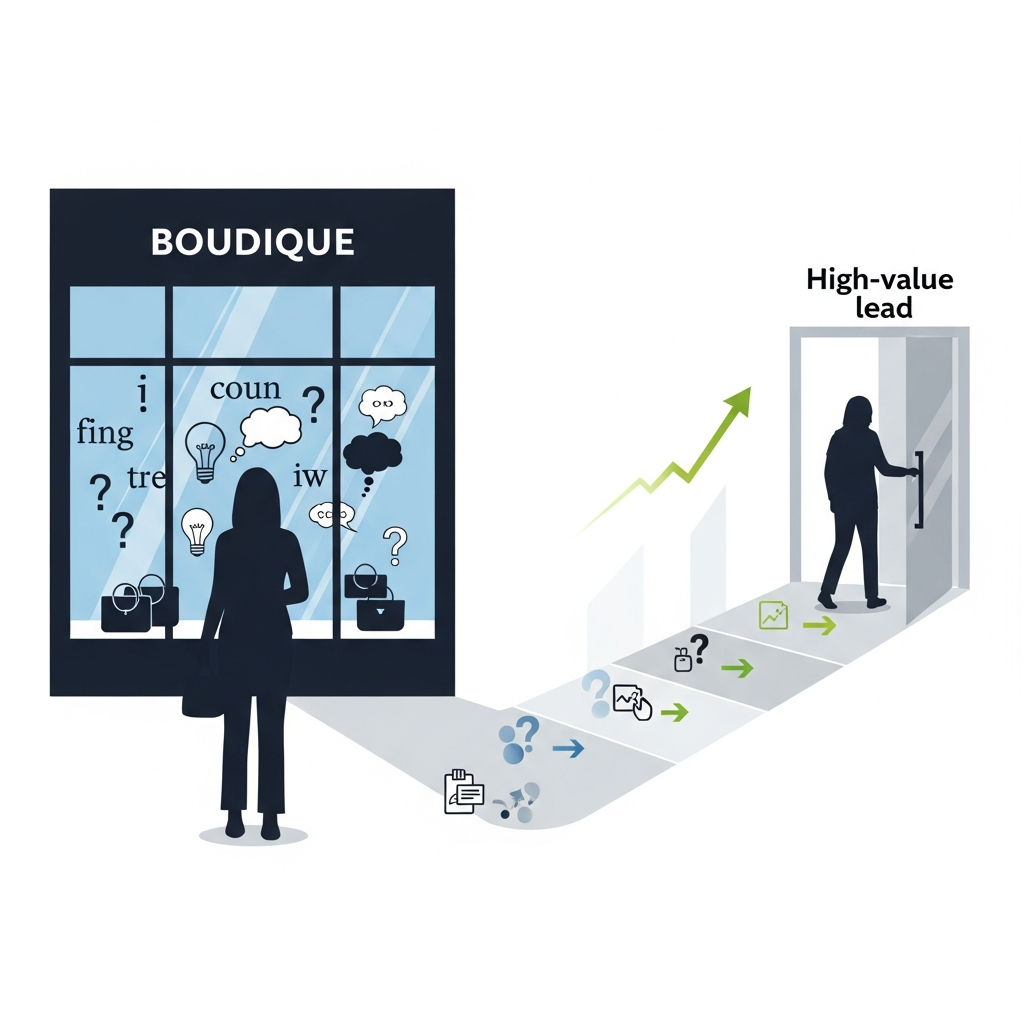
  1. Informational: The user wants to learn (e.g., “What is SEO?”).
  2. Navigational: The user is looking for a specific site (e.g., “Google Search Console login”).
  3. Commercial: The user is researching before a purchase (e.g., “Best SEO tools 2024”).
  4. Transactional: The user is ready to buy (e.g., “Ahrefs subscription discount”).

Ranking #1 requires a forensic analysis of the current top 10 results. If the SERP for your target keyword is filled with listicles, do not try to rank with a long-form white paper. The algorithm has already decided what the user wants; your job is to provide the most refined version of that format.

The “Skyscraper” Technique 2.0

The Skyscraper technique—finding the best content and making something better—is still viable, but it requires more nuance today. “Better” no longer means “longer.” It means more readable, more visually engaging, and more updated. Use original data, bespoke infographics, and expert interviews to add unique value that cannot be replicated by generative AI.

Visual for Mastering Search Engine Optimization: How to Rank #1 on Google

V. On-Page Optimization: The Art of the Nuance

On-page SEO is the process of optimizing individual web pages. While the basics are well-known, the mastery lies in the execution of the Title Tag and Meta Description as psychological triggers.

Your Title Tag is your first—and often only—chance to capture a user’s attention. It should be a blend of your primary keyword and a “power word” that increases CTR. For example, instead of “SEO Guide,” use “Mastering SEO: The Definitive 2024 Blueprint for Ranking #1.”

Furthermore, internal linking is perhaps the most undervalued lever in SEO. By strategically linking from high-authority pages (like your homepage) to “deep” content pages, you distribute Link Equity (or “Link Juice”) throughout your site, signaling to Google which pages are the most important.

>VI. Off-Page SEO: The Machiavellian World of Link Building

If on-page SEO is what you say about yourself, off-page SEO is what the world says about you. Backlinks remain the most significant ranking factor in Google’s algorithm. However, the days of quantity-over-quality are long gone. Ten links from high-authority, relevant domains are worth more than ten thousand links from disparate, low-quality blogs.

The Power of Relevance

A backlink from a niche-specific site (e.g., a tech blog linking to a software site) carries exponentially more weight than a link from a generic news site. Link building should be approached as Digital PR. This includes guest posting on reputable sites, the “Broken Link Building” strategy, and—most effectively—creating “Link Magnets” (original research, calculators, or controversial opinion pieces that demand citation).

“The best way to get links is to create something that is actually worth linking to.” – A sentiment often echoed by Matt Cutts.

Beware the “Black Hat” temptation. Purchasing link packages from Fiverr or participating in link farms will eventually lead to a manual penalty. Google’s Penguin algorithm and its subsequent AI-driven updates are incredibly adept at sniffing out unnatural link patterns. Slow, organic growth is the only sustainable path to the #1 spot.

>VII. User Experience (UX) and the Core Web Vitals

In 2021, Google officially integrated Core Web Vitals as ranking signals. This move codified what we already knew: Google prioritizes the user. If your site is slow, unresponsive, or suffers from “layout shift” (where elements jump around as they load), your rankings will suffer.

  • Largest Contentful Paint (LCP): Measures loading performance. Aim for 2.5 seconds or faster.
  • First Input Delay (FID): Measures interactivity. Aim for less than 100 milliseconds.
  • Cumulative Layout Shift (CLS): Measures visual stability. Aim for a score of less than 0.1.

Mobile-first indexing is also the standard. Your site must be perfectly responsive. If your mobile experience is a secondary thought, you are effectively invisible to the majority of searchers. SEO and UX are no longer separate disciplines; they are a symbiotic whole.

>VIII. The Artificial Intelligence Frontier: SGE and Beyond

As we navigate the mid-2020s, the elephant in the room is SGE (Search Generative Experience). Google is increasingly using AI to provide direct answers on the SERP, potentially leading to “zero-click” searches. To rank #1 in this environment, you must optimize for AI Overviews.

This involves being extremely concise in your definitions, using clear heading structures, and providing “nuggets” of information that an AI can easily scrape and attribute to you. Ironically, the rise of AI makes the human element—your unique perspective and “Experience” (the first ‘E’ in E-E-A-T)—more valuable than ever. AI can summarize facts, but it cannot (yet) provide a nuanced, human critique of a complex industry.

>IX. Measuring Success: The Analytics of Victory

Ranking #1 is a vanity metric if it doesn’t lead to conversions. To truly master SEO, one must be proficient in Google Analytics 4 (GA4) and Google Search Console. You must track not just your position, but your “Share of Voice,” your “Engagement Rate,” and your “Conversion Rate Optimization” (CRO).

SEO is not a one-time project; it is a cycle of hypothesis, execution, measurement, and refinement. The algorithm changes thousands of times a year. What works today might be relegated to the dustbin of history by the next Core Update. Vigilance is the price of dominance.

>X. Conclusion: The Long Game

Achieving the #1 spot on Google is not about “tricking” the algorithm. It is about becoming the most authoritative, trustworthy, and useful resource on the internet for your chosen topic. It requires a Herculean effort across technical, creative, and analytical domains. It is a game of marginal gains—optimizing a title here, speeding up a server there, and earning a high-authority link tomorrow.

Those who view SEO as a “hack” will always be at the mercy of the next update. But those who view it as a commitment to excellence—a way to ensure that the best information reaches the people who need it most—will find themselves not just at the top of the search results, but at the forefront of their industry. The view from the top is spectacular, but the climb is where the true mastery is forged.

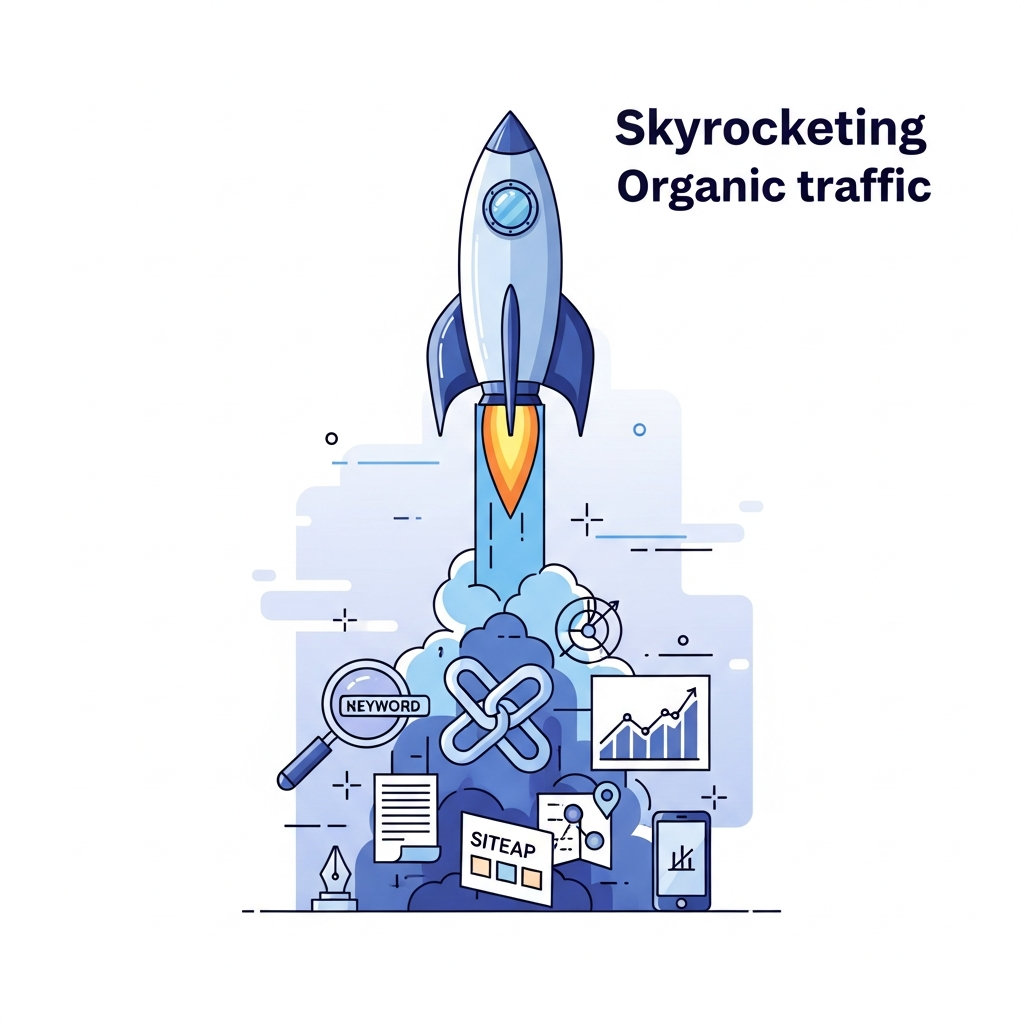
10 Proven Seo Strategies to Skyrocket Your Organic Traffic Fast

The search engine landscape is currently undergoing a seismic shift, one that renders the archaic practices of the early 2010s not just obsolete, but actively detrimental to your digital footprint. As we navigate the era of Generative AI, Search Generative Experience (SGE), and increasingly sophisticated Neural Matching, the “hack” is dead. Long live the strategy. To skyrocket organic traffic in the current milieu requires a synthesis of pedantic technical precision and a flair for psychological resonance.

For the uninitiated, SEO often feels like trying to nail jelly to a wall. For the expert, it is a game of probability, signals, and semantic engineering. If you are seeking a “magic button,” you are in the wrong place. However, if you are looking for a robust, battle-tested framework that leverages the current algorithmic biases of Google’s Hummingbird, RankBrain, and Smith updates, then let us begin our deep dive into the ten pillars of modern organic dominance.

Visual for 10 Proven Seo Strategies to Skyrocket Your Organic Traffic Fast

1. The Psychography of Search Intent Mastery

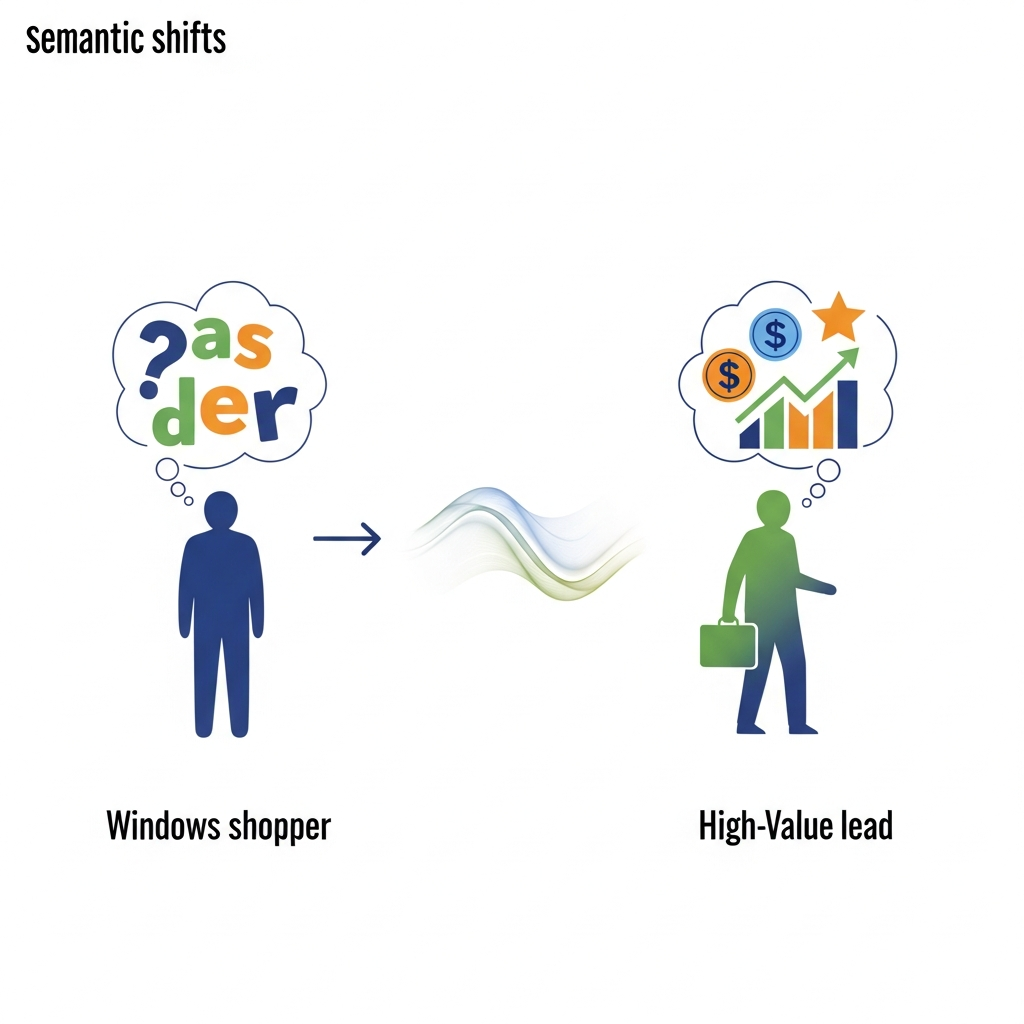
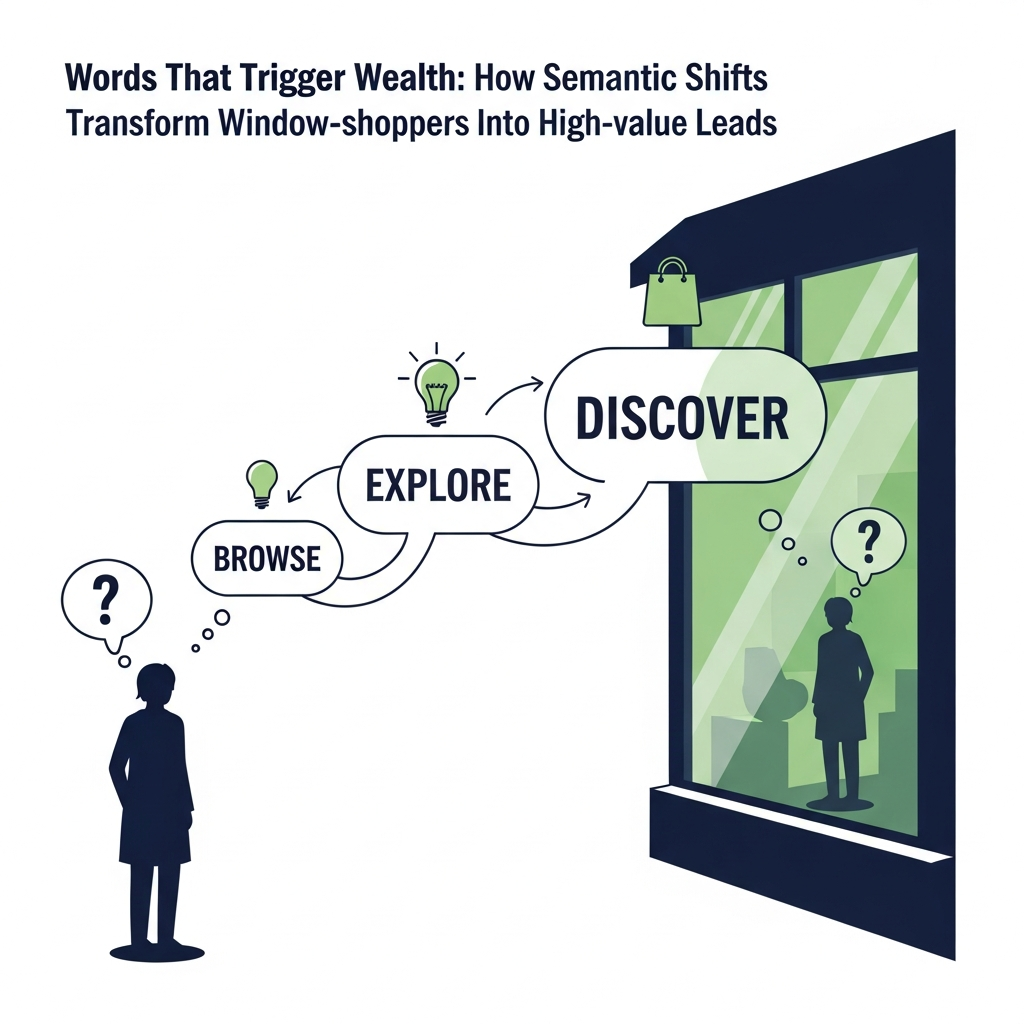
In the prehistoric era of search, we optimized for keywords. Today, we optimize for intent. Google has moved beyond simple string matching to “things, not strings.” Understanding search intent is the difference between attracting a window shopper and converting a high-value lead.

Search intent generally falls into four buckets: Informational, Navigational, Transactional, and Commercial Investigation. However, elite practitioners look deeper into the micro-intent. What is the specific problem the user is trying to solve at this exact millisecond? To master this:

  • Analyze the SERP Features: If the search results for your target keyword are dominated by video carousels, writing a 3,000-word essay is a fool’s errand. The algorithm has decided the intent is visual.
  • Deconstruct the “People Also Ask” (PAA) Clusters: These are a goldmine for understanding the logical progression of user curiosity. Use these to structure your subheadings.
  • Map Content to the Funnel: Ensure your top-of-funnel (TOFU) content doesn’t read like a sales pitch, and your bottom-of-funnel (BOFU) content doesn’t hide the “Buy” button behind a philosophical treatise on industry trends.

“To know what a person seeks is to know their mind. To provide the answer before they have fully articulated the question is to own the market.”

>2. Establishing Topical Authority via Content Hubs

Google no longer views pages in isolation. It evaluates your site’s Topical Authority. If you write one brilliant article about “Quantum Computing” on a blog otherwise dedicated to sourdough recipes, you will never rank. The algorithm views you as an intruder in the space.

The solution is the Pillar-and-Spoke model (or Topic Clusters). This involves creating a comprehensive “Pillar Page” that provides a high-level overview of a broad topic and then linking to numerous “Spoke” pages that dive deep into specific sub-niches. This internal linking structure signals to Google that you have exhausted the topic, making you a definitive source.

Pro Tip: Ensure your internal links use descriptive anchor text. Avoid the “click here” trap; instead, use “comprehensive guide to quantum entanglement” to pass maximum semantic value between pages.

Visual for 10 Proven Seo Strategies to Skyrocket Your Organic Traffic Fast

3. The E-E-A-T Moat: Building Human Trust in an AI World

With the deluge of AI-generated content flooding the web, Google has doubled down on Experience, Expertise, Authoritativeness, and Trustworthiness (E-E-A-T). This is not a direct ranking factor in the way a backlink is, but it is a framework that influences how the algorithm perceives your quality.

To fortify your E-E-A-T moat, you must move beyond the anonymous corporate voice. You need the “Experience” component—the “scars” of someone who has actually done the work.

  • Author Bylines: Every piece of content should be attributed to a real human with a verifiable digital footprint. Link to their LinkedIn profile and a detailed “About the Author” page.
  • First-Person Insights: Incorporate original research, case studies, and “in my experience” anecdotes. AI can aggregate facts, but it cannot (yet) share the nuance of a failed experiment or a hard-won victory.
  • Fact-Checking: In niches categorized as YMYL (Your Money or Your Life), such as health or finance, having a medical or financial professional review your content is non-negotiable.
Visual for 10 Proven Seo Strategies to Skyrocket Your Organic Traffic Fast

4. Technical Infrastructure: Core Web Vitals and Beyond

You can have the most poetic content on the internet, but if your site takes five seconds to load on a 4G connection, your bounce rate will be a tragedy. Technical SEO is the foundation upon which your creative efforts rest. Google’s Core Web Vitals (CWV) are now essential metrics for ranking.

Focus on these three metrics with clinical obsession:

  • Largest Contentful Paint (LCP): How fast does the main content load? Aim for under 2.5 seconds.
  • Interaction to Next Paint (INP): This replaced First Input Delay (FID) as a core metric. It measures the overall responsiveness of your page to user interactions.
  • Cumulative Layout Shift (CLS): Does your “Purchase” button jump around while the page is loading, causing users to accidentally click an ad? If so, your CLS is poor. Aim for a score of less than 0.1.

Utilize server-side caching, image compression (WebP format), and a robust Content Delivery Network (CDN) to ensure your infrastructure is as lean as a professional athlete.

Visual for 10 Proven Seo Strategies to Skyrocket Your Organic Traffic Fast

5. Semantic Engineering and Schema Markup

If you want to communicate directly with search engine crawlers, you must speak their language: Schema Markup. This is structured data (JSON-LD) that tells Google exactly what it is looking at. Instead of hoping Google “guesses” that your page is a product review, you tell it explicitly.

Implementing advanced Schema types can significantly increase your Organic Click-Through Rate (CTR) by enabling “Rich Snippets.” These include star ratings, price points, FAQ dropdowns, and recipe times directly in the search results.

Key Schema Types to Implement:

  • Organization Schema: Validates your brand’s identity.
  • FAQ Schema: Occupies more vertical real estate on the SERP, pushing competitors down.
  • Article and Person Schema: Reinforces the E-E-A-T of your content and its creator.

>6. Historical Optimization: The ROI of Content Pruning

Most marketers are obsessed with the “new.” However, the highest ROI in SEO often lies in the “old.” Historical optimization is the process of updating, refreshing, or even deleting old content to improve its performance.

Content decay is a natural phenomenon. Over time, facts become outdated, links break, and search intent shifts. By identifying pages that were once top performers but have since slipped to the second page of Google, you can reclaim that traffic with 20% of the effort required to write a new post.

The Pruning Strategy: If a page has zero traffic, zero backlinks, and provides no value to the user journey, delete it. This consolidates your “crawl budget” and allows Google to focus its energy on your high-performing assets. If two pages are competing for the same keyword (Keyword Cannibalization), merge them into one “super-post” and 301 redirect the old URL.

>7. The “Digital PR” Approach to Backlinks

The era of buying 500 links on Fiverr for $50 is over; in fact, doing so is a digital death sentence. In 2024 and beyond, link building is actually Digital PR. A single link from a high-authority, relevant publication like the New York Times or a top-tier industry journal is worth more than 10,000 links from obscure blogs.

To earn these links, you must create “Linkable Assets.” These are often:

  • Original Data and Statistics (everyone wants to cite a new study).
  • Controversial (but well-defended) Opinion Pieces.
  • Highly Visual Infographics or Interactive Tools.

Stop thinking about “building links” and start thinking about “earning mentions.” Use platforms like Connectively (formerly HARO) to provide expert quotes to journalists. When you become a source of value, the links follow as a natural byproduct.

>8. Optimizing for “Zero-Click” Searches and Featured Snippets

A significant percentage of searches now end without the user ever clicking on a website. They find their answer in the Featured Snippet (Position Zero). While some argue this “steals” traffic, the reality is that if you don’t occupy that spot, your competitor will.

To win the Featured Snippet, you must provide “snackable” answers within your long-form content. Use a specific “Snippet Bait” paragraph near the top of your post—usually 40 to 60 words—that directly answers the primary keyword’s question in a neutral, encyclopedia-like tone.

Structure matters here. Use HTML tables for comparison data and ordered lists for step-by-step instructions. Google’s algorithm is remarkably adept at scraping these structures to present them as the definitive answer.

>9. Video SEO and Multi-Modal Search

Google is no longer a text-only engine. With the rise of “Multi-modal” search, users are searching with images (Google Lens) and finding results in the form of short-form video (YouTube Shorts, TikTok). If your SEO strategy is limited to the written word, you are ignoring half the market.

Actionable Video Steps:

  • Embed relevant YouTube videos into your blog posts to increase “Dwell Time,” a key engagement signal.
  • Optimize your video titles and descriptions with the same rigor you apply to your H1 tags.
  • Use Video Object Schema to help Google index the key moments within your video, allowing them to appear in the “Key Moments” section of the SERP.

>10. Analyzing the Data: Moving Beyond Rankings

Finally, the most elite SEO strategy is to stop obsessing over “rankings” and start obsessing over “conversions.” Being number one for a high-volume keyword is meaningless if that traffic has a 99% bounce rate and zero intent to engage.

Use Google Search Console (GSC) to identify “Striking Distance” keywords—those for which you are currently ranking in positions 4-10. These are the low-hanging fruit. A slight tweak to the Meta Title to improve CTR or the addition of a few internal links can often push these into the top 3, where the lion’s share of traffic resides.

Analyze your Search Console Insights to see which content is resonating with your audience and double down on those themes. SEO is not a “set it and forget it” discipline; it is an iterative process of hypothesis, execution, and refinement.

“The best place to hide a dead body is page two of Google. The second best place is in a strategy that hasn’t been updated since 2018.”

Conclusion: The Long Game

Skyrocketing your organic traffic “fast” is a relative term. In the world of SEO, “fast” means months, not days. However, by implementing these ten strategies, you are not just chasing an algorithm; you are building an ecosystem. You are creating a digital asset that earns trust, provides immense value, and stands the test of time and technical shifts.

The future of search belongs to those who prioritize the user experience while providing the technical breadcrumbs that allow AI and search bots to understand their brilliance. Focus on intent, authority, and infrastructure. The traffic will not just follow; it will thrive.

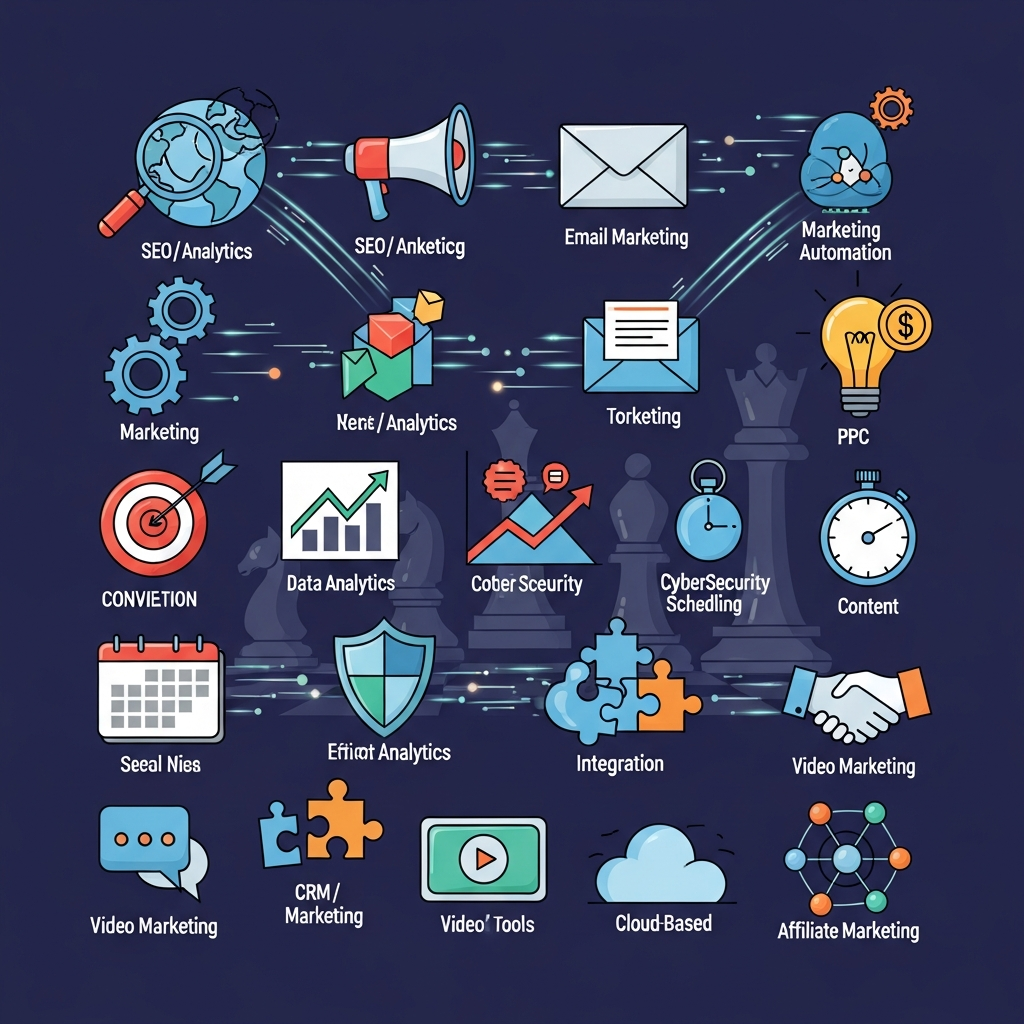
The 15 Best Digital Marketing Tools to Outsmart Your Competition

In the Darwinian landscape of the digital marketplace, the survival of the fittest has been replaced by the survival of the most technologically leveraged. We no longer live in an era where “good content” is the sole arbiter of success. We exist in a hyper-saturated ecosystem where algorithmic gatekeepers, shifting consumer psychology, and a relentless flood of data dictate who ascends the SERPs and who languishes in the digital void. To outsmart your competition, you must transcend basic intuition and adopt a suite of tools that function as cognitive prosthetics—enhancing your reach, your analytical depth, and your execution speed.

The following analysis does not merely list popular software; it dissects the categorical leaders that provide a definitive strategic advantage. These are the instruments of digital warfare for the modern growth hacker and the seasoned CMO alike. Let us delve into the technological armaments required to dominate the contemporary landscape.

Visual for The 15 Best Digital Marketing Tools to Outsmart Your Competition

I. The Pillars of Search Engine Dominance

Search Engine Optimization (SEO) is no longer about keyword stuffing; it is about semantic relevance, technical integrity, and authority mapping. To win here, you need tools that peer through the veil of Google’s proprietary algorithms.

1. Ahrefs: The Quantitative Analyst’s Best Friend

If SEO is a game of information asymmetry, Ahrefs is your most potent source of intelligence. While many tools claim to track backlinks, Ahrefs operates the world’s largest third-party search index. Its “Site Explorer” is not merely a diagnostic tool; it is a competitive autopsy. By dissecting a competitor’s backlink profile, you can identify the exact nodes of influence that contribute to their authority.

The brilliance of Ahrefs lies in its “Content Gap” tool. It allows you to triangulate the keywords for which your competitors rank, but you do not. This reveals the “white space” in your strategy—opportunities that are ripe for the taking. In an academic sense, Ahrefs provides the longitudinal data necessary to understand the evolution of a niche’s competitive density.

2. SEMrush: The Swiss Army Knife of Visibility

Where Ahrefs excels in backlink analysis, SEMrush dominates in holistic visibility management. It is a comprehensive platform that bridges the gap between SEO, PPC, and social media. Its “Keyword Magic Tool” is particularly adept at uncovering long-tail permutations that exhibit high commercial intent but low competitive friction.

“The goal of SEMrush isn’t just to show you where you stand, but to illustrate the trajectory of your entire market sector.”

For the analytical marketer, the “Market Explorer” feature is indispensable. It uses machine learning to categorize your competitors based on shared audience interests, providing a macro-view of the competitive landscape that goes far beyond simple keyword overlap.

3. Screaming Frog SEO Spider: The Technical Deep-Dive

Often overlooked by surface-level marketers, Screaming Frog is the tool of choice for the technical purist. It is a desktop-based website crawler that mimics how search engine bots perceive your site. In a world where Core Web Vitals and site architecture are paramount, Screaming Frog identifies the “silent killers” of rankings: broken links, duplicate metadata, and bloated scripts.

To outsmart the competition, one must ensure their technical foundation is impeccable. Screaming Frog allows you to export massive datasets into Pivot Tables, enabling a granular audit of a 10,000-page site in minutes. It is the difference between guessing why a page isn’t indexing and knowing exactly which canonical tag is misfiring.

Visual for The 15 Best Digital Marketing Tools to Outsmart Your Competition

II. Content Intelligence and Semantic Strategy

Content is the currency of the internet, but inflation is rampant. To maintain value, your content must be scientifically optimized for both human resonance and machine readability.

4. Surfer SEO: The Architect of Relevance

The era of “writing from the heart” is over if your goal is organic traffic. Surfer SEO introduces the concept of Correlational SEO. It analyzes the top 50 pages for a given keyword and identifies the exact frequency of NLP (Natural Language Processing) terms required to rank. It transforms the subjective art of writing into an objective science of semantic density.

By using Surfer, you are not just guessing what Google wants; you are responding to the empirical data of what is currently working. This tool allows you to out-optimize competitors who are still relying on antiquated notions of keyword density by focusing instead on the holistic “entity” relationships within the text.

5. BuzzSumo: The Oracle of Viral Potential

To outsmart the competition, you must understand what captivates the collective consciousness of your target audience. BuzzSumo provides a window into social engagement. It tracks shares, mentions, and engagement metrics across the web, allowing you to see which topics are gaining traction in real-time.

The “Evergreen Score” feature is particularly valuable. It identifies content that maintains a steady stream of engagement over months or years, rather than just a fleeting spike. This allows strategic marketers to pivot away from transient trends and invest in “high-yield” content assets that provide long-term ROI.

6. Grammarly Business: The Guardian of Brand Authority

It is easy to dismiss Grammarly as a mere spellchecker, but in a professional context, it is a tool for brand consistency and cognitive ease. Studies in psycholinguistics suggest that grammatical errors and poor syntax significantly diminish the perceived “Truth Effect” of a piece of writing. If your content is riddled with errors, your authority evaporates.

The “Business” tier of Grammarly allows teams to set specific tone-of-voice guidelines, ensuring that whether a junior intern or a C-suite executive is writing, the brand speaks with a unified, sophisticated voice. Consistency is a subtle but powerful competitive advantage.

Visual for The 15 Best Digital Marketing Tools to Outsmart Your Competition

III. Conversion Optimization and Behavioral Analytics

Traffic is a vanity metric; conversion is a sanity metric. If you cannot convert the visitors you have, you are simply subsidizing the success of your competitors by educating their future customers.

7. Hotjar: The Psychological Lens

Hotjar provides the “why” behind the “what.” While Google Analytics tells you that a user left your site, Hotjar’s heatmaps and session recordings show you where they got frustrated, where they hovered, and what they ignored. It is the digital equivalent of a one-way mirror in a focus group.

By observing actual user behavior, you can identify “friction points” in your funnel. Perhaps your “Buy Now” button is below the fold on mobile, or your form fields are intimidatingly long. Outsmarting the competition often involves simply making the path to purchase 10% smoother than theirs.

8. Unbounce: The Laboratory of Conversion

Landing pages are the frontline of your marketing campaigns. Unbounce allows you to build, launch, and A/B test landing pages without the bottleneck of a development team. Its “Smart Traffic” feature uses AI to automatically route visitors to the page variant that is most likely to convert them based on their specific attributes.

This level of automated optimization allows for a “fail fast, learn faster” approach. While your competitors are waiting weeks for a dev sprint to change a headline, you have already tested five variations and identified the winner.

9. Optimizely: Enterprise-Grade Experimentation

For those operating at a higher level of complexity, Optimizely is the gold standard for digital experimentation. It allows for multi-variate testing that can alter the entire user experience based on sophisticated segmentation. It is about moving beyond “Red Button vs. Blue Button” and into the realm of personalized user journeys.

The competitive advantage here is the ability to mitigate risk. By testing features in a controlled environment, you ensure that every change to your digital ecosystem is backed by statistically significant data. It is the triumph of evidence over ego.

Visual for The 15 Best Digital Marketing Tools to Outsmart Your Competition

IV. Social Media Orchestration and Listening

Social media is no longer a megaphone; it is a conversation. If you are only talking, you are losing. You must listen, analyze, and respond with surgical precision.

10. Brandwatch: The Intelligence Agency of Social

Brandwatch is far more than a scheduling tool; it is a consumer intelligence platform. It uses deep-learning AI to monitor billions of online conversations, identifying shifts in sentiment before they become trends. It allows you to perform “Competitor Benchmarking” that tracks not just their follower count, but their share of voice and consumer sentiment.

If a competitor’s product launches and faces a backlash, Brandwatch alerts you in real-time, allowing you to pivot your messaging to highlight your own product’s strengths where they are weak. It is the ultimate tool for tactical opportunism.

11. Sprout Social: The Efficiency Multiplier

Managing multiple social channels is a logistical nightmare that often leads to mediocrity. Sprout Social solves this through a unified “Smart Inbox” and robust reporting features. Its “ViralPost” technology analyzes your specific audience’s behavior to determine the optimal time to post for maximum engagement.

The real competitive edge of Sprout Social lies in its employee advocacy features. By making it easy for your staff to share brand content, you exponentially increase your organic reach without increasing your ad spend. It leverages the “human” element of social media that corporate accounts often lack.

Visual for The 15 Best Digital Marketing Tools to Outsmart Your Competition

V. Email Marketing and Lifecycle Automation

Email remains the highest-ROI channel in digital marketing. However, the days of the “blast” are over. Precision segmentation and behavioral triggers are the new requirements for success.

12. Klaviyo: The Data-Driven Communicator

For e-commerce, Klaviyo is the undisputed champion. It integrates deeply with platforms like Shopify to create a seamless flow of data. Unlike basic email tools, Klaviyo builds individual profiles for every customer, tracking their purchase history, browsing behavior, and email engagement.

This allows for “predictive analytics,” where the tool can estimate a customer’s next purchase date or their “Churn Risk.” By sending the right message at exactly the right moment in the lifecycle, you can extract significantly more lifetime value (LTV) from your customer base than competitors using generic automation.

13. Mailchimp: The Versatile Ecosystem

While often viewed as an “entry-level” tool, Mailchimp has evolved into a sophisticated marketing platform. Its “Customer Journey Builder” is intuitive yet powerful, allowing for complex branching logic based on user interactions. For small to mid-sized businesses, it provides a cost-effective way to implement enterprise-level automation.

The competitive advantage of Mailchimp is its sheer ubiquity and integration library. It connects with almost every other tool in this list, acting as the connective tissue for your marketing stack. In marketing, simplicity and integration are often underrated competitive strengths.

>VI. Analytics and the Data Synthesis

Information is not intelligence. Intelligence is the synthesis of data into actionable insights. Without the right analytics tools, you are flying blind in a storm.

14. Google Analytics 4 (GA4): The Necessary Evil

The transition to GA4 has been met with significant resistance due to its steep learning curve, but it is a non-negotiable tool. Unlike the previous version, GA4 is event-based and designed to function in a privacy-first, “cookieless” world. It uses machine learning to fill in the gaps in the user journey.

To outsmart your competition, you must master GA4’s “Explorations” feature. This allows for custom data visualization that goes far beyond standard reports. If you can understand your “Path Exploration”—the actual routes users take through your site—you can optimize for the most efficient conversion paths that others are overlooking.

15. Mixpanel: The Product-Led Growth Engine

While Google Analytics focuses on how people find your site, Mixpanel focuses on what they do inside your application or platform. It is a “Product Analytics” tool that tracks events at the user level. It is essential for SaaS companies and digital products.

Mixpanel’s “Cohort Analysis” allows you to see how different groups of users behave over time. For example, do users who use a specific feature in the first 24 hours have a higher retention rate? If so, you can optimize your onboarding to push that feature. This level of granular insight allows for product-led growth that can disrupt established players in your industry.

>Conclusion: The Synthesis of Human and Machine

The tools listed above represent the pinnacle of current digital marketing technology. However, a tool is only as effective as the strategist wielding it. To truly outsmart your competition, you must avoid the “Cargo Cult” mentality—adopting tools simply because others are using them.

Instead, look for the “Synergetic Synthesis.” Use Ahrefs to find the gaps, Surfer SEO to create the content, Hotjar to refine the experience, and Klaviyo to nurture the relationship. The competitive edge lies in the integration of these disparate data points into a cohesive, agile strategy.

In the final analysis, digital marketing is an iterative process of hypothesis, experimentation, and refinement. These 15 tools provide the magnifying glass, the laboratory, and the loudspeaker. The rest is up to your analytical prowess and creative intuition. The digital landscape favors the bold, but it rewards the informed. Arm yourself accordingly.

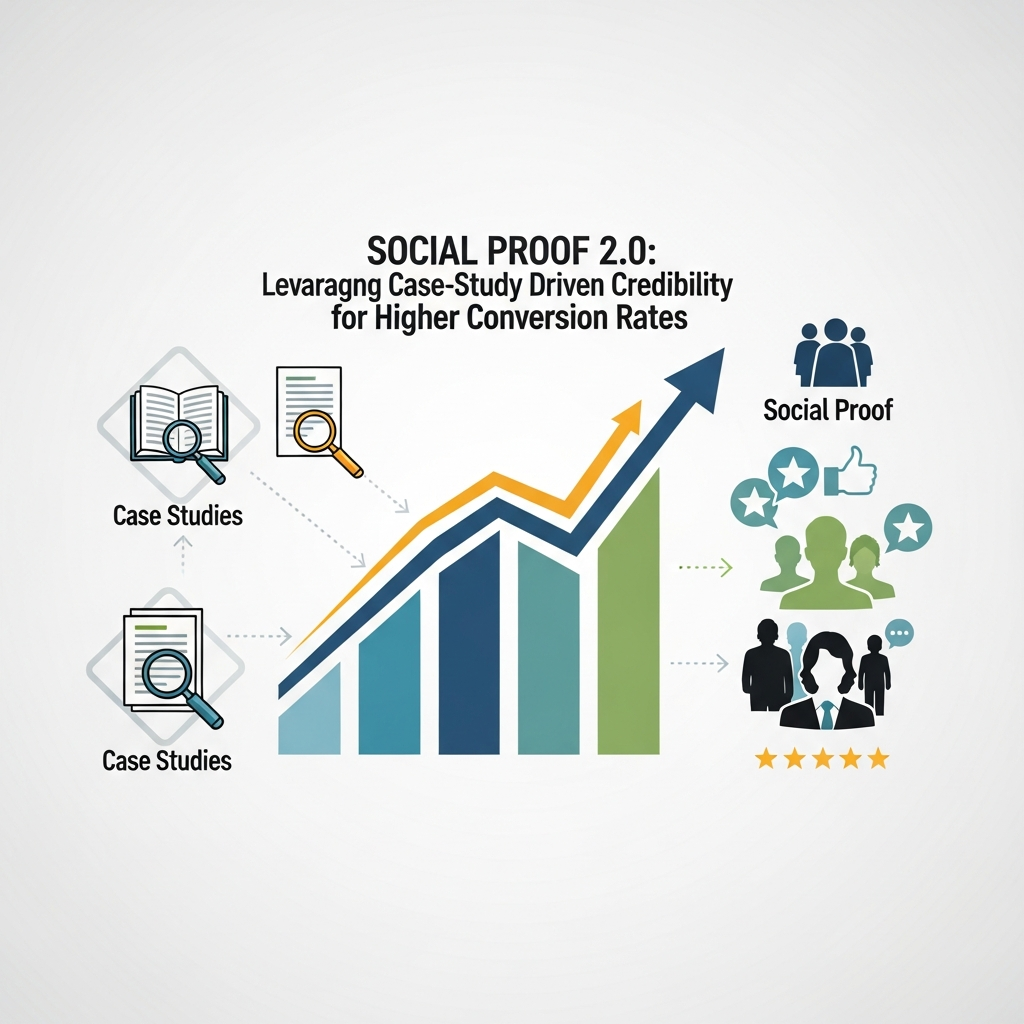
Social Proof 2.0: Leveraging Case-study Driven Credibility for Higher Conversion Rates
Social Proof 2.0: Leveraging Case-study Driven Credibility for Higher Conversion Rates concept 1

The Erosion of the “Star Rating” and the Birth of Social Proof 2.0

Let’s be brutally honest for a second. We’ve all become somewhat immune to those generic five-star ratings. You know the ones—tucked neatly into a carousel on a landing page, featuring a headshot that looks suspiciously like a stock photo of a “Smiling Business Professional.” We see them, we register them, and we immediately disregard them as marketing fluff. The skepticism of the modern buyer has reached an all-time high, and frankly, I don’t blame them. We’ve been burned by inflated metrics and “manufactured” testimonials for too long.

I remember sitting in a growth meeting three years ago for a mid-market SaaS firm. We had the logos. We had the quotes. We even had a “4.8 out of 5” badge from a reputable review site. Yet, our demo-to-close ratio was stagnating. The problem wasn’t a lack of proof; it was a lack of visceral credibility. We were checking boxes, but we weren’t building trust. That was my “aha” moment: Social Proof 1.0 is dead. It’s too passive. It’s too easily faked. What we needed—and what the market now demands—is Social Proof 2.0: the strategic deployment of narrative-driven, data-backed case studies that act as a proxy for the prospect’s own success.

In this guide, we aren’t just talking about writing a “success story.” We’re dissecting the neurobiology of why stories convert, how to reverse-engineer buyer hesitation through specific testimonials, and why your current “Case Studies” page is likely a graveyard of missed opportunities. This is about granular, messy, and undeniably real evidence.

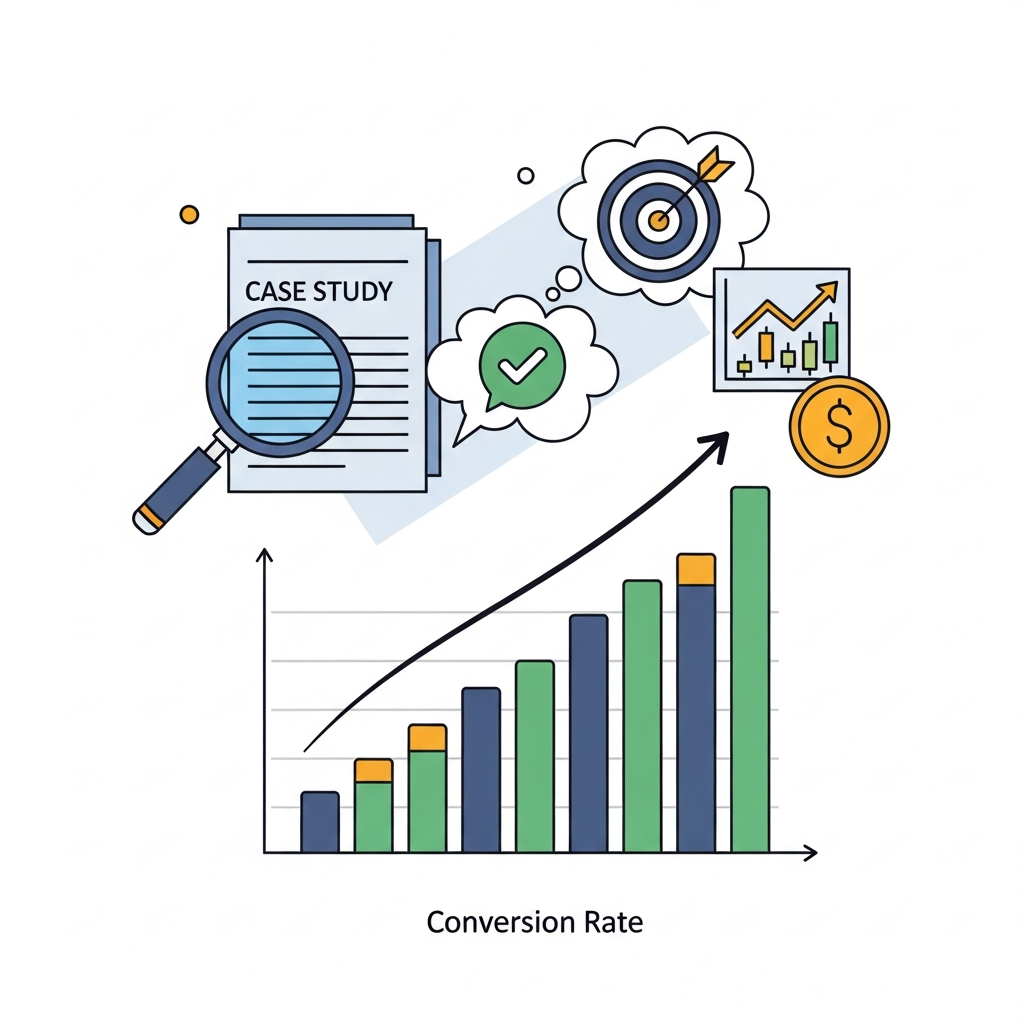
Social Proof 2.0: Leveraging Case-study Driven Credibility for Higher Conversion Rates concept 2

The Cognitive Science of Why Narratives Trump Statistics

Data is cold. Numbers are abstract. While we love to say we make “data-driven decisions,” the human brain is neurologically wired to process stories with far greater intensity. When we read a list of statistics—say, “Increased ROI by 40%”—only the language-processing parts of the brain (Broca’s and Wernicke’s areas) are activated. We understand the information, but it doesn’t move us.

However, when we read a narrative—a case study that details a specific person facing a specific struggle—the brain undergoes a process called neural coupling. The listener’s brain activity mirrors that of the storyteller. If the case study describes the stress of a failing supply chain, the reader’s cortisol levels might actually rise. If it describes the relief of a streamlined workflow, their brain releases oxytocin. You aren’t just selling a product; you are literally altering the chemistry of your prospect’s brain to align with your solution. This isn’t manipulation; it’s empathy at scale.

The Availability Heuristic and Your Brand

Psychologically, humans rely on the Availability Heuristic. We judge the probability of an event based on how easily we can recall a similar example. If a prospect can vividly remember the story of how “Company X” used your tool to save their Q4, they will perceive your tool as being more effective than a competitor who merely lists a “99% satisfaction rate.” The story is “available” in their mind; the statistic is a ghost.

Social Proof 2.0: Leveraging Case-study Driven Credibility for Higher Conversion Rates concept 3

The Anatomy of a High-Conversion Case Study: Moving Beyond the “Hero’s Journey”

Most B2B case studies follow a predictable, boring formula: The Problem, The Solution, The Result. It’s the “Hero’s Journey” for software, and it’s become white noise. To achieve Social Proof 2.0, we need to inject friction. We need the “messy middle.” If everything looks too perfect, it feels dishonest.

1. The Protagonist’s Internal Conflict

Don’t just tell me the company was losing money. Tell me that the Director of Operations was losing sleep. Tell me they were terrified of a board meeting. Internal conflict creates relatability. Your prospect doesn’t identify with a “Corporation”; they identify with a person who has the same job title and the same anxieties they do. We want to hear about the specific moment of crisis that led them to look for a solution.

2. The “Implementation Friction” (The Secret Sauce)

This is where most marketers get scared. They want to pretend the software was installed in five minutes and everything was sunshine. Stop doing this. True credibility comes from acknowledging the hurdles. “The integration took two weeks longer than expected because our legacy database was a disaster, but the support team stayed on the phone with us until midnight.” That sentence alone sells more than ten generic quotes. It proves you are a partner, not just a vendor.

3. Granular, Non-Round Numbers

If you tell me you increased revenue by “50%,” I think you’re rounding up or making it up. If you tell me you increased revenue by “47.3% over a 14-month period,” I believe you. Specificity is the antidote to skepticism. Use exact dates, specific dollar amounts, and actual timeframes. The “Social Proof 2.0” framework thrives on the precision of the data.

Social Proof 2.0: Leveraging Case-study Driven Credibility for Higher Conversion Rates concept 4

Reverse-Engineering Buyer Hesitation via Case Studies

One of the most effective ways I’ve used case studies is as a preemptive strike against objections. Every sales cycle has common friction points: “It’s too expensive,” “Our team won’t adopt it,” or “It won’t work with our current tech stack.”

Instead of trying to “overcome” these in a sales call, you should let your customers do it for you in your case studies. We call this The Objection-First Testimonial. I once worked with a client where the main objection was the complexity of the UI. We specifically went out and interviewed our least tech-savvy customer. We asked them: “What did you think of the interface when you first logged in?” They admitted they were intimidated. Then they explained how the intuitive design won them over in three days. Sending that case study to a hesitant prospect is like a tactical nuke for their doubts.

  • The Cost Objection: Feature a case study where the customer initially thought the price was too high but later realized the cost of not acting was ten times higher.
  • The Integration Objection: Highlight a customer who had the messiest, most archaic tech stack imaginable and show how your product played nice with it.
  • The Adoption Objection: Showcase a story where a skeptical internal team became the product’s biggest champions.

>Distribution 2.0: Killing the “Resources” Page Graveyard

If your case studies only live on a page called “Resources” or “Success Stories,” you are failing. That’s where content goes to die. In the Social Proof 2.0 model, case studies are dynamic assets that are injected into every stage of the funnel.

The “Contextual Proof” Method

Instead of one long PDF, break your case studies into “Micro-Proofs.” If a prospect is looking at your “Security & Compliance” page, they shouldn’t see a link to all case studies. They should see a 200-word excerpt from a CTO specifically talking about how you passed their rigorous security audit. This is Contextual Proof. You are matching the evidence to the specific concern the prospect has at that exact moment.

Integrating Social Proof into Sales Outreach

Stop sending “just checking in” emails. They are useless. Instead, send a “Thought this might be relevant to you” email with a link to a case study that mirrors the prospect’s exact industry and pain point. “Hey [Name], I know you’re dealing with [Specific Pain Point]. We just finished a project with [Similar Company] where we tackled that exact issue. Thought their approach to the [Specific Detail] might give you some ideas.” This isn’t a sales pitch; it’s a value-add backed by proof.

The “Dark Social” Amplifier

Much of your selling happens when you aren’t in the room. It happens in Slack channels, at dinners, and in private LinkedIn messages. Highly detailed, narrative-driven case studies are the ultimate currency for Dark Social. They give your internal champion the ammunition they need to convince the rest of the C-suite. A generic quote doesn’t win a budget battle; a detailed ROI roadmap based on a peer’s experience does.

>Video Case Studies: Authenticity over Production Value

We need to talk about the “B-Roll” trap. Many companies spend $10,000 on a high-gloss video case study with cinematic music and drone shots. It looks like a car commercial. And because it looks like a commercial, people treat it like a commercial—they tune it out.

In the Social Proof 2.0 world, authenticity is the new authority. A Zoom recording of a customer speaking candidly about their results, complete with a dog barking in the background or a slightly grainy connection, often converts better than a professional production. Why? Because it’s clearly real. It hasn’t been scrubbed by a legal team or a PR firm. It feels like a peer-to-peer recommendation.

The “Raw Interview” Technique

One strategy I’ve seen work wonders is the “Raw Interview” format. Instead of a polished edit, publish a 5-10 minute segment of the actual interview. Label it as “Uncut Interview with [Customer Name].” This signals to the prospect that you have nothing to hide. It builds an immense amount of “implied trust.” You’re letting them see the “source code” of your credibility.

>Metrics That Actually Matter (Beyond the Conversion Rate)

How do we know if Social Proof 2.0 is working? A simple lift in landing page conversion is nice, but it’s only the tip of the iceberg. We need to look deeper into the sales cycle.

1. Impact on Sales Cycle Velocity

Does the presence of high-quality case studies reduce the time from first touch to closed-won? When prospects have access to detailed narratives, they spend less time in the “Education” phase because the case study has already done the heavy lifting. Measure the average days-to-close for prospects who engaged with a case study versus those who didn’t. The difference is usually startling.

2. Deal Size Expansion

Social Proof 2.0 isn’t just about getting a “Yes.” It’s about getting a “Yes, and give me the premium tier.” When a prospect reads about a peer who utilized your most advanced features to achieve massive results, they are less likely to haggle over price and more likely to see the value in your higher-end offerings. Look for a correlation between case study consumption and Average Contract Value (ACV).

3. Retention and “Buyer’s Remorse” Reduction

Trust built on narrative is stickier than trust built on a feature list. When customers buy because they’ve seen a roadmap of success from someone like them, they enter the relationship with realistic expectations and a clear vision of how to achieve ROI. This leads to higher retention and lower churn in the first 90 days.

>The Ethics of Social Proof: Don’t Cross the Line

As we push for more detailed and visceral case studies, we must maintain an unwavering commitment to truth. The “2.0” in Social Proof implies a higher level of sophistication, not a higher level of deception. Never ghostwrite a testimonial and ask a customer to sign it. Never cherry-pick data to hide a negative outcome that was relevant to the story. If you lose your integrity in your social proof, you lose the ability to sell forever. Your reputation is a fragile thing; don’t trade it for a short-term conversion bump.

Instead, involve your customers in the process. Show them the draft. Ask them: “Does this accurately represent the stress you were under and the results we achieved?” Often, they’ll give you even better, more visceral details when they see you’re trying to tell a real story rather than just a marketing one.

>Conclusion: The Future of Credibility

The landscape of B2B and high-ticket B2C sales is shifting. The “information asymmetry” that once favored the seller is gone. Buyers have more information than ever, and their “BS detectors” are finely tuned. In this environment, your only competitive advantage is unimpeachable credibility.

Social Proof 2.0 is about moving away from the “look at us” marketing of the past and toward a “look at what we did together” philosophy. It’s about being brave enough to show the friction, the failures, and the ultimate triumphs. It’s about treating your case studies not as marketing collateral, but as essential pieces of evidence in a trial for your brand’s life. Start building your library of “messy,” granular, and undeniable proof today. Your conversion rates—and your customers—will thank you for it.

The Death of False Scarcity: Building Authentic Urgency in Modern Neuro-copywriting
The Death of False Scarcity: Building Authentic Urgency in Modern Neuro-copywriting concept 1

The Great Desensitization: Why Your Countdown Timer is Killing Your Conversion Rate

I remember sitting in a windowless boardroom in 2014, watching a “guru” demonstrate how a simple JavaScript countdown timer could double sales overnight. Back then, it worked. The reptilian brain, or more accurately, the amygdala-driven survival circuit, wasn’t yet conditioned to the digital “boy who cried wolf.” If a timer hit zero, we assumed the offer vanished. We felt that visceral prickle of FOMO—Fear Of Missing Out—and we reached for our wallets. But something shifted around 2019. The “evergreen” countdown timer, which magically resets every time you clear your cookies, became the hallmark of the digital snake oil salesman.

Modern consumers aren’t just skeptical; they are biologically habituated to manipulation. When a user sees a “Only 3 seats left!” banner on a webinar that they know is pre-recorded, a phenomenon known as Psychological Reactance kicks in. This is the brain’s defensive response to a perceived threat to its autonomy. Instead of clicking “Buy,” the prospect feels a surge of cortisol—not the “good” kind that drives action, but the “bad” kind that triggers avoidance. They feel hunted. And nobody likes being hunted. The death of false scarcity isn’t just an ethical shift; it’s a neurological necessity for any brand that plans to exist three years from now.

The Neurobiology of the “Bait and Switch”

To understand why authentic urgency works, we have to look at the Ventral Tegmental Area (VTA) and the Prefrontal Cortex (PFC). When we encounter a genuine limited-time opportunity, our dopamine pathways light up. We anticipate a reward. However, if the brain detects a lie—a fake deadline or a manufactured shortage—the PFC immediately flags it as a “deceptive signal.” This creates Cognitive Dissonance. The prospect wants the solution but despises the messenger. In neuro-copywriting, this is the kiss of death. You might get the one-time sale, but you’ve effectively incinerated the Lifetime Value (LTV) of that customer by damaging the trust-processing centers of their brain.

The Death of False Scarcity: Building Authentic Urgency in Modern Neuro-copywriting concept 2

Beyond the Timer: Defining Authentic Urgency

Authentic urgency isn’t about telling people to “Hurry!” It’s about illustrating the intrinsic cost of delay. If you are selling a weight loss program, the urgency isn’t that the price goes up in ten minutes; it’s that every day the prospect waits, their systemic inflammation persists. If you’re selling B2B software, the urgency is the $4,000 in lost productivity they bleed every month they stick with their legacy system.

We need to move from Extrinsic Pressure (timers, red text, screaming banners) to Intrinsic Motivation (logic, empathy, and consequence). Authentic urgency is a service to the customer. It helps them overcome the Status Quo Bias—that paralyzing neurological tendency to do nothing even when change is beneficial. You aren’t “forcing” a sale; you are facilitating a breakthrough.

The “Capacity Constraint” Framework

One of the most powerful ways to build authentic urgency is through Radical Transparency regarding your constraints. Every business has them. You have limited server bandwidth, limited coaching hours, limited physical inventory, or a limited window before a specific seasonal event.

  • Human Bandwidth: “I only take on three new consulting clients per month because my process requires 15 hours of deep-dive research for each.” (This is verifiable and logical).
  • Logistical Windows: “To get your garden seeds in the ground by the first frost, you need to order by Friday.” (This is an external reality the seller doesn’t control).
  • Curated Exclusivity: “We only printed 500 copies of this leather-bound edition because the artisanal bindery we use can’t handle more.” (This attaches value to the scarcity).

When you explain why something is scarce, the brain accepts the limitation as a fact rather than a tactic. This lowers the guard of the PFC and allows the emotional brain to engage with the benefits of the product.

The Death of False Scarcity: Building Authentic Urgency in Modern Neuro-copywriting concept 3

The Cognitive Psychology of “The Cost of Inaction” (COI)

Standard copywriting focuses heavily on ROI (Return on Investment). But the human brain is Loss Averse. As Daniel Kahneman famously noted, the pain of losing is twice as potent as the joy of gaining. Therefore, elite neuro-copywriting pivots from “Look what you’ll get” to “Look what you’re losing by waiting.”

This is where we employ Temporal Discounting. Most people value a small reward now more than a large reward later. By waiting, they are choosing the “small reward” of staying comfortable/lazy over the “large reward” of their desired future. Your copy must bridge this gap.

Writing the “Gap” Analysis

To do this effectively, you must paint a vivid, sensory-rich picture of the “Middle Ground.” That purgatory where they currently live. Let’s say you’re writing for a sleep aid supplement.

False Scarcity: “Buy now! Sale ends in 2 hours!” (Weak. Ignorable.)

Authentic Urgency (COI): “Another night of staring at the ceiling at 3:00 AM isn’t just frustrating; it’s physically taxing. Every hour of lost REM sleep increases your cortisol levels the next morning, making you more likely to snap at your kids or miss a crucial detail at work. You can keep hoping tomorrow will be different, or you can address the neural pathways keeping you awake. Which version of yourself do you want to be at 9:00 AM tomorrow?”

This approach uses affective forecasting—forcing the brain to simulate a future emotional state. It creates a sense of urgency that is internal, not external.

The Death of False Scarcity: Building Authentic Urgency in Modern Neuro-copywriting concept 4

Neuro-Copywriting Tactics for the Skeptical Era

If we are abandoning the “fake” tactics, what do we replace them with? How do we nudge the prospect toward the “Add to Cart” button without feeling like a used car salesman? We use Micro-Nudges and Social Validation that feel organic.

1. Real-Time Activity Feeds (Done Ethically)

Instead of “300 people are looking at this right now” (which is usually a lie), use “12 people joined the community in the last 24 hours.” This leverages Social Proof without the frantic energy. It suggests a moving train that the prospect might want to board, but it doesn’t scream in their ear. It taps into our tribal instincts—the need to belong to a successful group.

2. The “Threshold” Close

This is where you reveal how close you are to a meaningful milestone. “We’re about to ship our 10,000th order. To celebrate, we’re including a gift for the next 14 customers.” This is grounded in a specific, celebratory event. It feels like an invitation to a party rather than a countdown to an execution.

3. Micro-Copy: The Power of “Yet”

Urgency can be subtle. Using the word “yet” triggers a sense of incompleteness in the brain. “You haven’t mastered your morning routine yet.” This creates a Zeigarnik Effect—the psychological phenomenon where people remember uncompleted or interrupted tasks better than completed ones. The brain wants to close the loop. Your product becomes the “loop closer.”

>The Empathy-First Conversion Architecture

I’ve spent fifteen years analyzing heatmaps and click-through rates, and if there’s one thing I’ve learned, it’s that empathy outperforms ego every single time. False scarcity is an ego-driven tactic. It assumes the seller is in control. Authentic urgency is empathy-driven. It recognizes the customer’s struggle and offers a timely hand up.

When you write with empathy, you use Mirror Neurons. You describe the problem so accurately that the reader feels you are inside their head. “I know that feeling of looking at a blank screen while the cursor blinks, mocking your lack of ideas.” When the reader feels understood, their Oxytocin levels rise. Oxytocin is the “bonding hormone.” It mutes the amygdala’s fear response. In this state, the reader is much more likely to accept your “limitations” as honest and your “deadlines” as helpful.

Case Study: The “Waitlist” Strategy

I once worked with a SaaS founder who insisted on an “Open/Closed” enrollment model. We didn’t use a countdown timer. Instead, we used a Conditional Waitlist. We told the truth: “Our support team is small. To ensure every new user gets a 1-on-1 onboarding call, we only admit 50 people a week. Join the waitlist, and we’ll email you when your slot opens.”

The result? A 40% increase in conversion over the “Always Open” model. Why? Because the scarcity was logical. It was rooted in a commitment to quality. The “urgency” was the desire to be one of the 50, but it wasn’t manufactured—it was a byproduct of operational integrity. The prospects didn’t feel pressured; they felt chosen.

>Advanced Neuro-Linguistic Programming (NLP) in Urgency

We can further enhance authentic urgency by using specific linguistic structures that bypass the “analytical” filter. One such structure is the “If/Then” Proposition coupled with a Future Pace.

“If you decide to start today, then by this time next month, you’ll have your first three chapters drafted. If you wait, next month will look exactly like this one—more ideas, zero pages.”

This uses Linear Time Mapping. It forces the brain to plot two different trajectories. The urgency arises from the visible divergence of those two paths. One leads to growth; the other leads to stagnation. Stagnation is a form of biological death, and the brain is hardwired to avoid it at all costs.

The “Precision Pricing” Nudge

Oddly enough, urgency can be built into your pricing. Avoid “rounded” numbers. $497 feels like a marketing number. $482 feels like a calculated, cost-plus-margin number. When things feel calculated and precise, they feel more “real.” People don’t question the “scarcity” of a precisely priced item as much as they do a “Special $99 Sale!” which feels like it was pulled from a hat.

>Why “Slow” is the New “Fast” in High-Ticket Copy

If you are selling something for $5,000, a countdown timer is an insult to the buyer’s intelligence. High-ticket sales require Cognitive Ease. You want the buyer to feel calm, certain, and focused. The urgency here must be Philosophical.

You aren’t asking them to buy before the clock hits zero; you are asking them to commit before their current problem becomes an irreversible disaster. This is “High-Stakes Urgency.” It’s the difference between a “Flash Sale” on a sweater and a doctor telling you that you need surgery before the nerve damage becomes permanent. Which one gets your attention? Which one do you respect?

The “Inverted” Deadline

Try this: Instead of saying “Offer ends Friday,” say “We start on Monday.” Shift the focus from the end of the opportunity to the beginning of the transformation. This reframes the deadline as a “Launch Point.” It’s positive, forward-looking, and creates a natural, undeniable reason for the cut-off date. If the class starts Monday, you obviously can’t join on Tuesday. The scarcity is a natural law of the universe, not a line of code on a sales page.

>Reclaiming the Narrative: An Ethical Manifesto

We are entering the “Post-Truth” era of marketing, where consumers are increasingly insulated by “Ad-Blockers” of the mind. The only way through these defenses is through a radical commitment to the truth. Does that mean we stop being persuasive? Absolutely not. It means we become more persuasive by being more human.

Stop looking for the latest “hack” or “plugin.” Instead, look at your business. Where are the real bottlenecks? Where are the genuine limits? What is the actual, painful consequence of your customer waiting another six months to solve their problem? Write those things down. Use them. That is where the power lies.

The “Death of False Scarcity” is actually the birth of Sustainable Influence. It’s the move from being a “closer” to being a “guide.” Guides don’t need to lie about how much oxygen is left in the tank; they just need to point out that the sun is setting and the summit is still three miles away. That’s enough to get anyone moving.

The brain remembers how you made it feel. If you make it feel tricked, it will remember that every time your name pops up in an inbox. If you make it feel empowered—even if that empowerment came with a firm “Now is the time”—you’ve built a bridge that no competitor can burn down.

Focus on the Dopaminergic Reward of progress. Focus on the Amgydala’s healthy fear of a life wasted. But leave the JavaScript timers in 2014 where they belong. The modern world is too fast, too loud, and too smart for anything less than the truth. Build your urgency on the bedrock of reality, and you’ll never have to worry about a “declining conversion rate” again. You’ll be too busy serving the people who finally, actually, trust you.

Words That Trigger Wealth: How Semantic Shifts Transform Window-shoppers Into High-value Leads
Words That Trigger Wealth: How Semantic Shifts Transform Window-shoppers Into High-value Leads concept 1

The Invisible Friction: Why Your Copy is Repelling the Wealthy

I remember sitting in a mahogany-clad boardroom in Zurich about a decade ago, watching a brilliant CMO wither under the gaze of a private equity titan. The CMO was pitching a revolutionary wealth management platform. He kept using words like “cheap,” “efficient,” and “savings.” To a middle-market consumer, those words are honey. To the man across the table, they were grit in a finely tuned engine. He didn’t want “cheap.” He wanted exclusive. He didn’t care about “savings”—he cared about yield optimization and capital preservation.

That was the day I realized that words aren’t just carriers of meaning; they are emotional triggers that either align with a prospect’s identity or violently clash with it. If you are targeting high-value leads but using the vocabulary of a discount retailer, you aren’t just losing sales; you are invisible. You are broadcasting on a frequency they’ve long since tuned out. This isn’t about snobbery. It’s about the semantics of value.

When we talk about “Semantic Shifts,” we’re looking at the subtle, often unconscious psychological recalibration that happens when a lead encounters a specific set of vocabulary. It’s the difference between a “problem” and a “complexity.” It’s the gap between “buying a product” and “acquiring an asset.” If you want to transform window-shoppers into high-value leads, you have to stop selling features and start linguistic world-building.

Words That Trigger Wealth: How Semantic Shifts Transform Window-shoppers Into High-value Leads concept 2

The Sapir-Whorf Hypothesis of High-Ticket Sales

In linguistics, there’s a concept called linguistic relativity—the idea that the language we speak shapes how we perceive the world. In the world of high-ticket sales, this is our North Star. If your copy uses “transactional” language, your prospect perceives a “transactional” relationship. They look for the lowest price. They haggle. They treat you like a vendor. But if your copy utilizes “transformational” or “stewardship” language, the relationship shifts. You become a partner, an advisor, a gatekeeper.

Think about the word “cost.” It implies loss. It’s a subtraction from one’s wealth. Now, consider “investment” or, even better, “capital allocation.” These terms imply a future-facing movement of resources with the expectation of a return. A window-shopper asks what something costs. A high-value lead asks what the allocation requires and what the projected delta is. By shifting your semantics, you filter out the “price-sensitive” and attract the “value-obsessed.”

The Psychological Weight of Syllables

It sounds academic, almost pedantic, but the “weight” of your words matters. In English, we have a fascinating split between Germanic roots (short, punchy, visceral) and Latinate roots (longer, abstract, intellectual).

  • Germanic: Help, Buy, Get, Fix, Cheap.
  • Latinate: Facilitate, Acquire, Obtain, Resolve, Economical.

While “human” copy often favors the Germanic for its clarity, high-value leads often respond better to a strategic infusion of Latinate vocabulary. Why? Because it signals authority and distance. It suggests that the solution is sophisticated, not just a quick fix. You aren’t “helping them get more leads.” You are “facilitating the expansion of their proprietary pipeline.” See the difference? One sounds like a freelancer; the other sounds like a consultant.

Words That Trigger Wealth: How Semantic Shifts Transform Window-shoppers Into High-value Leads concept 3

The Semantic Pivot: From “Need” to “Aspiration”

High-value leads rarely “need” anything in the survivalist sense. They have their basics covered. They are operating at the top of Maslow’s hierarchy. Therefore, using “pain point” language—the bread and butter of traditional copywriting—can actually be offensive to them. If you tell a CEO who manages a $500M portfolio that he has a “problem,” his ego might reflexively reject it. He doesn’t have “problems”; he has “strategic bottlenecks.”

We need to shift the semantic focus from the deficiency (what they lack) to the aspiration (what they are becoming). This is the “Identity Shift.” Window-shoppers look for things to fill a hole. High-value leads look for things that polish their armor.

Reframing the “Solution”

Stop using the word “solution.” It’s become a corporate cliché that means absolutely nothing. Instead, use words that imply a structural change.

  • Instead of “Solution,” try “Architecture.” (e.g., “The architecture of your wealth.”)
  • Instead of “Fix,” try “Equilibrium.” (e.g., “Restoring equilibrium to your operations.”)
  • Instead of “Easy,” try “Seamless” or “Fluid.” (High-value leads know nothing is easy, but they pay for fluidity.)

This isn’t just about being “fancy.” It’s about matching the internal monologue of a person who deals with complexity every day. They want to know you understand the nuances of their world.

Words That Trigger Wealth: How Semantic Shifts Transform Window-shoppers Into High-value Leads concept 4

The Syntax of Certainty: How Sentence Structure Commands Wealth

It’s not just the words; it’s the architecture of the sentence. Most “window-shopper” copy is frantic. It uses lots of exclamation points! It asks too many questions? It feels desperate for attention. High-value copy, conversely, is marked by declarative certainty.

Consider the “if/then” structure.
“If you want to grow your business, then you should click here.” This is weak. It puts the power in the prospect’s hands and suggests uncertainty.
Now, consider the Presuppositional Statement:
“As your portfolio scales, the requirement for sophisticated risk mitigation becomes a matter of legacy, not just profit.”
This sentence doesn’t ask. It states a fact. It assumes the lead is already successful (“As your portfolio scales”) and positions the service as an inevitable next step. It’s authoritative. It’s calm. It smells like old money.

The Power of the Passive Voice (Used Sparingly)

We’re always told to “use the active voice.” In 90% of cases, that’s right. But in luxury and high-ticket environments, the passive voice can create a sense of inevitability and timelessness.
“We hand-stitch every bag” is active and focuses on the “we” (the vendor).
“Every bag is hand-stitched” is passive and focuses on the object and the standard.
It removes the “salesman” from the room and leaves only the craftsmanship. High-value leads don’t want to be “sold to” by a person; they want to “interact with” an excellence that exists independently of the salesperson.

>Case Study: The “Fee” vs. “Retainer” Transformation

I worked with a boutique legal firm that was struggling to attract high-net-worth individuals for their estate planning. Their website was filled with “affordable fees” and “simple pricing.” They were getting “shoppers”—people who wanted a $200 will. We did a total semantic overhaul.

We stripped out “fees” and replaced it with “capital commitment.” We replaced “pricing” with “retainer structure.” We changed “simple” to “streamlined for complexity.” Within three months, their lead volume actually decreased, but their lead value quadrupled. They stopped talking to people who wanted a bargain and started talking to people who wanted their children’s inheritance secured. The “word” was the filter.

The takeaway? You cannot attract a $100,000 client using $10 vocabulary. The cognitive dissonance is too loud. They will feel that “something is off,” and they will leave without even knowing why.

>Interrogating Your Current Lexicon: A Diagnostic

Take a look at your current landing page or sales deck. Be ruthless. Look for what I call “Cheapened Adjectives.” These are words that have been eroded by late-stage capitalism until they mean nothing.

  • Revolutionary: Unless you’ve invented cold fusion, it’s not revolutionary. Use “Pioneering” or “Primary.”
  • Ultimate: It sounds like a monster truck rally. Use “Definitive” or “Comprehensive.”
  • World-class: Everyone says this. Use “Peerless” or “Recognized by [Specific Authority].”
  • Hustle: This is for people trying to make their first $1,000. For high-value leads, use “Efficacy” or “Strategic Momentum.”

Your goal is to purge the “noise” of the common marketplace. You want your copy to feel like a quiet, expensive room. There is a reason luxury car commercials often have long silences and deep, resonant voiceovers. The silence is where the value lives.

>The Neurobiology of Precision: Why Specificity Triggers Trust

High-value leads are often high-information leads. They didn’t get where they are by being vague. When you use “fuzzy” words—”lots of,” “many,” “fast,” “better”—you trigger their skepticism. Their brains are wired to look for the “catch.”

Precision, however, bypasses this skepticism. Instead of “fast results,” use “a 22% reduction in operational latency within the first fiscal quarter.” The more specific the language, the more the lead’s brain perceives you as an expert who has actually done the work. This is the Semantic Shift from Generalization to Specification.

The “Artifact” Technique

One way to trigger wealth-perception is to treat your service or product as an “artifact” rather than a commodity. Use words that imply history, provenance, and curation.

  • Curation: Not “choosing,” but “curating.”
  • Provenance: Not “where it’s from,” but “its provenance.”
  • Legacy: Not “future,” but “legacy.”

These words carry a “phantom weight.” They suggest that what you are offering has value that transcends the immediate moment. For a high-value lead, who is often thinking in decades rather than days, this is the ultimate hook.

>Empathy in High-Ticket Copy: The “burden of Success”

Here is where many copywriters fail. They think “empathy” means “I know you’re struggling to pay the bills.” For a high-value lead, empathy means: “I know you’re struggling with the weight of responsibility, the lack of time, and the difficulty of finding people you can actually trust.”

Your copy should acknowledge the loneliness of the high-achiever. Use phrases like:
“For those who are tired of being the smartest person in the room.”
“We understand the nuances of managing high-stakes volatility.”
“You don’t need another vendor; you need a confidant for your strategic vision.”
This isn’t about being “nice.” It’s about signaling that you are part of their “tribe.” You understand the specific pressures that come with having a high net worth or a high-level position. You aren’t looking up at them; you are looking across at them.

>The Semantic Bridge: From Curiosity to Commitment

How do we move them from just reading to actually signing? We use “Committal Semantics.” We shift the language from the “potential” to the “actual.”

In your Call to Action (CTA), avoid “Submit” or “Buy Now.” Those are commands for subordinates. Instead, use language that implies an invitation to a higher tier of engagement.

  • “Request a Consultation” (Implies you might say no).
  • “Apply for Membership” (Exclusivity).
  • “Initiate the Onboarding Protocol” (Professionalism and process).
  • “Secure Your Position” (Scarcity).

Notice how these phrases feel more significant. They don’t feel like clicking a button; they feel like opening a door. That is the essence of the semantic shift.

>The Final Word: Consistency is the Real Conversion Hook

You can’t just sprinkle these words into your copy like salt and expect it to work. Semantic shifts require a holistic commitment. If your headline is “Bespoke Wealth Architecture” but your footer says “Cheap Deals Here,” the spell is broken. The high-value lead will smell the incongruity immediately.

This linguistic transformation is a commitment to a higher standard of communication. It’s about respecting your prospect’s intelligence and their time. It’s about speaking their language so fluently that they don’t even realize you’re selling to them—they just realize that they’ve finally found someone who understands exactly what they need.

Stop being a window-shopper in the world of high-ticket sales. Stop using the language of the masses and start using the lexicon of the elite. It’s not about changing what you do; it’s about changing how you name it. Because in the end, the person who defines the terms of the conversation is the person who wins the contract.

Mastering the Anchoring Effect: Psychological Pricing Strategies for Enterprise Saas Negotiations
Mastering the Anchoring Effect: Psychological Pricing Strategies for Enterprise Saas Negotiations concept 1

The Invisible Gravity of the First Number

I’ve sat in enough midtown Manhattan boardrooms to know the exact moment the oxygen leaves the room. It’s not when the legal team starts nitpicking the indemnity clauses, nor is it when the CTO asks about SOC2 compliance for the third time. It’s the moment the first number hits the mahogany table. That number—the anchor—creates a psychological gravity so dense that every subsequent minute of the negotiation is spent trying to escape its pull. If you aren’t the one setting that anchor, you’re already losing the war for margin.

The anchoring effect isn’t just some dusty heuristic from a Kahneman and Tversky paper; it is the visceral, often irrational way our brains latch onto the first piece of information offered when making decisions. In Enterprise SaaS, where value is often amorphous and “ROI” is a projection of a future that hasn’t happened yet, the anchor is the only objective reality the buyer has. It’s the north star, even if that star is a total fabrication. We’re going to dissect how to build that anchor, how to defend it, and why your $200k-a-year platform is actually being judged against a number you probably haven’t even thought of yet.

The Neurobiology of Why We Get Stuck

Our brains are remarkably efficient at being lazy. We use a process called “Anchor and Adjustment.” When we see a price, our brain accepts it as a baseline and then adjusts away from it based on new information. The problem? We never adjust far enough. The initial stimulus leaves a residue. In a high-stakes SaaS deal, if I pitch an enterprise license at $500,000, and your budget was $200,000, your brain doesn’t just stay at $200k. It subconsciously drifts toward $350k. You feel like you’ve won a massive discount, while I’ve secured a deal 75% higher than your internal ceiling. It’s a dance of cognitive dissonance where the loser often leaves the room smiling.

Mastering the Anchoring Effect: Psychological Pricing Strategies for Enterprise Saas Negotiations concept 2

The Architecture of the Enterprise Anchor

You don’t just shout a number and hope it sticks. That’s amateur hour. An effective anchor in the enterprise space is built through a sequence of value signals that precede the actual quote. It’s about “priming” the environment. If I spend three months talking about the $10 million in technical debt your current legacy system creates, a $1 million implementation fee feels like a bargain. I’ve anchored the problem before I’ve anchored the price.

Consider the “Decoy” strategy. I often advise SaaS founders to present a three-tier pricing model even when they know the prospect only wants the middle tier. The “Titanium” or “Global Enterprise” tier shouldn’t just be expensive; it should be painfully expensive. It exists solely to make the “Professional” tier look like a rounding error. When a CIO sees a $2M option and a $450k option, the $450k option stops being “expensive” and starts being “the sensible choice.” You aren’t selling the $2M tier. You’re selling the relief of not paying it.

The Precision Paradox: Why $147,550 Beats $150,000

There is a peculiar bit of psychological magic in the “precise number.” Round numbers—like $100k or $50k—are perceived as placeholders. They look like guesses. They invite a counter-offer that is equally round and usually 20% lower. However, when you present a quote of $147,550, you signal to the procurement team that this number is the result of a rigorous, data-driven calculation. It suggests you’ve crunched the numbers on server load, implementation hours, and seat-based utility. It is much harder for a buyer to look at a precise number and say, “Can you do $120k?” It feels disrespectful to the “math” you’ve clearly done. Precision commands a higher level of deference.

Mastering the Anchoring Effect: Psychological Pricing Strategies for Enterprise Saas Negotiations concept 3

Tactical Execution: The First-Mover Advantage

There’s a classic debate in negotiation circles: do you go first, or do you wait for the buyer to show their hand? In SaaS, if you have a solid grasp of the value you’re delivering, you always go first. Waiting allows the buyer to anchor you with their budget. “We only have $80k allocated for this” is a hard anchor to break. If you hit them with $250k before they can say a word, you’ve reframed their entire budget conversation. Now, they aren’t thinking about their $80k limit; they’re wondering why their budget is so misaligned with the market reality you’ve just established.

  • The “Flanking” Move: If you know the budget is low, anchor with a massive TCV (Total Contract Value) over three years rather than an annual fee. A $900,000 three-year deal sounds more serious and “anchors” the long-term commitment better than a $300k annual recurring revenue (ARR) quote.
  • The “Flinch”: When the buyer eventually counters, you must flinch. Not physically (though sometimes that helps), but through your terms. If you drop the price without changing the scope, you’ve just admitted your anchor was a lie. You’ve destroyed your credibility.
  • The Scope-Price Linkage: Every dollar move downward must be “paid for” by a feature or service removal. “We can get to $120k, but we’ll have to move from 24/7 support to a 12-hour ticket response time.” This reinforces the validity of the original anchor.

The “Total Cost of Ownership” (TCO) Re-Anchor

In enterprise sales, you aren’t just competing against other SaaS vendors. You are competing against the “Status Quo.” The Status Quo has its own anchor: $0 (or so the buyer thinks). Your job is to prove that the Status Quo actually costs $2M a year in inefficiency. By anchoring the cost of doing nothing, your subscription fee becomes a cost-saving measure rather than an expense. I’ve seen deals close at double the expected price because the salesperson spent the first three meetings documenting the hidden costs of the client’s current manual processes. Shift the anchor from “What this costs” to “What you’re losing.”

Mastering the Anchoring Effect: Psychological Pricing Strategies for Enterprise Saas Negotiations concept 4

Navigating the Procurement Gauntlet

Procurement officers are professional “de-anchorers.” They are trained to ignore your first offer and treat it as a theatrical performance. To beat them, you need to understand “The Threshold of Plausibility.” If your anchor is too high—say, 10x the market rate—it loses its gravitational pull and becomes a joke. You lose trust. The ideal anchor is just at the edge of what they find believable but high enough to leave you room for meaningful concessions.

When procurement says, “We have a strictly defined budget of $X,” they are attempting to counter-anchor. I’ve found success by acknowledging the budget and then immediately pivoting to “Value Adjustments.” “I understand the budget is $100k. Most of our clients with that budget find that they have to sacrifice [Key Critical Feature], which usually ends up costing them more in the long run. Would you like to see how we can bridge that gap?” You aren’t fighting their anchor; you’re making it look dangerous.

The “Silence” Anchor: Let the Number Breathe

One of the most common mistakes I see from even seasoned AEs is the “nervous chatter” immediately following the price reveal. You say, “The annual investment is $215,000…” and then, because the silence feels like a heavy blanket, you add, “…but we have some flexibility there depending on the seat count.” You just sabotaged your own anchor. You gave away the farm before they even asked for a cow.

State the price. Then stop. Don’t sip your water. Don’t look at your phone. Look them in the eye and wait. The first person to speak after a price is revealed is usually the one who makes a concession. Let them be the one to break. Even if they react with shock, let that reaction hang in the air. Their shock is just a negotiation tactic; your silence is a statement of value.

>The Psychology of Concessions: Giving Without Losing

If you start at $200k and eventually settle at $150k, the way you get there matters more than the final number. This is the “Decreasing Concessions” rule. If your first drop is $20k, your second should be $10k, and your third should be $2,500. This creates a psychological “asymptote”—it signals to the buyer that you are reaching your absolute floor. If you drop $10k every time they ask, they’ll keep asking until you’re at zero. You’re training them that your price is a suggestion, not a fact.

We also need to talk about “The Non-Monetary Anchor.” Sometimes, the best way to hold your price is to anchor on terms. “The price is $150k, but I can’t move on the Net-30 payment terms” or “I need a case study and a press release signed off within 90 days.” Often, procurement will fight you on these terms, and then you can “concede” on the terms to keep your price anchor intact. It’s a shell game, but one where everyone leaves with what they actually need.

The “Endowment Effect” Integration

How do you make an anchor even stronger? You let the prospect “own” the solution before they pay for it. This is why Proof of Concepts (PoCs) are so dangerous/effective. Once a team has integrated your software into their workflow, the psychological cost of “losing” that efficiency (the endowment effect) makes them less likely to fight your price anchor. They aren’t buying a new tool; they’re paying to keep a tool they already feel they own. At that point, the anchor isn’t just a number on a page—it’s the price of maintaining their new, better reality.

>The Ethics of Psychological Pricing

I’d be remiss if I didn’t touch on the morality of this. Is anchoring manipulative? Perhaps. But in the world of Enterprise SaaS, where a single bad deal can sink a startup and a single good one can lead to a Series B, you have a responsibility to your team and your product to capture the value you create. If you don’t anchor correctly, you aren’t being “fair”—you’re being undervalued. The goal of psychological pricing isn’t to trick people into paying more than something is worth; it’s to prevent them from underpaying for the immense value your engineers and product teams have spent years building. Value is subjective. The anchor is simply your way of defining that subjectivity.

Final Strategic Checklist for Your Next Negotiation

  • Research the “Shadow Anchor”: What did they pay for their last solution? That is their hidden baseline. You must break that before you set yours.
  • Prime the Value: Spend the discovery phase talking about the millions they are losing, not the thousands you are charging.
  • Be Specific: Use a non-round number to imply rigorous calculation.
  • Wait for the Silence: Give your anchor room to sink in.
  • Control the Concession Curve: Smaller and smaller drops to signal the floor.

The next time you’re preparing a quote, don’t just think about what you *need* to get. Think about what you need to *say* first. The first number isn’t just a price; it’s the boundary of the possible. If you don’t set the boundary, your customer will—and they’ll always set it in their own favor. Mastering the anchoring effect is about having the courage to claim your space in the market and the tactical discipline to hold it under pressure. Go big. Go precise. And for heaven’s sake, stop talking once you’ve said the number.

The Psychology of B2b Sales: Solving Decision Fatigue for Better Conversions
The Psychology of B2b Sales: Solving Decision Fatigue for Better Conversions concept 1

The Cognitive Exhaustion of the Modern Buyer

I remember sitting across from a Chief Information Officer during a grueling Q4 negotiation. He had fourteen tabs open, three different vendor comparisons on his second monitor, and a look in his eyes that I can only describe as “existential dread.” It wasn’t that he didn’t like our product. It wasn’t even a budget issue. He was simply done. Every cell in his brain was screaming for him to stop making choices. That is the reality of the modern B2B landscape. We aren’t selling to logic machines; we are selling to exhausted human beings navigating a minefield of “option overload.”

Decision fatigue isn’t just a catchy buzzword used by productivity gurus. It is a documented psychological phenomenon—often referred to as ego depletion—where the quality of decisions deteriorates after a long session of decision-making. In B2B sales, where the cycles are long and the committees are bloated, we are essentially asking our prospects to run a mental marathon. If you don’t understand the neurobiology of how your buyer’s brain processes (and rejects) information, you aren’t just losing sales; you’re actively contributing to their burnout.

The Psychology of B2b Sales: Solving Decision Fatigue for Better Conversions concept 2

The Neurobiology of the “No”: Why Choice Paralysis Kills Deals

To fix the conversion problem, we have to look at the prefrontal cortex. This is the “CEO” of the brain, responsible for executive function, logic, and complex choice. But here’s the rub: the prefrontal cortex has a remarkably small battery. Every time a buyer compares two features, weighs a price point, or justifies a purchase to a stakeholder, they are draining that battery. When the battery hits zero, the brain defaults to the path of least resistance. Usually, that path is doing nothing.

The Glucose Theory of Choice

Research by social psychologist Roy Baumeister suggests that willpower and decision-making draw from a finite pool of mental energy, specifically linked to glucose levels. While the “glucose” part is debated in some neurological circles, the practical application remains undeniable: a tired brain chooses the status quo. In a B2B context, the status quo is your biggest competitor. It’s not the rival firm undercutting your price; it’s the prospect’s desire to stop thinking. If your sales process requires too much “heavy lifting” mentally, the prospect will subconsciously label your solution as a source of stress rather than a source of value.

The Paradox of Choice in Enterprise Software

Barry Schwartz’s The Paradox of Choice remains the definitive text here. He argues that while we think more options lead to better outcomes, they actually lead to anxiety and regret. In B2B, we often try to impress prospects with “modular flexibility.” We tell them, “You can configure it any way you want!” To us, that sounds like freedom. To a fatigued buyer, it sounds like homework. By providing too many configurations, we trigger analysis paralysis. The fear of making the wrong choice becomes greater than the potential benefit of making the right one.

The Psychology of B2b Sales: Solving Decision Fatigue for Better Conversions concept 3

The B2B Committee Quagmire: Fatigue by Consensus

The days of the “Lone Wolf” decision-maker are dead. Gartner research indicates that the average B2B buying group now involves six to ten stakeholders. Think about the cognitive load of that for a moment. Each person in that group has their own biases, their own KPIs, and their own specific brand of decision fatigue. The “consensus-based” model of buying is a recipe for mental exhaustion.

The Noise-to-Signal Ratio

Each stakeholder introduces new variables. The CTO cares about integration; the CFO cares about the ROI timeline; the End User cares about the UI/UX. When these voices clash, the “noise” becomes deafening. As a salesperson, if you simply dump information on all of them, you are adding to the noise. High-performing reps act as information curators. They don’t give the buyer more information; they give them less, but of higher relevance. They filter the signal from the noise, effectively “outsourcing” the cognitive load from the buyer to themselves.

The Cost of “Social Friction”

Every time a buyer has to defend a choice to a colleague, they use up cognitive reserves. It’s a social risk. If you provide a 50-page slide deck, you’re asking them to do the work of distilling it for their boss. That is a massive friction point. If you want to solve decision fatigue, you must provide “internal champions” with ready-to-use, simplified collateral. Give them the one-page executive summary that makes them look like a genius without them having to sweat for it. You’re not just selling a product; you’re selling a way for them to save face and save energy.

The Psychology of B2b Sales: Solving Decision Fatigue for Better Conversions concept 4

Strategic Curation: Moving from “What Do You Want?” to “Here is What You Need”

The most successful B2B closers I’ve ever worked with have stopped asking open-ended questions mid-funnel. In the discovery phase, sure, let the prospect talk. But once you move into the solutioning phase, you must transition into a prescriptive role. Think of it like a high-end restaurant with a tasting menu versus a 20-page diner menu. The diner menu is stressful. The tasting menu is a relief.

The Prescriptive Sales Model

A prescriptive approach reduces the number of decisions a buyer has to make. Instead of saying, “We have three tiers of service, which one fits your budget?” you say, “Based on your current infrastructure and your goal of 20% growth, Tier 2 is the only logical path for you. Here is why.” You have removed the burden of comparison. You have taken the weight off their shoulders. This isn’t about being pushy; it’s about being helpful. You are acting as a consultant who has already done the mental labor for them.

Reducing the “Mental Friction” of Pricing

Pricing is where decision fatigue usually reaches its zenith. Complexity in pricing models—add-ons, per-seat costs, implementation fees, tiered discounts—is a conversion killer. I’ve seen deals die because the quote was too hard to read. To combat this, simplify your “Choice Architecture.” Use anchoring strategically. Present a “gold standard” option first. It sets a mental benchmark. Even if they don’t buy it, it makes the “recommended” option feel like a safe, middle-ground compromise. It narrows the field of vision, which is exactly what a fatigued brain needs.

>The Power of Defaults and Heuristics

Humans are creatures of habit. We use “heuristics”—mental shortcuts—to make decisions without thinking. In B2B sales, you can leverage these shortcuts to bypass the fatigue barrier. The most powerful heuristic is the Default Bias. We tend to stick with whatever the pre-set option is because changing it requires cognitive effort.

  • Default Configurations: Set the most popular or effective settings as the “standard” in your proposals.
  • Social Proof as a Shortcut: If a buyer is too tired to analyze your data, they will look at what their peers are doing. “Companies like Google and Amazon use this configuration” is a heuristic that says, “You don’t have to think about this; they already did.”
  • The Authority Bias: Use expert testimonials and third-party certifications. It allows the buyer to “borrow” the authority of others rather than verifying everything themselves from scratch.

>Micro-Conversions: Breaking the Marathon into Sprints

One of the biggest mistakes in B2B is trying to get the “Big Yes” too early. Asking for a six-figure contract is a massive cognitive load. It triggers the “threat response” in the brain. Instead, focus on micro-conversions. These are small, low-stakes “yeses” that build momentum without exhausting the buyer.

The “Foot-in-the-Door” Technique

Start with a low-friction request. “Can we spend five minutes on the phone to see if this is even a fit?” is easier than “Can we schedule a 60-minute demo?” Once they’ve committed to a small action, they are psychologically more likely to commit to the next one to maintain cognitive consistency. We like to think of ourselves as people who follow through. By getting those small wins, you are training the buyer to say “yes” to you, making the final “Big Yes” feel like a natural conclusion rather than a stressful leap.

Loss Aversion and the “Cost of Inaction”

Cognitive science tells us that the pain of loss is twice as powerful as the joy of gain. When a buyer is fatigued, they are more focused on not losing what they have (security, time, budget) than they are on gaining something new. Shift the conversation from “What you will gain” to “What you are currently losing by waiting.” This utilizes the framing effect. If they feel like they are already losing money every day they don’t act, the decision to buy becomes a way to stop the pain, which is a much more primal and easier decision than the decision to start a project.

>Healing the “Buyer’s Hangover”: Post-Purchase Dissonance

The psychological work doesn’t end when the contract is signed. In fact, that’s often when Cognitive Dissonance (buyer’s remorse) sets in. The buyer’s brain, finally coming down from the stress of the decision, starts to look for reasons why they might have made a mistake. This is why churn happens before implementation even begins.

To solve this, you need a “Decision Affirmation” strategy. Immediately after the sale, provide materials that validate their choice. Don’t send a technical manual. Send a “Welcome and Success Roadmap” that reiterates the benefits. Reassure the prefrontal cortex that it did a good job. You want to move them from the “exhaustion” phase to the “relief” phase as quickly as possible. When the buyer feels supported, their brain associates you with the end of stress, not the cause of it.

>Conclusion: The Empathy-Driven Sales Process

The “Hard Sell” is dead because the “Hard Sell” is too exhausting. Modern B2B sales is an exercise in cognitive empathy. It’s about looking at your sales process and asking, “Where am I making this person work too hard?” Every friction point, every unnecessary choice, and every bloated document is a leak in your conversion funnel.

By simplifying the choice architecture, acting as a prescriptive guide, and leveraging psychological heuristics, you aren’t just closing more deals. You are providing a service to your buyers. You are giving them back their most precious resource: their mental energy. In a world of infinite noise and endless options, the vendor who makes the decision easiest is the one who wins. It’s not about having the most features; it’s about having the most clarity. Stop selling, and start solving for the human brain.