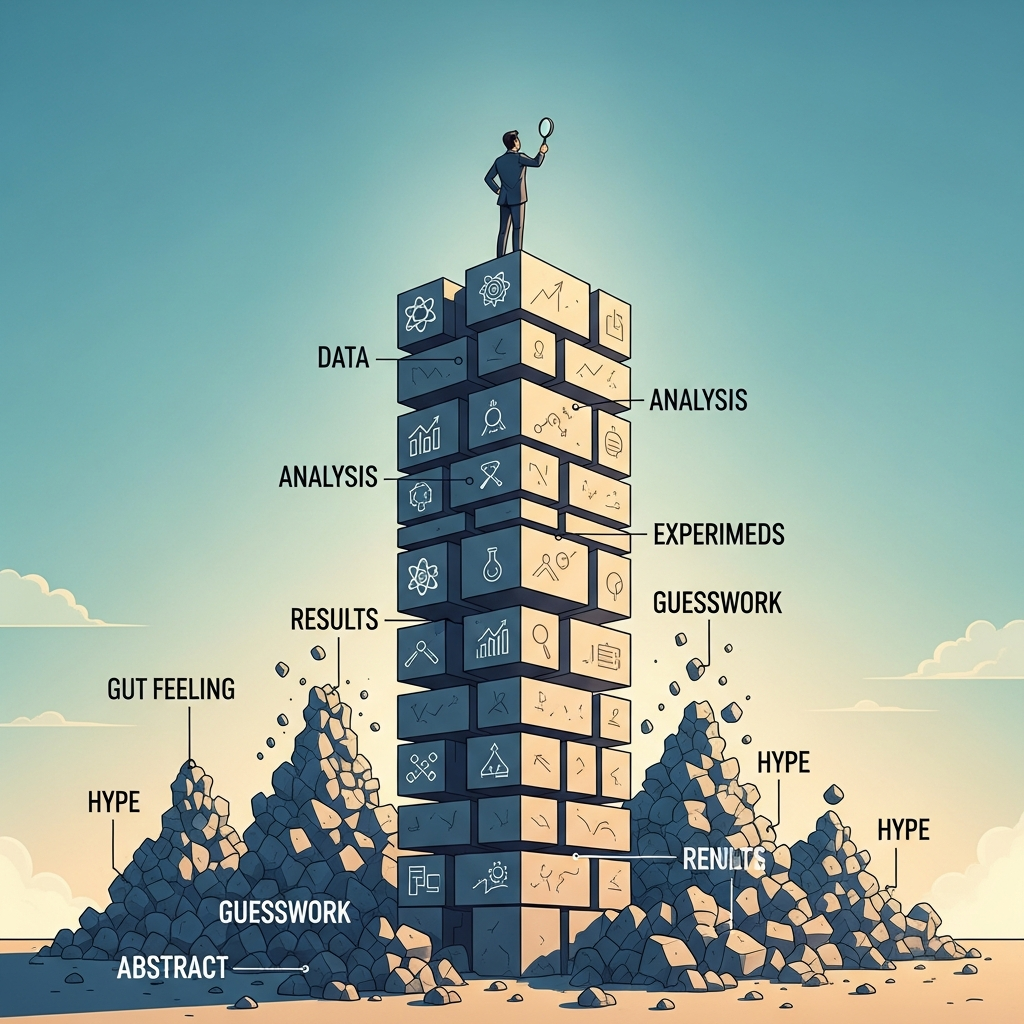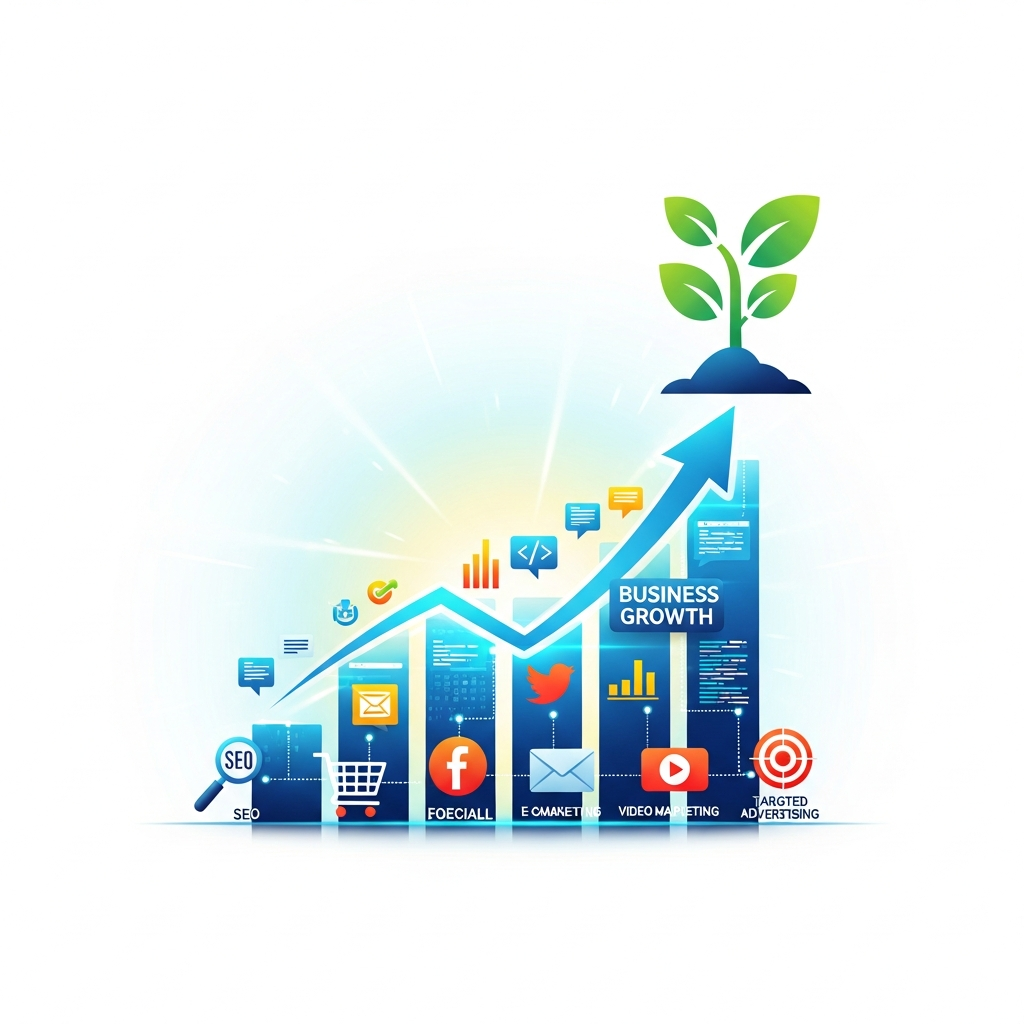

The 5-Phase Protocol: How Methodological Rigor Guarantees Scalable Results.

Scaling a business, a technical infrastructure, or a high-performance team is often viewed through a lens of chaotic growth. We celebrate the “hustle,” the late nights, and the “move fast and break things” mantra. But let’s be brutally honest: breaking things is expensive. In the world of high-stakes operations, unplanned breakage is a symptom of structural failure, not a badge of honor. To achieve true, sustainable scale—the kind that doesn’t collapse under its own weight—you need more than ambition. You need a protocol.

I’ve spent the better part of two decades dissecting why some organizations explode into market dominance while others plateau and wither. The differentiator is never just “better marketing” or “more funding.” It is methodological rigor. It is the transition from intuitive management to systemic execution. This is where the 5-Phase Protocol comes into play.

This isn’t a collection of “productivity hacks.” This is a foundational framework for engineering growth. If you are looking for shortcuts, you won’t find them here. If you are looking for a roadmap to building a machine that produces predictable, scalable results, let’s dive in.
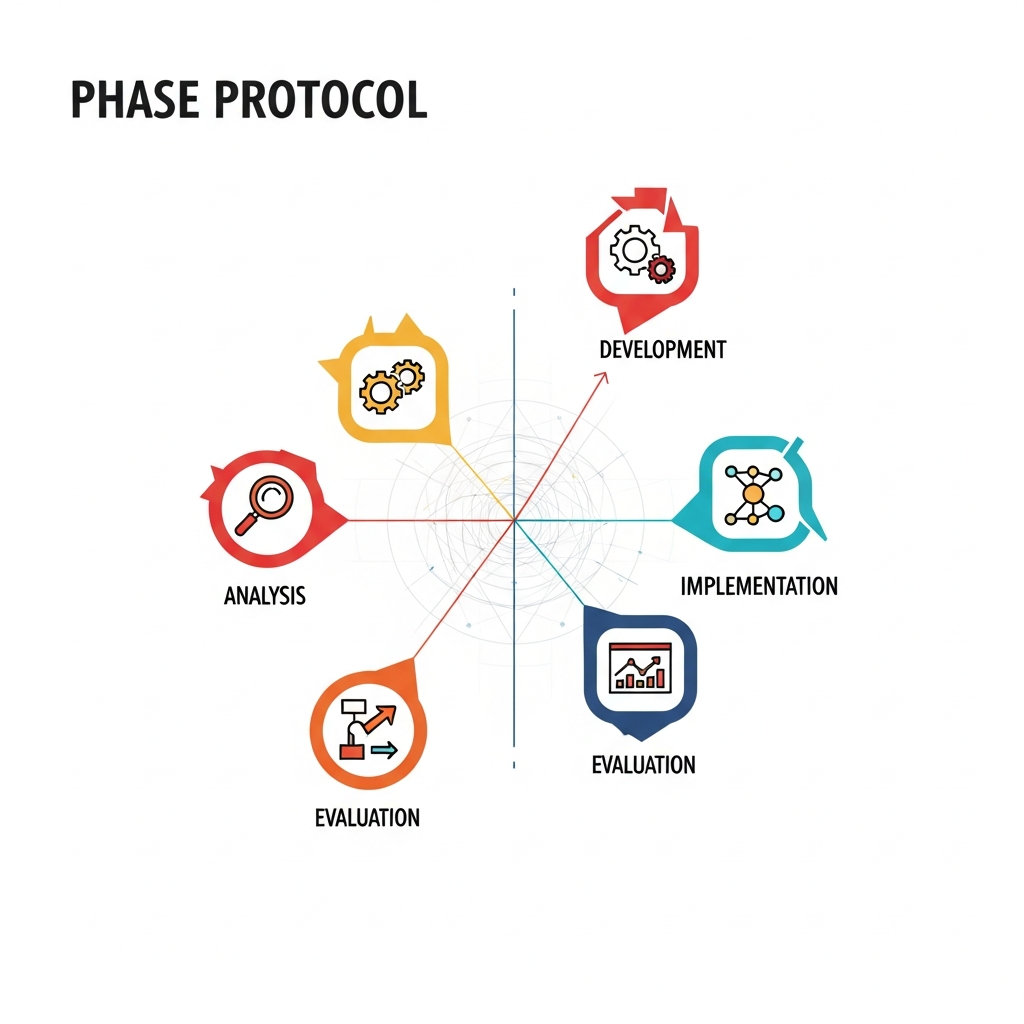
Visual for The 5-Phase Protocol: How Methodological Rigor Guarantees Scalable Results.

Phase 1: Deep Discovery and the Environmental Audit

Most leaders suffer from the “Solution First” bias. They see a problem and immediately reach for a tool or a tactic. Phase 1 of the protocol demands that you stop. Before a single line of code is written or a new hire is onboarded, you must perform a comprehensive environmental audit.

Discovery is the process of uncovering the Ground Truth. This isn’t the truth as presented in your quarterly reports or what your middle managers tell you during a synchronized slide deck presentation. Ground Truth is the granular, often ugly reality of your current operations. It involves identifying the “ghost in the machine”—those informal processes that employees use to bypass broken official systems.

The Anatomy of a Rigorous Audit

  • Data Integrity Check: Are the metrics you’re tracking actually reflective of health? If you’re scaling a sales team, are you looking at raw lead count, or are you tracking the velocity of qualified pipeline?
  • Dependency Mapping: Every system has bottlenecks. You need to map out every single dependency. If Person A leaves, does Process B collapse? If a third-party API goes down, does your entire service layer fail?
  • Cultural Resistance Assessment: Scaling requires change. You must identify who will be your champions and who will be your anchors. Ignoring the human element at this stage is a recipe for internal sabotage later.

The goal of Phase 1 is to eliminate “Assumed Knowledge.” When you assume you know why a process is failing, you build a solution for a phantom problem. Methodological rigor starts with the humility to admit you might be wrong about your own business.

“The greatest obstacle to discovery is not ignorance—it is the illusion of knowledge.” — Daniel J. Boorstin
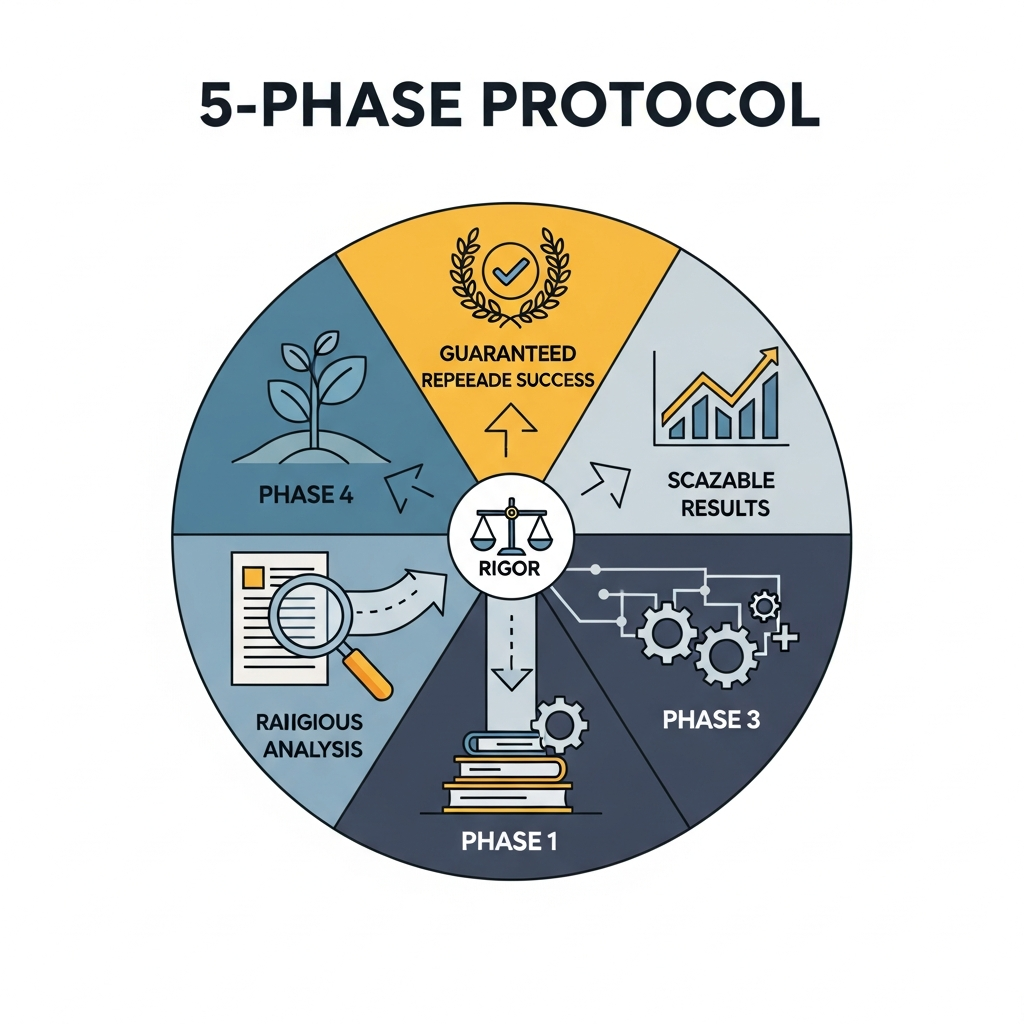
Visual for The 5-Phase Protocol: How Methodological Rigor Guarantees Scalable Results.

Phase 2: Architectural Modeling and Logic Frameworks

Once the audit is complete, we move into the blueprinting phase. In the 5-Phase Protocol, this is where we design the Scalable Architecture. Think of this as the difference between building a shed and building a skyscraper. You can’t just “add floors” to a shed; the foundation isn’t built for it. You have to design the skyscraper to be a skyscraper from day one.

Architectural modeling involves defining the logic that will govern your growth. This means moving away from “How do we do this?” and toward “How do we build a system that does this automatically?”

The Principle of Modular Design

A scalable system must be modular. Whether you are building software or a customer success team, the components should be able to function independently and interface through clearly defined protocols. In software, we call these APIs. In business, we call them Standard Operating Procedures (SOPs) and Key Performance Indicators (KPIs).

If your growth relies on one “genius” in the room making every decision, you haven’t built a scalable model; you’ve built a bottleneck. Phase 2 focuses on de-risking the individual. We build frameworks where the process is the star, not the person. This allows you to plug in talent and see immediate results because the “logic” of the role is already established.

Designing for Failure (The Pre-Mortem)

Rigorous architecture includes a “Pre-Mortem.” We ask: “It is one year from now and this project has failed. Why did it happen?” By imagining failure in the modeling phase, we can build safeguards directly into the architecture. We don’t just plan for success; we engineer against failure.
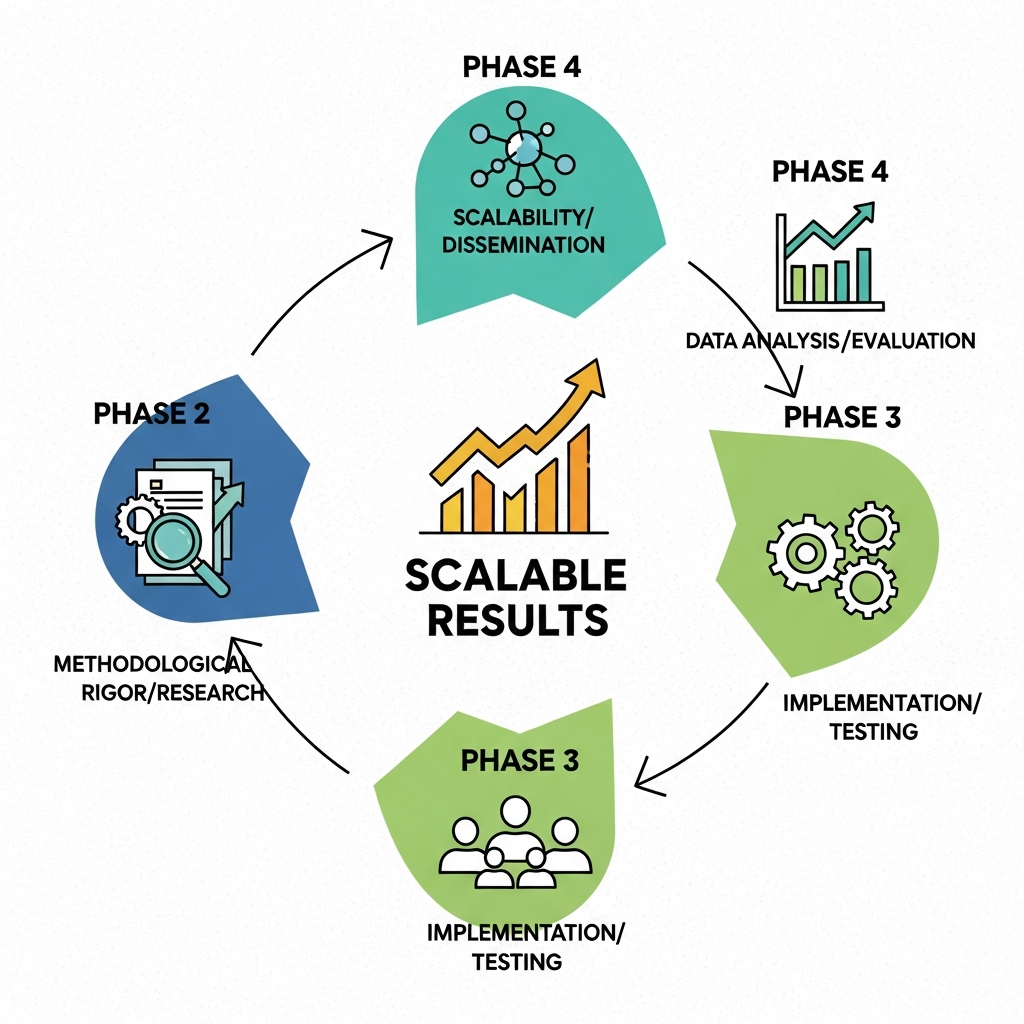
Visual for The 5-Phase Protocol: How Methodological Rigor Guarantees Scalable Results.

Phase 3: Controlled Execution (The Beta Loop)

Now we reach the stage where most people get impatient. They have the plan, they have the data, and they want to flip the switch for the entire company. Do not do this.

Phase 3 is about Controlled Execution. In the tech world, we call this a Beta test or a Canary release. In the broader business world, it’s a pilot program. The objective here isn’t to achieve massive results; it’s to validate the logic frameworks you built in Phase 2 under real-world conditions.

The “Sandbox” Methodology

You need a “sandbox”—a small, isolated segment of your market or operation where you can deploy the new protocol without risking the entire enterprise. This allows you to observe how the system handles stress, variance, and the “human factor.”

During Phase 3, your primary job is to find the friction. Where did the SOPs fail? Where did the data flow break? Controlled execution is about failing small to learn big. Every error caught in the Beta Loop is an error that doesn’t cost you $10 million when you move to Phase 5.

  • Short Feedback Cycles: In this phase, feedback should be daily, not monthly.
  • Iterative Refinement: If a process isn’t working, you don’t scrap the protocol; you refine the module. This is the essence of agility.
  • Documenting Variance: Keep a rigorous log of everything that didn’t go according to the blueprint. These are your “Optimization Nodes.”

>Phase 4: Optimization and Performance Tuning

If Phase 3 was about “Does it work?”, Phase 4 is about “How do we make it perfect?” This is where the 5-Phase Protocol transitions from a functional system to a high-performance engine. Optimization is the stage where you squeeze every ounce of efficiency out of your processes.

Many organizations skip this step. They see that the pilot program worked, and they immediately scale it. This is a massive mistake. Scaling an unoptimized process is simply scaling waste. If your customer acquisition cost is slightly too high in the pilot, it will become a hemorrhaging wound when you scale 100x.

The 80/20 of Optimization

In this phase, we apply the Pareto Principle. We identify the 20% of actions that are driving 80% of the results and we double down on them. Conversely, we look for the “Tail”—the activities that consume resources but provide marginal utility. We prune the tail ruthlessly.

Technical Debt and Process Debt: This is the time to pay it down. If you cut corners in Phase 3 to get the pilot live, you must fix those shortcuts now. In Phase 5, those shortcuts become structural cracks. Performance tuning involves upgrading your tools, training your people to a higher level of mastery, and automating repetitive tasks that were previously done manually for the sake of speed.

Zero-Based Budgeting for Growth

In Phase 4, we also look at resource allocation. We don’t just add 10% to last year’s budget. we look at every resource—time, money, and talent—and ask: “If we started from scratch today, would we invest this here?” If the answer is no, those resources are redirected to the high-leverage areas identified during the audit.

>Phase 5: Radical Scaling and Institutionalization

Finally, we reach the endgame. You have a validated, optimized, and stress-tested system. Now, and only now, do you pour the fuel on the fire. Phase 5 is about Radical Scaling.

Scaling isn’t just about doing more of the same; it’s about maintaining the integrity of the results while increasing volume. This is achieved through Institutionalization—the process of turning your protocol into the “cultural DNA” of the organization.

The Flywheel Effect

When you reach Phase 5, the protocol should start to generate its own momentum. Jim Collins famously called this the “Flywheel Effect.” In the beginning, it takes massive effort to get the wheel to turn. But because you followed the methodological rigor of the first four phases, the wheel is perfectly balanced and lubricated. Eventually, the weight of the system itself starts to drive the growth.

  • Automation of Governance: Use technology to monitor compliance with the protocol. Dashboards should alert you the moment a KPI deviates from the expected range.
  • Hyper-Documentation: Your SOPs should be so robust that a new hire can be onboarded and become productive within days, not months.
  • Continuous Evolution: Even in the scaling phase, the protocol is not static. It is a living framework that incorporates feedback from the front lines to stay ahead of market shifts.

The Danger of “Ego-Scaling”

The biggest threat in Phase 5 is ego. Leaders often get confident and start ignoring the protocol that got them there. They start making “gut instinct” bets again. Methodological rigor requires a level of discipline that many find uncomfortable. You must remain a student of your own system. Don’t scale because your ego wants to see a bigger number; scale because the data shows the system can handle the load.

>Why Methodological Rigor is the Only Real Security

We live in an era of volatility. Markets shift, technologies disrupt, and global events can upend an industry overnight. In this environment, “talent” is not enough. “Luck” is not a strategy. The only real security you have is the rigor of your methods.

A rigorous protocol allows you to pivot with precision. When you have a modular, well-documented system, you can swap out a failing component without crashing the whole machine. You can identify exactly where a problem is occurring because you have the data and the visibility to see it. That is the power of the 5-Phase Protocol.

It’s not the easiest way to grow. It requires more upfront work, more discipline, and a willingness to confront uncomfortable truths. But it is the guaranteed way to scale. If you want results that are predictable, repeatable, and scalable, you have to stop playing and start engineering.

Success is a byproduct of the system. Build a better system, and the success will take care of itself.

>The Human Factor: Why Most Fail the Protocol

If this protocol is so effective, why isn’t everyone using it? Because it requires a psychological shift that many are unwilling to make. It requires moving from the “Hero” archetype to the “Architect” archetype.

The “Hero” leader loves to swoop in and save the day. They thrive on the adrenaline of a crisis. But in a truly scalable, rigorous system, there are no crises to save. Everything is handled by the protocol. For some, this feels boring. They miss the “firefighting.”

To succeed with the 5-Phase Protocol, you must find your satisfaction in the elegance of the machine rather than the drama of the rescue. You must value consistency over intensity. Rigor is a quiet virtue, but in the world of high-performance scaling, it is the loudest differentiator there is.

Are you ready to stop hustling and start building? The protocol is waiting.
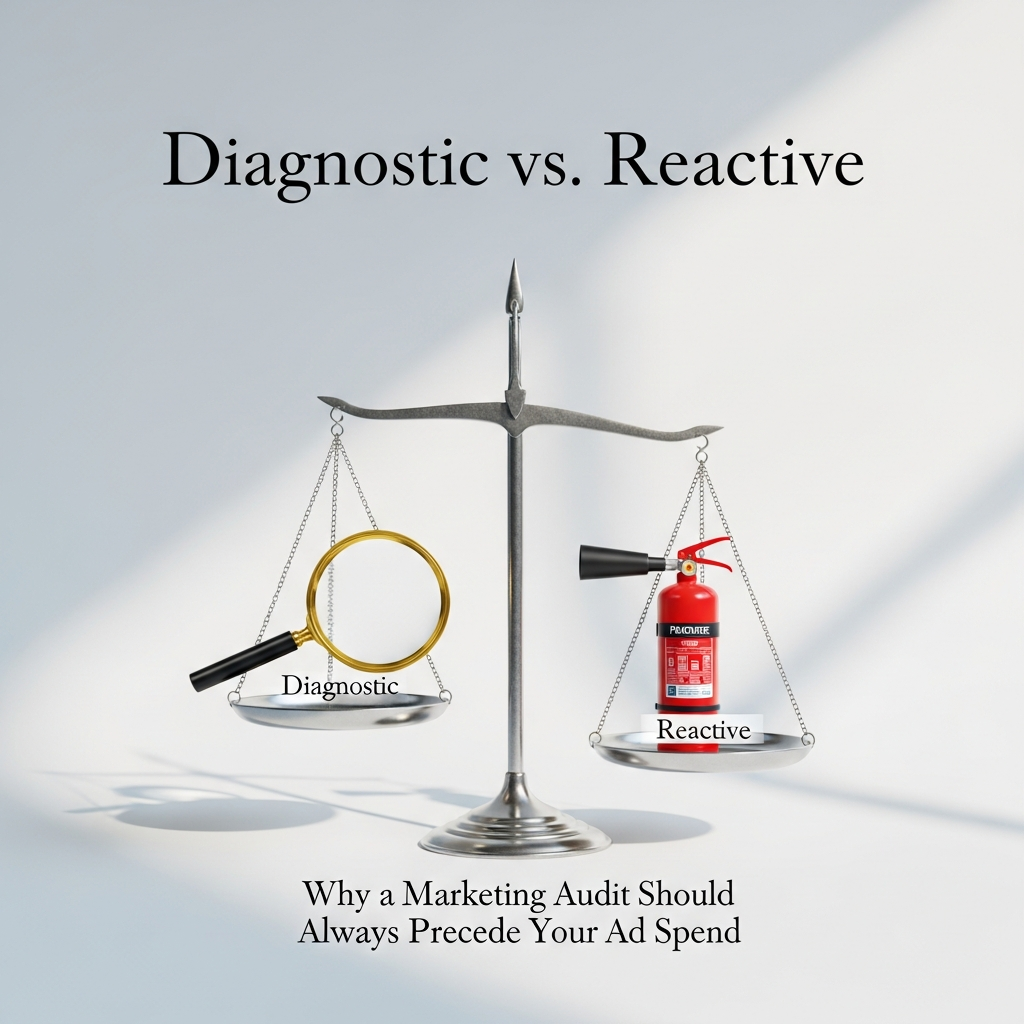
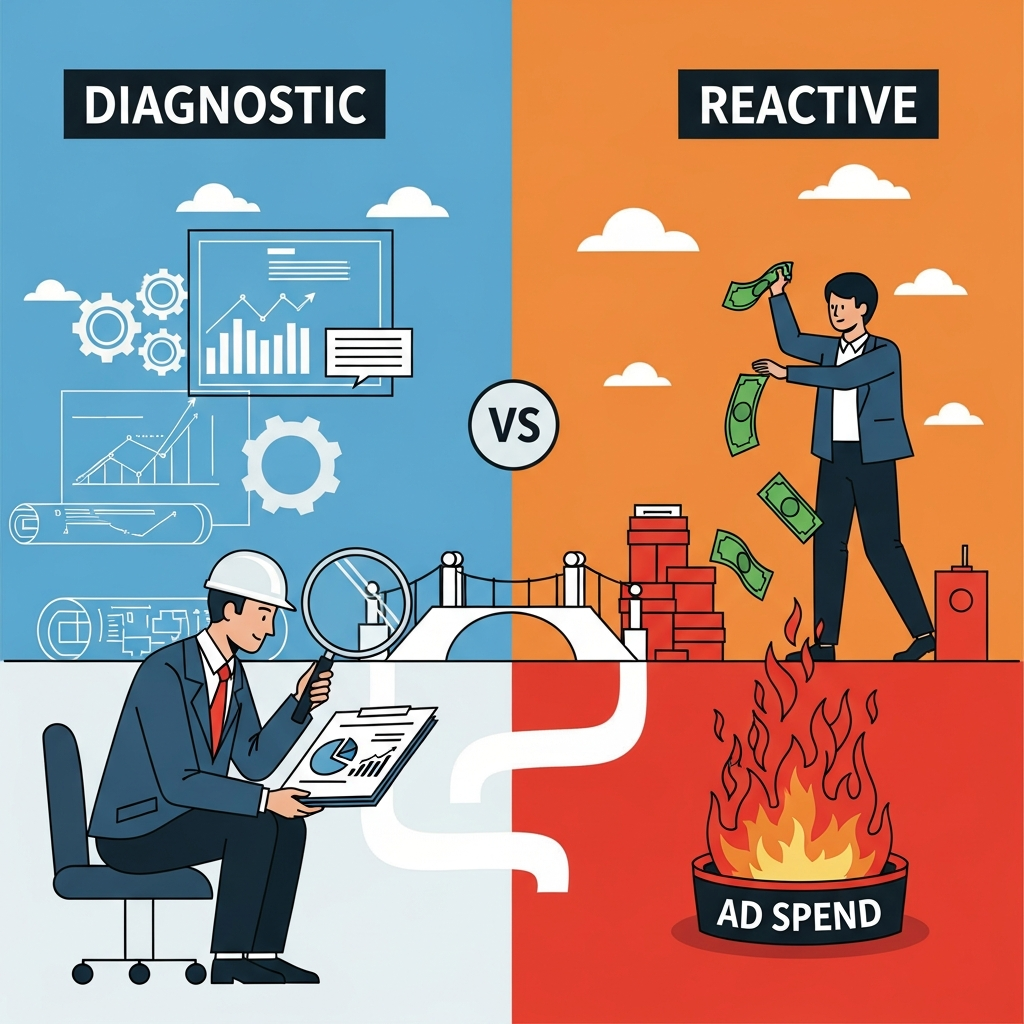
Diagnostic vs. Reactive: Why a Marketing Audit Should Always Precede Your Ad Spend

Imagine walking into a doctor’s office with a chronic cough, and before you even sit down, the physician hands you a prescription for high-dosage antibiotics and schedules you for a lung biopsy. No stethoscope. No blood tests. No questions about your history. You would walk out immediately, wouldn’t you? You would call it malpractice.

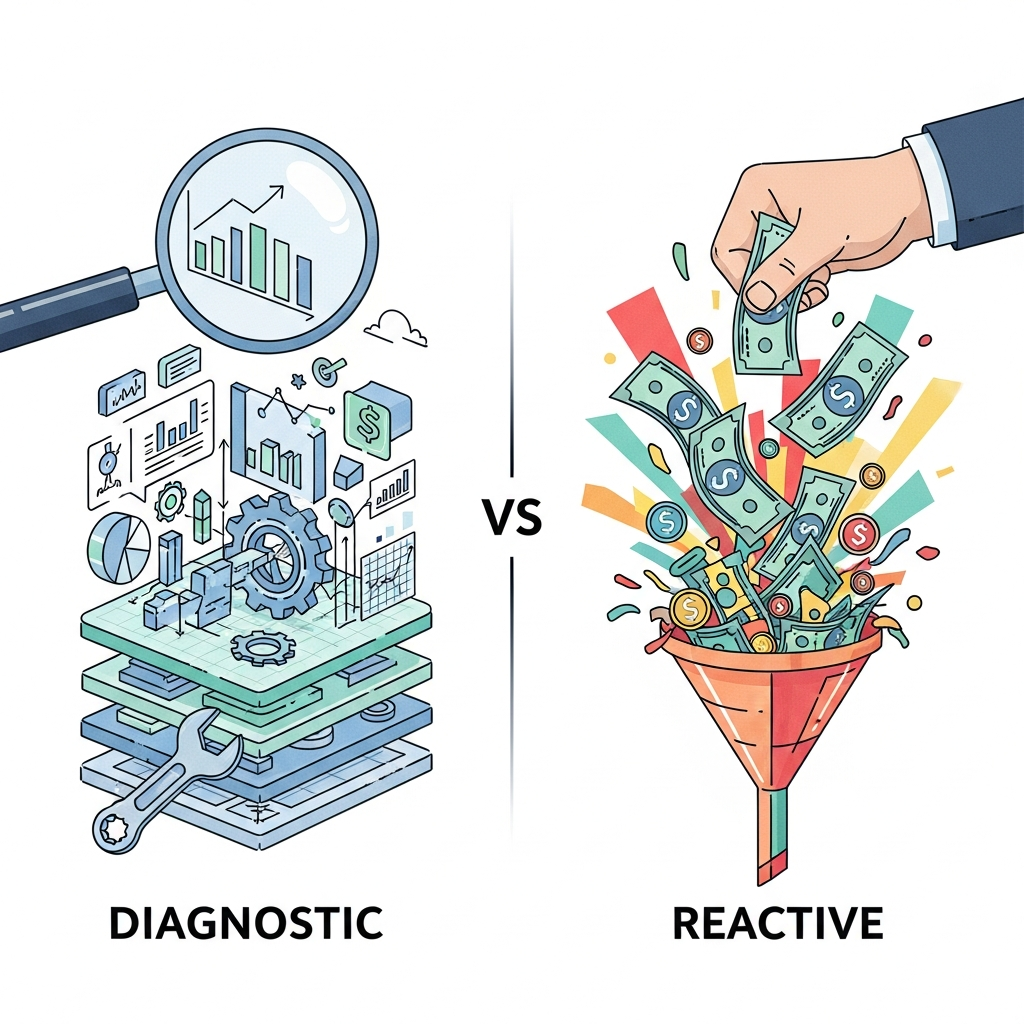
Yet, in the high-stakes world of digital growth, businesses commit the marketing equivalent of this every single day. They see a dip in sales or a plateau in growth and immediately “prescribe” more ad spend. They dump five, ten, or fifty thousand dollars into Meta, Google, or LinkedIn, hoping the sheer volume of traffic will drown their problems. It rarely does. Instead, they end up with a high-speed delivery system for a broken message, a leaky funnel, or a product-market mismatch.

This is the difference between reactive marketing and diagnostic marketing. One is a desperate gamble; the other is a strategic blueprint. In this guide, we are going to tear apart the myth that “more ads” is the solution to stagnant growth and explain why a comprehensive marketing audit is the only logical step before touching your credit card.

Visual for Diagnostic vs. Reactive: Why a Marketing Audit Should Always Precede Your Ad Spend

The Fatal Allure of Reactive Marketing

Reactive marketing is born out of anxiety. It’s the “we need leads yesterday” mentality. When a CEO looks at a dashboard and sees red, the first instinct is to turn the dials. “Double the daily budget on the retargeting campaign! Launch a new PMax campaign! Hire an agency that promises 10x ROI in 30 days!”

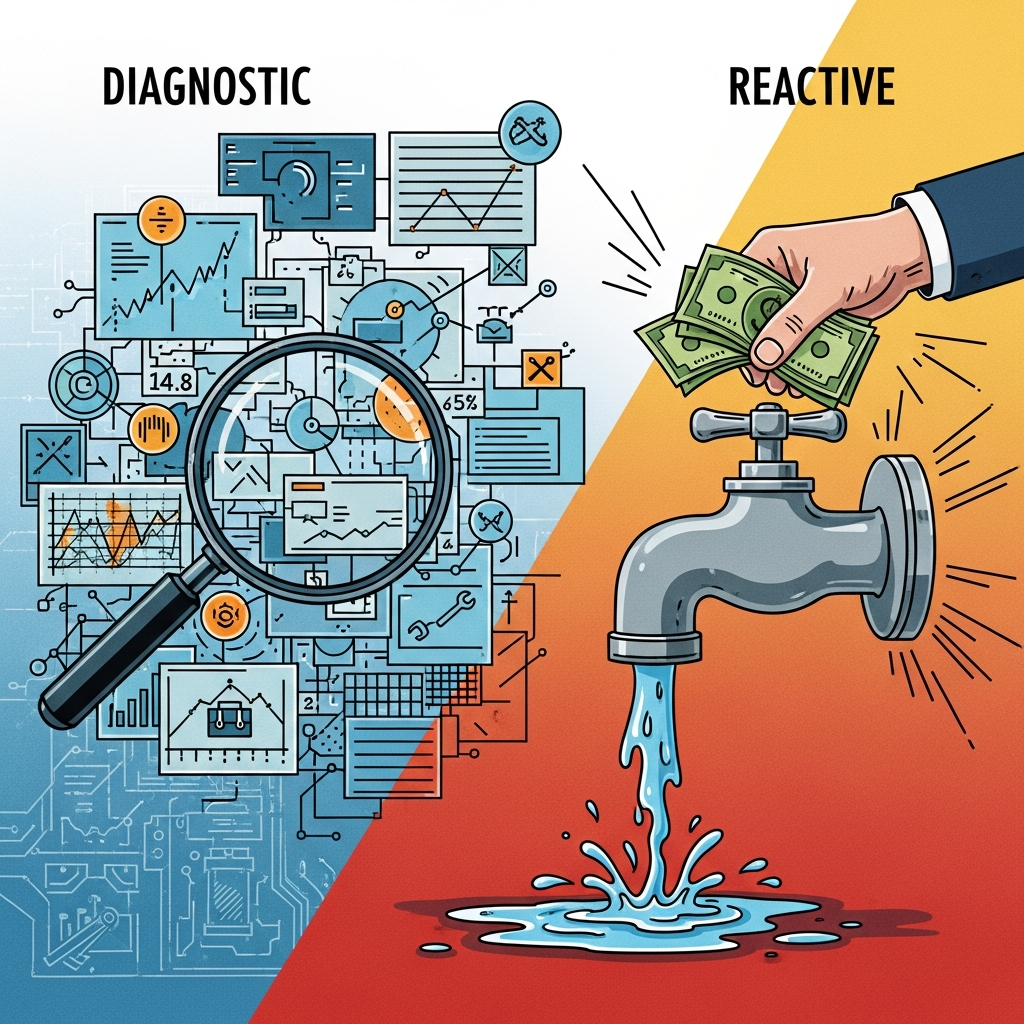
The problem with this approach is that it treats symptoms rather than causes. If your conversion rate is low, doubling your traffic just means you are paying twice as much to watch people leave your site. Reactive marketing is inherently expensive because it relies on brute force. It ignores the underlying “plumbing” of your brand’s digital presence.

“Pouring money into ads without an audit is like trying to fill a bucket with holes by using a larger hose. You might get more water in the bucket temporarily, but the waste is astronomical.”

When you react, you lose leverage. You are at the mercy of platform algorithms and rising CPMs. You haven’t earned the right to scale because you haven’t proven that your ecosystem can handle the pressure of increased volume.

Visual for Diagnostic vs. Reactive: Why a Marketing Audit Should Always Precede Your Ad Spend

The Diagnostic Approach: The Audit as a Foundation

Diagnostic marketing assumes that something is always broken—or at least, something can always be optimized. A marketing audit isn’t just a “check-up.” It is a deep-tissue scan of your entire go-to-market strategy. It looks at the technical, the psychological, and the financial aspects of your business.

Before you spend a single dollar on an ad, you must have answers to the following questions:

  • Is the tracking actually working? You’d be surprised how many Seven-figure brands have broken GA4 setups or misfiring pixels.
  • Does the landing page match the intent? If you’re bidding on “best accounting software” but your landing page talks about “enterprise financial transformation,” you’ve already lost.
  • What is the “true” CAC? Many companies calculate Customer Acquisition Cost (CAC) incorrectly, ignoring the overhead or the blended impact of organic traffic.
  • Who is the actual buyer? Not the “persona” you wrote three years ago, but the person actually clicking and buying today.

1. The Technical Audit: Fixing the Leaky Pipe

Most ad spend waste happens at the technical level. If your website takes four seconds to load on a mobile device, you are losing up to 50% of your paid traffic before they even see your headline. That is a 50% tax on your ad spend that no amount of “better creative” can fix.

A diagnostic audit starts with the “plumbing.” This includes Core Web Vitals, mobile responsiveness, and the checkout or lead-gen flow. If there is friction—if a button is hard to click or a form has twelve fields when it only needs three—your ad spend is being lit on fire. You must audit the user journey from the first click to the final confirmation page.

2. The Messaging Audit: Is Anyone Listening?

In a world of infinite scrolls and goldfish-level attention spans, your messaging is your only weapon. Most reactive marketing fails because the messaging is “me-centric.” It’s all about the features, the “we’ve been in business since 1994,” and the “award-winning service.”

A diagnostic audit peels back the layers of your copy. We look for Product-Market Fit resonance. Are you speaking to the customer’s pain, or are you just shouting about your solution? We analyze the “Hook-Value-Call to Action” framework across all touchpoints. If your ads are saying one thing and your website is saying another, the cognitive dissonance will kill your conversion rate.

Visual for Diagnostic vs. Reactive: Why a Marketing Audit Should Always Precede Your Ad Spend

Why Most Agencies Skip the Audit

If audits are so vital, why does every agency want to start running ads on day one? The answer is simple: Billable hours and immediate gratification.

Audits are hard work. They require high-level thinking, data science, and a willingness to tell the client their “baby is ugly.” It’s much easier for an agency to say, “Give us $10,000 for management and $50,000 for spend, and we’ll start testing.” Testing is often just a euphemism for “we don’t know what we’re doing, so we’re using your money to find out.”

An elite marketer will refuse to run ads without a diagnostic phase. They know that their reputation depends on ROI, and ROI is impossible to guarantee if the foundation is built on sand. When you pay for an audit, you are paying for a map. When you pay for reactive ads, you are paying for gas in a car with no steering wheel.

>The Pillars of a High-Impact Marketing Audit

If you are serious about scaling, your audit needs to cover four specific pillars. Skipping one is like trying to fly a plane with one wing missing.

Pillar 1: Data Integrity & Attribution

If you cannot measure it, you cannot manage it. In the post-iOS14 world, attribution is messy. A diagnostic audit looks at your “Source of Truth.” Are you relying solely on the Facebook Ads Manager dashboard (which often over-reports)? Or are you looking at Marketing Efficiency Ratio (MER) and First-Party Data?

We need to see where the drop-offs are. Is there a specific step in the funnel where 80% of users vanish? That is a data signal. A diagnostic audit turns “I think” into “I know.”

Pillar 2: Competitive Intelligence

You do not operate in a vacuum. Your competitors are bidding on the same keywords and targeting the same audiences. A reactive approach ignores the competition until they start stealing market share. A diagnostic approach analyzes their creative hooks, their pricing strategy, and their backlink profile.

Pro Tip: Use tools like the Meta Ad Library to see what your competitors have been running for more than 90 days. If an ad has been active for three months, it’s likely profitable. That is free data for your audit.

Pillar 3: Offer Architecture

Sometimes the ads aren’t the problem. Sometimes the offer is the problem. If you are offering a “Free Consultation” in a market where everyone else is offering a “Free Audit + 30-Day Roadmap,” you are going to lose. Your offer needs to be “Irresistible” in the sense that the value vastly outweighs the perceived cost or effort.

A marketing audit scrutinizes the offer. We look at the Value Ladder. Do you have an entry-point offer? Is there a logical upsell? Are you maximizing the Average Order Value (AOV)? If your AOV is too low, you’ll never be able to afford the rising costs of traffic.

Pillar 4: Creative Resonance

Creative is the new targeting. Since the algorithms are now better at finding your audience than you are, your “creative” (images, videos, headlines) does the heavy lifting. An audit looks at your historical creative performance. Which angles worked? Which ones flopped? We look for patterns in the “stop-rate” (the first 3 seconds of a video) and the “hold-rate” (how many people watched the whole thing).

>The Financial Impact: CAC vs. LTV

This is where the rubber meets the road. The ultimate goal of a marketing audit is to protect your Unit Economics. Reactive marketing often leads to a “Death Spiral” where the Cost Per Acquisition (CAC) exceeds the Lifetime Value (LTV) of a customer.

By conducting an audit first, you can identify ways to increase LTV through email marketing, SMS, and retention strategies before you pump the top of the funnel. If you can increase your LTV by 20% through a simple automated email sequence, you can suddenly afford to spend more on ads than your competitors. That is how you win markets.

“The business that can afford to spend the most to acquire a customer wins.” – Dan Kennedy

But you can only afford to spend the most if your backend is optimized. A diagnostic audit ensures that your backend is a profit-generating machine, not a black hole.

>Case Study: The $50,000 Lesson

I once consulted for an e-commerce brand spending $50,000 a month on Google Ads. They were barely breaking even and were convinced they needed a “better Google Ads expert.”

We paused the spend and did a 14-day diagnostic audit. We found two glaring issues:

  • The Mobile Checkout: The “Add to Cart” button was hidden below the fold on 80% of mobile devices.
  • The Message Gap: Their ads promised “Next Day Shipping,” but their product pages said “Ships in 3-5 business days.”

We fixed the button and aligned the shipping message. We didn’t change a single thing in the Google Ads account. Within 30 days, their conversion rate jumped by 40%. They were suddenly profitable without spending an extra dime on traffic. That is the power of a diagnostic mindset.

>How to Conduct Your Own Preliminary Audit

While a professional audit is irreplaceable, you can start the diagnostic process yourself. Follow this checklist before you approve your next ad budget increase:

Step 1: The “Ghost” Test

Open an incognito window and try to buy your own product or book your own service on a mobile device using a slow Wi-Fi connection. Every time you feel a moment of frustration or confusion, write it down. That is a conversion killer.

Step 2: The “So What?” Test

Read your ad copy and your landing page headlines out loud. After every sentence, ask yourself, “So what?” If your copy says “We have a patented technology,” and the answer is “So what?”, you haven’t explained the benefit. Keep digging until the “So what?” is answered with “This will save me time/money/stress.”

Step 3: The Data Reconciliation

Compare your Shopify/CRM sales to your Ad Manager sales. If there is a discrepancy of more than 20%, your tracking is broken. Do not scale until you know where your money is coming from.

>Stop Reacting. Start Diagnosing.

Ad spend is a multiplier. It multiplies what you already have. If you have a high-converting, psychologically resonant, technically sound sales process, ads will multiply your wealth. If you have a confusing, slow, “me-centric” website, ads will only multiply your losses.

The next time you feel the urge to “just try some ads,” stop. Take a breath. Invest in a marketing audit. It is the only way to ensure that your marketing budget is an investment in growth rather than a donation to Silicon Valley’s bottom line.

Marketing is a science of certainty, not a game of chance. You wouldn’t accept a medical diagnosis without a check-up; don’t accept a marketing strategy without an audit. Your balance sheet will thank you.

>Final Thoughts for the Decision Maker

If you are a CEO, a Founder, or a Marketing Director, your job is to be a steward of the company’s resources. Reactive spending is a failure of stewardship. A diagnostic audit is an act of leadership. It sets the tone for a culture of data-driven decisions and excellence. It forces your team to look at the hard truths and fix the foundational issues that are holding you back.

Are you ready to stop guessing and start growing? The audit is the first step. It’s time to look under the hood before you hit the gas.

Beyond the “Hustle”: Why Empirical Evidence is the Only Foundation for Sustainable Growth.

The business world has a fetish for the “grind.” If you spend ten minutes on LinkedIn or Twitter, you are bombarded with the same tired tropes: wake up at 4:00 AM, outwork your competition, “embrace the suck,” and wear your burnout like a badge of honor. We have romanticized the “hustle” to the point where we value movement over direction and effort over outcome. But here is the cold, hard truth that most gurus won’t tell you: the hustle is a lottery ticket, not a strategy.

I have spent years in the trenches of growth marketing and organizational design. I have seen founders work themselves into a hospital bed only to watch their companies fold in eighteen months. I have also seen “lazy” founders build empires by doing about four hours of high-leverage work a day. The difference isn’t grit. It isn’t even “passion.” The difference is the adherence to empirical evidence. If you are building a business based on gut feelings, caffeine, and motivational quotes, you aren’t an entrepreneur; you are a gambler who is running out of chips.

Visual for Beyond the

The Fatal Flaw of the Hustle Culture

The problem with hustle culture is that it confuses activity with achievement. In the early stages of a startup, yes, effort is required. But effort without an empirical feedback loop is just noise. When we operate in “hustle mode,” we are often operating in a state of high cortisol and low cognitive flexibility. We make decisions based on what feels productive rather than what the data proves is effective.

Hustle culture relies heavily on survivorship bias. We look at the one billionaire who slept on his office floor and assume that the floor-sleeping was the cause of his success. We ignore the 10,000 others who slept on their office floors and ended up bankrupt. Empirical evidence demands that we look at the denominator, not just the numerator. It forces us to ask: What are the repeatable, predictable variables that lead to growth?

The Psychological Cost of Ignoring Evidence

When you ignore evidence in favor of raw effort, you eventually hit a wall called Decision Fatigue. Your brain can only make a finite number of high-quality decisions per day. If you are “hustling” through 16-hour days, by hour ten, your ability to discern a good lead from a bad one or a sound investment from a sinkhole is compromised. Evidence-based growth acts as a cognitive externalization; the data makes the hard choices for you, preserving your mental energy for execution.

Visual for Beyond the

Defining Empirical Growth: Beyond the Buzzwords

To move beyond the hustle, we must first define what we mean by empirical evidence. In a business context, this is the application of the scientific method to your growth strategy. It is the transition from “I think our customers like X” to “We have observed a 22% higher conversion rate when we present X instead of Y, with a 95% confidence interval.”

Empirical growth is built on three pillars:

  • Observable Data: Real-world interactions, not hypothetical market research or “expert” opinions.
  • Falsifiability: Every strategy you deploy must be capable of being proven wrong. If you cannot define what failure looks like, you cannot recognize success.
  • Reproducibility: If you can’t make the growth happen twice using the same variables, you haven’t found a strategy; you’ve found a fluke.

The Difference Between Vanity Metrics and Empirical Signals

One of the biggest mistakes “hustlers” make is chasing vanity metrics. These are numbers that look great on a slide deck but have zero correlation with sustainable revenue. High social media engagement, “raw” website traffic, and the number of employees you have are classic vanity metrics. They feed the ego, but they don’t feed the bottom line.

Empirical signals, on the other hand, focus on unit economics and retention. If your Customer Acquisition Cost (CAC) is higher than your Lifetime Value (LTV), no amount of “hustle” will save you. In fact, the harder you hustle in that scenario, the faster you will go broke. Empirical evidence forces you to stop and fix the leaky bucket before you try to pour more water into it.

Visual for Beyond the

The Survivorship Bias Trap: Why Your Heroes Are Lying to You

Every biography of a successful tech mogul follows the same narrative arc: they had a “vision,” they worked harder than everyone else, they took massive risks, and they won. But if you dig into the actual mechanics of their growth, you find something different. You find that they were obsessively data-driven.


The “vision” is usually just a hypothesis. The “risk” was usually a calculated experiment where the downside was capped. The “hard work” was focused on optimizing systems, not just performing tasks. When we try to emulate the “hustle” without the “evidence,” we are essentially trying to fly a plane by flapping our arms really fast because we saw a bird do it. It’s the wrong mechanism for the desired outcome.

The Danger of “Founder Intuition”

Founder intuition is a dangerous drug. It feels like a superpower, but it’s often just a collection of personal biases disguised as insight. Intuition is great for generating hypotheses, but it is a terrible tool for validating them. A sustainable growth model requires the humility to let the data tell you that your “brilliant” idea is actually a dud.

>Building the Infrastructure for Sustainable Growth

If you want to move away from the frantic energy of the hustle and toward the steady, compounding growth of an empirical system, you need the right infrastructure. This isn’t about buying expensive software; it’s about a shift in your operational philosophy.

1. The Feedback Loop: The Heartbeat of Growth

Every action your company takes should be part of a loop. You launch a campaign, you measure the result, you analyze the variance between your expectation and reality, and you iterate. Most “hustle” companies skip the analysis and iteration phases. They just launch, launch, launch. By the time they realize they are heading in the wrong direction, they are 50 miles off course.

2. Cohort Analysis: Seeing the Truth Behind the Averages

Averages lie. If you look at your average retention rate, you might think you’re doing fine. But if you perform a cohort analysis—breaking down users by the month they joined—you might find that your newest users are leaving at twice the rate of your early adopters. This is an empirical “fire alarm” that the hustle-mindset would miss while focusing on total user growth.

3. The North Star Metric

A sustainable business needs one single metric that represents the value delivered to the customer. For Airbnb, it’s nights booked. For Slack, it’s messages sent. If your North Star metric is growing, your business is likely healthy. If you are “hustling” but your North Star metric is flat, you are wasting your life. Empirical evidence keeps you focused on the one thing that actually matters.

The “20-Mile March”: Why Pacing Beats Sprinting

In his book Great by Choice, Jim Collins introduces the concept of the “20-Mile March.” He tells the story of two explorers racing to the South Pole. One explorer pushed his team to the limit on good weather days and hunker down on bad days. The other explorer committed to walking 20 miles every single day, regardless of the weather. The one who paced himself—the one who adhered to a strict, evidence-based regimen—was the one who survived and won.

Growth is a marathon, not a sprint. Hustle culture is a series of frantic sprints that lead to exhaustion and injury. Sustainable growth is the 20-mile march. It requires the discipline to not overextend yourself when things are going well, so that you have the reserves to maintain your pace when things get difficult.

The Compounding Power of Small Gains

If you improve your conversion rate by just 1% every week, you don’t just grow by 52% in a year. Because of compounding, you actually grow by nearly 68%. This is the “boring” path to success. It doesn’t make for a great Instagram story, but it makes for a very large bank account. Hustle culture looks for 100% gains overnight; empirical growth looks for 1% gains that last forever.

>Case Study: The Pivot from Hype to Evidence

Consider the story of a well-known D2C mattress brand (we’ll keep it nameless to be polite). In their early years, they were the darlings of the “hustle” world. They raised hundreds of millions, spent aggressively on billboards and podcasts, and grew their top-line revenue at a staggering pace. They were “winning” the hustle game.

However, their unit economics were a disaster. They were losing money on every mattress sold once you factored in returns and marketing costs. They ignored the empirical evidence that their business model was unsustainable because they were addicted to the “growth at all costs” narrative. When the venture capital dried up, the hustle couldn’t save them. They had to drastically downsize and restructure. Meanwhile, smaller, quieter competitors who focused on profitable unit economics from day one are now the ones dominating the market.

>Step-by-Step: How to Transition to an Empirical Framework

If you’re currently caught in the hustle trap, how do you get out? You can’t just stop working, but you can change how you work. Follow this framework to transition your business into an evidence-led organization.

Step 1: The Data Audit

Sit down and list every metric you currently track. Now, go through that list and delete anything that you cannot directly link to revenue or customer retention. If a number goes up and you don’t know exactly what action caused it, it’s not data—it’s noise. You need to identify your levers.

Step 2: Establish Your Baselines

You cannot measure growth if you don’t know where you are starting. Establish firm baselines for your CAC, LTV, Churn Rate, and Conversion Rate. These are your “vital signs.” If any of these numbers move in the wrong direction, you stop the hustle and find out why. You don’t “grind” through a declining LTV.

Step 3: Run Weekly Sprints (The Real Kind)

In Agile methodology, a “sprint” isn’t about working harder; it’s about time-boxing an experiment. Every week, pick one variable to test. Maybe it’s a headline on a landing page, or a different lead magnet, or a pricing tweak. At the end of the week, look at the evidence. Did it work? If yes, keep it. If no, discard it. This is how you build a “Growth Machine.”

Step 4: Institutionalize the Learning

The greatest asset of an empirical company isn’t its product; it’s its knowledge base. Every time an experiment fails, document it. Why did it fail? What did we learn about our customers? This ensures that you never make the same mistake twice. In a hustle-based company, mistakes are repeated constantly because everyone is too busy to document the “why.”

>The Myth of “Not Enough Time”

The most common pushback I hear from founders is: “I don’t have time for all this data stuff. I just need to get things done!”

This is the ultimate irony. You have time to work 80 hours a week on things that might not work, but you don’t have three hours a week to ensure that your work is actually effective? The “not enough time” excuse is a psychological defense mechanism. Analyzing data is hard. It forces us to confront the possibility that we are wrong. Hustling is easy. It allows us to feel productive even when we are failing.

Sustainable growth requires the courage to be slow. It requires the maturity to admit that your effort is not a substitute for a viable strategy. If you don’t have time for evidence, you are effectively saying you have time for failure.

>The Biological Imperative of Sustainability

We often talk about business sustainability in terms of finances, but what about human sustainability? Your brain is a biological organ. It requires glucose, rest, and low-stress environments to function at peak capacity. When you operate in a state of perpetual hustle, you are essentially “overclocking” your brain. Eventually, the hardware fries.

Empirical evidence provides the “guardrails” for your mental health. When you know that your systems are working—because the data tells you so—your baseline stress level drops. You no longer feel the need to check your email at 2:00 AM because you trust the feedback loops you’ve built. This isn’t just better for your business; it’s better for your life. You can’t enjoy the fruits of your labor if you’ve burned out your capacity for joy before you reach the finish line.

>Conclusion: The New Standard of Excellence

The era of the “uninformed hustle” is coming to an end. In an age of AI-driven optimization and hyper-competitive global markets, raw effort is no longer a competitive advantage. Anyone can work hard. Anyone can pull an all-nighter. The new “moat”—the thing that will separate the titans from the also-rans—is the ability to process information and pivot based on empirical evidence faster than anyone else.

Stop looking at the clock and start looking at the spreadsheet. Stop valuing the “grind” and start valuing the truth. Growth is not a result of how much you suffer; it is a result of how much you learn. If you want to build something that lasts—something that grows while you sleep and sustains you for decades—you must move beyond the hustle. You must build your foundation on the only thing that doesn’t lie: evidence.

Are you ready to stop guessing and start growing?

The SWEM Framework: How to Identify Invisible Gaps in Your Digital Presence.

You’ve seen the symptoms before. You’re pouring money into a high-end tech stack, your agency is sending you monthly reports filled with “green” metrics, and your content team is churning out articles like a factory. Yet, the needle isn’t moving. Revenue is stagnant, your cost-per-acquisition is creeping upward, and there is a nagging feeling that something is fundamentally broken beneath the surface.

Most digital audits fail because they focus on the obvious. They look at your keyword rankings or your bounce rate. But in the modern landscape, the “invisible gaps”—the friction points you can’t see on a standard dashboard—are what actually kill your growth. After fifteen years in the trenches of digital strategy, I developed the SWEM Framework to stop the guessing game.

SWEM stands for Search, Website, Experience, and Monetization. It is a holistic diagnostic tool designed to uncover the structural, psychological, and technical cracks in your digital foundation. If you want to stop leaking money and start dominating your niche, you need to look at what your competitors (and likely your current team) are ignoring.

Visual for The SWEM Framework: How to Identify Invisible Gaps in Your Digital Presence.

Search: Moving Beyond the Keyword Obsession

Most people think Search begins and ends with SEO. They are wrong. In the era of Generative AI, SGE (Search Generative Experience), and entity-based indexing, search is about authority architecture. The invisible gap here isn’t that you aren’t ranking for “best [product]”; it’s that search engines don’t actually know what your brand is.

The Entity Gap

Google no longer just matches strings of text; it matches “entities”—concepts, people, and brands. If your digital presence lacks a clear Schema markup or a robust Knowledge Graph presence, you are invisible to the algorithms that matter. You might have the best content in the world, but if the “entity” of your brand isn’t connected to the “entity” of your industry, you will never achieve sustainable organic growth.

Crawl Budget Exhaustion

This is a silent killer for large sites. If your site has 5,000 pages but only 500 are truly valuable, search engines waste their “crawl budget” on low-quality junk. The gap here is a lack of technical hygiene. When a bot hits your site, does it get stuck in a loop of infinite filters and parameters? If so, your new, high-value content might not get indexed for weeks. That is a massive opportunity cost that no “keyword tool” will ever show you.

“SEO is no longer about tricking a bot. It is about providing a roadmap so clear that a machine can understand your expertise without needing to read a single line of your marketing fluff.”

Visual for The SWEM Framework: How to Identify Invisible Gaps in Your Digital Presence.

Website: The Infrastructure of Trust

Your website is not a brochure; it is a high-performance engine. However, most businesses treat it like a static asset. The invisible gaps in the “Website” pillar of SWEM usually reside in the tension between aesthetics and performance.

The “Pretty Site” Paradox

I have seen million-dollar brands lose 30% of their conversion rate because a designer insisted on a high-resolution hero video that takes four seconds to load on a 4G connection. Performance is a feature, not a technical detail. If your Largest Contentful Paint (LCP) is over 2.5 seconds, you are bleeding users before they even see your headline. The gap is often a lack of alignment between the creative team and the engineering team.

Accessibility as a Competitive Advantage

Many brands view ADA compliance as a legal checkbox. That’s a mistake. Accessible sites are inherently better for SEO and UX. If your site isn’t navigable via keyboard or lacks proper ARIA labels, you are alienating up to 20% of the population. More importantly, you’re signaling to search engines that your site is poorly constructed. This is an invisible gap that affects your “quality score” across the board.

Technical Debt and Bloat

How many tracking pixels do you have running? Do you still have the GTM tag for a tool you canceled in 2021? Every script you add increases the “Total Blocking Time.” This invisible weight slows down the user’s browser, leading to a “janky” experience that erodes trust. A monthly audit of your third-party scripts is mandatory, yet almost nobody does it.

>Experience: The Psychology of the Click

We’ve covered visibility and infrastructure. Now we move into the “E” of SWEM: Experience. This isn’t just about “UI” (User Interface); it’s about the psychological journey a user takes from “I have a problem” to “I trust this company to solve it.”

Cognitive Overload

The most common invisible gap in UX is Choice Overload. When you give a user six different Call-to-Actions (CTAs) on a single landing page, you aren’t being helpful—you’re being confusing. High-converting digital presences utilize “The Rule of One”: One primary goal per page. If your user has to think for more than two seconds about what to do next, you’ve lost them.

Micro-Friction and the “I’ll Do It Later” Effect

Micro-friction consists of small annoyances: a form field that doesn’t auto-fill, a “Chat with Us” bubble that covers the “Buy Now” button on mobile, or a password requirement that is too complex. Individually, these seem small. Collectively, they create the “I’ll do it later” effect. And in digital marketing, “later” means “never.” You need to record real user sessions (using tools like Hotjar or FullStory) to see where people are literally fighting your website to give you money.

The Mobile-First Lie

Every agency says they design “mobile-first.” Very few actually do. Most design on a 27-inch iMac and then “shrink” the site for mobile. This leads to buttons that are too small for human thumbs (the “fat finger” problem) and text that requires squinting. If your mobile conversion rate is less than 50% of your desktop conversion rate, you have a massive Experience gap that is likely costing you half your potential revenue.

>Monetization: Closing the Data Loop

The final pillar of the SWEM framework is Monetization. This isn’t just about selling; it’s about the systems that track, attribute, and optimize your revenue. If you can’t measure it, you can’t manage it. And if your data is dirty, your decisions will be disastrous.

The Attribution Illusion

Are you still relying on “Last-Click Attribution”? If so, you’re likely over-valuing your branded search ads and under-valuing your top-of-funnel content. The invisible gap here is a failure to understand the Multi-Touch Journey. A customer might see a LinkedIn ad, read three blog posts, sign up for a newsletter, and then search for your brand on Google. If you only look at the last step, you’ll kill the budget for the LinkedIn ads that actually started the fire.

CRM and Marketing Automation Desync

In many organizations, the marketing team lives in HubSpot/Marketo, and the sales team lives in Salesforce. If these two systems aren’t talking to each other with 100% accuracy, you have a “Leaky Bucket.” Marketing sends “leads” that Sales says are “garbage,” but neither side has the data to prove why. Closing this gap requires a unified data layer where the “source of truth” is consistent from the first click to the final invoice.

Price Elasticity and Value Communication

Sometimes the gap isn’t technical—it’s positioning. If your conversion rate is low despite high traffic and great UX, your Value-to-Price ratio might be off. Are you communicating the cost of inaction? Digital presence is often too focused on features and not enough on the transformative outcome. If the user doesn’t perceive the value as being significantly higher than the price, they won’t convert, no matter how fast your site loads.

>How to Conduct a SWEM Audit

Identifying these gaps is one thing; fixing them is another. I recommend a quarterly “SWEM Deep Dive.” Do not try to fix everything at once. Use the following hierarchy of needs:

  • Step 1: Website Infrastructure. Fix your speed, your mobile responsiveness, and your technical errors. You cannot build a skyscraper on a swamp.
  • Step 2: Search Authority. Ensure your entity is defined and your crawl budget is optimized. Build the “Search” foundation so your content actually gets seen.
  • Step 3: Experience Optimization. Use heatmaps and session recordings to identify where users are getting frustrated. Eliminate one piece of friction every week.
  • Step 4: Monetization Refinement. Clean up your data. Fix your attribution. Ensure your sales and marketing teams are speaking the same language.

The SWEM Scorecard

To get started, rate your digital presence on a scale of 1-10 for each pillar. Be brutally honest. If you’re a “10” on Search but a “2” on Experience, your SEO efforts are being wasted. The goal is balance. A balanced “7” across all four pillars will outperform a “10” in one and a “2” in the others every single time.

>The Invisible Gaps are Where the Growth Is

In a world where everyone is using the same AI tools to write the same generic content and the same “best practices” to build sites, your advantage lies in the nuances. The SWEM Framework forces you to look at the connective tissue of your digital presence. It forces you to ask: “Where is the friction that our dashboards aren’t showing us?”

Stop chasing the next “hack” or “secret strategy.” The biggest gains in digital marketing don’t come from doing something new; they come from fixing the invisible things that are already broken. Audit your Search, refine your Website, elevate your Experience, and master your Monetization. That is how you build a digital presence that doesn’t just look good—it scales.

Are you ready to find your gaps? Start with the “W.” Check your site speed right now. If it’s over three seconds, you’ve already found your first invisible gap. Now, go fix it.

7 Game-changing Benefits of Digital Marketing Every Business Owner Needs to Know

Let’s be honest for a second. If you’re running a business today and you’re still relying solely on word-of-mouth and the occasional local newspaper ad, you’re not just behind the curve—you’re practically invisible. The marketplace hasn’t just moved; it has evolved into a digital-first ecosystem where attention is the new gold. I’ve seen businesses with mediocre products skyrocket because their digital strategy was surgical, while legendary brands have crumbled because they refused to adapt to the pixelated landscape.

Digital marketing isn’t some buzzword reserved for Silicon Valley tech giants. It is the lifeblood of modern commerce. Whether you’re a local contractor, a boutique e-commerce shop, or a B2B service provider, the internet is where your customers live, breathe, and—most importantly—make their buying decisions. In this comprehensive guide, we are going to strip away the fluff and look at the seven game-changing benefits of digital marketing that will fundamentally shift how you view your business growth.

Visual for 7 Game-changing Benefits of Digital Marketing Every Business Owner Needs to Know

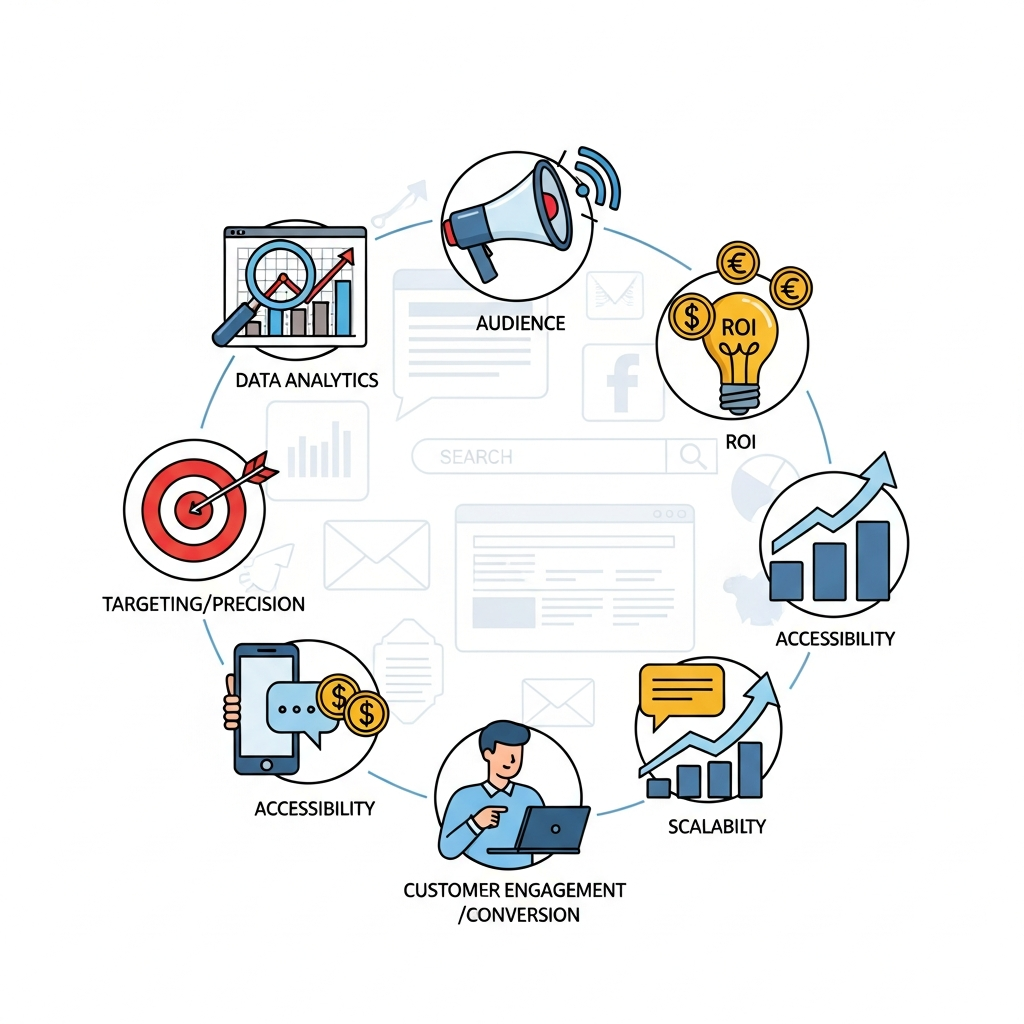
1. Hyper-Targeted Reach: Finding the Needle in the Haystack

Traditional advertising is often described as the “spray and pray” method. You buy a billboard on a busy highway. Thousands of people drive past it. Maybe 5% are actually your target demographic. Maybe 1% are currently in the market for what you sell. You’ve paid for 100% of the views but only 1% matter. That is an astronomical waste of capital.

Digital marketing flips the script. Through platforms like Meta Ads (Facebook and Instagram), Google Ads, and LinkedIn, you can target your ideal customer with terrifying precision. We’re talking about targeting based on:

  • Specific Demographics: Age, gender, income level, and even parental status.
  • Psychographics: Interests, hobbies, values, and political leanings.
  • Behavioral Data: Past purchase history, websites they’ve visited, and even how long they hovered over a specific product.
  • Geographic Location: From an entire country down to a specific zip code or a one-mile radius around your physical storefront (geofencing).

Imagine you sell high-end, organic dog food. Instead of shouting to the whole city, you can show ads specifically to people who own dogs, live in affluent neighborhoods, follow “Holistic Pet Care” pages, and have recently searched for “healthy dog treats.” That’s not just marketing; that’s a direct conversation with your most likely buyer.

Visual for 7 Game-changing Benefits of Digital Marketing Every Business Owner Needs to Know

2. Cost-Effectiveness and High ROI

I’ve sat in boardrooms where small business owners were terrified of digital marketing because they thought it was “expensive.” The truth is quite the opposite. Digital marketing is the great equalizer. You don’t need a million-dollar budget to make a massive impact.

Think about the cost of a 30-second TV spot or a full-page spread in a magazine. Those costs are fixed, upfront, and often require five or six figures just to get your foot in the door. With digital marketing, you can start with $5 a day. You have total control over your spend, and you can scale up or down in real-time based on performance.

“The beauty of the digital space is that it rewards relevance over deep pockets. A well-optimized Google Ad or a viral TikTok can generate more leads than a stagnant million-dollar billboard ever could.”

Furthermore, because you are only targeting people who are likely to buy, your Customer Acquisition Cost (CAC) is significantly lower. You aren’t wasting money showing your vegan skincare products to hunters. Every dollar spent is working harder, leading to a much higher Return on Investment (ROI) than traditional mediums could ever dream of.

Visual for 7 Game-changing Benefits of Digital Marketing Every Business Owner Needs to Know

3. Real-Time Data and Measurable Analytics

The old marketing adage goes: “Half the money I spend on advertising is wasted; the trouble is I don’t know which half.” In the digital world, that problem is solved. Digital marketing is entirely quantifiable.

When you run a campaign, you aren’t guessing if it’s working. You have access to a dashboard (like Google Analytics 4 or Facebook Ads Manager) that tells you exactly what is happening. You can see:

  • How many people saw your ad (Impressions).
  • How many people clicked it (Click-Through Rate).
  • Which specific ad copy or image prompted the click.
  • How much each lead or sale cost you (Cost Per Acquisition).
  • Exactly where they dropped off in your sales funnel.

This data allows for Agile Marketing. If an ad isn’t performing by Tuesday afternoon, you can kill it by Tuesday evening and move that budget to an ad that is crushing it. You don’t have to wait for a monthly report to see that you’ve wasted your money. This level of transparency is a superpower for a business owner who wants to stay lean and profitable.

>4. Enhanced Customer Engagement and Relationship Building

Traditional marketing is a monologue. You talk, and the customer listens (or ignores you). Digital marketing is a dialogue. It allows you to build a community around your brand, which is the key to long-term sustainability.

Social media platforms are the modern-day town square. When you post a video on Instagram or an update on LinkedIn, your customers can comment, ask questions, and share their experiences. This two-way communication does two vital things:

First, it builds trust. When a potential customer sees you answering questions and engaging with your audience, it humanizes your brand. You aren’t just a faceless corporation; you’re an expert who cares.

Second, it provides instant market research. Your customers will tell you what they like, what they hate, and what they want to see next. This feedback loop is worth its weight in gold. Instead of spending thousands on focus groups, you just have to look at your comments section or run a poll on your Instagram Stories.

The Power of Retargeting

Ever wondered why that pair of shoes you looked at on a website keeps following you around the internet? That’s retargeting (or remarketing). It’s a digital engagement strategy that keeps your brand top-of-mind. Most customers don’t buy on the first visit. By staying in their line of sight through gentle, digital “nurturing,” you significantly increase the chances of them returning to finish the purchase.

>5. Leveling the Playing Field for Small Businesses

In the 1990s, if you were a local hardware store, you couldn’t compete with the advertising budget of Home Depot. They owned the airwaves and the Sunday paper. Today, the internet doesn’t care about the size of your office; it cares about the quality of your content and the precision of your SEO (Search Engine Optimization).

With a solid SEO strategy, a local “mom and pop” shop can rank higher on Google than a national chain for specific, high-intent keywords. If someone searches for “best artisanal sourdough near me,” Google’s algorithm prioritizes relevance and local proximity over brand size.

Content marketing is another arena where the small guy can win. By creating helpful blog posts, engaging videos, or insightful whitepapers, you can establish yourself as a Subject Matter Expert (SME). People buy from people they trust. If you provide more value through your digital presence than your giant competitor does, you will win the customer every single time.

>6. Personalization: The “Amazon Effect”

We live in an era where consumers expect—and demand—personalization. We are tired of being treated like a number. Digital marketing allows you to deliver a tailored experience to every single person who interacts with your brand.

Through Email Marketing Automation and Dynamic Website Content, you can segment your audience based on their behavior. For example:

  • A first-time visitor might see a “10% off your first order” popup.
  • A loyal customer who has spent over $500 might receive an exclusive invite to a VIP loyalty program.
  • A user who abandoned their cart might receive an automated email reminder with a testimonial from a happy customer to nudge them toward the finish line.

This level of personalization creates a “sticky” brand experience. When a customer feels like you understand their specific needs and pain points, they are far less likely to shop around based on price alone. You’re no longer a commodity; you’re a solution tailored specifically for them.

>7. Higher Conversion Rates Through the Marketing Funnel

At the end of the day, marketing has one goal: to drive revenue. Digital marketing is designed to guide a total stranger through a structured journey—from awareness to consideration to the final sale—with minimal friction.

Because digital marketing is so integrated, the path to purchase is shorter. In traditional marketing, a customer sees a TV ad, has to remember the brand, go to a store later that week, and find the product. In digital marketing, they see an ad, click a button, and checkout via Apple Pay or credit card in under sixty seconds.

Conversion Rate Optimization (CRO) is the science of making your website a high-performing sales machine. By testing different button colors, headlines, and layouts (A/B testing), you can systematically increase the percentage of visitors who turn into paying customers. This isn’t guesswork; it’s conversion engineering.

The Multi-Channel Integration

Digital marketing allows for a “surround sound” effect. A customer might discover you on TikTok (Awareness), sign up for your newsletter (Lead Gen), read a testimonial on your blog (Trust), and finally purchase after seeing a retargeting ad on Google (Conversion). This multi-touchpoint approach is incredibly effective because it meets the customer wherever they happen to be in their buying journey.

>Conclusion: The Digital Mandate

If you take nothing else away from this, remember this: Digital marketing is not an expense; it is an investment in the future of your business. The world is not going back to the way it was. The digital footprint of your company is often the first, and sometimes the only, impression you get to make on a potential client.

The benefits are clear: you get to reach the right people, at the right time, with the right message, for a fraction of the cost of traditional media. You get to see exactly what’s working and what isn’t, and you get to build a tribe of loyal fans who will sustain your business for years to come.

Where do you start? Don’t try to do everything at once. Pick one or two channels where your audience is most active. Maybe it’s Google Search, or maybe it’s LinkedIn. Master those, analyze the data, and scale. The digital revolution isn’t coming; it’s already here. The only question is: Is your business ready to lead, or will it be left in the digital dust?

Ready to transform your digital presence? It starts with a single step—optimizing your strategy for the humans behind the screens, not just the algorithms that govern them. Get out there and make your mark.

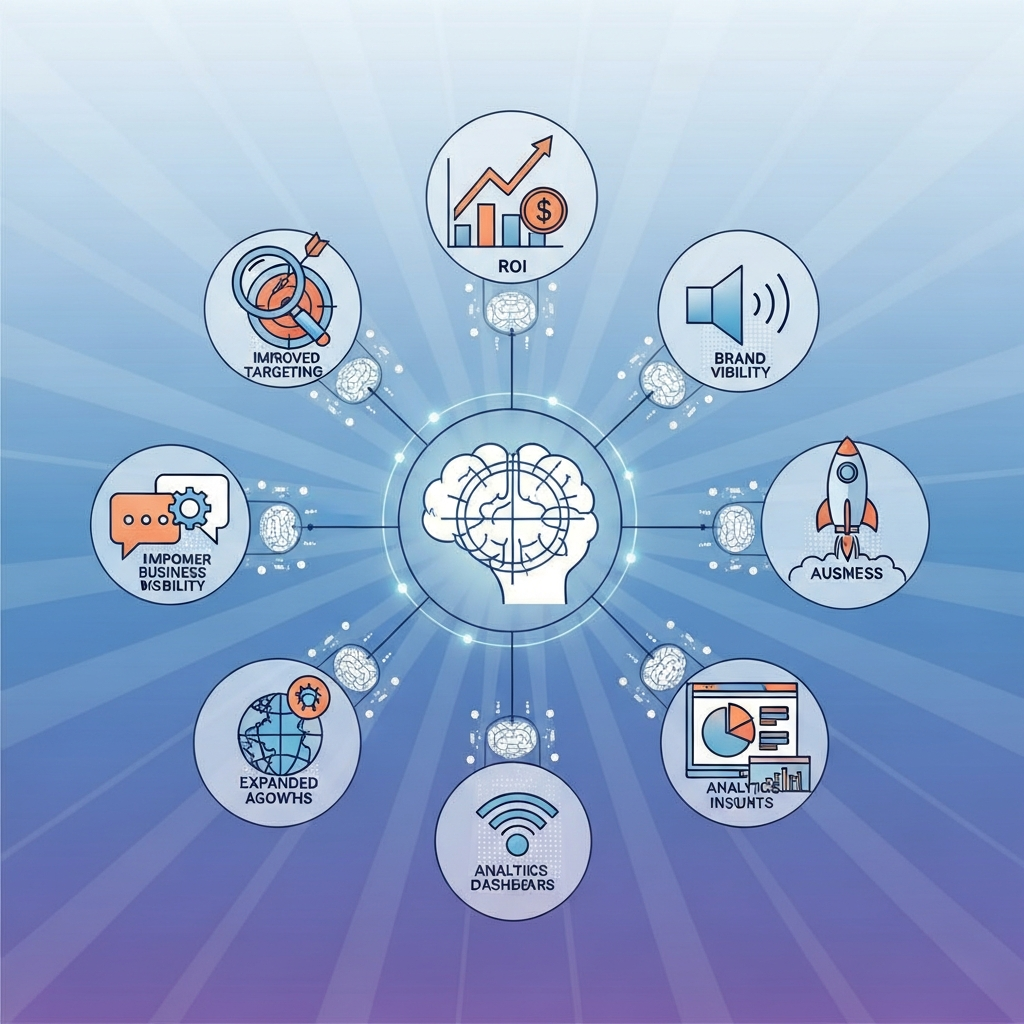
The Future of Scaling: How Digital Marketing Revolutionizes Brand Visibility

Scaling a brand in the mid-2020s feels a bit like trying to build a skyscraper during an earthquake. The ground is shifting, the tools are evolving, and the very definition of “visibility” is being rewritten by algorithms that change faster than a seasonal fashion line. If you are still operating on the 2018 playbook of “buy some Facebook ads and write a few SEO blogs,” you aren’t just behind the curve; you are practically invisible.

True scaling today isn’t just about growth. Growth is linear; scaling is exponential. Growth means you are adding resources at the same rate you are adding revenue. Scaling means you are leveraging digital systems to explode your brand visibility and market share while your costs remain relatively tethered. This is the revolution. We are moving away from the era of “brute force marketing” and into the era of “algorithmic synergy.”

Visual for The Future of Scaling: How Digital Marketing Revolutionizes Brand Visibility

The Paradigm Shift: From Reach to Resonance

For decades, marketing was a game of “how many eyeballs can I buy?” It was a sheer volume play. But the digital landscape has become saturated. We are bombarded with upwards of 10,000 advertisements every single day. The human brain has developed a sophisticated “digital blindness” to traditional outreach. In this environment, reach is cheap, but resonance is priceless.

Modern brand visibility is no longer about being everywhere; it is about being in the right place at the moment of highest intent. Digital marketing has transitioned from a megaphone to a laser-guided missile. To scale today, you must understand that the “Future of Scaling” relies on three core pillars: Data Intelligence, Hyper-Personalization, and Community Moats.

The Death of the Traditional Marketing Funnel

The old funnel—Awareness, Interest, Desire, Action—is dying. In its place, we have the “Messy Middle,” a term coined by Google researchers to describe the complex space between trigger and purchase where consumers are won and lost. Digital marketing revolutionizes visibility here by providing “information gain.”

The brands that scale are not those with the biggest budgets, but those that provide the most utility within the decision-making loop. If you can help a customer navigate the noise, you don’t just get a click; you get a conversion.

Visual for The Future of Scaling: How Digital Marketing Revolutionizes Brand Visibility

The Algorithmic Engine: How AI and Machine Learning Dictate Visibility

If you want to understand the future of scaling, you have to understand the algorithm. Whether it’s Google’s Search Generative Experience (SGE), TikTok’s Recommendation Engine, or Meta’s Advantage+ campaigns, the machines are now the gatekeepers of visibility. Scaling today requires “Algorithm Optimization,” which is fundamentally different from traditional SEO.

Predictive Analytics: We are moving from reactive marketing to predictive scaling. Elite brands are now using machine learning to predict which customers have the highest Lifetime Value (LTV) before they even make a second purchase. By feeding this data back into advertising platforms, brands can “train” the algorithm to find more high-value users, effectively scaling visibility among the 1% of the population that will drive 80% of the revenue.

Creative as the New Targeting: In the past, media buyers spent hours tweaking interests and demographics. Today, the algorithm handles that. The “levers” have shifted. Visibility is now driven by creative resonance. If your video content stops the scroll, the algorithm rewards you with lower costs and higher reach. In the future of scaling, your creative team is your most important data department.

Visual for The Future of Scaling: How Digital Marketing Revolutionizes Brand Visibility

Building the “Invisible” Scale: Search in the Age of AI

Search Engine Optimization is undergoing its most radical transformation since the advent of the internet. With the rise of Large Language Models (LLMs), people are no longer just searching for keywords; they are asking complex questions. To maintain brand visibility, you have to move beyond “ranking” and toward “becoming the source.”

Information Gain and Authority

Google’s recent updates emphasize E-E-A-T (Experience, Expertise, Authoritativeness, and Trustworthiness). But the secret sauce for scaling in the future is Information Gain. If your content simply parrots what every other blog says, the AI will synthesize that info and provide an answer on the search page, meaning the user never clicks through to your site.

To scale visibility, your brand must produce “primary-source content”—original research, unique case studies, and contrarian viewpoints. You must provide information that doesn’t exist elsewhere in the training data of the LLMs. This makes your brand an indispensable node in the digital knowledge graph.

>The Multi-Channel Ecosystem: Synergy Over Silos

The biggest mistake brands make when trying to scale is treating their digital channels as independent silos. They have an “SEO guy,” a “Facebook girl,” and an “Email person.” This is a recipe for stagnation. Scaling requires a holistic ecosystem where each channel feeds the other.

  • Short-Form Video as a Discovery Engine: Use TikTok, Reels, and YouTube Shorts to cast a wide net and capture “top-of-mind” awareness.
  • Email and SMS as a Retention Fortress: Once visibility is captured, it must be “owned.” Relying on third-party platforms for visibility is “renting” your audience. Scaling happens when you move users from rented media to owned media.
  • Retargeting as a Conversion Catalyst: Use the data from your discovery engine to serve hyper-specific mid-funnel content that addresses the specific objections of your prospects.

This “Omnichannel” approach ensures that once a potential customer sees your brand, they continue to see it across every digital touchpoint, creating an illusion of omnipresence. For a scaling brand, being “everywhere” to a specific niche is far more effective than being “nowhere” to the entire world.

>Psychological Triggers and the Nuance of Modern Branding

Scaling isn’t just about technical prowess; it’s about human psychology. As we move further into a digital-first world, the brands that win are those that feel “human.” This is the great irony of digital marketing: the more we use AI, the more we value the authentic.

The Power of Social Proof 2.0

A basic testimonial is no longer enough. To scale visibility, you need User-Generated Content (UGC) and Creator Partnerships. Consumers trust other consumers and their favorite creators more than they trust any corporate advertisement. By leveraging the existing trust and visibility of creators, brands can “piggyback” on established communities, bypassing the years it would take to build that trust from scratch.

The Halo Effect: When a respected voice in a niche mentions your brand, that visibility comes with an immediate transfer of authority. This isn’t just marketing; it’s social currency. Scaling visibility in the future involves managing a network of hundreds of micro-influencers rather than one or two celebrities.

>Unit Economics: The Math Behind the Visibility

You cannot scale what you cannot measure. The “Future of Scaling” is deeply rooted in unit economics. Too many brands focus on “Vanity Metrics”—likes, followers, and even raw traffic. These mean nothing if the unit economics don’t make sense.

To truly revolutionize your visibility, you must master the LTV/CAC Ratio. Customer Acquisition Cost (CAC) is the price you pay for visibility that leads to a sale. Lifetime Value (LTV) is the total profit that customer brings over time.

The Scaling Threshold: Generally, an LTV/CAC ratio of 3:1 is considered the minimum for healthy growth. However, the brands that “revolutionize” their industries often aim for 5:1 or higher. They achieve this by using digital marketing to lower CAC through better targeting and higher conversion rates, and by increasing LTV through sophisticated post-purchase email flows and loyalty programs.

If you can afford to pay more than your competitors to acquire a customer, you will eventually own the market. Digital marketing scaling is essentially a battle of who has the most efficient conversion engine.

>The Role of First-Party Data in a Cookieless World

The “Death of the Cookie” is a phrase that has haunted digital marketers for years. With Apple’s ATT (App Tracking Transparency) and the phasing out of third-party cookies, the old ways of tracking visibility are crumbling. The future of scaling belongs to those who own their data.

First-Party Data Strategy: Brands must create “value exchanges” to get users to share their information voluntarily. This could be through high-value lead magnets, interactive quizzes, or exclusive communities. Once you have this data, you can build “Lookalike Audiences” that are far more accurate than any third-party data could ever provide. This allows you to scale visibility with surgical precision, even in a privacy-first world.

>Emerging Technologies: The Next Frontier of Visibility

We cannot talk about the future without mentioning the “next big things.” While some may seem like buzzwords, their impact on brand visibility is inevitable.

Augmented Reality (AR) and Interactive Shopping

Imagine a customer being able to “place” your product in their living room via their smartphone camera before they buy it. AR isn’t just a gimmick; it’s a massive friction-reducer. Reducing friction is the key to scaling. The more “visible” a product’s utility is in the customer’s actual life, the higher the conversion rate. Brands like IKEA and Sephora are already scaling this technology to dominate their sectors.

The Metaverse and Virtual Presence

While the “Metaverse” has had its ups and downs in the hype cycle, the underlying trend is clear: we are spending more time in immersive digital environments. Brands that establish visibility in these virtual spaces—through digital goods, virtual events, or immersive storytelling—will have a first-mover advantage with the next generation of consumers (Gen Alpha), for whom the digital and physical worlds are essentially one and the same.

>Common Scaling Pitfalls (And How to Avoid Them)

Scaling is dangerous. If you scale a broken process, you simply break it faster. Here are the most common traps brands fall into when trying to revolutionize their visibility:

  • The Content Treadmill: Producing high volumes of low-quality content. This hurts your brand equity and dilutes your visibility. Quality always trumps quantity in the eyes of modern algorithms.
  • Ignoring Retention: If your bucket is leaky, pouring more water (visibility) into it won’t help. You must have a retention strategy in place before you hit the “scale” button on your ads.
  • Over-Reliance on a Single Platform: If 90% of your visibility comes from Instagram, you don’t have a business; you have a platform dependency. Diversity is the key to resilient scaling.
  • Losing the Brand Voice: As brands scale, they often become “corporate” and boring. The “humanity” that got them their first 1,000 customers is lost. Maintaining a distinct, punchy, and authoritative voice is essential as you grow.

>The Invisible Engine: Automation and Operations

True scaling happens behind the scenes. You can have the best digital marketing in the world, but if your operations can’t handle the influx of visibility, you will collapse. The “Future of Scaling” involves the heavy use of Marketing Automation.

From automated lead nurturing to AI-driven customer service chatbots that handle 80% of inquiries, these tools allow a small team to manage a massive brand presence. Automation ensures that no lead falls through the cracks and that every customer gets a consistent experience, regardless of how fast the brand is growing. In the digital age, your “visibility” is only as good as your “delivery.”

>Conclusion: The New Era of Visibility

The future of scaling is not about spending more; it’s about thinking more. It’s about leveraging the incredible power of AI and data while doubling down on the very things that make us human: storytelling, community, and trust. Digital marketing has evolved from a simple support function into the primary engine of brand value.

As we move forward, the line between “marketing” and “product” will continue to blur. Your visibility will be a direct reflection of the value you provide to the digital ecosystem. If you can master the balance between algorithmic precision and creative resonance, the potential for scale is virtually limitless. The revolution isn’t coming; it’s already here. The only question is: is your brand ready to be seen?

Key Takeaways for Immediate Scaling:

  • Audit your data: Are you collecting first-party data, or are you at the mercy of the platforms?
  • Analyze your Information Gain: Are you saying something new, or just adding to the noise?
  • Tighten your Unit Economics: Know your LTV/CAC numbers like the back of your hand.
  • Humanize your Brand: Use creators and UGC to build a moat of trust around your visibility.

Scaling in the digital age is a marathon run at the speed of a sprint. It requires constant adaptation, a relentless focus on the customer, and a willingness to discard what worked yesterday in favor of what will work tomorrow. That is how you revolutionize brand visibility. That is how you win.

How to Skyrocket Your Roi: the Power of Digital Marketing for Small Businesses

Let’s be brutally honest for a moment. If you are running a small business today and you aren’t obsessed with your digital presence, you aren’t just leaving money on the table—you are effectively handing your market share to the competitor down the street who finally figured out how to use a Meta pixel. We live in an era where the barrier to entry has never been lower, yet the noise has never been louder. To “skyrocket” your Return on Investment (ROI), you cannot simply throw spaghetti at the digital wall and hope something sticks. You need a surgical, data-driven approach that prioritizes high-impact moves over vanity metrics.

I have spent years in the trenches of digital strategy, and if there is one thing I’ve learned, it’s that small businesses have a unique superpower: agility. You don’t have the red tape of a Fortune 500 company. You can pivot, experiment, and double down on what works in real-time. This guide is your roadmap to doing exactly that.

Visual for How to Skyrocket Your Roi: the Power of Digital Marketing for Small Businesses

The ROI Mindset: Why Most Small Businesses Fail at Digital Marketing

Before we dive into the “how-to,” we must address the “why-not.” Most small business owners approach digital marketing as an expense rather than an investment. They see a monthly bill for SEO or a daily spend on Google Ads and they cringe. This is the first hurdle. To see a massive ROI, you must shift your perspective to focus on Customer Acquisition Cost (CAC) versus Lifetime Value (LTV).

If you spend $50 to acquire a customer who spends $500 over their lifetime with you, you haven’t “lost” $50; you’ve bought a $450 profit margin. Digital marketing is the machine that facilitates this transaction at scale. The failure usually happens because businesses track the wrong things. Likes, follows, and “brand awareness” are great, but they don’t pay the rent. Conversion, retention, and referral do.

Success in digital marketing isn’t about being everywhere; it’s about being exactly where your highest-value customers are, at the precise moment they realize they have a problem you can solve.

Visual for How to Skyrocket Your Roi: the Power of Digital Marketing for Small Businesses

The Foundation: Search Engine Optimization (SEO) as a Wealth Generator

SEO is often described as “free” traffic. Let’s clear that up: it isn’t free. It costs time, intellectual capital, and often, professional management. However, unlike paid ads, which stop the moment you stop paying, SEO is an appreciating asset. It is the “real estate” of the internet.

Mastering Local SEO: The Small Business Edge

If you have a physical location or serve a specific geographic area, Local SEO is your bread and butter. When someone searches for “best plumber near me” or “boutique coffee shop in [City],” you need to be in the “Map Pack” (the top three results next to the map).

How do you win here? It starts with your Google Business Profile (GBP). Most businesses half-fill this out. To skyrocket ROI, you must optimize it aggressively. This means high-resolution photos, responding to every single review (yes, even the bad ones), and using the “Posts” feature to share updates. Proximity, relevance, and prominence are Google’s key signals. You can’t change your proximity, but you can absolutely dominate relevance through keyword optimization and prominence through consistent, high-quality reviews.

Technical SEO and the User Experience

Google has become increasingly obsessed with how users feel when they land on your site. This is where Core Web Vitals come in. If your site takes five seconds to load on a mobile device, your ROI is already dead. Users will bounce, and Google will bury you. Ensure your site is mobile-responsive, uses HTTPS for security, and has a clean, intuitive navigation structure. A fast site doesn’t just help SEO; it directly increases conversion rates.

Visual for How to Skyrocket Your Roi: the Power of Digital Marketing for Small Businesses

Content Marketing: Moving from “Selling” to “Solving”

Content marketing is the fuel for your digital engine. But here is the secret: nobody cares about your “anniversary sale” or your “company picnic.” They care about their own problems. To skyrocket ROI, your content must bridge the gap between a customer’s pain point and your solution.

The “Helpful Content” Framework

Google’s recent algorithm updates have doubled down on E-E-A-T (Experience, Expertise, Authoritativeness, and Trustworthiness). As a small business owner, you have a wealth of “Experience” and “Expertise.” Leverage it. Instead of writing a generic post about “The Benefits of Landscaping,” write a deep dive into “How to Save Your Lawn During a Texas Heatwave Without Breaking the Bank.”

  • Identify the FAQ: What are the top 10 questions your customers ask? Write a dedicated, 1,000-word blog post for each.
  • Use Video: A 60-second video explaining a complex topic can build more trust than a 5,000-word whitepaper.
  • Repurpose Everything: One long-form blog post can become five Instagram reels, three LinkedIn articles, and a month’s worth of tweets.

The Buyer’s Journey: Awareness to Decision

Not every visitor is ready to buy. A high-ROI strategy accounts for the entire funnel. Top of Funnel (TOFU) content educates the user. Middle of Funnel (MOFU) content compares solutions. Bottom of Funnel (BOFU) content—like case studies, testimonials, and product demos—closes the deal. If you only focus on the “Buy Now” stage, you are ignoring 90% of your potential market.

>Paid Advertising: The Fast Track to Scalability

If SEO is a marathon, Paid Media (PPC) is a sprint. When done correctly, it is the fastest way to see an immediate jump in ROI. However, it is also the easiest way to burn through a budget. The key is granularity.

Google Ads: Capturing Intent

Google Ads are powerful because they capture intent. When someone searches for “emergency roof repair,” they are ready to spend money. Your goal is to be the first option they see. To maximize ROI here, stop using broad match keywords. They are a vacuum for your budget. Use “phrase match” or “exact match” to ensure your ads only show up for highly relevant queries.

Furthermore, your ad copy must match your landing page. If your ad promises a “20% Discount for New Customers,” and the landing page doesn’t mention that discount, the user will leave, and you will have paid for a useless click. This is called Message Match, and it is the difference between a 1% conversion rate and a 10% conversion rate.

Social Media Ads: Creating Desire

While Google captures intent, Meta (Facebook/Instagram) and TikTok create desire. You are interrupting a user’s scroll, so your creative must be thumb-stopping. For small businesses, User-Generated Content (UGC) often outperforms high-end production. A video of a real customer using your product feels authentic and trustworthy. Use Meta’s powerful “Lookalike Audiences” to find people who share characteristics with your best existing customers.

>Social Media: Community Over Reach

Organic social media reach has plummeted over the years. You can no longer rely on just “posting” and expecting people to see it. Today, social media for small businesses is about community management and social selling.

Don’t try to be on every platform. If you are a B2B consultancy, TikTok might be a waste of time, but LinkedIn is a goldmine. If you are a boutique clothing brand, Instagram and Pinterest are non-negotiable. Choose one or two platforms and dominate them. Engage with your followers. Reply to comments within the hour. Use Stories to show the “behind the scenes” of your business. People buy from people, not faceless corporations.

>Email Marketing: The Undisputed ROI King

If you were to ask any elite marketer which channel has the highest ROI, the answer is almost always email. For every $1 spent, email marketing generates an average return of $36 to $42. Why? Because you own the list. You aren’t at the mercy of an algorithm change.

Automating the Customer Journey

Small business owners are busy. You don’t have time to send individual emails to every lead. This is where automation comes in. You need three core “flows”:

  • The Welcome Series: Triggered when someone signs up for your list. Introduce your brand, deliver value, and offer a first-time incentive.
  • The Abandoned Cart/Inquiry: If someone was looking at a service or product but didn’t pull the trigger, send a gentle nudge 24 hours later.
  • The Post-Purchase Follow-up: Ask for a review, provide tips on how to use their new purchase, and suggest a complementary product.

Segmentation is the secret sauce. Stop sending the same email to your entire list. Segment by past purchase behavior, geographic location, or engagement level. A highly targeted email to 100 people will always outperform a generic blast to 10,000.

>Data and Analytics: The North Star of ROI

You cannot improve what you do not measure. Most small businesses have Google Analytics 4 (GA4) installed but never look at it. To skyrocket ROI, you must become a student of your own data.

Key Metrics to Watch

Ignore the “hits” (How Idiots Track Success). Instead, focus on:

  • Conversion Rate: What percentage of visitors actually take the desired action?
  • Cost Per Lead (CPL): How much are you paying to get someone into your funnel?
  • Customer Lifetime Value (LTV): How much is a customer worth over 1, 2, or 5 years?
  • Attribution: Which channel actually closed the sale? (Hint: It’s usually a combination of multiple touchpoints).

Use this data to kill what isn’t working. If your Pinterest ads aren’t converting after three months, pull the plug and move that budget into your high-performing Google Ads. Be ruthless with your capital.

>The Multiplier Effect: Integrating Your Strategy

The real magic happens when these channels work together. SEO brings them in, Content builds the trust, Social Media keeps them engaged, and Email closes the deal—while Paid Ads act as the accelerant. This is the Omnichannel Approach.

Imagine a potential customer sees your helpful blog post (SEO). They leave without buying, but because you have a tracking pixel, they see an ad for your service on Instagram (Retargeting). They click the ad, sign up for your newsletter to get a guide (Lead Magnet), and eventually, they receive an automated email that offers a consultation (Email Marketing). This is how small businesses beat larger competitors with deeper pockets: by being smarter, faster, and more integrated.

>Actionable Steps to Get Started Today

If you feel overwhelmed, don’t try to do everything at once. Focus on these three steps over the next 30 days:

  1. Claim and Optimize Your Google Business Profile: This is the lowest-hanging fruit for local ROI. Fill it out completely and get 5 new reviews this week.
  2. Install a Lead Magnet on Your Site: Stop letting 98% of your traffic leave without leaving a name and email. Offer a checklist, a discount, or a free guide in exchange for their contact info.
  3. Audit Your Current Spend: Look at where your money is going. If you’re paying a “marketing agency” that hasn’t shown you a conversion report in three months, it’s time for a difficult conversation.

Digital marketing is not a “set it and forget it” project. It is a living, breathing part of your business. By focusing on the fundamentals—SEO, high-value content, targeted paid media, and aggressive email follow-up—you won’t just see a marginal increase in sales. You will create a predictable, scalable machine that generates ROI while you sleep.

Small businesses are the backbone of the economy. In the digital age, you have more power than ever before to reach your audience directly. The only question is: are you going to seize it, or let your competition do it first?

Why Your Business Is Stalling Without a Digital Marketing Strategy (and How to Fix It)

You’re doing the work. You’re grinding sixty hours a week, your product is objectively better than the competition, and your website looks like it belongs in 2024. Yet, when you check your analytics, the needle hasn’t moved in six months. The leads are sporadic, the conversion rates are abysmal, and that “viral” moment you’ve been waiting for feels more like a pipe dream than a possibility.

Here is the hard truth that most agencies won’t tell you: Your business isn’t failing because of your product. It’s stalling because you don’t have a digital marketing strategy. You have a collection of random acts of marketing, and in a saturated digital landscape, “random” is just another word for “expensive.”

In this guide, we’re going to dismantle the “spray and pray” approach that is draining your bank account and rebuild a cohesive, high-performance engine that actually scales. If you’re tired of plateauing, read on.

Visual for Why Your Business Is Stalling Without a Digital Marketing Strategy (and How to Fix It)

The Difference Between Tactics and Strategy (And Why It Matters)

Most business owners confuse tactics with strategy. They say, “Our strategy is to run Facebook ads,” or “Our strategy is to post three times a week on Instagram.” Those aren’t strategies. Those are delivery mechanisms. Those are the tires on a car; they are useless without an engine, a steering wheel, and a destination.

A true digital marketing strategy is a comprehensive blueprint that aligns your business goals with the specific behaviors of your target audience across every digital touchpoint. It’s about the “Why” and the “Who” before you ever touch the “How.” When you lack this blueprint, you suffer from fragmented brand messaging, wasted ad spend, and a total lack of attribution. You end up guessing what works instead of knowing what works.

“Strategy without tactics is the slowest route to victory. Tactics without strategy is the noise before defeat.” — Sun Tzu

If you feel like you’re just making noise, it’s time to stop. Let’s look at the symptoms of a stalling business and how to reverse the damage.

Visual for Why Your Business Is Stalling Without a Digital Marketing Strategy (and How to Fix It)

Symptom 1: You’re Attracting the Wrong Kind of Traffic

If your traffic is up but your revenue is flat, you have a relevance problem. You might be ranking for keywords that have nothing to do with your bottom line, or your social media content might be attracting “lookie-loos” rather than buyers. This is the hallmark of a business that hasn’t defined its Ideal Customer Profile (ICP).

How to Fix It: Deep-Dive Audience Segmentation

Stop thinking about your audience in terms of vague demographics like “Women, ages 25-45.” That’s too broad to be useful. Instead, you need to build psychographic profiles. Ask yourself:

  • What keeps them awake at 2:00 AM? What are their primary anxieties?
  • What does their “dream state” look like? Where do they want to be in six months?
  • Where do they consume information? Are they on Reddit looking for raw truth, or LinkedIn looking for professional growth?
  • What are their objections? Why would they say “no” to you right now?

By narrowing your focus to a specific “Hero” persona, your messaging becomes a magnet. You stop trying to speak to everyone and start speaking to the person who actually has a credit card in their hand ready to solve a problem.

Visual for Why Your Business Is Stalling Without a Digital Marketing Strategy (and How to Fix It)

Symptom 2: The “Ghost Town” Website (Zero Engagement)

You’ve spent thousands on a beautiful UI/UX, but your bounce rate is over 80%. People land on your page, look around for three seconds, and vanish. This usually happens because your website is a digital brochure rather than a conversion machine.

How to Fix It: Conversion Rate Optimization (CRO) and Value Exchange

In 2024, nobody wants to “Contact Us” or “Sign Up for Our Newsletter.” Those are low-value asks. You need to provide immediate, tangible value in exchange for their attention. This is where your content strategy meets your website architecture.

Step 1: The Three-Second Test. When someone lands on your site, can they tell exactly what you do, who you do it for, and what the next step is within three seconds? If not, rewrite your H1 headers immediately.

Step 2: Lead Magnets that Actually Solve Problems. Create high-value assets—calculators, whitepapers, templates, or exclusive video audits. If you’re a B2B firm, offer a “Competitor Gap Analysis.” If you’re B2C, offer a “Style Guide for Your Specific Body Type.” Give away your best secrets for free to earn the right to sell the solution later.

>Symptom 3: High Ad Spend, Low ROAS

The days of “set it and forget it” Facebook or Google ads are dead. The algorithms have changed, privacy laws (like iOS 14+) have nuked traditional tracking, and consumer skepticism is at an all-time high. If you are just pointing ads at a product page and hoping for a 4.0 ROAS, you are likely losing money every single day.

How to Fix It: The Full-Funnel Advertising Model

You cannot treat a stranger like a repeat customer. Your digital marketing strategy must account for the different stages of the buyer’s journey:

  • Top of Funnel (TOFU): Awareness. Use video ads or educational blog content to introduce the problem your audience has. Don’t ask for the sale here. Ask for the “click” or the “view.”
  • Middle of Funnel (MOFU): Consideration. Re-target people who engaged with your TOFU content. Show them case studies, testimonials, and “How-To” guides. Position yourself as the expert.
  • Bottom of Funnel (BOFU): Decision. This is where you bring out the heavy hitters—discount codes, limited-time offers, or free trials.

By moving prospects through a logical progression, you lower your Cost Per Acquisition (CPA) because you’ve built trust before you ever asked for the money.

>The Power of Search Engine Optimization (SEO) Beyond Keywords

If your SEO strategy is still just “stuffing keywords into 500-word blog posts,” you are invisible to Google. Modern SEO is about Topical Authority and User Intent. Google doesn’t just want to find a word; it wants to provide the best possible answer to a question.

How to Fix It: The Pillar-and-Cluster Model

Instead of writing random articles, create “Pillar Pages”—massive, 3,000+ word guides that cover a broad topic in depth (like this one). Then, create “Cluster Content”—shorter posts that deep-dive into specific sub-topics and link back to the pillar.

For example, if you sell high-end coffee equipment, your Pillar Page might be “The Ultimate Guide to Home Brewing.” Your clusters might be “The Best Water Temperature for French Press,” “How to Grind Beans for Espresso,” and “Burr vs. Blade Grinders.” This structure tells Google you are an authority on the entire subject, not just someone chasing a single keyword.

>Social Media: Moving from Broadcasting to Community

Most businesses use social media as a megaphone. They post “Buy our product!” every three days and wonder why their engagement is zero. Social media platforms are built for socializing, not for advertisements. If your strategy doesn’t include a plan for engagement, you’re just screaming into a void.

How to Fix It: The 80/20 Rule of Content

80% of your content should be purely educational, entertaining, or inspiring. Only 20% should be promotional. You need to become a “media company” that happens to sell a product.

Use short-form video (Reels, TikTok, Shorts) to show the “behind the scenes” of your business. Humanize your brand. Show the mistakes you made, the team behind the product, and the real-world results your clients are getting. When you build a community, you don’t have to fight for attention; your audience will give it to you voluntarily.

>The Missing Link: Data and Attribution

The biggest reason businesses stall is that they don’t know what’s actually working. They see 100 sales and have no idea if they came from an email, a Google search, or a random tweet. If you can’t measure it, you can’t scale it.

How to Fix It: Setting Up a Modern Tracking Stack

You need more than just “standard” Google Analytics. To get a clear picture of your digital marketing performance, you need:

  • GA4 with Enhanced Measurement: Track scroll depth, video engagement, and file downloads automatically.
  • UTM Parameters: Every single link you post—whether in an email, on social media, or in a guest post—must have a UTM tag. This tells you exactly where your traffic is coming from.
  • Heatmaps (Hotjar/Clarity): See exactly where people are clicking (and where they aren’t). This identifies friction points on your website that are killing conversions.
  • Marketing Efficiency Ratio (MER): Instead of just looking at ROAS on individual platforms, look at your total marketing spend divided by your total revenue. This gives you the “big picture” of your business health.

>The Roadmap to Recovery: A 90-Day Execution Plan

Knowing what’s wrong is only half the battle. Here is how you fix your digital marketing strategy in the next 90 days:

Days 1-30: The Audit and Foundation Phase

Stop all non-performing ad spend. Audit your existing content to see what’s getting traffic and what’s dead weight. Update your ICP and ensure your website messaging is crystal clear. Set up your tracking so you have a baseline of data that isn’t corrupted by bots or internal traffic.

Days 31-60: The Content and Funnel Phase

Build your first major Pillar Page. Create three high-value lead magnets. Map out a 5-email automated “Welcome Series” that nurtures new leads from “Who are you?” to “I need this.” Start your full-funnel ad campaign with a small test budget to gather data on which hooks resonate most with your audience.

Days 61-90: The Optimization and Scaling Phase

Look at your data. Which ads had the highest click-through rate? Double down on those. Which emails had the highest open rates? Use those subject lines in your future campaigns. Now that you have a predictable system for turning strangers into leads and leads into customers, you can safely increase your budget to scale.

>Conclusion: The Cost of Doing Nothing

The digital landscape is more competitive than it has ever been. Your competitors are not just the people selling similar products; your competitors are every distraction, every notification, and every other brand fighting for your customer’s limited attention.

Continuing without a digital marketing strategy is like trying to cross the ocean in a rowboat without a compass. You’re working hard, but you’re likely just going in circles.

Stop stalling. Take the time to build a strategy that is rooted in data, centered on your customer, and designed for long-term growth. The “secret sauce” isn’t a magical algorithm or a secret keyword—it’s a cohesive plan that works while you sleep. Build it, and the growth will follow.

10 Proven Ways Digital Marketing Can Completely Transform Your Business Growth

The business landscape has shifted. If you are still relying on a “build it and they will come” philosophy or clinging to the expensive, untraceable methods of 1990s traditional advertising, you aren’t just falling behind—you are effectively invisible. We live in an era where the consumer’s attention is the most valuable currency on earth, and that attention is focused squarely on the five-inch screen in their pockets.

Transformation isn’t about just adding a “digital” layer to what you already do. It is about rethinking your entire growth trajectory through the lens of data, connectivity, and psychological triggers. As someone who has watched brands scale from zero to eight figures using these exact levers, I can tell you that digital marketing is the only engine capable of providing both surgical precision and massive, unbridled scale simultaneously. Here are 10 proven ways digital marketing will completely transform your business growth.

Visual for 10 Proven Ways Digital Marketing Can Completely Transform Your Business Growth

1. Hyper-Precision Targeting: Moving from “Spray and Pray” to “Sniper” Precision

In the old world of marketing, you bought a billboard and hoped that someone in your target demographic drove past it. It was inefficient, expensive, and largely unmeasurable. Digital marketing has flipped the script. Today, we don’t just target demographics; we target intent and behavior.

Through platforms like Meta and Google, you can reach a 34-year-old mother who lives in a specific zip code, has shown interest in organic gardening, and has recently visited a competitor’s website. This level of granularity ensures that your marketing spend isn’t being wasted on people who have zero interest in your offer.

The Power of Lookalike Audiences

One of the most transformative tools in modern marketing is the Lookalike Audience (LAL). By feeding your existing customer data into an AI-driven algorithm, platforms can find millions of other people who “look” exactly like your best buyers. This eliminates the guesswork of expansion. You aren’t guessing who might buy; you are targeting people who share the same digital DNA as your current revenue-generators.

“Targeting is no longer about finding a needle in a haystack; it’s about using a magnet so powerful the needle finds you.”

Visual for 10 Proven Ways Digital Marketing Can Completely Transform Your Business Growth

2. Search Engine Optimization (SEO) as Your Digital Real Estate

Think of your website as a physical storefront. If it’s located on a dark alleyway where no one walks, it doesn’t matter how great your products are. SEO is the process of moving that storefront to the busiest intersection in the digital world. But modern SEO is no longer about “keyword stuffing.” It’s about Topical Authority and User Experience.

When you consistently rank at the top of search results for high-intent keywords, you aren’t just getting traffic; you are capturing trust. Users subconsciously associate high search rankings with industry leadership. If Google trusts you enough to put you at the top, the customer trusts you enough to click.

The Long-Tail Keyword Strategy

Growth-oriented businesses focus on long-tail keywords—specific phrases that indicate a high readiness to buy. For example, while “shoes” is too broad, “handmade men’s leather dress shoes for wide feet” is a goldmine. Transforming your growth means identifying these specific pain points and owning the conversation around them before your competitor even realizes the niche exists.

Visual for 10 Proven Ways Digital Marketing Can Completely Transform Your Business Growth

3. Content Marketing as an Authority Engine

Content is the bridge between a stranger and a customer. In a world where consumers are bombarded with “Buy Now” ads, the brand that provides the most value wins. Content marketing transforms your business from a “vendor” into a “trusted advisor.”

By producing high-quality blogs, whitepapers, videos, and podcasts, you are essentially building a library of assets that work for you 24/7. This is the Hub and Spoke model: your core expertise (the Hub) is broken down into various formats (the Spokes) and distributed across the web.

  • Educational Content: Solves a problem for the user, building immediate rapport.
  • Entertaining Content: Humanizes the brand and increases shareability.
  • Transactional Content: Provides the final nudge needed to convert a warm lead into a sale.

When you stop selling and start solving, your growth becomes a natural byproduct of the value you provide to the market.

>4. Data-Driven Decision Making: The Death of Guesswork

Perhaps the most profound transformation digital marketing brings is the ability to see exactly what is happening in real-time. In traditional marketing, if a campaign failed, you often didn’t know why. Was it the creative? The message? The placement?

With digital marketing, every click, scroll, and conversion is a data point. Using tools like Google Analytics 4 (GA4), heatmaps, and CRM data, you can see where users are dropping off in your sales funnel. This allows for rapid iteration. If you see that 70% of users leave your site on the checkout page, you don’t need to guess that there’s a problem with your shipping costs or payment gateway—you know it.

Understanding Attribution Models

Digital marketing allows you to understand the “customer journey.” Rarely does someone buy the first time they see you. They might see an Instagram ad, later search for you on Google, and finally convert after receiving an email. Transformation occurs when you stop looking at single channels and start optimizing the entire ecosystem based on hard data.

>5. Social Media as a Community and Retention Hub

Most businesses treat social media as a megaphone for their announcements. That’s a mistake. The true power of social media for business growth lies in community building. It is a two-way street that allows for direct feedback and customer advocacy.

When you engage with your audience, answer their questions, and highlight their stories, you create brand evangelists. These are customers who don’t just buy once—they tell their friends. In the digital age, Word of Mouth (WOM) is amplified by a factor of ten thousand.

The “Social Proof” Multiplier

User-generated content (UGC) is the ultimate growth hack. When a customer posts a video of your product on TikTok or Instagram, it carries more weight than any high-budget commercial ever could. Leveraging this social proof transforms your brand from something you claim to be into something the community confirms you are.

>6. Paid Advertising (PPC) for Instant Scalability

While SEO and content marketing are long-term plays, Pay-Per-Click (PPC) is the “gasoline on the fire.” If you have a product that converts, PPC allows you to scale your revenue almost instantly. The beauty of digital ads (Google Ads, Meta Ads, LinkedIn Ads) is the control over the tap.

If you need more leads this week, you increase the budget. If your fulfillment center is overwhelmed, you dial it back. This flexibility is impossible with traditional media. Furthermore, digital advertising allows for Retargeting—the practice of showing ads only to people who have already interacted with your brand. This is often the highest-ROI activity in a digital marketer’s toolkit.

“The goal of PPC isn’t to spend money; it’s to buy customers at a profit. If you spend $1 to make $3, you have a money machine, not an expense.”

>7. Email Marketing & Lifecycle Automation

Your email list is the only digital asset you truly own. Algorithms change, and social platforms can disappear or throttle your reach, but your direct line to your customers’ inboxes is permanent. Email marketing, when done right, is the highest-ROI channel in existence.

Transformation happens through Automation. Instead of sending one-off blasts, you build automated “flows” that trigger based on user behavior:

  • The Welcome Series: Introduces your brand and sets expectations.
  • Abandoned Cart Recovery: Reminds users to finish their purchase (this alone can recover 10-20% of lost sales).
  • Post-Purchase Upsell: Encourages customers to buy again, increasing Customer Lifetime Value (CLV).
  • Win-Back Campaigns: Re-engages customers who haven’t purchased in a while.

A business with an automated email system is a business that makes money while the owners sleep.

>8. Conversion Rate Optimization (CRO): The “Silent” Growth Lever

Growth isn’t just about getting more traffic; it’s about making better use of the traffic you already have. This is where Conversion Rate Optimization (CRO) comes in. If you have 10,000 visitors and a 1% conversion rate, you have 100 sales. If you can use CRO to bump that to 2%, you have doubled your revenue without spending an extra dime on advertising.

CRO involves A/B testing different elements of your website:

  • Headline variations.
  • Button colors and placements.
  • Shortened forms vs. long forms.
  • Video vs. static images.

By constantly testing and refining, you create a frictionless path to purchase. This obsession with the “micro-moments” of the user experience is what separates the billion-dollar tech giants from the struggling local shops.

>9. Video Marketing and Human-Centric Storytelling

We are currently in the middle of a video revolution. From YouTube’s educational dominance to the viral nature of TikTok and Reels, video is how the modern world consumes information. Video allows you to convey emotion, nuance, and personality in a way that text simply cannot.

Transformation occurs when you use video to pull back the curtain. Show the “making of” your product. Interview your founders. Share a customer success story with raw emotion. When people can see the faces behind the brand, the “know, like, and trust” factor skyrockets. In a digital world that can often feel cold and robotic, humanity is a competitive advantage.

The Rise of Short-Form Content

Short-form video is the best discovery engine available today. It’s the top of the funnel where you catch the eye of the casual scroller. By mastering the 3-second hook, you can drive massive awareness for a fraction of the cost of traditional PR.

>10. Building an Omnichannel Experience

The final way digital marketing transforms your growth is by weaving all these threads into a single, seamless Omnichannel Experience. Your customer shouldn’t feel like they are interacting with a different company when they move from your Instagram to your website to your physical store.

Consistency is key. An omnichannel strategy ensures that the data from an offline purchase informs the next email the customer receives, or that a customer who abandoned a cart on their laptop sees a reminder on their mobile phone while browsing Facebook. This creates a “surround sound” effect that makes your business feel much larger and more established than it may actually be.

Omnichannel is about being wherever your customer is, at the exact moment they need you.

>The Road to Transformation: Where Do You Start?

Digital marketing can feel overwhelming because of the sheer volume of options. However, you don’t need to do everything at once to see growth. The transformation begins with a single step toward digital maturity.

Start by identifying your biggest bottleneck. Is it a lack of traffic? Start with SEO or PPC. Is it a lack of conversion? Focus on CRO. Is it low customer retention? Dive into Email Automation and Social Media Community building.

The businesses that thrive in the next decade will be the ones that view digital marketing not as a “cost center,” but as the primary driver of business intelligence and customer connection. The tools are available, the data is waiting, and the audience is already online. The only question is: are you ready to transform?

Stop playing small with outdated tactics. Embrace the digital revolution, lean into the data, and watch as your business growth moves from linear to exponential. The market doesn’t wait for the slow; it rewards the agile. It’s time to take your place at the top of the search results—and the top of your industry.