
You’re doing the work. You’re grinding sixty hours a week, your product is objectively better than the competition, and your website looks like it belongs in 2024. Yet, when you check your analytics, the needle hasn’t moved in six months. The leads are sporadic, the conversion rates are abysmal, and that “viral” moment you’ve been waiting for feels more like a pipe dream than a possibility.
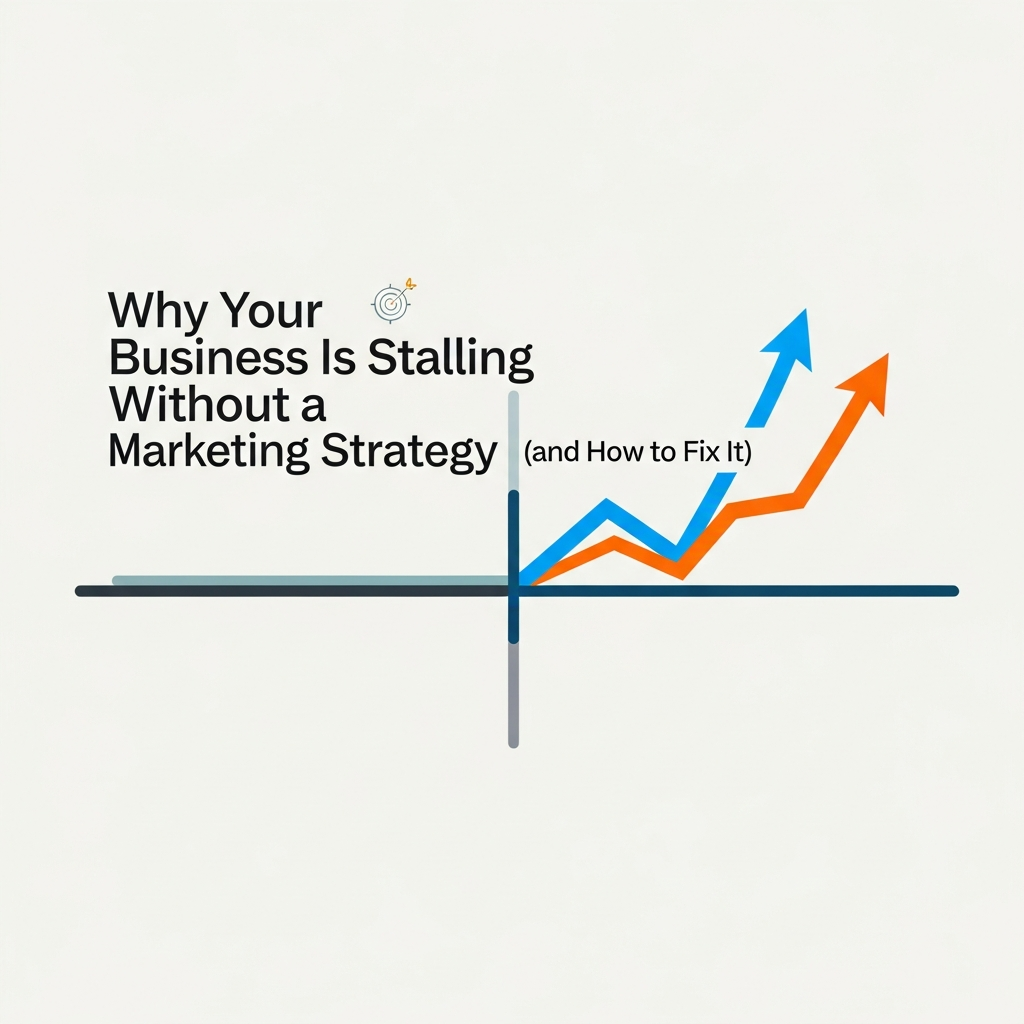
Here is the hard truth that most agencies won’t tell you: Your business isn’t failing because of your product. It’s stalling because you don’t have a digital marketing strategy. You have a collection of random acts of marketing, and in a saturated digital landscape, “random” is just another word for “expensive.”
In this guide, we’re going to dismantle the “spray and pray” approach that is draining your bank account and rebuild a cohesive, high-performance engine that actually scales. If you’re tired of plateauing, read on.

The Difference Between Tactics and Strategy (And Why It Matters)
Most business owners confuse tactics with strategy. They say, “Our strategy is to run Facebook ads,” or “Our strategy is to post three times a week on Instagram.” Those aren’t strategies. Those are delivery mechanisms. Those are the tires on a car; they are useless without an engine, a steering wheel, and a destination.
A true digital marketing strategy is a comprehensive blueprint that aligns your business goals with the specific behaviors of your target audience across every digital touchpoint. It’s about the “Why” and the “Who” before you ever touch the “How.” When you lack this blueprint, you suffer from fragmented brand messaging, wasted ad spend, and a total lack of attribution. You end up guessing what works instead of knowing what works.
“Strategy without tactics is the slowest route to victory. Tactics without strategy is the noise before defeat.” — Sun Tzu
If you feel like you’re just making noise, it’s time to stop. Let’s look at the symptoms of a stalling business and how to reverse the damage.
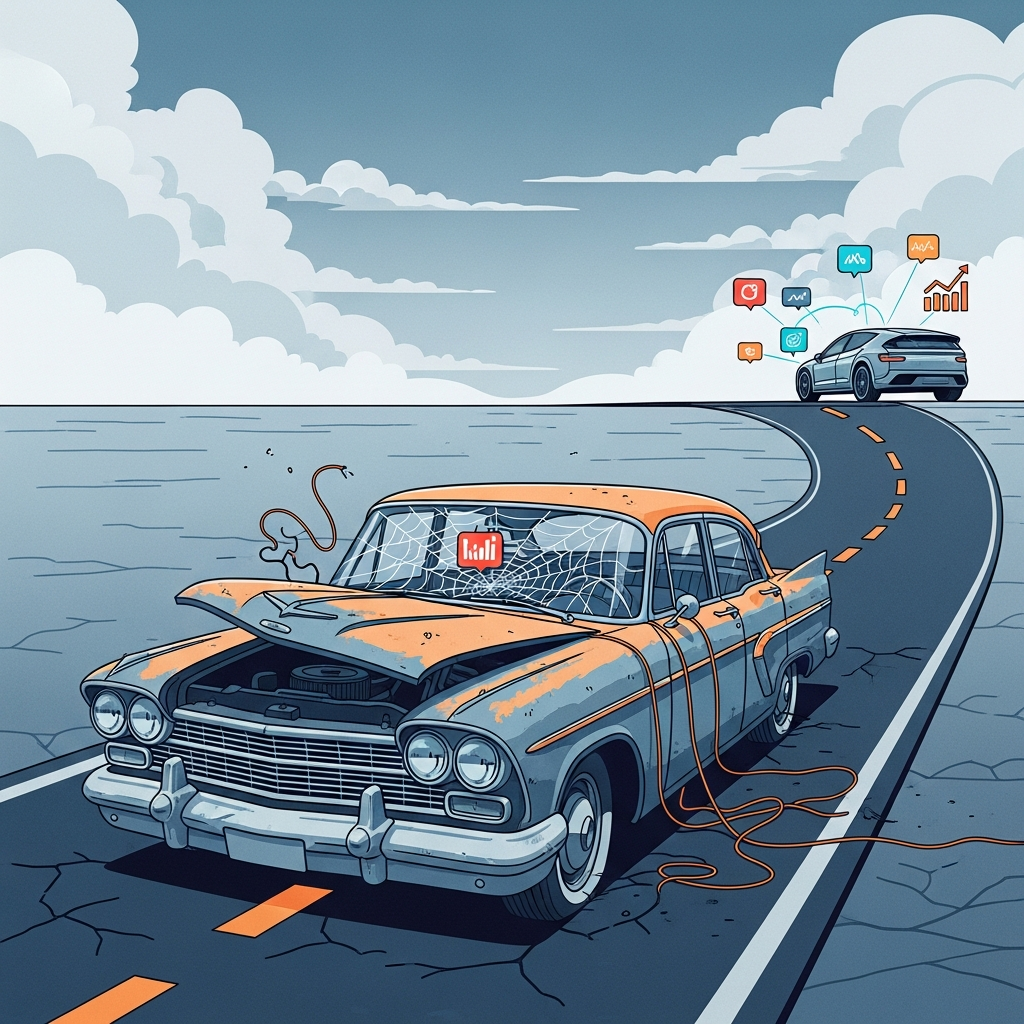
Symptom 1: You’re Attracting the Wrong Kind of Traffic
If your traffic is up but your revenue is flat, you have a relevance problem. You might be ranking for keywords that have nothing to do with your bottom line, or your social media content might be attracting “lookie-loos” rather than buyers. This is the hallmark of a business that hasn’t defined its Ideal Customer Profile (ICP).
How to Fix It: Deep-Dive Audience Segmentation
Stop thinking about your audience in terms of vague demographics like “Women, ages 25-45.” That’s too broad to be useful. Instead, you need to build psychographic profiles. Ask yourself:
- What keeps them awake at 2:00 AM? What are their primary anxieties?
- What does their “dream state” look like? Where do they want to be in six months?
- Where do they consume information? Are they on Reddit looking for raw truth, or LinkedIn looking for professional growth?
- What are their objections? Why would they say “no” to you right now?
By narrowing your focus to a specific “Hero” persona, your messaging becomes a magnet. You stop trying to speak to everyone and start speaking to the person who actually has a credit card in their hand ready to solve a problem.

Symptom 2: The “Ghost Town” Website (Zero Engagement)
You’ve spent thousands on a beautiful UI/UX, but your bounce rate is over 80%. People land on your page, look around for three seconds, and vanish. This usually happens because your website is a digital brochure rather than a conversion machine.
How to Fix It: Conversion Rate Optimization (CRO) and Value Exchange
In 2024, nobody wants to “Contact Us” or “Sign Up for Our Newsletter.” Those are low-value asks. You need to provide immediate, tangible value in exchange for their attention. This is where your content strategy meets your website architecture.
Step 1: The Three-Second Test. When someone lands on your site, can they tell exactly what you do, who you do it for, and what the next step is within three seconds? If not, rewrite your H1 headers immediately.
Step 2: Lead Magnets that Actually Solve Problems. Create high-value assets—calculators, whitepapers, templates, or exclusive video audits. If you’re a B2B firm, offer a “Competitor Gap Analysis.” If you’re B2C, offer a “Style Guide for Your Specific Body Type.” Give away your best secrets for free to earn the right to sell the solution later.
>Symptom 3: High Ad Spend, Low ROAS
The days of “set it and forget it” Facebook or Google ads are dead. The algorithms have changed, privacy laws (like iOS 14+) have nuked traditional tracking, and consumer skepticism is at an all-time high. If you are just pointing ads at a product page and hoping for a 4.0 ROAS, you are likely losing money every single day.
How to Fix It: The Full-Funnel Advertising Model
You cannot treat a stranger like a repeat customer. Your digital marketing strategy must account for the different stages of the buyer’s journey:
- Top of Funnel (TOFU): Awareness. Use video ads or educational blog content to introduce the problem your audience has. Don’t ask for the sale here. Ask for the “click” or the “view.”
- Middle of Funnel (MOFU): Consideration. Re-target people who engaged with your TOFU content. Show them case studies, testimonials, and “How-To” guides. Position yourself as the expert.
- Bottom of Funnel (BOFU): Decision. This is where you bring out the heavy hitters—discount codes, limited-time offers, or free trials.
By moving prospects through a logical progression, you lower your Cost Per Acquisition (CPA) because you’ve built trust before you ever asked for the money.
>The Power of Search Engine Optimization (SEO) Beyond Keywords
If your SEO strategy is still just “stuffing keywords into 500-word blog posts,” you are invisible to Google. Modern SEO is about Topical Authority and User Intent. Google doesn’t just want to find a word; it wants to provide the best possible answer to a question.
How to Fix It: The Pillar-and-Cluster Model
Instead of writing random articles, create “Pillar Pages”—massive, 3,000+ word guides that cover a broad topic in depth (like this one). Then, create “Cluster Content”—shorter posts that deep-dive into specific sub-topics and link back to the pillar.
For example, if you sell high-end coffee equipment, your Pillar Page might be “The Ultimate Guide to Home Brewing.” Your clusters might be “The Best Water Temperature for French Press,” “How to Grind Beans for Espresso,” and “Burr vs. Blade Grinders.” This structure tells Google you are an authority on the entire subject, not just someone chasing a single keyword.
>Social Media: Moving from Broadcasting to Community
Most businesses use social media as a megaphone. They post “Buy our product!” every three days and wonder why their engagement is zero. Social media platforms are built for socializing, not for advertisements. If your strategy doesn’t include a plan for engagement, you’re just screaming into a void.
How to Fix It: The 80/20 Rule of Content
80% of your content should be purely educational, entertaining, or inspiring. Only 20% should be promotional. You need to become a “media company” that happens to sell a product.
Use short-form video (Reels, TikTok, Shorts) to show the “behind the scenes” of your business. Humanize your brand. Show the mistakes you made, the team behind the product, and the real-world results your clients are getting. When you build a community, you don’t have to fight for attention; your audience will give it to you voluntarily.
>The Missing Link: Data and Attribution
The biggest reason businesses stall is that they don’t know what’s actually working. They see 100 sales and have no idea if they came from an email, a Google search, or a random tweet. If you can’t measure it, you can’t scale it.
How to Fix It: Setting Up a Modern Tracking Stack
You need more than just “standard” Google Analytics. To get a clear picture of your digital marketing performance, you need:
- GA4 with Enhanced Measurement: Track scroll depth, video engagement, and file downloads automatically.
- UTM Parameters: Every single link you post—whether in an email, on social media, or in a guest post—must have a UTM tag. This tells you exactly where your traffic is coming from.
- Heatmaps (Hotjar/Clarity): See exactly where people are clicking (and where they aren’t). This identifies friction points on your website that are killing conversions.
- Marketing Efficiency Ratio (MER): Instead of just looking at ROAS on individual platforms, look at your total marketing spend divided by your total revenue. This gives you the “big picture” of your business health.
>The Roadmap to Recovery: A 90-Day Execution Plan
Knowing what’s wrong is only half the battle. Here is how you fix your digital marketing strategy in the next 90 days:
Days 1-30: The Audit and Foundation Phase
Stop all non-performing ad spend. Audit your existing content to see what’s getting traffic and what’s dead weight. Update your ICP and ensure your website messaging is crystal clear. Set up your tracking so you have a baseline of data that isn’t corrupted by bots or internal traffic.
Days 31-60: The Content and Funnel Phase
Build your first major Pillar Page. Create three high-value lead magnets. Map out a 5-email automated “Welcome Series” that nurtures new leads from “Who are you?” to “I need this.” Start your full-funnel ad campaign with a small test budget to gather data on which hooks resonate most with your audience.
Days 61-90: The Optimization and Scaling Phase
Look at your data. Which ads had the highest click-through rate? Double down on those. Which emails had the highest open rates? Use those subject lines in your future campaigns. Now that you have a predictable system for turning strangers into leads and leads into customers, you can safely increase your budget to scale.
>Conclusion: The Cost of Doing Nothing
The digital landscape is more competitive than it has ever been. Your competitors are not just the people selling similar products; your competitors are every distraction, every notification, and every other brand fighting for your customer’s limited attention.
Continuing without a digital marketing strategy is like trying to cross the ocean in a rowboat without a compass. You’re working hard, but you’re likely just going in circles.
Stop stalling. Take the time to build a strategy that is rooted in data, centered on your customer, and designed for long-term growth. The “secret sauce” isn’t a magical algorithm or a secret keyword—it’s a cohesive plan that works while you sleep. Build it, and the growth will follow.