
Scaling a brand in the mid-2020s feels a bit like trying to build a skyscraper during an earthquake. The ground is shifting, the tools are evolving, and the very definition of “visibility” is being rewritten by algorithms that change faster than a seasonal fashion line. If you are still operating on the 2018 playbook of “buy some Facebook ads and write a few SEO blogs,” you aren’t just behind the curve; you are practically invisible.
True scaling today isn’t just about growth. Growth is linear; scaling is exponential. Growth means you are adding resources at the same rate you are adding revenue. Scaling means you are leveraging digital systems to explode your brand visibility and market share while your costs remain relatively tethered. This is the revolution. We are moving away from the era of “brute force marketing” and into the era of “algorithmic synergy.”

The Paradigm Shift: From Reach to Resonance
For decades, marketing was a game of “how many eyeballs can I buy?” It was a sheer volume play. But the digital landscape has become saturated. We are bombarded with upwards of 10,000 advertisements every single day. The human brain has developed a sophisticated “digital blindness” to traditional outreach. In this environment, reach is cheap, but resonance is priceless.
Modern brand visibility is no longer about being everywhere; it is about being in the right place at the moment of highest intent. Digital marketing has transitioned from a megaphone to a laser-guided missile. To scale today, you must understand that the “Future of Scaling” relies on three core pillars: Data Intelligence, Hyper-Personalization, and Community Moats.
The Death of the Traditional Marketing Funnel
The old funnel—Awareness, Interest, Desire, Action—is dying. In its place, we have the “Messy Middle,” a term coined by Google researchers to describe the complex space between trigger and purchase where consumers are won and lost. Digital marketing revolutionizes visibility here by providing “information gain.”
The brands that scale are not those with the biggest budgets, but those that provide the most utility within the decision-making loop. If you can help a customer navigate the noise, you don’t just get a click; you get a conversion.
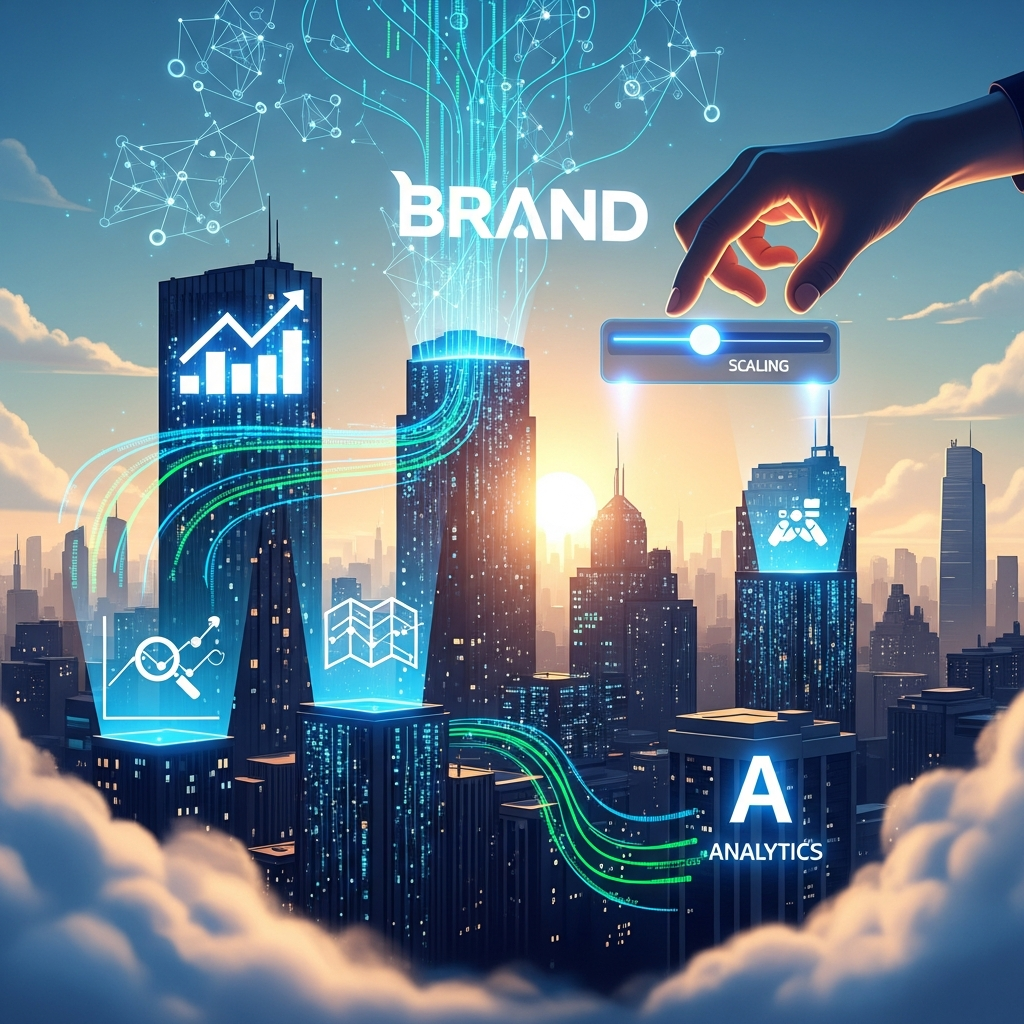
The Algorithmic Engine: How AI and Machine Learning Dictate Visibility
If you want to understand the future of scaling, you have to understand the algorithm. Whether it’s Google’s Search Generative Experience (SGE), TikTok’s Recommendation Engine, or Meta’s Advantage+ campaigns, the machines are now the gatekeepers of visibility. Scaling today requires “Algorithm Optimization,” which is fundamentally different from traditional SEO.
Predictive Analytics: We are moving from reactive marketing to predictive scaling. Elite brands are now using machine learning to predict which customers have the highest Lifetime Value (LTV) before they even make a second purchase. By feeding this data back into advertising platforms, brands can “train” the algorithm to find more high-value users, effectively scaling visibility among the 1% of the population that will drive 80% of the revenue.
Creative as the New Targeting: In the past, media buyers spent hours tweaking interests and demographics. Today, the algorithm handles that. The “levers” have shifted. Visibility is now driven by creative resonance. If your video content stops the scroll, the algorithm rewards you with lower costs and higher reach. In the future of scaling, your creative team is your most important data department.
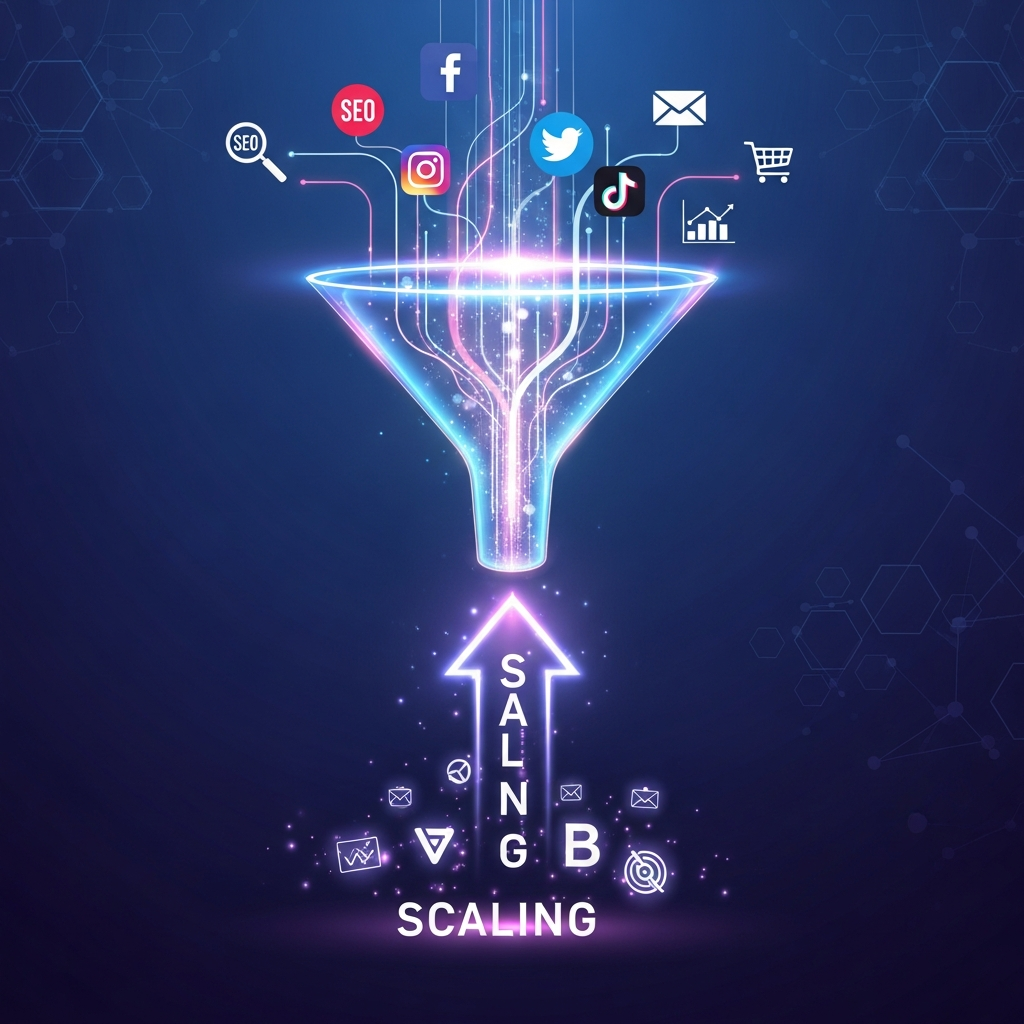
Building the “Invisible” Scale: Search in the Age of AI
Search Engine Optimization is undergoing its most radical transformation since the advent of the internet. With the rise of Large Language Models (LLMs), people are no longer just searching for keywords; they are asking complex questions. To maintain brand visibility, you have to move beyond “ranking” and toward “becoming the source.”
Information Gain and Authority
Google’s recent updates emphasize E-E-A-T (Experience, Expertise, Authoritativeness, and Trustworthiness). But the secret sauce for scaling in the future is Information Gain. If your content simply parrots what every other blog says, the AI will synthesize that info and provide an answer on the search page, meaning the user never clicks through to your site.
To scale visibility, your brand must produce “primary-source content”—original research, unique case studies, and contrarian viewpoints. You must provide information that doesn’t exist elsewhere in the training data of the LLMs. This makes your brand an indispensable node in the digital knowledge graph.
>The Multi-Channel Ecosystem: Synergy Over Silos
The biggest mistake brands make when trying to scale is treating their digital channels as independent silos. They have an “SEO guy,” a “Facebook girl,” and an “Email person.” This is a recipe for stagnation. Scaling requires a holistic ecosystem where each channel feeds the other.
- Short-Form Video as a Discovery Engine: Use TikTok, Reels, and YouTube Shorts to cast a wide net and capture “top-of-mind” awareness.
- Email and SMS as a Retention Fortress: Once visibility is captured, it must be “owned.” Relying on third-party platforms for visibility is “renting” your audience. Scaling happens when you move users from rented media to owned media.
- Retargeting as a Conversion Catalyst: Use the data from your discovery engine to serve hyper-specific mid-funnel content that addresses the specific objections of your prospects.
This “Omnichannel” approach ensures that once a potential customer sees your brand, they continue to see it across every digital touchpoint, creating an illusion of omnipresence. For a scaling brand, being “everywhere” to a specific niche is far more effective than being “nowhere” to the entire world.
>Psychological Triggers and the Nuance of Modern Branding
Scaling isn’t just about technical prowess; it’s about human psychology. As we move further into a digital-first world, the brands that win are those that feel “human.” This is the great irony of digital marketing: the more we use AI, the more we value the authentic.
The Power of Social Proof 2.0
A basic testimonial is no longer enough. To scale visibility, you need User-Generated Content (UGC) and Creator Partnerships. Consumers trust other consumers and their favorite creators more than they trust any corporate advertisement. By leveraging the existing trust and visibility of creators, brands can “piggyback” on established communities, bypassing the years it would take to build that trust from scratch.
The Halo Effect: When a respected voice in a niche mentions your brand, that visibility comes with an immediate transfer of authority. This isn’t just marketing; it’s social currency. Scaling visibility in the future involves managing a network of hundreds of micro-influencers rather than one or two celebrities.
>Unit Economics: The Math Behind the Visibility
You cannot scale what you cannot measure. The “Future of Scaling” is deeply rooted in unit economics. Too many brands focus on “Vanity Metrics”—likes, followers, and even raw traffic. These mean nothing if the unit economics don’t make sense.
To truly revolutionize your visibility, you must master the LTV/CAC Ratio. Customer Acquisition Cost (CAC) is the price you pay for visibility that leads to a sale. Lifetime Value (LTV) is the total profit that customer brings over time.
The Scaling Threshold: Generally, an LTV/CAC ratio of 3:1 is considered the minimum for healthy growth. However, the brands that “revolutionize” their industries often aim for 5:1 or higher. They achieve this by using digital marketing to lower CAC through better targeting and higher conversion rates, and by increasing LTV through sophisticated post-purchase email flows and loyalty programs.
If you can afford to pay more than your competitors to acquire a customer, you will eventually own the market. Digital marketing scaling is essentially a battle of who has the most efficient conversion engine.
>The Role of First-Party Data in a Cookieless World
The “Death of the Cookie” is a phrase that has haunted digital marketers for years. With Apple’s ATT (App Tracking Transparency) and the phasing out of third-party cookies, the old ways of tracking visibility are crumbling. The future of scaling belongs to those who own their data.
First-Party Data Strategy: Brands must create “value exchanges” to get users to share their information voluntarily. This could be through high-value lead magnets, interactive quizzes, or exclusive communities. Once you have this data, you can build “Lookalike Audiences” that are far more accurate than any third-party data could ever provide. This allows you to scale visibility with surgical precision, even in a privacy-first world.
>Emerging Technologies: The Next Frontier of Visibility
We cannot talk about the future without mentioning the “next big things.” While some may seem like buzzwords, their impact on brand visibility is inevitable.
Augmented Reality (AR) and Interactive Shopping
Imagine a customer being able to “place” your product in their living room via their smartphone camera before they buy it. AR isn’t just a gimmick; it’s a massive friction-reducer. Reducing friction is the key to scaling. The more “visible” a product’s utility is in the customer’s actual life, the higher the conversion rate. Brands like IKEA and Sephora are already scaling this technology to dominate their sectors.
The Metaverse and Virtual Presence
While the “Metaverse” has had its ups and downs in the hype cycle, the underlying trend is clear: we are spending more time in immersive digital environments. Brands that establish visibility in these virtual spaces—through digital goods, virtual events, or immersive storytelling—will have a first-mover advantage with the next generation of consumers (Gen Alpha), for whom the digital and physical worlds are essentially one and the same.
>Common Scaling Pitfalls (And How to Avoid Them)
Scaling is dangerous. If you scale a broken process, you simply break it faster. Here are the most common traps brands fall into when trying to revolutionize their visibility:
- The Content Treadmill: Producing high volumes of low-quality content. This hurts your brand equity and dilutes your visibility. Quality always trumps quantity in the eyes of modern algorithms.
- Ignoring Retention: If your bucket is leaky, pouring more water (visibility) into it won’t help. You must have a retention strategy in place before you hit the “scale” button on your ads.
- Over-Reliance on a Single Platform: If 90% of your visibility comes from Instagram, you don’t have a business; you have a platform dependency. Diversity is the key to resilient scaling.
- Losing the Brand Voice: As brands scale, they often become “corporate” and boring. The “humanity” that got them their first 1,000 customers is lost. Maintaining a distinct, punchy, and authoritative voice is essential as you grow.
>The Invisible Engine: Automation and Operations
True scaling happens behind the scenes. You can have the best digital marketing in the world, but if your operations can’t handle the influx of visibility, you will collapse. The “Future of Scaling” involves the heavy use of Marketing Automation.
From automated lead nurturing to AI-driven customer service chatbots that handle 80% of inquiries, these tools allow a small team to manage a massive brand presence. Automation ensures that no lead falls through the cracks and that every customer gets a consistent experience, regardless of how fast the brand is growing. In the digital age, your “visibility” is only as good as your “delivery.”
>Conclusion: The New Era of Visibility
The future of scaling is not about spending more; it’s about thinking more. It’s about leveraging the incredible power of AI and data while doubling down on the very things that make us human: storytelling, community, and trust. Digital marketing has evolved from a simple support function into the primary engine of brand value.
As we move forward, the line between “marketing” and “product” will continue to blur. Your visibility will be a direct reflection of the value you provide to the digital ecosystem. If you can master the balance between algorithmic precision and creative resonance, the potential for scale is virtually limitless. The revolution isn’t coming; it’s already here. The only question is: is your brand ready to be seen?
Key Takeaways for Immediate Scaling:
- Audit your data: Are you collecting first-party data, or are you at the mercy of the platforms?
- Analyze your Information Gain: Are you saying something new, or just adding to the noise?
- Tighten your Unit Economics: Know your LTV/CAC numbers like the back of your hand.
- Humanize your Brand: Use creators and UGC to build a moat of trust around your visibility.
Scaling in the digital age is a marathon run at the speed of a sprint. It requires constant adaptation, a relentless focus on the customer, and a willingness to discard what worked yesterday in favor of what will work tomorrow. That is how you revolutionize brand visibility. That is how you win.