Small Business Growth Hacks: How to Double Your Revenue on a Budget

The entrepreneurial dream is often sold as a series of high-gloss snapshots: the Series A funding round, the sleek glass office, and the “hockey stick” growth curve. But for the vast majority of small business owners, the reality is far more grounded in the grit of bootstrapping. When you are operating without a venture capital war chest, “growth” isn’t just a metric—it is a survival imperative. Doubling your revenue on a shoe-string budget requires more than just hard work; it demands a radical reimagining of your leverage points.

Most businesses fail not because they lack a good product, but because they succumb to the “Leaky Bucket” syndrome. They spend agonizing amounts of time and money pouring new leads into the top of the funnel while their existing value evaporates through poor retention, stagnant pricing, and inefficient conversion. To double your revenue without doubling your expenses, you must pivot from a mindset of acquisition at all costs to one of maximum yield per touchpoint.
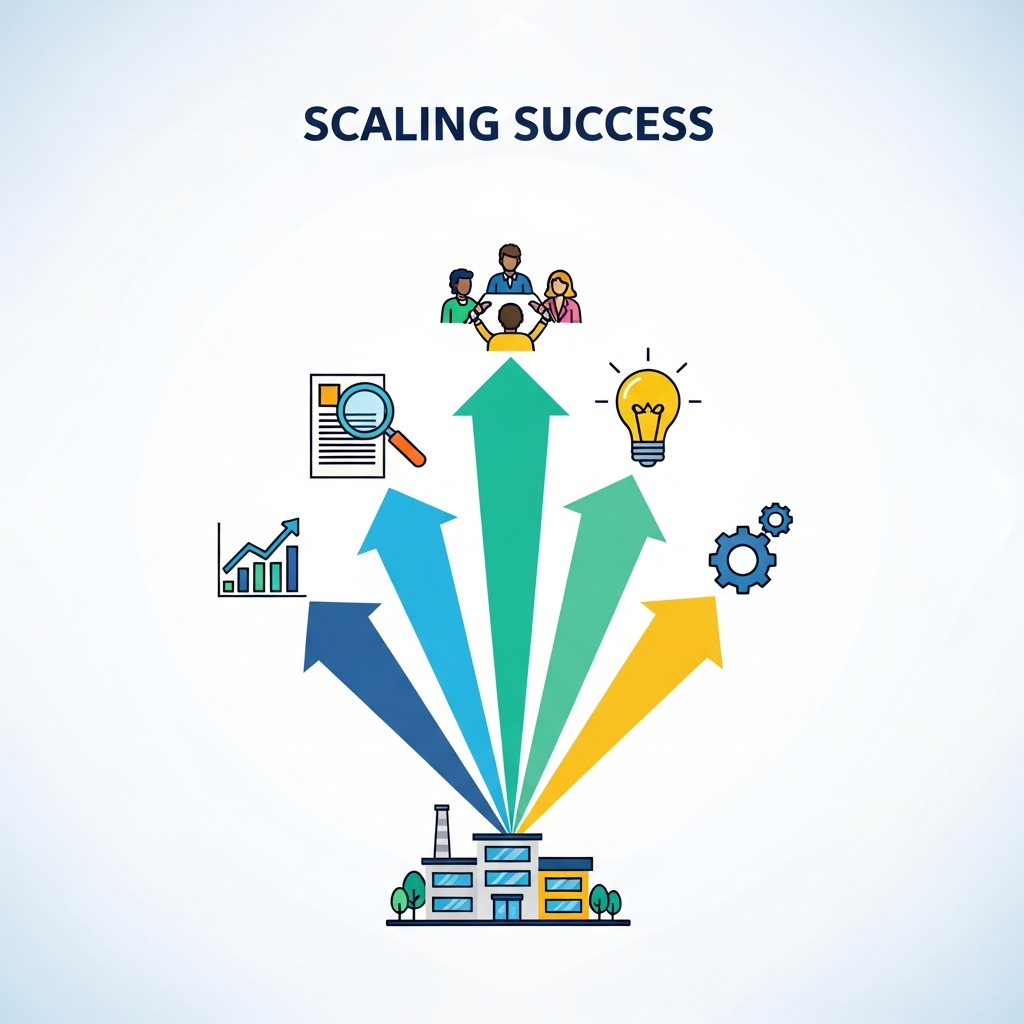
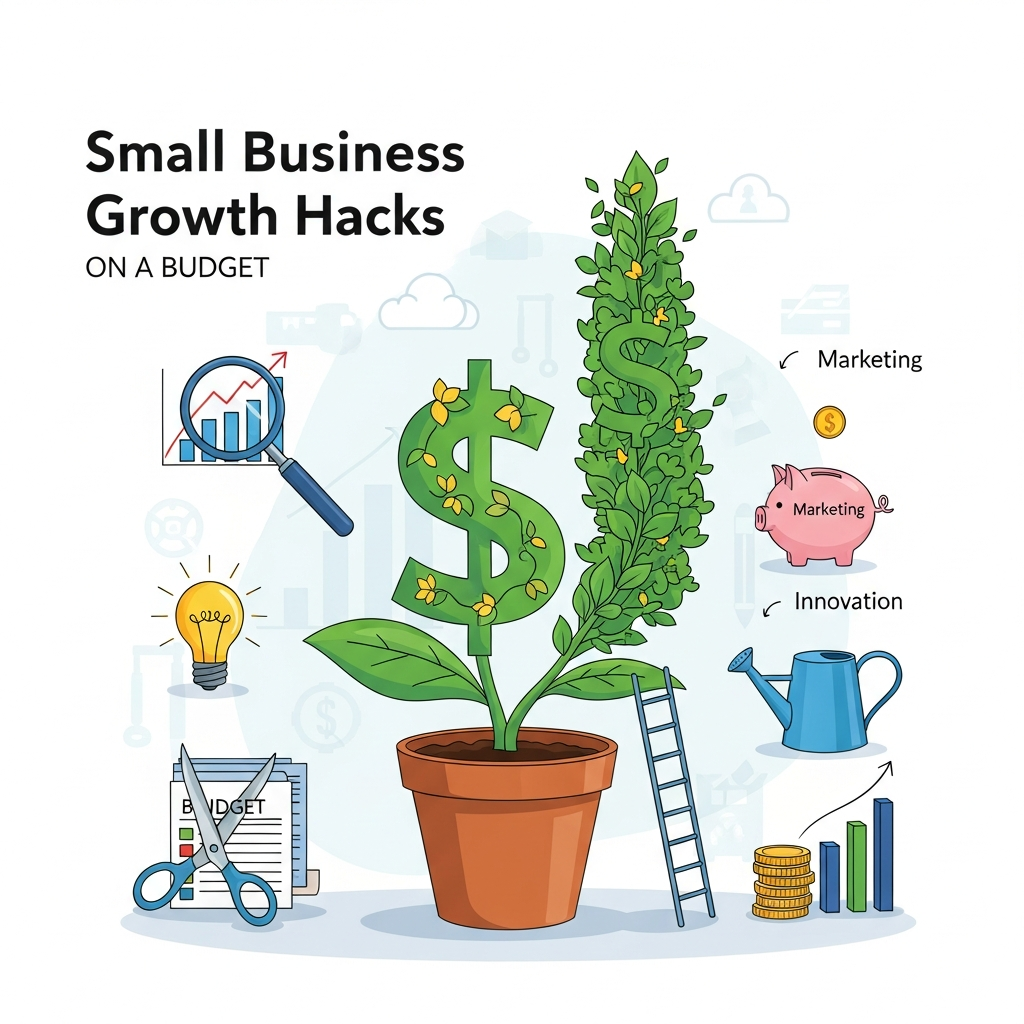
Visual for Small Business Growth Hacks: How to Double Your Revenue on a Budget

The Geometric Growth Formula: Moving Beyond Linear Thinking

Most business owners think of growth as a linear equation: if I want 2x the revenue, I need 2x the customers. This is the most expensive way to grow. Instead, elite strategists use the Jay Abraham model of geometric growth. There are only three ways to grow any business: increase the number of total clients, increase the average transaction value, and increase the frequency of repurchase.

If you increase each of these three variables by just 25%, the cumulative effect isn’t a 25% increase in revenue—it is nearly a 100% increase. This is the “growth hack” that requires zero additional ad spend. It requires optimization of the systems you already have in place. By focusing on these incremental gains across the board, you bypass the need for a massive marketing budget and instead build a compounding revenue machine.
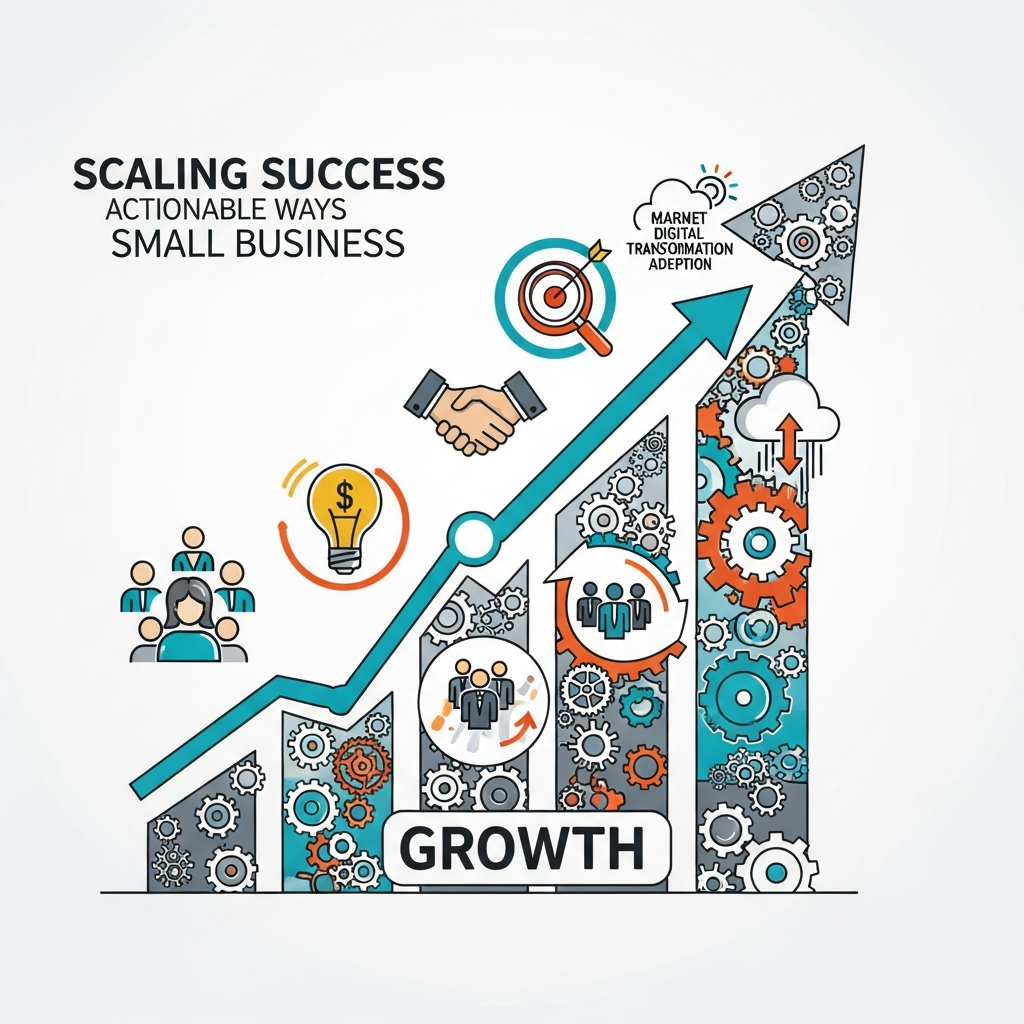
Visual for Small Business Growth Hacks: How to Double Your Revenue on a Budget

1. Conversion Rate Optimization (CRO): Plugging the Leaks

Before you spend a single dollar on increasing traffic, you must ensure your current traffic is actually converting. If your website has a 1% conversion rate and you double your traffic, you have doubled your revenue—but you have also doubled your acquisition costs. If, however, you improve your conversion rate from 1% to 2%, you have doubled your revenue without spending an extra dime on ads.

The Psychology of Frictionless UX

Conversion is often a battle against friction. Friction is anything that causes a potential customer to hesitate. To identify friction, you don’t need expensive consultants; you need data. Tools like Hotjar or Microsoft Clarity (which has a robust free tier) allow you to watch session recordings. Are users clicking on images that aren’t links? Are they abandoning their carts at the shipping calculator? Reducing the number of fields in your contact form from five to three can often result in a 20% lift in submissions overnight.

High-Velocity A/B Testing

In the journalistic world of copywriting, we know that the headline is 80% of the value. The same applies to your landing pages. Use a simple tool like Google Optimize to test two different headlines. One should focus on the benefit (“Get More Leads Today”) and the other on loss aversion (“Stop Losing Leads to Your Competitors”). You will often find that one resonates significantly better, effectively lowering your cost per acquisition through sheer linguistic efficiency.
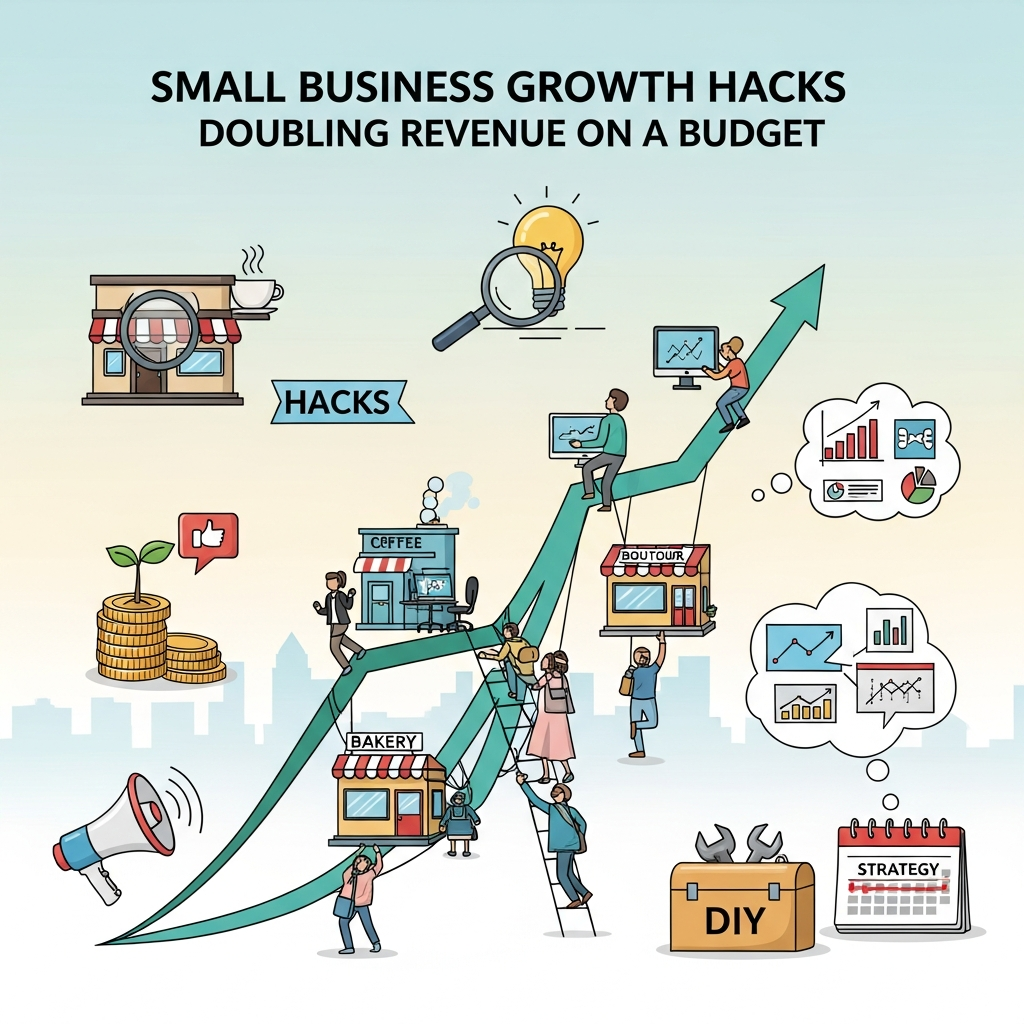
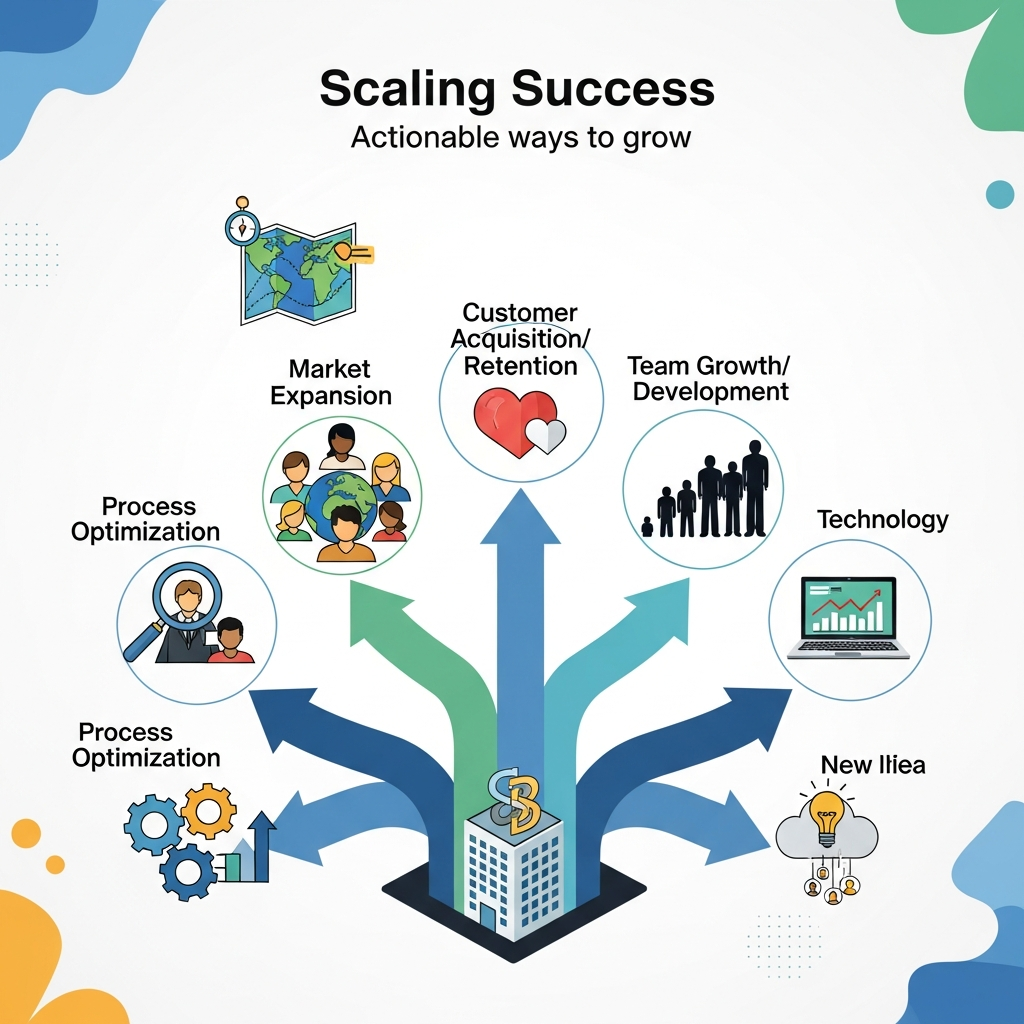
Visual for Small Business Growth Hacks: How to Double Your Revenue on a Budget

2. Leveraging Micro-Influencer Arbitrage

The era of the celebrity influencer is waning for small businesses. Their rates are astronomical, and their audiences are too broad. The real growth hack in 2024 and beyond lies in micro-influencer arbitrage. These are creators with 5,000 to 50,000 followers who command hyper-niche, high-trust communities.

“Trust is the new currency of the digital economy. A recommendation from a niche expert is worth a thousand banner ads.”

Instead of paying for a post, offer these creators an affiliate model or “product-for-post” arrangement. Because these creators are often looking to build their own portfolios, they are more willing to work on performance-based incentives. This aligns your costs directly with your revenue. If they don’t sell, you don’t pay. When they do sell, the cost is a percentage of a sale you wouldn’t have otherwise had. This is infinitely scalable and carries almost zero financial risk.
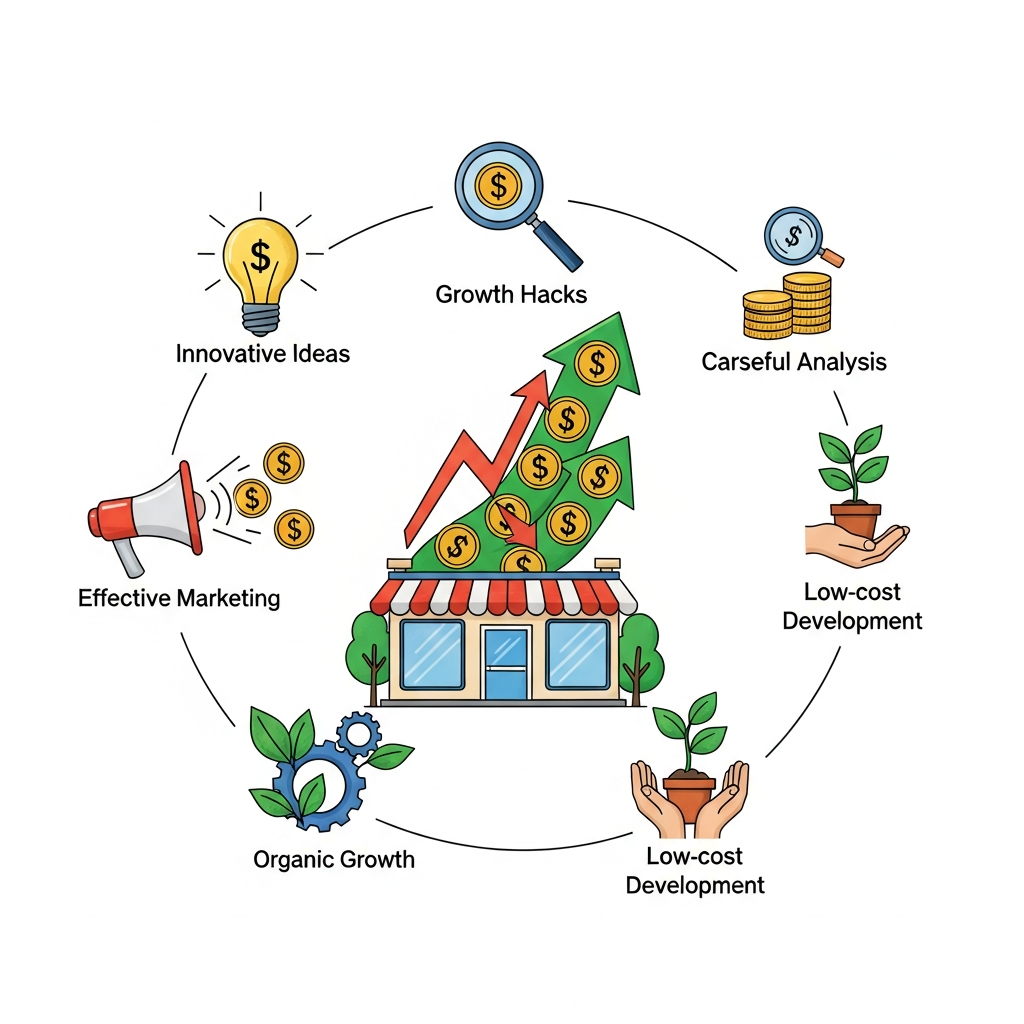
Visual for Small Business Growth Hacks: How to Double Your Revenue on a Budget

3. The “Invisible” Revenue: Maximizing Customer Lifetime Value (LTV)

The most expensive sale you will ever make is the first one. The profit in any business is found in the second, third, and tenth transaction. If you want to double your revenue, you must stop treating your customers like a one-off transaction and start treating them like a long-term asset.

The Art of the Upsell and Cross-Sell

Analyze your customer journey. At what point are they most excited? Usually, it is immediately after the purchase. This is the “Golden Window.” Implementing a one-click upsell—a complementary product offered immediately after the initial checkout—can increase your average order value (AOV) by 15-30% instantly. Amazon didn’t become a titan through innovation alone; they did it through the “Customers who bought this also bought…” algorithm.

Predictive Re-engagement

If you sell a consumable product or a service that needs renewal, don’t wait for the customer to remember you. Use your CRM data to predict when they are running low or when their interest might be waning. An automated email sent at day 45 of a 60-day supply, offering a “loyalty discount” if they reorder now, creates a predictable revenue stream that requires no manual intervention.
Visual for Small Business Growth Hacks: How to Double Your Revenue on a Budget

4. Strategic Partnerships: Borrowing Other People’s Audiences (OPA)

One of the fastest ways to double your revenue is to find a business that has already spent years building a relationship with your ideal customer—and then find a way to provide value to them. This is the concept of Other People’s Audiences.

Identify non-competing businesses that share your target demographic. If you are a high-end pet groomer, partner with a local boutique veterinarian or an organic pet food supplier. Create a “Welcome Package” for their new clients that includes a significant discount for your services. In return, you offer their customers exclusive value that makes the partner look like a hero. You gain access to a pre-vetted, high-trust list of leads for the cost of a few printed vouchers or a co-branded email.

>5. Content Marketing as a Compending Asset

Paid ads are like a faucet: when you stop paying, the water stops flowing. Content marketing is like planting an orchard: it takes time to grow, but once it does, it yields fruit for years with minimal maintenance. To double revenue on a budget, you must stop “blogging” and start creating Programmatic SEO assets.

Solving for Intent

Don’t write about what you do; write about the problems your customers are desperately trying to solve at 2:00 AM. Use tools like AnswerThePublic to find the exact questions people are asking. If you are a plumber, don’t just write “Best Plumber in Chicago.” Write “How to fix a leaking PVC pipe under a kitchen sink.” By solving their problem for free, you build the ultimate authority. When they eventually have a problem they can’t fix themselves, you are the only person they will call.

The Power of Video Repurposing

Creating content is time-consuming. Maximize your ROI by using the “Pillar and Post” method. Record one long-form, high-value video (10 minutes) addressing a core industry pain point. Use AI tools to chop that video into ten TikToks/Reels, three LinkedIn posts, and one comprehensive blog post. You have now populated your entire marketing ecosystem for a week from a single hour of effort. This is how small teams project the presence of a global corporation.

>6. Psychological Pricing and Tiered Options

Pricing is the most powerful lever in your business, yet it is often the one most neglected. Most small business owners price based on their costs or their competitors. Elite copywriters price based on perceived value.

The Decoy Effect

If you offer two options—a basic service for $500 and a premium service for $1,500—most people will choose the $500 option because the jump feels significant. However, if you introduce a “Decoy” option at $1,400 that has significantly fewer features than the $1,500 premium tier, the $1,500 option suddenly looks like an incredible bargain. You aren’t “selling” the premium tier; you are allowing the customer to “choose” the best value. This simple shift in pricing architecture can move your median transaction value up by 40%.

>7. Referral Loops: Turning Customers into a Sales Force

A referral is the highest-converting lead you will ever receive. Yet, most businesses leave referrals to chance. To double your revenue, you must systematize your referral process. This is often called a Viral Coefficient.

Create an “Irresistible Referral Loop.” Instead of just asking for a referral, give your current customers a “Gift Credit” they can give to a friend. For every friend who redeems the credit, the original customer gets a credit for themselves. This creates a win-win-win scenario. Dropbox grew to a multi-billion dollar valuation using this exact hack: “Give space, get space.” It works just as well for a local landscaping business or a boutique SaaS platform.

>8. High-Perplexity Email Marketing: The Anti-Newsletter

The traditional “monthly newsletter” is dead. Nobody wants a PDF of your company updates. What they want is curated, high-value insight. To drive revenue through email, you must move toward behavior-based automation.

If a user visits your pricing page three times but doesn’t buy, that should trigger an automated “Is everything okay?” email from the founder. These emails should be plain-text, appearing as if they were typed manually. This “human-centric” automation has a much higher response rate than glossy, HTML-heavy marketing emails. It initiates a conversation, and in small business, conversations lead to conversions.

>9. Operational Efficiency: Scaling Without Hiring

Doubling revenue often breaks businesses because they try to scale their manual labor. To keep your budget intact, you must scale your systems. This is where the modern SME can outcompete larger incumbents.

The No-Code Revolution

Use tools like Zapier or Make to connect your disparate apps. If a lead fills out a form, Zapier should automatically add them to your CRM, send them a personalized introductory text message, and notify your sales team in Slack. By automating the administrative “drudge work,” you free up your time—or your staff’s time—to focus on high-value revenue-generating activities like closing deals or innovating products.

>10. The Power of “No”: Niche Down to Scale Up

It sounds counterintuitive, but the fastest way to double your revenue is often to fire half of your clients. Small businesses often get trapped in the “Generalist Trap,” taking any client who can pay. This leads to specialized workflows for every project, which destroys your margins.

By narrowing your focus to a specific niche—for example, instead of “Digital Marketing,” you do “SEO for Pediatric Dentists”—you can productize your service. Productization allows you to create a “factory line” for your delivery. You become faster, your results become more predictable, and you can charge a premium because you are a specialist rather than a generalist. Efficiency is the silent partner of revenue growth.

>Conclusion: The Path to 2x

Doubling your revenue on a budget isn’t about finding a single “silver bullet.” It is about the relentless pursuit of marginal gains. It is the result of tightening your conversion funnels, leveraging the trust of micro-influencers, and turning your existing customers into your most vocal advocates. It requires the discipline to look at your data and the courage to stop doing what isn’t working.

Growth is not a mystery; it is a mechanical process. When you optimize the math of your business—AOV, LTV, and Conversion—the revenue increase becomes an inevitability rather than a hope. Start with one of these hacks today, master it, and move to the next. The compounding effect will take care of the rest.
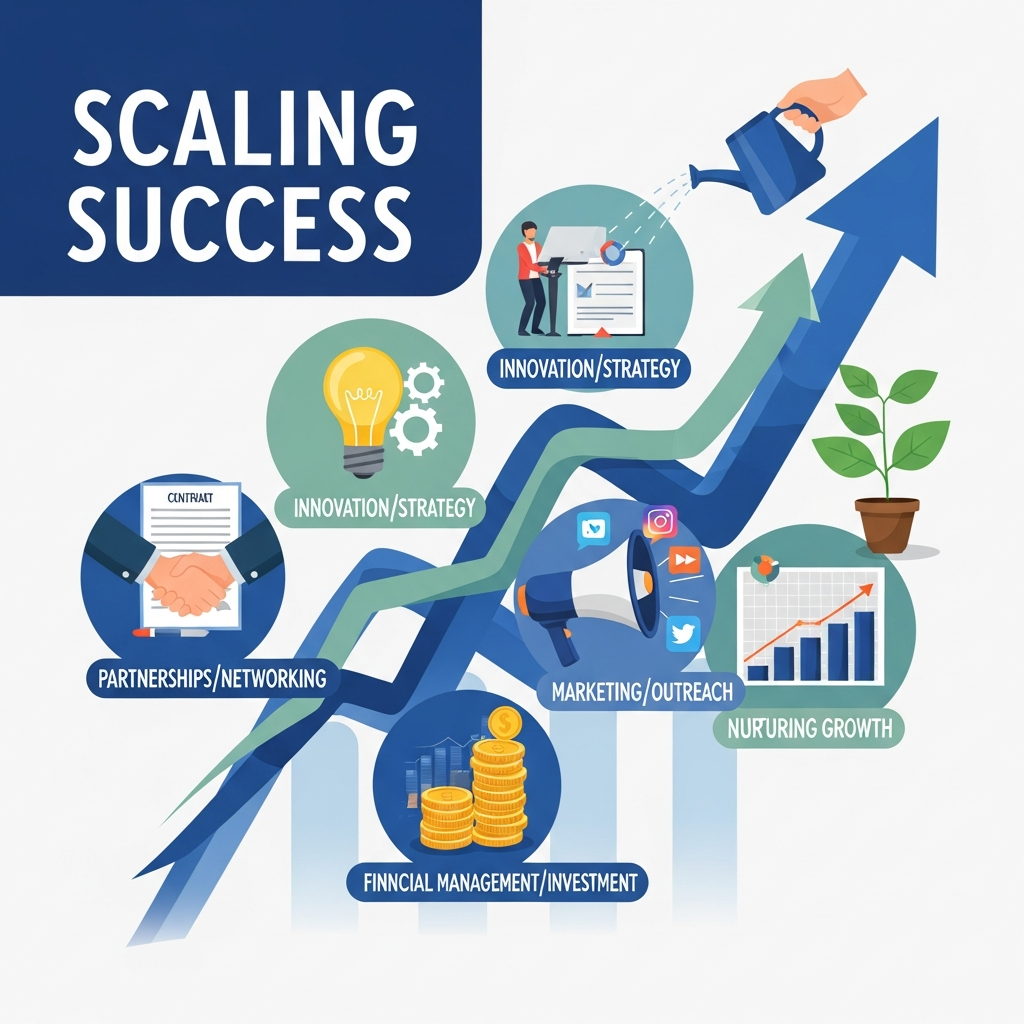
Scaling Success: 5 Actionable Ways to Grow Your Small Business Today

The transition from a “scrappy startup” to a “scalable enterprise” is less of a linear path and more of a psychological and operational chasm. Most small businesses don’t fail because they lack a good product; they fail because they attempt to grow with systems designed to keep them small. There is a fundamental, often painful distinction between growth—which is simply getting bigger—and scaling, which is the ability to increase revenue exponentially while costs increase only marginally.

In my two decades of consulting for mid-market firms and lean startups alike, I have observed a recurring pattern. Founders often find themselves trapped in the “Founder’s Paradox”: the very passion and hands-on control that built the company become the primary bottlenecks preventing its expansion. To scale, you must dismantle the version of the company that currently works to build one that can work without you.

This guide isn’t about vague “hustle” culture or platitudes. It is a technical roadmap for the business owner ready to move beyond the plateau. We will dissect five actionable, high-leverage strategies that move the needle from incremental progress to compounding success.

Visual for Scaling Success: 5 Actionable Ways to Grow Your Small Business Today

1. The Infrastructure of Autonomy: Implementing Advanced Automation

If your business processes rely on manual data entry, human memory, or the founder’s personal oversight, you aren’t running a scalable business; you’re running an elaborate job. The first pillar of scaling is the aggressive pursuit of “Infrastructure Autonomy.” This involves moving beyond basic tools and integrating a “Single Source of Truth” (SSOT) architecture.

Eliminating Technical Debt

Most small businesses suffer from “Technical Debt”—a fragmented stack of software that doesn’t talk to each other. Your CRM (Customer Relationship Management) should be the heartbeat of your operation. When a lead enters your ecosystem, the journey through the sales funnel, the onboarding process, and the eventual invoicing should be a seamless, automated handoff.

Actionable Step: Audit your “Time-to-Task” ratio. Identify any repetitive task performed by a human more than three times a week. Tools like Zapier or Make (formerly Integromat) should be utilized to bridge the gaps between your CRM, project management tools like Monday.com or Asana, and your accounting software. The goal is “Zero-Touch” data migration.

The Power of Programmatic Marketing

Scaling requires a predictable lead generation engine. You cannot rely on referrals alone, as they are not scalable. By implementing programmatic advertising and automated nurturing sequences (using platforms like Klaviyo or HubSpot), you create a “faucet” of demand that you can turn up or down based on your capacity. This moves marketing from a speculative expense to a measurable investment with a clear Return on Ad Spend (ROAS).

“Complexity is the silent killer of growth. If a process cannot be documented in a flow chart and automated by software, it is a liability to your scale.”

Visual for Scaling Success: 5 Actionable Ways to Grow Your Small Business Today

2. Transitioning from “Doer” to “Architect”: Strategic Talent Acquisition

The most difficult transition for a small business owner is the shift from being the primary value-producer to being the architect of the organization. Scaling requires you to hire for where you want to be in two years, not where you are today. This often means making “high-conviction” hires—people who are more skilled in their specific domains than you are.

The Rise of the Fractional Executive

One of the most effective ways to scale without the overhead of a massive C-suite is the use of fractional leadership. You may not need a full-time Chief Financial Officer (CFO) or Chief Marketing Officer (CMO) at $250k a year, but you absolutely need the strategic oversight they provide. Hiring fractional experts allows you to inject high-level strategy into your business at a fraction of the cost, providing the roadmap for your junior staff to execute.

Building a “Culture of Ownership”

To scale, you must move away from a “Command and Control” management style to a “Context, Not Control” framework. This involves clearly defining Key Performance Indicators (KPIs) for every role and giving employees the autonomy to reach them. When your team owns the outcome rather than just the task, the need for micromanagement vanishes, freeing up the founder to focus on high-level partnerships and market expansion.

Consider these hiring priorities for scaling:

  • Operations Manager: To build and maintain the SOPs (Standard Operating Procedures).
  • Customer Success Lead: To ensure that as you acquire more customers, the quality of service does not degrade.
  • Specialized Technicians: To offload the “craft” work from the founder’s plate.
Visual for Scaling Success: 5 Actionable Ways to Grow Your Small Business Today

3. Mastering Customer Lifetime Value (LTV) and Retention Metrics

It is a well-documented economic reality that acquiring a new customer is five to twenty-five times more expensive than retaining an existing one. Yet, many businesses focus solely on the “top of the funnel.” True scaling happens when you master the “bottom of the funnel”—the retention and expansion of your current client base.

The Mathematics of Churn

If your business loses 10% of its customers every month, you have to grow by more than 10% just to stay still. This is the “leaky bucket” syndrome. To scale, you must focus on reducing churn through proactive customer success. This means using data to predict when a customer might leave and intervening before they do. Use NPS (Net Promoter Scores) and CSAT (Customer Satisfaction) surveys to get a pulse on your health before the symptoms of decline become terminal.

Expansion Revenue: The “Upsell” Engine

Scaling is significantly easier when your average order value (AOV) increases over time. This is achieved through expansion revenue—selling more to the people who already trust you.
Strategies include:

  • Tiered Pricing Models: Offering “Good, Better, Best” options that allow customers to grow into higher service levels.
  • Cross-Selling: Identifying complementary products or services that solve the next problem your customer will face.
  • Subscription Pivots: Converting one-time sales into recurring revenue models to create predictable cash flow.

“Growth is a vanity metric; Retention is a sanity metric. You cannot scale a business that people are constantly leaving.”

Visual for Scaling Success: 5 Actionable Ways to Grow Your Small Business Today

4. Productization: Turning Services into Scalable Assets

If you run a service-based business, you are likely trading hours for dollars. This model is inherently unscalable because time is a finite resource. To scale, you must “productize” your services. This means turning a bespoke, customized offering into a standardized, repeatable product with a fixed price and a fixed delivery timeline.

Creating the “Black Box” Delivery Model

A productized service is one where the input (client data/needs) and the output (the result) are clearly defined, and the process in between is a “black box” of standardized steps. This allows you to hire lower-cost labor to execute the steps while maintaining high-quality results. It also makes your marketing much clearer; instead of saying “we do marketing,” you say “we provide a 30-day lead generation system for dental practices.”

Leveraging Intellectual Property (IP)

What knowledge does your business possess that can be packaged? Scaling often involves moving up the value chain from “doing the work” to “selling the system.” This could take the form of:

  • Online Courses or Training: Teaching others your proprietary methodology.
  • Licensing: Letting other firms use your brand or processes for a fee.
  • Software as a Service (SaaS): Building a tool that automates the problem you currently solve manually.

Productization allows for “decoupled growth,” where your revenue is no longer tied to the number of hours your team works. This is the holy grail of scaling.

Visual for Scaling Success: 5 Actionable Ways to Grow Your Small Business Today

5. Financial Engineering and Strategic Capital Allocation

Scaling requires fuel, and that fuel is capital. Many small business owners are “profit-focused” when they should be “cash-flow focused.” You can be profitable on paper and still go bankrupt during a growth spurt because your cash is tied up in accounts receivable or inventory. Financial engineering is the art of managing these cycles to fund your expansion.

Optimizing the Cash Conversion Cycle (CCC)

The Cash Conversion Cycle measures how fast a dollar spent on expenses returns to your pocket as revenue. To scale effectively, you need to shorten this cycle. This might involve:

  • Changing Billing Terms: Moving from “Net 30” to “Payment Upfront” or “50% Deposit.”
  • Inventory Management: Using “Just-in-Time” (JIT) methods to reduce the amount of capital sitting on shelves.
  • Negotiating Vendor Terms: Asking your suppliers for longer payment windows while you accelerate your own collections.

Smart Debt vs. Bad Debt

While many “bootstrappers” are afraid of debt, strategic leverage is a powerful scaling tool. High-interest credit card debt is toxic, but a low-interest SBA (Small Business Administration) loan or a line of credit can provide the liquidity needed to hire a key salesperson or invest in a massive marketing campaign. The key is to ensure the “Internal Rate of Return” (IRR) on the invested capital is significantly higher than the cost of the debt.

Unit Economics: The Foundation of Investment

Before you pour money into scaling, you must prove your “Unit Economics.” You need to know, with certainty, your Customer Acquisition Cost (CAC) and your Lifetime Value (LTV). If it costs you $100 to get a customer who spends $500 over their lifetime, you have a scalable model. At that point, scaling is simply a matter of finding more “hundred-dollar bills” to feed the machine.

>Conclusion: The Scaling Mindset

Scaling a small business is not a single event; it is a continuous process of evolution. It requires a relentless focus on systems, a willingness to let go of control, and a disciplined approach to financial management. The most successful entrepreneurs I know are those who spent as much time building the “business machine” as they did building the “product.”

By implementing these five strategies—automating your infrastructure, hiring strategic talent, focusing on LTV, productizing your offerings, and engineering your finances—you move from the chaos of the “daily grind” to the clarity of a high-growth enterprise. The path to scale is paved with standardized processes and data-driven decisions. Start today by identifying the one bottleneck in your business that, if removed, would allow everything else to flow faster. Fix that, then move to the next. That is how you scale success.

How to Grow a Small Business: the Ultimate Step-by-step Guide for Entrepreneurs

The entrepreneurial dream often begins in a garage, a spare bedroom, or a corner of a local coffee shop. It starts with a spark—an idea that solves a problem or fills a gap. But then, reality hits. You have a product. You have a few customers. Now what? The transition from “surviving” to “thriving” is where most small businesses stall out. They hit the invisible ceiling of the founder’s personal bandwidth.

Growth isn’t just about doing more of what you’re currently doing; it’s about doing things fundamentally differently. It is the shift from being a technician who owns a job to becoming a CEO who owns a system. If you want to scale without losing your mind—or your profit margins—you need a roadmap that balances aggressive marketing with operational discipline. This guide is that roadmap.

Visual for How to Grow a Small Business: the Ultimate Step-by-step Guide for Entrepreneurs

The Pre-Growth Checklist: Are You Actually Ready?

Before you pour gasoline on the fire, you need to make sure the fire is actually burning hot enough to sustain itself. Growing a broken business model only accelerates its demise. Before looking at outward expansion, we must look inward at three critical pillars: Product-Market Fit, Unit Economics, and Scalability.

1. Validating Product-Market Fit (Again)

You might have had product-market fit for your first 50 customers, but does that fit hold up for the next 5,000? Growth often requires moving from early adopters (who are forgiving) to the “early majority” (who are demanding). Listen to your current churn rate. If people are leaving as fast as they are arriving, you don’t have a growth problem; you have a product problem. Fix the bucket before you pump more water into it.

2. The Math of Growth: CAC vs. LTV

If you don’t know these two acronyms, stop everything. Customer Acquisition Cost (CAC) is how much it costs you in marketing and sales to get one new customer. Lifetime Value (LTV) is how much total profit that customer brings in before they stop buying from you. A healthy growing business typically aims for an LTV that is at least 3x its CAC. If it costs you $100 to get a customer who only spends $80, you aren’t growing—you’re subsidizing your customers’ lives with your own bankruptcy.

“Growth for the sake of growth is the ideology of the cancer cell.” — Edward Abbey

Abbey’s words ring true in the boardroom. Growth must be profitable, or at the very least, have a clear path to profitability. Chasing “vanity metrics” like total users or Instagram followers while your bank account bleeds dry is a recipe for a very public failure.

Visual for How to Grow a Small Business: the Ultimate Step-by-step Guide for Entrepreneurs

Step 1: Deepen Your Existing Market Share

The easiest person to sell to is someone who has already bought from you. The second easiest is someone exactly like them. Before you try to conquer new territories or launch entirely new product lines, you must exhaust your current niche.

The Art of the Upsell and Cross-Sell

Growth doesn’t always mean new faces. It can mean deeper pockets. Look at your current offerings. Is there a “Premium” version for your power users? Is there a “Maintenance Plan” for your service clients? Increasing your Average Order Value (AOV) is the most efficient way to grow because your acquisition cost is zero.

Building a Referral Engine

Word of mouth is the “Holy Grail” of marketing, but most small businesses leave it to chance. A systematic referral program incentivizes your best customers to become your unpaid sales force. Whether it’s a discount, a free month of service, or exclusive access, give your fans a reason to talk about you.

Visual for How to Grow a Small Business: the Ultimate Step-by-step Guide for Entrepreneurs

Step 2: Master the Digital Acquisition Funnel

In the modern era, if you can’t acquire customers while you sleep, you don’t have a scalable business. You have a manual labor project. You need a “Funnel”—a journey that takes a total stranger and turns them into a brand advocate.

Content Marketing: The Long Game

Stop shouting “Buy Now!” and start saying “Here is how to solve your problem.” Content marketing (blogs, videos, podcasts) builds authority. When you provide value for free, you build a “reciprocity bank account” with your audience. By the time they see your product, the trust is already established. SEO (Search Engine Optimization) is the backbone here; it ensures that when your potential customer has a midnight panic-search on Google, your business is the answer they find.

Paid Media: The Accelerator

Once you have a funnel that converts, it’s time to use Google Ads, Meta Ads, or LinkedIn Ads. The key is small-scale testing. Don’t drop $10,000 on a campaign on day one. Drop $10 a day. Test headlines. Test images. Only when the data shows a positive Return on Ad Spend (ROAS) do you “crank the handle.”

Visual for How to Grow a Small Business: the Ultimate Step-by-step Guide for Entrepreneurs

Step 3: Operational Excellence and Automation

Most small businesses fail to grow because the founder is the bottleneck. If every decision—from the color of the napkins to the wording of a refund email—requires your approval, you are stuck. To grow, you must replace yourself with systems.

Standard Operating Procedures (SOPs)

If a task is done more than twice, it needs an SOP. A good SOP is a document (or video) so clear that a reasonably intelligent person could complete the task without asking you a single question. This is how you maintain quality as you scale. Without SOPs, growth leads to chaos, and chaos leads to a damaged brand reputation.

The Tech Stack

Leverage automation tools to do the heavy lifting.

  • CRM (Customer Relationship Management): Tools like HubSpot or Pipedrive ensure no lead falls through the cracks.
  • Email Automation: Use Klaviyo or Mailchimp to nurture leads automatically.
  • Project Management: Asana, Trello, or Monday.com keep the team aligned without constant meetings.
Visual for How to Grow a Small Business: the Ultimate Step-by-step Guide for Entrepreneurs

Step 4: Hiring for Cultural and Competency Fit

You cannot grow a large business with a team of one. However, a “bad hire” is more expensive than “no hire.” In the early stages of growth, each new employee represents a massive percentage of your company culture.

Hire for Attitude, Train for Skill

In a small, growing business, you need “utility players”—people who are comfortable with ambiguity and willing to wear multiple hats. Look for people with a “growth mindset.” They should be more interested in solving problems than in staying strictly within their job description.

The First Five Hires

Typically, the first hires should be roles that take the most repetitive, time-consuming tasks off the founder’s plate. This usually means:

  • An Operations Coordinator (to handle the “how”)
  • A Sales/Account Executive (to handle the “who”)
  • A Customer Success Lead (to keep the “who” happy)

>Step 5: Financial Management and Cash Flow

Growth is a cash-hungry beast. Often, the faster you grow, the less cash you have on hand because you are reinvesting every penny into inventory, marketing, and headcount. This is the “Growth Paradox.”

Managing the Cash Gap

The cash gap is the time between when you pay for your inputs (inventory, labor) and when you get paid by your customers. If you have a 60-day cash gap and you double your sales, you might actually run out of money. Small businesses must negotiate better terms with suppliers (pay later) and incentivize customers to pay sooner (deposits or discounts for upfront payment).

When to Seek External Funding

Bootstrapping is noble, but sometimes it’s too slow. If you have a proven model and the only thing holding you back is capital, look into:

  • SBA Loans: Lower interest rates, specifically for small businesses.
  • Line of Credit: A safety net for seasonal dips.
  • Angel Investors/Venture Capital: Only if you are prepared to give up equity and go for a “moonshot” exit.

>Step 6: Strategic Diversification

Once you have dominated your niche and your operations are stable, it’s time to look at horizontal and vertical expansion.

Vertical Integration

Can you bring part of your supply chain in-house? If you run a coffee shop, can you start roasting your own beans? This increases margins and gives you more control over quality.

Horizontal Expansion

This involves taking your existing expertise to a new market. If you have a successful landscaping business in one city, can you replicate the system in the next county over? Or, can you offer a complementary service, like pool maintenance, to the same customer base?

>The Psychology of the Growing Entrepreneur

The biggest obstacle to growth is rarely the market; it’s the entrepreneur’s own ego. Many founders struggle with “The Founder’s Trap”—the belief that “No one can do it as well as I can.” While that might be true in the short term, your job is to build a company where others *can* do it as well as you, or better.

You have to move from being the Chief Doer to the Chief Visionary. This requires a high degree of emotional intelligence and the ability to delegate trust, not just tasks. If you micromanage your team as you grow, you will burn out your best people and create a culture of dependency.

“It doesn’t make sense to hire smart people and tell them what to do; we hire smart people so they can tell us what to do.” — Steve Jobs

Embrace the discomfort of not knowing every detail of your business. If the machine is working, your role is to watch the gauges, look at the horizon, and steer the ship.

>Step 7: Retaining Your Soul (The Brand Identity)

As businesses grow, they often become “corporate” and sterile. They lose the “magic” that made their first customers fall in love with them. To grow sustainably, you must institutionalize your values.

Write down your core values. Not the generic “Integrity” or “Excellence” posters you see in dentist offices, but the real, gritty values that define how you work. “We answer every email within 2 hours” or “We never ship a product we wouldn’t give to our mothers.” As you hire more people, these values serve as the North Star, ensuring that the 100th employee provides the same level of care as the 1st.

>Conclusion: The Infinite Game

Growth is not a destination. There is no point where you “arrive” and everything becomes easy. In fact, bigger businesses have bigger problems—they just have better systems to handle them. The goal of growth isn’t just to increase the numbers on a spreadsheet; it’s to increase the impact you have on your customers, your employees, and your community.

Start small. Fix your unit economics. Systematize your processes. Hire people smarter than you. And never, ever stop listening to the customer. If you do those things with consistency and a bit of wit, you won’t just have a small business that grew; you’ll have a legacy that lasts.

The road to scaling is paved with data, discipline, and a healthy dose of courage. Now, go look at your numbers, find your bottleneck, and start the transition from technician to titan. The market is waiting.

Seo for Beginners: the Ultimate Step-by-step Guide to Ranking #1

Listen, I’ve seen enough “SEO gurus” on YouTube to last a lifetime, and most of them are selling you a version of digital alchemy that hasn’t worked since the Bush administration. You’re told that SEO is this mystical, byzantine art form where you have to appease the Google gods with sacrifices of meta tags and keyword stuffing. It’s nonsense. SEO—Search Engine Optimization—is actually quite simple at its core: it’s about being the most relevant answer to a specific question. If you can provide that answer better than anyone else, and prove to a machine that you’ve done it, you win.

I remember my first site back in 2012. I thought I was a genius because I used the word “cheap sneakers” 45 times in a 300-word post. I ranked for about three hours before Google’s Penguin update slapped my site into the digital abyss. I learned the hard way that you can’t trick a trillion-dollar company. You have to work with them. This guide is the culmination of a decade spent in the trenches, failing, succeeding, and finally understanding the rhythm of the algorithm. Let’s get your site to the top of the pile.

Seo for Beginners: the Ultimate Step-by-step Guide to Ranking #1  concept 1

The Psychology of the Searcher: It’s Not Just Keywords

Before you touch a single line of code or write a blog post, you need to understand Search Intent. This is the “why” behind the “what.” When someone types something into that white box, they want one of four things. If you give them a sales page when they wanted an educational guide, you will fail. Period.

  • Informational Intent: They want to learn. “How to fix a leaky faucet.” (They need a guide).
  • Navigational Intent: They are trying to find a specific site. “Facebook login.” (They don’t need your blog).
  • Commercial Investigation: They are comparing options. “Best DSLR cameras 2024.” (They need a listicle).
  • Transactional Intent: They are ready to buy. “Buy Nikon D850.” (They need a product page).

Your job is to match your content to that intent. If you’re targeting “best running shoes,” don’t just link to your store; write a massive comparison review. That’s how you earn the click.

Seo for Beginners: the Ultimate Step-by-step Guide to Ranking #1  concept 2

Keyword Research: Finding the Gaps in the Map

Most beginners start by trying to rank for massive terms like “Insurance” or “Coffee.” Unless you have a million-dollar budget and a team of fifty, you will lose. You need to look for Long-Tail Keywords. These are longer, more specific phrases that have lower search volume but much higher conversion rates.

Think of it this way: someone searching for “shoes” is just browsing. Someone searching for “size 10 red leather Chelsea boots for men” is standing there with their credit card out. Use tools like Ahrefs or SEMrush if you have the cash, but if you’re starting on a budget, Google’s own “People Also Ask” section and “Autocomplete” are gold mines. Type in your main topic and see what questions the internet is actually asking. Those questions are your roadmap.

The “Low-Hanging Fruit” Strategy

I always tell my clients to look for “low difficulty, high intent” keywords. Look for forums like Reddit or Quora appearing in the top 3 results for a query. If a forum is ranking, it means there isn’t a high-quality, dedicated article on the topic. That is your invitation to swoop in and take the crown.

Seo for Beginners: the Ultimate Step-by-step Guide to Ranking #1  concept 3

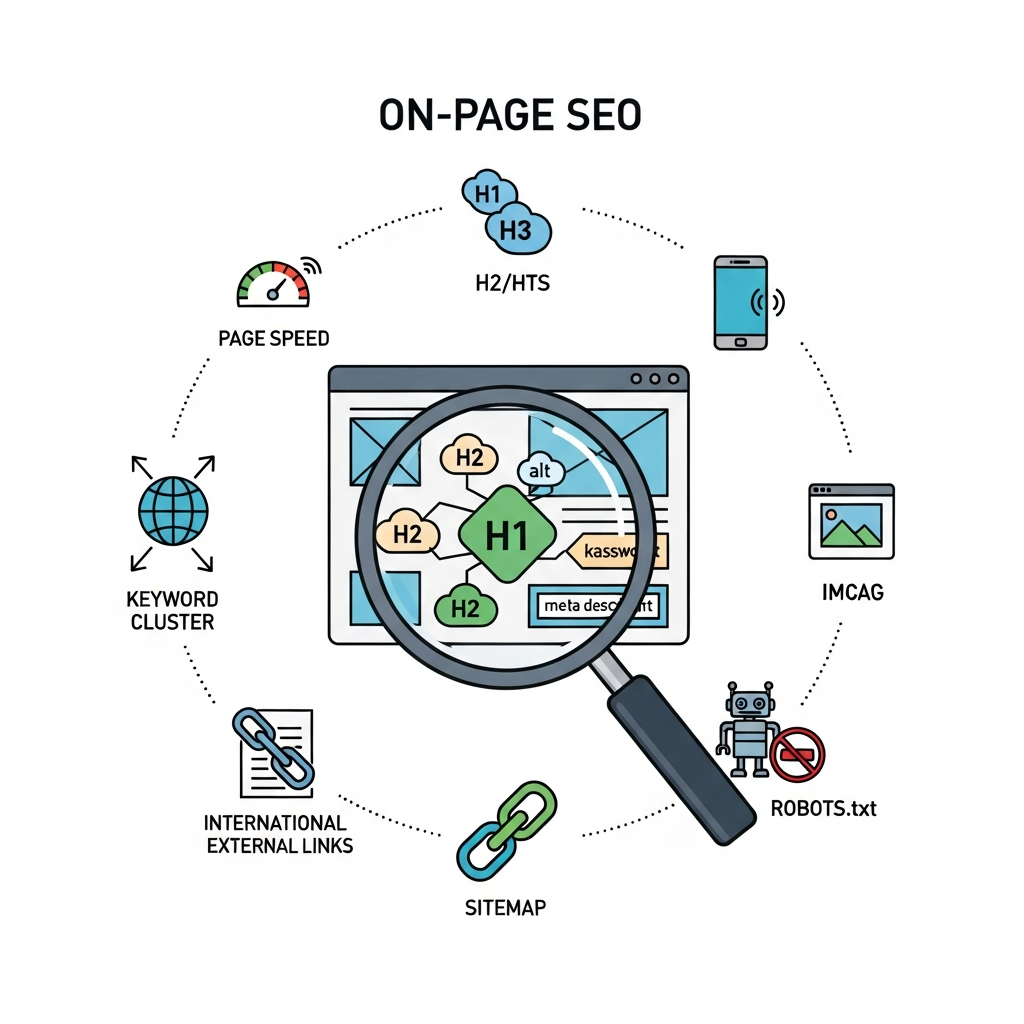
On-Page SEO: Making Your Content “Readable” for Bots

Once you have your keyword, you need to place it where the crawlers can find it. But please, for the love of all that is holy, don’t overdo it. Write for humans first, bots second. If your sentence sounds like a robot wrote it, rewrite it.

  • The Title Tag: This is the most important on-page element. Keep it under 60 characters and put your main keyword near the beginning. Make it “clicky” but not clickbaity.
  • The H1 Tag: You only get one. Use it for your main headline. It should be similar but not identical to your title tag.
  • Subheadings (H2 & H3): These break up the text. They help Google understand the hierarchy of your information and help users skim. Nobody reads word-for-word anymore; we all scan.
  • URL Structure: Keep it clean. yourdomain.com/seo-guide is better than yourdomain.com/p=123?category=blog&id=99.
  • Alt Text for Images: Google can’t “see” an image. The Alt Text tells it what the image is. It also helps visually impaired users, which is a big deal for accessibility.

“SEO is not about being the best writer; it’s about being the most relevant resource that the algorithm can actually interpret.”

>Technical SEO: The Plumbing of Your Website

You can have the greatest content in the world, but if your site takes 10 seconds to load, or if Google’s bots get lost in a maze of broken links, you’ll never rank. This is the “Technical SEO” part, and while it sounds scary, it’s mostly just housekeeping.

Site Speed and Core Web Vitals

Google hates slow sites. Users hate them more. If your page doesn’t load in under 2.5 seconds, you’re bleeding visitors. Use Google PageSpeed Insights. If your images are 5MB each, compress them. If your hosting is a $2-a-month shared plan that crashes every time three people visit, upgrade it. Speed is a ranking factor, but more importantly, it’s a conversion factor.

Mobile-First Indexing

We live in a mobile world. Google now looks at the mobile version of your site to decide how to rank you. If your site looks like a desktop site shrunk down to ant-size on a phone, you’re in trouble. Ensure your design is responsive—it should fluidly adapt to any screen size.

The Robots.txt and Sitemap

The robots.txt file is like a “Keep Out” sign for certain parts of your site. The sitemap.xml is a literal map you give to Google so it knows where every page is. Most CMS platforms like WordPress handle this automatically with plugins like Yoast or Rank Math. Just make sure they exist.

>Content Strategy: Quality Over Quantity (Seriously)

There was a time when “pumping out content” was the strategy. That era is dead. Google’s Helpful Content Update has made it clear: they want “Expertise, Experience, Authoritativeness, and Trustworthiness” (E-E-A-T).

Stop writing 500-word fluff pieces. If you’re writing a guide on SEO, write the *ultimate* guide. Cover the history, the technical side, the creative side, and the future. Provide original data, personal anecdotes, and unique insights that a generative AI couldn’t just scrape from the web. Google loves “originality.” If you’re just regurgitating the top 5 results, why should Google rank you at #6?

Use a mix of sentence lengths. Some short. Like this. And some that are long, winding, and descriptive, providing a rhythm that keeps the reader engaged and moving down the page, which increases “dwell time”—a metric that tells Google your content doesn’t suck.

>The Dark Art of Link Building (Backlinks)

Backlinks are basically “votes” from other websites. If a reputable site like The New York Times links to you, Google thinks, “Hey, this site must be legit.” If a spammy site about “cheap pills” links to you, it does nothing or might even hurt you.

The problem is that most people approach link building like a telemarketer. They send 1,000 cold emails saying, “Please link to my blog.” Don’t do that. It’s annoying and it doesn’t work. Instead, focus on Digital PR and Link Magnet content.

  • Create Original Data: Run a survey, analyze a dataset, and publish the findings. People love to link to statistics.
  • Guest Posting (The Right Way): Write for other high-quality sites in your niche. Don’t do it for a “dofollow” link alone; do it to build an audience.
  • The Broken Link Method: Find a dead link on a competitor’s site, contact the owner, and suggest they replace it with your (better) live link. It’s a win-win.

Beware of “Private Blog Networks” (PBNs) or buying links on Fiverr. Google is very good at spotting these, and the resulting penalty can be a death sentence for your domain. It’s better to have 5 high-quality links than 500 garbage ones.

>Measuring Success: Stop Chasing Vanity Metrics

Ranking #1 for a keyword is great for the ego, but it doesn’t pay the bills. You need to track what matters. Set up Google Search Console and Google Analytics 4 (GA4) immediately.

Search Console will tell you which keywords are bringing people to your site and if there are any technical errors. Analytics will tell you what people do once they get there. Are they staying for 5 minutes or bouncing in 5 seconds? Are they clicking your “Buy Now” button? If you have high traffic but zero conversions, you don’t have an SEO problem; you have a CRO (Conversion Rate Optimization) problem.

>The Future: AI and the Search Generative Experience (SGE)

The “Search Generative Experience” is Google’s new AI-powered interface. It provides an answer directly at the top of the page, often making it so the user never has to click a link. This scares people. It shouldn’t.

AI is good at facts, but it’s bad at “human experience.” To survive in an AI-heavy search world, you need to lean into your humanity. Use “I” and “we.” Share your personal failures and specific case studies. AI can’t tell a story about how it stayed up until 3 AM fixing a server; only you can. That’s the stuff that will keep people clicking through to your site long after the bots have summarized the basics.

>Putting It All Together: Your SEO Checklist

SEO isn’t a “set it and forget it” thing. It’s a garden. You plant, you water, you weed, and eventually, you harvest. Here is your immediate action plan:

  • Week 1: Audit your site. Fix the broken links and slow-loading images.
  • Week 2: Keyword research. Find 10 long-tail keywords your competitors are ignoring.
  • Week 3: Content creation. Write three “power posts” that are better than anything currently on page 1.
  • Week 4: Outreach. Connect with five people in your industry and start building relationships (not just asking for links).

It takes time. Usually 3 to 6 months to see real movement. But once that flywheel starts spinning, the traffic is “free,” passive, and incredibly powerful. Don’t overthink the algorithm. Focus on the human on the other side of the screen. If they’re happy, Google will be happy. Now, stop reading and go build something worth ranking.

Mastering On-page Seo: the Definitive Checklist for Higher Search Visibility

I remember the first time I thought I had “solved” SEO. It was 2012, and I had stuffed enough keywords into a 500-word blog post to make a dictionary feel insecure. I hit publish, waited for the traffic to flood in like a broken levee, and… nothing. Crickets. A digital tumbleweed blew across my analytics dashboard. It turns out, search engines aren’t just looking for words; they are looking for meaning, structure, and a certain kind of digital hospitality that most people completely ignore.

On-page SEO is the art of making your website readable for both a hyper-intelligent AI and a distracted human who is probably looking at your site while waiting for their coffee to brew. If you get it wrong, you’re invisible. If you get it right, you’re the answer to a prayer. This isn’t just about “optimizing”; it’s about claiming your territory in the most competitive real estate market on the planet: the first page of Google.

Mastering On-page Seo: the Definitive Checklist for Higher Search Visibility concept 1

The Philosophy of Intent: Why Robots are Getting Feelings

Before we dive into the nuts and bolts of meta tags and alt text, we need to address the elephant in the server room: Search Intent. Google’s algorithms, particularly after the Helpful Content Update and various Core updates, have moved away from simple pattern matching. They are now obsessed with “Information Gain” and satisfying the specific psychological need of the searcher.

When someone types a query, they are in one of four states of mind. Are they looking for a specific site (Navigational)? Are they trying to learn how to fix a leaky faucet (Informational)? Are they comparing the best espresso machines (Commercial)? Or are they ready to pull out their credit card right now (Transactional)? If your on-page strategy doesn’t align with that specific mental state, your bounce rate will scream louder than a banshee, and your rankings will plummet. You cannot rank a product page for an informational query, no matter how many keywords you sprinkle on it like fairy dust.

Mastering On-page Seo: the Definitive Checklist for Higher Search Visibility concept 2

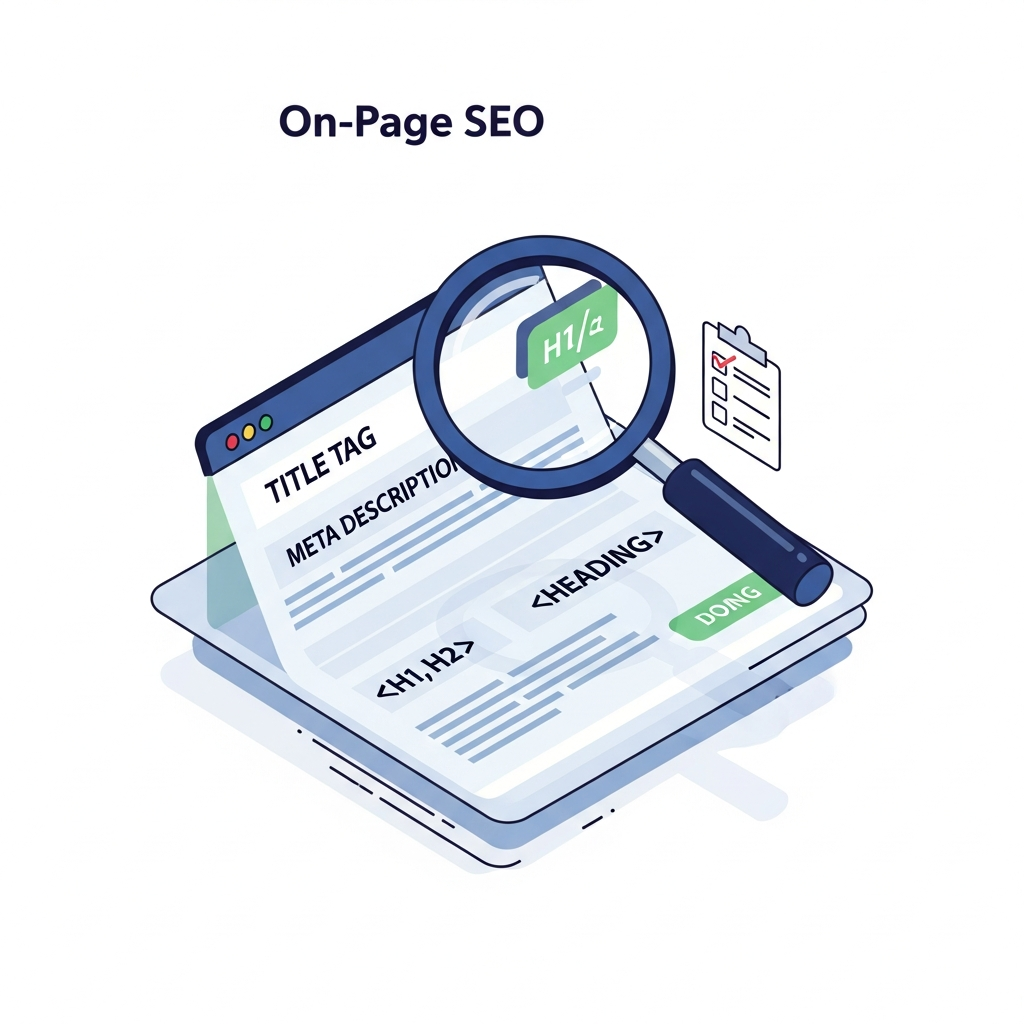
The Technical Trinity: Titles, Metas, and URLs

Let’s start with the low-hanging fruit that most people still manage to bruise. These three elements are the first thing a user sees in the SERPs (Search Engine Results Pages). They are your digital storefront.

1. The Title Tag: Your 60-Character Billboard

Your title tag is the single most important on-page element after your actual content. It needs to be a masterclass in brevity and persuasion. While the old rule was “keep it under 60 characters,” the real metric is pixels (usually around 580px). If you go over, Google will give you the dreaded “…” treatment, cutting off your punchline.

Don’t just list keywords. Write a headline that creates a “curiosity gap.” Instead of “Best Running Shoes 2024,” try “10 Best Running Shoes of 2024: We Tested 50+ Pairs for Comfort.” The latter promises a process and a result. It feels human. Also, place your primary keyword toward the front. It’s called “front-loading,” and it helps both bots and humans identify the topic instantly.

2. Meta Descriptions: The Ad Copy

Here is a secret: Meta descriptions do not directly affect rankings. Google doesn’t look at them to decide if you’re an authority. However, they drastically affect Click-Through Rate (CTR). If more people click your result than the guy above you, Google notices. You are effectively “voting” your way up the rankings through user behavior.

Write your meta description like a Facebook ad. Use a call to action (CTA). Use active verbs. Stop saying “This post is about…” and start saying “Discover the exact framework we used to…” Keep it around 150-155 characters to avoid truncation. And for heaven’s sake, don’t let a plugin auto-generate this from your first paragraph. That’s how you end up with a meta description that starts with “In today’s fast-paced world…”—the universal signal for “boring content ahead.”

3. URL Structure: Cleanliness is Next to Godliness

A URL should be a map, not a cipher. Compare these two:
example.com/p=12345-asdf-98/
example.com/mastering-on-page-seo/

The second one tells the user exactly where they are going. It’s descriptive, it’s evergreen (don’t put years in the URL if you can avoid it), and it’s easy to share. Keep your URLs short. Research suggests that shorter URLs tend to rank better. Use hyphens to separate words—never underscores. Google treats hyphens as spaces, but it sees underscores as a way to join two words together into one giant, confusing mess.

Mastering On-page Seo: the Definitive Checklist for Higher Search Visibility concept 3

The Content Hierarchy: More Than Just Bold Text

Once the user clicks, you have about three seconds to prove you aren’t a waste of their time. This is where your heading structure (H1, H2, H3) and the actual meat of your content come into play.

The H1 Tag: The One and Only

Every page needs exactly one H1 tag. It’s the title of your book. It should be similar to your Title Tag but doesn’t have to be identical. Use it to reinforce the primary topic. If your H1 is “How to Bake Sourdough,” but your content is mostly about the history of flour, you’re going to have a high bounce rate. Alignment is everything.

Subheadings (H2s and H3s): The Skimmer’s Guide

Most people do not read online; they skim. They are looking for the “Answer Paragraph.” Your H2s and H3s should act as signposts. If a reader only reads your headings, they should still walk away with 60% of the value of the article. This is also where you should weave in LSI (Latent Semantic Indexing) keywords. These are terms related to your main topic. If you’re writing about “Apple,” and your subheadings mention “Orchard,” “Fruit,” and “Granny Smith,” Google knows you aren’t talking about the iPhone.

The Golden Rule of Keyword Density

Stop counting keywords. If you’re writing naturally about a topic, your keywords will appear. If you find yourself forcing a phrase like “affordable plumber in East London” five times into a single paragraph, you’re doing it wrong. This is called keyword stuffing, and it’s a one-way ticket to the basement of the search results. Aim for “Topic Coverage” instead. Answer the questions that naturally arise from your primary subject.

The best SEO writing doesn’t feel like SEO writing. it feels like a conversation with an expert who happens to be remarkably organized.

>Visual Optimization: The Invisible Speed Killer

Images are the heavy weights of the web. They make your site look beautiful, but they can also make it move like it’s stuck in molasses. Google’s Core Web Vitals—specifically Largest Contentful Paint (LCP)—depend heavily on how you handle visuals.

  • Image Compression: Use tools like TinyPNG or plugins like ShortPixel. A 5MB image is a crime against user experience. Aim for under 100KB whenever possible.
  • Alt Text: This is not a place to dump keywords. It is an accessibility feature for the visually impaired. Describe the image. If it’s a “golden retriever playing with a red ball,” that’s exactly what your alt text should say. If you can naturally include a keyword, great. If not, don’t sweat it.
  • WebP Format: Stop using JPEGs and PNGs where possible. WebP offers superior compression and quality characteristics, and Google loves it.
  • Lazy Loading: This ensures that images only load when they are about to enter the viewport. This saves bandwidth and speeds up the initial page load significantly.

>The Spider’s Web: Internal and External Linking

If your website was a city, links would be the roads. Without them, your best content is just an isolated cabin in the woods that no one can find.

Internal Linking: The Power of Context

Internal links pass “link juice” (authority) from your high-performing pages to your newer or weaker pages. But don’t just link “here” or “click this.” Use descriptive anchor text. If you’re linking to a post about keyword research, your anchor text should be “comprehensive keyword research guide.” This tells Google exactly what the destination page is about.

I like to use the “Hub and Spoke” model. You have one massive, authoritative “Pillar Page” (the Hub) that links out to several smaller, more specific articles (the Spokes). Those spokes all link back to the hub. This creates a tight topical cluster that signals to Google that you are an absolute authority on the subject.

External Linking: Don’t Be a Hoarder

Some people are afraid to link to other websites because they don’t want to “lose” the reader. This is a mistake. Linking to high-authority, relevant sources (like .gov, .edu, or major industry publications) actually increases your credibility. It shows Google that you are participating in the wider web ecosystem and that you’ve done your research. Just make sure those links open in a new tab so your site stays open in the background.

>User Experience (UX) and Core Web Vitals

We’ve reached the point where technical SEO and UX are essentially the same thing. Google’s algorithm now includes “Page Experience” signals. If your site jumps around while loading (Cumulative Layout Shift) or takes ten seconds to respond to a click (Interaction to Next Paint), you’re going to lose rank.

Mobile-First Indexing: This is no longer a suggestion; it’s the law. Google primarily uses the mobile version of your site for indexing and ranking. If your mobile site is a stripped-down, buggy version of your desktop site, you are in trouble. Check your “Mobile Usability” report in Google Search Console religiously.

Dwell Time and Pogo-sticking: While Google denies these are direct ranking factors, they are certainly “proxy” signals. If a user clicks your result and immediately hits the back button because your site looks like it was designed in 1998 or is covered in intrusive pop-ups, that tells the algorithm your page didn’t satisfy the query. Clean up your UI. Make your font readable (at least 16px). Get rid of the “Join our newsletter!” pop-up that appears before the user has even read the first sentence.

>The Magic of Schema Markup

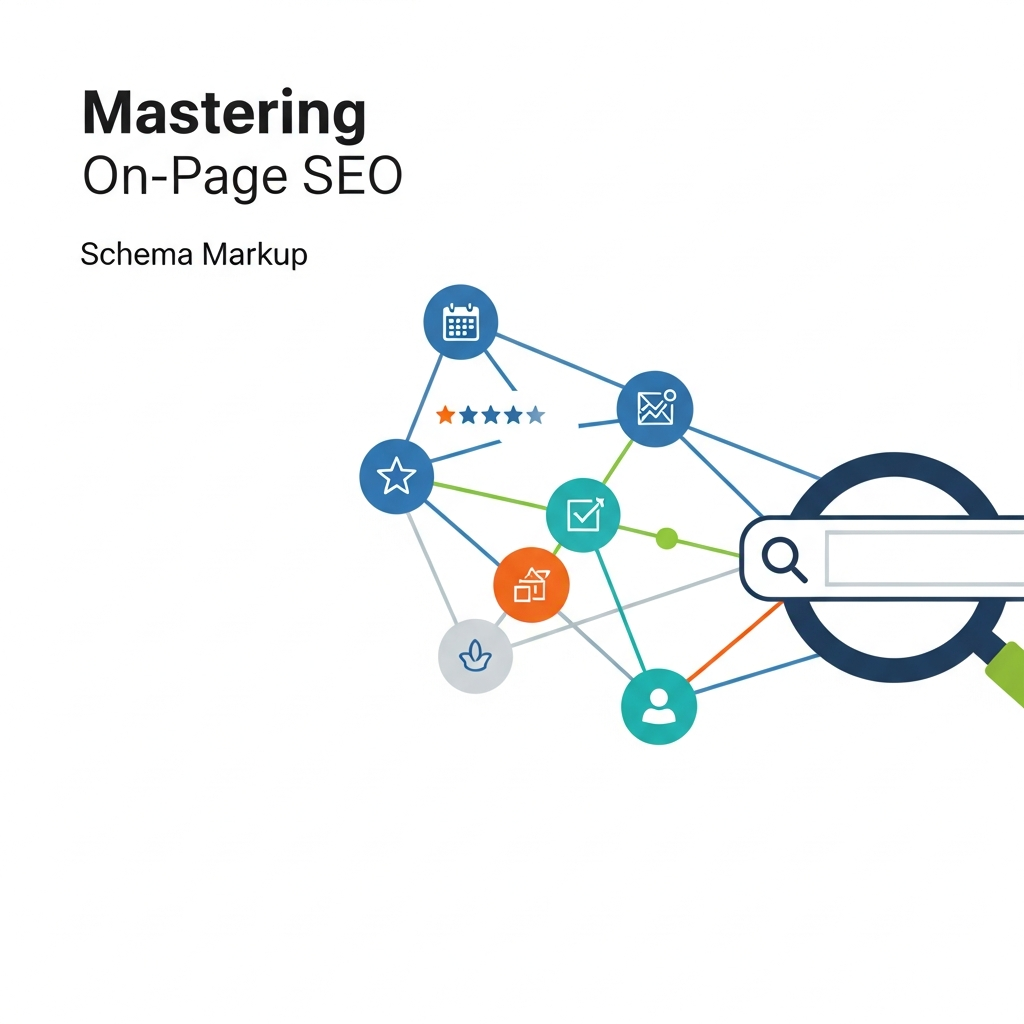
Schema markup (JSON-LD) is like giving Google a pair of glasses. It helps the search engine understand the context of your data. It turns a string of numbers into a “Review Rating” or a “Price.” It turns a list of names into “FAQ Questions.”

By implementing Schema, you become eligible for Rich Snippets. These are the fancy results that show star ratings, recipe times, or event dates. Rich snippets have a significantly higher CTR than standard results. If you’re on WordPress, plugins like RankMath or Yoast make this easy, but for the purists, writing the JSON-LD code manually and dropping it into the header is the way to go. It’s the closest thing to “legal cheating” in SEO.

>Advanced Strategy: The Concept of “Information Gain”

With the explosion of AI-generated content, the internet is becoming a sea of sameness. Google is fighting back by prioritizing “Information Gain.” This refers to the unique value a piece of content adds beyond what is already in the top 10 results.

If you are just rewriting the top three results in your own words, you are a commodity. To truly master on-page SEO, you need to add something new. This could be:

  • Personal anecdotes or case studies.
  • Original data or surveys you conducted.
  • A contrarian take on a popular opinion.
  • High-quality original photography or custom diagrams.

If your content provides a perspective that literally doesn’t exist elsewhere, Google will move mountains to make sure people see it. This is the “Extra Mile” that most SEOs are too lazy to run.

>The Common Pitfalls: Where Pros Trip Up

Even the best of us make mistakes. Here are the “silent killers” of on-page SEO that you need to audit for immediately:

1. Keyword Cannibalization

This happens when you have five different pages all trying to rank for “best SEO tips.” You are essentially competing against yourself, confusing Google as to which page is the authority. Consolidate those pages into one “Super-Post” or differentiate them with more specific long-tail keywords (e.g., “SEO tips for dentists” vs “SEO tips for e-commerce”).

2. Ignoring the “Fold”

The “fold” is the part of the screen visible without scrolling. If your top-of-page real estate is taken up by a massive hero image and three ads, and the actual content doesn’t start until the third scroll, you have a problem. Get to the point quickly. Answer the user’s main question in the first two paragraphs.

3. Broken Links and Redirect Loops

Nothing kills the “flow” of a bot or a human like a 404 error. Use a tool like Screaming Frog to crawl your site and find broken internal links. Fix them. It’s the digital equivalent of sweeping the floor.

>The Definitive On-Page SEO Checklist (Summary)

To wrap this up, let’s distill this into a checklist you can use every time you hit “Publish.”

  • Primary Keyword: Identified and used in the Title, H1, and first 100 words?
  • Title Tag: Under 60 characters and compelling to click?
  • Meta Description: Includes a CTA and accurately reflects the content?
  • URL: Short, descriptive, and uses hyphens?
  • H-Tags: Only one H1? Proper hierarchy (H2-H4) used for skimming?
  • Media: All images compressed? Alt text added? WebP used?
  • Links: At least 2-3 internal links to other relevant content? 1-2 outbound links to authority sites?
  • Readability: Short paragraphs? Bullet points? 16px+ font size?
  • Schema: Relevant JSON-LD markup implemented?
  • Mobile: Checked on a physical device for any layout shifts?

Mastering on-page SEO is not a one-time event; it’s a lifestyle choice for your website. It requires a blend of technical precision, psychological insight, and a genuine desire to be helpful. The algorithms will change—they always do—but the desire for high-quality, well-structured, and fast-loading information is universal. Stop chasing the algorithm and start building for the human on the other side of the screen. When you do that, the rankings usually take care of themselves. Well, that and a really good meta description.

Why Your Website Isn’t Ranking: 7 Critical Seo Mistakes to Fix Immediately

Let’s be brutally honest for a second. You’ve spent weeks, maybe months, obsessing over HEX codes. You’ve argued with developers about the exact curvature of your “Buy Now” buttons. You’ve likely sacrificed several nights of sleep and an alarming amount of caffeine to birth this digital masterpiece into the world. And yet, when you look at your Google Search Console, the graph looks like a flatline on a hospital monitor.

Zero clicks. Five impressions—four of which were probably your mom. It’s a gut-punch. In the industry, we call this the “Digital Sahara” effect. You built the oasis, but nobody’s coming because you forgot to put up the signs, or worse, you put them up in a language only a hallucinating camel could understand. SEO isn’t a dark art practiced by hooded figures in basement apartments, but it isn’t a “set it and forget it” checkbox on your Squarespace dashboard either.

Google’s algorithm is a moody librarian with billions of books to sort and a very short temper. If you aren’t following the rules—or if you’re following the rules from 2014—you’re basically invisible. Here is exactly why your website is currently pulling a disappearing act and the high-octane fixes you need to implement before your competitors eat your lunch.

Why Your Website Isn't Ranking: 7 Critical Seo Mistakes to Fix Immediately concept 1

1. The “Keywords Are Everything” Delusion

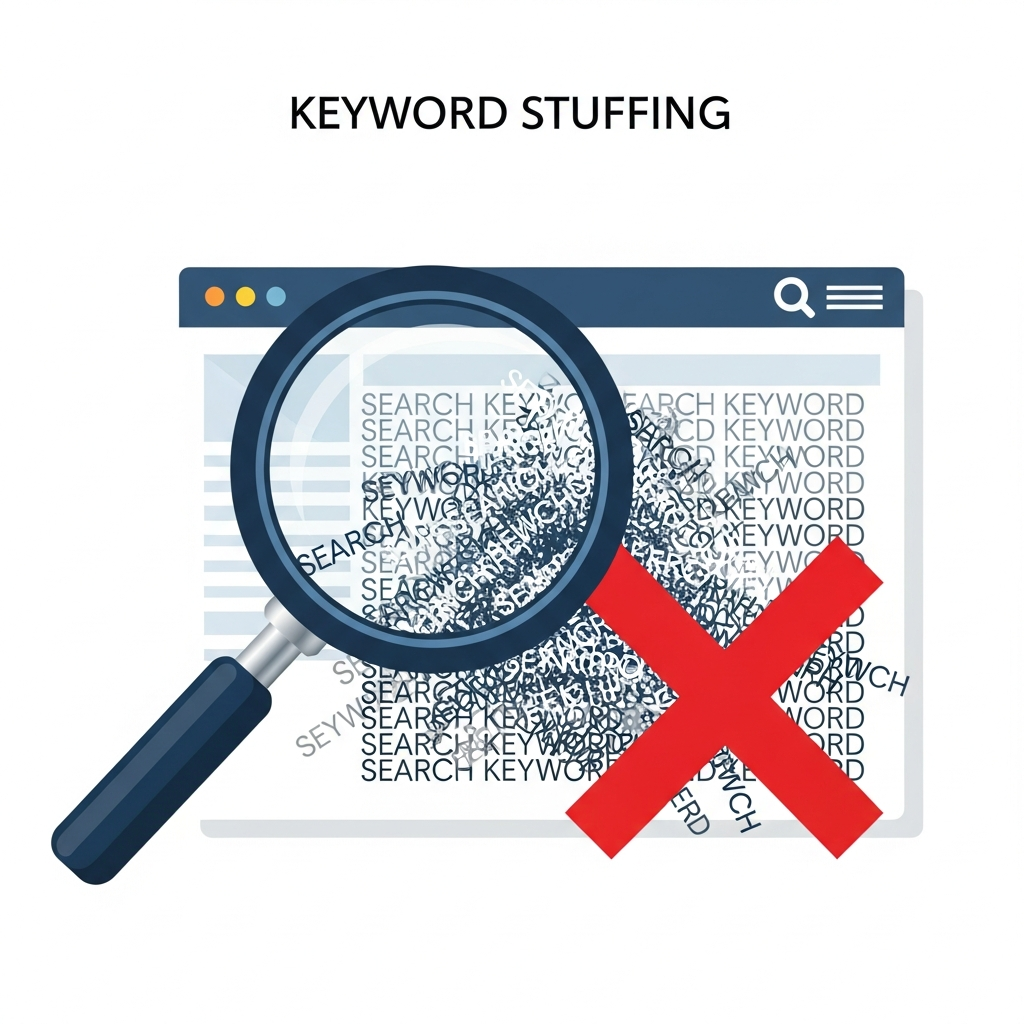
Back in the day, you could rank for “best pizza in New York” by writing “best pizza in New York” fifty times in white text on a white background. Those were the Wild West days. If you try that now, Google will treat your site like a spammy flyer under a windshield wiper. The mistake isn’t just “keyword stuffing”—it’s a fundamental misunderstanding of Semantic Search and Entity-based SEO.

Modern search engines don’t just look for strings of characters. They look for meaning. They want to know if you actually understand the topic. If you’re writing about “Organic Gardening,” and you don’t mention “compost,” “soil pH,” “mulching,” or “pollinators,” Google realizes you’re a fraud. You’re missing the “entities” that define the neighborhood of that topic.

The Fix: Latent Semantic Indexing (LSI) and Topic Clusters

Stop obsessing over a single “magic” keyword. Instead, build a topical fortress. If you want to rank for “Home Insurance,” you need to cover “premiums,” “deductibles,” “liability coverage,” and “natural disaster riders.” Use tools like Ahrefs or Clearscope to identify these related terms. Don’t just sprinkle them in; weave them into a narrative that actually helps the human reading it. If a human finds it useful, the algorithm eventually will too. It’s becoming scarily good at detecting “thin” content that’s just a keyword wrapper.

>2. The Spinning Wheel of Death (Technical Debt)

You have approximately 2.5 seconds. That’s it. If your website takes longer than that to load, the average user is gone. They’ve bounced back to the search results faster than a rubber ball on a concrete floor. This isn’t just a “user experience” issue; it’s a massive ranking factor. Google introduced Core Web Vitals (CWV) because they realized that slow sites make users miserable.

Many business owners suffer from “Plugin Bloat.” You wanted a fancy slider? Plugin. You wanted a pop-up that begs for emails? Plugin. You wanted a floating social media bar that follows the user like a needy ghost? Plugin. Every one of those is a heavy backpack your website has to carry while trying to win a sprint.

The Fix: A Technical Exorcism

Go to Google PageSpeed Insights right now. If your mobile score is in the red, you are actively bleeding money. Start by optimizing your images—don’t upload a 5MB JPEG when a 100KB WebP file will do. Next, look at your “Largest Contentful Paint” (LCP). If your server is slow, consider upgrading your hosting. Cheap $5-a-month shared hosting is the equivalent of trying to run a Ferrari on lawnmower fuel. It won’t work, and you’ll end up on page 10 of the SERPs (Search Engine Results Pages) where even the FBI won’t find you.

“The best place to hide a dead body is the second page of Google search results.” — Anonymous (but painfully accurate) SEO Pro.

Why Your Website Isn't Ranking: 7 Critical Seo Mistakes to Fix Immediately concept 3

3. The “AI Slop” Content Trap

We need to talk about the elephant in the room: ChatGPT. Since the explosion of LLMs, the internet has been flooded with “beige” content. It’s grammatically correct, it’s structured, and it’s utterly, painfully boring. It has no soul. It has no “Information Gain.”

If your blog post says the exact same thing as the top ten results, why should Google rank you? You aren’t adding anything new to the collective human knowledge. Google’s recent Helpful Content Updates (HCU) are designed to nuking sites that produce mass-scale AI content without human oversight. If you are just hitting “generate” and “publish,” you are building your house on a sinkhole.

The Fix: Experience, Expertise, Authoritativeness, and Trustworthiness (E-E-A-T)

To rank now, you need the “double E.” Show Experience. Use phrases like “In my ten years of doing this…” or “When I tried this strategy, here is what went wrong.” Give people data they can’t get elsewhere. Conduct a survey. Run an experiment. Share a controversial opinion that you can back up with logic. The goal is to create content that an AI couldn’t write because the AI hasn’t lived your life or run your business.

>4. Your Backlink Profile Looks Like a Toxic Waste Dump

Backlinks (links from other websites to yours) are essentially “votes of confidence.” However, not all votes are equal. A link from the New York Times is a glowing endorsement from a world-class scholar. A link from “Cheap-Medication-4-U.xyz” is a recommendation from a guy selling “Rolexes” out of a trench coat in a dark alley.

If you hired a “SEO expert” on Fiverr who promised 5,000 backlinks for $50, you haven’t bought a shortcut; you’ve bought a death sentence. Google’s Penguin algorithm (now part of the core algo) identifies these “link farms” and ignores them, or worse, penalizes the recipient. If your site is drowning in “toxic” links, your rankings will stay at the bottom of the ocean.

The Fix: Digital PR and “Earned” Media

Stop “building” links and start “earning” them. This sounds harder because it is. Reach out to journalists in your niche. Use platforms like Connectively (formerly HARO) to provide expert quotes. Create “link bait”—infographics, original research, or tools that people want to link to because it makes their own content better. One high-quality link from a reputable site in your industry is worth more than 10,000 bot-generated links from Russia or India.

>5. The Labyrinth: Poor Site Architecture and Orphan Pages

Imagine walking into a supermarket where the milk is in the ceiling, the cereal is in the basement, and there are no signs. You’d leave. Google’s “crawlers” (the bots that index your site) feel the same way about messy site architecture. If your most important pages are more than three clicks away from the homepage, the bots might never find them. Or, they might decide those pages aren’t important enough to rank.

Then there are Orphan Pages. These are pages on your site that have zero internal links pointing to them. They are digital islands. If you don’t link to your own content, why should anyone else?

The Fix: The “Pyramid” Structure

Your site should have a logical flow. Homepage links to main category pages. Category pages link to individual posts or products. Use Breadcrumbs to help both users and bots navigate. More importantly, implement a robust internal linking strategy. When you write a new blog post, go back to three old posts and add a link to the new one. This passes “link juice” (authority) around your site and tells Google, “Hey, this page is relevant!”

>6. Ignoring Search Intent (The “Steak vs. Salad” Problem)

This is the most common mistake made by smart people. They rank for a keyword, but it’s the wrong keyword for what they are offering. There are four main types of search intent:

  • Informational: “How do I fix a leaky faucet?”
  • Navigational: “Delta Airlines login.”
  • Commercial: “Best plumbing tools 2024.”
  • Transactional: “Buy 12-inch pipe wrench online.”

If you are trying to sell a pipe wrench (Transactional) using a page that only gives a history of plumbing (Informational), you will fail. Even if you rank #1, people will click, realize they can’t buy what they need, and immediately leave. Google sees this “pogo-sticking” and realizes your page isn’t satisfying the user’s intent. Down the rankings you go.

The Fix: Audit Your SERPs

Before you write a single word, type your target keyword into Google. Look at what is already ranking. Are they long-form guides? Are they product pages? Are they lists of “Top 10” items? If the top 10 results are all listicles, and you try to rank with a 5,000-word philosophical essay, you are fighting an uphill battle against the collective psychology of the internet. Give the people what they are looking for, in the format they expect.

>7. The “Mobile-First” Afterthought

We live in a world where people browse the web while waiting for coffee, sitting on the bus, or—let’s be real—on the toilet. Over 60% of global search traffic is mobile. Google has moved to Mobile-First Indexing. This means Google looks at the mobile version of your site first to decide where you should rank, even for desktop searches.

If your desktop site is beautiful but your mobile site has tiny text, overlapping buttons, or images that don’t scale, you are being downgraded. It doesn’t matter how “aesthetic” your site looks on a 27-inch iMac if it’s a dumpster fire on an iPhone 13.

The Fix: Thumb-Friendly Design

Test your site on your own phone. Can you click every button without accidentally hitting three others? Is the font size at least 16px? Does the “hamburger menu” actually work, or does it just flicker and die? Use Google’s Search Console to check for “Mobile Usability” errors. If it says your “clickable elements are too close together,” fix it. It’s not just about design; it’s about accessibility and ranking power.

>Bringing it All Together (The Roadmap)

SEO isn’t a one-time project you finish and put on a shelf. It’s a garden. If you don’t water it, pull the weeds, and occasionally talk to the plants, it will wither. But if you fix these seven critical mistakes, you aren’t just “optimizing”—you’re building a digital asset that works for you 24/7.

Start with the technical stuff. Clean up the code, speed up the loading times, and make sure your mobile experience is flawless. Then, move to the content. Inject your personality, your data, and your “hot takes” into everything you publish. Stop trying to trick the algorithm and start trying to be the most helpful resource on the internet for your specific niche.

It takes time. You won’t see results tomorrow. You might not even see them next month. But six months from now, when your phone starts ringing and your inbox is full of leads because you’re sitting pretty at the top of page one, you’ll realize it was the best investment you ever made. Now, stop reading this and go check your PageSpeed score. You’ve got work to do.

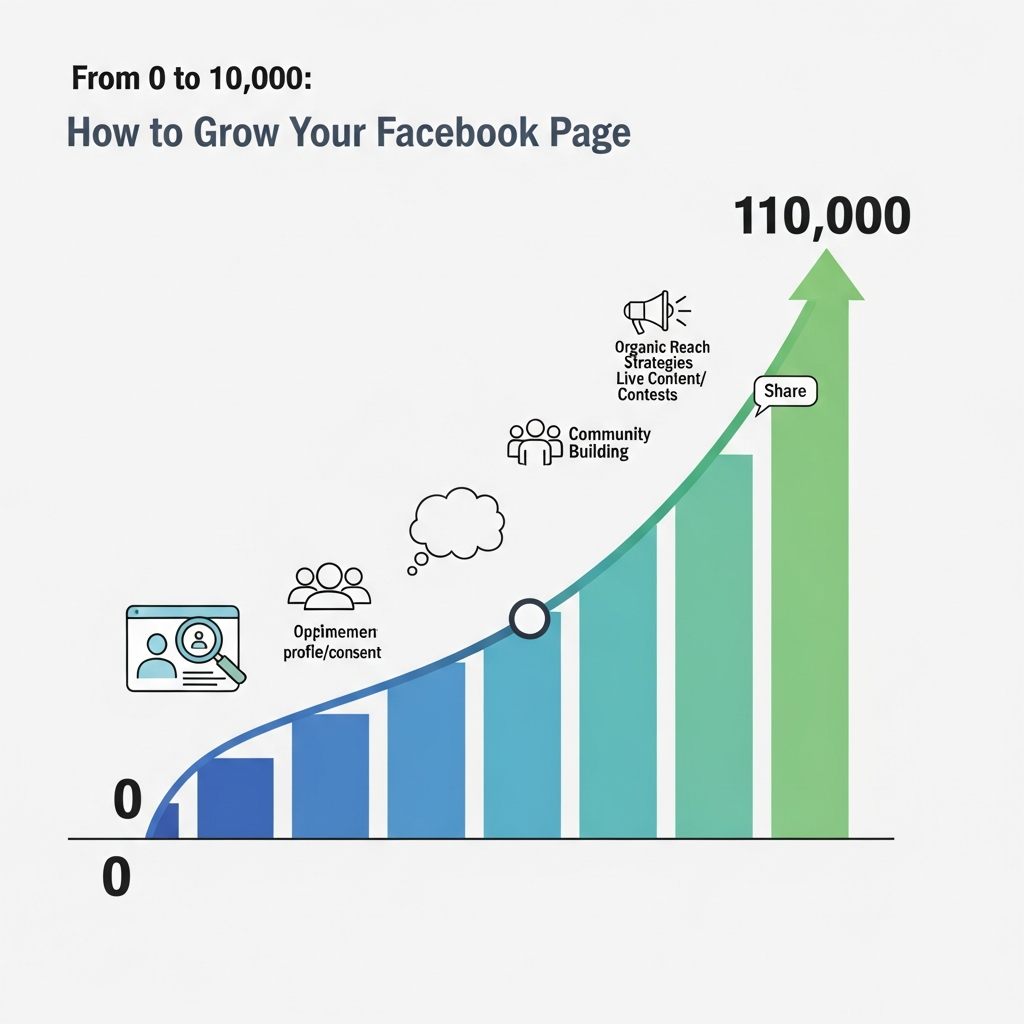
From 0 to 10,000: How to Grow Your Facebook Page Without Paid Ads

Let’s be brutally honest for a second. Starting a Facebook Page in 2024 feels a bit like trying to start a fire in a rainstorm. You post a carefully crafted update, maybe a photo of your latest project or a link to a blog post you spent six hours writing, and then? Nothing. Crickets. Maybe your mom “likes” it, and if you’re lucky, your aunt leaves a “Proud of you!” comment. It’s disheartening. It’s frustrating. And it’s exactly why most people give up before they even hit the 500-follower mark.

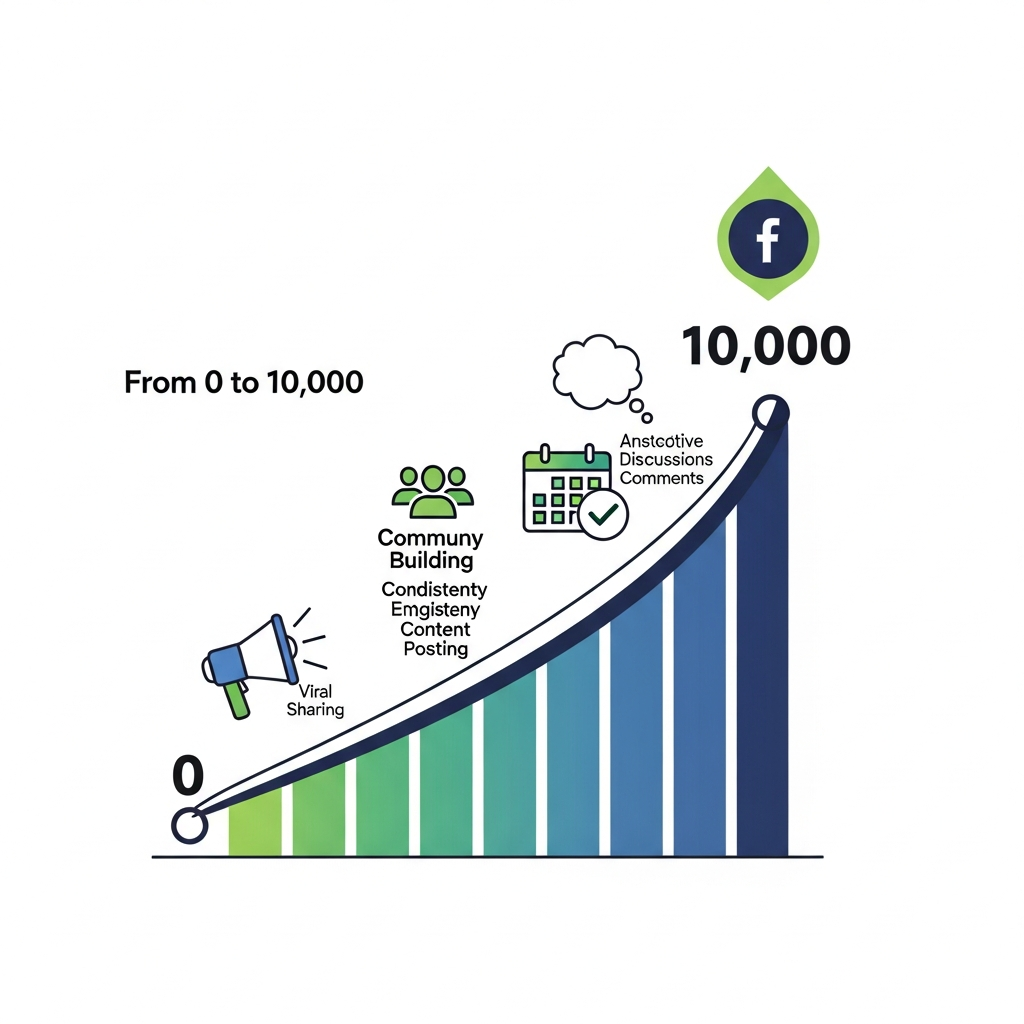
The common wisdom says Facebook organic reach is dead. They tell you that unless you’re ready to shovel thousands of dollars into Meta’s ad manager, you’re invisible. I’m here to tell you—with the scars of a dozen failed pages to prove it—that the common wisdom is wrong. It isn’t dead; it’s just evolved. The days of “build it and they will come” are gone, replaced by a “provide massive value and they will share” reality. Moving from zero to 10,000 followers without spending a dime on ads is not a pipe dream. It is a repeatable, tactical process. But you have to stop treating Facebook like a billboard and start treating it like a community center.

From 0 to 10,000: How to Grow Your Facebook Page Without Paid Ads concept 1

The Myth of the Algorithmic Throttle

Most creators blame “the algorithm” for their lack of growth. They think Mark Zuckerberg has a personal vendetta against their brand. Here’s the reality: the algorithm is a mirror. It reflects exactly what your audience finds interesting. If your reach is low, it’s because the content isn’t sparking a reaction that the system deems worthy of promotion. Facebook wants users to stay on the platform. If you help them do that, they will reward you with reach. If you try to siphon people off to your website with every single post, they will bury you.

To hit that 10k milestone, we need to shift our focus from “How do I get more views?” to “How do I make my content so good that people feel like they’re doing their friends a favor by sharing it?” That’s the secret sauce. Shares are the only metric that matters for organic growth. Likes are nice, comments are better, but shares are the fuel that drives the engine.

From 0 to 10,000: How to Grow Your Facebook Page Without Paid Ads concept 2

The Audit: Your Page is Your Landing Page

Before you even think about posting your next Reel, we need to look at your “storefront.” When someone discovers your content in their feed, they will click your profile. If that profile looks like a desert or a chaotic mess, they won’t hit follow. You have exactly three seconds to convince them you’re worth their time.

The Cover Photo is a Billboard, Not a Decoration. Stop using a generic landscape or a blurry logo. Your cover photo should state exactly what you do and what the visitor gets. If you’re a fitness coach, show a transformation or you in action with a headline like “Daily 15-minute workouts for busy parents.” Use a call to action (CTA) right in the image. “Click here for our free guide” (and then put the link in the image description).

The “About” Section is Your Elevator Pitch. Use keywords, but don’t be a robot. Write it for a human. Tell them who you help and how. Instead of “We sell organic coffee,” try “Helping early-morning hustlers conquer their day with ethically sourced, small-batch beans that actually taste like heaven.”

The “Call to Action” Button

Facebook gives you a primary button. Don’t just set it to “Like.” Set it to “Follow” or “Send Message.” If you want to build a community, making it easy for people to message you creates a level of intimacy that a simple “Like” never can. I’ve found that pages with a “Send Message” CTA often see higher retention because the “super-fans” feel like they have a direct line to the creator.

From 0 to 10,000: How to Grow Your Facebook Page Without Paid Ads concept 3

The Growth Engine: Reels and Vertical Video

If you want organic reach in the current landscape, you must embrace Facebook Reels. It is the only part of the platform where the algorithm aggressively pushes your content to people who do not follow you. While your standard image posts might reach 5% of your existing followers, a Reel can reach 500% of your current follower count if it’s tuned correctly.

But here’s where people mess up: they just repost TikToks with the watermark. Don’t do that. Facebook’s AI is smart enough to detect the watermark, and it will suppress the reach. You need native-feeling content. Here is the framework for a Reel that actually converts viewers into followers:

  • The 2-Second Hook: You have to stop the thumb. Use a bold text overlay on the screen that addresses a pain point. “Why your sourdough isn’t rising” is better than “Baking day!”
  • The Value Middle: Give them a “quick win.” Don’t hold back the good stuff. If you have a secret tip, give it away. People follow creators who actually help them solve problems.
  • The Pattern Interrupt: Change the camera angle or the text on the screen every 3-4 seconds. Our brains are wired to pay attention to change. Static videos are death.
  • The Follow Trigger: Don’t just say “Follow me.” Give them a reason. “Follow for Part 2” or “Follow for more daily hacks on [Topic].”

“I once spent three weeks filming a high-production documentary-style video for a client. It got 200 views. The next day, we filmed a 15-second tip on an iPhone in the parking lot. It hit 450,000 views and brought in 2,000 followers in 48 hours. Authenticity beats production value every single time.”

>The “Shares-First” Content Strategy

To get to 10,000 followers without ads, you need your current audience to act as your marketing team. This requires “Shareable Assets.” There are generally four types of content that get shared on Facebook:

1. The “That’s So Me” Post (Relatability)

Memes aren’t just for teenagers. They are the strongest tool for relatability. If you run a page for graphic designers, a meme about a client asking to “make the logo pop” will get shares because designers want their peers to know they relate to that struggle. It’s an identity marker.

2. The “I Didn’t Know That” Post (Educational)

Infographics or short, punchy lists. People share these because they want to appear helpful or knowledgeable to their own circle. If you can summarize a complex topic into five bullet points on a clean image, that post will live forever in the “Saved” and “Shared” folders.

3. The “Finally Someone Said It” Post (Polarizing)

Don’t be afraid to take a stand. If everyone in your niche is saying one thing, and you believe the opposite, say it loudly. This sparks conversation. Caution: Don’t be a jerk. Be contrarian with kindness. This attracts your tribe and repels the people who wouldn’t follow you anyway.

4. The “This Is Beautiful” Post (Aspirational)

High-quality imagery or storytelling that touches the heart. This is harder to pull off consistently, but a well-told story about a personal failure and the subsequent comeback is pure gold for engagement.

>Groups: The Trojan Horse Strategy

Facebook Groups are where the real “social” part of social media happens. However, most people use them wrong. They join 50 groups and spam their latest link. Result? Banned. Instantly.

Instead, use the Value-First Injection method. Join groups where your target audience hangs out. Don’t post your page links. Instead, look for people asking questions. Provide the most comprehensive, helpful answer possible in the comments. Do this for a week. People will naturally start clicking on your profile to see who this helpful person is. If your profile is optimized (as we discussed earlier), they’ll see your “Work” section links to your Page, or they’ll see your recent public posts. This is “permission marketing” at its finest.

Once you’ve established yourself as an expert in a group, you can occasionally share a post from your page—but only if it directly solves a problem being discussed. “Hey, I saw a lot of people asking about [X], I actually just put together a deep-dive video on my page about it if anyone wants to see the visual steps.” This isn’t spam; it’s a resource.

>The 20-Minute Engagement Rule

The first hour after you post is the most critical. Facebook’s algorithm is testing the “temperature” of your post. If you post and then walk away, you’re leaving money on the table. For the first 20 minutes after posting, stay on the app. When someone comments, reply immediately. This does two things:

  • It doubles the comment count (which looks good to the algorithm).
  • It notifies the user who commented, often bringing them back to the post to reply again, creating a “conversation loop.”

The more “depth” a conversation has (replies to replies), the more likely Facebook is to show that post to more people. Treat your comment section like a dinner party. You wouldn’t ignore a guest who just complimented your cooking, right?

>The Power of the “Micro-Community”

When you’re at 0-500 followers, you have a massive advantage: you can be unscalable. You can literally talk to every single follower. Send a voice note to new followers. Ask them what they’re struggling with. This sounds like it takes too much time, but the loyalty you build in the first 1,000 followers determines the trajectory of the next 9,000. These people become your “Street Team.” They are the ones who will tag their friends in your posts without being asked. You aren’t building a following; you’re building an army of advocates.

>Leveraging “Engagement Bait” Without Being “Bait-y”

Facebook has cracked down on explicit engagement bait (e.g., “LIKE THIS IF YOU LOVE DOGS!”). If you do this, your reach will be penalized. However, you can use Low-Friction Requests. These are questions that require almost no effort to answer but get the ball rolling.

Instead of a deep, philosophical question, try: “Coffee or Tea?” or “Which logo do you prefer: A or B?” These “this or that” posts are incredibly effective because they don’t require the user to think hard. Once they’ve commented on a simple post, the algorithm is more likely to show them your more complex, long-form content the next day. It’s about warming up the relationship.

>Consistency vs. Intensity

I’ve seen people post five times a day for a week and then disappear for a month because they’re burnt out. That is a recipe for failure. Facebook’s algorithm prizes predictability. If you can only manage three posts a week, that’s fine—just make sure they happen every single week. Use the Meta Business Suite to schedule your content in advance. Spend one afternoon on a Sunday batching your Reels and images so you aren’t scrambling on a Wednesday morning.

The “Sweet Spot” Posting Schedule:

  • 1 Reel per day (Reach)
  • 1 Image/Infographic every other day (Engagement/Shares)
  • 1 Facebook Live per week (Trust/Retention)

If that’s too much, scale back the images, but keep the Reels. They are your primary growth lever.

>Analyzing the Right Data

Stop looking at “Total Likes.” It’s a vanity metric. Instead, go into your Meta Insights and look at “Minutes Viewed” for your videos and “Post Reach” for your images. Specifically, look at the “Followers vs. Non-Followers” reach breakdown. If your content is only reaching followers, you’re stagnant. If you see a high percentage of non-followers, you’ve hit a vein of growth. Double down on whatever that topic or format was.

Look at your “Negative Feedback” too. If people are hiding your posts, you’re either posting too often or the content is irrelevant. Adjust quickly. The algorithm keeps a “quality score” for your page; don’t let it tank by being annoying.

>Cross-Pollination: The Final Push

You don’t have to grow your Facebook Page only on Facebook. If you have an email list, send them a link to a specific, high-value post (not just the page). If you’re on LinkedIn or Twitter, share a screenshot of a conversation happening on your Facebook page to pique interest. The goal is to create a multi-channel funnel that leads back to your Facebook community.

One of the most effective strategies I’ve used is the “Newsletter Bridge.” Every time I write a newsletter, I include a “Question of the week” and tell people the discussion is happening over on the Facebook Page. This moves warm traffic from my inbox to my social feed, which gives the post an initial boost of engagement that helps trigger the wider algorithm.

>The 10k Mindset: Playing the Long Game

Growing to 10,000 followers without ads is a marathon, not a sprint. You will have weeks where your numbers go backward. You will have posts that you thought were brilliant that get zero traction. This is normal. The difference between the pages that hit 10k and those that die at 200 is persistence and adaptation.

Don’t get married to your content. If something isn’t working, kill it. If a specific type of Reel is flying, make ten more versions of it. Listen to your audience. They will tell you what they want by how they interact. Your job isn’t to be a “creator” in a vacuum; it’s to be a facilitator of the conversations your audience is already dying to have.

Start today. Not by buying ads, but by finding one person in a group and helping them. Then post one Reel that teaches something valuable. Then do it again tomorrow. The snowball starts small, but once it gets rolling, it’s unstoppable.

You don’t need Meta’s permission to grow. You just need to be too good to ignore. Now, go optimize that cover photo and start recording your first Reel. The first 10,000 are waiting for you.

How to Scale Your Small Business With Facebook Ads: a Step-by-step Blueprint

>The Quiet Anxiety of the Scaling Pivot

Most small business owners treat Facebook Ads like a sophisticated slot machine. You put a dollar in, you pull the lever of the “Publish” button, and you pray for a three-cherry ROAS (Return on Ad Spend). It works for a while. Then, suddenly, the machine jams. Your cost per acquisition (CPA) spikes. Your creative “fatigues.” You feel that familiar, cold knot in your stomach—the realization that what got you to six figures won’t drag you to seven. I’ve been there, staring at a red dashboard at 2:00 AM, wondering if the algorithm had a personal vendetta against my brand. It doesn’t. It just demands a different level of rigor once you decide to scale.

Scaling is not a linear function of budget. It is a complex reorganization of data, creative psychology, and technical infrastructure. If you simply double your budget tomorrow, you won’t double your revenue; you’ll likely just double your waste. This guide is the blueprint I wish I had when I was burning my own cash trying to figure out why my “winning” ads died the moment I touched the budget toggle.

How to Scale Your Small Business With Facebook Ads: a Step-by-step Blueprint concept 2

Phase 1: The Technical Infrastructure (The “Truth” Layer)

Before you spend another dime, we need to talk about data integrity. Post-iOS 14.5, the “signal” Facebook receives from your website is degraded. If the algorithm is flying blind, your scaling efforts will crash. You cannot scale on a broken foundation.

The Conversion API (CAPI) and Server-Side Tracking

The standard browser-based Pixel is no longer enough. Ad blockers, cookie restrictions, and privacy settings “leak” data. You need Conversion API (CAPI). This creates a direct server-to-server connection between your website (Shopify, WooCommerce, etc.) and Meta. It ensures that when a purchase happens, Meta knows about it, even if the user’s browser tried to hide it. Without CAPI, your “Event Match Quality” will be poor, and the algorithm won’t know which users are actually worth bidding on.

Advanced Matching and Event Priority

Go into your Events Manager. Ensure “Advanced Matching” is turned on for all parameters (email, phone, city). Why? Because Meta needs to “stitch” a user’s identity across devices. If a customer clicks an ad on their iPhone but buys later on their MacBook, Advanced Matching is the thread that connects those two events. Without it, your attribution is a mess, and you’ll kill ads that are actually making you money because the dashboard says “0 sales.”

“In the world of algorithmic bidding, the person with the cleanest data wins. It’s not about who has the best product; it’s about who feeds the machine the highest quality signals.”

>Phase 2: The Creative-Led Growth Strategy

In the old days of Facebook Ads, we obsessed over “ninja” targeting. We’d layer interests like “People who like luxury watches AND organic kale AND live in a 5-mile radius of a Whole Foods.” Those days are dead. Creative is the new targeting.

The Algorithmic Bias of Creative

The Meta algorithm is now so sophisticated that it analyzes the visual elements and text of your ad to determine who to show it to. If your ad features a woman doing yoga, the algorithm will naturally find people interested in wellness. You don’t need to tell it to find “yoga lovers.” In fact, if you use tight interest targeting, you often increase your costs by limiting the algorithm’s ability to find cheaper pockets of the auction.

The “Big Three” Creative Archetypes for Scaling

  • The Social Proof Heavyweight: This isn’t just a testimonial. It’s a “mashup” video of five different customers saying the same thing. It builds immediate, unshakeable trust.
  • The Educational “How-To”: Scale often requires moving from “Warm” audiences to “Cold” ones. Cold audiences don’t know why they need you. A high-production (or intentionally lo-fi) video explaining the *mechanism* of your product solves the “Problem Awareness” gap.
  • The Aesthetic Lifestyle: High-quality static images or “cinematic” reels that sell the *identity* associated with your brand. This lowers the “friction of the scroll.”

The Concept of “Hook Rate” and “Hold Rate”

Stop looking at ROAS as your primary creative metric. It’s a “lagging” indicator. To scale, you need “leading” indicators.
Hook Rate (3-Second Video Views / Impressions): If this is below 25%, your creative is failing to stop the thumb. Change the first 2 seconds.
Hold Rate (ThruPlays / 3-Second Video Views): If this is low, your content is boring. You’re losing them before the pitch. Scale is only possible when your creative is “sticky” enough to keep people off the “Next” button.

>Phase 3: The “Simplified” Account Structure

Small businesses often suffer from “Campaign Bloat.” They have 15 campaigns, each with 10 ad sets, all with $5/day budgets. This is the fastest way to stay small. It traps your account in the “Learning Phase.”

Consolidation is Your Friend

To scale, you need to exit the Learning Phase as quickly as possible. Meta requires roughly 50 conversion events per ad set, per week, to optimize. If you spread your budget across too many ad sets, none of them will hit that 50-conversion threshold. They will perpetually underperform. Aim for a “Simplified Structure”:

  • One Prospecting Campaign (TOF): Use Broad targeting (Age, Gender, Location only) or very wide Lookalikes (3-5%). Let the creative do the heavy lifting.
  • One Retargeting Campaign (MOF/BOF): Only if your audience is large enough. Often, for small businesses, it’s better to use “Advantage+ Shopping Campaigns” (ASC) which handle prospecting and retargeting in one go.
  • The Testing Sandbox: A separate campaign where you test new creatives with small budgets before moving them into the “Scale” campaign.

>Phase 4: The Scientific Method of Scaling

Scaling is not just “increasing the budget.” It is the systematic reduction of uncertainty. There are two primary ways to scale: Vertical and Horizontal.

Vertical Scaling: The 20% Rule

If an ad set is performing well, the temptation is to double the budget. Don’t. Facebook’s auction is sensitive. A massive budget increase resets the learning phase and can cause your CPA to explode. Increase the budget by 20% every 48 to 72 hours. This allows the algorithm to adjust its bidding strategy without losing the “scent” of your ideal customer.

Horizontal Scaling: The Multi-Angle Approach

Vertical scaling eventually hits a ceiling where the “audience saturation” kicks in. To move past this, you scale horizontally. This means taking your winning product and finding a *new reason* for people to buy it.
Example: If you sell ergonomic chairs to “office workers,” horizontal scaling involves creating a new ad set targeting “gamers” with specific “gamer-focused” creative. You aren’t just spending more on the same people; you’re opening new doors to new rooms of people.

Using CBO (Campaign Budget Optimization)

When you are ready to scale, switch to CBO. You give the budget to the Campaign level, and Meta distributes it to the ad sets that are performing best in real-time. This is the “autopilot” of scaling. It prevents you from wasting money on an ad set that’s having a “bad day” and shifts those funds to the one that’s converting.

>Phase 5: The Math of the “Messy Middle”

You cannot scale what you cannot measure. Most small businesses look at the Facebook Ads Manager ROAS and think that’s the whole story. It’s not. As you scale, you must look at your MER (Marketing Efficiency Ratio).

MER = Total Revenue / Total Ad Spend.

Why does this matter? Because as you scale on Facebook, you will see “halo effects.” People will see your ad, not click, but search for you on Google three days later. Or they’ll see your ad, go to your Instagram, and buy through a link in your bio. If you only look at Facebook’s “Last Click” or “7-day Click” attribution, you’ll think the ads aren’t working as well as they are. You need to understand your Contribution Margin. If your MER is healthy, keep scaling, even if the individual ad ROAS looks slightly lower than it did at a $50/day spend.

>Phase 6: Avoiding the “Death Spirals”

Scaling creates friction. Things will break. Here is how to handle the most common failures.

Creative Fatigue: The Silent Killer

When you scale, you are showing your ads to more people, more often. Your “Frequency” will go up. When people see the same ad three or four times without clicking, they become “blind” to it. Your CTR (Click-Through Rate) will drop, and your CPMs will rise. To fight this, you must have a Creative Pipeline. You should be testing 2-3 new creatives every single week in your “Sandbox” so that when your “Scale” creative starts to die, you have a replacement ready to go.

The Post-Purchase Experience Gap

Scaling your ads scales your problems. If you double your orders, can your shipping department handle it? Can your customer service team answer the emails? I’ve seen businesses scale their ads beautifully only to be shut down by Facebook because their “Customer Feedback Score” tanked due to shipping delays. A low feedback score will increase your CPMs so high that your ads become unprofitable. Scaling is a holistic business effort, not just a marketing one.

“Your ads are only as good as your fulfillment. The algorithm prioritizes user experience; if your customers are unhappy, Meta will tax your greed with higher ad costs.”

>Conclusion: The Stoic Approach to Scaling

Scaling a small business via Facebook Ads is not a “set it and forget it” endeavor. It is a disciplined practice of hypothesis testing. You will have days where the data makes no sense. You will have weeks where you feel like you’re just donating money to Menlo Park. But the blueprint remains the same: Fix your data, lead with creative, simplify your account, and scale with mathematical patience.

Success in this arena belongs to the analytical and the empathetic. You must be analytical enough to read the spreadsheets, but empathetic enough to understand the human on the other side of the screen. They aren’t a “conversion event.” They are a person with a problem, looking for a solution. Solve their problem better than anyone else, and the algorithm will eventually reward you with the scale you’re looking for. Now, go back into your Ads Manager. Look at your Hook Rates. Check your CAPI status. Stop gambling and start scaling.