
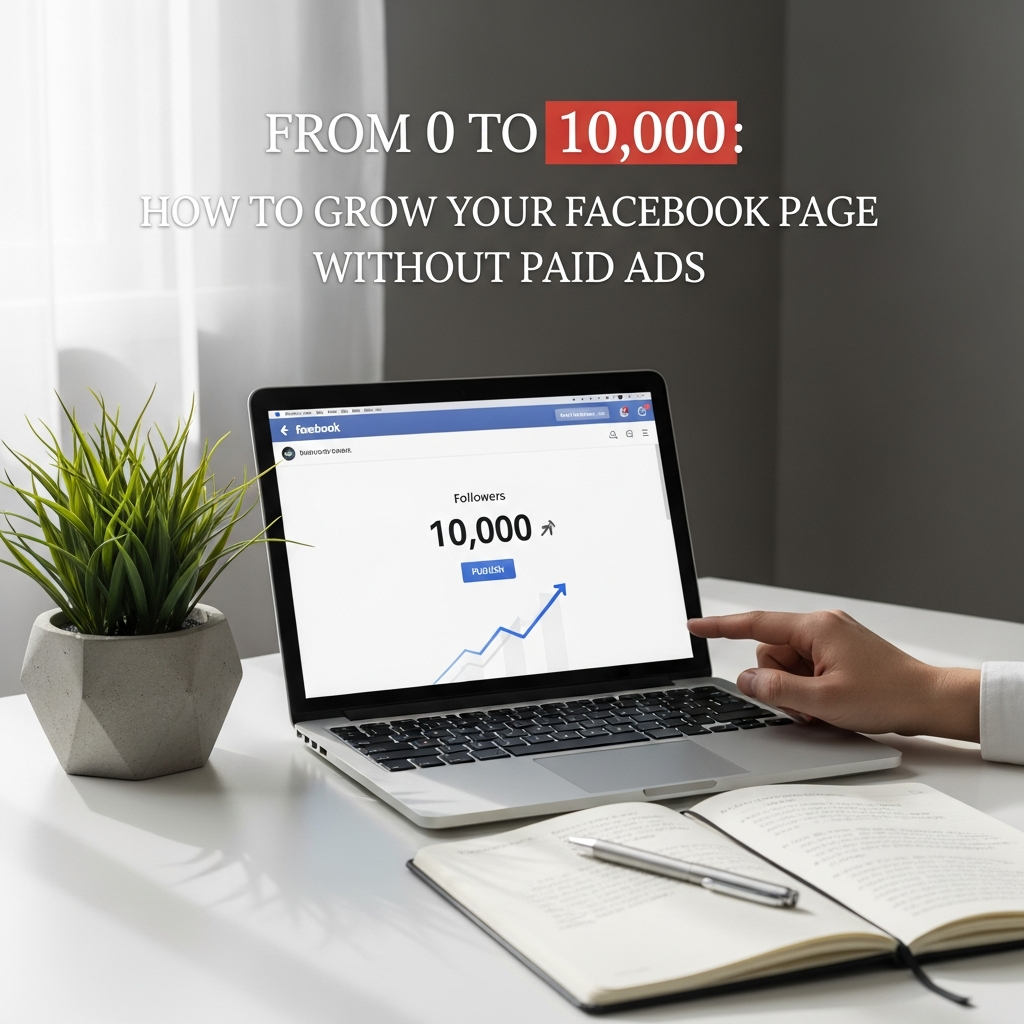
Let’s be brutally honest for a second. Starting a Facebook Page in 2024 feels a bit like trying to start a fire in a rainstorm. You post a carefully crafted update, maybe a photo of your latest project or a link to a blog post you spent six hours writing, and then? Nothing. Crickets. Maybe your mom “likes” it, and if you’re lucky, your aunt leaves a “Proud of you!” comment. It’s disheartening. It’s frustrating. And it’s exactly why most people give up before they even hit the 500-follower mark.
The common wisdom says Facebook organic reach is dead. They tell you that unless you’re ready to shovel thousands of dollars into Meta’s ad manager, you’re invisible. I’m here to tell you—with the scars of a dozen failed pages to prove it—that the common wisdom is wrong. It isn’t dead; it’s just evolved. The days of “build it and they will come” are gone, replaced by a “provide massive value and they will share” reality. Moving from zero to 10,000 followers without spending a dime on ads is not a pipe dream. It is a repeatable, tactical process. But you have to stop treating Facebook like a billboard and start treating it like a community center.
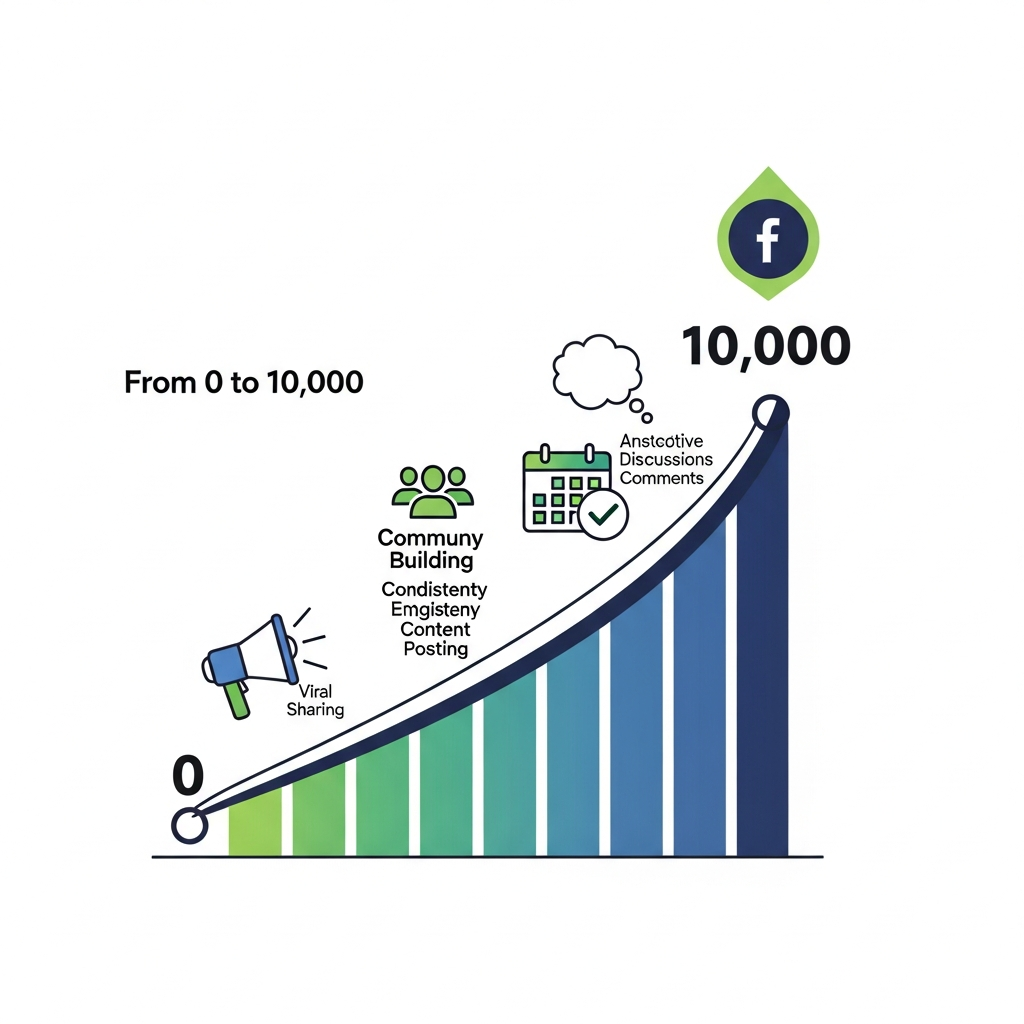
The Myth of the Algorithmic Throttle
Most creators blame “the algorithm” for their lack of growth. They think Mark Zuckerberg has a personal vendetta against their brand. Here’s the reality: the algorithm is a mirror. It reflects exactly what your audience finds interesting. If your reach is low, it’s because the content isn’t sparking a reaction that the system deems worthy of promotion. Facebook wants users to stay on the platform. If you help them do that, they will reward you with reach. If you try to siphon people off to your website with every single post, they will bury you.
To hit that 10k milestone, we need to shift our focus from “How do I get more views?” to “How do I make my content so good that people feel like they’re doing their friends a favor by sharing it?” That’s the secret sauce. Shares are the only metric that matters for organic growth. Likes are nice, comments are better, but shares are the fuel that drives the engine.
The Audit: Your Page is Your Landing Page
Before you even think about posting your next Reel, we need to look at your “storefront.” When someone discovers your content in their feed, they will click your profile. If that profile looks like a desert or a chaotic mess, they won’t hit follow. You have exactly three seconds to convince them you’re worth their time.
The Cover Photo is a Billboard, Not a Decoration. Stop using a generic landscape or a blurry logo. Your cover photo should state exactly what you do and what the visitor gets. If you’re a fitness coach, show a transformation or you in action with a headline like “Daily 15-minute workouts for busy parents.” Use a call to action (CTA) right in the image. “Click here for our free guide” (and then put the link in the image description).
The “About” Section is Your Elevator Pitch. Use keywords, but don’t be a robot. Write it for a human. Tell them who you help and how. Instead of “We sell organic coffee,” try “Helping early-morning hustlers conquer their day with ethically sourced, small-batch beans that actually taste like heaven.”
The “Call to Action” Button
Facebook gives you a primary button. Don’t just set it to “Like.” Set it to “Follow” or “Send Message.” If you want to build a community, making it easy for people to message you creates a level of intimacy that a simple “Like” never can. I’ve found that pages with a “Send Message” CTA often see higher retention because the “super-fans” feel like they have a direct line to the creator.
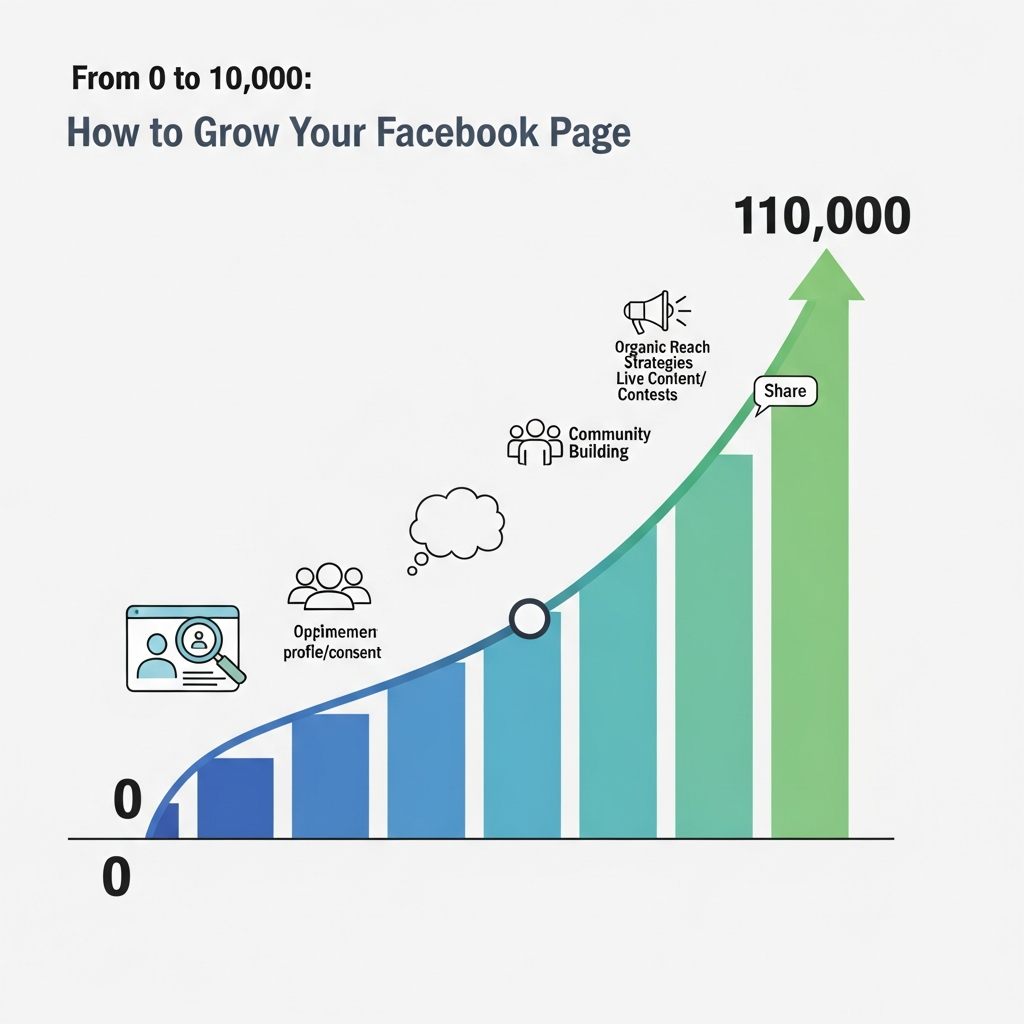
The Growth Engine: Reels and Vertical Video
If you want organic reach in the current landscape, you must embrace Facebook Reels. It is the only part of the platform where the algorithm aggressively pushes your content to people who do not follow you. While your standard image posts might reach 5% of your existing followers, a Reel can reach 500% of your current follower count if it’s tuned correctly.
But here’s where people mess up: they just repost TikToks with the watermark. Don’t do that. Facebook’s AI is smart enough to detect the watermark, and it will suppress the reach. You need native-feeling content. Here is the framework for a Reel that actually converts viewers into followers:
- The 2-Second Hook: You have to stop the thumb. Use a bold text overlay on the screen that addresses a pain point. “Why your sourdough isn’t rising” is better than “Baking day!”
- The Value Middle: Give them a “quick win.” Don’t hold back the good stuff. If you have a secret tip, give it away. People follow creators who actually help them solve problems.
- The Pattern Interrupt: Change the camera angle or the text on the screen every 3-4 seconds. Our brains are wired to pay attention to change. Static videos are death.
- The Follow Trigger: Don’t just say “Follow me.” Give them a reason. “Follow for Part 2” or “Follow for more daily hacks on [Topic].”
“I once spent three weeks filming a high-production documentary-style video for a client. It got 200 views. The next day, we filmed a 15-second tip on an iPhone in the parking lot. It hit 450,000 views and brought in 2,000 followers in 48 hours. Authenticity beats production value every single time.”
>The “Shares-First” Content Strategy
To get to 10,000 followers without ads, you need your current audience to act as your marketing team. This requires “Shareable Assets.” There are generally four types of content that get shared on Facebook:
1. The “That’s So Me” Post (Relatability)
Memes aren’t just for teenagers. They are the strongest tool for relatability. If you run a page for graphic designers, a meme about a client asking to “make the logo pop” will get shares because designers want their peers to know they relate to that struggle. It’s an identity marker.
2. The “I Didn’t Know That” Post (Educational)
Infographics or short, punchy lists. People share these because they want to appear helpful or knowledgeable to their own circle. If you can summarize a complex topic into five bullet points on a clean image, that post will live forever in the “Saved” and “Shared” folders.
3. The “Finally Someone Said It” Post (Polarizing)
Don’t be afraid to take a stand. If everyone in your niche is saying one thing, and you believe the opposite, say it loudly. This sparks conversation. Caution: Don’t be a jerk. Be contrarian with kindness. This attracts your tribe and repels the people who wouldn’t follow you anyway.
4. The “This Is Beautiful” Post (Aspirational)
High-quality imagery or storytelling that touches the heart. This is harder to pull off consistently, but a well-told story about a personal failure and the subsequent comeback is pure gold for engagement.
>Groups: The Trojan Horse Strategy
Facebook Groups are where the real “social” part of social media happens. However, most people use them wrong. They join 50 groups and spam their latest link. Result? Banned. Instantly.
Instead, use the Value-First Injection method. Join groups where your target audience hangs out. Don’t post your page links. Instead, look for people asking questions. Provide the most comprehensive, helpful answer possible in the comments. Do this for a week. People will naturally start clicking on your profile to see who this helpful person is. If your profile is optimized (as we discussed earlier), they’ll see your “Work” section links to your Page, or they’ll see your recent public posts. This is “permission marketing” at its finest.
Once you’ve established yourself as an expert in a group, you can occasionally share a post from your page—but only if it directly solves a problem being discussed. “Hey, I saw a lot of people asking about [X], I actually just put together a deep-dive video on my page about it if anyone wants to see the visual steps.” This isn’t spam; it’s a resource.
>The 20-Minute Engagement Rule
The first hour after you post is the most critical. Facebook’s algorithm is testing the “temperature” of your post. If you post and then walk away, you’re leaving money on the table. For the first 20 minutes after posting, stay on the app. When someone comments, reply immediately. This does two things:
- It doubles the comment count (which looks good to the algorithm).
- It notifies the user who commented, often bringing them back to the post to reply again, creating a “conversation loop.”
The more “depth” a conversation has (replies to replies), the more likely Facebook is to show that post to more people. Treat your comment section like a dinner party. You wouldn’t ignore a guest who just complimented your cooking, right?
>The Power of the “Micro-Community”
When you’re at 0-500 followers, you have a massive advantage: you can be unscalable. You can literally talk to every single follower. Send a voice note to new followers. Ask them what they’re struggling with. This sounds like it takes too much time, but the loyalty you build in the first 1,000 followers determines the trajectory of the next 9,000. These people become your “Street Team.” They are the ones who will tag their friends in your posts without being asked. You aren’t building a following; you’re building an army of advocates.
>Leveraging “Engagement Bait” Without Being “Bait-y”
Facebook has cracked down on explicit engagement bait (e.g., “LIKE THIS IF YOU LOVE DOGS!”). If you do this, your reach will be penalized. However, you can use Low-Friction Requests. These are questions that require almost no effort to answer but get the ball rolling.
Instead of a deep, philosophical question, try: “Coffee or Tea?” or “Which logo do you prefer: A or B?” These “this or that” posts are incredibly effective because they don’t require the user to think hard. Once they’ve commented on a simple post, the algorithm is more likely to show them your more complex, long-form content the next day. It’s about warming up the relationship.
>Consistency vs. Intensity
I’ve seen people post five times a day for a week and then disappear for a month because they’re burnt out. That is a recipe for failure. Facebook’s algorithm prizes predictability. If you can only manage three posts a week, that’s fine—just make sure they happen every single week. Use the Meta Business Suite to schedule your content in advance. Spend one afternoon on a Sunday batching your Reels and images so you aren’t scrambling on a Wednesday morning.
The “Sweet Spot” Posting Schedule:
- 1 Reel per day (Reach)
- 1 Image/Infographic every other day (Engagement/Shares)
- 1 Facebook Live per week (Trust/Retention)
If that’s too much, scale back the images, but keep the Reels. They are your primary growth lever.
>Analyzing the Right Data
Stop looking at “Total Likes.” It’s a vanity metric. Instead, go into your Meta Insights and look at “Minutes Viewed” for your videos and “Post Reach” for your images. Specifically, look at the “Followers vs. Non-Followers” reach breakdown. If your content is only reaching followers, you’re stagnant. If you see a high percentage of non-followers, you’ve hit a vein of growth. Double down on whatever that topic or format was.
Look at your “Negative Feedback” too. If people are hiding your posts, you’re either posting too often or the content is irrelevant. Adjust quickly. The algorithm keeps a “quality score” for your page; don’t let it tank by being annoying.
>Cross-Pollination: The Final Push
You don’t have to grow your Facebook Page only on Facebook. If you have an email list, send them a link to a specific, high-value post (not just the page). If you’re on LinkedIn or Twitter, share a screenshot of a conversation happening on your Facebook page to pique interest. The goal is to create a multi-channel funnel that leads back to your Facebook community.
One of the most effective strategies I’ve used is the “Newsletter Bridge.” Every time I write a newsletter, I include a “Question of the week” and tell people the discussion is happening over on the Facebook Page. This moves warm traffic from my inbox to my social feed, which gives the post an initial boost of engagement that helps trigger the wider algorithm.
>The 10k Mindset: Playing the Long Game
Growing to 10,000 followers without ads is a marathon, not a sprint. You will have weeks where your numbers go backward. You will have posts that you thought were brilliant that get zero traction. This is normal. The difference between the pages that hit 10k and those that die at 200 is persistence and adaptation.
Don’t get married to your content. If something isn’t working, kill it. If a specific type of Reel is flying, make ten more versions of it. Listen to your audience. They will tell you what they want by how they interact. Your job isn’t to be a “creator” in a vacuum; it’s to be a facilitator of the conversations your audience is already dying to have.
Start today. Not by buying ads, but by finding one person in a group and helping them. Then post one Reel that teaches something valuable. Then do it again tomorrow. The snowball starts small, but once it gets rolling, it’s unstoppable.
You don’t need Meta’s permission to grow. You just need to be too good to ignore. Now, go optimize that cover photo and start recording your first Reel. The first 10,000 are waiting for you.