
Listen, I’ve seen enough “SEO gurus” on YouTube to last a lifetime, and most of them are selling you a version of digital alchemy that hasn’t worked since the Bush administration. You’re told that SEO is this mystical, byzantine art form where you have to appease the Google gods with sacrifices of meta tags and keyword stuffing. It’s nonsense. SEO—Search Engine Optimization—is actually quite simple at its core: it’s about being the most relevant answer to a specific question. If you can provide that answer better than anyone else, and prove to a machine that you’ve done it, you win.
I remember my first site back in 2012. I thought I was a genius because I used the word “cheap sneakers” 45 times in a 300-word post. I ranked for about three hours before Google’s Penguin update slapped my site into the digital abyss. I learned the hard way that you can’t trick a trillion-dollar company. You have to work with them. This guide is the culmination of a decade spent in the trenches, failing, succeeding, and finally understanding the rhythm of the algorithm. Let’s get your site to the top of the pile.
The Psychology of the Searcher: It’s Not Just Keywords
Before you touch a single line of code or write a blog post, you need to understand Search Intent. This is the “why” behind the “what.” When someone types something into that white box, they want one of four things. If you give them a sales page when they wanted an educational guide, you will fail. Period.
- Informational Intent: They want to learn. “How to fix a leaky faucet.” (They need a guide).
- Navigational Intent: They are trying to find a specific site. “Facebook login.” (They don’t need your blog).
- Commercial Investigation: They are comparing options. “Best DSLR cameras 2024.” (They need a listicle).
- Transactional Intent: They are ready to buy. “Buy Nikon D850.” (They need a product page).
Your job is to match your content to that intent. If you’re targeting “best running shoes,” don’t just link to your store; write a massive comparison review. That’s how you earn the click.
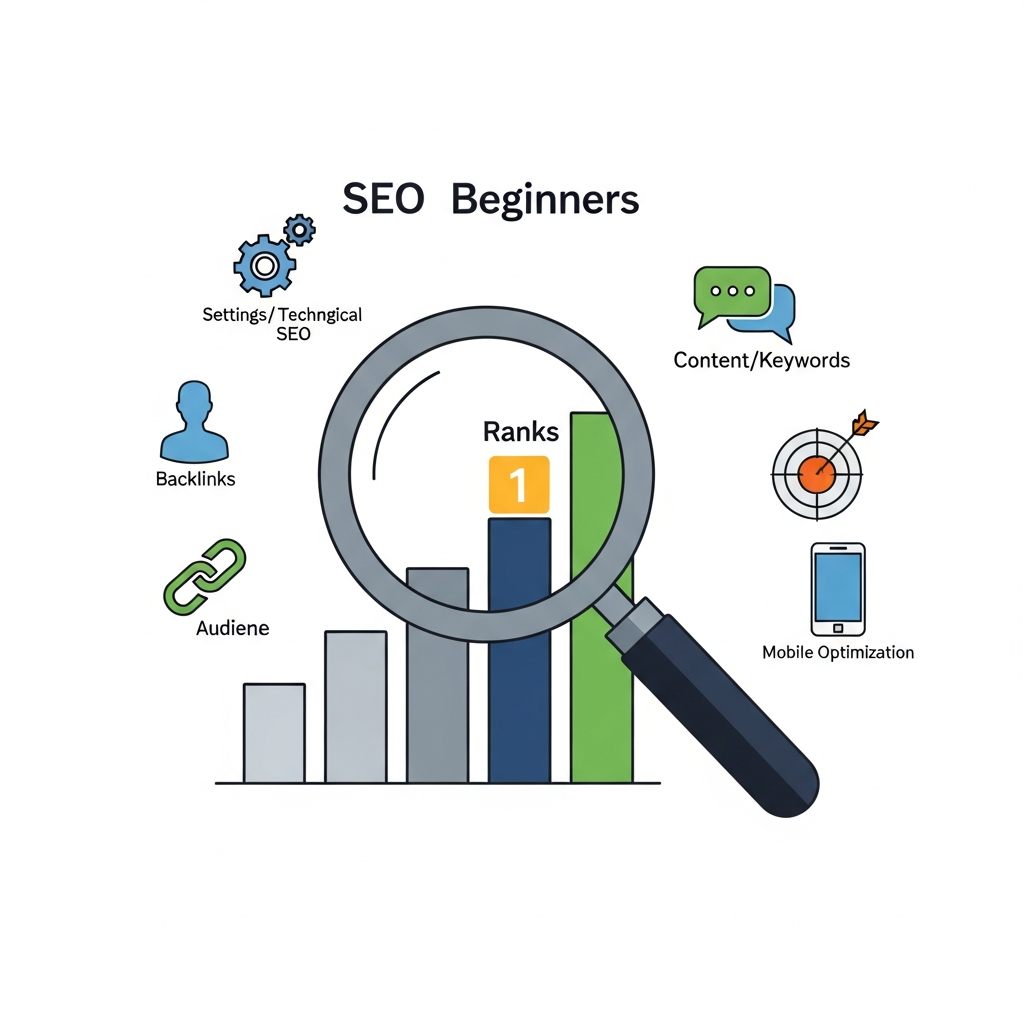
Keyword Research: Finding the Gaps in the Map
Most beginners start by trying to rank for massive terms like “Insurance” or “Coffee.” Unless you have a million-dollar budget and a team of fifty, you will lose. You need to look for Long-Tail Keywords. These are longer, more specific phrases that have lower search volume but much higher conversion rates.
Think of it this way: someone searching for “shoes” is just browsing. Someone searching for “size 10 red leather Chelsea boots for men” is standing there with their credit card out. Use tools like Ahrefs or SEMrush if you have the cash, but if you’re starting on a budget, Google’s own “People Also Ask” section and “Autocomplete” are gold mines. Type in your main topic and see what questions the internet is actually asking. Those questions are your roadmap.
The “Low-Hanging Fruit” Strategy
I always tell my clients to look for “low difficulty, high intent” keywords. Look for forums like Reddit or Quora appearing in the top 3 results for a query. If a forum is ranking, it means there isn’t a high-quality, dedicated article on the topic. That is your invitation to swoop in and take the crown.
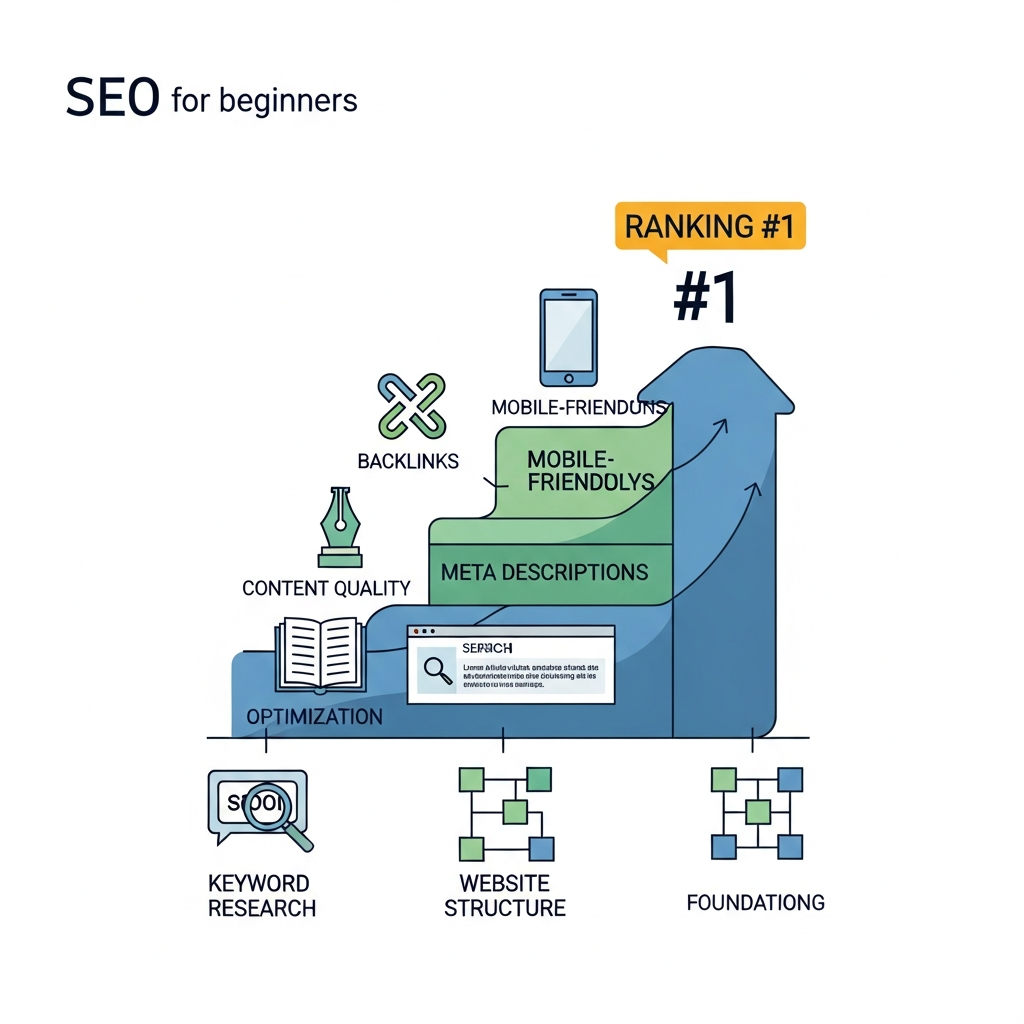
On-Page SEO: Making Your Content “Readable” for Bots
Once you have your keyword, you need to place it where the crawlers can find it. But please, for the love of all that is holy, don’t overdo it. Write for humans first, bots second. If your sentence sounds like a robot wrote it, rewrite it.
- The Title Tag: This is the most important on-page element. Keep it under 60 characters and put your main keyword near the beginning. Make it “clicky” but not clickbaity.
- The H1 Tag: You only get one. Use it for your main headline. It should be similar but not identical to your title tag.
- Subheadings (H2 & H3): These break up the text. They help Google understand the hierarchy of your information and help users skim. Nobody reads word-for-word anymore; we all scan.
- URL Structure: Keep it clean.
yourdomain.com/seo-guideis better thanyourdomain.com/p=123?category=blog&id=99. - Alt Text for Images: Google can’t “see” an image. The Alt Text tells it what the image is. It also helps visually impaired users, which is a big deal for accessibility.
“SEO is not about being the best writer; it’s about being the most relevant resource that the algorithm can actually interpret.”
>Technical SEO: The Plumbing of Your Website
You can have the greatest content in the world, but if your site takes 10 seconds to load, or if Google’s bots get lost in a maze of broken links, you’ll never rank. This is the “Technical SEO” part, and while it sounds scary, it’s mostly just housekeeping.
Site Speed and Core Web Vitals
Google hates slow sites. Users hate them more. If your page doesn’t load in under 2.5 seconds, you’re bleeding visitors. Use Google PageSpeed Insights. If your images are 5MB each, compress them. If your hosting is a $2-a-month shared plan that crashes every time three people visit, upgrade it. Speed is a ranking factor, but more importantly, it’s a conversion factor.
Mobile-First Indexing
We live in a mobile world. Google now looks at the mobile version of your site to decide how to rank you. If your site looks like a desktop site shrunk down to ant-size on a phone, you’re in trouble. Ensure your design is responsive—it should fluidly adapt to any screen size.
The Robots.txt and Sitemap
The robots.txt file is like a “Keep Out” sign for certain parts of your site. The sitemap.xml is a literal map you give to Google so it knows where every page is. Most CMS platforms like WordPress handle this automatically with plugins like Yoast or Rank Math. Just make sure they exist.
>Content Strategy: Quality Over Quantity (Seriously)
There was a time when “pumping out content” was the strategy. That era is dead. Google’s Helpful Content Update has made it clear: they want “Expertise, Experience, Authoritativeness, and Trustworthiness” (E-E-A-T).
Stop writing 500-word fluff pieces. If you’re writing a guide on SEO, write the *ultimate* guide. Cover the history, the technical side, the creative side, and the future. Provide original data, personal anecdotes, and unique insights that a generative AI couldn’t just scrape from the web. Google loves “originality.” If you’re just regurgitating the top 5 results, why should Google rank you at #6?
Use a mix of sentence lengths. Some short. Like this. And some that are long, winding, and descriptive, providing a rhythm that keeps the reader engaged and moving down the page, which increases “dwell time”—a metric that tells Google your content doesn’t suck.
>The Dark Art of Link Building (Backlinks)
Backlinks are basically “votes” from other websites. If a reputable site like The New York Times links to you, Google thinks, “Hey, this site must be legit.” If a spammy site about “cheap pills” links to you, it does nothing or might even hurt you.
The problem is that most people approach link building like a telemarketer. They send 1,000 cold emails saying, “Please link to my blog.” Don’t do that. It’s annoying and it doesn’t work. Instead, focus on Digital PR and Link Magnet content.
- Create Original Data: Run a survey, analyze a dataset, and publish the findings. People love to link to statistics.
- Guest Posting (The Right Way): Write for other high-quality sites in your niche. Don’t do it for a “dofollow” link alone; do it to build an audience.
- The Broken Link Method: Find a dead link on a competitor’s site, contact the owner, and suggest they replace it with your (better) live link. It’s a win-win.
Beware of “Private Blog Networks” (PBNs) or buying links on Fiverr. Google is very good at spotting these, and the resulting penalty can be a death sentence for your domain. It’s better to have 5 high-quality links than 500 garbage ones.
>Measuring Success: Stop Chasing Vanity Metrics
Ranking #1 for a keyword is great for the ego, but it doesn’t pay the bills. You need to track what matters. Set up Google Search Console and Google Analytics 4 (GA4) immediately.
Search Console will tell you which keywords are bringing people to your site and if there are any technical errors. Analytics will tell you what people do once they get there. Are they staying for 5 minutes or bouncing in 5 seconds? Are they clicking your “Buy Now” button? If you have high traffic but zero conversions, you don’t have an SEO problem; you have a CRO (Conversion Rate Optimization) problem.
>The Future: AI and the Search Generative Experience (SGE)
The “Search Generative Experience” is Google’s new AI-powered interface. It provides an answer directly at the top of the page, often making it so the user never has to click a link. This scares people. It shouldn’t.
AI is good at facts, but it’s bad at “human experience.” To survive in an AI-heavy search world, you need to lean into your humanity. Use “I” and “we.” Share your personal failures and specific case studies. AI can’t tell a story about how it stayed up until 3 AM fixing a server; only you can. That’s the stuff that will keep people clicking through to your site long after the bots have summarized the basics.
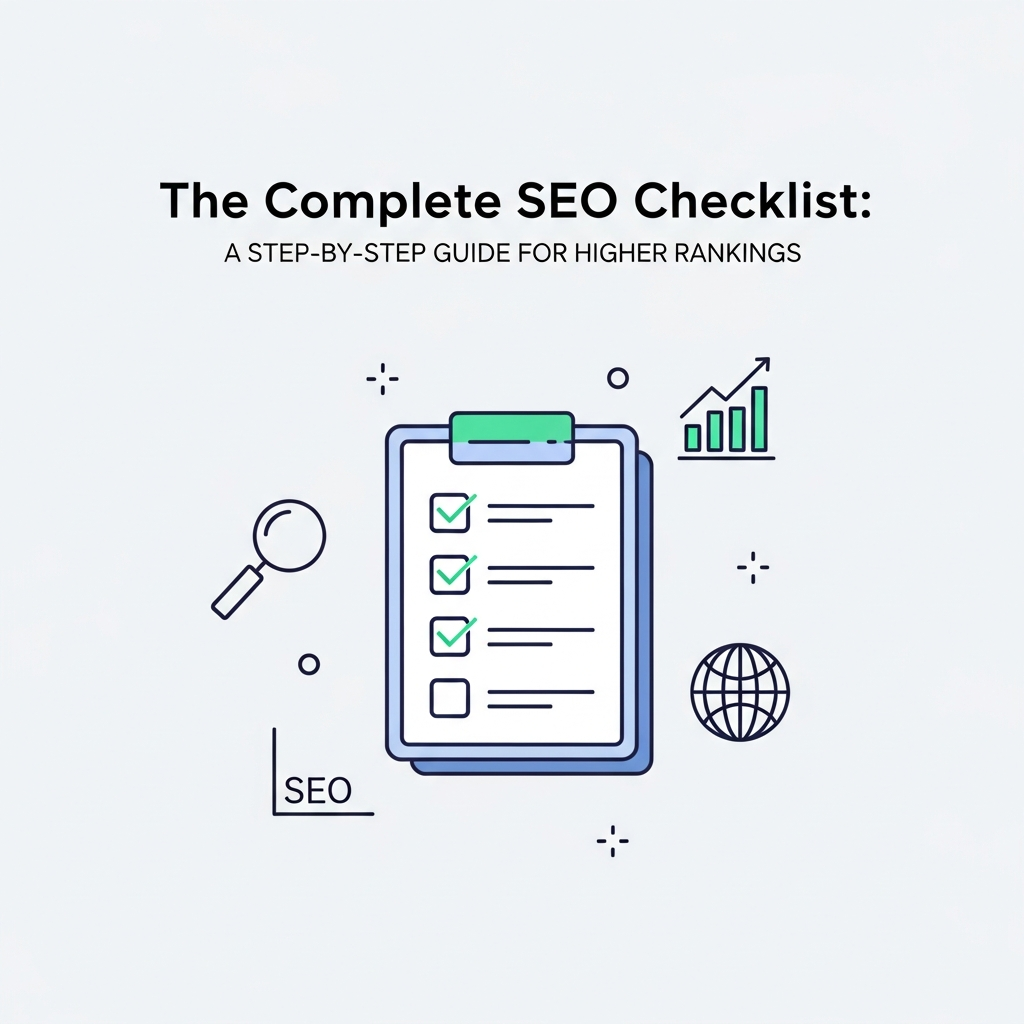
>Putting It All Together: Your SEO Checklist
SEO isn’t a “set it and forget it” thing. It’s a garden. You plant, you water, you weed, and eventually, you harvest. Here is your immediate action plan:
- Week 1: Audit your site. Fix the broken links and slow-loading images.
- Week 2: Keyword research. Find 10 long-tail keywords your competitors are ignoring.
- Week 3: Content creation. Write three “power posts” that are better than anything currently on page 1.
- Week 4: Outreach. Connect with five people in your industry and start building relationships (not just asking for links).
It takes time. Usually 3 to 6 months to see real movement. But once that flywheel starts spinning, the traffic is “free,” passive, and incredibly powerful. Don’t overthink the algorithm. Focus on the human on the other side of the screen. If they’re happy, Google will be happy. Now, stop reading and go build something worth ranking.