
The Ghost in the Machine: Beyond the “Spray and Pray” Trauma
I remember sitting in a dimly lit office back in 2014, staring at a Facebook Ads Manager dashboard that felt like a gambling terminal. We were burning through a client’s budget—fifty grand a month—on what we called “broad interest targeting.” We were basically throwing spaghetti at a very expensive wall and hoping something stuck. It was soul-crushing. You’d see the bounce rates and feel a physical pang in your chest. That wasn’t marketing; it was a desperate plea for attention in a room full of people screaming. Fast forward to today, and the landscape hasn’t just changed; it’s undergone a molecular restructuring. AI automation isn’t a “plugin” or a “feature”—it is the surgical scalpel replacing the blunt trauma of traditional advertising.
When we talk about “The Precision Revolution,” we aren’t just talking about algorithms that work faster than humans. We’re talking about the end of the average. In the old world, we built personas like “Marketing Mary” or “Tech-Savvy Tom.” These were caricatures—hollowed-out versions of real humans. AI doesn’t care about your caricatures. It looks at the stochastic noise of human behavior and finds the signal. It’s analytical, yes, but for the first time, it allows us to be deeply empathetic because we stop bothering people with things they don’t want.
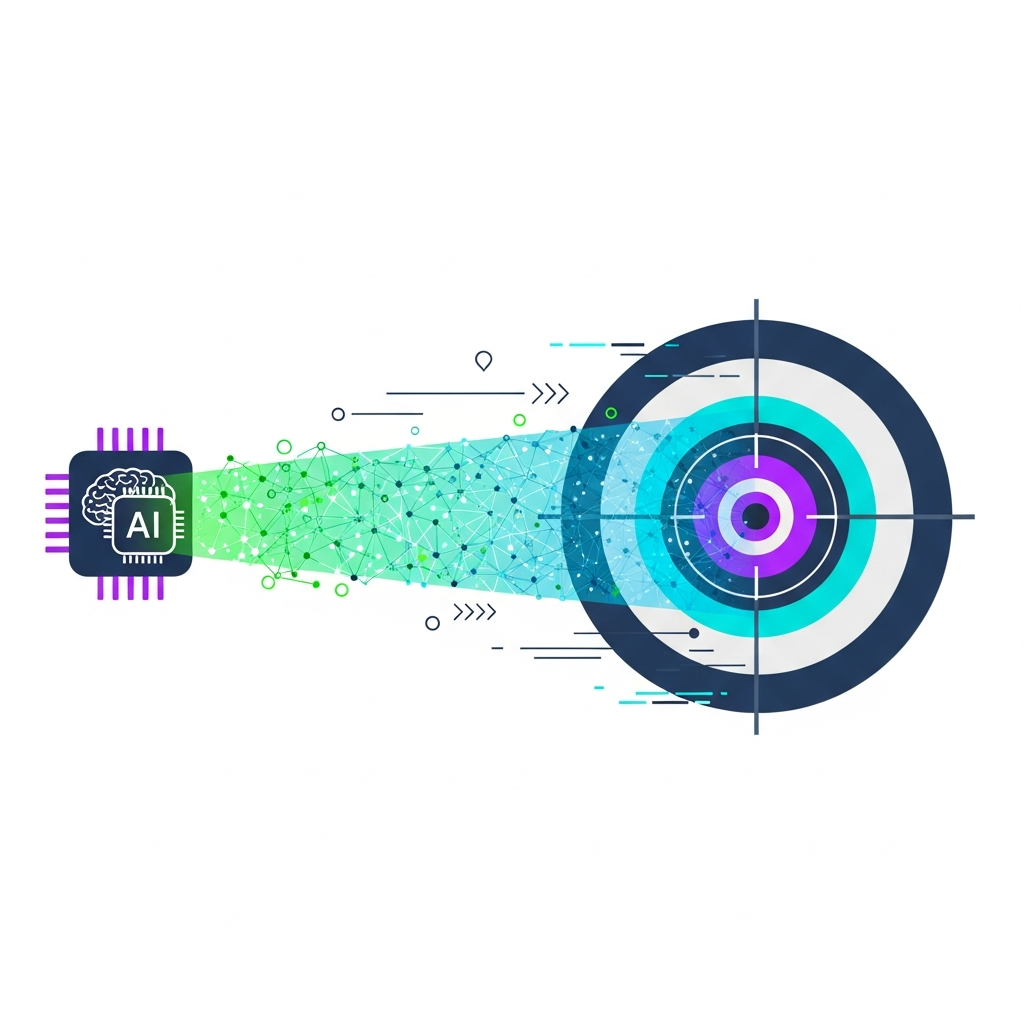
The Neuroscience of Micro-Relevance
Why does a perfectly timed notification feel like magic, while a generic email feels like a violation? It comes down to cognitive load. Humans are biologically wired to filter out irrelevant stimuli; it’s a survival mechanism. If our ancestors paid attention to every rustle in the grass, they’d have died of nervous exhaustion. Modern digital noise is that rustling grass. AI-driven precision works because it bypasses the “relevance filter” by mimicking the way our brains prioritize information.
The Bayesian Brain and Predictive Modeling
Most people think AI predicts the future. It doesn’t. It calculates the probability of a specific outcome based on a recursive loop of past data points. In academic circles, we often look at this through the lens of Bayesian inference. Essentially, the system starts with a “prior” belief (e.g., “People who buy organic coffee might like artisanal honey”) and constantly updates that belief as new evidence arrives. For your brand, this means the automation is learning in real-time. If a user lingers on a product image for 4.2 seconds instead of 1.8, the “prior” updates. The precision comes from the fact that the machine doesn’t get tired of calculating these updates. It does it billions of times per second.
I’ve watched brands struggle because they treat AI like a static tool—set it and forget it. That’s a mistake. You have to feed the beast high-quality data. If you feed it garbage, it will give you precisely targeted garbage. But when you align your brand values with these probabilistic models? That’s when you stop being a “vendor” and start being a “solution.”
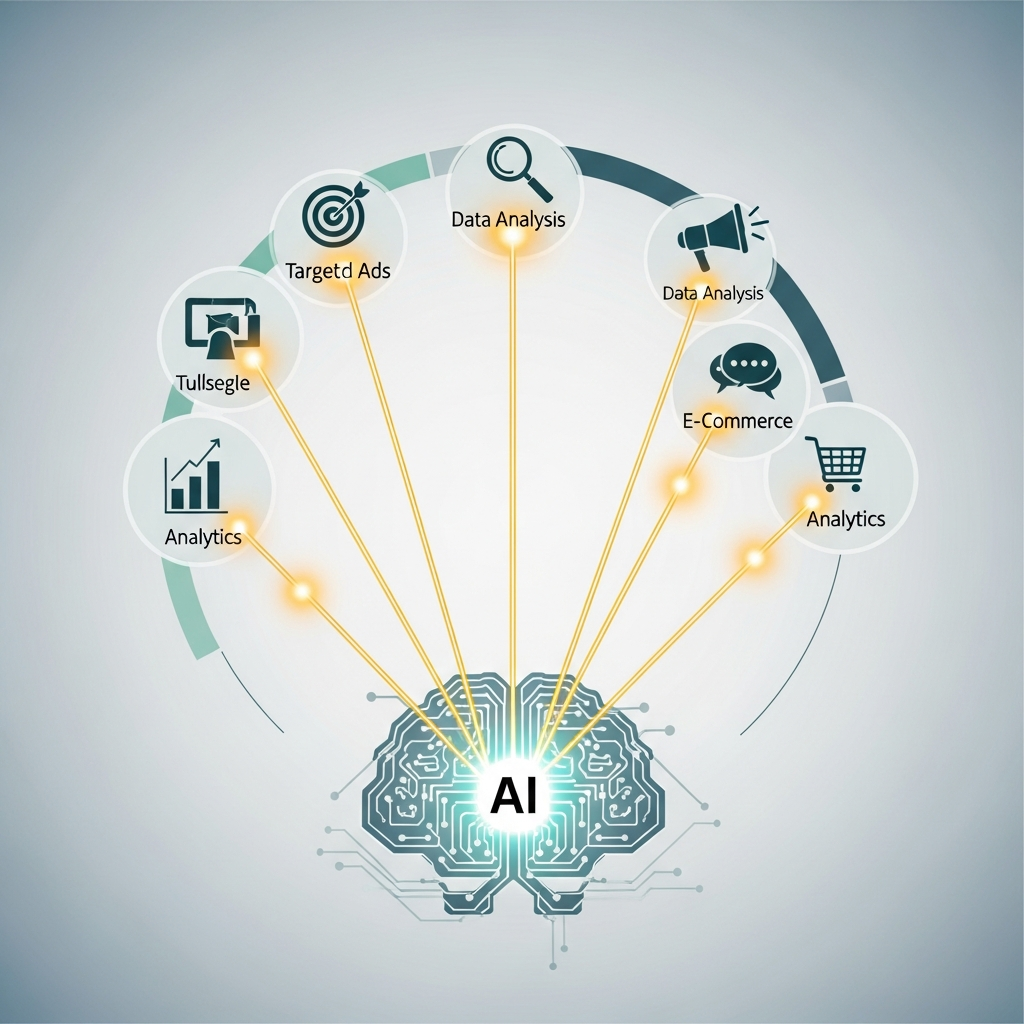
Deconstructing the “Black Box”: How Logic Meets Automation
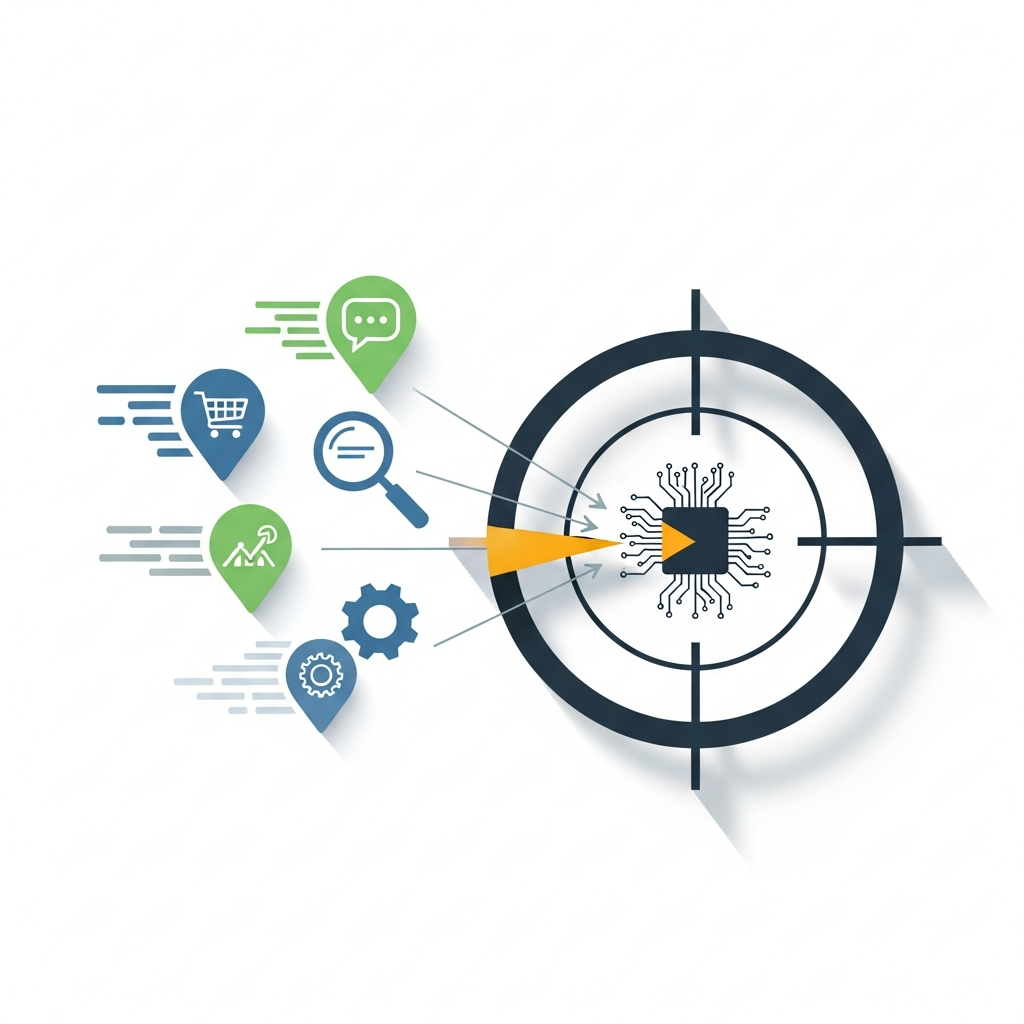
There’s a lot of fear-mongering about “black box” algorithms—the idea that we don’t know why the AI does what it does. While the internal weights of a neural network are complex, the logic of precision automation is actually quite elegant. It’s built on three pillars: Signal Identification, Latency Reduction, and Iterative Refinement.
- Signal Identification: This is the ability to distinguish between “intent” and “noise.” A user searching for “how to fix a leaky faucet” has a different intent than someone searching for “designer kitchen faucets.” AI looks at the semantic context to ensure your brand appears only when the intent matches your value proposition.
- Latency Reduction: In the manual days, we’d run a report, analyze it on Monday, and change the ads on Tuesday. By then, the “moment” was gone. Automation acts in milliseconds. It’s the difference between catching a falling glass and reading a report about how the glass broke.
- Iterative Refinement: The AI is constantly running micro-experiments (A/B testing on steroids). It might test 5,000 variations of a headline across 5,000 different micro-segments. No human team, no matter how caffeinated, can compete with that level of granular optimization.
>The Death of the Demographic: Long Live the Psychographic
Stop targeting “Women aged 25-34 in urban areas.” It’s lazy. It’s ineffective. It’s a relic of the Mad Men era. Two women in that demographic could have nothing in common—one might be a minimalist ultra-marathoner, while the other is a maximalist gourmet chef. AI allows us to target behavioral clusters and psychographic profiles.
Through Natural Language Processing (NLP), AI can analyze the sentiment of a user’s social media interactions or the nuance of their search queries. It understands the “why” behind the click. If your brand sells high-end hiking gear, you don’t want someone who just likes the “aesthetic” of mountains; you want the person who is currently researching the topographical maps of the Dolomites. AI finds that person by connecting dots that aren’t visible to the naked eye. It’s about finding the “inner state,” not just the “outer zip code.”
The Empathetic Edge
This is where it gets personal. We’ve all been followed around the internet by a pair of shoes we already bought. That is *bad* automation. It’s clunky. True precision automation—the kind I advocate for—knows you bought the shoes. It stops showing you the ad. Instead, it might show you a video on how to care for that specific leather, or suggest the perfect socks to match. Precision is an act of service. When you use AI to respect a customer’s journey, you build a level of brand loyalty that “lookalike audiences” can never touch.
>The Plumbing Problem: Why Your Data Architecture is Leaking
I have to be the bearer of bad news here: your AI is only as good as your data plumbing. I’ve consulted for Fortune 500 companies that wanted “AI Revolution” results but had their data stored in five different siloes that didn’t talk to each other. It’s like trying to run a Ferrari on swamp water.
To achieve actual precision, you need a Single Source of Truth (SSOT). This means your CRM, your website analytics, your social data, and your email platforms must be integrated. AI requires a holistic view of the customer. If the AI doesn’t know that “User A” who clicked the ad is the same “User A” who called support yesterday, the precision fails. You end up sending a promotional “buy now” email to someone who is currently furious about a shipping delay. That’s not just a missed sale; it’s a brand-killer.
>Hyper-Personalization at Scale: The Holy Grail
We used to say “Personalization doesn’t scale.” You could either be personal with ten people or generic with ten million. AI shattered that dichotomy. We are now in the era of Dynamic Creative Optimization (DCO). This isn’t just swapping out a first name in an email. This is the AI generating unique landing pages, visual assets, and pricing structures for every individual user in real-time.
Imagine a world where your website morphs based on who is visiting. A first-time visitor sees educational content and a “warm” welcome. A returning loyalist sees their “frequently bought” items and a loyalty discount. A price-sensitive browser sees a “limited time offer.” This isn’t science fiction; it’s what top-tier brands are doing right now to crush their competition. The precision lies in the timing—hitting the user with the right message at the exact point in their “Circadian Rhythm of Commerce.”
The Concept of “Stochastic Resonance” in Marketing
In physics, stochastic resonance is a phenomenon where a signal that is too weak to be heard can be boosted by adding white noise. Marketing automation does something similar. By analyzing the “noise” of the market, AI identifies the tiny, weak signals of interest that a human would miss. It then amplifies those signals by delivering targeted content. It’s about finding the “whisper” of intent in a “scream” of data.
>Ethics, Privacy, and the “Creepiness” Threshold
We have to talk about the elephant in the room. There is a fine line between “highly targeted” and “stalking.” As someone who has spent years in the trenches of data analytics, I’ve seen where that line is, and it’s thinner than you think. The Precision Revolution must be built on a foundation of Data Sovereignty and Radical Transparency.
If you use AI to manipulate people’s insecurities, you will fail in the long run. The “uncanny valley” of marketing occurs when the AI knows something about the user that they haven’t explicitly shared. The goal is to be helpful, not omniscient. Use automation to solve problems, not to exploit psychological vulnerabilities. Brands that prioritize privacy-first AI—using zero-party data (information the user intentionally shares)—are the ones that will survive the upcoming regulatory storms like GDPR and CCPA. Precision is not a license to pry; it’s a responsibility to be relevant.
>The Human-in-the-Loop: Why Robots Won’t Replace Your CMO
There’s a common anxiety that AI will make brand managers obsolete. I actually believe the opposite is true. AI makes the human element more important than ever. The AI provides the precision, but the human provides the purpose.
AI can tell you that a certain segment of your audience responds better to the color blue and a 10% discount. It can’t tell you *why* your brand should exist in the first place. It can’t feel the “vibe” of a cultural movement. It can’t understand the nuance of irony or the depth of human grief. We need “Human-in-the-Loop” (HITL) systems where the AI handles the heavy lifting of data processing, and the human provides the creative guardrails and ethical oversight. The most successful brands I’ve seen are the ones where the creative directors and data scientists are best friends, not rivals.
A Personal Note on the “Aha!” Moment
I once worked with a small e-commerce brand that was struggling to find its footing. They were using basic automated bidding on Google. We switched them to a custom-built AI model that factored in local weather patterns, stock market fluctuations (their product was a luxury item), and even local “mood” data from social media. Within three months, their ROAS (Return on Ad Spend) jumped from 2.1 to 8.4. But the coolest part? Their customer support tickets dropped by 40%. Because we were so precise in who we targeted, the people buying the product were the ones who actually needed it. We weren’t “selling” anymore; we were “matching.” That’s the dream.
>Practical Steps: Navigating the Transition
If you’re feeling overwhelmed, good. That means you’re paying attention. The transition to AI-driven precision isn’t a weekend project; it’s a cultural shift. Here’s how you start without losing your mind:
- Audit Your Data Integrity: Before buying a single AI tool, look at your data. Is it clean? Is it accessible? If not, fix that first.
- Start with “Low-Hanging Fruit”: Don’t try to automate your entire brand at once. Start with automated bidding or predictive lead scoring. Get a win, then expand.
- Invest in “Translation” Talent: You need people who can bridge the gap between technical data science and brand storytelling. These “translators” are the most valuable assets in the modern economy.
- Test, Break, and Learn: Automation allows for rapid failure. Embrace it. If a model isn’t working, kill it and start over. The cost of failure in an automated world is much lower than the cost of stagnation.
>The Future is Non-Linear
We are moving toward a world of Anticipatory Marketing. This is where your brand provides a solution before the customer even realizes they have a problem. It sounds like sci-fi, but it’s just the logical conclusion of high-precision AI. When you combine massive computing power with deep human empathy, you create a brand experience that feels less like a transaction and more like a relationship.
The “Precision Revolution” isn’t about being colder or more mechanical. It’s about using technology to strip away the irrelevance, the noise, and the waste, leaving behind only the most meaningful connections. It’s about being right—not just loud. And in a world that is louder than ever, being right is the only thing that matters.
Are you ready to stop screaming and start connecting? Because the machine is ready when you are.