
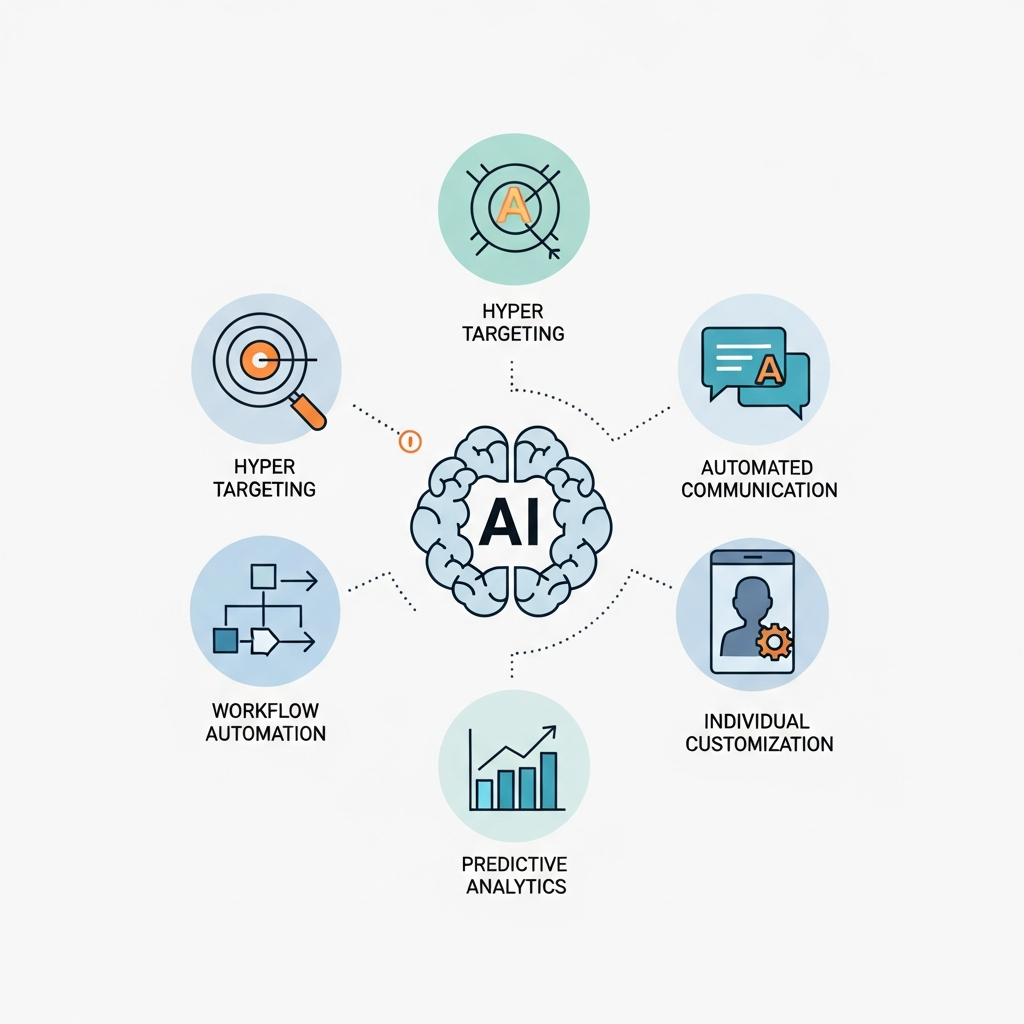
The Death of the “Spray and Pray” Era: Why Bulk Messaging is a Liability
I remember the specific moment I realized the old way of doing things was utterly, irredeemably dead. It was 2018. I was working with a mid-sized SaaS firm that had just invested six figures into a “cutting-edge” bulk-sending platform. We fired off a campaign—beautifully designed, grammatically perfect—to 50,000 leads. The result? A 0.2% click-through rate and a permanent blacklisting from three major ISP servers. It felt like shouting into a hurricane and expecting someone to hear a whisper. It wasn’t just a failure of technology; it was a failure of empathy. We were treating human beings like rows in a CSV file.
Today, the landscape is even more unforgiving. Our inboxes are digital fortresses. Gatekeepers are no longer just human assistants; they are sophisticated AI filters designed to detect “automated” patterns with surgical precision. If your outreach feels like a template, it dies in the spam folder. Period. But here is the paradox: to achieve true, human-level scale, we need the very thing that created the problem—Artificial Intelligence. The difference lies in how we wield it. We are moving beyond the era of bulk messaging and into the age of Hyper-targeted Automation.
This isn’t about sending more emails. It’s about sending the right message, to the right person, at the exact moment their pain point becomes unbearable. It’s about using Large Language Models (LLMs) and predictive analytics to simulate the thoughtfulness of a boutique consultancy at the scale of a global enterprise. Let’s peel back the layers on how we actually do this without losing our souls in the process.
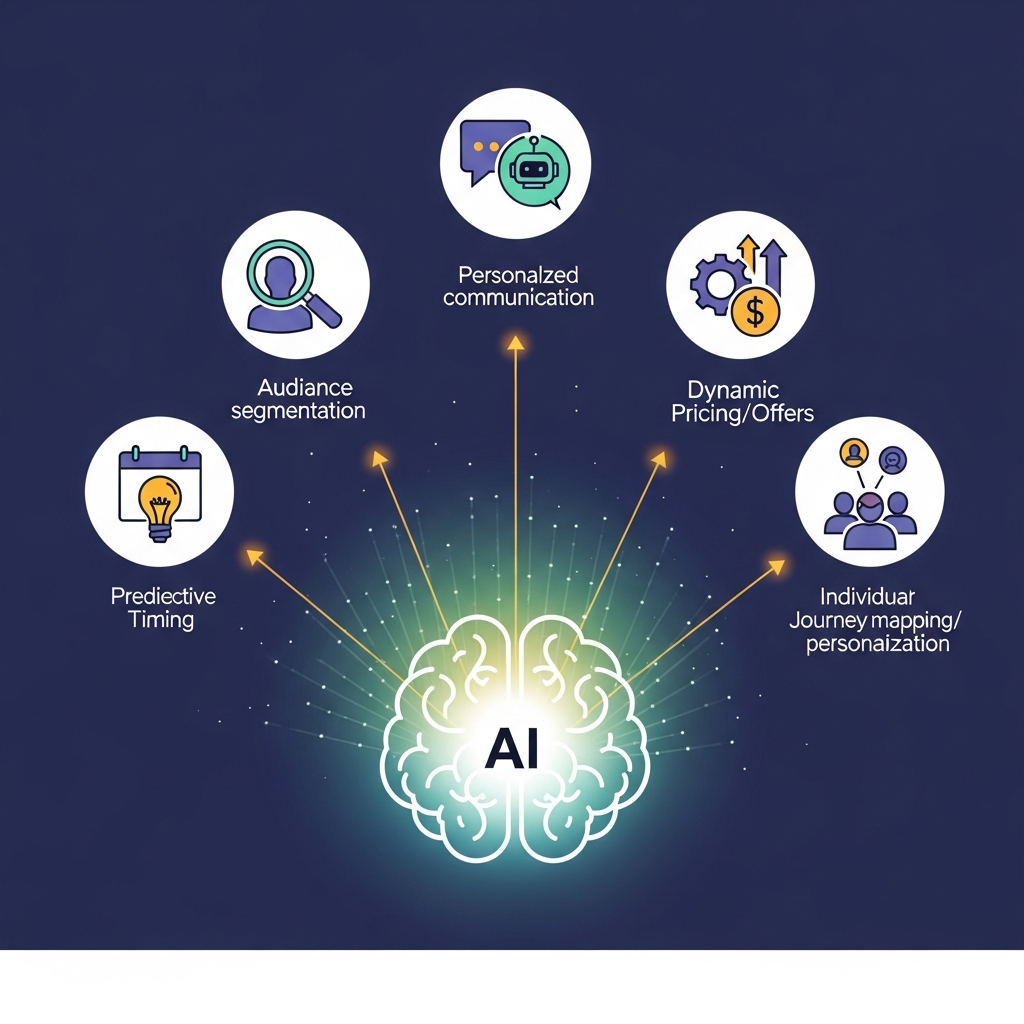
1. Psychographic Segmentation and Semantic Intent Mapping
Traditional segmentation is lazy. We usually group people by job title, industry, or geography. “Marketing Managers in Chicago.” That tells us nothing about their current psychological state or their immediate business needs. Psychographic segmentation powered by AI looks at the why behind the person. By leveraging Natural Language Processing (NLP), we can scrape a prospect’s recent LinkedIn posts, their company’s quarterly earnings reports, or even their interviews on podcasts to determine their “Semantic Intent.”
Think about it. Is the prospect currently in a “Defensive” posture (cutting costs, optimizing existing stacks) or an “Aggressive” posture (hiring rapidly, expanding into new markets)? An AI can analyze thousands of data points to categorize leads into these nuanced buckets. When you know a CTO is currently obsessed with “Technical Debt” because they mentioned it three times in a recent webinar, your automation shouldn’t talk about “Innovation.” It should talk about “Refactoring and Efficiency.”
The “Digital Body Language” Framework
- Linguistic Mirroring: AI identifies the specific vocabulary a prospect uses. If they use academic language, your automation adapts. If they are punchy and informal, the AI softens the tone.
- Sentiment Velocity: Is the prospect’s public sentiment becoming more frustrated or more optimistic? AI tracks this shift, triggering messages when a “frustration peak” is detected.
- Thematic Clustering: Instead of static lists, AI creates fluid clusters based on shared challenges. You’re not messaging “HR Directors”; you’re messaging “Leaders struggling with remote culture retention.”
By the time the message hits their inbox, it doesn’t feel like marketing. It feels like synchronicity. It feels like you’ve been paying attention—because, through the lens of your AI, you have.
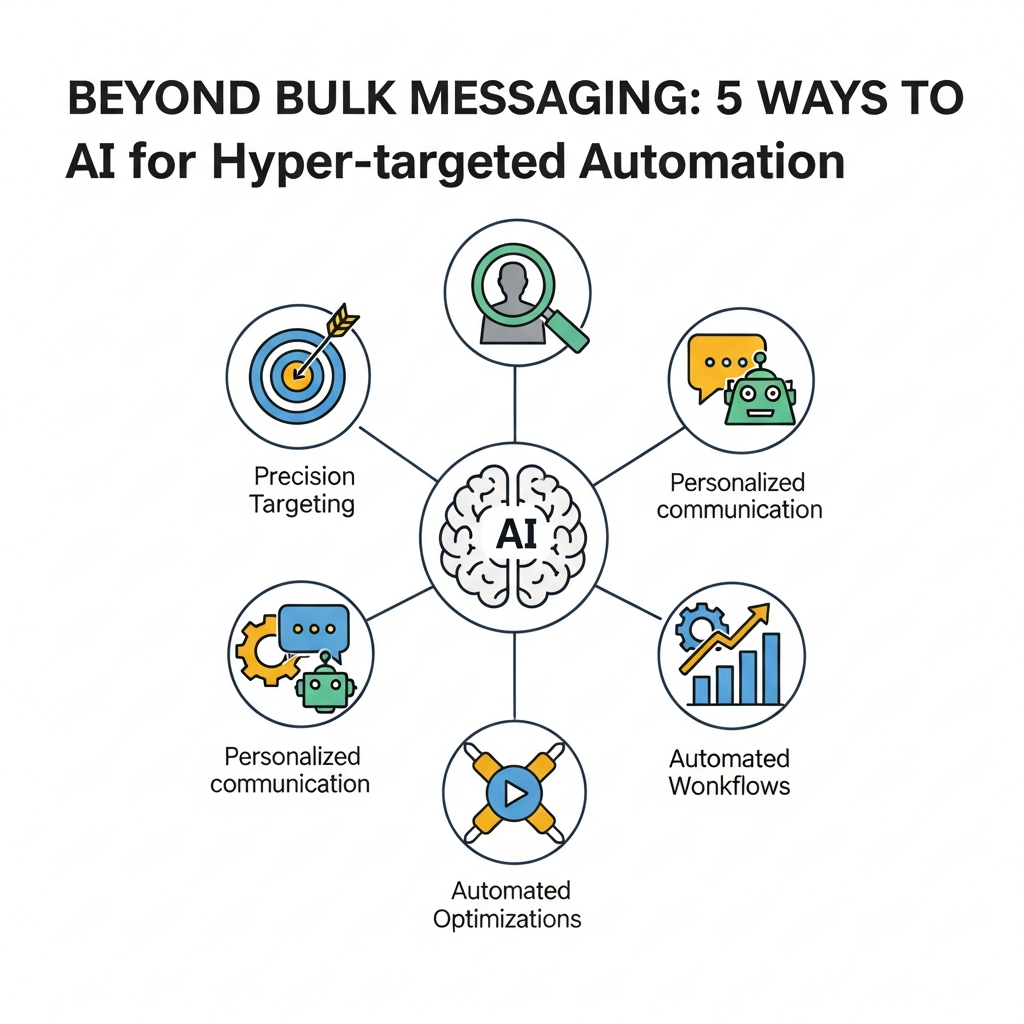
2. Generative Contextualization: Moving Beyond {First_Name}
We’ve all seen the {First_Name} tag fail. “Hi [FIRST_NAME], I saw you work at [COMPANY_NAME]!” It’s the digital equivalent of a limp handshake. Generative AI, specifically through Retrieval-Augmented Generation (RAG), allows us to inject actual, live context into every single outgoing message. This isn’t just “personalization”; it’s “contextualization.”
Imagine an automation workflow that, before sending an email, performs a real-time Google search for the prospect’s company. It finds a news article from three hours ago stating they just won a green energy award. The AI then synthesizes that information and writes a custom opening sentence: “I noticed your team just took home the Green Tech Excellence award this morning—quite a feat considering the competitive landscape in the Pacific Northwest.”
Implementing the “Reason for Outreach” (RFO) Engine
To do this at scale, you need an RFO engine. This is a middleware layer where your CRM talks to an LLM (like GPT-4 or Claude 3) and a search API. The process looks like this:
- Step A: Triggered by a lead entering a stage.
- Step B: AI scrapes the most recent “signal” (a new hire, a funding round, a specific social media comment).
- Step C: The LLM drafts a unique “bridge” paragraph connecting that signal to your value proposition.
- Step D: A human (or a high-level “Reviewer AI”) checks for hallucinations before the “Send” button is cleared.
This level of idiosyncratic detail is impossible for a human to do for 500 leads a day, but it’s trivial for an AI. The result is a message that passes the “Turing Test” of sales outreach every single time.
>3. Predictive Lead Scoring and Behavioral Decay Models
Most automation is chronological. “Send Email 1 on Day 1, Email 2 on Day 3.” This is fundamentally flawed because humans don’t operate on a linear schedule. Life happens. Projects blow up. People go on vacation. Predictive Lead Scoring uses machine learning to determine the “Propensity to Engage” in real-time.
Instead of a static sequence, imagine a dynamic web. If a prospect opens your initial email three times in one hour but doesn’t reply, that is a high-intent signal. Most legacy systems would just wait for the next scheduled email. An AI-driven system, however, recognizes this “Engagement Spike” and immediately triggers a low-friction “nudge”—perhaps a LinkedIn connection request or a highly specific case study related to the link they clicked.
The Concept of “Lead Decay”
On the flip side, we have to talk about Negative Signals. If a lead hasn’t interacted with your content in 14 days, their “score” decays. Rather than continuing to pepper them with “Just circling back!” emails (which is the quickest way to get marked as spam), the AI shifts them into a “Passive Nurture” track. This track might only send a high-value, non-salesy industry report once a month. We are using AI to respect the prospect’s silence, which is a form of empathy that builds long-term brand equity.
Data science allows us to look at historical patterns. If the data shows that VPs of Engineering are most likely to book a demo on Tuesday mornings after their department stand-up, the AI holds your message until that precise window. We are optimizing for receptivity, not just delivery.
>4. Autonomous Conversational Nurturing (The “Anti-Bot” Bot)
The most exhausting part of any outreach is the “in-between.” It’s the “Can you send me more info?” or the “Check back in six months” replies. These are often where deals go to die because humans are inconsistent at follow-ups. However, standard “If-This-Then-That” chatbots are too rigid. They can’t handle the nuance of a human saying, “I’m interested, but my budget is currently tied up in the Q3 restructuring.”
Modern Autonomous Agents can. By using specialized LLMs trained on your specific product documentation and past successful sales transcripts, these agents can handle the “Middle of the Funnel” conversations with startling fluidity. They don’t just provide canned answers; they negotiate, they clarify, and they empathize.
Bridging the Gap Between Automation and Human Intervention
The secret is the “Hand-off Protocol.” You don’t want an AI closing a million-dollar contract (yet). You want the AI to handle the 80% of repetitive clarifying questions so that when a human salesperson steps in, the prospect is “warm” and informed.
I’ve seen this work brilliantly in high-ticket consulting. The AI handles the initial vetting, asks about the prospect’s current roadblocks, and even provides a few “quick win” suggestions. By the time the consultant jumps on a Zoom call, the prospect already feels like they’ve received value. The AI has acted as a sophisticated concierge, not a telemarketer.
>5. Multi-Channel Orchestration and Attribution AI
Hyper-targeted automation cannot exist in a vacuum. If you are only using email, you are missing 70% of the conversation. But the problem with multi-channel (Email, LinkedIn, Twitter, Direct Mail, SMS) is that it usually becomes a disjointed mess. The prospect receives an email and a LinkedIn message that say the exact same thing. It’s robotic and annoying.
Attribution AI solves this by creating a “Single Source of Truth.” It tracks the prospect’s journey across every touchpoint and adjusts the automation accordingly. If the prospect engaged with a specific whitepaper on your website via a LinkedIn ad, the subsequent email automation should acknowledge that specific whitepaper’s content. It’s about creating a cohesive narrative arc.
The “Surround Sound” Strategy
- Phase 1: Awareness. AI triggers targeted ad placements on the prospect’s social feeds based on their psychographic profile.
- Phase 2: Engagement. Once the AI detects a “View” or a “Like,” it triggers a personalized LinkedIn message referencing the ad’s topic.
- Phase 3: Validation. If they respond, an automated (but highly contextual) email is sent with a bespoke video or document.
- Phase 4: Conversion. A direct mail piece (yes, physical mail) is triggered via an API, containing a QR code that leads to a personalized landing page.
This isn’t bulk messaging; it’s an orchestrated symphony. Each channel plays a different part, but they are all reading from the same sheet music. The AI acts as the conductor, ensuring that no note is played too loudly or out of turn.
>The Ethics of Precision: Staying Human in a Machine World
As we lean into these incredibly powerful tools, there is a visceral danger of becoming “too efficient.” There is a fine line between “highly targeted” and “creepy.” If you tell a prospect you know what they had for breakfast because your AI scraped their Instagram, you’ve lost. The goal of hyper-targeted automation is to reduce friction, not to eliminate the human element.
I always tell my teams: “Use AI to do the research, but use humans to set the intent.” AI is a multiplier. If you multiply “cynical, salesy aggression,” you just get a faster version of what everyone hates. But if you multiply “genuine curiosity and a desire to help,” you create something transformative. We must use these tools to buy back our time so we can spend that time on the high-level creative strategy and deep relationship building that no machine can ever replicate.
The future of business isn’t “AI vs. Human.” It’s “Human + AI vs. The Old Way.” By moving beyond the blunt instrument of bulk messaging and embracing the surgical precision of hyper-targeted automation, we aren’t just sending better messages. We are building better businesses. We are treating our prospects with the respect of a tailored experience, and in return, they are giving us the one thing money can’t buy: their attention. And in today’s economy, attention is the only currency that truly matters.
It’s time to stop shouting. It’s time to start whispering the right things into the right ears.