
Let’s be honest for a second. If you’re running a business today and you’re still relying solely on word-of-mouth and the occasional local newspaper ad, you’re not just behind the curve—you’re practically invisible. The marketplace hasn’t just moved; it has evolved into a digital-first ecosystem where attention is the new gold. I’ve seen businesses with mediocre products skyrocket because their digital strategy was surgical, while legendary brands have crumbled because they refused to adapt to the pixelated landscape.
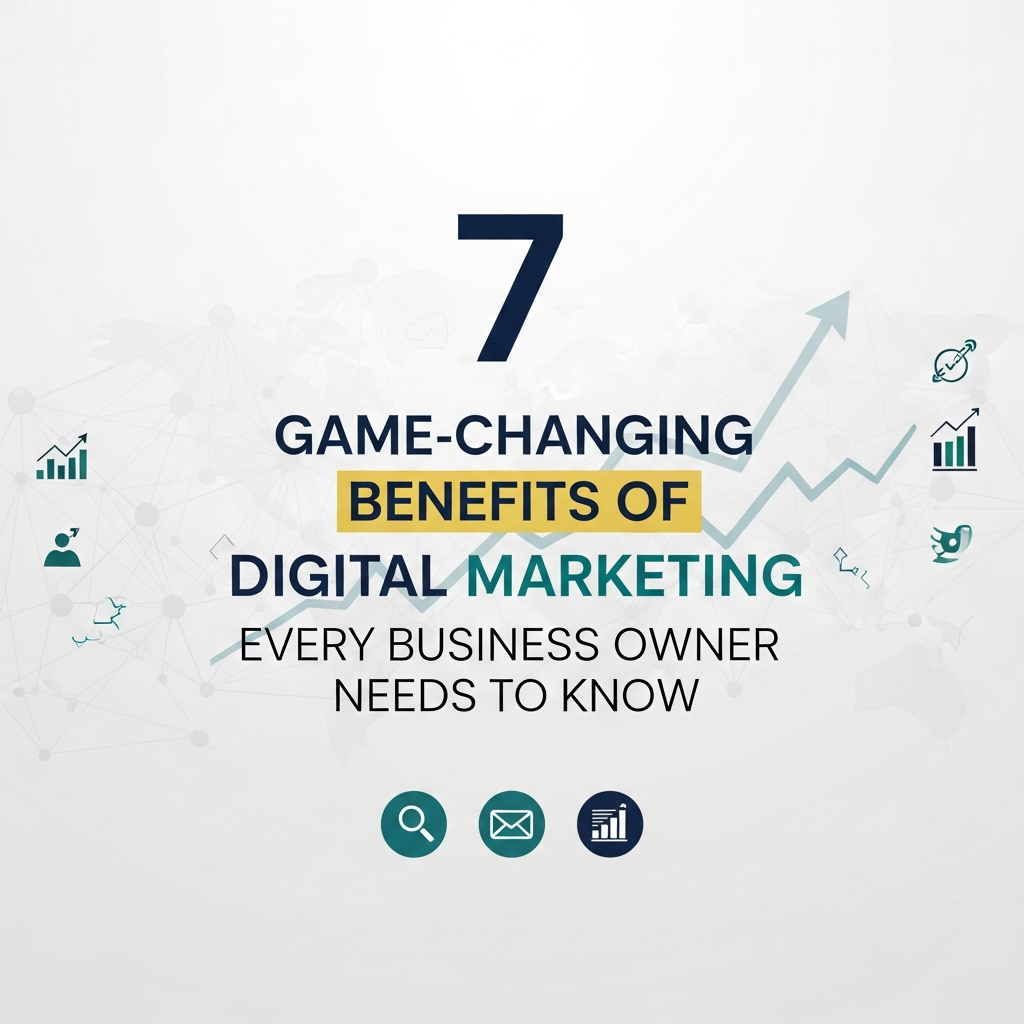
Digital marketing isn’t some buzzword reserved for Silicon Valley tech giants. It is the lifeblood of modern commerce. Whether you’re a local contractor, a boutique e-commerce shop, or a B2B service provider, the internet is where your customers live, breathe, and—most importantly—make their buying decisions. In this comprehensive guide, we are going to strip away the fluff and look at the seven game-changing benefits of digital marketing that will fundamentally shift how you view your business growth.
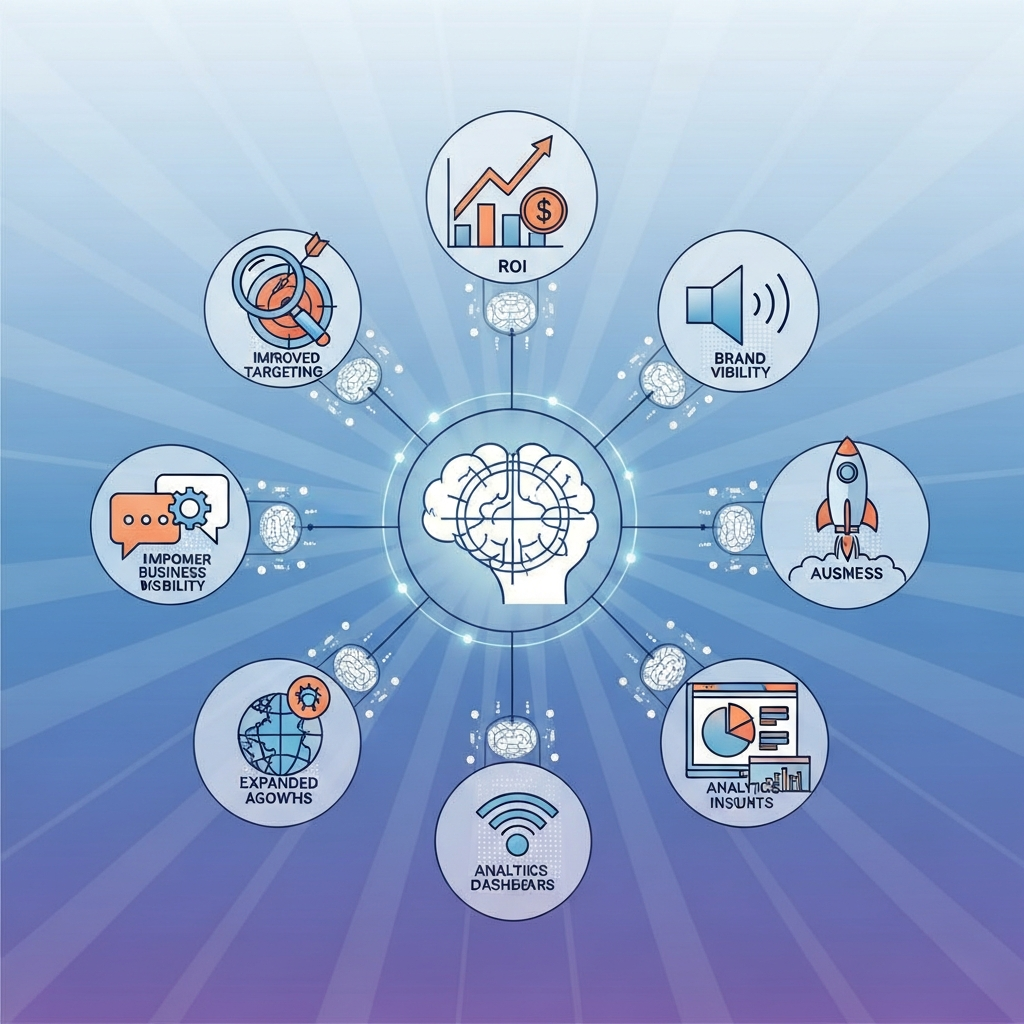
1. Hyper-Targeted Reach: Finding the Needle in the Haystack
Traditional advertising is often described as the “spray and pray” method. You buy a billboard on a busy highway. Thousands of people drive past it. Maybe 5% are actually your target demographic. Maybe 1% are currently in the market for what you sell. You’ve paid for 100% of the views but only 1% matter. That is an astronomical waste of capital.
Digital marketing flips the script. Through platforms like Meta Ads (Facebook and Instagram), Google Ads, and LinkedIn, you can target your ideal customer with terrifying precision. We’re talking about targeting based on:
- Specific Demographics: Age, gender, income level, and even parental status.
- Psychographics: Interests, hobbies, values, and political leanings.
- Behavioral Data: Past purchase history, websites they’ve visited, and even how long they hovered over a specific product.
- Geographic Location: From an entire country down to a specific zip code or a one-mile radius around your physical storefront (geofencing).
Imagine you sell high-end, organic dog food. Instead of shouting to the whole city, you can show ads specifically to people who own dogs, live in affluent neighborhoods, follow “Holistic Pet Care” pages, and have recently searched for “healthy dog treats.” That’s not just marketing; that’s a direct conversation with your most likely buyer.
2. Cost-Effectiveness and High ROI
I’ve sat in boardrooms where small business owners were terrified of digital marketing because they thought it was “expensive.” The truth is quite the opposite. Digital marketing is the great equalizer. You don’t need a million-dollar budget to make a massive impact.
Think about the cost of a 30-second TV spot or a full-page spread in a magazine. Those costs are fixed, upfront, and often require five or six figures just to get your foot in the door. With digital marketing, you can start with $5 a day. You have total control over your spend, and you can scale up or down in real-time based on performance.
“The beauty of the digital space is that it rewards relevance over deep pockets. A well-optimized Google Ad or a viral TikTok can generate more leads than a stagnant million-dollar billboard ever could.”
Furthermore, because you are only targeting people who are likely to buy, your Customer Acquisition Cost (CAC) is significantly lower. You aren’t wasting money showing your vegan skincare products to hunters. Every dollar spent is working harder, leading to a much higher Return on Investment (ROI) than traditional mediums could ever dream of.
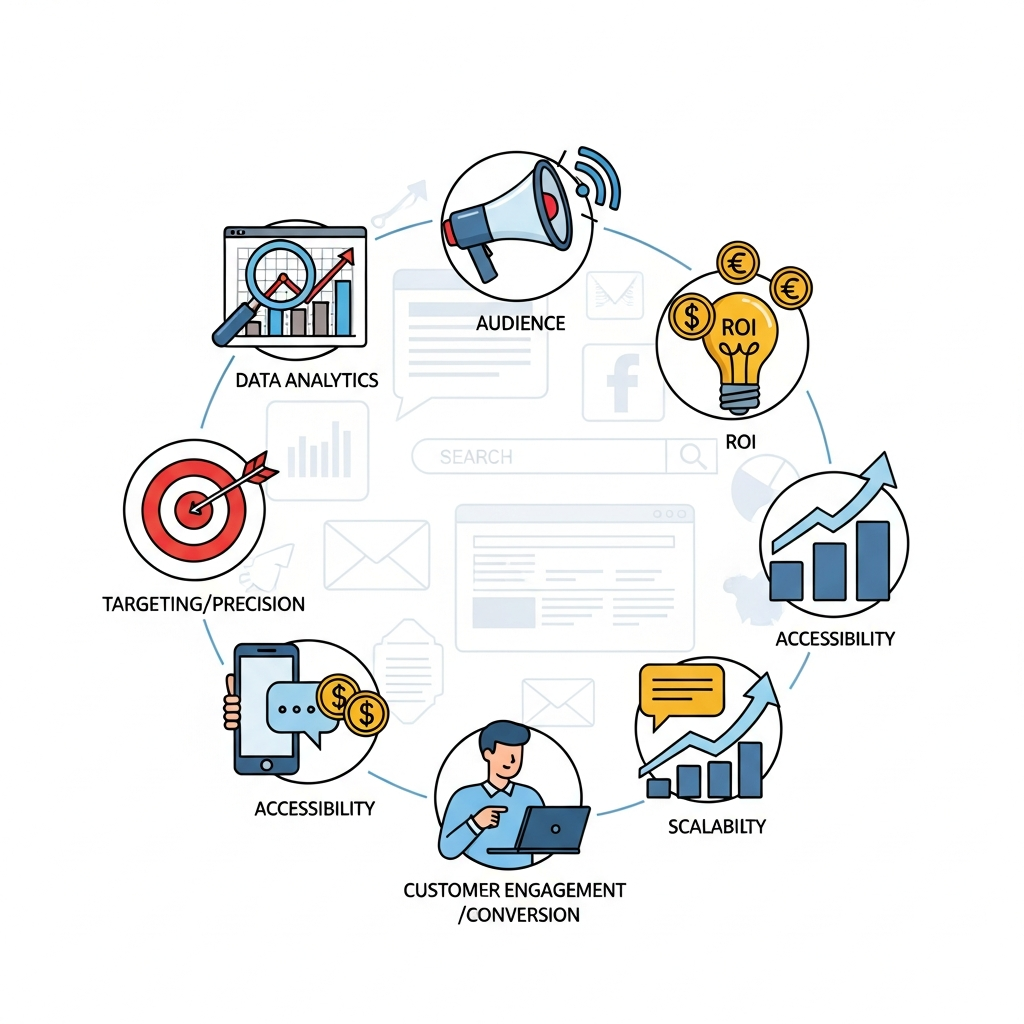
3. Real-Time Data and Measurable Analytics
The old marketing adage goes: “Half the money I spend on advertising is wasted; the trouble is I don’t know which half.” In the digital world, that problem is solved. Digital marketing is entirely quantifiable.
When you run a campaign, you aren’t guessing if it’s working. You have access to a dashboard (like Google Analytics 4 or Facebook Ads Manager) that tells you exactly what is happening. You can see:
- How many people saw your ad (Impressions).
- How many people clicked it (Click-Through Rate).
- Which specific ad copy or image prompted the click.
- How much each lead or sale cost you (Cost Per Acquisition).
- Exactly where they dropped off in your sales funnel.
This data allows for Agile Marketing. If an ad isn’t performing by Tuesday afternoon, you can kill it by Tuesday evening and move that budget to an ad that is crushing it. You don’t have to wait for a monthly report to see that you’ve wasted your money. This level of transparency is a superpower for a business owner who wants to stay lean and profitable.
>4. Enhanced Customer Engagement and Relationship Building
Traditional marketing is a monologue. You talk, and the customer listens (or ignores you). Digital marketing is a dialogue. It allows you to build a community around your brand, which is the key to long-term sustainability.
Social media platforms are the modern-day town square. When you post a video on Instagram or an update on LinkedIn, your customers can comment, ask questions, and share their experiences. This two-way communication does two vital things:
First, it builds trust. When a potential customer sees you answering questions and engaging with your audience, it humanizes your brand. You aren’t just a faceless corporation; you’re an expert who cares.
Second, it provides instant market research. Your customers will tell you what they like, what they hate, and what they want to see next. This feedback loop is worth its weight in gold. Instead of spending thousands on focus groups, you just have to look at your comments section or run a poll on your Instagram Stories.
The Power of Retargeting
Ever wondered why that pair of shoes you looked at on a website keeps following you around the internet? That’s retargeting (or remarketing). It’s a digital engagement strategy that keeps your brand top-of-mind. Most customers don’t buy on the first visit. By staying in their line of sight through gentle, digital “nurturing,” you significantly increase the chances of them returning to finish the purchase.
>5. Leveling the Playing Field for Small Businesses
In the 1990s, if you were a local hardware store, you couldn’t compete with the advertising budget of Home Depot. They owned the airwaves and the Sunday paper. Today, the internet doesn’t care about the size of your office; it cares about the quality of your content and the precision of your SEO (Search Engine Optimization).
With a solid SEO strategy, a local “mom and pop” shop can rank higher on Google than a national chain for specific, high-intent keywords. If someone searches for “best artisanal sourdough near me,” Google’s algorithm prioritizes relevance and local proximity over brand size.
Content marketing is another arena where the small guy can win. By creating helpful blog posts, engaging videos, or insightful whitepapers, you can establish yourself as a Subject Matter Expert (SME). People buy from people they trust. If you provide more value through your digital presence than your giant competitor does, you will win the customer every single time.
>6. Personalization: The “Amazon Effect”
We live in an era where consumers expect—and demand—personalization. We are tired of being treated like a number. Digital marketing allows you to deliver a tailored experience to every single person who interacts with your brand.
Through Email Marketing Automation and Dynamic Website Content, you can segment your audience based on their behavior. For example:
- A first-time visitor might see a “10% off your first order” popup.
- A loyal customer who has spent over $500 might receive an exclusive invite to a VIP loyalty program.
- A user who abandoned their cart might receive an automated email reminder with a testimonial from a happy customer to nudge them toward the finish line.
This level of personalization creates a “sticky” brand experience. When a customer feels like you understand their specific needs and pain points, they are far less likely to shop around based on price alone. You’re no longer a commodity; you’re a solution tailored specifically for them.
>7. Higher Conversion Rates Through the Marketing Funnel
At the end of the day, marketing has one goal: to drive revenue. Digital marketing is designed to guide a total stranger through a structured journey—from awareness to consideration to the final sale—with minimal friction.
Because digital marketing is so integrated, the path to purchase is shorter. In traditional marketing, a customer sees a TV ad, has to remember the brand, go to a store later that week, and find the product. In digital marketing, they see an ad, click a button, and checkout via Apple Pay or credit card in under sixty seconds.
Conversion Rate Optimization (CRO) is the science of making your website a high-performing sales machine. By testing different button colors, headlines, and layouts (A/B testing), you can systematically increase the percentage of visitors who turn into paying customers. This isn’t guesswork; it’s conversion engineering.
The Multi-Channel Integration
Digital marketing allows for a “surround sound” effect. A customer might discover you on TikTok (Awareness), sign up for your newsletter (Lead Gen), read a testimonial on your blog (Trust), and finally purchase after seeing a retargeting ad on Google (Conversion). This multi-touchpoint approach is incredibly effective because it meets the customer wherever they happen to be in their buying journey.
>Conclusion: The Digital Mandate
If you take nothing else away from this, remember this: Digital marketing is not an expense; it is an investment in the future of your business. The world is not going back to the way it was. The digital footprint of your company is often the first, and sometimes the only, impression you get to make on a potential client.
The benefits are clear: you get to reach the right people, at the right time, with the right message, for a fraction of the cost of traditional media. You get to see exactly what’s working and what isn’t, and you get to build a tribe of loyal fans who will sustain your business for years to come.
Where do you start? Don’t try to do everything at once. Pick one or two channels where your audience is most active. Maybe it’s Google Search, or maybe it’s LinkedIn. Master those, analyze the data, and scale. The digital revolution isn’t coming; it’s already here. The only question is: Is your business ready to lead, or will it be left in the digital dust?
Ready to transform your digital presence? It starts with a single step—optimizing your strategy for the humans behind the screens, not just the algorithms that govern them. Get out there and make your mark.