
The digital landscape is often described as a democratic meritocracy, where the best content rises to the top through the invisible hand of the algorithm. However, any seasoned digital strategist knows that the reality is far more Machiavellian. You have poured your intellectual capital into a website, polished the prose, and optimized the imagery, yet you remain relegated to the digital equivalent of a forgotten dusty shelf in a library basement. If your website isn’t ranking, it is rarely a matter of bad luck; it is almost certainly a failure of systemic synchronization between your site’s architecture and the ever-evolving heuristics of search engines.
Search Engine Optimization (SEO) is not a “set-and-forget” endeavor. It is a rigorous, multidisciplinary exercise in technical precision, linguistic nuance, and psychological profiling. To rank is to prove to a non-human entity—the search crawler—that you are the definitive authority on a subject. When that proof fails, the consequences are invisibility. In this comprehensive analysis, we will dissect the seven most egregious SEO mistakes that keep high-quality websites in the shadows and provide the high-level remediation strategies necessary to reclaim your digital sovereignty.
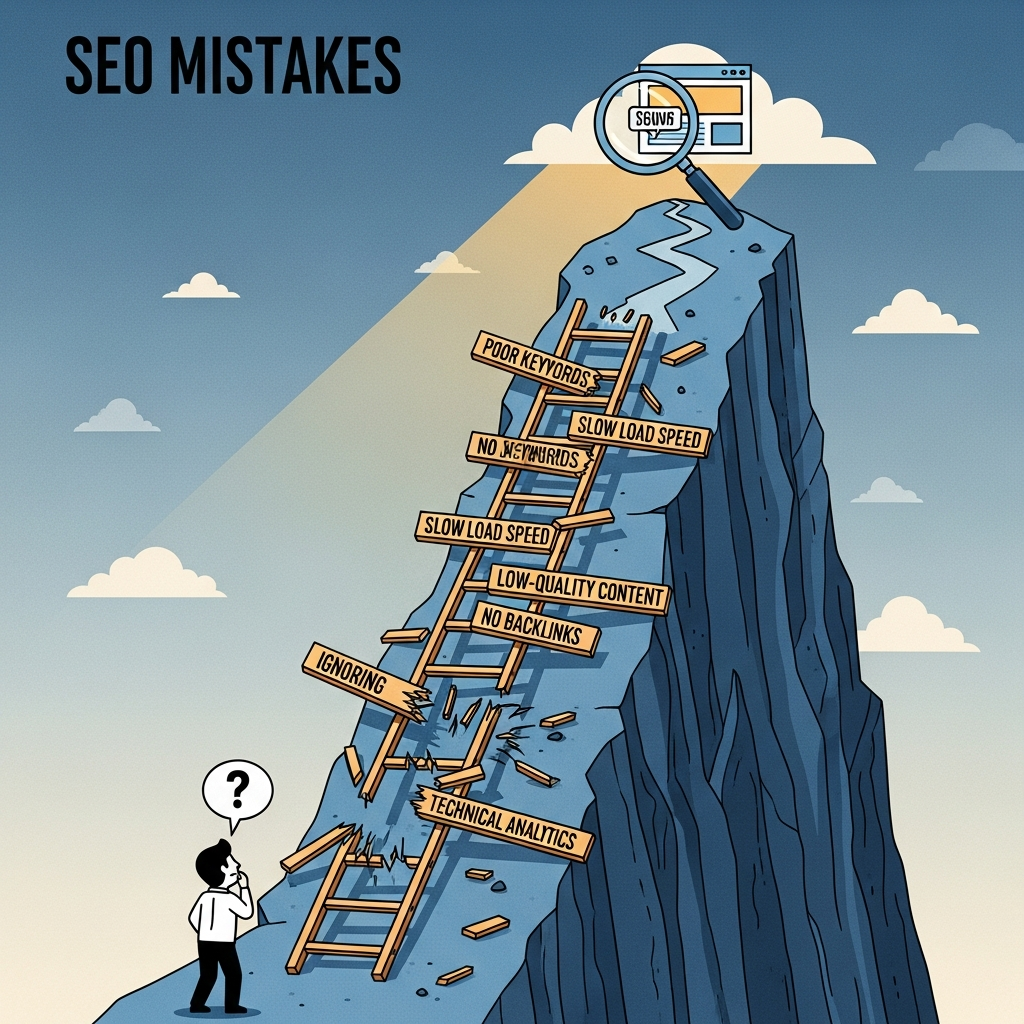
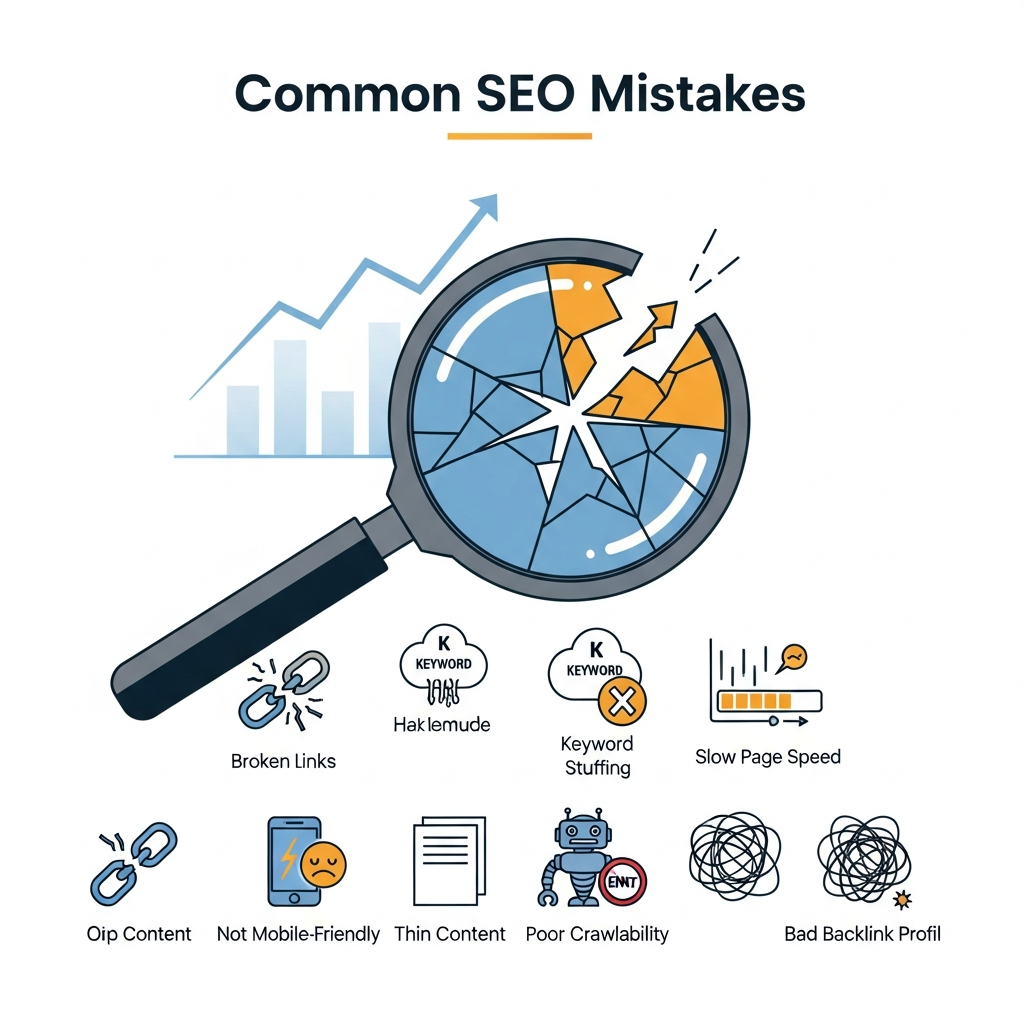
1. The Technical Sunder: Ignoring the Crawl Budget and Indexing Architecture
Before a search engine can rank your content, it must first be able to find, read, and interpret it. This is the domain of Technical SEO, and it is where most websites fail before they even begin the content race. Search engines like Google utilize “spiders” or “crawlers” to navigate the web. These bots operate on a “crawl budget”—a finite amount of time and resources allocated to your site based on its perceived authority and health.
If your site architecture is a labyrinth of broken links, orphaned pages, and convoluted redirect chains, you are effectively squandering your crawl budget. The crawler gets frustrated (in a computational sense) and departs before reaching your most valuable assets. Furthermore, the misuse of the robots.txt file can inadvertently block crucial CSS and JavaScript files, leading to a “partial render” that obscures your content from the engine’s view.
The Fix: Engineering a Frictionless Path
To remedy technical obfuscation, one must adopt the mindset of a systems architect. Start with a comprehensive crawl of your site using tools like Screaming Frog or Ahrefs. Identify and eliminate 404 errors with surgical precision. Implement a flat site architecture; ideally, no piece of content should be more than three clicks away from the homepage.
“Technical SEO is the foundation upon which all other efforts are built. Without a crawlable infrastructure, your content is essentially shouting into a vacuum.”
Furthermore, prioritize your XML sitemap. Ensure it is dynamically updated and submitted to Google Search Console. If you are utilizing heavy JavaScript frameworks (like React or Angular), ensure you are employing Server-Side Rendering (SSR) or Dynamic Rendering. If the bot sees a blank page because it can’t execute your script, your ranking potential is zero.
2. Keyword Cannibalization: The War Within
There is a persistent myth in the SEO community that the more pages you have targeting a specific keyword, the better your chances of ranking. This is a fundamental misunderstanding of how search engines perceive authority. This phenomenon, known as keyword cannibalization, occurs when multiple pages on your site compete for the same search query. Instead of presenting a single, authoritative pillar of information, you are forcing Google to choose between several diluted options.
The result? Google often chooses neither, or it fluctuates between them, preventing any single page from gaining the “link juice” and historical authority required to crack the top three positions. It is the digital equivalent of a political party splitting its own vote, allowing a less qualified opponent to win the seat.
The Fix: Content Consolidation and Semantic Mapping
Audit your content library for thematic overlap. If you have three blog posts titled “How to Bake Bread,” “Best Bread Baking Tips,” and “Bread Making for Beginners,” you are cannibalizing yourself. The solution is content pruning and consolidation.
- Identify: Use Google Search Console to see which pages are ranking for the same queries.
- Consolidate: Merge the insights from multiple “thin” pages into one “mega-guide” that provides comprehensive value.
- Redirect: Use 301 redirects from the old, deleted URLs to the new authoritative URL. This transfers the existing “ranking power” to the new destination.
- Clarify: Use unique H1 tags and meta-descriptions to ensure each page has a distinct, non-overlapping purpose.
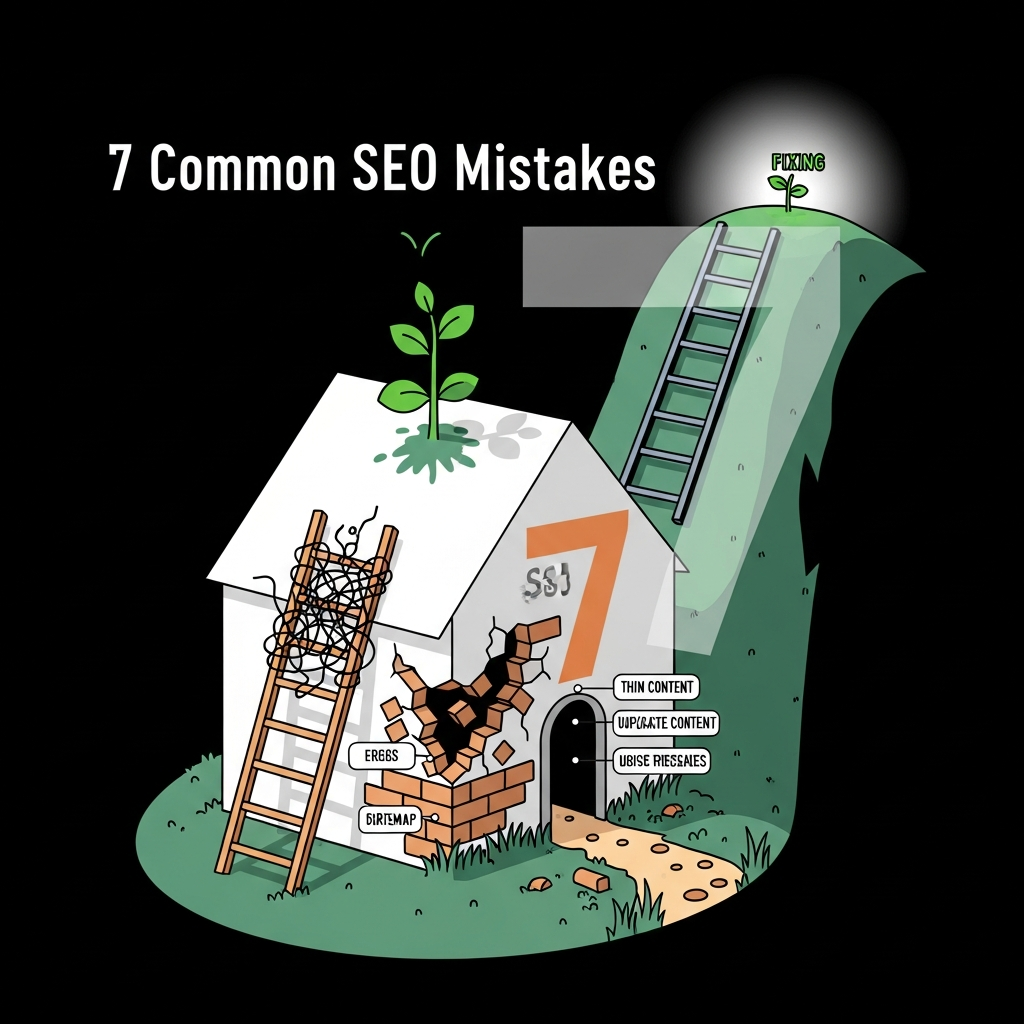
3. The Backlink Paradox: Valuing Quantity Over Qualitative Authority
In the early days of the web, SEO was a numbers game. He who had the most links won. Today, the algorithm has evolved from a simple counter to a sophisticated forensic investigator. A thousand links from low-authority, “spammy” directories or irrelevant forums are not just useless—they are actively toxic. This is the “Backlink Paradox”: the harder you try to “get” links through artificial means, the less likely you are to rank.
Google’s Penguin update and its subsequent iterations have made it clear that relevance and authority are the only currencies that matter. A single link from a high-authority publication like The New York Times or a niche-specific leader like Search Engine Journal is worth more than ten thousand links from a private blog network (PBN).
The Fix: Earned Authority Through “Skyscraper” Content
Stop “building” links and start “earning” them. This requires a shift from transactional outreach to a PR-based mindset. The most effective method remains the Skyscraper Technique: find a piece of content in your niche that is already performing well and has many backlinks, then create something significantly better—more data-driven, better designed, and more current.
Once your superior asset is live, reach out to the individuals who linked to the original piece and demonstrate the added value of your resource. Additionally, focus on Digital PR. Provide expert quotes to journalists via platforms like HARO (Help A Reporter Out) or Featured.com. When you become a cited source of truth, the high-authority backlinks follow naturally, signaling to Google that you are a trusted entity in your field.
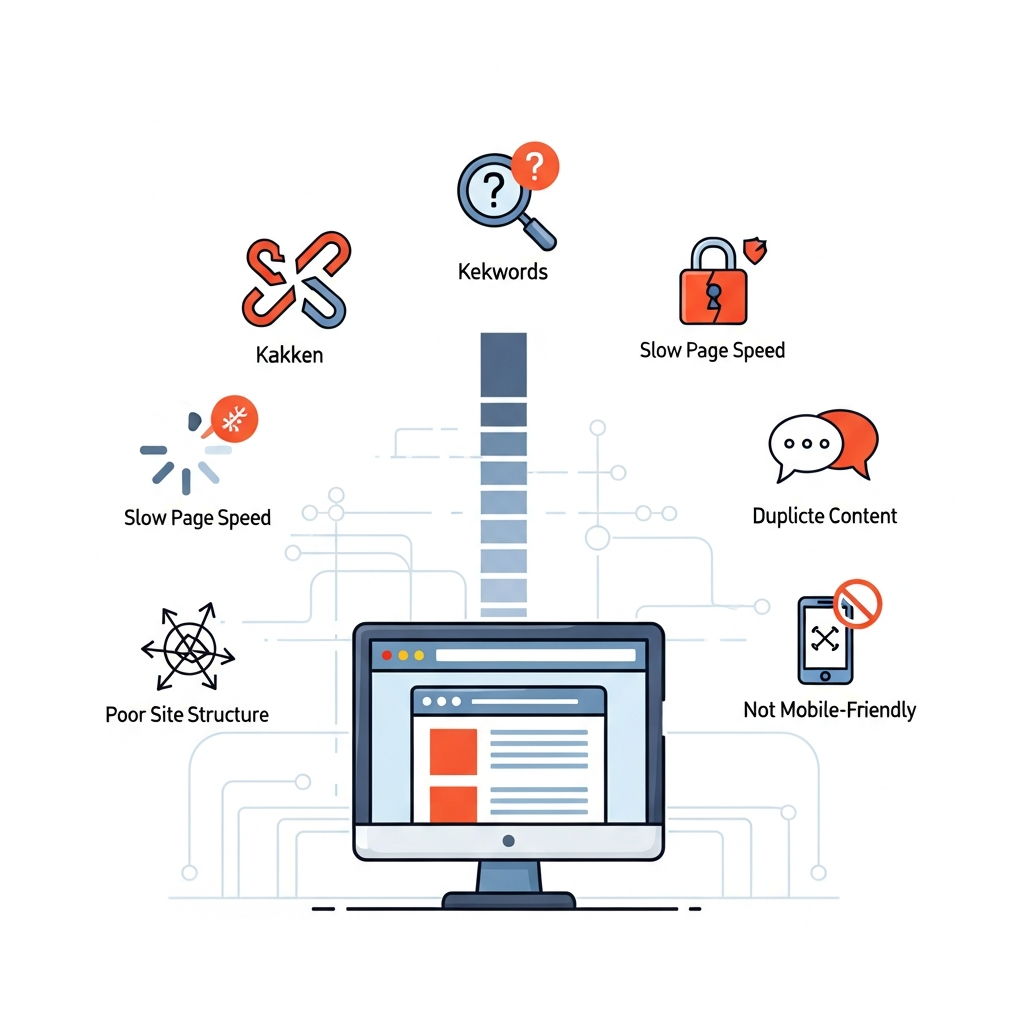
4. Neglecting Core Web Vitals: The User Experience Mandate
For years, SEOs focused almost exclusively on keywords and links, treating the actual user experience (UX) as a secondary concern. That era ended with the introduction of Core Web Vitals. Google has explicitly stated that page experience is a ranking factor. If your site is sluggish, shifts layout during loading, or provides a frustrating mobile experience, your rankings will suffer, regardless of your content’s quality.
The three pillars of Core Web Vitals are:
- Largest Contentful Paint (LCP): How fast the main content loads.
- First Input Delay (FID): How quickly the site responds to a user’s first interaction.
- Cumulative Layout Shift (CLS): How much the page elements “jump around” as the site loads.
The Fix: Performance Optimization as a Competitive Advantage
Performance optimization is an ongoing technical requirement. Start by optimizing your images; use next-gen formats like WebP and implement “lazy loading” so images only load as the user scrolls. Minify your CSS, JavaScript, and HTML to reduce the payload size. Consider a Content Delivery Network (CDN) like Cloudflare to serve your site from servers physically closer to the user.
Most importantly, adopt a mobile-first philosophy. Google uses the mobile version of your site for indexing and ranking. If your desktop site is a masterpiece but your mobile site is a cramped, unreadable mess, you are effectively invisible to the majority of the world’s searchers.
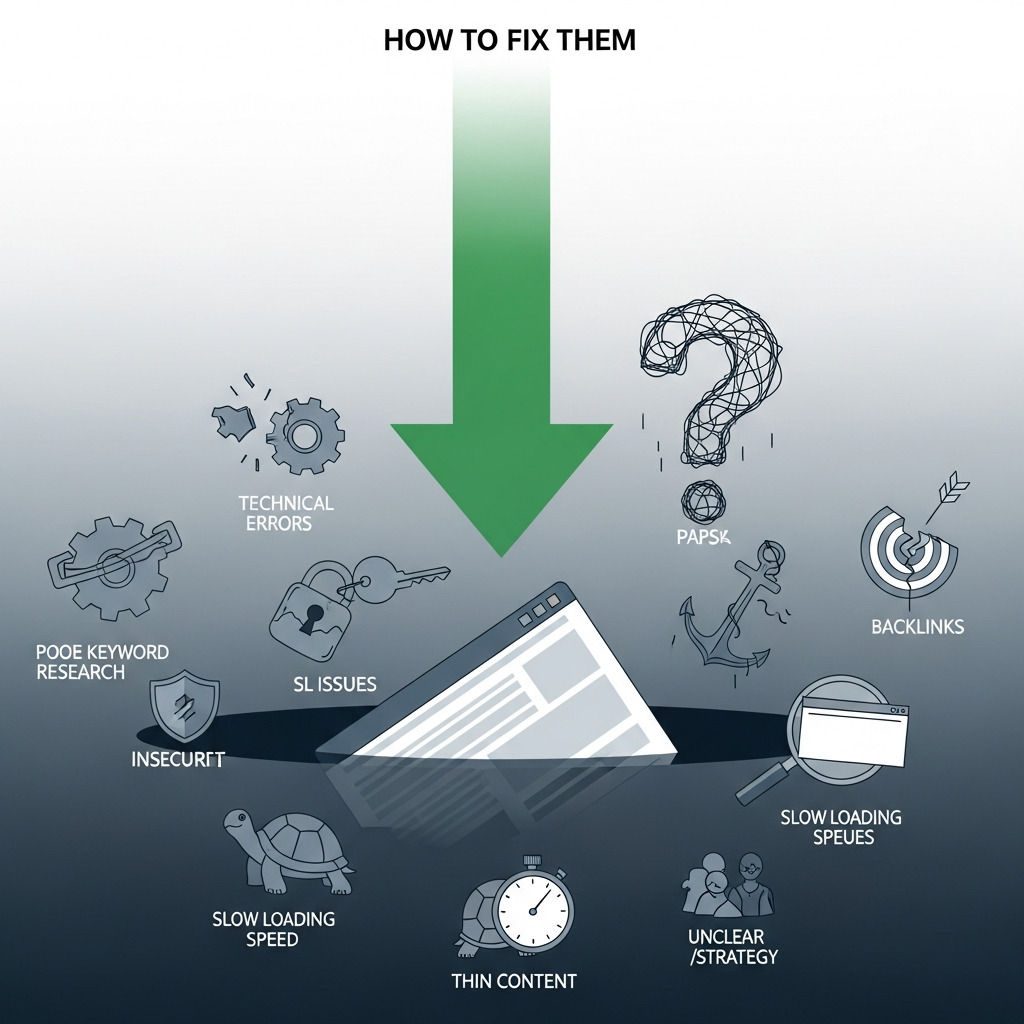
5. The “Thin Content” Epidemic: Sacrificing Substance for Frequency
There is a pervasive anxiety among content creators that they must publish daily to remain relevant. This often leads to the production of “thin content”—articles that are short, derivative, and offer no unique insight. From an analytical perspective, thin content is a liability. It increases your site’s “noise-to-signal” ratio and fails to satisfy the user’s search intent.
Google’s E-E-A-T guidelines (Experience, Expertise, Authoritativeness, and Trustworthiness) are designed to filter out the superficial. If your content looks like it was generated by a first-generation AI or written by someone with only a passing familiarity with the subject, it will never reach the first page.
The Fix: The Deep-Dive Methodology
Quality is a prerequisite, not a luxury. Instead of publishing four 500-word posts a week, publish one 2,500-word comprehensive guide. Incorporate original research, proprietary data, expert interviews, and unique case studies. Use Semantic SEO: don’t just target a keyword; cover the entire topic. If you are writing about “Remote Work,” you must also address “digital nomadism,” “asynchronous communication,” “VPN security,” and “mental health for remote employees.”
By creating a comprehensive topical map, you signal to the algorithm that your domain is an exhaustive resource. This builds “Topical Authority,” which allows you to rank for high-competition keywords that would otherwise be out of reach.
>6. Misaligning with Search Intent: The Psychological Disconnect
You may have the best-written article in the world, but if it doesn’t match the search intent of the user, it will fail. Search intent is the “why” behind a query. Generally, intent falls into four categories: Informational, Navigational, Transactional, and Commercial Investigation.
A common mistake is trying to rank a transactional “product page” for an informational query. If someone searches for “the history of coffee,” they are looking for an educational essay, not a “Buy Now” button for a bag of beans. Conversely, if they search for “best espresso machine reviews,” they are in the commercial investigation phase and want comparisons, not a deep dive into the botany of Coffea arabica.
The Fix: Reverse-Engineering the SERP
Before writing a single word, perform a manual search for your target keyword. Look at the top three results. What type of content are they? Are they listicles, long-form guides, product pages, or videos? Google is showing you exactly what the user wants. If the top results are all “How-to” guides and you are trying to rank a landing page, you are fighting an uphill battle against the algorithm’s understanding of human psychology.
Align your content structure with the dominant intent. Use the inverted pyramid style for informational queries—provide the most important answer immediately, then delve into the details. For commercial queries, provide clear comparisons, pros and cons, and pricing data. When your content satisfies the user’s intent, your dwell time increases and your bounce rate decreases—both of which are potent signals of quality to the search engine.
>7. The Internal Link Vacuum: Failing to Distribute Authority
Many site owners focus so heavily on external backlinks that they completely neglect their internal linking structure. Internal links are the nervous system of your website. They guide users to related content, but more importantly, they help search engines understand the hierarchy and relationship between your pages. Without internal links, your high-authority “hub” pages cannot pass their “link juice” to your deeper, more specific “spoke” pages.
A page with no internal links is known as an orphan page. For Google, an orphan page is a sign of low importance. If you don’t care enough to link to it from within your own site, why should the search engine prioritize it in its index?
The Fix: Implementing the Hub-and-Spoke Model
Adopt a “Topic Cluster” or “Hub-and-Spoke” model. Create a central, comprehensive pillar page for a broad topic (the Hub) and link it to several more specific, related articles (the Spokes). Each spoke article should also link back to the pillar page.
Use descriptive anchor text. Instead of using “click here,” use “advanced SEO strategies” or “benefits of organic gardening.” This gives the search engine context about the destination page. Regularly audit your site for orphan pages and integrate them into your broader content ecosystem. By creating a dense, logical web of internal links, you ensure that every part of your site benefits from the authority of your best-performing content.
>The Synthesis: SEO as an Iterative Discipline
The fundamental truth of SEO is that it is never “finished.” The search engines of today are vastly more sophisticated than those of five years ago, and they will be eclipsed by the AI-driven models of next year. However, the core principles remain constant: your website must be technically sound, your content must be authoritative and useful, and your user experience must be frictionless.
If your website isn’t ranking, it is not an indictment of your business’s value, but rather a diagnostic indicator that your communication with the search engine is flawed. By systematically addressing these seven mistakes—from the technical bedrock to the nuances of search intent—you move from being a passive observer of the algorithm to an active participant in your own digital success. SEO is a marathon of incremental gains. Start with the foundation, refine the strategy, and the rankings will inevitably follow.
Are you ready to stop guessing and start ranking? The transition from obscurity to authority begins with a single, data-driven audit. Reclaim your place at the top of the search results by treating SEO not as a dark art, but as the high-stakes engineering discipline that it truly is.