
The marketing industry has long been obsessed with the caricature. For decades, we have relied on the comfortable, albeit reductive, practice of building “buyer personas” that look more like a police sketch than a living, breathing human being. We speak of “Millennial Mike,” who lives in a metropolitan area, earns $75,000 a year, and enjoys artisanal coffee. We treat these demographic clusters as if they were destiny. But here is the uncomfortable truth that keeps Chief Marketing Officers awake at 3:00 AM: Millennial Mike does not exist. Or, more accurately, the version of Mike who buys a laptop is fundamentally different from the version of Mike who buys a mattress, regardless of his age, zip code, or affinity for medium-roast beans.
The tectonic plates of digital marketing are shifting. We are moving away from the static, ossified world of demographic targeting and toward the fluid, high-velocity realm of Dynamic Audience Segmentation. This isn’t just a buzzword to justify a software upgrade; it is a fundamental ontological shift. We are stoping asking “Who is this person?” and starting to ask “What is this person trying to achieve in this exact micro-moment?”
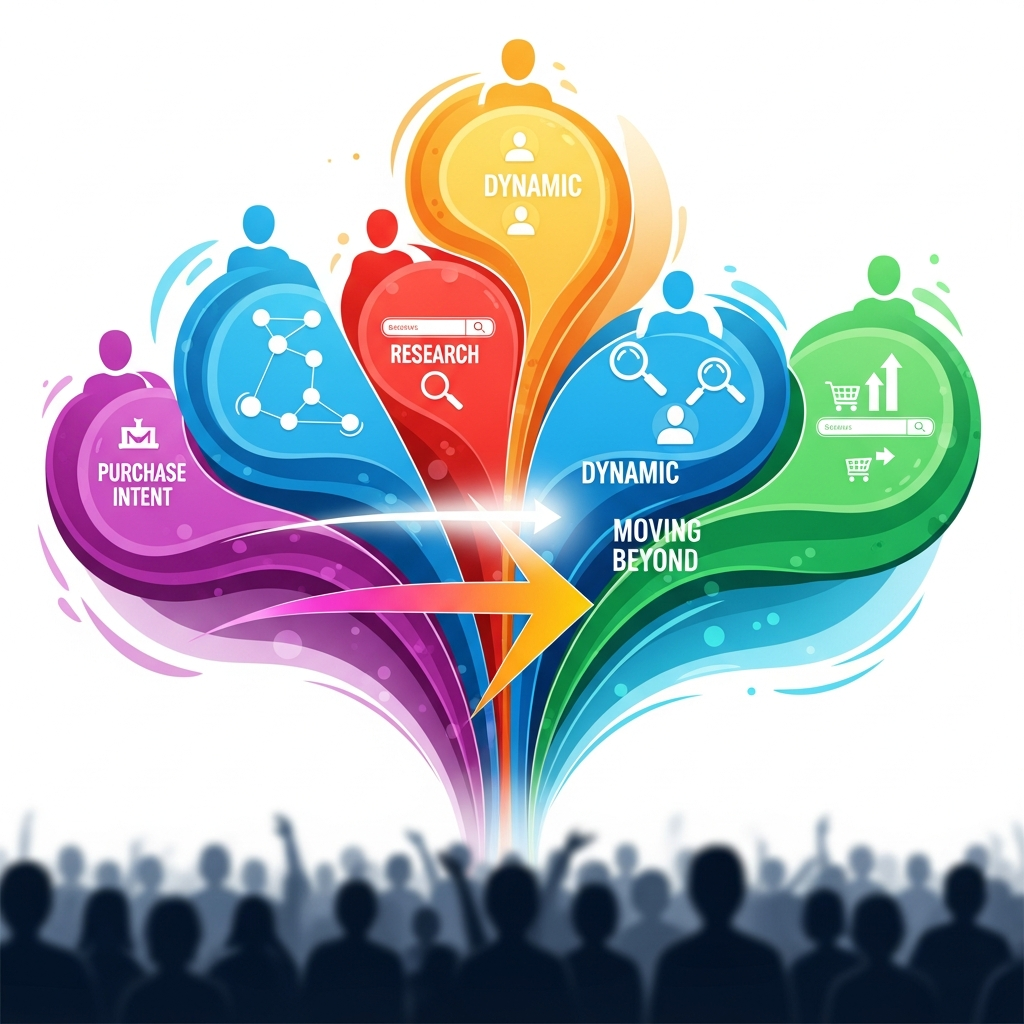
The Demographic Delusion: Why Your Personas are Lying to You
To understand the necessity of behavioral intent, we must first perform a post-mortem on the demographic model. Demographics are descriptive, not predictive. They tell you what a person looks like on a census form, but they reveal absolutely nothing about the psychological triggers that lead to a conversion.
Consider the classic marketing paradox involving two men: both born in 1948, both raised in the UK, both incredibly wealthy, and both twice married with children. One is King Charles III; the other is Ozzy Osbourne. On a demographic spreadsheet, they are identical. In reality, if you try to sell a Gothic-themed bat-shaped velvet recliner to the King of England using the same creative you used for the Prince of Darkness, your ROI will be a tragic comedy. This is the “Demographic Delusion”—the mistaken belief that shared identity traits equal shared purchase intent.
Demographics provide the skeleton, but behavioral intent provides the nervous system. While demographics remain useful for broad-stroke media buying and top-of-funnel brand awareness, they are woefully inadequate for the sophisticated middle and bottom-of-funnel orchestration required in a hyper-competitive digital landscape.
Defining Dynamic Audience Segmentation
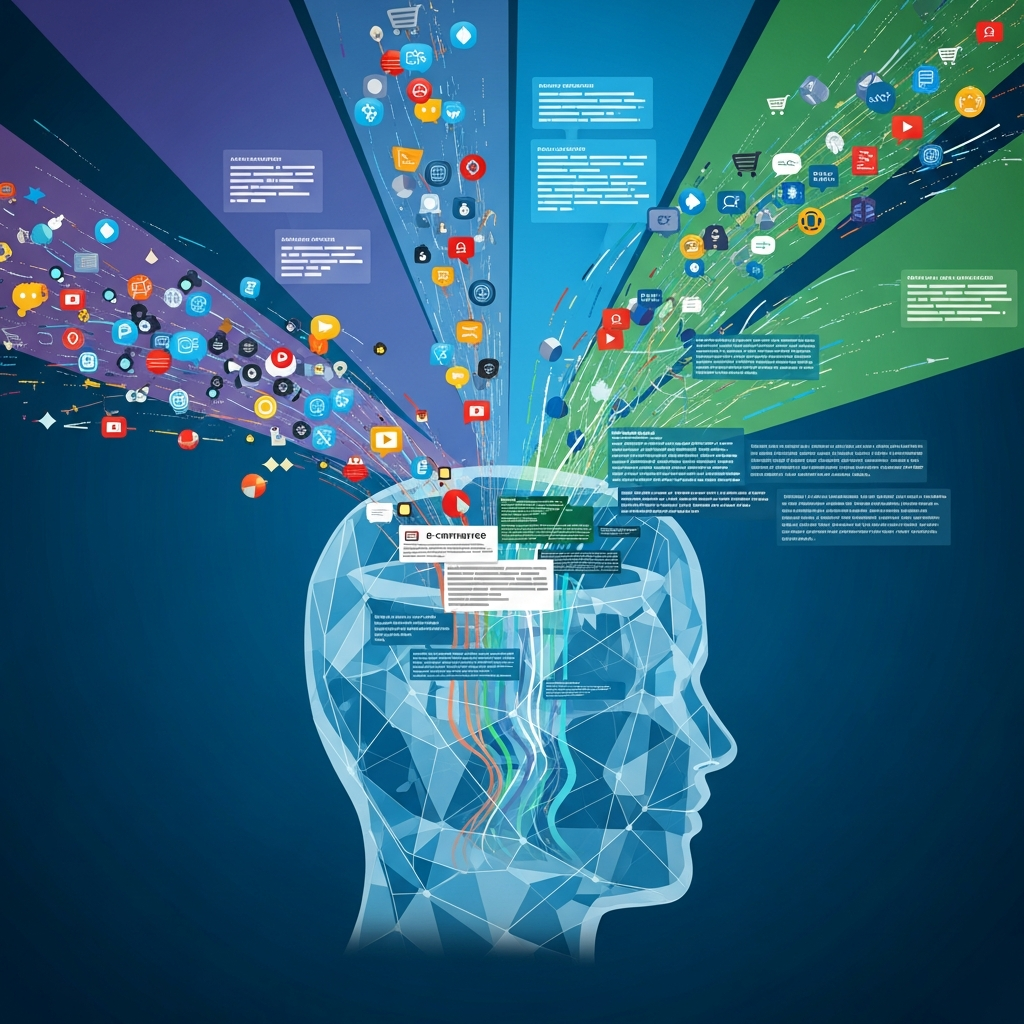
Dynamic Audience Segmentation is the practice of categorizing users into groups based on their real-time interactions, psychological states, and digital body language. Unlike static segments, which are updated weekly or monthly, dynamic segments are “living” entities. A user may enter a “High-Intent Luxury Shopper” segment at 2:15 PM and, after viewing a shipping policy or a negative review, exit that segment by 2:17 PM.
This approach leverages first-party data to monitor how a user moves through your digital ecosystem. It tracks the “velocity” of their engagement. Are they skimming headers, or are they lingering on the technical specifications page? Did they arrive via a generic search term like “best sneakers,” or a high-intent long-tail query like “Nike Air Zoom Pegasus 40 size 10 discount code”?
The Anatomy of Behavioral Intent
Behavioral intent is comprised of several layers of data that, when synthesized, create a high-fidelity picture of the consumer’s current mission. These layers include:
- Transactional History: What they have bought in the past, the frequency of those purchases, and the average order value (AOV).
- Engagement Recency: How long has it been since their last meaningful interaction with the brand?
- Content Consumption: Which topics are they obsessing over? A user reading four articles on “Tax Implications of Crypto” is signaling a very different intent than a user reading “Top 10 Crypto Memes.”
- Technical Signals: Device type, browser, and even the speed of their scroll can indicate whether they are “window shopping” on a mobile device during a commute or “power shopping” on a desktop with a credit card in hand.
“The modern consumer is a moving target. If your segmentation model is rooted in the past—even if that past was only five minutes ago—you are already irrelevant.”
>From Static Buckets to Fluid Flows: The Technical Pivot
Transitioning to dynamic segmentation requires a departure from the traditional “list-based” marketing approach. In the old world, you would export a CSV of “In-Active Users” from your CRM and upload it to your email service provider. By the time that email is sent, 10% of those users may have already re-engaged, making your “We miss you” discount code look redundant and desperate.
In the dynamic world, we utilize Customer Data Platforms (CDPs) and Real-Time Interaction Management (RTIM) tools. These systems act as a central nervous system, ingesting data from your website, mobile app, customer support tickets, and point-of-sale systems. They then use “If-This-Then-That” logic—often augmented by machine learning—to move users between segments instantaneously.
The Role of Machine Learning in Intent Detection
Human marketers are excellent at strategy, but we are terrible at processing millions of data points in milliseconds. This is where machine learning (ML) earns its keep. ML algorithms can identify “lookalike behaviors” rather than just “lookalike audiences.”
For example, an ML model might discover that users who view the “Careers” page and then the “Pricing” page are not actually prospective customers, but rather job seekers trying to research the company’s stability. A static demographic filter wouldn’t catch this. A dynamic behavioral filter, however, would immediately exclude these users from your expensive retargeting campaigns, saving you thousands in wasted ad spend.
>Mapping the Intent Spectrum
Not all intent is created equal. To master dynamic segmentation, you must map your audience along an Intent Spectrum. This allows you to tailor your messaging not just to who they are, but to where they are in their cognitive journey.
1. Informational Intent (The Researcher)
These users are looking for answers, not products. They use “How-to” and “What is” queries.
Dynamic Action: Serve them high-value educational content. Do not push for a sale; push for a newsletter sign-up or a whitepaper download. If you hit them with a “Buy Now” pop-up, you’ll trigger “marketing friction” and drive them away.
2. Navigational Intent (The Brand Seeker)
These users know who you are and are trying to find a specific page (e.g., “Brand Name Login”).
Dynamic Action: Make their path as frictionless as possible. If they are an existing customer, the homepage should dynamically change to show a “Welcome Back” message with a link to their most recent activity.
3. Commercial Investigation (The Comparison Shopper)
These users are in the “messy middle” of the funnel. They are comparing you against competitors. They are looking at “Reviews,” “Top 10,” and “Versus” pages.
Dynamic Action: This is the time for social proof. Serve them case studies, testimonials, and comparison charts that highlight your unique value proposition. Use dynamic overlays to offer a “Limited Time Trial” to tip the scales.
4. Transactional Intent (The Buyer)
The “Buy” signal is screaming. They have visited the pricing page three times in the last hour and have added an item to the cart.
Dynamic Action: Remove all distractions. Simplify the checkout. If they hesitate, trigger a real-time “Abandoned Cart” sequence via SMS or email within minutes, not days.
>Psychographic Nuance: The “Why” Behind the “What”
While behavioral intent tells us what a user is doing, psychographics tell us why they are doing it. When we combine behavioral triggers with psychographic profiling, we reach the zenith of dynamic segmentation.
Imagine two users both searching for “Electric SUVs.”
User A is motivated by status and innovation. They want the fastest 0-60 time and the most advanced autopilot features.
User B is motivated by environmental ethics and safety. They want to know about the sustainability of the battery supply chain and the car’s crash test ratings.
A dynamic system would analyze their previous content consumption. Has User A been reading articles about “Cutting Edge Tech”? Has User B been browsing “Eco-Friendly Living”? The dynamic segment would then serve User A a video of the SUV on a racetrack and User B a video of the SUV being safely driven through a pristine forest. Same product, same intent (to buy an SUV), but vastly different psychological drivers.
>The Privacy Paradox: Ethical Dynamic Segmentation
We cannot discuss advanced tracking without addressing the elephant in the room: privacy. With the demise of the third-party cookie and the rise of regulations like GDPR and CCPA, the “Wild West” of data collection is over. However, this is actually a boon for behavioral intent modeling.
Static demographics often relied on invasive, third-party data scraped from across the web. Dynamic segmentation, by contrast, thrives on First-Party Data—data the user has willingly given you through their interactions on your own properties. This is a value-exchange. Most consumers are willing to share their “digital body language” if it results in a more personalized, less annoying experience.
The key to ethical segmentation is transparency and “zero-party data” (data the user intentionally and proactively shares with a brand). For example, a “Style Quiz” on a clothing website is a goldmine for dynamic segmentation. The user gets a personalized recommendation, and the brand gets a deep understanding of intent without resorting to “creepy” cross-site tracking.
>Implementing a Dynamic Strategy: A Step-by-Step Framework
Moving from a static model to a dynamic one is not a weekend project. It requires a structural overhaul of how you view your audience. Follow this framework to begin the transition:
Step 1: Audit Your Data Silos
You cannot be dynamic if your email data lives in one tool, your website data in another, and your CRM in a third. Your first step is data orchestration. Ensure that every touchpoint is feeding into a centralized profile. If a customer complains on Twitter, your website should know about it ten seconds later.
Step 2: Define “High-Intent” Signals
Work with your sales and analytics teams to identify the “Golden Paths.” What are the specific behaviors that most often lead to a conversion? Is it visiting the “About Us” page? Is it downloading a specific case study? Assign a “Lead Score” to these behaviors. Once a user crosses a certain score, they are dynamically moved into a “High-Priority” segment.
Step 3: Create Modular Content Blocks
Dynamic segmentation is useless if you don’t have the content to support it. Instead of creating one large “Generic Homepage,” create modular content blocks that can be swapped out based on the user’s segment. A first-time visitor sees a “Brand Intro” block; a returning high-intent user sees a “Product Demo” block.
Step 4: Test, Learn, and Refine
The beauty of dynamic segmentation is that it is inherently measurable. Use A/B testing to see if your intent-based segments are actually outperforming your demographic ones. (Spoiler: They will.) Monitor your “Segment Decay”—how quickly users move in and out of groups—and adjust your triggers accordingly.
>The Burstiness of Human Interest
Traditional marketing assumes a linear progression: Awareness → Interest → Desire → Action. In reality, human interest is “bursty.” We might ignore a category for six months, then spend 48 hours in an obsessive research frenzy before making a purchase. Static demographics cannot capture this “burstiness.” They see a “35-year-old male” even when that male is in the middle of a 2:00 AM deep-dive into high-end espresso machines.
Dynamic segmentation honors this human erraticism. It recognizes that our interests are not our identities. We are not “The Outdoor Enthusiast”; we are a person who happens to be planning a hiking trip this week. By focusing on the intent of the moment, brands can be present when they are needed and invisible when they are not. This is the hallmark of sophisticated, human-centric marketing.
>The Future: Predictive Intent and Beyond
As we look toward the horizon, the next evolution of dynamic audience segmentation is Predictive Intent. This goes beyond reacting to what a user is doing and starts predicting what they will do. By analyzing the behavior of millions of previous customers, AI can identify the “pre-intent” signals that even the user isn’t aware of yet.
For example, a travel brand might notice that users who suddenly start checking the weather in multiple tropical locations while simultaneously browsing “noise-canceling headphones” have an 85% probability of booking a long-haul flight within the next 72 hours. Predictive segmentation allows the brand to serve the perfect offer before the user even types “flights to Bali” into a search engine.
>Conclusion: The End of the “Average” Customer
The era of “Average Joe” is over. In a world of infinite choice and dwindling attention spans, the only way to break through the noise is through radical relevance. This relevance cannot be found in a person’s age, gender, or income. It is found in the patterns of their clicks, the speed of their scrolls, and the specific questions they ask of the digital void.
Dynamic Audience Segmentation is more than a marketing tactic; it is an act of respect. It is a commitment to seeing the consumer not as a static data point, but as a dynamic individual with evolving needs and fleeting desires. By moving beyond demographics to behavioral intent, we stop shouting at crowds and start conversing with people. And in the world of elite copywriting and high-stakes marketing, that conversation is where the magic—and the profit—really happens.
Are you still marketing to the person your customer was yesterday, or are you ready to meet the person they are right now?