
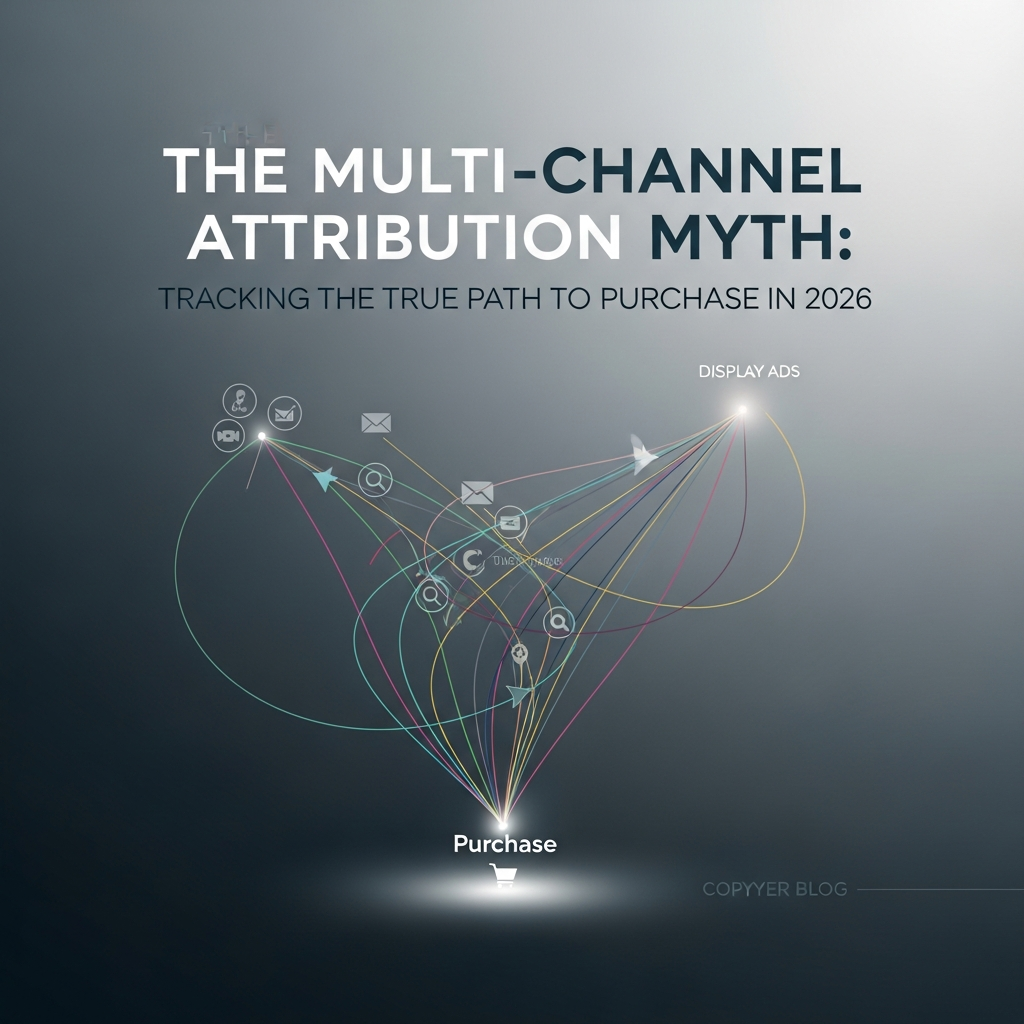
For decades, digital marketing has been haunted by a ghost. Not the spectral, chain-rattling variety, but a far more insidious poltergeist: the phantom of the “perfectly tracked” customer journey. We have collectively hallucinated a world where a user sees a Facebook ad, clicks a Google search link, reads a blog post, and then—with the surgical precision of a Swiss watchmaker—converts, leaving behind a pristine trail of digital breadcrumbs. We called it Multi-Channel Attribution (MCA), and we treated its dashboards as if they were carved into stone tablets brought down from Mount Sinai.
But as we navigate the landscape of 2026, the mirage has finally evaporated. The industry is waking up to a sobering reality: Multi-channel attribution was never a map of the territory; it was a comforting fiction we told ourselves to justify bloated ad spends to skeptical CFOs. Between the final sunset of third-party cookies, the aggressive fortification of “walled gardens,” and the rise of AI-driven search agents, the “Path to Purchase” has become less of a straight line and more of a quantum superposition. To track it, we must abandon our old tools and embrace a new, far more complex methodology of triangulation and inference.
The Deceptive Comfort of Linear Models
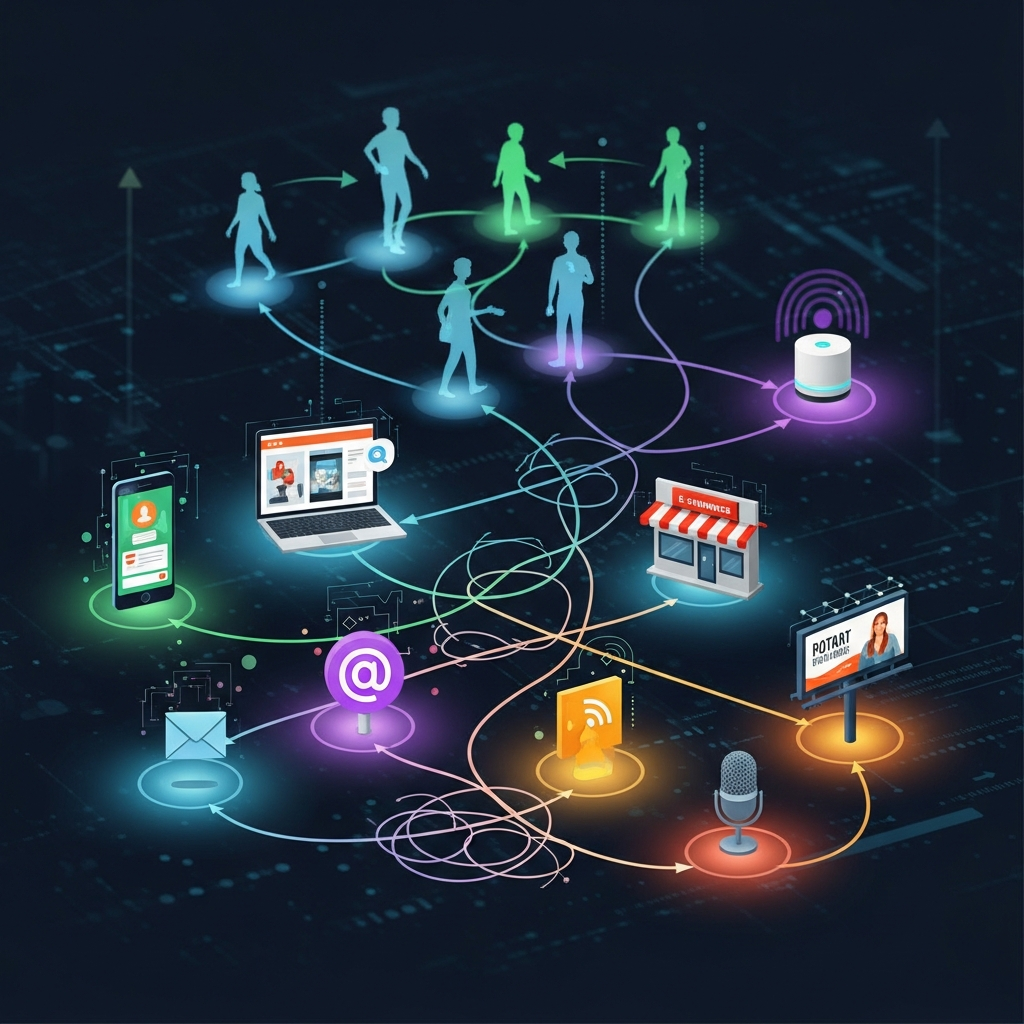
Historically, attribution was a game of oversimplification. We clung to models like First-Touch, Last-Touch, or Linear Distribution because they were computationally inexpensive and emotionally satisfying. If a customer bought a high-end espresso machine after clicking an email, the email team got the champagne. Never mind that the customer had been subconsciously primed by six months of YouTube reviews, three podcast mentions, and a chance encounter with the brand at a local trade show.
These models suffer from what economists call the narrative fallacy—our tendency to turn a sequence of random events into a coherent story of cause and effect. In 2026, this fallacy is no longer just a minor accounting error; it is a strategic liability. When you attribute 100% of a sale to the last click, you aren’t just misallocating credit; you are systematically defunding the top-of-funnel awareness that made the last click possible in the first place. It is the marketing equivalent of a striker in soccer taking all the credit for a goal, despite the midfield having spent ninety minutes orchestrating the play.
The Incrementalism Trap
The greatest casualty of traditional attribution is the understanding of incrementality. In the mid-2020s, many brands discovered—painfully—that a significant portion of their “attributed” revenue was actually “organic cannibalization.” They were paying Google and Meta to show ads to people who were already going to buy. This “Attribution Industrial Complex” flourished by claiming credit for the inevitable. In 2026, the elite marketer focuses not on what the dashboard says, but on what would have happened if the ad spend had been zero. If your ROAS (Return on Ad Spend) looks too good to be true, it likely is; you are probably just tax-collecting on your own brand equity.
The Privacy Panopticon and the Death of Determinism
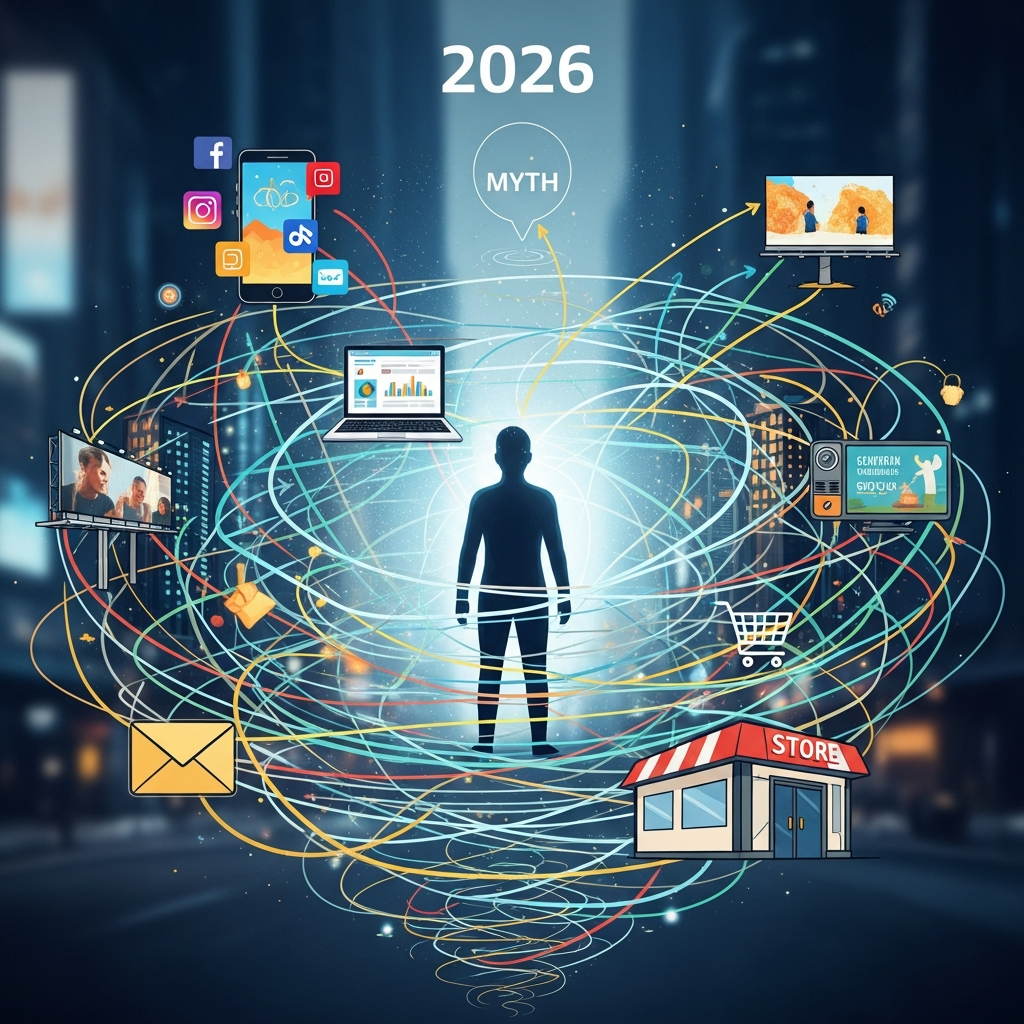
We are currently living through the “Post-Deterministic Era.” The era of “stitching” identities across devices and platforms is effectively over. Apple’s App Tracking Transparency (ATT) was merely the opening salvo in a war that has now seen the total lockdown of MAC addresses, the obfuscation of IP addresses via private relays, and the implementation of heavy-handed data residency laws globally.
The technical hurdles are now insurmountable for traditional tracking:
- The Decay of the Signal: Browsers now treat tracking scripts with the same hostility they once reserved for malware. Even first-party cookies have shortened lifespans, making “Long-Term Attribution” a literal impossibility for products with high consideration cycles.
- Walled Garden Isolation: Google, Meta, and Amazon have built taller walls. They will tell you what happened inside their ecosystem with granular detail, but the moment the user steps outside, the trail goes cold. We are left with “Data Silos” that refuse to speak the same language.
- AI Agent Intermediation: In 2026, a significant portion of the “search” process is performed by AI agents—Large Language Models (LLMs) that browse the web on behalf of the user. When a user asks an AI to “find me the best noise-canceling headphones for under $300,” the AI parses the web, synthesizes the data, and presents a recommendation. The brand never sees the user; they only see the bot. How do you attribute a sale when the “buyer” was a piece of software?
“Attribution in 2026 is no longer about following the user; it is about modeling the aggregate behavior of the crowd. We have moved from the microscope to the telescope.”
>Enter the Renaissance of Marketing Mix Modeling (MMM)
As deterministic tracking died, a relic from the 1960s was resurrected and supercharged with machine learning: Marketing Mix Modeling. Unlike traditional attribution, which tries to track individual users, MMM uses high-level statistical analysis to determine how different inputs (spend across various channels) correlate with outputs (sales).
The beauty of modern MMM in 2026 is its resilience to privacy shifts. It doesn’t need to know who bought the product; it only needs to know that when we increased spend on TikTok by 20% in the Pacific Northwest, total sales rose by 4% after a three-week lag. This is Top-Down Attribution, and it is the only way to account for the “untrackable” channels: television, out-of-home (OOH), word-of-mouth, and the increasingly influential world of “Dark Social.”
The Rise of Dark Social
Dark Social refers to the vast amount of social sharing that happens in private channels—Slack, WhatsApp, Discord, and Telegram. When a colleague drops a link to a SaaS tool in a private Slack channel, and the CTO buys it three days later, the analytics platform sees that as “Direct/None.” This is a massive blind spot. Our research suggests that for B2B enterprises, up to 70% of the “influence” happens in spaces where trackers cannot go. To solve this, 2026 marketers are utilizing “Self-Reported Attribution” (SRA). A simple, open-ended question at checkout—”How did you first hear about us?”—often yields more accurate data than a million-dollar tech stack.
>The Triangulation Strategy: A New Framework
Since no single source of truth exists, the elite human marketer in 2026 uses a Triangulation Framework. This involves balancing three distinct data streams to find the “center of gravity” for their marketing efficacy.
1. Platform-Specific Data (The Micro View)
While biased, the data provided by Meta or Google is still useful for intra-channel optimization. It tells you which creative is working within that specific environment. However, it should never be used to decide inter-channel budget allocation. Use platform data to win the battle, but don’t use it to plan the war.
2. Marketing Mix Modeling (The Macro View)
Deploying Bayesian regression models to understand the long-term impact of brand building versus performance marketing. This allows for the calculation of “Carryover Effects”—the reality that an ad seen today might not result in a sale for six months. MMM is the “truth serum” for your marketing budget.
3. Incrementality Testing (The Scientific View)
This is the gold standard. By running “Lift Studies”—where a specific region or audience is intentionally withheld from seeing ads (the control group)—marketers can measure the true incremental value of their spend. If the group that didn’t see the ads bought the product at the same rate as the group that did, your marketing isn’t driving growth; it’s just subsidizing existing demand.
>Psychographic Nuance: Why Humans Buy (and Why Data Misses It)
The obsession with technical attribution often blinds us to the psychological reality of the purchase path. Consumption is rarely a logical progression. It is a messy, emotional, and often impulsive reaction to a multitude of stimuli. A consumer might be influenced by a brand’s stance on sustainability (untrackable), a recommendation from a trusted influencer on a locked Instagram story (untrackable), and a sense of nostalgia triggered by a specific color palette (untrackable).
In 2026, the most successful brands are those that stop trying to “game” the attribution algorithm and start focusing on “Brand Salience.” If you are the first brand that comes to mind when a need arises, attribution doesn’t matter. You have already won. The “Path to Purchase” is increasingly moving inside the consumer’s mind, a place where no cookie or tracking pixel can ever hope to reside.
The Role of Zero-Party Data
To bridge the gap, we are seeing a pivot toward Zero-Party Data—information that a customer intentionally and proactively shares with a brand. This includes preference centers, interactive quizzes, and community engagement. By incentivizing users to tell us about their journey, we bypass the need for invasive tracking. It turns out that if you provide enough value, people will actually tell you why they are buying from you. What a concept.
>The Infrastructure of 2026: Probabilistic over Deterministic
If you are still building your 2026 strategy on deterministic foundations, you are building on quicksand. The transition to probabilistic modeling is mandatory. This involves using machine learning to fill in the gaps where data is missing. For instance, if we know that 40% of our mobile web users are on iOS devices with high privacy settings, we can use the behavior of the “visible” 60% to model the likely behavior of the “invisible” 40%.
This requires a cultural shift within marketing departments. We have to become comfortable with confidence intervals rather than absolute integers. A report might no longer say “We made $1,402,301 from this campaign.” Instead, it will say “We are 95% confident that this campaign generated between $1.2M and $1.6M in incremental revenue.” To the uninitiated, this looks like guesswork. To the expert, it is the only honest way to report data in a fragmented world.
>Conclusion: Embracing the Mess
The “Multi-Channel Attribution Myth” was born out of a desire for control in an uncontrollable world. We wanted to believe that the human psyche was a predictable machine that we could program with enough ad impressions. 2026 has stripped away that illusion, revealing a landscape that is chaotic, private, and deeply human.
The marketers who will thrive in this era are not those with the most complex tracking scripts, but those who understand that influence is not an event, but an atmosphere. By combining the macro-insights of MMM, the scientific rigor of incrementality testing, and the humble honesty of customer surveys, we can finally stop chasing the ghost of the “perfect path” and start building brands that people actually want to find—regardless of how they get there.
The path to purchase isn’t a trackable sequence of clicks; it’s a series of emotional resonances. In 2026, the best way to “track” your customers is to lead them so effectively that the tracking becomes an afterthought. The myth is dead. Long live the nuance.