
The era of keyword-focused SEO is officially in the rearview mirror. If you are still building content calendars around high-volume, low-competition keywords as standalone targets, you are essentially trying to build a modern skyscraper on a foundation of sand. Google has evolved. The algorithms—Hummingbird, RankBrain, BERT, and now MUM—don’t just read your words; they understand your intent. They are looking for context, authority, and semantic relevance.
Search engines no longer view “strings” of text; they view “things”—entities and the relationships between them. This shift necessitates a complete overhaul of how we approach content strategy. Enter: Semantic Content Clustering. This isn’t just another buzzword to throw around in marketing meetings. It is the architectural blueprint for building topical authority in an environment where AI-driven search engines prioritize depth over breadth.

The Death of the Keyword and the Birth of the Entity
For years, the playbook was simple: find a keyword, check the volume, write a 1,500-word post, and pray for a backlink. That strategy is failing. Why? Because Google has moved toward Semantic Search. Semantic search is the process by which search engines attempt to produce the most accurate results by understanding searcher intent, query context, and the relationship between words.
Consider the word “Apple.” Without context, a search engine doesn’t know if you want the fruit, the tech giant, or the record label. Semantic SEO provides that context. By clustering content around a central theme, you signal to Google that your site isn’t just a collection of random articles, but a comprehensive knowledge base—a definitive source of truth for an entire topic area.
“SEO is no longer about being the best answer for a specific keyword; it’s about being the best answer for a specific journey.”
Defining Semantic Content Clustering
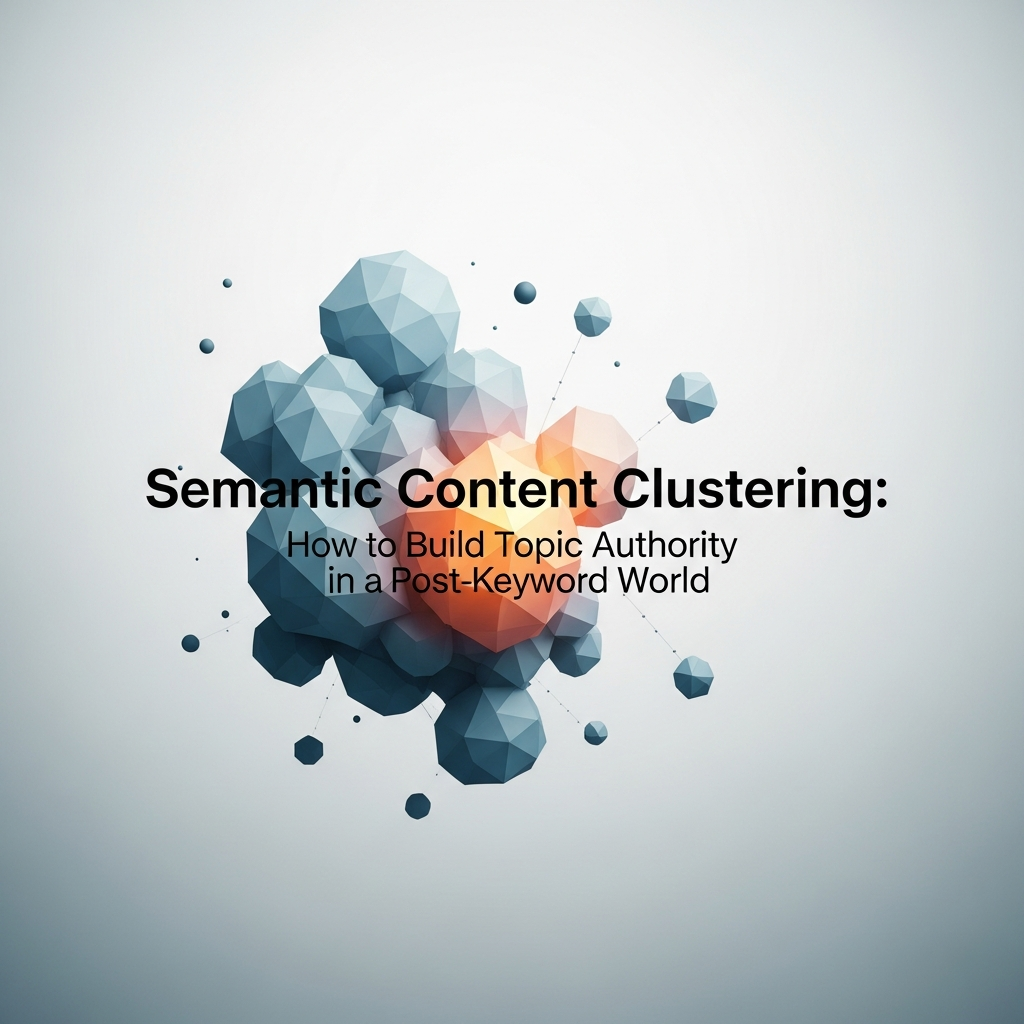
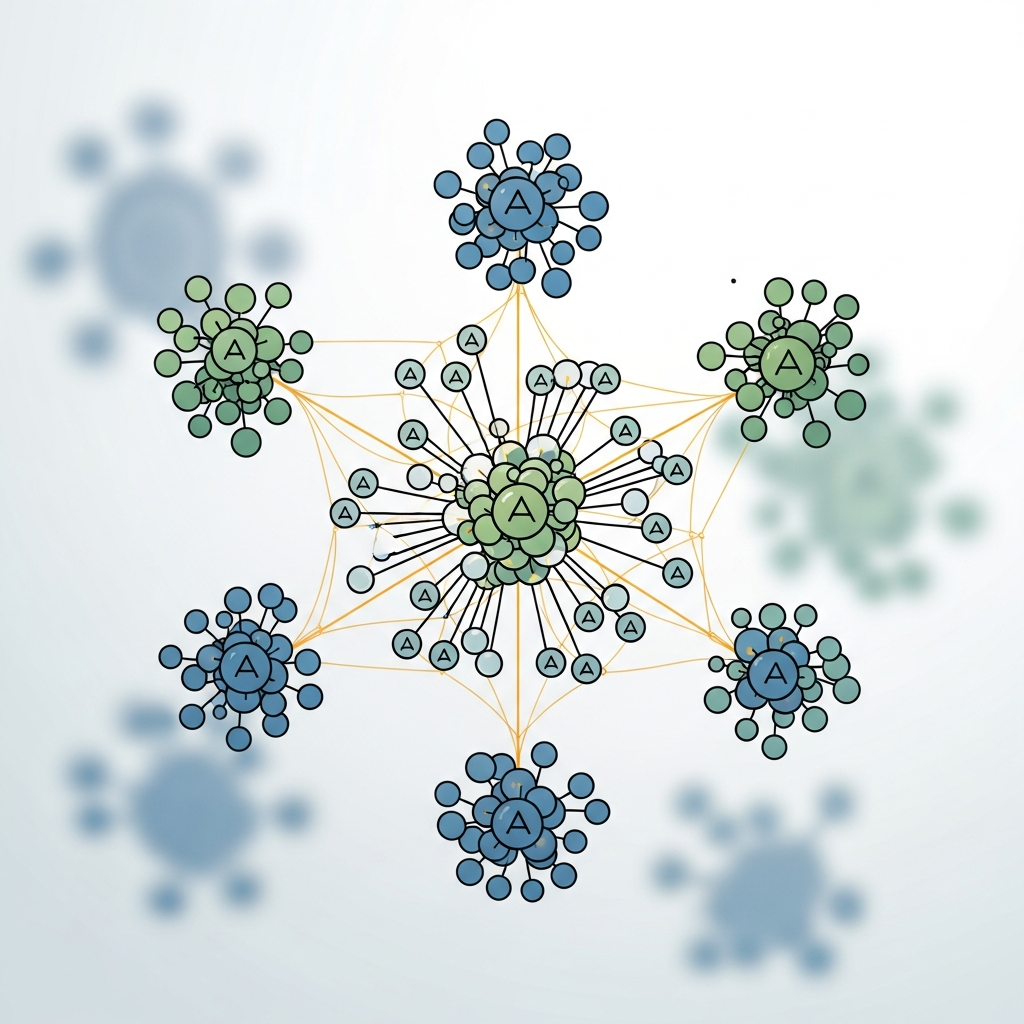
Semantic content clustering is the strategic organization of your website’s content into interconnected “hubs” and “spokes.” Instead of creating disparate pages, you create a Pillar Page (the hub) that provides a comprehensive overview of a broad topic and then link it to multiple Cluster Pages (the spokes) that dive deep into specific subtopics.
This structure does three critical things for your SEO:
- Improves Crawlability: It creates a clean, logical site architecture that helps search bots find and index your content faster.
- Increases Topical Authority: By covering every facet of a topic, you prove to Google that you have “Topical Breadth,” a key component of the E-E-A-T (Experience, Expertise, Authoritativeness, Trustworthiness) framework.
- Boosts User Engagement: It keeps users on your site longer by providing logical next steps in their learning journey.

The Anatomy of a High-Authority Content Cluster
Building a cluster isn’t about volume; it’s about architecture. You need four distinct elements to make a semantic cluster work effectively.
1. The Pillar Page (The Hub)
The pillar page is the high-level overview. It should be broad enough to encompass dozens of subtopics but detailed enough to stand on its own. Think of it as the “Ultimate Guide” or the “Masterclass” page. It targets a high-volume, high-competition broad term.
2. The Cluster Content (The Spokes)
These are your deep dives. Each cluster page focuses on a specific long-tail keyword or question related to the pillar. If your pillar is “Digital Marketing,” your cluster pages might be “How to Set Up Google Ads,” “The Future of AI in Social Media,” or “A Guide to Retargeting Pixels.”
3. The Internal Linking Graph (The Connective Tissue)
This is where the magic happens. All cluster pages must link back to the pillar page, and the pillar page must link out to all cluster pages. Ideally, cluster pages should also link to each other where contextually appropriate. This creates a “semantic loop” that passes link equity and context throughout the entire silo.
4. Semantic Breadth (The Context)
To truly build authority, your cluster must include LSI (Latent Semantic Indexing) keywords and related entities. If you’re writing about “Mountain Biking,” search engines expect to see terms like “suspension,” “trail ratings,” “hardtail,” and “downhill geometry.” If those entities are missing, your cluster is semantically incomplete.
>Step-by-Step: How to Build Your Semantic Roadmap
As an elite copywriter, I don’t just “write.” I engineer. Here is the exact process for building a cluster that dominates the SERPs.
Step 1: Identify Your Core Entity
Don’t start with a keyword tool. Start with your business goals. What is the one thing you want to be known for? This is your core entity. If you are a SaaS company selling CRM software, your core entity is “Customer Relationship Management.” Everything you write should orbit this sun.
Step 2: Map the Semantic Universe
Use tools like Google’s “People Also Ask,” AnswerThePublic, and AI models to identify every question a user might have regarding your core entity. You are looking for intent patterns. Organize these into categories: Information-seeking, Navigational, and Transactional. Your cluster should serve all three.
Step 3: Audit Existing Content
You likely already have “zombie content”—old posts that are underperforming. Don’t delete them. Refactor them. Map your existing articles to your new cluster categories. If a post doesn’t fit into a cluster, it’s a distraction and should either be rewritten or redirected.
Step 4: Execute the “Inverted Pyramid” of Content
Write your pillar page first, but don’t publish it until you have at least 5-10 cluster pages ready to go. Launching a pillar page without its supporting spokes is like launching a ship without a crew. Once the cluster is live, use descriptive anchor text for your internal links. Avoid “click here” or “read more.” Use anchors like “advanced B2B lead generation strategies” to tell Google exactly what the destination page is about.
>The Technical Side of Semantic Authority: Schema and JSON-LD
You cannot ignore the “machine-readable” side of semantic SEO. While your content is for humans, your metadata is for the bots. To solidify your topic authority, you must use Structured Data (Schema.org).
By implementing “About” and “Mentions” schema, you can explicitly tell Google which entities your page is discussing. If your pillar page mentions “Cloud Computing,” use Schema to link that term to the Wikipedia entry for Cloud Computing. This removes any ambiguity for the search engine and cements your page’s place in the Knowledge Graph.
>Advanced Strategy: Leveraging “Searcher Task Accomplishment”
Google’s recent updates have placed a heavy emphasis on whether a user actually finishes their “task” on your site. If they read your cluster page and then have to go back to Google to search for a related question, you have failed the semantic test.
Your cluster should be a closed ecosystem. Anticipate the “next” question. If they are reading about “How to Start a Podcast,” the next logical question is “What is the best podcasting microphone?” Your cluster should have that answer ready and linked. When Google sees that users land on your site and stay there to satisfy their entire search journey, your authority will skyrocket.
>Common Pitfalls in Semantic Clustering
Even the best marketers stumble here. Avoid these three common mistakes:
- Keyword Cannibalization: Don’t create two cluster pages that target the same intent. If “best SEO tools” and “top SEO software” serve the same purpose, merge them. Semantic SEO is about distinct concepts, not different wordings.
- Weak Pillars: A pillar page that is too short won’t rank. It needs to be a definitive resource. If you can’t get at least 2,500 words of high-quality, non-fluff content on your pillar page, your topic might be too narrow.
- Broken Links: In a cluster, the link is the currency. A broken link or a “nofollow” tag on an internal link in your cluster is like a leak in a dam. It wastes all your topical power.
>The Role of AI in Semantic Content Creation
We are in a “Post-Keyword World” largely because of Large Language Models (LLMs). Google is using AI to understand you, so you should use AI to understand Google. Use tools like SurferSEO, Frase, or Clearscope to identify the semantic gap between your content and the top-ranking results.
These tools analyze the “Corpus” of the top 10 results and tell you which entities you are missing. If the top 10 pages for “Sustainable Investing” all mention “ESG Scores” and “Carbon Offsets,” and your page doesn’t, you will never rank for that topic, regardless of your keyword density.
>Measuring the Success of Your Topic Authority
Traditional SEO metrics like individual keyword rankings are becoming less relevant. To measure the success of a semantic cluster, look at these KPIs:
- Topical Share of Voice: How much of the total search traffic for a specific category do you own?
- Organic Pages per Session: Are users moving from one cluster page to another?
- Ranked Keywords per Page: A successful semantic page should rank for hundreds, if not thousands, of long-tail variations, not just one primary term.
- Internal Link Through-Put: Use Search Console to see if your pillar page is passing impressions to your cluster pages.
>Future-Proofing Your Strategy: SGE and Beyond
With the advent of Google’s Search Generative Experience (SGE), the “zero-click search” is becoming more common. AI will summarize your content directly on the results page. You might think this is bad for traffic, but it’s actually an opportunity. Google cites its sources in SGE. By being the most authoritative cluster on a topic, you ensure that you are the source Google chooses to cite.
The goal is no longer to get the “click” for a simple question; the goal is to be the authority for the complex journey. Simple questions get answered by AI; complex strategies and deep dives require human-led authority. That is where you win.
>Conclusion: The Architecture of Trust
Semantic content clustering is more than an SEO tactic; it is a commitment to quality. It requires you to stop thinking like a “search engine optimizer” and start thinking like a “subject matter expert.” When you build a cluster, you aren’t just trying to trick an algorithm into ranking you higher. You are building a comprehensive map of a topic, helping users navigate complex information, and establishing a level of trust that no single “keyword-optimized” post could ever achieve.
The transition from keywords to topics is a transition from being a solicitor to being a consultant. In a world saturated with AI-generated noise, authority is the only currency that still holds value. Build your clusters, connect your entities, and dominate your niche by being the most thorough, logical, and helpful resource on the web.