
The transition from a “scrappy startup” to a “scalable enterprise” is less of a linear path and more of a psychological and operational chasm. Most small businesses don’t fail because they lack a good product; they fail because they attempt to grow with systems designed to keep them small. There is a fundamental, often painful distinction between growth—which is simply getting bigger—and scaling, which is the ability to increase revenue exponentially while costs increase only marginally.
In my two decades of consulting for mid-market firms and lean startups alike, I have observed a recurring pattern. Founders often find themselves trapped in the “Founder’s Paradox”: the very passion and hands-on control that built the company become the primary bottlenecks preventing its expansion. To scale, you must dismantle the version of the company that currently works to build one that can work without you.
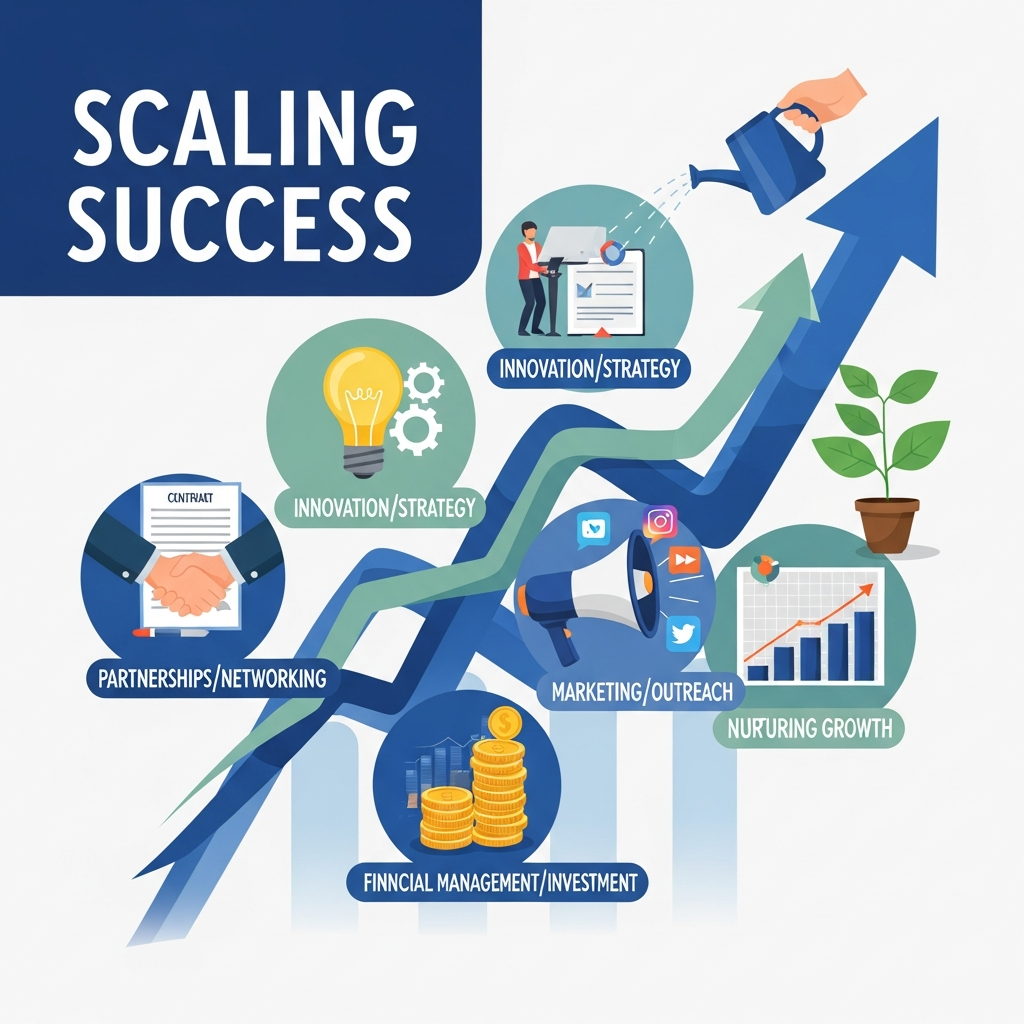
This guide isn’t about vague “hustle” culture or platitudes. It is a technical roadmap for the business owner ready to move beyond the plateau. We will dissect five actionable, high-leverage strategies that move the needle from incremental progress to compounding success.
1. The Infrastructure of Autonomy: Implementing Advanced Automation
If your business processes rely on manual data entry, human memory, or the founder’s personal oversight, you aren’t running a scalable business; you’re running an elaborate job. The first pillar of scaling is the aggressive pursuit of “Infrastructure Autonomy.” This involves moving beyond basic tools and integrating a “Single Source of Truth” (SSOT) architecture.
Eliminating Technical Debt
Most small businesses suffer from “Technical Debt”—a fragmented stack of software that doesn’t talk to each other. Your CRM (Customer Relationship Management) should be the heartbeat of your operation. When a lead enters your ecosystem, the journey through the sales funnel, the onboarding process, and the eventual invoicing should be a seamless, automated handoff.
Actionable Step: Audit your “Time-to-Task” ratio. Identify any repetitive task performed by a human more than three times a week. Tools like Zapier or Make (formerly Integromat) should be utilized to bridge the gaps between your CRM, project management tools like Monday.com or Asana, and your accounting software. The goal is “Zero-Touch” data migration.
The Power of Programmatic Marketing
Scaling requires a predictable lead generation engine. You cannot rely on referrals alone, as they are not scalable. By implementing programmatic advertising and automated nurturing sequences (using platforms like Klaviyo or HubSpot), you create a “faucet” of demand that you can turn up or down based on your capacity. This moves marketing from a speculative expense to a measurable investment with a clear Return on Ad Spend (ROAS).
“Complexity is the silent killer of growth. If a process cannot be documented in a flow chart and automated by software, it is a liability to your scale.”
2. Transitioning from “Doer” to “Architect”: Strategic Talent Acquisition
The most difficult transition for a small business owner is the shift from being the primary value-producer to being the architect of the organization. Scaling requires you to hire for where you want to be in two years, not where you are today. This often means making “high-conviction” hires—people who are more skilled in their specific domains than you are.
The Rise of the Fractional Executive
One of the most effective ways to scale without the overhead of a massive C-suite is the use of fractional leadership. You may not need a full-time Chief Financial Officer (CFO) or Chief Marketing Officer (CMO) at $250k a year, but you absolutely need the strategic oversight they provide. Hiring fractional experts allows you to inject high-level strategy into your business at a fraction of the cost, providing the roadmap for your junior staff to execute.
Building a “Culture of Ownership”
To scale, you must move away from a “Command and Control” management style to a “Context, Not Control” framework. This involves clearly defining Key Performance Indicators (KPIs) for every role and giving employees the autonomy to reach them. When your team owns the outcome rather than just the task, the need for micromanagement vanishes, freeing up the founder to focus on high-level partnerships and market expansion.
Consider these hiring priorities for scaling:
- Operations Manager: To build and maintain the SOPs (Standard Operating Procedures).
- Customer Success Lead: To ensure that as you acquire more customers, the quality of service does not degrade.
- Specialized Technicians: To offload the “craft” work from the founder’s plate.
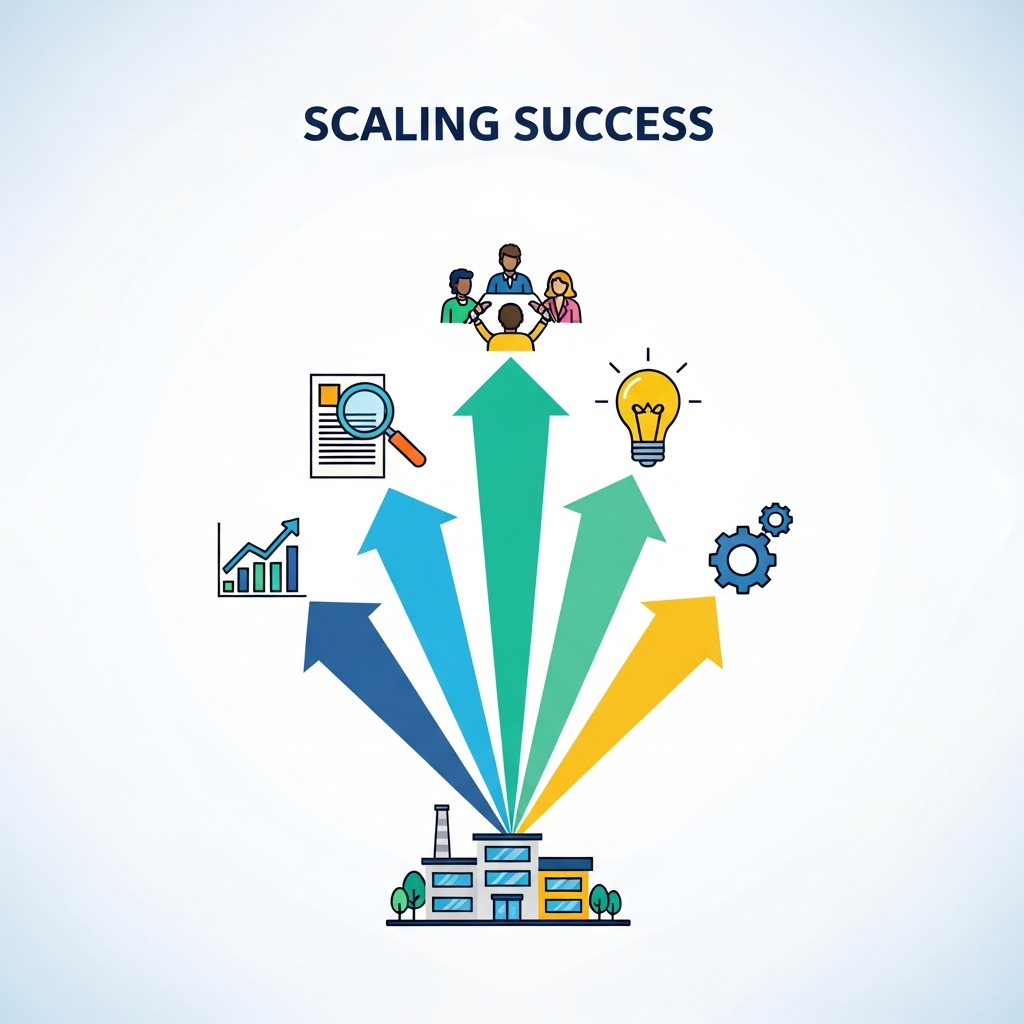
3. Mastering Customer Lifetime Value (LTV) and Retention Metrics
It is a well-documented economic reality that acquiring a new customer is five to twenty-five times more expensive than retaining an existing one. Yet, many businesses focus solely on the “top of the funnel.” True scaling happens when you master the “bottom of the funnel”—the retention and expansion of your current client base.
The Mathematics of Churn
If your business loses 10% of its customers every month, you have to grow by more than 10% just to stay still. This is the “leaky bucket” syndrome. To scale, you must focus on reducing churn through proactive customer success. This means using data to predict when a customer might leave and intervening before they do. Use NPS (Net Promoter Scores) and CSAT (Customer Satisfaction) surveys to get a pulse on your health before the symptoms of decline become terminal.
Expansion Revenue: The “Upsell” Engine
Scaling is significantly easier when your average order value (AOV) increases over time. This is achieved through expansion revenue—selling more to the people who already trust you.
Strategies include:
- Tiered Pricing Models: Offering “Good, Better, Best” options that allow customers to grow into higher service levels.
- Cross-Selling: Identifying complementary products or services that solve the next problem your customer will face.
- Subscription Pivots: Converting one-time sales into recurring revenue models to create predictable cash flow.
“Growth is a vanity metric; Retention is a sanity metric. You cannot scale a business that people are constantly leaving.”
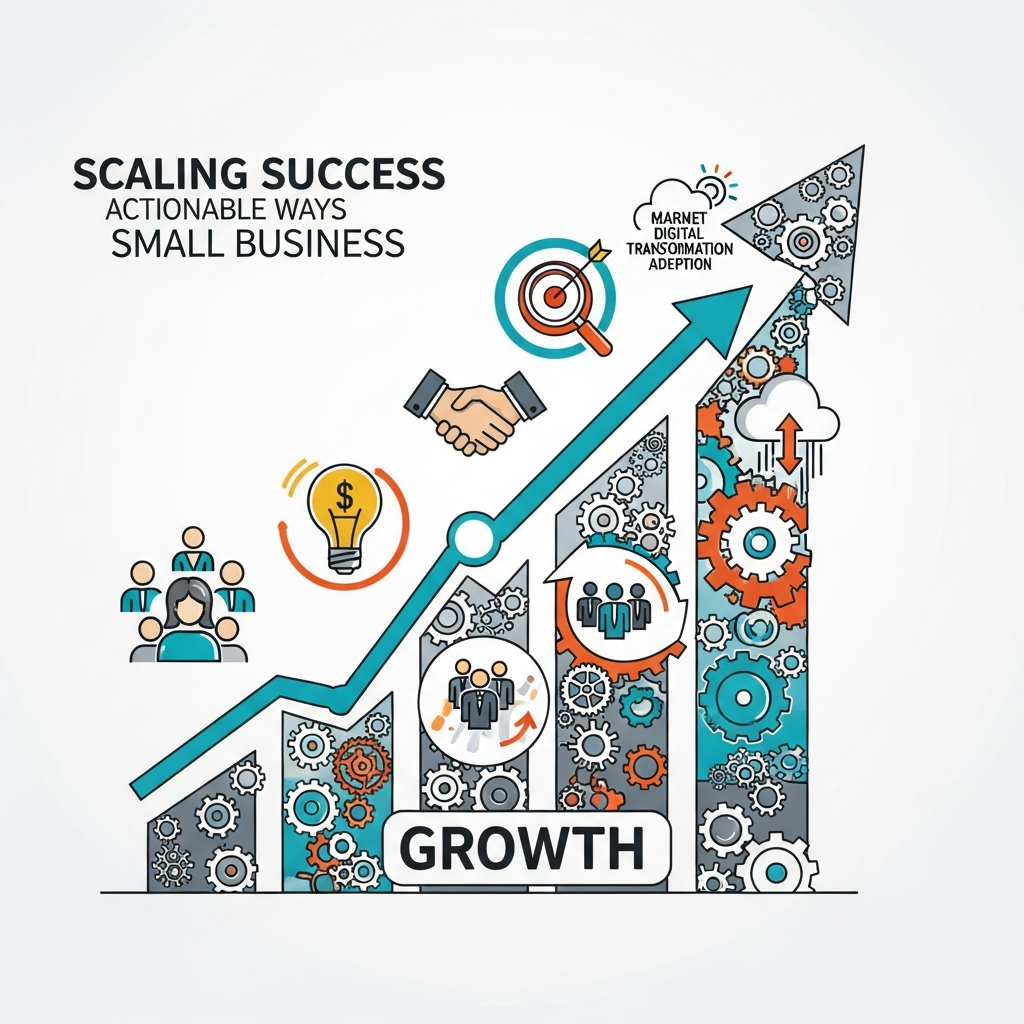
4. Productization: Turning Services into Scalable Assets
If you run a service-based business, you are likely trading hours for dollars. This model is inherently unscalable because time is a finite resource. To scale, you must “productize” your services. This means turning a bespoke, customized offering into a standardized, repeatable product with a fixed price and a fixed delivery timeline.
Creating the “Black Box” Delivery Model
A productized service is one where the input (client data/needs) and the output (the result) are clearly defined, and the process in between is a “black box” of standardized steps. This allows you to hire lower-cost labor to execute the steps while maintaining high-quality results. It also makes your marketing much clearer; instead of saying “we do marketing,” you say “we provide a 30-day lead generation system for dental practices.”
Leveraging Intellectual Property (IP)
What knowledge does your business possess that can be packaged? Scaling often involves moving up the value chain from “doing the work” to “selling the system.” This could take the form of:
- Online Courses or Training: Teaching others your proprietary methodology.
- Licensing: Letting other firms use your brand or processes for a fee.
- Software as a Service (SaaS): Building a tool that automates the problem you currently solve manually.
Productization allows for “decoupled growth,” where your revenue is no longer tied to the number of hours your team works. This is the holy grail of scaling.
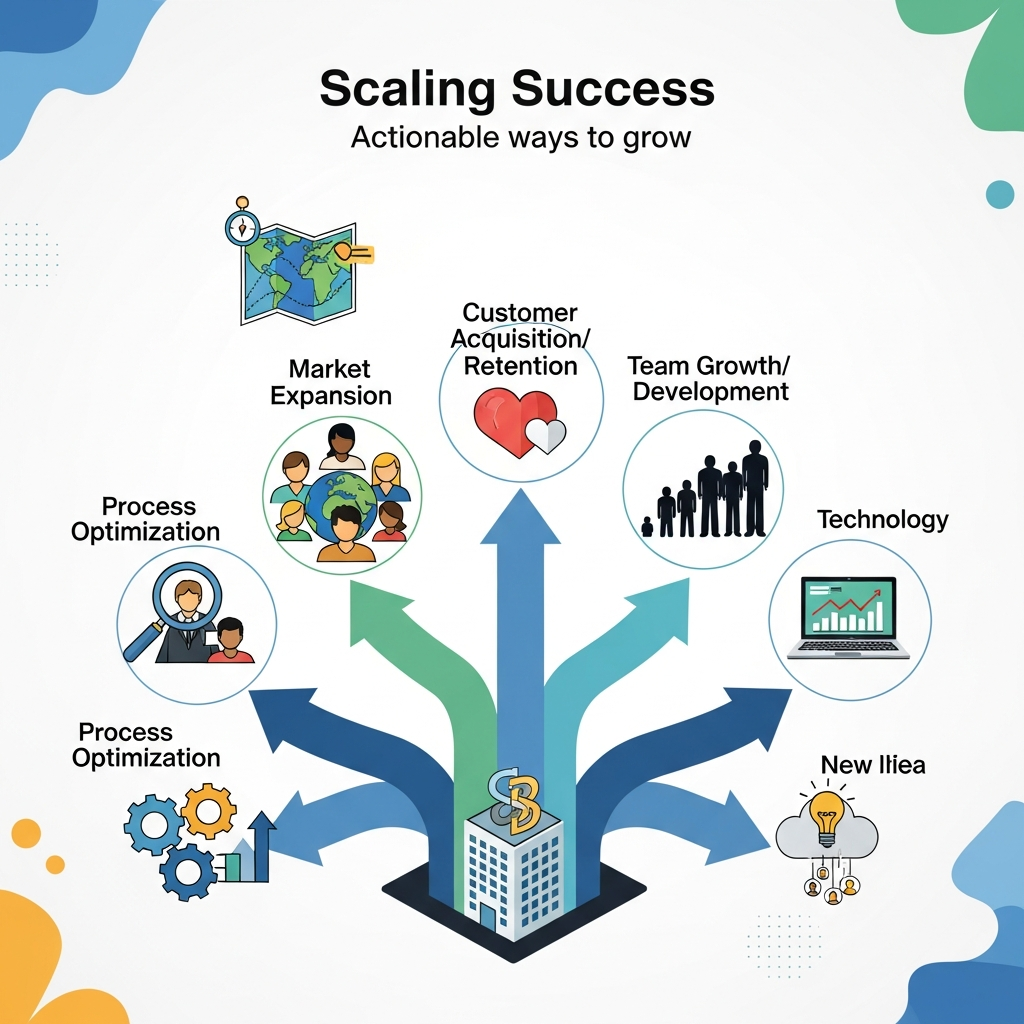
5. Financial Engineering and Strategic Capital Allocation
Scaling requires fuel, and that fuel is capital. Many small business owners are “profit-focused” when they should be “cash-flow focused.” You can be profitable on paper and still go bankrupt during a growth spurt because your cash is tied up in accounts receivable or inventory. Financial engineering is the art of managing these cycles to fund your expansion.
Optimizing the Cash Conversion Cycle (CCC)
The Cash Conversion Cycle measures how fast a dollar spent on expenses returns to your pocket as revenue. To scale effectively, you need to shorten this cycle. This might involve:
- Changing Billing Terms: Moving from “Net 30” to “Payment Upfront” or “50% Deposit.”
- Inventory Management: Using “Just-in-Time” (JIT) methods to reduce the amount of capital sitting on shelves.
- Negotiating Vendor Terms: Asking your suppliers for longer payment windows while you accelerate your own collections.
Smart Debt vs. Bad Debt
While many “bootstrappers” are afraid of debt, strategic leverage is a powerful scaling tool. High-interest credit card debt is toxic, but a low-interest SBA (Small Business Administration) loan or a line of credit can provide the liquidity needed to hire a key salesperson or invest in a massive marketing campaign. The key is to ensure the “Internal Rate of Return” (IRR) on the invested capital is significantly higher than the cost of the debt.
Unit Economics: The Foundation of Investment
Before you pour money into scaling, you must prove your “Unit Economics.” You need to know, with certainty, your Customer Acquisition Cost (CAC) and your Lifetime Value (LTV). If it costs you $100 to get a customer who spends $500 over their lifetime, you have a scalable model. At that point, scaling is simply a matter of finding more “hundred-dollar bills” to feed the machine.
>Conclusion: The Scaling Mindset
Scaling a small business is not a single event; it is a continuous process of evolution. It requires a relentless focus on systems, a willingness to let go of control, and a disciplined approach to financial management. The most successful entrepreneurs I know are those who spent as much time building the “business machine” as they did building the “product.”
By implementing these five strategies—automating your infrastructure, hiring strategic talent, focusing on LTV, productizing your offerings, and engineering your finances—you move from the chaos of the “daily grind” to the clarity of a high-growth enterprise. The path to scale is paved with standardized processes and data-driven decisions. Start today by identifying the one bottleneck in your business that, if removed, would allow everything else to flow faster. Fix that, then move to the next. That is how you scale success.